What Happened to the Sony PSP? The Handheld War Sony Lost

2026-03-31 by 404 Memory Found

Picture this: it's E3 2004, and Sony's Kaz Hirai walks onstage holding something that looks like it fell out of a science fiction movie. It's sleek, black, impossibly thin. The screen is massive. He calls it the PlayStation Portable, and the crowd loses it. For the first time, somebody was going to challenge Nintendo's stranglehold on handheld gaming, and they were doing it with hardware that made the Game Boy Advance look like a calculator.

I remember seeing photos of this thing in EGM and just staring. The screen alone was 4.3 inches, which doesn't sound like much now, but in 2004, the Game Boy Advance SP had a 2.9-inch display. The PSP's screen was bright, vibrant, widescreen. It looked like you were holding a portable movie theater. And the games? Ridge Racer, Metal Gear Acid, Lumines. These weren't watered-down ports. They looked and played like home console titles.

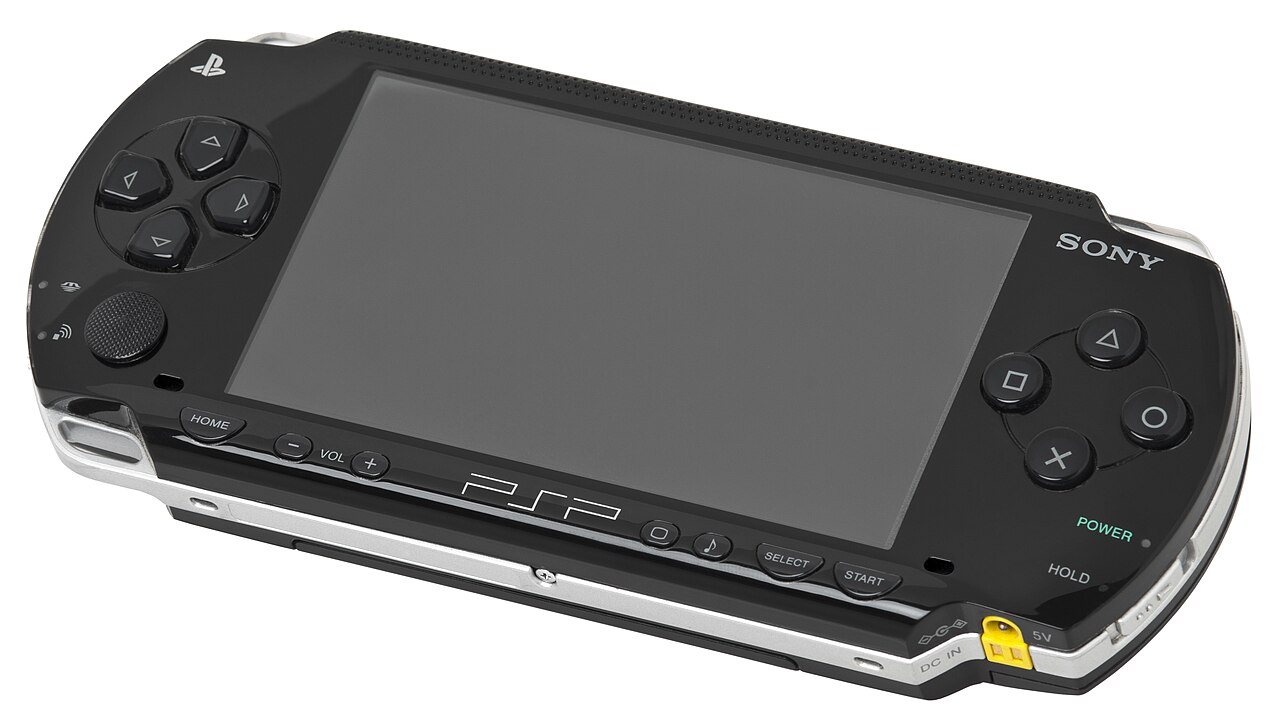
Sony PSP-1000 handheld console
The original PSP-1000, Sony's first handheld gaming console, released in December 2004 in Japan.

The Hardware That Changed Everything

Sony officially released the PSP in Japan on December 12, 2004, at a price of 19,800 yen (roughly $189 USD at the time). The North American launch followed on March 24, 2005, where it debuted at $249 as a "Value Pack" that included a 32MB Memory Stick Duo, headphones with a remote, a soft case, a cleaning cloth, and a UMD demo disc. There was no standalone option. If you wanted a PSP at launch, you were paying $249.

The specs were genuinely impressive for something that fit in your pocket. The PSP ran on a MIPS R4000-based CPU clocked at 333 MHz, paired with a dedicated graphics processor. For context, the Nintendo DS ran at 67 MHz. The PSP had 32MB of RAM. The DS had 4MB. It wasn't even close on paper. Sony's machine could render environments and character models that rivaled early PlayStation 2 games, and it did it on a screen that made everything pop.

Then there was UMD, which stands for Universal Media Disc. This was Sony's proprietary optical disc format, a tiny little disc housed in a plastic shell that could hold up to 1.8GB of data. Sony had big plans for UMD. It wasn't just for games. They launched UMD movies, selling films like Spider-Man 2 and Resident Evil for $20 to $28 a pop. The idea was that the PSP would be your all-in-one entertainment device: games, movies, music, web browsing. A Swiss Army knife for your backpack.

The Launch Window Was Stacked

Sony came out swinging. The North American launch lineup included about 24 titles, which was huge for a brand-new platform. Ridge Racer was the showcase title, a beautiful arcade racer that made you feel like you were playing a PS2 on the bus. Lumines, Tetsuya Mizuguchi's puzzle game, became an instant classic that people still talk about. Metal Gear Acid brought Hideo Kojima's franchise to handheld in a weird, wonderful card-based strategy format. Wipeout Pure delivered blistering anti-gravity racing with a licensed electronic soundtrack.

And then the heavy hitters kept coming. Grand Theft Auto: Liberty City Stories launched in October 2005 and sold over 7.6 million copies, becoming the PSP's best-selling game ever. God of War: Chains of Olympus arrived in 2008 and proved you could have a cinematic action experience on a handheld. Crisis Core: Final Fantasy VII became a system seller in Japan, moving hardware like crazy when it launched in September 2007.

For a while, things looked great. The PSP sold 10 million units worldwide by the end of 2005. Sony was pulling in third-party support from everyone: Capcom, Square Enix, Konami, EA. The momentum felt real.

So What Went Wrong?

Here's where it gets complicated, because the PSP didn't exactly fail. It sold approximately 82 million units lifetime, which by any normal standard is a massive success. The problem is that Nintendo's DS sold 154 million. Nearly double. More than that, the DS changed the entire conversation about what handheld gaming could be, while the PSP just tried to be a small PlayStation.

Nintendo's strategy was completely different. While Sony was chasing power and multimedia, Nintendo shipped a dual-screen device with a touchscreen and a microphone. It looked weird. It sounded like a gimmick. And then Nintendogs came out, and Brain Age, and your mom was playing it. Your grandma was playing it. People who had never touched a video game in their lives were suddenly hooked on a $149 clamshell that could recognize your voice and let you pet a virtual dog.

Original Nintendo DS in blue
The Nintendo DS, released in November 2004, outsold the PSP nearly 2-to-1 with its innovative dual-screen design.

The DS launched on November 21, 2004, just three weeks before the PSP hit Japan. It cost $149 in North America, a full $100 less than Sony's machine. That price difference mattered enormously. Parents buying holiday gifts for their kids weren't doing spec comparisons. They were looking at the price tag. And at $149, the DS was an easy yes.

The UMD Problem

Remember those UMD movies? They died fast. Really fast. The problem was obvious to everyone except Sony's planning division: why would you pay $20 for a movie you could only watch on a 4.3-inch screen when you could buy the DVD for the same price and watch it on your TV? UMD movies launched in 2005 with a big marketing push. By 2006, major studios like Universal and Paramount had already abandoned the format. Walmart pulled UMD movies from its shelves entirely. It was a complete disaster.

The broader issue was that Sony built the PSP around a vision of convergence that consumers didn't actually want. People didn't need a portable movie player, a web browser, and a music player all crammed into their gaming device. They already had iPods for music. They already had laptops for the web. And in a few years, they'd have smartphones that did all of this better than the PSP ever could.

Piracy Almost Killed It

This is the part that doesn't get talked about enough. The PSP had one of the worst piracy problems in gaming history. Hackers figured out early on that the PSP's firmware could be exploited, and once custom firmware spread, people could play pirated games from the Memory Stick without ever buying a UMD. By some estimates, piracy rates on certain PSP titles exceeded 90%.

This absolutely devastated third-party developer support. Publishers looked at the attach rate, meaning how many games were sold per console, and it was abysmal compared to the DS. Capcom's Monster Hunter was one of the few franchises that thrived on PSP, largely because it was so popular in Japan where piracy rates were lower. But Western developers started pulling back. Why invest millions developing a PSP game when most people were just going to steal it?

Sony tried everything to fight it. They pushed firmware updates constantly, each one trying to patch the latest exploit. Hackers cracked every single one, usually within days. It became a cat-and-mouse game that Sony never won. The PSP Go, released in October 2009 at $249, eliminated the UMD drive entirely and went all-digital, partly as an anti-piracy measure. But at $249 with no disc drive and a smaller screen, it flopped. It struggled to find an audience and was quietly discontinued.

The Smartphone Killed the Dream

The final nail came from a direction nobody in 2004 could have predicted. When Steve Jobs unveiled the iPhone on January 9, 2007, the entire portable electronics landscape shifted overnight. Within two years, mobile gaming exploded. Angry Birds launched in December 2009 and proved that people would happily play games on their phone for $0.99 instead of buying a dedicated $40 game on a dedicated $200 device.

By 2010, the PSP was in serious trouble. Monthly NPD sales data showed the device falling behind even the aging Nintendo DS. Sony tried to revive interest with the PSP-3000 model, which had an improved screen and built-in microphone, but it was putting bandages on a sinking ship. The ecosystem had moved on. Developers had moved on. The audience had literally moved on to their phones.

The Numbers Tell the Story

When you line up the sales figures, the PSP's story becomes painfully clear. Sony shipped roughly 80 million PSP units worldwide over the handheld's lifetime. That sounds impressive until you realize the Nintendo DS moved over 154 million units during the same era. The DS outsold the PSP nearly two to one, and it did so with hardware that was objectively less powerful.

The PSP launched strong. In its first year, Sony moved about 15 million units globally. Game sales were respectable, with titles like Grand Theft Auto: Liberty City Stories, Monster Hunter Freedom Unite, and God of War: Chains of Olympus proving that console-quality games could work on a handheld. Monster Hunter in particular became a cultural phenomenon in Japan, single-handedly keeping the PSP relevant in that market for years.

But the attach rate told a different story in Western markets. While DS owners were buying four or five games per system, PSP owners in North America averaged fewer than three. Part of this was piracy draining potential sales. Part of it was the multimedia positioning encouraging people to use the PSP for movies and music rather than games. And part of it was a library that, while containing genuine classics, never quite matched the breadth and creativity of what Nintendo offered.

Third-party publishers noticed. By 2009, major Western developers were pulling back from PSP development. The cost of making a PSP game had crept up toward console levels, but the sales ceiling was far lower. Why spend $10 million developing a PSP exclusive when you could put that money toward an Xbox 360 or PS3 title with a much larger potential audience?

The financial picture for UMD movies was even bleaker. By 2006, most major studios had stopped releasing new titles on the format. The UMD movie library peaked at around 500 titles before publishers abandoned it entirely. Consumers had spoken with their wallets, and they were not interested in buying movies they could only watch on a 4.3-inch screen.

The Legacy Sony Left Behind

Sony tried once more with the PlayStation Vita in 2011, and the story rhymed uncomfortably with the PSP's decline. The Vita was again the more powerful handheld on the market, featuring a gorgeous 5-inch OLED screen, dual analog sticks, and processing power that genuinely impressed. And again, it lost badly to Nintendo, this time to the 3DS. Sony officially ended Vita production in 2019 and has shown no interest in returning to the handheld market since.

But the PSP's influence echoes through modern gaming in ways that deserve recognition. The idea that a portable device should handle console-quality graphics is now the baseline expectation. When Valve launched the Steam Deck in 2022, it was essentially building on a vision Sony pioneered nearly two decades earlier. The Switch itself, with its emphasis on playing real console games on the go, owes a philosophical debt to what Sony attempted.

The PSP also proved that handhelds could be genuine multimedia devices. Before the PSP, handheld gaming systems played games and maybe had a clock. After the PSP, every handheld was expected to browse the web, play media, and function as more than just a gaming machine. The smartphone revolution would have happened regardless, but the PSP helped set expectations for what a pocket-sized screen could deliver.

Monster Hunter Freedom Unite remains one of the defining games of its generation in Japan. God of War: Chains of Olympus showed that AAA storytelling could work in portable form. LocoRoco and Patapon proved that the platform could inspire genuine creativity when developers designed specifically for it rather than porting console experiences down.

The PSP was a machine that was right about the future and wrong about the timing. Sony correctly predicted that people would want powerful portable media devices. They just did not anticipate that the device filling that role would be a phone rather than a dedicated gaming handheld. The PSP arrived at the exact moment when the market was about to split: casual players were heading toward smartphones, and dedicated handheld gamers would stay loyal to Nintendo's ecosystem and its unmatched first-party software library.

If you still have a PSP sitting in a drawer somewhere, it is worth digging out. Thanks to the homebrew community, the system has experienced a remarkable second life as an emulation powerhouse and indie gaming platform. Custom firmware unlocks capabilities Sony never intended, and the hardware itself remains a satisfying object to hold and use. The screen still looks good. The build quality still feels premium. And the library, freed from the limitations of UMD, reveals itself as deeper and more interesting than its commercial performance ever suggested.

The PSP did not fail because it was a bad product. It failed because it was caught between two unstoppable forces: Nintendo's brilliance at designing games people actually wanted to play on the go, and Apple's creation of a device that made dedicated portable media players obsolete overnight. In the end, the PSP was a beautiful answer to a question the market had already stopped asking.

Frequently Asked Questions

Why did the PSP lose to the Nintendo DS?

The Nintendo DS outsold the PSP nearly two to one despite having weaker hardware. Nintendo focused on innovative gameplay through the DS's dual screens and touchscreen, creating unique experiences that could not be replicated elsewhere. The DS also had much stronger first-party software and broader demographic appeal, attracting casual players with titles like Brain Age and Nintendogs alongside traditional gamers. The PSP's strategy of delivering scaled-down console experiences proved less compelling for portable play than Nintendo's approach of designing games specifically for handheld use.

Can you still buy PSP games?

Sony shut down the PSP's digital storefront in 2021, ending official sales of PSP games through the PlayStation Store. Physical UMD games remain available through secondhand markets, retro game shops, and online marketplaces like eBay. Some PSP titles were made available on the PlayStation Vita store before that also wound down. The homebrew community has also kept the platform alive, with custom firmware enabling access to a wide range of software.

How many PSP models did Sony release?

Sony released four main PSP hardware revisions. The original PSP-1000 launched in 2004 in Japan and 2005 in North America. The slimmer PSP-2000 (Slim and Lite) arrived in 2007 with added video output and more RAM. The PSP-3000 in 2008 improved the screen quality with a better LCD panel and built-in microphone. Finally, the PSP Go (N1000) in 2009 removed the UMD drive entirely in favor of digital-only distribution, a move that was ahead of its time but commercially unsuccessful. A budget model called the PSP Street (E1000) was also released in Europe in 2011.

What was the best-selling PSP game?

Grand Theft Auto: Liberty City Stories holds the title of best-selling PSP game in Western markets, moving over 7 million copies worldwide. In Japan, Monster Hunter Freedom 3rd was the top seller with roughly 4.8 million units sold domestically. Other major sellers included Monster Hunter Freedom Unite, Gran Turismo, God of War: Chains of Olympus, and Daxter. The Monster Hunter franchise in particular was crucial to the PSP's sustained success in the Japanese market.

Did the PSP have any lasting impact on gaming?

The PSP established several ideas that became industry standards. It proved that portable devices could deliver near-console graphical fidelity, an expectation that shaped the development of the PlayStation Vita, Nintendo Switch, and Steam Deck. It pioneered the concept of a handheld as a multimedia device rather than a single-purpose gaming machine. The PSP's digital storefront also helped normalize digital game distribution on handhelds, paving the way for the fully digital ecosystems we see today. Its commercial struggles also taught the industry important lessons about the dangers of piracy on portable platforms and the risks of competing with smartphone entertainment.

Related Posts:
← Back to Blog

What Happened to the Sony PSP? The Handheld War Sony Lost | 404 Memory Found

📖 What Happened to the Sony PSP? The Handheld War Sony Lost

Picture this: it's E3 2004, and Sony's Kaz Hirai walks onstage holding something that looks like it fell out of a science fiction movie. It's sleek, black, impossibly thin. The screen is massive. He calls it the PlayStation Portable, and the crowd loses it. For the first time, somebody was going to challenge Nintendo's stranglehold on handheld gaming, and they were doing it with hardware that made the Game Boy Advance look like a calculator.

I remember seeing photos of this thing in EGM and just staring. The screen alone was 4.3 inches, which doesn't sound like much now, but in 2004, the Game Boy Advance SP had a 2.9-inch display. The PSP's screen was bright, vibrant, widescreen. It looked like you were holding a portable movie theater. And the games? Ridge Racer, Metal Gear Acid, Lumines. These weren't watered-down ports. They looked and played like home console titles.

Sony PSP-1000 handheld console
The original PSP-1000, Sony's first handheld gaming console, released in December 2004 in Japan.

The Hardware That Changed Everything

Sony officially released the PSP in Japan on December 12, 2004, at a price of 19,800 yen (roughly $189 USD at the time). The North American launch followed on March 24, 2005, where it debuted at $249 as a "Value Pack" that included a 32MB Memory Stick Duo, headphones with a remote, a soft case, a cleaning cloth, and a UMD demo disc. There was no standalone option. If you wanted a PSP at launch, you were paying $249.

The specs were genuinely impressive for something that fit in your pocket. The PSP ran on a MIPS R4000-based CPU clocked at 333 MHz, paired with a dedicated graphics processor. For context, the Nintendo DS ran at 67 MHz. The PSP had 32MB of RAM. The DS had 4MB. It wasn't even close on paper. Sony's machine could render environments and character models that rivaled early PlayStation 2 games, and it did it on a screen that made everything pop.

Then there was UMD, which stands for Universal Media Disc. This was Sony's proprietary optical disc format, a tiny little disc housed in a plastic shell that could hold up to 1.8GB of data. Sony had big plans for UMD. It wasn't just for games. They launched UMD movies, selling films like Spider-Man 2 and Resident Evil for $20 to $28 a pop. The idea was that the PSP would be your all-in-one entertainment device: games, movies, music, web browsing. A Swiss Army knife for your backpack.

The Launch Window Was Stacked

Sony came out swinging. The North American launch lineup included about 24 titles, which was huge for a brand-new platform. Ridge Racer was the showcase title, a beautiful arcade racer that made you feel like you were playing a PS2 on the bus. Lumines, Tetsuya Mizuguchi's puzzle game, became an instant classic that people still talk about. Metal Gear Acid brought Hideo Kojima's franchise to handheld in a weird, wonderful card-based strategy format. Wipeout Pure delivered blistering anti-gravity racing with a licensed electronic soundtrack.

And then the heavy hitters kept coming. Grand Theft Auto: Liberty City Stories launched in October 2005 and sold over 7.6 million copies, becoming the PSP's best-selling game ever. God of War: Chains of Olympus arrived in 2008 and proved you could have a cinematic action experience on a handheld. Crisis Core: Final Fantasy VII became a system seller in Japan, moving hardware like crazy when it launched in September 2007.

For a while, things looked great. The PSP sold 10 million units worldwide by the end of 2005. Sony was pulling in third-party support from everyone: Capcom, Square Enix, Konami, EA. The momentum felt real.

So What Went Wrong?

Here's where it gets complicated, because the PSP didn't exactly fail. It sold approximately 82 million units lifetime, which by any normal standard is a massive success. The problem is that Nintendo's DS sold 154 million. Nearly double. More than that, the DS changed the entire conversation about what handheld gaming could be, while the PSP just tried to be a small PlayStation.

Nintendo's strategy was completely different. While Sony was chasing power and multimedia, Nintendo shipped a dual-screen device with a touchscreen and a microphone. It looked weird. It sounded like a gimmick. And then Nintendogs came out, and Brain Age, and your mom was playing it. Your grandma was playing it. People who had never touched a video game in their lives were suddenly hooked on a $149 clamshell that could recognize your voice and let you pet a virtual dog.

Original Nintendo DS in blue
The Nintendo DS, released in November 2004, outsold the PSP nearly 2-to-1 with its innovative dual-screen design.

The DS launched on November 21, 2004, just three weeks before the PSP hit Japan. It cost $149 in North America, a full $100 less than Sony's machine. That price difference mattered enormously. Parents buying holiday gifts for their kids weren't doing spec comparisons. They were looking at the price tag. And at $149, the DS was an easy yes.

The UMD Problem

Remember those UMD movies? They died fast. Really fast. The problem was obvious to everyone except Sony's planning division: why would you pay $20 for a movie you could only watch on a 4.3-inch screen when you could buy the DVD for the same price and watch it on your TV? UMD movies launched in 2005 with a big marketing push. By 2006, major studios like Universal and Paramount had already abandoned the format. Walmart pulled UMD movies from its shelves entirely. It was a complete disaster.

The broader issue was that Sony built the PSP around a vision of convergence that consumers didn't actually want. People didn't need a portable movie player, a web browser, and a music player all crammed into their gaming device. They already had iPods for music. They already had laptops for the web. And in a few years, they'd have smartphones that did all of this better than the PSP ever could.

Piracy Almost Killed It

This is the part that doesn't get talked about enough. The PSP had one of the worst piracy problems in gaming history. Hackers figured out early on that the PSP's firmware could be exploited, and once custom firmware spread, people could play pirated games from the Memory Stick without ever buying a UMD. By some estimates, piracy rates on certain PSP titles exceeded 90%.

This absolutely devastated third-party developer support. Publishers looked at the attach rate, meaning how many games were sold per console, and it was abysmal compared to the DS. Capcom's Monster Hunter was one of the few franchises that thrived on PSP, largely because it was so popular in Japan where piracy rates were lower. But Western developers started pulling back. Why invest millions developing a PSP game when most people were just going to steal it?

Sony tried everything to fight it. They pushed firmware updates constantly, each one trying to patch the latest exploit. Hackers cracked every single one, usually within days. It became a cat-and-mouse game that Sony never won. The PSP Go, released in October 2009 at $249, eliminated the UMD drive entirely and went all-digital, partly as an anti-piracy measure. But at $249 with no disc drive and a smaller screen, it flopped. It struggled to find an audience and was quietly discontinued.

The Smartphone Killed the Dream

The final nail came from a direction nobody in 2004 could have predicted. When Steve Jobs unveiled the iPhone on January 9, 2007, the entire portable electronics landscape shifted overnight. Within two years, mobile gaming exploded. Angry Birds launched in December 2009 and proved that people would happily play games on their phone for $0.99 instead of buying a dedicated $40 game on a dedicated $200 device.

By 2010, the PSP was in serious trouble. Monthly NPD sales data showed the device falling behind even the aging Nintendo DS. Sony tried to revive interest with the PSP-3000 model, which had an improved screen and built-in microphone, but it was putting bandages on a sinking ship. The ecosystem had moved on. Developers had moved on. The audience had literally moved on to their phones.

The Numbers Tell the Story

When you line up the sales figures, the PSP's story becomes painfully clear. Sony shipped roughly 80 million PSP units worldwide over the handheld's lifetime. That sounds impressive until you realize the Nintendo DS moved over 154 million units during the same era. The DS outsold the PSP nearly two to one, and it did so with hardware that was objectively less powerful.

The PSP launched strong. In its first year, Sony moved about 15 million units globally. Game sales were respectable, with titles like Grand Theft Auto: Liberty City Stories, Monster Hunter Freedom Unite, and God of War: Chains of Olympus proving that console-quality games could work on a handheld. Monster Hunter in particular became a cultural phenomenon in Japan, single-handedly keeping the PSP relevant in that market for years.

But the attach rate told a different story in Western markets. While DS owners were buying four or five games per system, PSP owners in North America averaged fewer than three. Part of this was piracy draining potential sales. Part of it was the multimedia positioning encouraging people to use the PSP for movies and music rather than games. And part of it was a library that, while containing genuine classics, never quite matched the breadth and creativity of what Nintendo offered.

Third-party publishers noticed. By 2009, major Western developers were pulling back from PSP development. The cost of making a PSP game had crept up toward console levels, but the sales ceiling was far lower. Why spend $10 million developing a PSP exclusive when you could put that money toward an Xbox 360 or PS3 title with a much larger potential audience?

The financial picture for UMD movies was even bleaker. By 2006, most major studios had stopped releasing new titles on the format. The UMD movie library peaked at around 500 titles before publishers abandoned it entirely. Consumers had spoken with their wallets, and they were not interested in buying movies they could only watch on a 4.3-inch screen.

The Legacy Sony Left Behind

Sony tried once more with the PlayStation Vita in 2011, and the story rhymed uncomfortably with the PSP's decline. The Vita was again the more powerful handheld on the market, featuring a gorgeous 5-inch OLED screen, dual analog sticks, and processing power that genuinely impressed. And again, it lost badly to Nintendo, this time to the 3DS. Sony officially ended Vita production in 2019 and has shown no interest in returning to the handheld market since.

But the PSP's influence echoes through modern gaming in ways that deserve recognition. The idea that a portable device should handle console-quality graphics is now the baseline expectation. When Valve launched the Steam Deck in 2022, it was essentially building on a vision Sony pioneered nearly two decades earlier. The Switch itself, with its emphasis on playing real console games on the go, owes a philosophical debt to what Sony attempted.

The PSP also proved that handhelds could be genuine multimedia devices. Before the PSP, handheld gaming systems played games and maybe had a clock. After the PSP, every handheld was expected to browse the web, play media, and function as more than just a gaming machine. The smartphone revolution would have happened regardless, but the PSP helped set expectations for what a pocket-sized screen could deliver.

Monster Hunter Freedom Unite remains one of the defining games of its generation in Japan. God of War: Chains of Olympus showed that AAA storytelling could work in portable form. LocoRoco and Patapon proved that the platform could inspire genuine creativity when developers designed specifically for it rather than porting console experiences down.

The PSP was a machine that was right about the future and wrong about the timing. Sony correctly predicted that people would want powerful portable media devices. They just did not anticipate that the device filling that role would be a phone rather than a dedicated gaming handheld. The PSP arrived at the exact moment when the market was about to split: casual players were heading toward smartphones, and dedicated handheld gamers would stay loyal to Nintendo's ecosystem and its unmatched first-party software library.

If you still have a PSP sitting in a drawer somewhere, it is worth digging out. Thanks to the homebrew community, the system has experienced a remarkable second life as an emulation powerhouse and indie gaming platform. Custom firmware unlocks capabilities Sony never intended, and the hardware itself remains a satisfying object to hold and use. The screen still looks good. The build quality still feels premium. And the library, freed from the limitations of UMD, reveals itself as deeper and more interesting than its commercial performance ever suggested.

The PSP did not fail because it was a bad product. It failed because it was caught between two unstoppable forces: Nintendo's brilliance at designing games people actually wanted to play on the go, and Apple's creation of a device that made dedicated portable media players obsolete overnight. In the end, the PSP was a beautiful answer to a question the market had already stopped asking.

Frequently Asked Questions

Why did the PSP lose to the Nintendo DS?

The Nintendo DS outsold the PSP nearly two to one despite having weaker hardware. Nintendo focused on innovative gameplay through the DS's dual screens and touchscreen, creating unique experiences that could not be replicated elsewhere. The DS also had much stronger first-party software and broader demographic appeal, attracting casual players with titles like Brain Age and Nintendogs alongside traditional gamers. The PSP's strategy of delivering scaled-down console experiences proved less compelling for portable play than Nintendo's approach of designing games specifically for handheld use.

Can you still buy PSP games?

Sony shut down the PSP's digital storefront in 2021, ending official sales of PSP games through the PlayStation Store. Physical UMD games remain available through secondhand markets, retro game shops, and online marketplaces like eBay. Some PSP titles were made available on the PlayStation Vita store before that also wound down. The homebrew community has also kept the platform alive, with custom firmware enabling access to a wide range of software.

How many PSP models did Sony release?

Sony released four main PSP hardware revisions. The original PSP-1000 launched in 2004 in Japan and 2005 in North America. The slimmer PSP-2000 (Slim and Lite) arrived in 2007 with added video output and more RAM. The PSP-3000 in 2008 improved the screen quality with a better LCD panel and built-in microphone. Finally, the PSP Go (N1000) in 2009 removed the UMD drive entirely in favor of digital-only distribution, a move that was ahead of its time but commercially unsuccessful. A budget model called the PSP Street (E1000) was also released in Europe in 2011.

What was the best-selling PSP game?

Grand Theft Auto: Liberty City Stories holds the title of best-selling PSP game in Western markets, moving over 7 million copies worldwide. In Japan, Monster Hunter Freedom 3rd was the top seller with roughly 4.8 million units sold domestically. Other major sellers included Monster Hunter Freedom Unite, Gran Turismo, God of War: Chains of Olympus, and Daxter. The Monster Hunter franchise in particular was crucial to the PSP's sustained success in the Japanese market.

Did the PSP have any lasting impact on gaming?

The PSP established several ideas that became industry standards. It proved that portable devices could deliver near-console graphical fidelity, an expectation that shaped the development of the PlayStation Vita, Nintendo Switch, and Steam Deck. It pioneered the concept of a handheld as a multimedia device rather than a single-purpose gaming machine. The PSP's digital storefront also helped normalize digital game distribution on handhelds, paving the way for the fully digital ecosystems we see today. Its commercial struggles also taught the industry important lessons about the dangers of piracy on portable platforms and the risks of competing with smartphone entertainment.

← Back to Blog
00:00