What was in the October 20, 1999 letter?
Microsoft published the letter itself in 2021, inside a web museum it built for the Xbox's twentieth anniversary. Rick Thompson, then Microsoft's vice president of hardware for the Xbox project, wrote it and addressed it to Jacqualee Story, executive vice president of business affairs at Nintendo of America. It is dated October 20, 1999.
The wording is diplomatic rather than predatory. Thompson thanks Story for trying to arrange a meeting with Genyo Takeda and Hiroshi Yamauchi to discuss "a possible strategic partnership between Nintendo and Microsoft on future video game platforms." No price appears anywhere on the page. Microsoft has never disclosed what it was willing to pay, and no filing or court record has produced a figure since.
The letter also names Dolphin, the code name for the console that shipped as the GameCube, and offers Microsoft's help in making Dolphin the best machine it could be. That is the real tell. Microsoft wanted inside Nintendo's next machine as an owner, a partner or a supplier, in that order of preference. The GameCube arrived in 2001 with none of Microsoft's fingerprints on it.
Why did Nintendo laugh Microsoft out of the room?
Two former Xbox executives have described the reaction on the record, in a Bloomberg oral history of the console published in 2021. Kevin Bachus, who ran third-party relations on the project, said Steve Ballmer sent the team to ask whether Nintendo would consider being acquired. Nintendo's answer, in Bachus's words, was that they "just laughed their asses off."
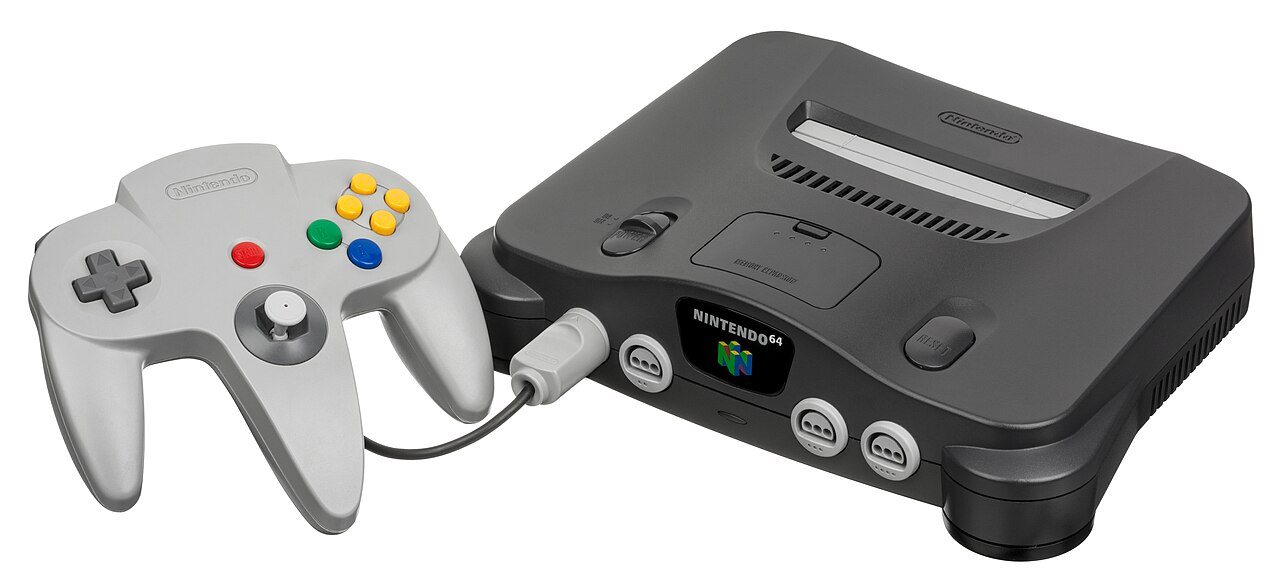
Bachus described the rest of it as an hour of somebody laughing at you. The reaction makes sense from where Nintendo sat. In 1999 Microsoft sold operating systems and office software. It had no console on the market, no console retail channel and no first-party game studios worth the name. Nintendo had the Game Boy, the Nintendo 64, Mario and Pokemon.
Nintendo was not the only company Microsoft called. The same reporting says Microsoft approached Electronic Arts, Midway Games and Square while it worried that its unnamed console would launch without enough games. None of those approaches produced an acquisition, and Microsoft ended up assembling a launch lineup the slow way.
What was the January 2000 joint venture proposal?
When buying Nintendo outright went nowhere, Microsoft tried a partnership instead. Bob McBreen, head of business development for the Xbox, told Bloomberg: "We actually had Nintendo in our building in January 2000 to work through the details of a joint venture."
What Microsoft handed over in that meeting was the full technical specification of the Xbox, a machine that had not been announced yet. McBreen summarized the pitch without much varnish, telling Nintendo: "Listen, you're much better at the game portions of it with Mario and all that stuff."
That was the part Nintendo would never agree to. The proposal asked Nintendo to become a software house and let Microsoft build the hardware, which is the half of the business Nintendo had spent decades defending. It co-designed its own silicon, chose its own storage formats and policed which games shipped on its systems. The NES rebuilt the American console market after the 1983 crash on that exact principle, and Nintendo has run every machine since the same way.
What did Microsoft build after the answer was no?
The original Xbox reached American stores in November 2001, roughly two years after the letter. Microsoft had gone from being laughed out of a meeting to shipping a console, and it did it by building the studios, the online service and the publishing relationships underneath the box rather than buying a catalogue.
Microsoft's read on Nintendo's hardware position was not baseless. The Nintendo 64 finished its life at 32.93 million units, and the GameCube that followed sold 21.74 million, according to Nintendo's own hardware figures. That was the weakest stretch in the company's console history, and it is the stretch Microsoft walked into the room to exploit.
Nintendo did not need rescuing from it. The DS and the Wii came next, and the Switch reached 156.59 million units sold through by June 30, 2026, which puts it near the top of the all-time hardware list. An acquired Nintendo would have handed Microsoft a games catalogue in 2000 and taught it nothing about running a platform.
Is Microsoft still trying to buy Nintendo in 2026?
No. Nintendo remains an independent company, and no offer has ever been made public. The idea did outlive everyone who pitched it in 1999, though. In September 2023, unredacted documents from the Federal Trade Commission's case against Microsoft over its 68.7 billion dollar purchase of Activision Blizzard appeared on a court portal, and one of them was an August 2020 email from Phil Spencer, the head of Xbox.
Spencer wrote that "Nintendo is THE prime asset for us in Gaming" and that "getting Nintendo would be a career moment." He also named the obstacle: Nintendo is "sitting on a big pile of cash," which makes a hostile approach pointless and a friendly one a matter of Nintendo's choosing. Twenty-one years after the first letter, the answer was still no, and this time nobody had to say it in a meeting.
What the two companies have instead is a supplier relationship on Nintendo's terms. Nintendo shipped 23.68 million Switch 2 units through June 30, 2026, and Microsoft now sells games on that machine: Activision's Call of Duty blog lists Call of Duty: Modern Warfare 4 for Nintendo Switch 2 on October 23, 2026, the same day as every other platform. Microsoft got onto Nintendo's store. It never got the boardroom.
Frequently Asked Questions
Did Microsoft try to buy Nintendo?
Yes. Microsoft approached Nintendo in 1999 about an acquisition, and it published the letter, dated October 20, 1999, in a web museum in 2021. A follow-up meeting at Microsoft in January 2000 proposed a joint venture instead. Nintendo refused both, and it has never been acquired.
How much did Microsoft offer for Nintendo?
No public figure exists for Microsoft's 1999 approach to Nintendo. The letter Microsoft published in 2021 names no price, and neither company has ever confirmed one. Any specific dollar amount quoted for the deal is not sourced to Microsoft or to Nintendo.
Is Microsoft still trying to buy Nintendo in 2026?
No. Nintendo is still independent in 2026, with 23.68 million Switch 2 units sold through by June 30, 2026. The most recent evidence of Microsoft's interest is an August 2020 email from Xbox head Phil Spencer, made public in the September 2023 Federal Trade Commission document leak, which called Nintendo "THE prime asset for us in Gaming." No offer followed it.