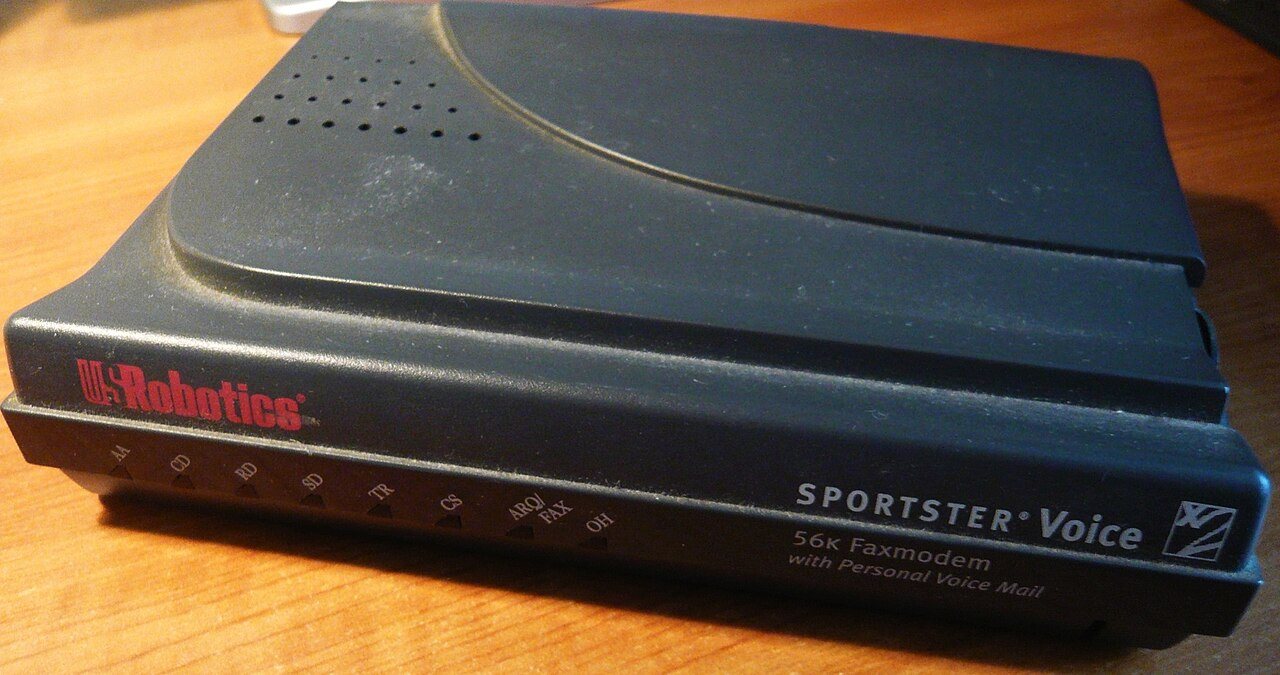
Dial-Up Was INSANELY Slow (Here's the Math)

2026-03-09 by 404 Memory Found

The Agony of Waiting for a JPEG

If you're under 30 years old, you have no idea what the internet was actually like in the 1990s. You think you know, but you don't. You can't comprehend the sheer frustration of dial-up internet until you've lived it. Let me paint you a picture.

It's 1996. You want to look something up online. You sit down at your computer. You pick up the phone—wait, no, you PLUG the phone into your modem. Because your modem uses your actual phone line. So when you're online, nobody can call you. And when someone calls the house, you get disconnected. You hear that horrible screeching noise—this ungodly sound of your modem negotiating with another modem—and then you're connected. That entire process takes 20-45 seconds.

Okay, you're online. Now you want to check the weather. You open Netscape Navigator or Internet Explorer. You type in a URL. Nothing happens for 3-5 seconds. Then the page starts loading. And I do mean STARTS. You see the header load first. Then you wait. And wait. A line of text appears at the top. Then more text appears below. A small image starts loading—you can watch it load pixel by pixel from the top down. This is not exaggeration. This is how the internet worked.

A single webpage with a few kilobytes of text and a couple of small images might take 10-15 seconds to load. If it had a lot of images, it could take a minute or more. And if someone picked up a phone and connected to the internet while you were downloading, your connection would drop.

Old CRT monitor — the screen that stared back during dial-up connections
Retro computer hardware and technology from the 90s

Here's the thing though: this was the internet. This was cutting edge. People were GRATEFUL for this speed because it was better than anything else available. Dial-up at 56 kilobits per second seemed revolutionary compared to the 14.4 kbps modems that came before it. And if you had 56k, you were basically a technology elite.

Let's put that in perspective. Modern internet in developed countries is measured in megabits or gigabits. A gigabit is 1,000 megabits. A megabit is 1,000 kilobits. So a typical modern internet connection is somewhere between 100-500 megabits per second. Compare that to 56 kilobits per second. Do the math. Modern internet is approximately 2,000 to 9,000 times faster than dial-up.

And it's not just about speed. It's about understanding how slow that actually was in practice. A single photograph at decent quality is maybe 200-500 kilobytes. At dial-up speeds, that single photograph would take 5-10 minutes to download. A 3-minute song in MP3 format is about 3-5 megabytes. That would take 10-20 minutes to download. A full-length movie is several gigabytes. That would take 20+ hours of continuous, uninterrupted connection.

And continuous was the problem. If your connection dropped—and it would drop—you had to start over. There was no resume capability. No way to pick up where you left off. You just started the download again. From zero.

I swear I'm not making this up: people would schedule their internet usage. They would get online, download the things they wanted, then immediately disconnect. Staying connected to the internet cost money—you were paying your ISP by the minute in a lot of cases. Leaving your connection open while you read something was literally costing you money.

Loading screens and buffering — the hallmark of dial-up internet

So people would plan their internet sessions. Download the web pages you want to read while connected, then disconnect and read them offline. Download your email, disconnect, read and reply to your email offline, then connect again to send it. People actually used programs called "offline browsers" that would download entire websites so you could browse them at your leisure while not paying for internet time.

And don't even get me started on images. In the dial-up era, web designers had to design for slow connections. They used low-resolution images. They used fewer images. They used GIFs instead of JPEGs because GIFs compressed better. They used transparent GIFs as invisible 1-pixel spacers to create layouts because layout tables were hard to manage.

The internet looked terrible by modern standards. Chunky. Low-res. Slow to load. Ugly fonts. No modern design sensibilities. But that's what we got because the speed was so limited that you couldn't do anything else. You couldn't have high-resolution images. You couldn't have video. You couldn't have auto-playing anything. You couldn't have interactive features that required constant connection.

And weirdly, this limitation created some benefits. Websites were faster to load because they couldn't be bloated with advertising and scripts and analytics. Text was readable because designers had to make it readable. There was almost a purity to the early web that's kind of nostalgic when you think about it.

But nobody who lived through it is nostalgic in the moment. In the moment, you're frustrated. You're waiting for something to load. You're willing it to load faster. You're picking up the phone and hearing the buzz of your modem disconnect and cursing under your breath. You're experiencing the internet as a series of waits instead of a seamless experience.

But here's something else that really drives home how brutal dial-up was: websites had to be designed entirely differently. Designers couldn't use large images. Animations were impossible. Video? Forget it. HTML had to be lean and mean. This wasn't just an inconvenience—it fundamentally shaped web design philosophy for over a decade. The entire aesthetic of the 1990s internet, the simplicity, the text-heavy layouts, the sparse graphics—all of that was a direct consequence of dial-up speed constraints. Fast forward to today: websites are bloated with high-res images, auto-playing videos, infinite scroll, massive JavaScript libraries. The design philosophy completely inverted because the constraint went away.

There's another angle that blows people away: upload speeds were even SLOWER than download speeds on dial-up. If you wanted to upload a photo or document, it could take minutes just to push a few megabytes. This is why the barrier to content creation on the internet was so high in the 1990s. You couldn't easily share photos. You couldn't stream anything. You couldn't participate as a content creator without serious technical knowledge. Compare that to today where anyone with a phone can instantly upload 4K video to social media. The speed difference didn't just affect how fast you consumed content—it shaped who could create and share content. It was a massive gating mechanism that we've completely removed.

Then vs Now: The Speed Difference

In 1996, a high-speed internet connection was 56 kilobits per second. A typical webpage took 10-30 seconds to load depending on how many images it had. Email took time to download. Anything multimedia was basically impossible. Playing audio or video online was not practical.

In 2026, a typical internet connection in a developed country is 100-500 megabits per second. In many places it's a gigabit (1,000 megabits) or faster. A webpage loads in milliseconds. Video streams in real-time at 4K resolution. You can download a full-length movie in seconds. You can upload terabytes of data to the cloud. The experience is so different that it's hard to even compare them.

And the practical implications have been massive. Because the internet is fast now, we've built entire industries around it. Video streaming services wouldn't exist if you had to wait 20 hours to download a movie. Cloud computing wouldn't work. Real-time collaboration wouldn't work. Social media as it exists now wouldn't work. The entire modern internet—everything we take for granted—depends on fast, reliable connections.

Frequently Asked Questions

How fast was dial-up internet?

Dial-up internet was approximately 0.056 megabits per second (56 kilobits per second). This was approximately 2,000 to 9,000 times slower than modern internet connections of 100-500 megabits per second. A single high-quality photograph would take 5-10 minutes to download, and a full-length movie would take 20+ hours of continuous, uninterrupted connection.

What did dial-up internet sound like?

Dial-up modems made a distinctive beeping and static screeching noise as they negotiated the connection with the ISP's modem. Users heard a series of varying tones, buzzes, and high-pitched noise that lasted 20-45 seconds before the connection established. That sound became iconic to the dial-up era and is instantly recognizable to anyone who lived through it.

Why was internet so slow in the 1990s?

Dial-up internet was limited by the physics of copper telephone lines. The infrastructure that existed was designed for voice calls, not data transmission. Telephone lines had physical limitations on how much data they could carry per second. Broadband technology like cable modems and DSL were developed in the late 1990s but took years to become widely available and affordable.

When did internet speeds improve?

Broadband internet started becoming available in the late 1990s through cable modems and DSL. By the early 2000s, broadband was becoming mainstream in developed countries. By 2010, fast broadband was standard in most developed urban areas. By 2026, gigabit internet is becoming common, and 5G mobile internet is providing similar speeds wirelessly.

Related Posts:
← Back to Blog

Dial-Up Was INSANELY Slow (Here's the Math) | 404 Memory Found

📖 Dial-Up Was INSANELY Slow (Here's the Math)

The Agony of Waiting for a JPEG

If you're under 30 years old, you have no idea what the internet was actually like in the 1990s. You think you know, but you don't. You can't comprehend the sheer frustration of dial-up internet until you've lived it. Let me paint you a picture.

It's 1996. You want to look something up online. You sit down at your computer. You pick up the phone—wait, no, you PLUG the phone into your modem. Because your modem uses your actual phone line. So when you're online, nobody can call you. And when someone calls the house, you get disconnected. You hear that horrible screeching noise—this ungodly sound of your modem negotiating with another modem—and then you're connected. That entire process takes 20-45 seconds.

Okay, you're online. Now you want to check the weather. You open Netscape Navigator or Internet Explorer. You type in a URL. Nothing happens for 3-5 seconds. Then the page starts loading. And I do mean STARTS. You see the header load first. Then you wait. And wait. A line of text appears at the top. Then more text appears below. A small image starts loading—you can watch it load pixel by pixel from the top down. This is not exaggeration. This is how the internet worked.

A single webpage with a few kilobytes of text and a couple of small images might take 10-15 seconds to load. If it had a lot of images, it could take a minute or more. And if someone picked up a phone and connected to the internet while you were downloading, your connection would drop.

Old CRT monitor — the screen that stared back during dial-up connections
Retro computer hardware and technology from the 90s

Here's the thing though: this was the internet. This was cutting edge. People were GRATEFUL for this speed because it was better than anything else available. Dial-up at 56 kilobits per second seemed revolutionary compared to the 14.4 kbps modems that came before it. And if you had 56k, you were basically a technology elite.

Let's put that in perspective. Modern internet in developed countries is measured in megabits or gigabits. A gigabit is 1,000 megabits. A megabit is 1,000 kilobits. So a typical modern internet connection is somewhere between 100-500 megabits per second. Compare that to 56 kilobits per second. Do the math. Modern internet is approximately 2,000 to 9,000 times faster than dial-up.

And it's not just about speed. It's about understanding how slow that actually was in practice. A single photograph at decent quality is maybe 200-500 kilobytes. At dial-up speeds, that single photograph would take 5-10 minutes to download. A 3-minute song in MP3 format is about 3-5 megabytes. That would take 10-20 minutes to download. A full-length movie is several gigabytes. That would take 20+ hours of continuous, uninterrupted connection.

And continuous was the problem. If your connection dropped—and it would drop—you had to start over. There was no resume capability. No way to pick up where you left off. You just started the download again. From zero.

I swear I'm not making this up: people would schedule their internet usage. They would get online, download the things they wanted, then immediately disconnect. Staying connected to the internet cost money—you were paying your ISP by the minute in a lot of cases. Leaving your connection open while you read something was literally costing you money.

Loading screens and buffering — the hallmark of dial-up internet

So people would plan their internet sessions. Download the web pages you want to read while connected, then disconnect and read them offline. Download your email, disconnect, read and reply to your email offline, then connect again to send it. People actually used programs called "offline browsers" that would download entire websites so you could browse them at your leisure while not paying for internet time.

And don't even get me started on images. In the dial-up era, web designers had to design for slow connections. They used low-resolution images. They used fewer images. They used GIFs instead of JPEGs because GIFs compressed better. They used transparent GIFs as invisible 1-pixel spacers to create layouts because layout tables were hard to manage.

The internet looked terrible by modern standards. Chunky. Low-res. Slow to load. Ugly fonts. No modern design sensibilities. But that's what we got because the speed was so limited that you couldn't do anything else. You couldn't have high-resolution images. You couldn't have video. You couldn't have auto-playing anything. You couldn't have interactive features that required constant connection.

And weirdly, this limitation created some benefits. Websites were faster to load because they couldn't be bloated with advertising and scripts and analytics. Text was readable because designers had to make it readable. There was almost a purity to the early web that's kind of nostalgic when you think about it.

But nobody who lived through it is nostalgic in the moment. In the moment, you're frustrated. You're waiting for something to load. You're willing it to load faster. You're picking up the phone and hearing the buzz of your modem disconnect and cursing under your breath. You're experiencing the internet as a series of waits instead of a seamless experience.

But here's something else that really drives home how brutal dial-up was: websites had to be designed entirely differently. Designers couldn't use large images. Animations were impossible. Video? Forget it. HTML had to be lean and mean. This wasn't just an inconvenience—it fundamentally shaped web design philosophy for over a decade. The entire aesthetic of the 1990s internet, the simplicity, the text-heavy layouts, the sparse graphics—all of that was a direct consequence of dial-up speed constraints. Fast forward to today: websites are bloated with high-res images, auto-playing videos, infinite scroll, massive JavaScript libraries. The design philosophy completely inverted because the constraint went away.

There's another angle that blows people away: upload speeds were even SLOWER than download speeds on dial-up. If you wanted to upload a photo or document, it could take minutes just to push a few megabytes. This is why the barrier to content creation on the internet was so high in the 1990s. You couldn't easily share photos. You couldn't stream anything. You couldn't participate as a content creator without serious technical knowledge. Compare that to today where anyone with a phone can instantly upload 4K video to social media. The speed difference didn't just affect how fast you consumed content—it shaped who could create and share content. It was a massive gating mechanism that we've completely removed.

Then vs Now: The Speed Difference

In 1996, a high-speed internet connection was 56 kilobits per second. A typical webpage took 10-30 seconds to load depending on how many images it had. Email took time to download. Anything multimedia was basically impossible. Playing audio or video online was not practical.

In 2026, a typical internet connection in a developed country is 100-500 megabits per second. In many places it's a gigabit (1,000 megabits) or faster. A webpage loads in milliseconds. Video streams in real-time at 4K resolution. You can download a full-length movie in seconds. You can upload terabytes of data to the cloud. The experience is so different that it's hard to even compare them.

And the practical implications have been massive. Because the internet is fast now, we've built entire industries around it. Video streaming services wouldn't exist if you had to wait 20 hours to download a movie. Cloud computing wouldn't work. Real-time collaboration wouldn't work. Social media as it exists now wouldn't work. The entire modern internet—everything we take for granted—depends on fast, reliable connections.

Frequently Asked Questions

How fast was dial-up internet?

Dial-up internet was approximately 0.056 megabits per second (56 kilobits per second). This was approximately 2,000 to 9,000 times slower than modern internet connections of 100-500 megabits per second. A single high-quality photograph would take 5-10 minutes to download, and a full-length movie would take 20+ hours of continuous, uninterrupted connection.

What did dial-up internet sound like?

Dial-up modems made a distinctive beeping and static screeching noise as they negotiated the connection with the ISP's modem. Users heard a series of varying tones, buzzes, and high-pitched noise that lasted 20-45 seconds before the connection established. That sound became iconic to the dial-up era and is instantly recognizable to anyone who lived through it.

Why was internet so slow in the 1990s?

Dial-up internet was limited by the physics of copper telephone lines. The infrastructure that existed was designed for voice calls, not data transmission. Telephone lines had physical limitations on how much data they could carry per second. Broadband technology like cable modems and DSL were developed in the late 1990s but took years to become widely available and affordable.

When did internet speeds improve?

Broadband internet started becoming available in the late 1990s through cable modems and DSL. By the early 2000s, broadband was becoming mainstream in developed countries. By 2010, fast broadband was standard in most developed urban areas. By 2026, gigabit internet is becoming common, and 5G mobile internet is providing similar speeds wirelessly.

← Back to Blog
00:00