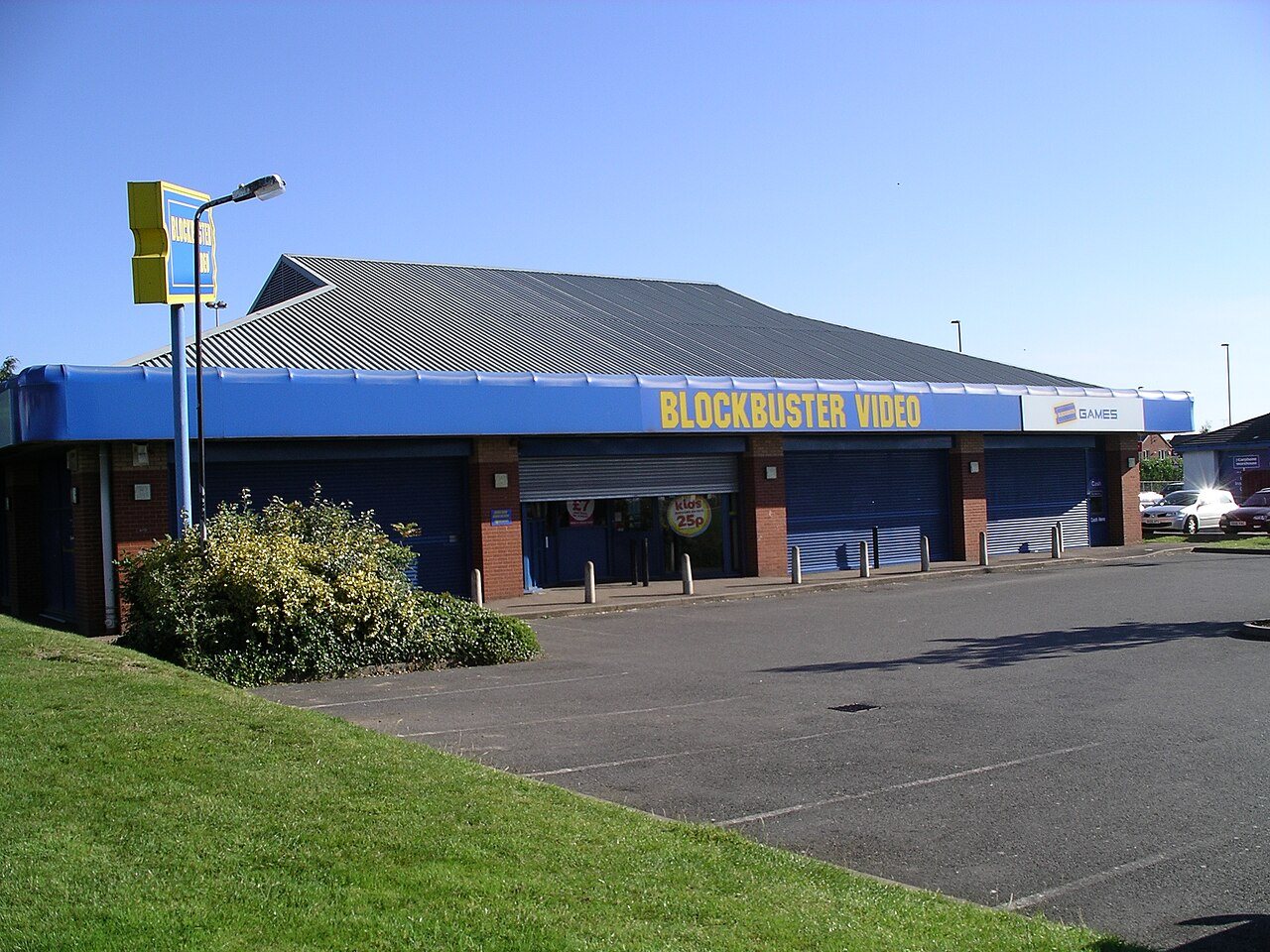
Blockbuster's $50M Netflix Blunder (The Deal That Wasn't)

2026-03-05 by 404 Memory Found

The DVD Rental Company That Turned Down the Future

Imagine you're the CEO of Blockbuster in the year 2000. Blockbuster is HUGE. You have 9,000 physical stores across the globe. You have a late-fee business model that prints money every single day. Customers have no choice but to come to your stores, rent movies, and if they don't return them on time, they pay fees. You're making money from the product (the rental) AND from customer failure (the late fees). It's brilliant. It's profitable. It's unstoppable. Or so you think.

One day, a young entrepreneur named Reed Hastings walks into your office. Hastings founded a small DVD-by-mail startup called Netflix. No physical stores. No late fees. Just mail DVDs to people's houses, they watch them, they mail them back. It's a completely different business model. And Hastings looks across your desk and says, "I think you should buy us. We're going to be worth a lot someday."

And Blockbuster's leadership does something that seems reasonable at the time. They laugh. Or more politely, they decline. They thank Hastings for the offer, but they explain that their late-fee model is too profitable to abandon, and that Netflix's mail-order model will never compete with the convenience of having physical stores on every corner. Blockbuster is worth billions. Netflix is worth basically nothing. Why would Blockbuster care?

Reed Hastings allegedly offered Netflix for about $50 million. Blockbuster turned it down. And then something remarkable happened: the future proved Hastings right and Blockbuster's leadership spectacularly wrong.

VHS tapes and movie rentals from the Blockbuster era

Here's the thing though, and this is important: Blockbuster didn't think they were making a mistake. Their model made sense. Late fees were 15-20% of their revenue. Why would they want to eliminate that? Why would they want to compete on convenience when they had 9,000 physical locations and Netflix had mail? Mail took days. Blockbuster could give you a movie in minutes.

The problem is that Blockbuster was optimizing for the present instead of anticipating the future. They were protecting their current business model when the market was about to shift fundamentally. They didn't understand that customer convenience was about to matter more than immediate access. They didn't see that streaming was coming. They didn't predict that movies would eventually be delivered instantaneously over the internet instead of through the mail.

Netflix started with DVDs by mail because that was possible with the technology of 2000. But Hastings' vision was always bigger. He saw a future where movies would be delivered instantly over the internet. He saw a future where the marginal cost of delivering one more movie would be essentially zero. He saw a future where the "late fee" business model would become obsolete because there would be no such thing as a due date—just unlimited access.

And that's exactly what happened. Netflix kept evolving. They added streaming in 2007. By 2010, streaming was growing faster than their DVD-by-mail business. By 2015, DVD-by-mail was becoming irrelevant. And suddenly, Netflix wasn't competing with Blockbuster anymore. Netflix was something entirely different. They were a streaming service. They were a content creator. They were the future of entertainment.

Meanwhile, Blockbuster was still protecting their late-fee model. They were still running thousands of physical stores. They were still optimizing for a world that was disappearing. And customers, having discovered Netflix and streaming, simply stopped going to Blockbuster. Why drive to a store, wait in line, and deal with late fees when you could stream unlimited movies at home?

A pile of VHS tapes — Blockbuster's bread and butter before Netflix changed everything
Streaming entertainment on modern devices

By the time Blockbuster realized what was happening, it was too late. They tried to launch Blockbuster Online to compete with Netflix, but they were years behind. They tried to add streaming, but Netflix already owned the market position. By 2010, Blockbuster was in free fall. By 2013, the last Blockbuster store closed. The company that dominated movie rentals for 25 years went bankrupt.

And Netflix? Netflix went from a startup Blockbuster could've bought for $50 million in 2000 to a company worth over $200 billion today. They're not just a streaming service anymore. They're a content creator. They produce some of the best television shows and movies in the world. They win Oscars. They dominate the viewing habits of literally billions of people globally.

The math is brutal. If Blockbuster had bought Netflix for $50 million in 2000, they would've owned the future of entertainment. Instead, they declined, protected their dying business model, and became a historical footnote. They became the punch line of a business failure joke.

And here's what makes this story particularly painful: Blockbuster could have afforded it. $50 million was nothing to them. They spent more than that on new store buildouts every year. But they couldn't see it. They couldn't imagine a world where their 9,000 physical stores became liabilities instead of assets. They couldn't fathom that customer convenience would eventually matter more than immediate gratification.

But let's dig deeper into why Blockbuster said no. The CFO at the time, John Antioco, actually DID see the value in what Netflix was proposing. He understood the subscription model could work. The problem? Blockbuster had 9,000 physical stores, massive real estate leases, and a business model built entirely on late fees—the thing Netflix had literally eliminated. Accepting Netflix's offer would've meant admitting their entire infrastructure was becoming a liability. It would've required writing off billions in assets and real estate. Asking Blockbuster's board to approve that acquisition wasn't just a business decision—it was existential surrender.

The tragedy is that Blockbuster DID try to adapt. They eventually launched Blockbuster Online to compete with Netflix directly. But they were fighting with legacy costs, store leases, and an organizational culture built around the old model. They couldn't pivot fast enough because they had too much anchored to the past. Meanwhile, Netflix grew without the overhead, without the real estate burden, without any of the baggage. By the time Blockbuster's online service reached real competitiveness, Netflix was already expanding into original content and had built an insurmountable lead. The lesson? Sometimes you can't compete in the new world while maintaining your old one.

The irony that cuts deepest is that Blockbuster had everything Netflix needed. They had the brand recognition, the customer base, the real estate footprint, and the capital to invest. Netflix had the vision but barely had the cash to survive another year. If Blockbuster had said yes to that fifty million dollar deal, they would not just have survived. They would have dominated streaming from the very beginning. Instead, they became the cautionary tale that every business school professor loves to tell on the first day of class. And somewhere in Bend, Oregon, the last Blockbuster store still stands. It is a tourist attraction now, not a business. People take selfies in front of it. They buy novelty t-shirts. It has become a monument to what happens when you laugh at the future instead of listening to it.

Then vs Now: The Actual Outcome

In 2000, Blockbuster was a $5+ billion company with 9,000 stores globally, 60,000+ employees, and a seemingly unbreakable business model. Netflix was a startup worth basically nothing, with a gimmicky mail-order business that everyone thought would fail. The conventional wisdom said Blockbuster would crush Netflix. Blockbuster had scale. Blockbuster had locations. Blockbuster had customer loyalty (for better or worse, through late fees).

By 2010, Netflix had completely dominated the movie rental market. Their streaming service was the standard. Blockbuster Online had failed to compete. By 2013, Blockbuster was completely gone, filing for bankruptcy. By 2026, Netflix is valued at over $200 billion. Blockbuster isn't a company anymore. It's a memory. It's a symbol of corporate failure and the inability to anticipate disruption.

The lesson here is terrifying if you're running a successful company: your greatest strength today can become your greatest weakness tomorrow. Blockbuster's 9,000 physical stores, which seemed like an unbeatable advantage in 2000, became their Achilles heel when the market moved to digital. Their profitable late-fee model, which generated huge cash flow, prevented them from seeing that the future would eliminate late fees entirely.

Frequently Asked Questions

When did Blockbuster turn down Netflix?

In 2000, Netflix founder Reed Hastings pitched his subscription rental service to Blockbuster's leadership, offering to be acquired for approximately $50 million. Blockbuster rejected the offer, believing their late-fee based business model and physical stores were unbeatable and that mail-order rentals would never compete with their convenience.

How much was Netflix worth when Blockbuster rejected it?

Netflix was essentially a startup with minimal valuation when offered to Blockbuster for $50 million in 2000. The company had no profitable revenue stream yet and was betting everything on a mail-order DVD rental model that most industry experts thought would fail against Blockbuster's established retail presence.

What happened to Blockbuster?

Blockbuster attempted to compete with Netflix through their Blockbuster Online service, but they were too late and Netflix's head start was insurmountable. As streaming became dominant in the late 2000s, Blockbuster's physical stores became increasingly irrelevant. The company filed for bankruptcy in 2010 and closed their last store in 2013.

How much is Netflix worth today?

As of 2026, Netflix is valued at over $200 billion, making it one of the most valuable media companies in the world. This represents a 4,000+ fold increase from the $50 million valuation Blockbuster rejected in 2000, illustrating how dramatically the entertainment industry transformed in less than 30 years.

Related Posts:
← Back to Blog

Blockbuster's $50M Netflix Blunder (The Deal That Wasn't) | 404 Memory Found

📖 Blockbuster's $50M Netflix Blunder (The Deal That Wasn't)

The DVD Rental Company That Turned Down the Future

Imagine you're the CEO of Blockbuster in the year 2000. Blockbuster is HUGE. You have 9,000 physical stores across the globe. You have a late-fee business model that prints money every single day. Customers have no choice but to come to your stores, rent movies, and if they don't return them on time, they pay fees. You're making money from the product (the rental) AND from customer failure (the late fees). It's brilliant. It's profitable. It's unstoppable. Or so you think.

One day, a young entrepreneur named Reed Hastings walks into your office. Hastings founded a small DVD-by-mail startup called Netflix. No physical stores. No late fees. Just mail DVDs to people's houses, they watch them, they mail them back. It's a completely different business model. And Hastings looks across your desk and says, "I think you should buy us. We're going to be worth a lot someday."

And Blockbuster's leadership does something that seems reasonable at the time. They laugh. Or more politely, they decline. They thank Hastings for the offer, but they explain that their late-fee model is too profitable to abandon, and that Netflix's mail-order model will never compete with the convenience of having physical stores on every corner. Blockbuster is worth billions. Netflix is worth basically nothing. Why would Blockbuster care?

Reed Hastings allegedly offered Netflix for about $50 million. Blockbuster turned it down. And then something remarkable happened: the future proved Hastings right and Blockbuster's leadership spectacularly wrong.

VHS tapes and movie rentals from the Blockbuster era

Here's the thing though, and this is important: Blockbuster didn't think they were making a mistake. Their model made sense. Late fees were 15-20% of their revenue. Why would they want to eliminate that? Why would they want to compete on convenience when they had 9,000 physical locations and Netflix had mail? Mail took days. Blockbuster could give you a movie in minutes.

The problem is that Blockbuster was optimizing for the present instead of anticipating the future. They were protecting their current business model when the market was about to shift fundamentally. They didn't understand that customer convenience was about to matter more than immediate access. They didn't see that streaming was coming. They didn't predict that movies would eventually be delivered instantaneously over the internet instead of through the mail.

Netflix started with DVDs by mail because that was possible with the technology of 2000. But Hastings' vision was always bigger. He saw a future where movies would be delivered instantly over the internet. He saw a future where the marginal cost of delivering one more movie would be essentially zero. He saw a future where the "late fee" business model would become obsolete because there would be no such thing as a due date—just unlimited access.

And that's exactly what happened. Netflix kept evolving. They added streaming in 2007. By 2010, streaming was growing faster than their DVD-by-mail business. By 2015, DVD-by-mail was becoming irrelevant. And suddenly, Netflix wasn't competing with Blockbuster anymore. Netflix was something entirely different. They were a streaming service. They were a content creator. They were the future of entertainment.

Meanwhile, Blockbuster was still protecting their late-fee model. They were still running thousands of physical stores. They were still optimizing for a world that was disappearing. And customers, having discovered Netflix and streaming, simply stopped going to Blockbuster. Why drive to a store, wait in line, and deal with late fees when you could stream unlimited movies at home?

A pile of VHS tapes — Blockbuster's bread and butter before Netflix changed everything
Streaming entertainment on modern devices

By the time Blockbuster realized what was happening, it was too late. They tried to launch Blockbuster Online to compete with Netflix, but they were years behind. They tried to add streaming, but Netflix already owned the market position. By 2010, Blockbuster was in free fall. By 2013, the last Blockbuster store closed. The company that dominated movie rentals for 25 years went bankrupt.

And Netflix? Netflix went from a startup Blockbuster could've bought for $50 million in 2000 to a company worth over $200 billion today. They're not just a streaming service anymore. They're a content creator. They produce some of the best television shows and movies in the world. They win Oscars. They dominate the viewing habits of literally billions of people globally.

The math is brutal. If Blockbuster had bought Netflix for $50 million in 2000, they would've owned the future of entertainment. Instead, they declined, protected their dying business model, and became a historical footnote. They became the punch line of a business failure joke.

And here's what makes this story particularly painful: Blockbuster could have afforded it. $50 million was nothing to them. They spent more than that on new store buildouts every year. But they couldn't see it. They couldn't imagine a world where their 9,000 physical stores became liabilities instead of assets. They couldn't fathom that customer convenience would eventually matter more than immediate gratification.

But let's dig deeper into why Blockbuster said no. The CFO at the time, John Antioco, actually DID see the value in what Netflix was proposing. He understood the subscription model could work. The problem? Blockbuster had 9,000 physical stores, massive real estate leases, and a business model built entirely on late fees—the thing Netflix had literally eliminated. Accepting Netflix's offer would've meant admitting their entire infrastructure was becoming a liability. It would've required writing off billions in assets and real estate. Asking Blockbuster's board to approve that acquisition wasn't just a business decision—it was existential surrender.

The tragedy is that Blockbuster DID try to adapt. They eventually launched Blockbuster Online to compete with Netflix directly. But they were fighting with legacy costs, store leases, and an organizational culture built around the old model. They couldn't pivot fast enough because they had too much anchored to the past. Meanwhile, Netflix grew without the overhead, without the real estate burden, without any of the baggage. By the time Blockbuster's online service reached real competitiveness, Netflix was already expanding into original content and had built an insurmountable lead. The lesson? Sometimes you can't compete in the new world while maintaining your old one.

The irony that cuts deepest is that Blockbuster had everything Netflix needed. They had the brand recognition, the customer base, the real estate footprint, and the capital to invest. Netflix had the vision but barely had the cash to survive another year. If Blockbuster had said yes to that fifty million dollar deal, they would not just have survived. They would have dominated streaming from the very beginning. Instead, they became the cautionary tale that every business school professor loves to tell on the first day of class. And somewhere in Bend, Oregon, the last Blockbuster store still stands. It is a tourist attraction now, not a business. People take selfies in front of it. They buy novelty t-shirts. It has become a monument to what happens when you laugh at the future instead of listening to it.

Then vs Now: The Actual Outcome

In 2000, Blockbuster was a $5+ billion company with 9,000 stores globally, 60,000+ employees, and a seemingly unbreakable business model. Netflix was a startup worth basically nothing, with a gimmicky mail-order business that everyone thought would fail. The conventional wisdom said Blockbuster would crush Netflix. Blockbuster had scale. Blockbuster had locations. Blockbuster had customer loyalty (for better or worse, through late fees).

By 2010, Netflix had completely dominated the movie rental market. Their streaming service was the standard. Blockbuster Online had failed to compete. By 2013, Blockbuster was completely gone, filing for bankruptcy. By 2026, Netflix is valued at over $200 billion. Blockbuster isn't a company anymore. It's a memory. It's a symbol of corporate failure and the inability to anticipate disruption.

The lesson here is terrifying if you're running a successful company: your greatest strength today can become your greatest weakness tomorrow. Blockbuster's 9,000 physical stores, which seemed like an unbeatable advantage in 2000, became their Achilles heel when the market moved to digital. Their profitable late-fee model, which generated huge cash flow, prevented them from seeing that the future would eliminate late fees entirely.

Frequently Asked Questions

When did Blockbuster turn down Netflix?

In 2000, Netflix founder Reed Hastings pitched his subscription rental service to Blockbuster's leadership, offering to be acquired for approximately $50 million. Blockbuster rejected the offer, believing their late-fee based business model and physical stores were unbeatable and that mail-order rentals would never compete with their convenience.

How much was Netflix worth when Blockbuster rejected it?

Netflix was essentially a startup with minimal valuation when offered to Blockbuster for $50 million in 2000. The company had no profitable revenue stream yet and was betting everything on a mail-order DVD rental model that most industry experts thought would fail against Blockbuster's established retail presence.

What happened to Blockbuster?

Blockbuster attempted to compete with Netflix through their Blockbuster Online service, but they were too late and Netflix's head start was insurmountable. As streaming became dominant in the late 2000s, Blockbuster's physical stores became increasingly irrelevant. The company filed for bankruptcy in 2010 and closed their last store in 2013.

How much is Netflix worth today?

As of 2026, Netflix is valued at over $200 billion, making it one of the most valuable media companies in the world. This represents a 4,000+ fold increase from the $50 million valuation Blockbuster rejected in 2000, illustrating how dramatically the entertainment industry transformed in less than 30 years.

← Back to Blog
00:00