How these 2026 dollar figures were calculated
Every launch price here is a US suggested retail price for the base configuration at its American release, taken from the source linked beside it. Price cuts, bundles and street prices are left out, which is why some figures sit above what shoppers remember paying.
The conversion uses the Consumer Price Index for All Urban Consumers (CPI-U), US city average, all items, not seasonally adjusted, the series behind the Bureau of Labor Statistics inflation calculator. Each launch price is multiplied by 334.980, the CPI-U reading for August 2026, then divided by the CPI-U annual average for the year the product shipped in the United States. The Bureau of Labor Statistics published that August index on September 11, 2026, with prices up 3.4 percent over 12 months.
In plain multipliers, a 1989 dollar is worth 2.70 dollars in 2026, a 1995 dollar 2.20, a 1998 dollar 2.06 and a 2001 dollar 1.89.
Two limits are worth stating. CPI-U tracks a household basket, so it says nothing about how much better the hardware got, and a 1994 camera shooting 640 by 480 pixels is not the same product as a phone camera today. CPI-U also excludes state sales tax, so what a shopper handed over at the register was higher than the MSRP in most states.
Which 90s gadgets got cheaper, and which got dearer
Software and imaging fell hardest. Adobe Photoshop 1.0 listed at $895 in 1990, or $2,294 in 2026 dollars, for a single-machine license with no updates. Microsoft Encarta shipped at $395 in 1993, or $916 today, to put an encyclopedia on one CD-ROM. A full retail copy of Windows 95 was $209.95, a price The Seattle Times reported Microsoft suggesting in June 1995, and that comes to $461 now.
Cameras collapsed faster still. The Nikon D1 body cost $5,500 in 1999, which is $11,059 in 2026 dollars, and DPReview notes that professional digital SLRs before it ran closer to $15,000. The Apple QuickTake 100 asked $749 in 1994, or $1,693, for eight photos at VGA resolution.
Phones followed the same curve. The Motorola StarTAC was $1,000 in 1996, worth $2,135 today, and the first iPhone at $599 in 2007 works out to $968. "iPhone is a revolutionary and magical product that is literally five years ahead of any other mobile phone," Steve Jobs said in Apple's press release of January 9, 2007.
Are game consoles cheaper in 2026 than in 1995?
No, and that is the one line on this list moving the wrong way. The original Sony PlayStation arrived in North America on September 9, 1995 at $299, which is $657 in 2026 dollars, after Sony Computer Entertainment America president Steve Race walked on stage at E3 that May and said only "$299" against the Sega Saturn at $399, or $877 today.
Later consoles were genuinely cheap by comparison. The Nintendo GameCube at $199 in 2001 is $376, and the Nintendo Wii at $249.99 in 2006 is $415. The Nintendo Switch 2 launched in the United States on June 5, 2025 at $449.99, above both, and on September 1, 2026 Nintendo of America raised it to $499.99. "This is in response to various changes in market conditions, which are expected to extend over the medium to long term," the company said in its price revision notice.
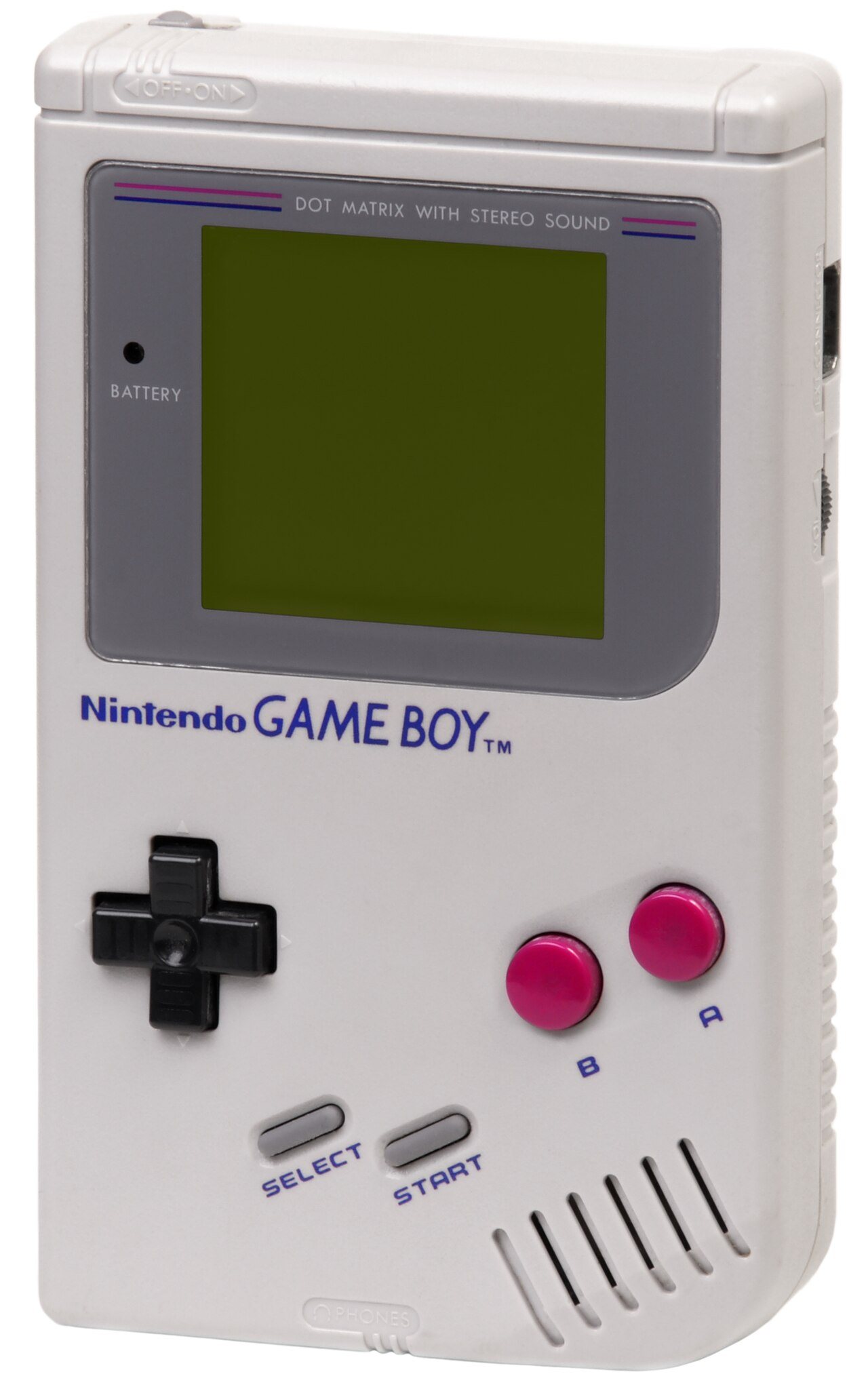
Nintendo president Shuntaro Furukawa told shareholders that the new price still does not cover everything: "it was challenging to bear the rising costs over a long period." At $499.99 the Switch 2 sits above the Wii and the GameCube in real terms, and below the $877 the Saturn would cost. Handhelds crept up too: the 1989 Game Boy equals $243 today, the 2004 Nintendo DS $266.
What did a full 1998 home setup cost in 2026 dollars?
Take a household kitting itself out in 1998. A Bondi Blue iMac G3 at $1,299, an Iomega Zip 100 drive at $199 to move files, a Diamond Rio PMP300 at $200 to carry MP3s, and AOL's unlimited dial-up at $19.95 a month, the price it set in December 1996.
That is $1,698 of hardware plus $239.40 for the first year online, or about $4,000 in 2026 dollars. Add a 14-hour TiVo at $499 in 1999, worth $1,003 today, and the room clears $5,000.
The 2026 comparison is not one device against another, it is one device against a shelf. The 2007 iPhone, $968 in today's money, absorbed the $1,693 digital camera, the $411 MP3 player and the $1,620 Apple Newton MessagePad in a single $599 purchase. The thing that got cheaper was rarely any one gadget. It was the whole pile of them collapsing into one.
Some of the pile never earned its price at any exchange rate. The Virtual Boy asked $179.95 in 1995, or $396 in 2026 dollars, and Nintendo pulled it inside a year. The 3DO at $699.99 in 1993 is $1,623 today.
All 40 launch prices, from the 1989 Genesis to the 2007 iPhone
Each line gives the product, its US launch year, the launch price, then the same money in 2026 dollars. The RAZR V3 figure is its Cingular price on a two-year contract, and the AOL line is monthly.
- Sega Genesis, 1989, $189, about $511 (Wikipedia)
- Nintendo Game Boy, 1989, $89.95, about $243 (Wikipedia)
- Atari Lynx, 1989, $179.95, about $487 (Wikipedia)
- Adobe Photoshop 1.0, 1990, $895, about $2,294 (Wikipedia)
- Super Nintendo, 1991, $199, about $489 (Wikipedia)
- Sega Game Gear, 1991, $149.99, about $369 (Wikipedia)
- Sony MZ-1 MiniDisc recorder, 1992, $750, about $1,791 (Wall Street Journal)
- Apple Newton MessagePad, 1993, $699, about $1,620 (Wikipedia)
- 3DO Interactive Multiplayer, 1993, $699.99, about $1,623 (Wikipedia)
- Atari Jaguar, 1993, $249.95, about $579 (Wikipedia)
- Microsoft Encarta, 1993, $395, about $916 (Wikipedia)
- Apple QuickTake 100, 1994, $749, about $1,693 (Wikipedia)
- IBM ThinkPad 701C, 1995, $1,999, about $4,394 (Wikipedia)
- Windows 95, full retail, 1995, $209.95, about $461 (Seattle Times)
- Sony PlayStation, 1995, $299, about $657 (Wikipedia)
- Sega Saturn, 1995, $399, about $877 (Wikipedia)
- Nintendo Virtual Boy, 1995, $179.95, about $396 (Wikipedia)
- Iomega Zip 100 drive, 1995, $199, about $437 (How-To Geek)
- Palm Pilot 1000, 1996, $299, about $638 (PCWorld)
- Motorola StarTAC, 1996, $1,000, about $2,135 (Wikipedia)
- Nintendo 64, 1996, $199.99, about $427 (Wikipedia)
- AOL unlimited dial-up, per month, 1996, $19.95, about $43 (Deseret News)
- Apple iMac G3, 1998, $1,299, about $2,670 (Macworld)
- Diamond Rio PMP300, 1998, $200, about $411 (Wikipedia)
- Furby, 1998, $35, about $72 (Wikipedia)
- Sega Dreamcast, 1999, $199, about $400 (Wikipedia)
- Nikon D1, body only, 1999, $5,500, about $11,059 (DPReview)
- TiVo, 14-hour, 1999, $499, about $1,003 (Encyclopedia.com)
- Sony PlayStation 2, 2000, $299, about $582 (Wikipedia)
- Microsoft Xbox, 2001, $299, about $566 (Microsoft)
- Nintendo GameCube, 2001, $199, about $376 (Wikipedia)
- Game Boy Advance, 2001, $99.99, about $189 (Wikipedia)
- Apple iPod, 5 GB, 2001, $399, about $755 (Apple)
- Nintendo DS, 2004, $149.99, about $266 (Wikipedia)
- Motorola RAZR V3, on a two-year contract, 2004, $500, about $887 (NBC News)
- Sony PSP, 2005, $249, about $427 (Wikipedia)
- Xbox 360 Premium, 2005, $399, about $684 (Wikipedia)
- Nintendo Wii, 2006, $249.99, about $415 (Nintendo)
- Microsoft Zune 30, 2006, $249.95, about $415 (Wikipedia)
- Apple iPhone, 8 GB, 2007, $599, about $968 (Apple)
Frequently Asked Questions
How much did a PlayStation cost in 1995 in today's money?
The original Sony PlayStation went on sale in North America on September 9, 1995 at $299. Against the CPI-U annual average for 1995 and the August 2026 index of 334.980, that is about $657 in 2026 dollars. The Sega Saturn, which beat it to US shelves in May 1995 at $399, works out to roughly $877.
What was the most expensive 90s gadget in today's money?
On this list of 40 items it is the Nikon D1, which cost $5,500 for the body alone in 1999 and equals about $11,059 in 2026 dollars. Among machines ordinary households bought, the IBM ThinkPad 701C at $1,999 in 1995 is the peak at roughly $4,394, followed by the $1,000 Motorola StarTAC of 1996 at $2,135.
Why were 90s computers so expensive?
Chips, memory and displays were made in far smaller volumes in the 1990s, and a computer had to carry parts that later became free or built in, among them a modem, a CD-ROM drive, a sound card and an operating system license that listed at $209.95 on its own in 1995. Retail software carried the same load, with a single Adobe Photoshop license at $895 in 1990. Volume, integration and price competition did most of the work of bringing those numbers down, not inflation.