What Happened to the Game Genie, the $50 Cheat Device That Beat Nintendo in Court

Picture this: April 1991. You are eleven years old. School has been out for thirty-seven minutes. You and three friends are sitting on the floor in front of a Magnavox console TV, a NES blinking red because the cartridge slot is wearing out, and a small black plastic L-shaped object that looks like somebody melted a Game Boy and stretched it into a sleeve plugged into the top of your Super Mario Bros. cart. On the screen is a glowing blue text menu that says ENTER CODES.

One of your friends pulls a folded photocopy out of his backpack. The paper has been photocopied so many times that the letters look like they were drawn with a leaky pen. He reads off a string of nonsense: "S-X-I-O-P-O." You type it in by spinning the D-pad through each letter. You hit Start.

Mario goes from three lives to infinity. The next thirty minutes of your life are nothing but uninterrupted joy. Your friend says he has another code for a moon jump. Your other friend says his cousin has a code where Mario walks through the bricks. Within an hour you have a kid's living room operating less like a video game and more like a research lab, and the device that made all of this possible was a $50 piece of plastic from a toy company called Galoob that Nintendo was actively, expensively, publicly trying to kill in federal court.

This is the Game Genie. It is one of the strangest, most ambitious, most beloved third-party accessories of the 8-bit and 16-bit eras, and the story of how it almost did not exist, and how a court case nobody outside of copyright law remembers shaped the entire modern software industry, is genuinely wild.

What the Game Genie actually was

Strip the cultural memory away and the Game Genie is a clever piece of pass-through hardware. You insert your NES game cartridge into the top of the Game Genie. You insert the Game Genie into the NES cartridge slot. The Game Genie sits between the cartridge and the console, intercepting the data flow between the game's ROM chip and the system's CPU as the game runs.

When you typed a Game Genie code on the boot screen, you were not modifying the cartridge. You were not modifying the NES. You were telling the Game Genie's onboard processor to watch for a specific memory address and substitute a different value whenever the game asked for it. The codes were just compact encodings of "at this ROM address, return this value instead of the real one." A code like SXIOPO told the Game Genie to intercept the read of Mario's "lives remaining" counter and lie to the game about it, sending back a value that never decreased. Mario was, technically, still losing lives. The game was just being misinformed about it in real time.

This sounds like something out of a hacker movie. It was being sold at Toys R Us for $49.99 and bundled with a 200-page code book.

The Game Genie did not modify your cartridge. It did not modify your console. It just sat in the middle and lied. That distinction was about to become the most important sentence in the entire case.

Who actually built it

The Game Genie was invented in the United Kingdom by Codemasters, a British games studio founded in 1986 by brothers Richard and David Darling. Codemasters was already known in the UK as a budget-game publisher for the ZX Spectrum, Amstrad, and Commodore 64, with a line of cheap-and-cheerful titles like Dizzy that sold for a quarter of the price of a full-priced game.

The Darlings noticed something interesting about NES games specifically. The cartridges contained both code and data. The console did not encrypt the cartridge bus. If you could read the bus, you could see exactly what the cartridge was sending. And if you could read it, you could overwrite specific bytes on the fly. The hard part was building a small, cheap, consumer-friendly device that could do this for any NES game without crashing the system.

Codemasters built the hardware. They licensed the technology to Lewis Galoob Toys, a California toy company that had been around since 1957 selling baby toys and Micro Machines and had absolutely no business relationship with the games industry until this moment. Galoob would handle American distribution. Camerica, a Canadian company, would handle the Canadian market. The retail launch was scheduled for the 1990 holiday season.

That is when Nintendo's legal department picked up the phone.

How Nintendo tried to kill it

Nintendo of America did not like the Game Genie for two reasons, only one of which Nintendo was willing to say out loud. The official reason was that Nintendo believed the Game Genie violated Nintendo's copyright on the underlying games. The unofficial reason was that Nintendo wanted total control over the NES ecosystem, including every accessory, every cartridge, every release schedule, every box quote, and especially every third-party device that did not pay Nintendo a licensing fee.

Nintendo had spent the entire 1980s building the strictest licensing regime in the history of consumer electronics. The 10NES lockout chip in the NES was specifically designed to refuse to boot any cartridge that did not contain a matching authentication chip, which Nintendo only sold to licensed third-party publishers. Companies that tried to ship unlicensed games got blacklisted, sued, or both. Nintendo had even won a famous lawsuit against Atari Games, which had tried to reverse-engineer the 10NES chip and was caught using a copy of Nintendo's source code obtained through fraudulent means at the Copyright Office.

The Game Genie was a problem because it did not need Nintendo's authentication chip. It plugged in between the licensed cartridge and the console, used the cartridge's own authentication, and ran the game from outside Nintendo's control. There was no licensing fee. There was no approval. There was no way for Nintendo to say no.

So Nintendo decided to say no through the courts.

The lawsuit

In May 1990, before Nintendo could sue first, Galoob filed a preemptive lawsuit in federal court in San Francisco asking for a declaratory judgment that the Game Genie did not infringe Nintendo's copyrights. Nintendo countersued for copyright infringement and asked for a preliminary injunction that would stop Galoob from selling the device while the case played out.

On July 2, 1990, the United States District Court for the Northern District of California granted Nintendo's preliminary injunction. That meant the Game Genie could not be sold in the United States while the case was pending. The 9th Circuit Court of Appeals affirmed the injunction on February 27, 1991. For roughly a full year, the Game Genie was on shelves in Canada, the UK, and parts of Europe, but legally embargoed in the United States. Imported Canadian units leaked across the border anyway, sold for inflated prices at gray-market import shops, and turned up at suburban swap meets in Seattle and Detroit.

Nintendo's argument in court was that the Game Genie created an unauthorized derivative work of Nintendo's copyrighted games. When you played Super Mario Bros. with the Game Genie active, what appeared on the TV was no longer the game Nintendo had copyrighted. It was a modified version of that game. Nintendo argued that modification, even in a single play session, was the legal equivalent of creating a new work without permission.

Galoob's counterargument was deceptively simple. The Game Genie did not modify the cartridge. It did not write anything to memory the game would care about after it was unplugged. It did not store the modified game. It just intercepted data in real time and substituted different values. Galoob's lawyers compared it to a pair of glasses that changes the color of the light reaching your eyes, or fast-forwarding past commercials on a VHS tape, or skipping a paragraph of a book you owned. The underlying work was unchanged. The user's experience of it was different. That was not a derivative work. That was just a different way of experiencing a copy you legitimately owned.

This is the kind of legal question that sounds boring until you realize that it is going to determine the entire future of consumer software in the United States.

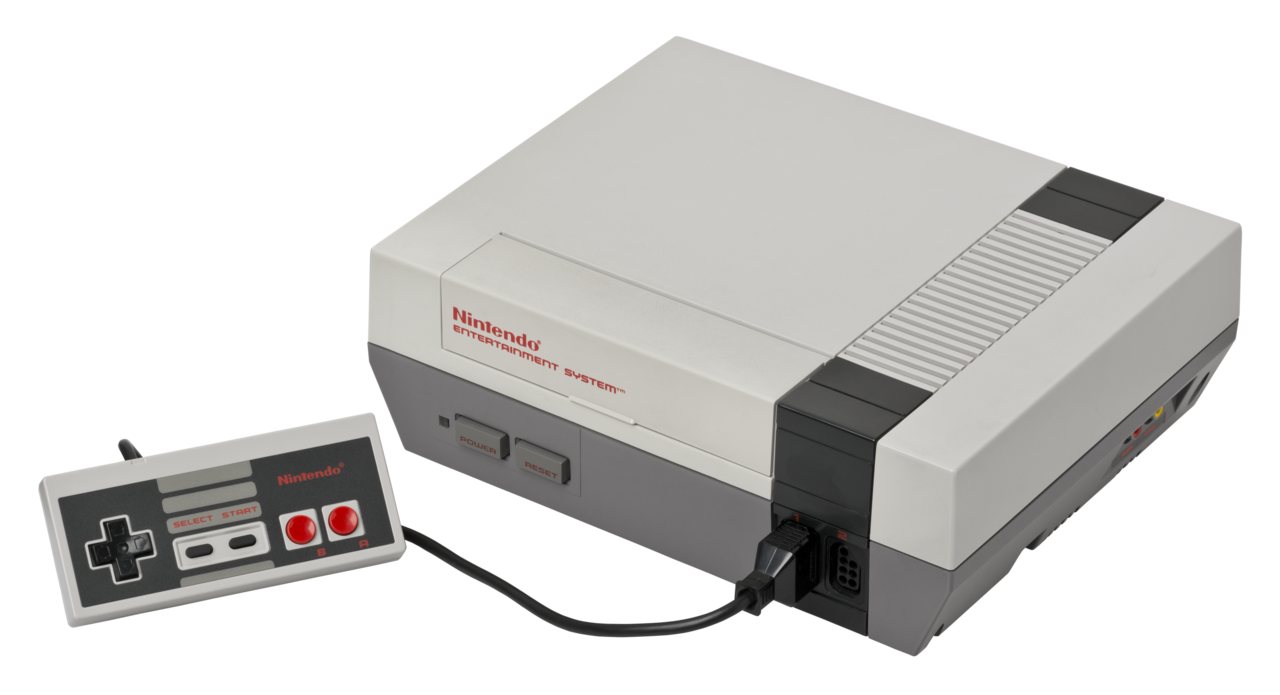
The Nintendo Entertainment System console with controller and a game cartridge
The Nintendo Entertainment System. The 10NES lockout chip inside it was the whole reason Nintendo could control its ecosystem, and the whole reason the Game Genie was such a threat: it slipped between the cartridge and the console and ran its mischief from outside Nintendo's gate.

The verdict that changed everything

In July 1991, the district court reversed itself and ruled in favor of Galoob. The court vacated the preliminary injunction. The judge wrote that consumer use of the Game Genie to temporarily alter copyrighted video games for personal enjoyment did not create a derivative work. Because the consumers were not direct infringers, Galoob could not be a contributory infringer either. The Game Genie was, in legal terms, not breaking anything.

Nintendo appealed. The case went back to the 9th Circuit Court of Appeals. On May 21, 1992, the appeals court affirmed the district court ruling. Galoob had won. The Game Genie was legal. The Supreme Court denied Nintendo's request for certiorari in 1993, which is the legal version of "we are not interested in hearing this again."

Galoob then sued Nintendo for the lost revenue caused by the year-long injunction and won approximately $15 million in damages. Nintendo paid. That is roughly $34 million in today's money, paid by Nintendo, to a toy company, because Nintendo had spent two years in court trying to stop a $49.99 cheat device and failed.

The ruling did way more than save the Game Genie. It established that consumer software, once legitimately purchased, could be modified in real time without creating a derivative work, as long as the modification was non-permanent and made for personal use. That precedent would eventually underpin everything from emulator save states to Windows hex editors to the entire homebrew and modding scenes for the next thirty-five years. The Galoob case is still cited today in software copyright disputes. The Game Genie is, no exaggeration, why "modding a video game in your own house" is something you are legally allowed to do.

How the codes actually traveled

The thing the lawsuit cannot quite capture is what the Game Genie actually felt like as a kid in 1991 and 1992. The codes were the entire culture. You did not just type in the codes that came in the official Game Genie Code Book. You traded codes. You found them in Nintendo Power magazine, which had a Game Genie section despite Nintendo officially hating the product. You photocopied them from older kids' notebooks. You wrote them out on the back of an envelope with a Sharpie and brought them to school to swap.

Galoob officially supported the code culture by running a hotline. You could call 1-900-454-GENIE for new codes, at $0.95 per minute, which was the kind of phone number that ended up on your parents' phone bill in a way that started Important Family Conversations. There were Game Genie Codes magazines. There were code books for every console version, updated every six months as new games came out. By the SNES era, the official Game Genie Codes Magazine claimed a paid circulation of over 200,000 subscribers in the United States, which made it the third-largest gaming print publication in the country, behind only Nintendo Power and GamePro.

The codes themselves were a kind of folk art. Codemasters and later Galoob's American team would playtest games for weeks looking for interesting memory addresses to manipulate. Some codes were straightforward, like infinite lives or extra health. Others were strange and beautiful: a code in Castlevania 2 that turned the player invisible, a code in Metroid that made Samus jump three times higher and break the level geometry, a code in Super Mario Bros. 3 that started you with all the powerups at once and on world 8. Some codes triggered programming errors that the game's developers had never patched, and you could fall through walls, get stuck inside enemies, or hear soundtracks that were never meant to play.

This was, in retrospect, the first popular wave of consumer-level video game modding. The kids who grew up trading Game Genie codes are the same demographic that eventually built ROM hacks, speedrun strats, save-state TASes, and the entire emulator scene. The Game Genie taught a whole generation that the games they bought were not fixed. They were tweakable. They were systems with knobs, and you could turn the knobs.

The Galoob Game Genie cheat device for the Nintendo Entertainment System
The original NES Game Genie, made by Galoob under license from the UK studio Codemasters. The L-shaped pass-through sleeve plugged into the NES cartridge slot and then accepted a regular game cartridge on top of it.

The slow fade

Game Genie versions came out for the Super Nintendo, the Sega Genesis, the Game Boy, the Game Gear, and the Sega Master System. Each version was its own engineering project, because the bus protocols and memory layouts were different on every console. The Genesis Game Genie was particularly successful, partly because Sega had been losing the licensing-control war to Nintendo for years and had even less leverage to push back than Nintendo had.

By the mid-1990s, the market started moving. The Sony PlayStation, launched in the United States in September 1995, used CD-ROMs instead of cartridges. The Game Genie's pass-through architecture did not work with CD-ROM data, which is read sequentially rather than randomly. Galoob and competitors like Datel (the company behind Action Replay and later GameShark) had to pivot to memory-card-based cheat devices that stored save game modifications instead of intercepting the cart bus.

Hasbro acquired Lewis Galoob Toys in October 1998 for about $220 million in stock. The Game Genie product line was already winding down by then, partly because the consoles were moving past the cartridge era, and partly because the internet had started doing what the Game Genie Codes Magazine used to do, only faster and free. By the time the Nintendo 64 launched, the cheat device market had fragmented into a half-dozen competing products, most of which would eventually consolidate under the Datel and Codejunkies brands and live out their final years as PC USB peripherals selling to a much smaller, more dedicated audience.

The original NES Game Genie sold millions of units worldwide. Galoob's court filings during the damages phase suggested that the year-long injunction cost the company an enormous chunk of what should have been peak holiday sales. Even after the injunction was lifted, NES sales were past their peak by mid-1992, and the SNES and Genesis versions had to carry the brand from there. The Game Genie was always slightly out of step with the console it served, arriving late on the NES, getting cut off early on the cartridge consoles that followed.

Why it still matters

The Game Genie is the kind of product that should not have worked. It was a third-party peripheral, on a platform that was famously hostile to third parties, sold by a toy company with no software background, designed in a different country, sued out of existence for an entire year, and based on a legal theory that Nintendo had every reason to believe it could defeat.

It worked anyway. It worked because Codemasters built a piece of hardware that was genuinely clever. It worked because Galoob's lawyers were patient and right on the merits. It worked because the 9th Circuit got the law correct in a case that, in retrospect, looks much more obvious than it felt at the time.

And it worked because eleven-year-olds in 1991 will absolutely march into any store and pay $49.99 for the right to walk through a brick wall in Super Mario Bros. 3 without telling their mom what the device is actually for.

The Game Genie is gone. The codes are still in every emulator. The case is still in every copyright textbook. The kids who typed in SXIOPO at the boot screen are running studios, writing games, building modding tools, and arguing on the internet about save states. The whole consumer relationship with software, the idea that you bought a thing and could mess with it, the idea that the games were toys and not commandments, traces in a direct line back to a small plastic L-shaped sleeve that sat between a cartridge and a console and politely lied about how many lives Mario had.

Frequently Asked Questions

Who invented the Game Genie?

The Game Genie was invented by Codemasters, a British games studio founded by brothers Richard and David Darling in 1986. Codemasters licensed the technology to Lewis Galoob Toys for distribution in the United States and to Camerica for distribution in Canada.

When was the Game Genie released?

The Game Genie for the Nintendo Entertainment System was originally scheduled for the 1990 holiday season. Nintendo's preliminary injunction blocked United States sales for roughly a year. The device began selling legally in the United States in mid-1991 after the district court vacated the injunction. Versions for the SNES, Sega Genesis, Game Boy, Game Gear, and Sega Master System followed throughout the early 1990s.

How much did the Game Genie cost?

The NES Game Genie launched at $49.99 in the United States. Most subsequent versions for other consoles launched at similar price points, typically between $49 and $59 depending on the console and the year.

Did Nintendo really lose the lawsuit?

Yes. In July 1991, the United States District Court for the Northern District of California ruled in favor of Galoob and vacated the preliminary injunction. The Ninth Circuit Court of Appeals affirmed that ruling on May 21, 1992. The Supreme Court declined to hear the case in 1993. Galoob later won approximately $15 million in damages from Nintendo for the year of lost sales caused by the injunction.

How did the Game Genie work technically?

The Game Genie was a pass-through cartridge adapter. The user's NES game cartridge plugged into the top of the Game Genie. The Game Genie plugged into the console's cartridge slot. As the game ran, the Game Genie monitored the data bus and substituted different values at specific memory addresses encoded in the user's cheat codes. The original cartridge data was never modified. Removing the Game Genie returned the game to normal behavior.

What did Game Genie codes look like?

NES Game Genie codes were six-letter strings using a 16-letter alphabet (A, P, Z, L, G, I, T, Y, E, O, X, U, K, S, V, N). A typical code like SXIOPO encoded a memory address and a replacement value. Later console versions used longer codes or alphanumeric codes to handle larger memory spaces.

Why did the Game Genie stop being sold?

Two main reasons. First, the cartridge era ended. Sony's PlayStation launched in 1995 on CD-ROM, and the Game Genie's pass-through architecture was incompatible with CD media. Successor cheat devices like Action Replay and GameShark used memory cards instead, but they were not Game Genie products. Second, the internet replaced the Game Genie's printed code books. Once cheat codes were searchable online, the value of a dedicated codebook subscription collapsed.

Why does the Galoob v. Nintendo case still matter?

The ruling established that consumers could legally modify the behavior of copyrighted software in real time, without permission, as long as the modification was non-permanent and made for personal use. That principle has been cited in legal disputes about emulators, save states, hex editing, game modding, and even some early disputes about ad blockers and accessibility software. Galoob v. Nintendo is one of the foundational cases of consumer software rights in the United States.

๐Ÿ“– What Happened to the Game Genie, the $50 Cheat Device That Beat Nintendo in Court
_ โ–ก ร—
← Back

What Happened to the Game Genie, the $50 Cheat Device That Beat Nintendo in Court

2026-05-12 by 404 Memory Found

Picture this: April 1991. You are eleven years old. School has been out for thirty-seven minutes. You and three friends are sitting on the floor in front of a Magnavox console TV, a NES blinking red because the cartridge slot is wearing out, and a small black plastic L-shaped object that looks like somebody melted a Game Boy and stretched it into a sleeve plugged into the top of your Super Mario Bros. cart. On the screen is a glowing blue text menu that says ENTER CODES.

One of your friends pulls a folded photocopy out of his backpack. The paper has been photocopied so many times that the letters look like they were drawn with a leaky pen. He reads off a string of nonsense: "S-X-I-O-P-O." You type it in by spinning the D-pad through each letter. You hit Start.

Mario goes from three lives to infinity. The next thirty minutes of your life are nothing but uninterrupted joy. Your friend says he has another code for a moon jump. Your other friend says his cousin has a code where Mario walks through the bricks. Within an hour you have a kid's living room operating less like a video game and more like a research lab, and the device that made all of this possible was a $50 piece of plastic from a toy company called Galoob that Nintendo was actively, expensively, publicly trying to kill in federal court.

This is the Game Genie. It is one of the strangest, most ambitious, most beloved third-party accessories of the 8-bit and 16-bit eras, and the story of how it almost did not exist, and how a court case nobody outside of copyright law remembers shaped the entire modern software industry, is genuinely wild.

What the Game Genie actually was

Strip the cultural memory away and the Game Genie is a clever piece of pass-through hardware. You insert your NES game cartridge into the top of the Game Genie. You insert the Game Genie into the NES cartridge slot. The Game Genie sits between the cartridge and the console, intercepting the data flow between the game's ROM chip and the system's CPU as the game runs.

When you typed a Game Genie code on the boot screen, you were not modifying the cartridge. You were not modifying the NES. You were telling the Game Genie's onboard processor to watch for a specific memory address and substitute a different value whenever the game asked for it. The codes were just compact encodings of "at this ROM address, return this value instead of the real one." A code like SXIOPO told the Game Genie to intercept the read of Mario's "lives remaining" counter and lie to the game about it, sending back a value that never decreased. Mario was, technically, still losing lives. The game was just being misinformed about it in real time.

This sounds like something out of a hacker movie. It was being sold at Toys R Us for $49.99 and bundled with a 200-page code book.

The Game Genie did not modify your cartridge. It did not modify your console. It just sat in the middle and lied. That distinction was about to become the most important sentence in the entire case.

Who actually built it

The Game Genie was invented in the United Kingdom by Codemasters, a British games studio founded in 1986 by brothers Richard and David Darling. Codemasters was already known in the UK as a budget-game publisher for the ZX Spectrum, Amstrad, and Commodore 64, with a line of cheap-and-cheerful titles like Dizzy that sold for a quarter of the price of a full-priced game.

The Darlings noticed something interesting about NES games specifically. The cartridges contained both code and data. The console did not encrypt the cartridge bus. If you could read the bus, you could see exactly what the cartridge was sending. And if you could read it, you could overwrite specific bytes on the fly. The hard part was building a small, cheap, consumer-friendly device that could do this for any NES game without crashing the system.

Codemasters built the hardware. They licensed the technology to Lewis Galoob Toys, a California toy company that had been around since 1957 selling baby toys and Micro Machines and had absolutely no business relationship with the games industry until this moment. Galoob would handle American distribution. Camerica, a Canadian company, would handle the Canadian market. The retail launch was scheduled for the 1990 holiday season.

That is when Nintendo's legal department picked up the phone.

How Nintendo tried to kill it

Nintendo of America did not like the Game Genie for two reasons, only one of which Nintendo was willing to say out loud. The official reason was that Nintendo believed the Game Genie violated Nintendo's copyright on the underlying games. The unofficial reason was that Nintendo wanted total control over the NES ecosystem, including every accessory, every cartridge, every release schedule, every box quote, and especially every third-party device that did not pay Nintendo a licensing fee.

Nintendo had spent the entire 1980s building the strictest licensing regime in the history of consumer electronics. The 10NES lockout chip in the NES was specifically designed to refuse to boot any cartridge that did not contain a matching authentication chip, which Nintendo only sold to licensed third-party publishers. Companies that tried to ship unlicensed games got blacklisted, sued, or both. Nintendo had even won a famous lawsuit against Atari Games, which had tried to reverse-engineer the 10NES chip and was caught using a copy of Nintendo's source code obtained through fraudulent means at the Copyright Office.

The Game Genie was a problem because it did not need Nintendo's authentication chip. It plugged in between the licensed cartridge and the console, used the cartridge's own authentication, and ran the game from outside Nintendo's control. There was no licensing fee. There was no approval. There was no way for Nintendo to say no.

So Nintendo decided to say no through the courts.

The lawsuit

In May 1990, before Nintendo could sue first, Galoob filed a preemptive lawsuit in federal court in San Francisco asking for a declaratory judgment that the Game Genie did not infringe Nintendo's copyrights. Nintendo countersued for copyright infringement and asked for a preliminary injunction that would stop Galoob from selling the device while the case played out.

On July 2, 1990, the United States District Court for the Northern District of California granted Nintendo's preliminary injunction. That meant the Game Genie could not be sold in the United States while the case was pending. The 9th Circuit Court of Appeals affirmed the injunction on February 27, 1991. For roughly a full year, the Game Genie was on shelves in Canada, the UK, and parts of Europe, but legally embargoed in the United States. Imported Canadian units leaked across the border anyway, sold for inflated prices at gray-market import shops, and turned up at suburban swap meets in Seattle and Detroit.

Nintendo's argument in court was that the Game Genie created an unauthorized derivative work of Nintendo's copyrighted games. When you played Super Mario Bros. with the Game Genie active, what appeared on the TV was no longer the game Nintendo had copyrighted. It was a modified version of that game. Nintendo argued that modification, even in a single play session, was the legal equivalent of creating a new work without permission.

Galoob's counterargument was deceptively simple. The Game Genie did not modify the cartridge. It did not write anything to memory the game would care about after it was unplugged. It did not store the modified game. It just intercepted data in real time and substituted different values. Galoob's lawyers compared it to a pair of glasses that changes the color of the light reaching your eyes, or fast-forwarding past commercials on a VHS tape, or skipping a paragraph of a book you owned. The underlying work was unchanged. The user's experience of it was different. That was not a derivative work. That was just a different way of experiencing a copy you legitimately owned.

This is the kind of legal question that sounds boring until you realize that it is going to determine the entire future of consumer software in the United States.

The Nintendo Entertainment System console with controller and a game cartridge
The Nintendo Entertainment System. The 10NES lockout chip inside it was the whole reason Nintendo could control its ecosystem, and the whole reason the Game Genie was such a threat: it slipped between the cartridge and the console and ran its mischief from outside Nintendo's gate.

The verdict that changed everything

In July 1991, the district court reversed itself and ruled in favor of Galoob. The court vacated the preliminary injunction. The judge wrote that consumer use of the Game Genie to temporarily alter copyrighted video games for personal enjoyment did not create a derivative work. Because the consumers were not direct infringers, Galoob could not be a contributory infringer either. The Game Genie was, in legal terms, not breaking anything.

Nintendo appealed. The case went back to the 9th Circuit Court of Appeals. On May 21, 1992, the appeals court affirmed the district court ruling. Galoob had won. The Game Genie was legal. The Supreme Court denied Nintendo's request for certiorari in 1993, which is the legal version of "we are not interested in hearing this again."

Galoob then sued Nintendo for the lost revenue caused by the year-long injunction and won approximately $15 million in damages. Nintendo paid. That is roughly $34 million in today's money, paid by Nintendo, to a toy company, because Nintendo had spent two years in court trying to stop a $49.99 cheat device and failed.

The ruling did way more than save the Game Genie. It established that consumer software, once legitimately purchased, could be modified in real time without creating a derivative work, as long as the modification was non-permanent and made for personal use. That precedent would eventually underpin everything from emulator save states to Windows hex editors to the entire homebrew and modding scenes for the next thirty-five years. The Galoob case is still cited today in software copyright disputes. The Game Genie is, no exaggeration, why "modding a video game in your own house" is something you are legally allowed to do.

How the codes actually traveled

The thing the lawsuit cannot quite capture is what the Game Genie actually felt like as a kid in 1991 and 1992. The codes were the entire culture. You did not just type in the codes that came in the official Game Genie Code Book. You traded codes. You found them in Nintendo Power magazine, which had a Game Genie section despite Nintendo officially hating the product. You photocopied them from older kids' notebooks. You wrote them out on the back of an envelope with a Sharpie and brought them to school to swap.

Galoob officially supported the code culture by running a hotline. You could call 1-900-454-GENIE for new codes, at $0.95 per minute, which was the kind of phone number that ended up on your parents' phone bill in a way that started Important Family Conversations. There were Game Genie Codes magazines. There were code books for every console version, updated every six months as new games came out. By the SNES era, the official Game Genie Codes Magazine claimed a paid circulation of over 200,000 subscribers in the United States, which made it the third-largest gaming print publication in the country, behind only Nintendo Power and GamePro.

The codes themselves were a kind of folk art. Codemasters and later Galoob's American team would playtest games for weeks looking for interesting memory addresses to manipulate. Some codes were straightforward, like infinite lives or extra health. Others were strange and beautiful: a code in Castlevania 2 that turned the player invisible, a code in Metroid that made Samus jump three times higher and break the level geometry, a code in Super Mario Bros. 3 that started you with all the powerups at once and on world 8. Some codes triggered programming errors that the game's developers had never patched, and you could fall through walls, get stuck inside enemies, or hear soundtracks that were never meant to play.

This was, in retrospect, the first popular wave of consumer-level video game modding. The kids who grew up trading Game Genie codes are the same demographic that eventually built ROM hacks, speedrun strats, save-state TASes, and the entire emulator scene. The Game Genie taught a whole generation that the games they bought were not fixed. They were tweakable. They were systems with knobs, and you could turn the knobs.

The Galoob Game Genie cheat device for the Nintendo Entertainment System
The original NES Game Genie, made by Galoob under license from the UK studio Codemasters. The L-shaped pass-through sleeve plugged into the NES cartridge slot and then accepted a regular game cartridge on top of it.

The slow fade

Game Genie versions came out for the Super Nintendo, the Sega Genesis, the Game Boy, the Game Gear, and the Sega Master System. Each version was its own engineering project, because the bus protocols and memory layouts were different on every console. The Genesis Game Genie was particularly successful, partly because Sega had been losing the licensing-control war to Nintendo for years and had even less leverage to push back than Nintendo had.

By the mid-1990s, the market started moving. The Sony PlayStation, launched in the United States in September 1995, used CD-ROMs instead of cartridges. The Game Genie's pass-through architecture did not work with CD-ROM data, which is read sequentially rather than randomly. Galoob and competitors like Datel (the company behind Action Replay and later GameShark) had to pivot to memory-card-based cheat devices that stored save game modifications instead of intercepting the cart bus.

Hasbro acquired Lewis Galoob Toys in October 1998 for about $220 million in stock. The Game Genie product line was already winding down by then, partly because the consoles were moving past the cartridge era, and partly because the internet had started doing what the Game Genie Codes Magazine used to do, only faster and free. By the time the Nintendo 64 launched, the cheat device market had fragmented into a half-dozen competing products, most of which would eventually consolidate under the Datel and Codejunkies brands and live out their final years as PC USB peripherals selling to a much smaller, more dedicated audience.

The original NES Game Genie sold millions of units worldwide. Galoob's court filings during the damages phase suggested that the year-long injunction cost the company an enormous chunk of what should have been peak holiday sales. Even after the injunction was lifted, NES sales were past their peak by mid-1992, and the SNES and Genesis versions had to carry the brand from there. The Game Genie was always slightly out of step with the console it served, arriving late on the NES, getting cut off early on the cartridge consoles that followed.

Why it still matters

The Game Genie is the kind of product that should not have worked. It was a third-party peripheral, on a platform that was famously hostile to third parties, sold by a toy company with no software background, designed in a different country, sued out of existence for an entire year, and based on a legal theory that Nintendo had every reason to believe it could defeat.

It worked anyway. It worked because Codemasters built a piece of hardware that was genuinely clever. It worked because Galoob's lawyers were patient and right on the merits. It worked because the 9th Circuit got the law correct in a case that, in retrospect, looks much more obvious than it felt at the time.

And it worked because eleven-year-olds in 1991 will absolutely march into any store and pay $49.99 for the right to walk through a brick wall in Super Mario Bros. 3 without telling their mom what the device is actually for.

The Game Genie is gone. The codes are still in every emulator. The case is still in every copyright textbook. The kids who typed in SXIOPO at the boot screen are running studios, writing games, building modding tools, and arguing on the internet about save states. The whole consumer relationship with software, the idea that you bought a thing and could mess with it, the idea that the games were toys and not commandments, traces in a direct line back to a small plastic L-shaped sleeve that sat between a cartridge and a console and politely lied about how many lives Mario had.

Frequently Asked Questions

Who invented the Game Genie?

The Game Genie was invented by Codemasters, a British games studio founded by brothers Richard and David Darling in 1986. Codemasters licensed the technology to Lewis Galoob Toys for distribution in the United States and to Camerica for distribution in Canada.

When was the Game Genie released?

The Game Genie for the Nintendo Entertainment System was originally scheduled for the 1990 holiday season. Nintendo's preliminary injunction blocked United States sales for roughly a year. The device began selling legally in the United States in mid-1991 after the district court vacated the injunction. Versions for the SNES, Sega Genesis, Game Boy, Game Gear, and Sega Master System followed throughout the early 1990s.

How much did the Game Genie cost?

The NES Game Genie launched at $49.99 in the United States. Most subsequent versions for other consoles launched at similar price points, typically between $49 and $59 depending on the console and the year.

Did Nintendo really lose the lawsuit?

Yes. In July 1991, the United States District Court for the Northern District of California ruled in favor of Galoob and vacated the preliminary injunction. The Ninth Circuit Court of Appeals affirmed that ruling on May 21, 1992. The Supreme Court declined to hear the case in 1993. Galoob later won approximately $15 million in damages from Nintendo for the year of lost sales caused by the injunction.

How did the Game Genie work technically?

The Game Genie was a pass-through cartridge adapter. The user's NES game cartridge plugged into the top of the Game Genie. The Game Genie plugged into the console's cartridge slot. As the game ran, the Game Genie monitored the data bus and substituted different values at specific memory addresses encoded in the user's cheat codes. The original cartridge data was never modified. Removing the Game Genie returned the game to normal behavior.

What did Game Genie codes look like?

NES Game Genie codes were six-letter strings using a 16-letter alphabet (A, P, Z, L, G, I, T, Y, E, O, X, U, K, S, V, N). A typical code like SXIOPO encoded a memory address and a replacement value. Later console versions used longer codes or alphanumeric codes to handle larger memory spaces.

Why did the Game Genie stop being sold?

Two main reasons. First, the cartridge era ended. Sony's PlayStation launched in 1995 on CD-ROM, and the Game Genie's pass-through architecture was incompatible with CD media. Successor cheat devices like Action Replay and GameShark used memory cards instead, but they were not Game Genie products. Second, the internet replaced the Game Genie's printed code books. Once cheat codes were searchable online, the value of a dedicated codebook subscription collapsed.

Why does the Galoob v. Nintendo case still matter?

The ruling established that consumers could legally modify the behavior of copyrighted software in real time, without permission, as long as the modification was non-permanent and made for personal use. That principle has been cited in legal disputes about emulators, save states, hex editing, game modding, and even some early disputes about ad blockers and accessibility software. Galoob v. Nintendo is one of the foundational cases of consumer software rights in the United States.

๐Ÿ“– What Happened to the Game Genie, the $50 Cheat Device That Beat Nintendo in Court

Picture this: April 1991. You are eleven years old. School has been out for thirty-seven minutes. You and three friends are sitting on the floor in front of a Magnavox console TV, a NES blinking red because the cartridge slot is wearing out, and a small black plastic L-shaped object that looks like somebody melted a Game Boy and stretched it into a sleeve plugged into the top of your Super Mario Bros. cart. On the screen is a glowing blue text menu that says ENTER CODES.

One of your friends pulls a folded photocopy out of his backpack. The paper has been photocopied so many times that the letters look like they were drawn with a leaky pen. He reads off a string of nonsense: "S-X-I-O-P-O." You type it in by spinning the D-pad through each letter. You hit Start.

Mario goes from three lives to infinity. The next thirty minutes of your life are nothing but uninterrupted joy. Your friend says he has another code for a moon jump. Your other friend says his cousin has a code where Mario walks through the bricks. Within an hour you have a kid's living room operating less like a video game and more like a research lab, and the device that made all of this possible was a $50 piece of plastic from a toy company called Galoob that Nintendo was actively, expensively, publicly trying to kill in federal court.

This is the Game Genie. It is one of the strangest, most ambitious, most beloved third-party accessories of the 8-bit and 16-bit eras, and the story of how it almost did not exist, and how a court case nobody outside of copyright law remembers shaped the entire modern software industry, is genuinely wild.

What the Game Genie actually was

Strip the cultural memory away and the Game Genie is a clever piece of pass-through hardware. You insert your NES game cartridge into the top of the Game Genie. You insert the Game Genie into the NES cartridge slot. The Game Genie sits between the cartridge and the console, intercepting the data flow between the game's ROM chip and the system's CPU as the game runs.

When you typed a Game Genie code on the boot screen, you were not modifying the cartridge. You were not modifying the NES. You were telling the Game Genie's onboard processor to watch for a specific memory address and substitute a different value whenever the game asked for it. The codes were just compact encodings of "at this ROM address, return this value instead of the real one." A code like SXIOPO told the Game Genie to intercept the read of Mario's "lives remaining" counter and lie to the game about it, sending back a value that never decreased. Mario was, technically, still losing lives. The game was just being misinformed about it in real time.

This sounds like something out of a hacker movie. It was being sold at Toys R Us for $49.99 and bundled with a 200-page code book.

The Game Genie did not modify your cartridge. It did not modify your console. It just sat in the middle and lied. That distinction was about to become the most important sentence in the entire case.

Who actually built it

The Game Genie was invented in the United Kingdom by Codemasters, a British games studio founded in 1986 by brothers Richard and David Darling. Codemasters was already known in the UK as a budget-game publisher for the ZX Spectrum, Amstrad, and Commodore 64, with a line of cheap-and-cheerful titles like Dizzy that sold for a quarter of the price of a full-priced game.

The Darlings noticed something interesting about NES games specifically. The cartridges contained both code and data. The console did not encrypt the cartridge bus. If you could read the bus, you could see exactly what the cartridge was sending. And if you could read it, you could overwrite specific bytes on the fly. The hard part was building a small, cheap, consumer-friendly device that could do this for any NES game without crashing the system.

Codemasters built the hardware. They licensed the technology to Lewis Galoob Toys, a California toy company that had been around since 1957 selling baby toys and Micro Machines and had absolutely no business relationship with the games industry until this moment. Galoob would handle American distribution. Camerica, a Canadian company, would handle the Canadian market. The retail launch was scheduled for the 1990 holiday season.

That is when Nintendo's legal department picked up the phone.

How Nintendo tried to kill it

Nintendo of America did not like the Game Genie for two reasons, only one of which Nintendo was willing to say out loud. The official reason was that Nintendo believed the Game Genie violated Nintendo's copyright on the underlying games. The unofficial reason was that Nintendo wanted total control over the NES ecosystem, including every accessory, every cartridge, every release schedule, every box quote, and especially every third-party device that did not pay Nintendo a licensing fee.

Nintendo had spent the entire 1980s building the strictest licensing regime in the history of consumer electronics. The 10NES lockout chip in the NES was specifically designed to refuse to boot any cartridge that did not contain a matching authentication chip, which Nintendo only sold to licensed third-party publishers. Companies that tried to ship unlicensed games got blacklisted, sued, or both. Nintendo had even won a famous lawsuit against Atari Games, which had tried to reverse-engineer the 10NES chip and was caught using a copy of Nintendo's source code obtained through fraudulent means at the Copyright Office.

The Game Genie was a problem because it did not need Nintendo's authentication chip. It plugged in between the licensed cartridge and the console, used the cartridge's own authentication, and ran the game from outside Nintendo's control. There was no licensing fee. There was no approval. There was no way for Nintendo to say no.

So Nintendo decided to say no through the courts.

The lawsuit

In May 1990, before Nintendo could sue first, Galoob filed a preemptive lawsuit in federal court in San Francisco asking for a declaratory judgment that the Game Genie did not infringe Nintendo's copyrights. Nintendo countersued for copyright infringement and asked for a preliminary injunction that would stop Galoob from selling the device while the case played out.

On July 2, 1990, the United States District Court for the Northern District of California granted Nintendo's preliminary injunction. That meant the Game Genie could not be sold in the United States while the case was pending. The 9th Circuit Court of Appeals affirmed the injunction on February 27, 1991. For roughly a full year, the Game Genie was on shelves in Canada, the UK, and parts of Europe, but legally embargoed in the United States. Imported Canadian units leaked across the border anyway, sold for inflated prices at gray-market import shops, and turned up at suburban swap meets in Seattle and Detroit.

Nintendo's argument in court was that the Game Genie created an unauthorized derivative work of Nintendo's copyrighted games. When you played Super Mario Bros. with the Game Genie active, what appeared on the TV was no longer the game Nintendo had copyrighted. It was a modified version of that game. Nintendo argued that modification, even in a single play session, was the legal equivalent of creating a new work without permission.

Galoob's counterargument was deceptively simple. The Game Genie did not modify the cartridge. It did not write anything to memory the game would care about after it was unplugged. It did not store the modified game. It just intercepted data in real time and substituted different values. Galoob's lawyers compared it to a pair of glasses that changes the color of the light reaching your eyes, or fast-forwarding past commercials on a VHS tape, or skipping a paragraph of a book you owned. The underlying work was unchanged. The user's experience of it was different. That was not a derivative work. That was just a different way of experiencing a copy you legitimately owned.

This is the kind of legal question that sounds boring until you realize that it is going to determine the entire future of consumer software in the United States.

The Nintendo Entertainment System console with controller and a game cartridge
The Nintendo Entertainment System. The 10NES lockout chip inside it was the whole reason Nintendo could control its ecosystem, and the whole reason the Game Genie was such a threat: it slipped between the cartridge and the console and ran its mischief from outside Nintendo's gate.

The verdict that changed everything

In July 1991, the district court reversed itself and ruled in favor of Galoob. The court vacated the preliminary injunction. The judge wrote that consumer use of the Game Genie to temporarily alter copyrighted video games for personal enjoyment did not create a derivative work. Because the consumers were not direct infringers, Galoob could not be a contributory infringer either. The Game Genie was, in legal terms, not breaking anything.

Nintendo appealed. The case went back to the 9th Circuit Court of Appeals. On May 21, 1992, the appeals court affirmed the district court ruling. Galoob had won. The Game Genie was legal. The Supreme Court denied Nintendo's request for certiorari in 1993, which is the legal version of "we are not interested in hearing this again."

Galoob then sued Nintendo for the lost revenue caused by the year-long injunction and won approximately $15 million in damages. Nintendo paid. That is roughly $34 million in today's money, paid by Nintendo, to a toy company, because Nintendo had spent two years in court trying to stop a $49.99 cheat device and failed.

The ruling did way more than save the Game Genie. It established that consumer software, once legitimately purchased, could be modified in real time without creating a derivative work, as long as the modification was non-permanent and made for personal use. That precedent would eventually underpin everything from emulator save states to Windows hex editors to the entire homebrew and modding scenes for the next thirty-five years. The Galoob case is still cited today in software copyright disputes. The Game Genie is, no exaggeration, why "modding a video game in your own house" is something you are legally allowed to do.

How the codes actually traveled

The thing the lawsuit cannot quite capture is what the Game Genie actually felt like as a kid in 1991 and 1992. The codes were the entire culture. You did not just type in the codes that came in the official Game Genie Code Book. You traded codes. You found them in Nintendo Power magazine, which had a Game Genie section despite Nintendo officially hating the product. You photocopied them from older kids' notebooks. You wrote them out on the back of an envelope with a Sharpie and brought them to school to swap.

Galoob officially supported the code culture by running a hotline. You could call 1-900-454-GENIE for new codes, at $0.95 per minute, which was the kind of phone number that ended up on your parents' phone bill in a way that started Important Family Conversations. There were Game Genie Codes magazines. There were code books for every console version, updated every six months as new games came out. By the SNES era, the official Game Genie Codes Magazine claimed a paid circulation of over 200,000 subscribers in the United States, which made it the third-largest gaming print publication in the country, behind only Nintendo Power and GamePro.

The codes themselves were a kind of folk art. Codemasters and later Galoob's American team would playtest games for weeks looking for interesting memory addresses to manipulate. Some codes were straightforward, like infinite lives or extra health. Others were strange and beautiful: a code in Castlevania 2 that turned the player invisible, a code in Metroid that made Samus jump three times higher and break the level geometry, a code in Super Mario Bros. 3 that started you with all the powerups at once and on world 8. Some codes triggered programming errors that the game's developers had never patched, and you could fall through walls, get stuck inside enemies, or hear soundtracks that were never meant to play.

This was, in retrospect, the first popular wave of consumer-level video game modding. The kids who grew up trading Game Genie codes are the same demographic that eventually built ROM hacks, speedrun strats, save-state TASes, and the entire emulator scene. The Game Genie taught a whole generation that the games they bought were not fixed. They were tweakable. They were systems with knobs, and you could turn the knobs.

The Galoob Game Genie cheat device for the Nintendo Entertainment System
The original NES Game Genie, made by Galoob under license from the UK studio Codemasters. The L-shaped pass-through sleeve plugged into the NES cartridge slot and then accepted a regular game cartridge on top of it.

The slow fade

Game Genie versions came out for the Super Nintendo, the Sega Genesis, the Game Boy, the Game Gear, and the Sega Master System. Each version was its own engineering project, because the bus protocols and memory layouts were different on every console. The Genesis Game Genie was particularly successful, partly because Sega had been losing the licensing-control war to Nintendo for years and had even less leverage to push back than Nintendo had.

By the mid-1990s, the market started moving. The Sony PlayStation, launched in the United States in September 1995, used CD-ROMs instead of cartridges. The Game Genie's pass-through architecture did not work with CD-ROM data, which is read sequentially rather than randomly. Galoob and competitors like Datel (the company behind Action Replay and later GameShark) had to pivot to memory-card-based cheat devices that stored save game modifications instead of intercepting the cart bus.

Hasbro acquired Lewis Galoob Toys in October 1998 for about $220 million in stock. The Game Genie product line was already winding down by then, partly because the consoles were moving past the cartridge era, and partly because the internet had started doing what the Game Genie Codes Magazine used to do, only faster and free. By the time the Nintendo 64 launched, the cheat device market had fragmented into a half-dozen competing products, most of which would eventually consolidate under the Datel and Codejunkies brands and live out their final years as PC USB peripherals selling to a much smaller, more dedicated audience.

The original NES Game Genie sold millions of units worldwide. Galoob's court filings during the damages phase suggested that the year-long injunction cost the company an enormous chunk of what should have been peak holiday sales. Even after the injunction was lifted, NES sales were past their peak by mid-1992, and the SNES and Genesis versions had to carry the brand from there. The Game Genie was always slightly out of step with the console it served, arriving late on the NES, getting cut off early on the cartridge consoles that followed.

Why it still matters

The Game Genie is the kind of product that should not have worked. It was a third-party peripheral, on a platform that was famously hostile to third parties, sold by a toy company with no software background, designed in a different country, sued out of existence for an entire year, and based on a legal theory that Nintendo had every reason to believe it could defeat.

It worked anyway. It worked because Codemasters built a piece of hardware that was genuinely clever. It worked because Galoob's lawyers were patient and right on the merits. It worked because the 9th Circuit got the law correct in a case that, in retrospect, looks much more obvious than it felt at the time.

And it worked because eleven-year-olds in 1991 will absolutely march into any store and pay $49.99 for the right to walk through a brick wall in Super Mario Bros. 3 without telling their mom what the device is actually for.

The Game Genie is gone. The codes are still in every emulator. The case is still in every copyright textbook. The kids who typed in SXIOPO at the boot screen are running studios, writing games, building modding tools, and arguing on the internet about save states. The whole consumer relationship with software, the idea that you bought a thing and could mess with it, the idea that the games were toys and not commandments, traces in a direct line back to a small plastic L-shaped sleeve that sat between a cartridge and a console and politely lied about how many lives Mario had.

Frequently Asked Questions

Who invented the Game Genie?

The Game Genie was invented by Codemasters, a British games studio founded by brothers Richard and David Darling in 1986. Codemasters licensed the technology to Lewis Galoob Toys for distribution in the United States and to Camerica for distribution in Canada.

When was the Game Genie released?

The Game Genie for the Nintendo Entertainment System was originally scheduled for the 1990 holiday season. Nintendo's preliminary injunction blocked United States sales for roughly a year. The device began selling legally in the United States in mid-1991 after the district court vacated the injunction. Versions for the SNES, Sega Genesis, Game Boy, Game Gear, and Sega Master System followed throughout the early 1990s.

How much did the Game Genie cost?

The NES Game Genie launched at $49.99 in the United States. Most subsequent versions for other consoles launched at similar price points, typically between $49 and $59 depending on the console and the year.

Did Nintendo really lose the lawsuit?

Yes. In July 1991, the United States District Court for the Northern District of California ruled in favor of Galoob and vacated the preliminary injunction. The Ninth Circuit Court of Appeals affirmed that ruling on May 21, 1992. The Supreme Court declined to hear the case in 1993. Galoob later won approximately $15 million in damages from Nintendo for the year of lost sales caused by the injunction.

How did the Game Genie work technically?

The Game Genie was a pass-through cartridge adapter. The user's NES game cartridge plugged into the top of the Game Genie. The Game Genie plugged into the console's cartridge slot. As the game ran, the Game Genie monitored the data bus and substituted different values at specific memory addresses encoded in the user's cheat codes. The original cartridge data was never modified. Removing the Game Genie returned the game to normal behavior.

What did Game Genie codes look like?

NES Game Genie codes were six-letter strings using a 16-letter alphabet (A, P, Z, L, G, I, T, Y, E, O, X, U, K, S, V, N). A typical code like SXIOPO encoded a memory address and a replacement value. Later console versions used longer codes or alphanumeric codes to handle larger memory spaces.

Why did the Game Genie stop being sold?

Two main reasons. First, the cartridge era ended. Sony's PlayStation launched in 1995 on CD-ROM, and the Game Genie's pass-through architecture was incompatible with CD media. Successor cheat devices like Action Replay and GameShark used memory cards instead, but they were not Game Genie products. Second, the internet replaced the Game Genie's printed code books. Once cheat codes were searchable online, the value of a dedicated codebook subscription collapsed.

Why does the Galoob v. Nintendo case still matter?

The ruling established that consumers could legally modify the behavior of copyrighted software in real time, without permission, as long as the modification was non-permanent and made for personal use. That principle has been cited in legal disputes about emulators, save states, hex editing, game modding, and even some early disputes about ad blockers and accessibility software. Galoob v. Nintendo is one of the foundational cases of consumer software rights in the United States.

00:00