In January 1999, a search engine called Excite had a stock price of around $128 a share, a market value of roughly $35 billion, and a CEO named George Bell who had just turned down the chance to buy a 4-person company called Google for $750,000.
That sentence contains the entire decade of the late dot-com era. The number that's wild is not the $750,000. The number that's wild is the $35 billion.
This is the story of Excite. Not the punchline version, where George Bell is the guy who passed on Google. The actual version, where six Stanford friends in a Cupertino apartment built one of the original web search engines, took it public in the same month as Yahoo and Lycos, merged it with the largest broadband company in America, and then watched the entire $35 billion structure collapse on top of itself in less than three years.
Excite is the cleanest case study we have for what the late 1990s actually were. Smart people, real technology, real users, decisions that made sense in the moment, and a market that punished every one of those decisions in retrospect. Let's walk through it.
Six Stanford Kids and a Company Called Architext
In June 1993, six undergraduates at Stanford incorporated a company called Architext Software. Their names were Graham Spencer, Joe Kraus, Mark VanHaren, Ryan McIntyre, Ben Lutch, and Martin Reinfried. The original idea, before there was even much of a public World Wide Web to search, was to build software that could search and analyze large databases of text using statistical word relationships rather than just exact keyword matching.
Architext was funded with a $15,000 loan from Joe Kraus's father. The team set up shop in Joe Kraus's parents' garage in Los Altos and then in a rented house in Cupertino. The Wired-era cliche of "founders in a garage" was, in this case, literal.
By 1994, the technology landscape had changed under their feet. Mosaic had launched in early 1993. Netscape was about to. The web was no longer a niche academic protocol. It was the next mass medium. The Architext founders pivoted from selling enterprise text-search to building a search engine for this new web. They renamed the product, and eventually the company, Excite.
Vinod Khosla at Kleiner Perkins Caufield and Byers led an early venture round, putting Kleiner alongside Institutional Venture Partners on the cap table. By the time Excite went public, Kleiner Perkins owned roughly 25% of the company.
Here's the thing. Excite's actual technology was good. Their search engine used statistical concept extraction, the idea that the word "doctor" and the word "physician" should return similar results because they are conceptually similar, even if a user types one and a document contains the other. That sounds like nothing now. In 1995 it was a real differentiator. Excite was widely considered one of the technically more sophisticated search engines of its era.
October 1995: Excite Launches
Excite launched as a public website in October 1995. By then there were already several search engines on the web. Yahoo, founded by Jerry Yang and David Filo at Stanford, had launched in early 1994 as a hand-curated directory and was the dominant front door to the web. WebCrawler, Lycos, Infoseek, and AltaVista were either already live or about to be.
The interesting fact is that, in late 1995, nobody knew which of these would win. They were all roughly the same size, all roughly the same speed, all funded by the same handful of VCs, and all losing money. The model was: get users, sell ads, become the front door.
Excite's pitch had two layers. One was the technology, the concept search. The other was the editorial wrapper, news and content channels around the search box, plus user-customization with a feature called My Excite. The company very deliberately moved away from being just a search engine and toward being a "portal." That word, "portal," ran the late '90s. Yahoo was a portal. Excite was a portal. AOL was a portal. Microsoft built MSN as a portal. The thesis was that web users would pick one home page and largely live there, the way TV viewers pick one channel.
The April 1996 IPO Triple-Header
In April 1996, three search engine companies went public on the Nasdaq in the same month: Yahoo, Lycos, and Excite. Yahoo's first-day pop is the one history remembers, but Excite's IPO worked too. The company priced shares at $17, raised about $34 million, and within months had a market value in the hundreds of millions.
This was a year when "we are losing money but we have user growth" was a complete answer. The market loved it. By late 1996 Excite was acquiring smaller players, including Magellan and McKinley's Internet directory, and consolidating itself as one of the top three or four destinations on the web by traffic.
And here's where the Google moment lives. Pull back from the headline.
The 1999 Google Pitch (And Why George Bell Wasn't Crazy)
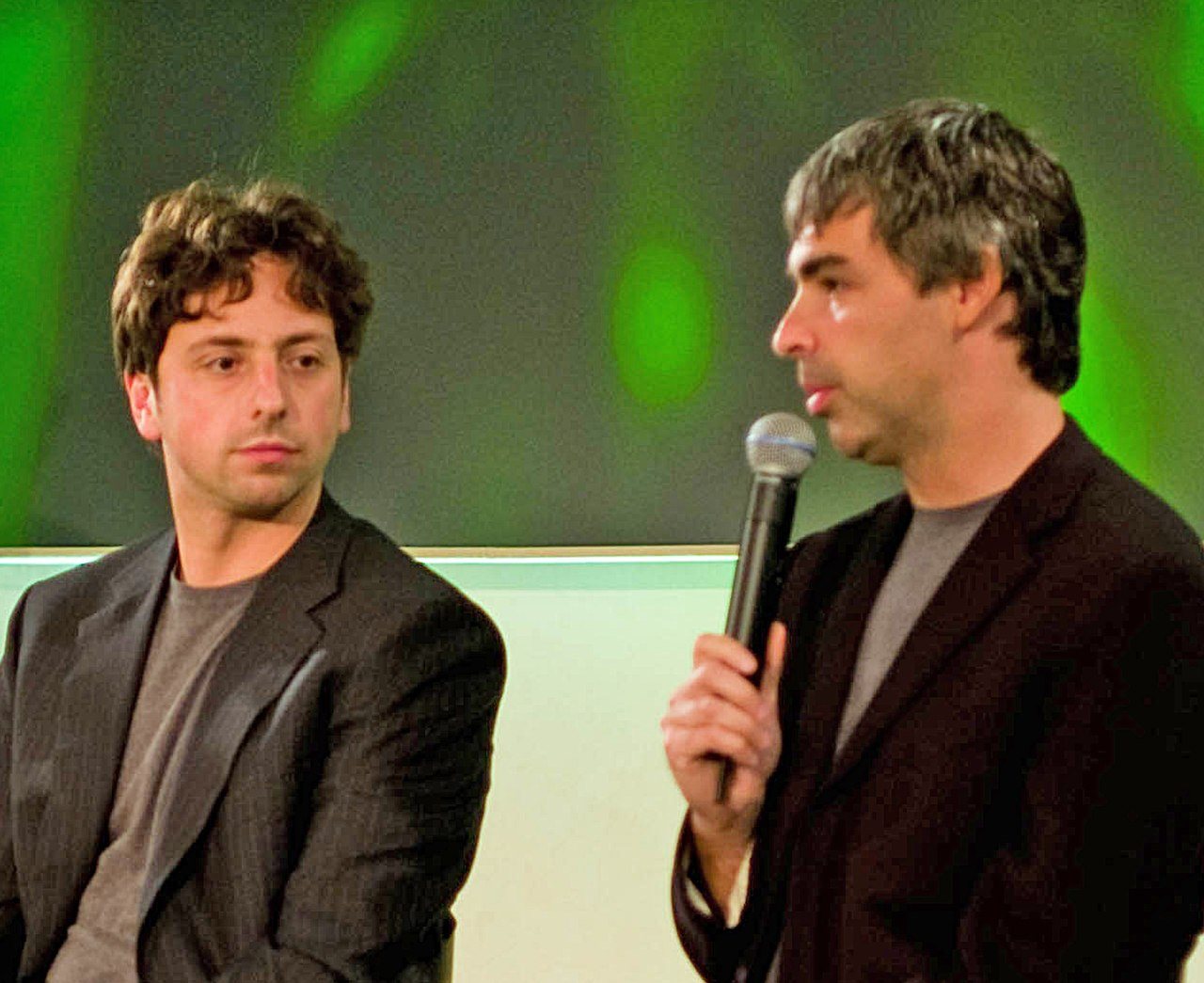
In late 1998 and into early 1999, Larry Page and Sergey Brin were two PhD students at Stanford running a search engine called Google out of a Menlo Park garage they were renting from Susan Wojcicki. They had built something called PageRank that ranked web results by the link structure of the web itself, treating each link as a vote. It was much better than what was on the market. They knew it was much better. They were also broke and exhausted, and they wanted to get back to their PhDs.
So they tried to sell Google. The asking price went through Vinod Khosla as an intermediary. The pitch landed in front of George Bell, who was the CEO of Excite at the time. The number on the table was first $1 million, then negotiated down to $750,000.
And George Bell said no.
The version of this story that gets retold makes Bell sound stupid. He wasn't. Years later, in interviews including with the Internet History Podcast, Bell laid out his reasoning. The deal-breaker, he said, was a non-negotiable condition that Page and Brin attached to the sale. They wanted Excite to rip out its existing search technology and replace it entirely with Google's. Excite at that moment had hundreds of engineers whose jobs depended on the Excite search stack. Bell had a board, a quarterly earnings cadence, and a culture built around that technology. Saying yes to Google's terms wasn't just a $750,000 line item, it was an internal political event that would gut his engineering organization.
And here's the thing the Excite story always misses. Better search was, in 1999, a worse business model than worse search. Excite made money by keeping you on Excite. Showing you a banner ad next to your results, then a news feed, then a sports score, then a horoscope, then more ads. The point was the portal. A search engine that sent you off the page faster, the way Google was designed to, was actively bad for the page-view economics every public search company was trading on. Bell was running a media company that happened to have a search box, not a search company that happened to have ads. He was looking at Google through that lens. From inside that lens, Google's offer was "pay us $750,000 and we will optimize for the metric you are not measured on."
Bell was wrong, in the way that people are wrong who can describe their world accurately and just don't notice the world is changing under them. He saw the choice exactly as it was framed, and the framing itself was about to be obsolete.
The lesson of Excite vs Google is not that George Bell was a bad CEO. The lesson is that he was a perfectly competent CEO of a business model that was 18 months from being dead.
The Other 1999 Decision: The @Home Merger
While the Google offer was on the table, Excite was negotiating something far bigger. In January 1999, Excite agreed to merge with @Home Network, the country's largest broadband cable internet provider, in a deal valued at $6.7 billion in stock. The combined company became Excite@Home. George Bell became CEO of the combined entity. Tom Jermoluk, who had been running @Home, stayed on as chairman.
The thinking behind the merger was elegant on paper. @Home had pipes. Excite had eyeballs. Cable broadband was about to change the home internet experience permanently. If you owned both the pipe into someone's house and the home page they saw when they opened their browser, you owned the most valuable real estate of the next decade. AT&T, which had a controlling stake in @Home through its acquisition of TCI in 1998, was a strategic backer.
The market loved it. Excite@Home traded as high as around $128 per share in the first quarter of 1999, with a peak market cap somewhere around $35 billion. For context, the original Excite IPO three years earlier had priced at $17 a share and raised $34 million total. The implied wealth creation between 1996 and early 1999 was, on paper, more than 100x.
And then it didn't work. Almost none of it worked.
Why Excite@Home Fell Apart
Three things went wrong, in roughly this order.
First, the integration didn't deliver synergies. @Home's broadband customers were not particularly more likely to use Excite than any other portal, and the bundling of "Excite as your default home page" felt to many users like the kind of intrusion that made AOL annoying in 1997. The product fit was real on a slide deck and weak in practice.
Second, AT&T started behaving like a controlling shareholder rather than a partner. By 2000, AT&T had increased its ownership stake and begun negotiating directly with cable partners to take broadband subscribers off the @Home network when contracts expired. This was, from AT&T's view, a normal commercial move. From Excite@Home's view, the company that owned a controlling chunk of them was simultaneously planning to walk away with their largest customer base. It made the long-term enterprise value of Excite@Home very hard for the public market to underwrite.
Third, the dot-com bubble burst. The Nasdaq peaked in March 2000. By the second half of 2000, every internet advertising business was watching its CPMs collapse. Excite was a portal that monetized through banner ads. When the ad market dried up, the entire revenue side of Excite's business stalled. Combined with the fixed costs of running @Home's broadband infrastructure, the company's cash burn became unsustainable.
The stock cratered. From the $128 peak in early 1999, Excite@Home was trading around $15 by September 2000, when George Bell stepped down as CEO. By late 2001, it was trading under $1.
On October 1, 2001, Excite@Home filed for Chapter 11 bankruptcy in the Northern District of California. In the messy unwind that followed, AT&T took over service for many of the broadband subscribers, and the Excite portal was sold off to iWon for a fraction of its former value, then changed hands several more times in subsequent years. There is, technically, still an excite.com today. It is a thin portal page kept alive by a series of small operators. It is not the company.
What Excite Got Right (Yes, Really)
It's tempting to write the whole story as a parade of mistakes, capped by the Google decision. That's not quite fair. Look at what Excite actually pulled off.
They took a research-stage search technology out of Stanford and turned it into one of the four most-visited destinations on the web within three years. They went public successfully in the most contested IPO month of the decade. They built a personalization product, My Excite, that anticipated every "your home page" feature now built into Google News, Apple News, and Yahoo's portal. They were one of the first major web companies to sign content distribution deals with newspaper chains and wire services. They acquired Magellan, McKinley, MatchLogic, and a handful of other operators in moves that, at the time, looked smart.
And they correctly identified that broadband was going to reshape the consumer internet. They were just early on the timing, paired with the wrong partner, and exposed to the wrong commercial structure with AT&T. The strategic logic was not crazy. The execution and the macro environment were unkind.
The Three Stories Inside the Excite Story
If you zoom out, Excite is actually three stories layered on top of each other.
Story one is about the founders. Six Stanford kids, $15,000 from a parent, a garage, a real piece of technology, an IPO three years later. By any reasonable measure, this is the dream version of a startup. Joe Kraus has spent the post-Excite years as an entrepreneur and investor, including building JotSpot (acquired by Google in 2006) and serving as a general partner at GV. The founders did fine. The technology is what got buried.
Story two is about the late-1990s portal model. Pageviews, banner ads, sticky home pages, vertical content channels, a CEO from the magazine industry. (Bell came to Excite from Times Mirror Magazines.) This model dominated the late '90s web and was, in retrospect, almost exactly wrong. Google didn't win because it had better technology, although it did. It won because it had a better economic model. Search ads on intent versus banner ads on attention. The portal era ended. The search era started. Excite was on the wrong side of that line.
Story three is about cable broadband. AT&T spent the late '90s buying up cable systems through the TCI acquisition and trying to use those pipes for high-speed internet via @Home. The integration of internet and cable would eventually happen, but not on @Home's terms and not on Excite@Home's timeline. Comcast and Time Warner Cable and Cox would build their own broadband businesses through the 2000s, with their own portals and their own back-end deals. The era of "one company owns the pipe and the home page" never arrived in the form Excite@Home bet on. It arrived in a different form, and Google was waiting at the front door of every browser by then.
The Real Punchline
Here's the part that doesn't get told enough. The reason George Bell's $750,000 decision feels so absurd in retrospect is not that he failed to see the future. It's that the future arrived faster than anyone, including the founders of Google, expected.
In 1999, Page and Brin were trying to sell Google because they could not figure out how to make money from search. In 1999. The AdWords product, the thing that turned Google into a money geyser, did not launch until October 2000. The keyword auction model that became AdWords' big leap, sometimes called the Overture model after the company GoTo.com became, didn't get adopted in its modern form until 2002. The Google IPO was August 2004.
If George Bell had bought Google for $750,000 in 1999, he would have inherited a tiny company with no revenue model, told his board he had paid for it by ripping out his own engineering team, and watched the dot-com bubble burst eighteen months later. The Excite@Home merger would have happened anyway. The $35 billion would have been built on the same broken structure. Whether his small Google acquisition would have survived inside that wreckage, the way Hotmail survived inside Microsoft, is genuinely unclear.
The convenient story is that one decision changed everything. The truer story is that Excite's whole model was on a clock, and by the time the alarm went off, everyone in the building was already at their desks, doing the work, and no one heard it ring.
Frequently Asked Questions About Excite
When did Excite start and when did it end? Excite was founded as Architext Software in June 1993 by six Stanford undergraduates. It launched as a public website in October 1995. Its parent company Excite@Home filed for Chapter 11 bankruptcy on October 1, 2001. A small successor portal at excite.com still exists today under different ownership, but the original company is long gone.
Who founded Excite? Graham Spencer, Joe Kraus, Mark VanHaren, Ryan McIntyre, Ben Lutch, and Martin Reinfried, all then-students at Stanford University. Joe Kraus is the co-founder most often associated with the company in interviews, and his account in Jessica Livingston's book Founders at Work is the canonical first-person source on the early years.
Did Excite really turn down buying Google for $750,000? Yes. In 1999, Larry Page and Sergey Brin, with Vinod Khosla acting as intermediary, offered to sell Google to Excite for $1 million, then negotiated down to $750,000. Excite CEO George Bell turned it down. Bell has said in subsequent interviews, including with the Internet History Podcast in 2014, that the main sticking point was Page and Brin's demand that Excite replace its search stack with Google's, which would have required gutting Excite's existing engineering organization.
Was Excite ever the largest search engine? No. Yahoo was the dominant front door to the web through the late '90s, with Excite usually ranking in the top three to top five depending on the metric. By traffic, Excite was a major player but never the leader.
What was Excite@Home? The combined entity formed in 1999 when Excite merged with @Home Network, the largest broadband cable internet provider in the United States at the time, in a stock deal valued at about $6.7 billion. The combined company peaked at a market cap of roughly $35 billion in early 1999 and filed for bankruptcy in October 2001.
Why did Excite fail? A combination of factors. The portal-and-banner-ad business model was being undermined by Google's intent-based search ads. The @Home merger created strategic and operational tension with AT&T as a controlling shareholder. The dot-com crash in 2000 collapsed the online ad market that Excite depended on. And competing search engines, particularly Google, simply offered a better core product as the web grew larger and noisier.
Does Excite still exist? A site at excite.com is still online as of today, but it has been sold and resold multiple times since 2001, most recently operating as a thin portal and webmail service. It has no continuity of staff, technology, or strategy with the original company.
What happened to the founders? All six founders moved on after the bubble. Joe Kraus founded JotSpot, which was acquired by Google in 2006, and later joined Google Ventures (now GV). Graham Spencer also joined Google. Several of the others moved into investing, smaller startups, or stepped away from the industry.
What's the lesson of Excite? Picking the right business model matters more than picking the right technology. Excite had real engineers, real users, real revenue, and a real strategy. It also had a model that was about to be replaced. Better technology can lose to better economics, especially when the better economics show up while you are negotiating a $6.7 billion merger to defend the older model.