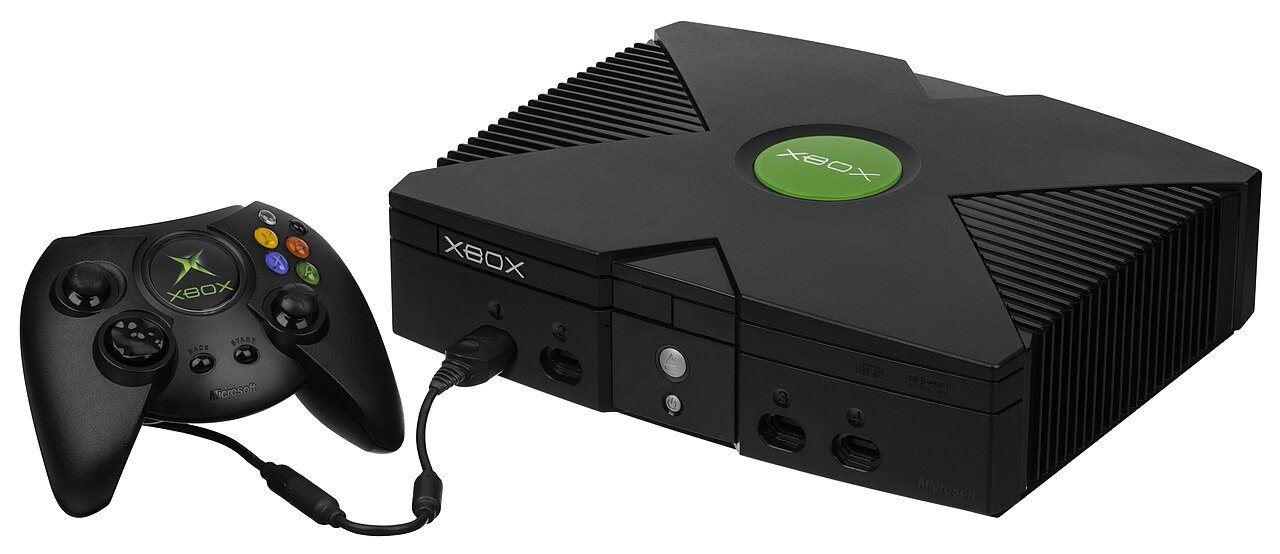
How four DirectX engineers talked Microsoft into a console
In 1998, four members of Microsoft's DirectX team, Seamus Blackley, Kevin Bachus, Ted Hase and Otto Berkes, started building a games machine out of PC parts after hours. Sony was about to ship the PlayStation 2, and Sony was selling it as a living room computer rather than a toy.
The obstacle was internal. Microsoft in 1999 was a Windows company, and a rival team out of the WebTV group wanted a cheap set-top box running a cut-down copy of Windows. The DirectX plan called for custom silicon, a built-in hard drive and an Ethernet port, none of which looked like Windows at all.
So the engineers described it as a Windows device anyway. "We absolutely, intentionally hoodwinked [Bill Gates]," Blackley told GamesRadar in 2021, saying he had told Gates in writing, many times, that the team was building a Windows console. By the time senior management understood what the hardware actually was, the project was too far along to stop.
Microsoft had already tried to buy Nintendo and been turned down, so building the box was the only route left into the living room.
Why did Microsoft lose money on every Xbox it sold?
The Xbox reached US stores on November 15, 2001 at $299, a year after the PlayStation 2 and three days before the Nintendo GameCube. Inside the case was a 733 MHz Intel Pentium III, an Nvidia graphics chip, 64 MB of memory, a hard drive and an Ethernet port. No other console of that generation shipped with a hard drive and a network port as standard.
Those parts cost more than the sticker. Digital Trends' history of the console puts the build cost near $425 a unit against the $299 price, which is a loss of more than $100 before a single game changed hands. The plan was the usual console plan: give away the hardware, take a licensing fee on every game sold for it.
That plan needs volume, and the volume never arrived. The Xbox sold about 24.65 million units worldwide before Microsoft ended production in 2006, against more than 160 million for the PlayStation 2, a lifetime figure Sony finally confirmed in 2024. Microsoft's losses on the first Xbox ran past $4 billion.
What did Halo and Xbox Live actually change?
Microsoft bought Bungie in June 2000 and pulled Halo, then in development for Mac and PC, onto the Xbox as a launch title. Halo: Combat Evolved went on to sell about 6.4 million copies on the console, which works out to roughly one Xbox owner in four buying the same game.
Xbox Live followed on November 15, 2002, exactly one year after the console. Microsoft sold it as a $49.95 starter kit with a headset and a one-year subscription, and it was broadband only, with no dial-up option at a time when most American homes still had a modem. One account carried a single gamertag, one friends list and system-level voice chat across every game that supported it.
The payoff was Halo 2 on November 9, 2004. NBC News reported that week that the game sold 2.4 million copies and took $125 million in its first 24 hours, more than the opening day of any film to that point. Friends lists, party chat, matchmaking and downloadable map packs all became normal because they worked here first.
Why did the Xbox fail in Japan?
The Xbox launched in Japan on February 22, 2002 and sold 123,929 units over its opening weekend, a respectable start that fell apart quickly. Buyers reported that the drive was scratching their discs, and some Japanese shops pulled the console off sale while Microsoft sorted it out.
Sales never recovered. Microsoft had shipped 190,092 units in Japan by the end of March 2002, and the console finished its life there under 500,000 units, a rounding error next to what Sony and Nintendo were doing at home.
The reasons stack up: a machine the size of a small suitcase, the original controller that Japanese players found unusable, and a library built around American shooters and sports games. Microsoft spent heavily on Japanese studios and still could not move the numbers. The Xbox brand has never recovered in that market, and every Xbox since has sold worse in Japan than the one before it.
Can you still play an original Xbox online in 2026?
Not on Microsoft's servers. Larry "Major Nelson" Hryb announced the end of the service on February 5, 2010, saying the change "will allow us to continue evolving the LIVE service with new features and experiences that fully harness the power of Xbox 360." Xbox Live for the original console went dark on April 15, 2010, taking Halo 2 matchmaking with it.
It came back without Microsoft. Insignia, a free fan-built reverse engineering of the old Xbox Live servers, has been running since 2020 and reopened Halo 2 matchmaking in a public beta in March 2024. As of August 2026 it had more than 34,000 registered users and supported 199 of the 381 games that used Xbox Live, with friends lists, clans, voice chat and leaderboards working again.
Offline, the disc in your hand still boots. Microsoft's backward compatibility library also lists 39 original Xbox titles that run on Xbox One and Xbox Series X and Series S, a list frozen in November 2021 when licensing and technical limits ended new additions. Microsoft said in 2026 that the program will restart for the brand's 25th anniversary.
Where to find one today
A working console with a controller and cables runs about $60 to $100 in 2026, according to BGR's survey of the resale market this year. Complete boxed systems average near $275, and sealed units go for several times that. Check that the machine has not sat unused for a decade with its internal clock capacitor leaking, which is the failure that kills these boards.
For the parts that wear out, the S-type controllers and the HD-capable video cables the console needs on a modern television, Stone Age Gamer stocks original Xbox gear.
Frequently Asked Questions
How much is an original Xbox worth in 2026?
A used original Xbox from 2001 sells for roughly $60 to $100 in 2026 with a controller and cables, and complete boxed examples average close to $275, according to BGR's 2026 look at the resale market. Sealed consoles are collector items and go for several hundred dollars or more.
Does Xbox Live still work on the original Xbox?
Microsoft's Xbox Live service for the original Xbox was switched off on April 15, 2010, and it has not returned. Online play on the 2001 console now runs on Insignia, a free fan-run replacement that supported 199 of the 381 Xbox Live games as of August 2026, including Halo 2.
How many original Xbox consoles were sold?
The original Xbox sold about 24.65 million units worldwide between its US launch on November 15, 2001 and the end of production in 2006. That is a fraction of the PlayStation 2's confirmed lifetime total of more than 160 million, and Microsoft lost over $4 billion on the console.