What Happened to the Sega Saturn? The Console That Self-Destructed at Launch

2026-04-01 by 404 Memory Found

Picture this: May 11, 1995. The Los Angeles Convention Center is packed with industry folks, press, and gaming enthusiasts who've come to see what Sega's got cooking for the future of 32-bit gaming. There's genuine buzz in the air. Sega's got momentum. The Genesis killed it for years, and now they're about to show us the next chapter. I'm not gonna lie, I was hyped as a kid. My older cousin had a Genesis, and whatever came next from Sega felt like the future was mine to own.

And then everything went sideways in the span of about five minutes.

What happened at E3 that day, and the months that followed, tells you everything you need to know about how to spectacularly self-destruct a gaming console at launch. I'm talking about the Sega Saturn, a machine that had legitimate talent, genuine engineering innovation, and some absolutely incredible games. But none of that mattered because the people running Sega made a series of decisions that still make old gaming heads like me shake our heads in disbelief decades later.

The Japanese Success That Made Them Cocky

Let's rewind for a second. In Japan, the Saturn was actually crushing it. November 22, 1994. That's when Sega of Japan launched the Saturn at 44,800 yen, which was roughly $400 at the time. Remember, the Super Famicom was already out there, and this 32-bit machine represented a genuine leap forward in what you could do on screen. The Japanese market responded. By the time we're talking about the American launch, the Saturn had already sold over a million units in Japan. Numbers like that tend to make corporate executives confident. Sometimes too confident.

Here's the thing about confidence without strategy: it's a recipe for disaster. Sega of Japan was looking at those Japanese numbers and thinking they could replicate that success in North America by doing the exact same thing. Problem was, the North American market doesn't work the same way. The business relationships are different. The retail landscape is different. The competition is fiercer. But those nuances didn't really factor into what was about to happen.

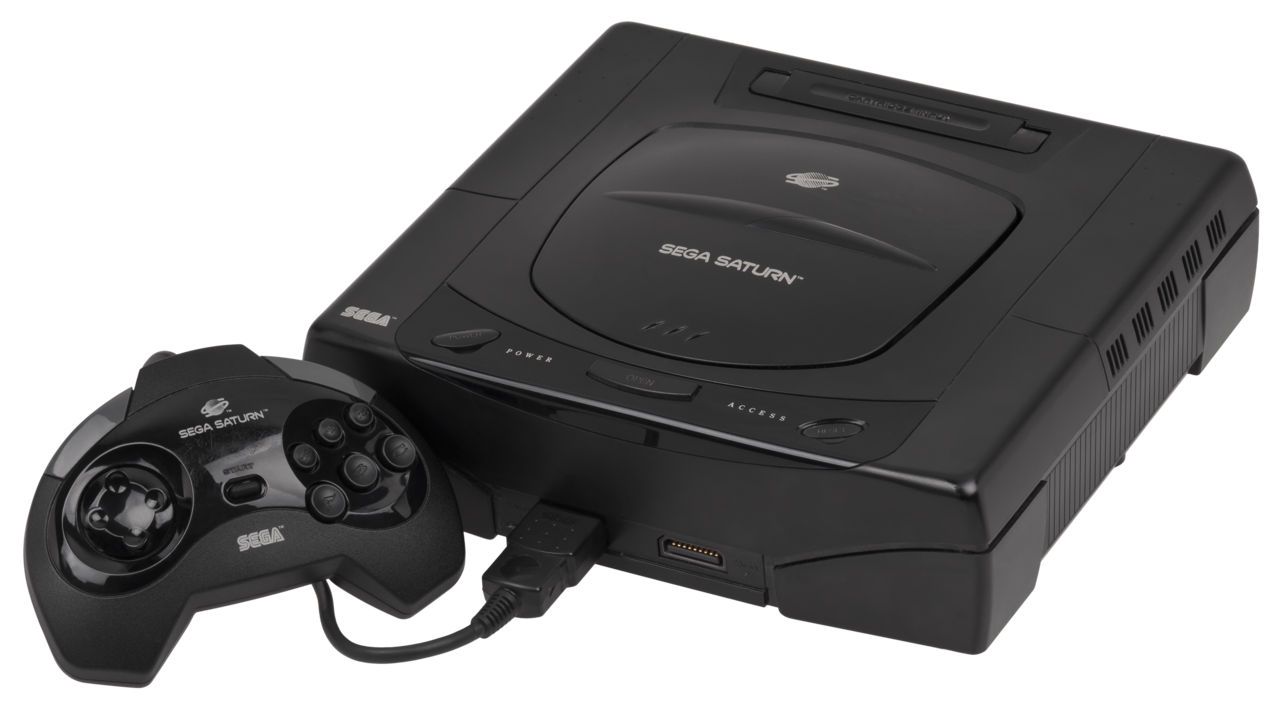
Sega Saturn console with controller, the Mk1 North American model
The Sega Saturn Mk1, Sega's 32-bit console that launched into one of the most chaotic debuts in gaming history.

The E3 Surprise That Nobody Asked For

So here we are at E3 1995. Sega's got this plan to announce the Saturn's immediate availability. Tom Kalinske was the CEO of Sega of America at the time, and from what we know now, he was actually opposed to this whole surprise launch thing. He wanted a planned rollout, proper notice to retailers, a coordinated strategy. You know, the smart way to do it. But Kalinske got overruled by Sega of Japan. And when Japan says jump, America says how high, apparently.

So Sega's team takes the E3 stage on May 11, 1995, and announces that the Saturn is shipping to select retailers that very week. Not in the fall. Not in the summer. That literal week. The price: $399. And here's where it gets interesting: the moment those words came out, the Saturn went from an anticipated product to an instant point of friction between Sega and every major retailer in North America.

Imagine you're a Toys R Us manager, or you work at KB Toys, or Walmart, or Electronics Boutique. You've got relationships with Sega. You've got expectations about how much notice you get before a major product launch. You plan inventory. You coordinate marketing. You hire staff. And then some guy on stage tells the world the product is available right now, but your store doesn't have it yet, and nobody from Sega corporate called you first. That's not how business works. That's not how partnerships work. And retailers noticed.

KB Toys refused to stock the Saturn initially. Walmart didn't carry it at launch. You had this situation where you'd walk into major retail chains and the Saturn simply wasn't there, while Sega was spending millions on marketing saying "go buy it now." The cognitive disconnect was wild.

The $299 Response That Ended the War Before It Started

But here's the thing. While Sega's busy alienating retailers and shocking the industry, Sony's waiting in the wings with a plan that was going to reshape the entire console market.

Sony had been working on the PlayStation. They were going to launch it in time for the holiday season of 1995, so they knew they had time. They watched Sega's chaos unfold at E3. They watched the pricing announcement at $399. And then Steve Race, Sony Computer Entertainment America's president, walked to the podium, said one word: "$299." And walked off.

Steve Race's one-word PlayStation pricing announcement at E3 1995 is still considered one of the most devastating moments in console war history. One hundred dollars cheaper. One word. Game over.

One hundred dollars less. For a system that had better third-party support lined up, a simpler architecture from a developer standpoint, and was coming from a company that understood the consumer electronics business. One hundred dollars might not sound like much now, but in 1995, that was the difference between "I'm saving up for this" and "My parents can actually afford this for my birthday."

The PlayStation launched on September 9, 1995, four months after the Saturn's surprise American debut. But from the moment that price was announced, the Saturn was fighting uphill. Sega had given themselves a head start in the race, and then handed Sony the finish line ribbon.

Japanese Sega Saturn console in gray with controller
The Japanese Sega Saturn, which launched November 22, 1994, five months before the botched North American debut.

Six Games and a Prayer

The launch library situation made everything worse. Only six games were available when the Saturn hit shelves that May. Six. For context, the PlayStation launched in September with around 29 titles. The Super Nintendo had launched with five, but that was 1991, and even then people complained. By 1995, the industry expected a robust launch lineup. Sega gave retailers a surprise console with barely anything to play on it.

The six launch titles were Virtua Fighter (a solid port but not a system seller for most Americans), Daytona USA (which had framerate issues that hardcore fans noticed immediately), Clockwork Knight, Bug!, Worldwide Soccer, and Panzer Dragoon. Of those, Virtua Fighter and Panzer Dragoon were genuinely good. The rest ranged from decent to forgettable. Compare that to the PlayStation's launch, which included Ridge Racer, Battle Arena Toshinden, Rayman, and a slew of other titles that gave buyers real choices.

When you combine a surprise launch with an inadequate library, a price point $100 higher than your competitor, and angry retailers who aren't pushing your product, you've created a perfect storm of failure. Every single element worked against the Saturn, and almost all of it was self-inflicted.

The Hardware That Was Too Smart for Its Own Good

Now, here's where I actually want to give Sega some credit, because the engineering of the Saturn was genuinely impressive. The system used two Hitachi SH-2 processors, which gave it this dual-CPU architecture that was way ahead of its time in terms of raw capability. On paper, it was powerful. The GPU was sophisticated. The sound chip was excellent. Technically, the Saturn could do things that should have made it competitive.

But, and this is a huge but, that dual-processor architecture made the Saturn an absolute nightmare to develop for. Most developers were used to one processor with clear authority over the system. The Saturn's design meant you had to carefully manage communication between two CPUs, handle cache synchronization, and deal with all kinds of memory management issues that didn't exist on other platforms. The PlayStation, by comparison, had a cleaner architecture that was easier to work with. And in the game industry, ease of development matters enormously because it means you get better games faster, and you get more games period.

Third-party developers looked at the PlayStation, looked at the Saturn's dual-CPU headache, and made the obvious choice. Why fight with a complicated system when you've got an easier one that's also cheaper and has better marketing behind it? The Saturn's technical ambition became its Achilles' heel.

The Games That Nobody Played (But Should Have)

And here's the tragedy, the thing that really gets me heated about the Saturn: the games were incredible. I'm talking legitimately, seriously incredible. These were not compromised products. These were games that showed what the system could actually do when talented developers put in the work.

Panzer Dragoon Saga is still considered one of the best JRPGs ever made on any system. Radiant Silvergun is a shooter so refined that originals sell for hundreds of dollars today. Virtua Fighter 2 basically defined 3D fighting games for a generation. Nights into Dreams was so inventive and charming that it became an enduring cult classic. The Saturn library, once it got rolling, was phenomenal.

Guardian Heroes was a side-scrolling beat-'em-up with RPG elements that had no equal on any other console. Dragon Force was a real-time strategy game that let you command armies of 200 soldiers on screen simultaneously, something that felt impossible in 1996. Burning Rangers was a firefighting action game from Sonic Team that was so ahead of its time it still feels fresh. And Sega Rally Championship brought arcade-quality racing to the living room in a way that the PlayStation couldn't touch at the time.

The Saturn's 2D capabilities were actually superior to the PlayStation's. Games like Street Fighter Alpha 3, X-Men vs. Street Fighter, and the Capcom fighting library all ran better on Saturn thanks to the VDP2 chip that handled background scrolling and sprite manipulation. If you were a fighting game enthusiast in the late 1990s, the Saturn was objectively the better machine. But fighting game fans weren't a big enough market to save a failing console.

But here's the problem: barely anyone in North America was playing these games. By the time the Saturn's library started to really flourish, the PlayStation had the momentum, the retail presence, and the cultural narrative. The Saturn was already dead in the water in the US. Japan absolutely loved it, and that's where a lot of these amazing games found their audience. But in the market where Sega needed to win, the great games couldn't save a console that had been sabotaged by its own launch.

Bernie Stolar and the Official Surrender

By 1997, the situation was so dire that Sega of America's new president, Bernie Stolar, made a statement that basically confirmed what everyone already knew. He said, "The Saturn is not our future." Not "we're transitioning to a new strategy." Not "we're refocusing our efforts." Just a flat-out admission that the hardware they'd bet the company on was finished in the markets where it mattered most.

That statement sent shockwaves through the industry. It was almost unheard of for a console manufacturer to publicly say, "Yeah, this thing we're selling? Don't bother with it." But that's where Sega was. They'd lost so much money that they had to make a move. The Dreamcast was already in development, and Sega was essentially telling consumers and retailers to wait for that instead.

You know what that does to your current sales? It annihilates them. Why would anyone buy a Saturn if the company's president just told you it's not the future? Stolar's honesty might have been refreshing, but it was also a nail in the coffin.

The Numbers Tell the Whole Story

Let's talk about what this all added up to. The Saturn sold roughly 5.75 million units in Japan. That's respectable, considering the Japanese market genuinely loved the console. But in North America, it moved around 2 million units. In Europe, maybe a million. Worldwide, you're looking at approximately 9.26 million total Saturn sales across its entire lifespan.

Now compare that to the PlayStation. Sony's console sold over 102 million units worldwide. The Saturn sold less than one-tenth of what the PlayStation sold. Let that sink in. A console with incredible games, innovative hardware, and a legendary brand name behind it sold barely 9% of what its main competitor moved.

The financial damage was catastrophic. Sega hemorrhaged billions on the Saturn. The surprise launch cost them market share. The retailer alienation cost them distribution. The developer frustration cost them third-party support. Every bad decision compounded on top of the others, and by the time anyone realized how bad things were, the damage was irreversible.

The Dreamcast launched in 1998 in Japan and 1999 in North America. It was a brilliant console with ahead-of-its-time online capabilities and some killer games. But the Saturn's failure had depleted Sega's war chest and credibility. The Dreamcast was discontinued in 2001, and that was the end of Sega as a console manufacturer. They went third-party, which is where they remain today.

The Sega of Japan vs. Sega of America Problem

The Saturn failure exposed a fracture inside Sega that had been growing for years. Sega of Japan and Sega of America were essentially operating as two separate companies with competing visions, different market strategies, and an inability to communicate effectively. The surprise launch was just the most visible symptom of a much deeper organizational dysfunction.

Tom Kalinske had built Sega of America into a powerhouse during the Genesis era. The "Genesis does what Nintendon't" campaign, the aggressive pricing, the partnership with EA for sports games, these were all Kalinske's strategies, and they worked brilliantly. But Sega of Japan never fully trusted their American counterpart. There was a cultural gap that neither side could bridge, and it showed in every major decision around the Saturn.

Kalinske wanted to launch a different console entirely. Before the Saturn, he had been pushing for a simpler, more developer-friendly machine that could compete on price. Sega of Japan overruled him and went with the more complex dual-CPU design. Kalinske wanted a coordinated North American launch with proper retail support. Japan overruled him and went with the surprise. Kalinske wanted to price the Saturn at $299 or less. Japan set the price at $399. Pattern after pattern of the American team being right and the Japanese leadership ignoring them.

After the Saturn debacle, Kalinske left Sega in 1996. He later said in interviews that the Saturn launch was the moment he realized the relationship between the two offices was irreparable. The man who had made Sega relevant in America walked away because the company wouldn't let him do his job. That tells you everything.

The Lessons Nobody at Sega Learned in Time

What really gets me about the Saturn story is that it wasn't a bad product. The hardware was capable. The games were great. The company had a history of innovation and success with the Genesis. But it was brought down by corporate ego, by decisions made in Japan that didn't account for North American business realities, by a lack of communication between different regions of the same company, and by a single catastrophic decision to surprise the market in a way that surprised the people you needed the most.

Tom Kalinske opposed the surprise launch, and history proved him right. The people who knew the North American market, who understood how retailers worked, who had the industry relationships, they warned against this strategy. But they got overruled. And the entire company paid the price.

The Saturn remains one of the most collectible retro consoles today, precisely because so few people owned one. Complete Saturn collections, especially of the Japanese library, can run into thousands of dollars. Panzer Dragoon Saga alone regularly sells for $500 to $1,000 for a complete copy. It's a console that's more appreciated now than it ever was during its actual lifespan, which is maybe the saddest part of the whole story.

If you ever find a Saturn at a swap meet or a retro game store, pick it up. Hold that controller, which is honestly one of the best D-pad controllers ever made. Play some Nights into Dreams or Virtua Fighter 2. You'll see what could have been. You'll understand why people who were there still feel a little sting when they think about what Sega threw away. The Saturn deserved better. And honestly? So did we.

Frequently Asked Questions

Why did Sega launch the Saturn early in North America?

Sega of Japan wanted to capitalize on the Saturn's success in Japan and beat the PlayStation to market. They decided on a surprise launch at E3 in May 1995, shipping the console to select retailers that same week. Tom Kalinske, CEO of Sega of America, opposed this strategy but was overruled by executives in Japan.

How much did the Sega Saturn cost at launch?

The Saturn launched at $399 in North America and 44,800 yen (roughly $400) in Japan. Sony undercut this significantly by pricing the PlayStation at $299, a $100 difference that proved decisive in the console war.

Why was the Saturn so hard to develop for?

The Saturn used dual Hitachi SH-2 processors, which meant developers had to manage communication between two CPUs, handle cache synchronization, and deal with complex memory management. The PlayStation's simpler single-processor architecture made it much easier to work with, giving Sony a massive advantage in attracting third-party developers.

How many Sega Saturn units were sold worldwide?

The Saturn sold approximately 9.26 million units worldwide: about 5.75 million in Japan, 2 million in North America, and roughly 1 million in Europe. The PlayStation, by comparison, sold over 102 million units.

What were the best Sega Saturn games?

The Saturn had an incredible library including Panzer Dragoon Saga, Radiant Silvergun, Virtua Fighter 2, Nights into Dreams, and many others. Most of these games found larger audiences in Japan, as the Saturn's North American install base was too small to support strong sales.

What did Bernie Stolar say about the Saturn?

In 1997, Sega of America president Bernie Stolar publicly stated, "The Saturn is not our future," effectively admitting the console had failed and signaling that Sega was moving on to the Dreamcast.

Did the Saturn's failure lead to the Dreamcast's demise?

Yes. The Saturn's massive financial losses depleted Sega's resources and damaged their credibility with retailers and developers. While the Dreamcast was technically excellent, Sega didn't have the financial staying power to compete with Sony's PlayStation 2, and discontinued the Dreamcast in 2001, ending their run as a console manufacturer.

Related Posts:
← Back to Blog

What Happened to the Sega Saturn? The Console That Self-Destructed at Launch | 404 Memory Found

📖 What Happened to the Sega Saturn? The Console That Self-Destructed at Launch

Picture this: May 11, 1995. The Los Angeles Convention Center is packed with industry folks, press, and gaming enthusiasts who've come to see what Sega's got cooking for the future of 32-bit gaming. There's genuine buzz in the air. Sega's got momentum. The Genesis killed it for years, and now they're about to show us the next chapter. I'm not gonna lie, I was hyped as a kid. My older cousin had a Genesis, and whatever came next from Sega felt like the future was mine to own.

And then everything went sideways in the span of about five minutes.

What happened at E3 that day, and the months that followed, tells you everything you need to know about how to spectacularly self-destruct a gaming console at launch. I'm talking about the Sega Saturn, a machine that had legitimate talent, genuine engineering innovation, and some absolutely incredible games. But none of that mattered because the people running Sega made a series of decisions that still make old gaming heads like me shake our heads in disbelief decades later.

The Japanese Success That Made Them Cocky

Let's rewind for a second. In Japan, the Saturn was actually crushing it. November 22, 1994. That's when Sega of Japan launched the Saturn at 44,800 yen, which was roughly $400 at the time. Remember, the Super Famicom was already out there, and this 32-bit machine represented a genuine leap forward in what you could do on screen. The Japanese market responded. By the time we're talking about the American launch, the Saturn had already sold over a million units in Japan. Numbers like that tend to make corporate executives confident. Sometimes too confident.

Here's the thing about confidence without strategy: it's a recipe for disaster. Sega of Japan was looking at those Japanese numbers and thinking they could replicate that success in North America by doing the exact same thing. Problem was, the North American market doesn't work the same way. The business relationships are different. The retail landscape is different. The competition is fiercer. But those nuances didn't really factor into what was about to happen.

Sega Saturn console with controller, the Mk1 North American model
The Sega Saturn Mk1, Sega's 32-bit console that launched into one of the most chaotic debuts in gaming history.

The E3 Surprise That Nobody Asked For

So here we are at E3 1995. Sega's got this plan to announce the Saturn's immediate availability. Tom Kalinske was the CEO of Sega of America at the time, and from what we know now, he was actually opposed to this whole surprise launch thing. He wanted a planned rollout, proper notice to retailers, a coordinated strategy. You know, the smart way to do it. But Kalinske got overruled by Sega of Japan. And when Japan says jump, America says how high, apparently.

So Sega's team takes the E3 stage on May 11, 1995, and announces that the Saturn is shipping to select retailers that very week. Not in the fall. Not in the summer. That literal week. The price: $399. And here's where it gets interesting: the moment those words came out, the Saturn went from an anticipated product to an instant point of friction between Sega and every major retailer in North America.

Imagine you're a Toys R Us manager, or you work at KB Toys, or Walmart, or Electronics Boutique. You've got relationships with Sega. You've got expectations about how much notice you get before a major product launch. You plan inventory. You coordinate marketing. You hire staff. And then some guy on stage tells the world the product is available right now, but your store doesn't have it yet, and nobody from Sega corporate called you first. That's not how business works. That's not how partnerships work. And retailers noticed.

KB Toys refused to stock the Saturn initially. Walmart didn't carry it at launch. You had this situation where you'd walk into major retail chains and the Saturn simply wasn't there, while Sega was spending millions on marketing saying "go buy it now." The cognitive disconnect was wild.

The $299 Response That Ended the War Before It Started

But here's the thing. While Sega's busy alienating retailers and shocking the industry, Sony's waiting in the wings with a plan that was going to reshape the entire console market.

Sony had been working on the PlayStation. They were going to launch it in time for the holiday season of 1995, so they knew they had time. They watched Sega's chaos unfold at E3. They watched the pricing announcement at $399. And then Steve Race, Sony Computer Entertainment America's president, walked to the podium, said one word: "$299." And walked off.

Steve Race's one-word PlayStation pricing announcement at E3 1995 is still considered one of the most devastating moments in console war history. One hundred dollars cheaper. One word. Game over.

One hundred dollars less. For a system that had better third-party support lined up, a simpler architecture from a developer standpoint, and was coming from a company that understood the consumer electronics business. One hundred dollars might not sound like much now, but in 1995, that was the difference between "I'm saving up for this" and "My parents can actually afford this for my birthday."

The PlayStation launched on September 9, 1995, four months after the Saturn's surprise American debut. But from the moment that price was announced, the Saturn was fighting uphill. Sega had given themselves a head start in the race, and then handed Sony the finish line ribbon.

Japanese Sega Saturn console in gray with controller
The Japanese Sega Saturn, which launched November 22, 1994, five months before the botched North American debut.

Six Games and a Prayer

The launch library situation made everything worse. Only six games were available when the Saturn hit shelves that May. Six. For context, the PlayStation launched in September with around 29 titles. The Super Nintendo had launched with five, but that was 1991, and even then people complained. By 1995, the industry expected a robust launch lineup. Sega gave retailers a surprise console with barely anything to play on it.

The six launch titles were Virtua Fighter (a solid port but not a system seller for most Americans), Daytona USA (which had framerate issues that hardcore fans noticed immediately), Clockwork Knight, Bug!, Worldwide Soccer, and Panzer Dragoon. Of those, Virtua Fighter and Panzer Dragoon were genuinely good. The rest ranged from decent to forgettable. Compare that to the PlayStation's launch, which included Ridge Racer, Battle Arena Toshinden, Rayman, and a slew of other titles that gave buyers real choices.

When you combine a surprise launch with an inadequate library, a price point $100 higher than your competitor, and angry retailers who aren't pushing your product, you've created a perfect storm of failure. Every single element worked against the Saturn, and almost all of it was self-inflicted.

The Hardware That Was Too Smart for Its Own Good

Now, here's where I actually want to give Sega some credit, because the engineering of the Saturn was genuinely impressive. The system used two Hitachi SH-2 processors, which gave it this dual-CPU architecture that was way ahead of its time in terms of raw capability. On paper, it was powerful. The GPU was sophisticated. The sound chip was excellent. Technically, the Saturn could do things that should have made it competitive.

But, and this is a huge but, that dual-processor architecture made the Saturn an absolute nightmare to develop for. Most developers were used to one processor with clear authority over the system. The Saturn's design meant you had to carefully manage communication between two CPUs, handle cache synchronization, and deal with all kinds of memory management issues that didn't exist on other platforms. The PlayStation, by comparison, had a cleaner architecture that was easier to work with. And in the game industry, ease of development matters enormously because it means you get better games faster, and you get more games period.

Third-party developers looked at the PlayStation, looked at the Saturn's dual-CPU headache, and made the obvious choice. Why fight with a complicated system when you've got an easier one that's also cheaper and has better marketing behind it? The Saturn's technical ambition became its Achilles' heel.

The Games That Nobody Played (But Should Have)

And here's the tragedy, the thing that really gets me heated about the Saturn: the games were incredible. I'm talking legitimately, seriously incredible. These were not compromised products. These were games that showed what the system could actually do when talented developers put in the work.

Panzer Dragoon Saga is still considered one of the best JRPGs ever made on any system. Radiant Silvergun is a shooter so refined that originals sell for hundreds of dollars today. Virtua Fighter 2 basically defined 3D fighting games for a generation. Nights into Dreams was so inventive and charming that it became an enduring cult classic. The Saturn library, once it got rolling, was phenomenal.

Guardian Heroes was a side-scrolling beat-'em-up with RPG elements that had no equal on any other console. Dragon Force was a real-time strategy game that let you command armies of 200 soldiers on screen simultaneously, something that felt impossible in 1996. Burning Rangers was a firefighting action game from Sonic Team that was so ahead of its time it still feels fresh. And Sega Rally Championship brought arcade-quality racing to the living room in a way that the PlayStation couldn't touch at the time.

The Saturn's 2D capabilities were actually superior to the PlayStation's. Games like Street Fighter Alpha 3, X-Men vs. Street Fighter, and the Capcom fighting library all ran better on Saturn thanks to the VDP2 chip that handled background scrolling and sprite manipulation. If you were a fighting game enthusiast in the late 1990s, the Saturn was objectively the better machine. But fighting game fans weren't a big enough market to save a failing console.

But here's the problem: barely anyone in North America was playing these games. By the time the Saturn's library started to really flourish, the PlayStation had the momentum, the retail presence, and the cultural narrative. The Saturn was already dead in the water in the US. Japan absolutely loved it, and that's where a lot of these amazing games found their audience. But in the market where Sega needed to win, the great games couldn't save a console that had been sabotaged by its own launch.

Bernie Stolar and the Official Surrender

By 1997, the situation was so dire that Sega of America's new president, Bernie Stolar, made a statement that basically confirmed what everyone already knew. He said, "The Saturn is not our future." Not "we're transitioning to a new strategy." Not "we're refocusing our efforts." Just a flat-out admission that the hardware they'd bet the company on was finished in the markets where it mattered most.

That statement sent shockwaves through the industry. It was almost unheard of for a console manufacturer to publicly say, "Yeah, this thing we're selling? Don't bother with it." But that's where Sega was. They'd lost so much money that they had to make a move. The Dreamcast was already in development, and Sega was essentially telling consumers and retailers to wait for that instead.

You know what that does to your current sales? It annihilates them. Why would anyone buy a Saturn if the company's president just told you it's not the future? Stolar's honesty might have been refreshing, but it was also a nail in the coffin.

The Numbers Tell the Whole Story

Let's talk about what this all added up to. The Saturn sold roughly 5.75 million units in Japan. That's respectable, considering the Japanese market genuinely loved the console. But in North America, it moved around 2 million units. In Europe, maybe a million. Worldwide, you're looking at approximately 9.26 million total Saturn sales across its entire lifespan.

Now compare that to the PlayStation. Sony's console sold over 102 million units worldwide. The Saturn sold less than one-tenth of what the PlayStation sold. Let that sink in. A console with incredible games, innovative hardware, and a legendary brand name behind it sold barely 9% of what its main competitor moved.

The financial damage was catastrophic. Sega hemorrhaged billions on the Saturn. The surprise launch cost them market share. The retailer alienation cost them distribution. The developer frustration cost them third-party support. Every bad decision compounded on top of the others, and by the time anyone realized how bad things were, the damage was irreversible.

The Dreamcast launched in 1998 in Japan and 1999 in North America. It was a brilliant console with ahead-of-its-time online capabilities and some killer games. But the Saturn's failure had depleted Sega's war chest and credibility. The Dreamcast was discontinued in 2001, and that was the end of Sega as a console manufacturer. They went third-party, which is where they remain today.

The Sega of Japan vs. Sega of America Problem

The Saturn failure exposed a fracture inside Sega that had been growing for years. Sega of Japan and Sega of America were essentially operating as two separate companies with competing visions, different market strategies, and an inability to communicate effectively. The surprise launch was just the most visible symptom of a much deeper organizational dysfunction.

Tom Kalinske had built Sega of America into a powerhouse during the Genesis era. The "Genesis does what Nintendon't" campaign, the aggressive pricing, the partnership with EA for sports games, these were all Kalinske's strategies, and they worked brilliantly. But Sega of Japan never fully trusted their American counterpart. There was a cultural gap that neither side could bridge, and it showed in every major decision around the Saturn.

Kalinske wanted to launch a different console entirely. Before the Saturn, he had been pushing for a simpler, more developer-friendly machine that could compete on price. Sega of Japan overruled him and went with the more complex dual-CPU design. Kalinske wanted a coordinated North American launch with proper retail support. Japan overruled him and went with the surprise. Kalinske wanted to price the Saturn at $299 or less. Japan set the price at $399. Pattern after pattern of the American team being right and the Japanese leadership ignoring them.

After the Saturn debacle, Kalinske left Sega in 1996. He later said in interviews that the Saturn launch was the moment he realized the relationship between the two offices was irreparable. The man who had made Sega relevant in America walked away because the company wouldn't let him do his job. That tells you everything.

The Lessons Nobody at Sega Learned in Time

What really gets me about the Saturn story is that it wasn't a bad product. The hardware was capable. The games were great. The company had a history of innovation and success with the Genesis. But it was brought down by corporate ego, by decisions made in Japan that didn't account for North American business realities, by a lack of communication between different regions of the same company, and by a single catastrophic decision to surprise the market in a way that surprised the people you needed the most.

Tom Kalinske opposed the surprise launch, and history proved him right. The people who knew the North American market, who understood how retailers worked, who had the industry relationships, they warned against this strategy. But they got overruled. And the entire company paid the price.

The Saturn remains one of the most collectible retro consoles today, precisely because so few people owned one. Complete Saturn collections, especially of the Japanese library, can run into thousands of dollars. Panzer Dragoon Saga alone regularly sells for $500 to $1,000 for a complete copy. It's a console that's more appreciated now than it ever was during its actual lifespan, which is maybe the saddest part of the whole story.

If you ever find a Saturn at a swap meet or a retro game store, pick it up. Hold that controller, which is honestly one of the best D-pad controllers ever made. Play some Nights into Dreams or Virtua Fighter 2. You'll see what could have been. You'll understand why people who were there still feel a little sting when they think about what Sega threw away. The Saturn deserved better. And honestly? So did we.

Frequently Asked Questions

Why did Sega launch the Saturn early in North America?

Sega of Japan wanted to capitalize on the Saturn's success in Japan and beat the PlayStation to market. They decided on a surprise launch at E3 in May 1995, shipping the console to select retailers that same week. Tom Kalinske, CEO of Sega of America, opposed this strategy but was overruled by executives in Japan.

How much did the Sega Saturn cost at launch?

The Saturn launched at $399 in North America and 44,800 yen (roughly $400) in Japan. Sony undercut this significantly by pricing the PlayStation at $299, a $100 difference that proved decisive in the console war.

Why was the Saturn so hard to develop for?

The Saturn used dual Hitachi SH-2 processors, which meant developers had to manage communication between two CPUs, handle cache synchronization, and deal with complex memory management. The PlayStation's simpler single-processor architecture made it much easier to work with, giving Sony a massive advantage in attracting third-party developers.

How many Sega Saturn units were sold worldwide?

The Saturn sold approximately 9.26 million units worldwide: about 5.75 million in Japan, 2 million in North America, and roughly 1 million in Europe. The PlayStation, by comparison, sold over 102 million units.

What were the best Sega Saturn games?

The Saturn had an incredible library including Panzer Dragoon Saga, Radiant Silvergun, Virtua Fighter 2, Nights into Dreams, and many others. Most of these games found larger audiences in Japan, as the Saturn's North American install base was too small to support strong sales.

What did Bernie Stolar say about the Saturn?

In 1997, Sega of America president Bernie Stolar publicly stated, "The Saturn is not our future," effectively admitting the console had failed and signaling that Sega was moving on to the Dreamcast.

Did the Saturn's failure lead to the Dreamcast's demise?

Yes. The Saturn's massive financial losses depleted Sega's resources and damaged their credibility with retailers and developers. While the Dreamcast was technically excellent, Sega didn't have the financial staying power to compete with Sony's PlayStation 2, and discontinued the Dreamcast in 2001, ending their run as a console manufacturer.

← Back to Blog
00:00