What Happened to the Nokia N-Gage? The Gaming Phone That Became a Punchline

2026-04-01 by 404 Memory Found

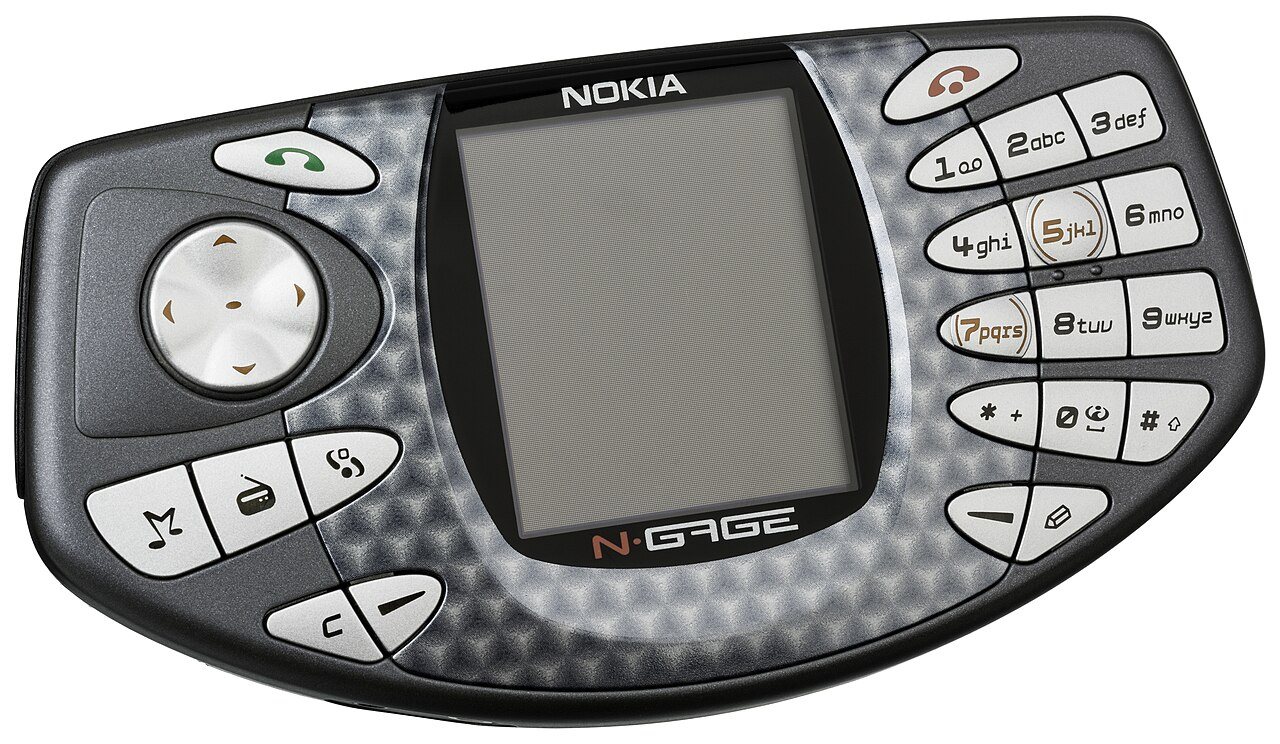
Picture this: it's late 2003, and you're standing in a Best Buy staring at something that doesn't quite make sense. It's too big to be a phone. It's too small to be a Game Boy. The screen is vertical when every other gaming device goes horizontal. The buttons are arranged like a phone's keypad, not a D-pad. And to make a phone call on this thing, you have to hold it sideways against your face like you're listening to a taco tell you a secret.

This is the Nokia N-Gage. And if you were there, you know exactly what happened next: nothing. Almost nobody bought it. The people who did became the butt of every joke on every gaming forum on the internet. Nokia, the most powerful mobile phone company on the planet, had just launched what it believed would be the future of portable entertainment. Instead, it became one of the most notorious hardware failures in gaming history.

But here's the thing about the N-Gage that I think gets lost in all the memes and the mockery: Nokia wasn't wrong about the idea. They were just horrifically, almost impressively wrong about the execution. And the story of how that happened is wilder than most people realize.

Nokia N-Gage handheld gaming device
The Nokia N-Gage, released October 7, 2003. Nokia's ambitious attempt to merge mobile phones with dedicated gaming handhelds.

Nokia Was the King of Everything (Except Games)

To understand why Nokia thought the N-Gage was a good idea, you need to understand what Nokia was in 2002. This wasn't some scrappy startup making a bet. Nokia had a 35% share of the global mobile phone market. They sold more phones than Motorola, Samsung, and Siemens combined. The Nokia 3310, released in 2000, had sold over 126 million units worldwide. When people thought "cell phone," they thought Nokia. Full stop.

But Nokia's leadership saw the writing on the wall. Phones were becoming more than just phones. People were playing Snake on their Nokias for hours. The Japanese market was already exploding with mobile gaming on platforms like i-mode. And the handheld gaming market, dominated by Nintendo's Game Boy line, was generating billions in revenue. In 2002, the Game Boy Advance had already sold over 30 million units since its June 2001 launch. Nokia looked at those numbers and saw an opportunity.

The pitch was seductive: what if you could combine the thing everyone already carried in their pocket (a phone) with the thing every kid wanted in their backpack (a Game Boy)? One device to rule them all. Nokia even had an advantage that Nintendo didn't: they already had relationships with every wireless carrier on the planet. They had global distribution infrastructure. They had brand recognition that gaming companies would kill for.

Nokia announced the N-Gage on November 4, 2002, at a press event that generated genuine excitement. They showed off a device that could play 3D games, make phone calls, send text messages, play MP3s, and connect to Bluetooth for multiplayer gaming. The gaming press covered it seriously. Third-party publishers lined up. EA signed on for FIFA and Tiger Woods PGA Tour. Sega committed Sonic N and Puyo Pop. Activision brought Tony Hawk's Pro Skater. Ubisoft put in Rayman 3. This wasn't shovelware. These were real franchises from real studios.

October 7, 2003: The Launch That Launched a Thousand Jokes

The N-Gage hit shelves on October 7, 2003, at a retail price of $299. For context, a Game Boy Advance SP (the hot new handheld that year) cost $99. So right away, you're asking people to pay three times more for an unproven device from a company that had never made a gaming platform. Bold move.

The problems were immediate and they were physical. The first thing everyone noticed was the "sidetalking" issue. Because Nokia designed the N-Gage as a phone first, the speaker and microphone were on the side edge of the device. This meant that to make a phone call, you had to hold the entire thing sideways against your face. You looked like you were trying to hear the ocean in a very expensive, very angular seashell. Or, as the internet immediately decided, you looked like you were talking into a taco.

A website called Sidetalkin' (sidetalkin.com) popped up almost instantly, collecting photos of people holding random objects against their faces taco-style. It went viral before "going viral" was even a phrase people used. The mockery was relentless and it was devastating. Nokia had spent hundreds of millions of dollars developing this device, and the dominant cultural conversation about it was a joke about Mexican food.

Then there was the cartridge slot. To change games, you had to power off the device, remove the back cover, take out the battery, swap the game card, put the battery back in, replace the cover, and power back on. Every single time you wanted to play a different game. On a Game Boy Advance, you just pulled one cartridge out and pushed another one in. It took three seconds. On the N-Gage, it took about a minute of disassembly and reassembly. This was a design decision that someone at Nokia approved, which, honestly, is kind of insane when you think about it.

The Numbers Were a Catastrophe

Nokia initially claimed it sold 400,000 N-Gage units in the first two weeks. This sounded impressive until independent market research firms Chart-Track and Arcadia Research published their findings: actual sales were closer to 5,000 units in the United States and 800 in the UK during that same period. Nokia had been counting units shipped to retailers, not units sold to actual humans. When this discrepancy came out, it was embarrassing on a corporate scale that's hard to overstate.

In the United States, the N-Gage was being outsold by the Game Boy Advance at a ratio of roughly 100 to 1. Within 17 days of launch, GameStop and Electronics Boutique started offering $100 rebates, dropping the effective price to $199. By December 2003, you could find N-Gages for $99 at some retailers. A device that launched at $299 had lost two-thirds of its retail value in less than three months.

The game sales were even worse. Because so few people owned the hardware, third-party publishers saw dismal returns. Tony Hawk's Pro Skater reportedly sold around 2,000 copies in its opening week. Game developers started pulling back. The lineup of promised titles shrank. The virtuous cycle that every platform needs (good games attract buyers, buyers attract developers, developers make more good games) never got started. It was a death spiral from day one.

Nintendo Game Boy Advance in purple, the handheld that dominated the market during the N-Gage era
The Game Boy Advance, Nintendo's handheld that outsold the N-Gage roughly 100 to 1 in the US market at a fraction of the price.

The N-Gage QD: Too Little, Way Too Late

To Nokia's credit, they didn't immediately give up. On May 26, 2004, they released the N-Gage QD, a redesigned version that addressed nearly every complaint. The QD was smaller, rounder, and more comfortable to hold. The speaker was moved to the front of the device, so you could make calls without looking like you were auditioning for a taco commercial. The game card slot was relocated to the bottom, which meant you could swap games without performing surgery on the device. It also launched at a more reasonable $99.

The QD was, by almost every measure, the device the original N-Gage should have been. But it arrived seven months after a launch that had already poisoned the brand. The "taco phone" reputation was cemented. Gamers had moved on. The gaming press had written their obituaries. And perhaps most critically, Nintendo launched the Nintendo DS in November 2004, a device with two screens, touchscreen input, wireless multiplayer, and a massive library of games from every major publisher. The DS would go on to sell over 154 million units worldwide. The N-Gage, across both models, sold roughly 3 million.

Nokia also removed features from the QD that the original had. No MP3 playback, no FM radio, no USB connectivity. So while the gaming experience improved, the "all-in-one device" pitch got weaker. You were paying for a gaming phone that played fewer types of media than its predecessor. The logic was baffling.

The N-Gage Platform: A Ghost in the Machine

Nokia made one more attempt. In 2008, they relaunched "N-Gage" as a software platform rather than a dedicated device. The idea was that N-Gage games would run on Nokia's existing smartphone lineup (the N81, N82, N95, N96, and others). This actually made a lot more sense conceptually. You wouldn't need to buy a separate gaming device. You'd just download games to the phone you already owned.

The N-Gage platform launched with about 50 titles, including some genuinely decent games like Asphalt 4, Reset Generation, and ONE. But the timing was, once again, catastrophic. Apple had launched the iPhone in June 2007, and by 2008, the App Store was transforming mobile gaming into something Nokia couldn't compete with. Why would anyone pay $7 to $10 for an N-Gage game when the iPhone was filling up with games that cost $0.99 or were free? Nokia shut down the N-Gage platform in 2010. The final chapter closed with barely a whisper.

Where Nokia Got It Right (Seriously)

And here's where it gets interesting. Strip away the taco jokes and the botched cartridge slot and the terrible pricing, and what you find is a company that accurately predicted the future of gaming. The idea that your phone would be your primary gaming device? That's exactly what happened. Mobile gaming generated over $90 billion in revenue in 2023. Every single person reading this has played a game on their phone. Nokia saw that coming in 2002.

They also pioneered concepts that became standard. Bluetooth multiplayer gaming, which the N-Gage supported at launch, is now built into every mobile platform. The idea of an online gaming service tied to your phone (N-Gage Arena, their online platform) prefigured Xbox Live on mobile, PlayStation Network, and Apple Game Center. Digital game distribution, which the 2008 N-Gage platform attempted, is now how virtually all mobile games are sold.

Nokia was five years too early with the wrong hardware, but they were reading the map correctly. The tragedy is that by the time the world caught up to their vision, Nokia itself was being eaten alive by Apple and Android. The company that predicted mobile gaming never got to participate in the revolution it helped inspire.

The Legacy Nobody Talks About

The N-Gage sold approximately 3 million units across its lifespan, which fell well short of Nokia's projected 6 million by the end of 2004. Only about 50 games were released for the original hardware platform. Nokia's gaming division reportedly lost hundreds of millions of dollars on the venture, though exact figures were never publicly disclosed.

But the N-Gage's influence is real, even if it's invisible. The PlayStation Vita, which launched in 2011 with 3G cellular connectivity, owed something to the N-Gage's vision of a connected portable gaming device. The entire concept of smartphone gaming, from Angry Birds to Genshin Impact, lives in the space that Nokia tried to claim first. Even the Nintendo Switch, with its hybrid home/portable design, echoes the N-Gage's core thesis: gaming should go wherever you go.

Every time you pull out your phone on the subway and open a game, you're living in the future the N-Gage imagined. Nokia just couldn't build the version of that future that anyone actually wanted to use. They saw the destination. They just drove there in a taco.

Frequently Asked Questions

When was the Nokia N-Gage released and how much did it cost?

The Nokia N-Gage was released on October 7, 2003, at a retail price of $299 in the United States. The redesigned N-Gage QD followed on May 26, 2004, at a lower price point of $99. For comparison, the competing Game Boy Advance SP retailed for $99 at the same time as the original N-Gage launch.

How many Nokia N-Gage units were sold?

Nokia sold approximately 3 million N-Gage units across both the original model and the QD revision during its production run from 2003 to 2006. This fell dramatically short of Nokia's internal projection of 6 million units by the end of 2004. In its first two weeks, independent research firms estimated actual US sales at around 5,000 units, despite Nokia's initial claim of 400,000 shipped globally.

Why was the N-Gage called the "taco phone"?

The N-Gage earned the nickname "taco phone" because making a phone call required holding the device sideways against your face, with the edge pressed to your ear. This posture made users look like they were talking into a taco. The mockery was amplified by a website called Sidetalkin' that collected photos of people imitating the pose with various objects.

What games were available for the Nokia N-Gage?

Approximately 50 games were released for the N-Gage hardware platform, including titles from major publishers like EA (FIFA, Tiger Woods PGA Tour), Sega (Sonic N, Puyo Pop), Activision (Tony Hawk's Pro Skater), and Ubisoft (Rayman 3). Despite the strong publisher support at launch, the small install base caused many developers to abandon the platform within its first year.

Is the Nokia N-Gage worth anything today?

Original N-Gage units in good condition have become collectible items, typically selling for $50 to $150 on secondary markets depending on condition and completeness. The N-Gage QD tends to sell for less, usually $30 to $80. Sealed, boxed units command significantly higher prices among retro gaming collectors, occasionally reaching $200 or more.

Related Posts:
← Back to Blog

What Happened to the Nokia N-Gage? The Gaming Phone That Became a Punchline | 404 Memory Found

📖 What Happened to the Nokia N-Gage? The Gaming Phone That Became a Punchline

Picture this: it's late 2003, and you're standing in a Best Buy staring at something that doesn't quite make sense. It's too big to be a phone. It's too small to be a Game Boy. The screen is vertical when every other gaming device goes horizontal. The buttons are arranged like a phone's keypad, not a D-pad. And to make a phone call on this thing, you have to hold it sideways against your face like you're listening to a taco tell you a secret.

This is the Nokia N-Gage. And if you were there, you know exactly what happened next: nothing. Almost nobody bought it. The people who did became the butt of every joke on every gaming forum on the internet. Nokia, the most powerful mobile phone company on the planet, had just launched what it believed would be the future of portable entertainment. Instead, it became one of the most notorious hardware failures in gaming history.

But here's the thing about the N-Gage that I think gets lost in all the memes and the mockery: Nokia wasn't wrong about the idea. They were just horrifically, almost impressively wrong about the execution. And the story of how that happened is wilder than most people realize.

Nokia N-Gage handheld gaming device
The Nokia N-Gage, released October 7, 2003. Nokia's ambitious attempt to merge mobile phones with dedicated gaming handhelds.

Nokia Was the King of Everything (Except Games)

To understand why Nokia thought the N-Gage was a good idea, you need to understand what Nokia was in 2002. This wasn't some scrappy startup making a bet. Nokia had a 35% share of the global mobile phone market. They sold more phones than Motorola, Samsung, and Siemens combined. The Nokia 3310, released in 2000, had sold over 126 million units worldwide. When people thought "cell phone," they thought Nokia. Full stop.

But Nokia's leadership saw the writing on the wall. Phones were becoming more than just phones. People were playing Snake on their Nokias for hours. The Japanese market was already exploding with mobile gaming on platforms like i-mode. And the handheld gaming market, dominated by Nintendo's Game Boy line, was generating billions in revenue. In 2002, the Game Boy Advance had already sold over 30 million units since its June 2001 launch. Nokia looked at those numbers and saw an opportunity.

The pitch was seductive: what if you could combine the thing everyone already carried in their pocket (a phone) with the thing every kid wanted in their backpack (a Game Boy)? One device to rule them all. Nokia even had an advantage that Nintendo didn't: they already had relationships with every wireless carrier on the planet. They had global distribution infrastructure. They had brand recognition that gaming companies would kill for.

Nokia announced the N-Gage on November 4, 2002, at a press event that generated genuine excitement. They showed off a device that could play 3D games, make phone calls, send text messages, play MP3s, and connect to Bluetooth for multiplayer gaming. The gaming press covered it seriously. Third-party publishers lined up. EA signed on for FIFA and Tiger Woods PGA Tour. Sega committed Sonic N and Puyo Pop. Activision brought Tony Hawk's Pro Skater. Ubisoft put in Rayman 3. This wasn't shovelware. These were real franchises from real studios.

October 7, 2003: The Launch That Launched a Thousand Jokes

The N-Gage hit shelves on October 7, 2003, at a retail price of $299. For context, a Game Boy Advance SP (the hot new handheld that year) cost $99. So right away, you're asking people to pay three times more for an unproven device from a company that had never made a gaming platform. Bold move.

The problems were immediate and they were physical. The first thing everyone noticed was the "sidetalking" issue. Because Nokia designed the N-Gage as a phone first, the speaker and microphone were on the side edge of the device. This meant that to make a phone call, you had to hold the entire thing sideways against your face. You looked like you were trying to hear the ocean in a very expensive, very angular seashell. Or, as the internet immediately decided, you looked like you were talking into a taco.

A website called Sidetalkin' (sidetalkin.com) popped up almost instantly, collecting photos of people holding random objects against their faces taco-style. It went viral before "going viral" was even a phrase people used. The mockery was relentless and it was devastating. Nokia had spent hundreds of millions of dollars developing this device, and the dominant cultural conversation about it was a joke about Mexican food.

Then there was the cartridge slot. To change games, you had to power off the device, remove the back cover, take out the battery, swap the game card, put the battery back in, replace the cover, and power back on. Every single time you wanted to play a different game. On a Game Boy Advance, you just pulled one cartridge out and pushed another one in. It took three seconds. On the N-Gage, it took about a minute of disassembly and reassembly. This was a design decision that someone at Nokia approved, which, honestly, is kind of insane when you think about it.

The Numbers Were a Catastrophe

Nokia initially claimed it sold 400,000 N-Gage units in the first two weeks. This sounded impressive until independent market research firms Chart-Track and Arcadia Research published their findings: actual sales were closer to 5,000 units in the United States and 800 in the UK during that same period. Nokia had been counting units shipped to retailers, not units sold to actual humans. When this discrepancy came out, it was embarrassing on a corporate scale that's hard to overstate.

In the United States, the N-Gage was being outsold by the Game Boy Advance at a ratio of roughly 100 to 1. Within 17 days of launch, GameStop and Electronics Boutique started offering $100 rebates, dropping the effective price to $199. By December 2003, you could find N-Gages for $99 at some retailers. A device that launched at $299 had lost two-thirds of its retail value in less than three months.

The game sales were even worse. Because so few people owned the hardware, third-party publishers saw dismal returns. Tony Hawk's Pro Skater reportedly sold around 2,000 copies in its opening week. Game developers started pulling back. The lineup of promised titles shrank. The virtuous cycle that every platform needs (good games attract buyers, buyers attract developers, developers make more good games) never got started. It was a death spiral from day one.

Nintendo Game Boy Advance in purple, the handheld that dominated the market during the N-Gage era
The Game Boy Advance, Nintendo's handheld that outsold the N-Gage roughly 100 to 1 in the US market at a fraction of the price.

The N-Gage QD: Too Little, Way Too Late

To Nokia's credit, they didn't immediately give up. On May 26, 2004, they released the N-Gage QD, a redesigned version that addressed nearly every complaint. The QD was smaller, rounder, and more comfortable to hold. The speaker was moved to the front of the device, so you could make calls without looking like you were auditioning for a taco commercial. The game card slot was relocated to the bottom, which meant you could swap games without performing surgery on the device. It also launched at a more reasonable $99.

The QD was, by almost every measure, the device the original N-Gage should have been. But it arrived seven months after a launch that had already poisoned the brand. The "taco phone" reputation was cemented. Gamers had moved on. The gaming press had written their obituaries. And perhaps most critically, Nintendo launched the Nintendo DS in November 2004, a device with two screens, touchscreen input, wireless multiplayer, and a massive library of games from every major publisher. The DS would go on to sell over 154 million units worldwide. The N-Gage, across both models, sold roughly 3 million.

Nokia also removed features from the QD that the original had. No MP3 playback, no FM radio, no USB connectivity. So while the gaming experience improved, the "all-in-one device" pitch got weaker. You were paying for a gaming phone that played fewer types of media than its predecessor. The logic was baffling.

The N-Gage Platform: A Ghost in the Machine

Nokia made one more attempt. In 2008, they relaunched "N-Gage" as a software platform rather than a dedicated device. The idea was that N-Gage games would run on Nokia's existing smartphone lineup (the N81, N82, N95, N96, and others). This actually made a lot more sense conceptually. You wouldn't need to buy a separate gaming device. You'd just download games to the phone you already owned.

The N-Gage platform launched with about 50 titles, including some genuinely decent games like Asphalt 4, Reset Generation, and ONE. But the timing was, once again, catastrophic. Apple had launched the iPhone in June 2007, and by 2008, the App Store was transforming mobile gaming into something Nokia couldn't compete with. Why would anyone pay $7 to $10 for an N-Gage game when the iPhone was filling up with games that cost $0.99 or were free? Nokia shut down the N-Gage platform in 2010. The final chapter closed with barely a whisper.

Where Nokia Got It Right (Seriously)

And here's where it gets interesting. Strip away the taco jokes and the botched cartridge slot and the terrible pricing, and what you find is a company that accurately predicted the future of gaming. The idea that your phone would be your primary gaming device? That's exactly what happened. Mobile gaming generated over $90 billion in revenue in 2023. Every single person reading this has played a game on their phone. Nokia saw that coming in 2002.

They also pioneered concepts that became standard. Bluetooth multiplayer gaming, which the N-Gage supported at launch, is now built into every mobile platform. The idea of an online gaming service tied to your phone (N-Gage Arena, their online platform) prefigured Xbox Live on mobile, PlayStation Network, and Apple Game Center. Digital game distribution, which the 2008 N-Gage platform attempted, is now how virtually all mobile games are sold.

Nokia was five years too early with the wrong hardware, but they were reading the map correctly. The tragedy is that by the time the world caught up to their vision, Nokia itself was being eaten alive by Apple and Android. The company that predicted mobile gaming never got to participate in the revolution it helped inspire.

The Legacy Nobody Talks About

The N-Gage sold approximately 3 million units across its lifespan, which fell well short of Nokia's projected 6 million by the end of 2004. Only about 50 games were released for the original hardware platform. Nokia's gaming division reportedly lost hundreds of millions of dollars on the venture, though exact figures were never publicly disclosed.

But the N-Gage's influence is real, even if it's invisible. The PlayStation Vita, which launched in 2011 with 3G cellular connectivity, owed something to the N-Gage's vision of a connected portable gaming device. The entire concept of smartphone gaming, from Angry Birds to Genshin Impact, lives in the space that Nokia tried to claim first. Even the Nintendo Switch, with its hybrid home/portable design, echoes the N-Gage's core thesis: gaming should go wherever you go.

Every time you pull out your phone on the subway and open a game, you're living in the future the N-Gage imagined. Nokia just couldn't build the version of that future that anyone actually wanted to use. They saw the destination. They just drove there in a taco.

Frequently Asked Questions

When was the Nokia N-Gage released and how much did it cost?

The Nokia N-Gage was released on October 7, 2003, at a retail price of $299 in the United States. The redesigned N-Gage QD followed on May 26, 2004, at a lower price point of $99. For comparison, the competing Game Boy Advance SP retailed for $99 at the same time as the original N-Gage launch.

How many Nokia N-Gage units were sold?

Nokia sold approximately 3 million N-Gage units across both the original model and the QD revision during its production run from 2003 to 2006. This fell dramatically short of Nokia's internal projection of 6 million units by the end of 2004. In its first two weeks, independent research firms estimated actual US sales at around 5,000 units, despite Nokia's initial claim of 400,000 shipped globally.

Why was the N-Gage called the "taco phone"?

The N-Gage earned the nickname "taco phone" because making a phone call required holding the device sideways against your face, with the edge pressed to your ear. This posture made users look like they were talking into a taco. The mockery was amplified by a website called Sidetalkin' that collected photos of people imitating the pose with various objects.

What games were available for the Nokia N-Gage?

Approximately 50 games were released for the N-Gage hardware platform, including titles from major publishers like EA (FIFA, Tiger Woods PGA Tour), Sega (Sonic N, Puyo Pop), Activision (Tony Hawk's Pro Skater), and Ubisoft (Rayman 3). Despite the strong publisher support at launch, the small install base caused many developers to abandon the platform within its first year.

Is the Nokia N-Gage worth anything today?

Original N-Gage units in good condition have become collectible items, typically selling for $50 to $150 on secondary markets depending on condition and completeness. The N-Gage QD tends to sell for less, usually $30 to $80. Sealed, boxed units command significantly higher prices among retro gaming collectors, occasionally reaching $200 or more.

← Back to Blog
00:00