Picture This: 1990, and Sega Was About to Change Handheld Gaming Forever
Picture this: 1990. You're walking through a video game store, the smell of arcade cabinets and fresh plastic hanging in the air. Sega is at the absolute peak of their confidence. The Genesis has absolutely demolished the NES. They own the console space. They're making arcade games that feel like arcade games. They're winning. And now they walk into the handheld market with something that looks genuinely like the future: a full color, backlit handheld that makes the Game Boy look like it belongs in 1989, which it kind of does.
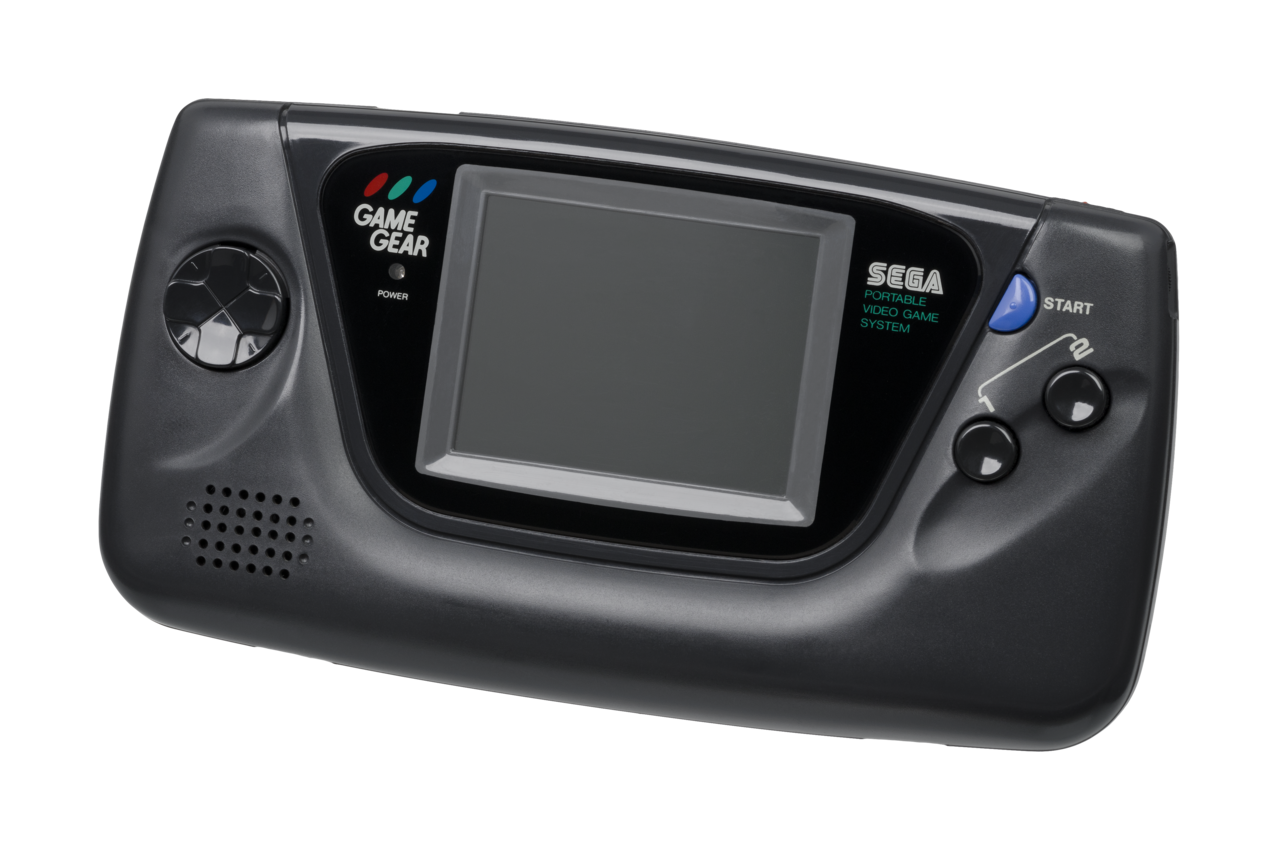
On October 6, 1990, Sega released the Game Gear in Japan. The specs were wild for the time. A 3.2-inch backlit color screen with 4,096 colors. A Z80 CPU running at 3.58 MHz. The ability to play Master System games with an adapter. This wasn't just a handheld gaming device. This was a statement. This was Sega saying, "We're not just going to compete with Nintendo's Game Boy. We're going to embarrass it."
The response in Japan was immediate and overwhelming. Sega sold 40,000 units in the first two days. 90,000 in the first month. By the time the Game Gear hit America in April 1991 at $149.99, there were over 600,000 back orders. The momentum was real. The demand was real. And somehow, despite having objectively superior hardware, better games were coming, and genuine consumer enthusiasm, the Sega Game Gear became one of the most famous failures in handheld gaming history. This is the story of how Sega won the technology war and lost the actual war, spectacularly.

The Hardware Wasn't the Problem. The Batteries Absolutely Were.
Here's where it gets interesting. The Game Gear had one fatal flaw, and it was so obvious that it somehow took everyone by surprise anyway. That beautiful backlit color screen? It was a power hog. A magnificent, electricity-devouring power hog. The Game Gear ran on six AA batteries. Six. And it would eat through them in about three to five hours of continuous play. Think about that for a second. Three to five hours. You go on a family road trip, and your Game Gear is dead before you hit the state line.

Meanwhile, Nintendo's Game Boy ran on four AA batteries and got 30 hours or more. Thirty hours. Not three. Thirty. The contrast was so stark that it wasn't even funny. It was the kind of thing that made parents laugh when they saw the battery requirement on the Game Gear box. "Wait, this needs six batteries?" And that laugh, that simple laugh of disbelief, was the sound of a console's future dying.
The Game Gear did have some solutions. There was an optional rechargeable battery pack. There was an external power supply. There was a car adapter. But none of these solved the fundamental problem: they were all additional purchases. They were all clunky. And they all screamed the same message: the Game Gear, this marvel of technology, this portable color gaming machine, was kind of a nightmare to actually use. When your handheld gaming device requires more accessories than a camping trip, something has gone wrong.
Sega knew this was a problem. They knew it immediately. But by then, momentum is a powerful thing. The Game Gear had launched. The expectation had been set. The Game Boy, by contrast, had already spent years in the market. It had millions of users. It had a library of games that was almost comically deep. And it just worked. You threw four batteries in, and you played for a month. That simplicity, that reliability, that "just works" quality, ended up mattering more than all of Sega's technical superiority.
The Game Boy's Dominance Wasn't Magic. It Was Boring Excellence.
Here's the thing about the Game Boy that people sometimes get wrong. It wasn't a technical marvel. Nintendo engineers had to actively make choices to keep it from being more advanced, because the system was deliberately designed around two principles: battery life and durability. The monochrome green screen that everyone made fun of? That was a choice. That was Nintendo saying, "We could make this fancier, but we're making it more practical instead."
The Game Boy had a simple processor. A simple screen. Simple sound. It was boring. It looked outdated the moment the Game Gear came out. But boring works. Boring survives. Boring lets a parent take their kid on a six-hour road trip and not hear complaints about dead batteries. By March 1996, when Sega discontinued the Game Gear after about six years of production, it had sold 10.62 million units globally. Impressive numbers on the surface. Except the Game Boy had sold 118.69 million units. The Game Boy had lapped the Game Gear twice.
This wasn't because Game Boy owners were more loyal. It wasn't because Nintendo made better games, though they absolutely did, at least for a significant chunk of the Game Gear's life. This happened because when you're asking someone to carry something in their pocket or backpack, practicality matters more than specs. A device that actually works beats a device that's theoretically superior but needs a truck full of batteries.
And here's where the business logic starts to break down a little. Nintendo didn't win because they were smarter about hardware design. Well, they did, but that wasn't the main reason. Nintendo won because they understood a fundamental truth about consumer electronics: the best device is the one people will actually use. And nobody wants to use a device that dies after three hours.
The Master System Adapter Was a Good Idea That Proved Nothing
One of the more interesting things Sega did with the Game Gear was release an adapter that let you play Master System cartridges on the handheld. This is actually kind of brilliant from a business perspective. You already own Master System games? Use them on the Game Gear. You already invested in our library. Now it's portable. Come with us to handheld gaming without losing your existing library.
But here's the thing that people don't talk about enough: this strategy works fine if your library is robust. The Master System had a decent game library, but it was nothing compared to the NES and certainly nothing compared to what the Game Boy had access to through third-party publishers. So the adapter was an interesting technology solution to a business problem it didn't actually solve. More people owned Game Boys. More people wanted to play Game Boy games. Sega's strategy made logical sense on a spreadsheet, and it failed in the real world.
And which is kind of insane, because Sega had other advantages. The Game Gear's processing power meant games could do more impressive things. The color screen meant certain genres could shine. But Sega was spread so thin across hardware platforms that they couldn't capitalize on any of it effectively.
But Here's the Real Problem: Sega Was Trying to Win Six Different Wars at Once
This is where the narrative gets genuinely tragic. The Game Gear wasn't killed by the Game Boy. It was killed by Sega's own chaos. In the early 1990s, Sega was supporting the Genesis, the Game Gear, the Sega CD add-on, the 32X add-on, arcade cabinets, and Saturn development. That's not a product strategy. That's a company eating itself. Every resource committed to Game Gear development was a resource not committed to making sure the Game Gear had the games it needed to compete.
Nintendo, by contrast, was completely focused. One console. One handheld. Tons of resources flowing to both. Sega's structure meant they were fighting a multi-front war with divided attention, divided budgets, and divided talent. The Game Boy didn't win because it was better at being a Game Boy. It won because Nintendo could commit fully to making it indispensable.
Sega's inability to maintain focus destroyed what could have been a dominant position. The Game Gear launched strong. It had momentum. It had a better screen. It had better hardware. And then Sega spread resources so thin across so many platforms that the Game Gear's potential just evaporated. By 1997, when Sega discontinued it, the Genesis and Saturn were where the real battles were happening. The Game Gear had become a side project for a company that couldn't afford side projects.
The Budget Relaunch Almost Saved It, and Then Didn't
In 2000, something interesting happened. Majesco, the video game publisher, licensed the Game Gear and re-released it at $30. Thirty dollars. The original launch price was $149.99. For a $30 handheld with $15 games, suddenly the battery issue seemed less critical. Parents were willing to accept the tradeoffs. The price made the hassles forgivable. And honestly, for what it was, the budget Game Gear was a decent product.
But it was ten years too late. The Game Boy had spent that entire decade establishing market dominance. Game Boy Pocket had come out. Game Boy Color had come out. Tamagotchi was eating the casual market. The Pokemon phenomena had made Game Boy synonymous with gaming itself for an entire generation. A $30 Game Gear was interesting as a curiosity. As a market competitor, it was an afterthought.
Majesco tried. They gave it a legitimate effort. But there's no amount of price cutting that overcomes ten years of being the second player. The Game Gear's chance had been 1991. Not 2000.
What the Game Gear Taught Us About Hardware, Software, and Market Reality
The Game Gear is one of the most instructive failures in gaming history because it's not a failure of execution or ideas. The Game Gear failed because of market forces that pure technical superiority couldn't overcome. And that's a lesson that echoes through gaming, consumer electronics, and technology in general.
You can have the better hardware. You can have the newer technology. You can have the more impressive specs. But if the fundamental user experience is inconvenient, if the software library doesn't match the competition, if your company is too chaotic to properly support the product, and if your competitor has already locked in the market position, better hardware doesn't matter. At all.
The Game Gear was a device ahead of its time in some ways and fundamentally impractical in others. It was a device that demanded infrastructure, accessories, and patience from users who were perfectly happy with a simpler solution. It was a device that represented Sega's technical confidence and strategic confusion all at once. And it was ultimately a device that lost not because it was bad, but because nothing it could offer was worth dealing with dead batteries and limited software.
The Atari Lynx faced similar problems and did even worse, selling only around 500,000 units total. The Lynx was technically superior to both the Game Boy and the Game Gear, and nobody cared. It had the same battery problems plus even fewer games. So the Game Gear's 10.62 million units start looking almost respectable when you realize Sega was competing not just against the Game Boy but against user expectations shaped by decades of Nintendo handheld dominance.
In 2020, Sega released the Game Gear Micro for their 60th anniversary. It's a novelty device with 50 games built in, tiny screen, no cartridge slot, and it costs more than the original Game Gear did at launch. It's a museum piece for collectors, a way of saying, "Remember this thing?" And yeah, people do remember it. They remember it as the handheld that was too ambitious, too power-hungry, and ultimately too late. But they remember it fondly, because hardware enthusiasm is real even when market success isn't. The Game Gear was a remarkable device. It just existed at a moment when remarkable wasn't enough.
The Games Library Problem: Superior Hardware Needs Superior Games
Here's something that gets overlooked in the Game Gear versus Game Boy narrative: hardware is only half the battle. The other half is software. And the Game Gear had a legitimate games library, but it never matched the Game Boy's depth or quality. This is partly a chicken-and-egg problem. Game developers want to develop for platforms where people will buy games. Game Boy had way more users, so developers prioritized Game Boy games. This meant fewer Game Gear exclusives. This meant fewer reasons for Game Boy users to switch.
The Game Gear got some genuinely excellent games. Sonic Chaos. Gunstar Heroes. The Shinobi series. Dragon Kingdom. Some of these games were better than their Game Boy counterparts. But there were fewer of them. And in a market where Network effects matter, fewer games means fewer reasons to buy the console, which means fewer users, which means fewer reasons for developers to make games.
This is a strategy problem that no amount of hardware superiority can solve. You can have the better system, but if there are fewer games, you lose. Sega's strategy of trying to use Master System compatibility as a workaround was theoretically sound but practically limited. Not everyone owned a Master System, and Master System games often didn't translate well to the smaller screen anyway.
By the mid-1990s, the Game Boy had such a deep library that any new user saw value immediately. The Game Gear had to prove its worth with fewer options. Marketing can only take you so far. At some point, the customer looks at the game library and makes a rational choice based on what's available. The Game Boy had more options. Game Boy won this battle decisively.
The Broader Lesson: Market Position Beats Technical Superiority
Looking back at the Game Gear story, the real tragedy is that it was a great device that arrived at exactly the wrong moment. Not too early, not too late, but in a market where first-mover advantage was already insurmountable. Nintendo's Game Boy didn't get there first because it was the most advanced handheld. It got there first because Nintendo had been making handhelds since the 1980s with the Game and Watch series. The Game Boy launched into an existing user base of Nintendo handheld fans.
The Game Gear represented a technical revolution. But revolutions in consumer electronics don't usually win. Incremental improvements backed by existing market position win. The Game Gear tried to leap-frog the Game Boy's position with better hardware and lost the chess match to simple market momentum.
This is true across technology. The technically superior product often loses to the entrenched leader. Not because consumers are stupid. Because switching costs are high, because network effects matter, because inertia is real, and because "good enough and already here" beats "better and asking me to change" surprisingly often. Sega learned this the hard way, multiple times, in multiple markets.
Accessories as a Warning Sign: When Your Product Needs Too Much Stuff
One of the clearest signs that the Game Gear was fighting an uphill battle was the accessory ecosystem. Gaming devices don't need a ton of accessories to be successful. The Game Boy worked fine with just batteries and a game. The Game Gear came with a recommendation for a rechargeable battery pack, a car charger, a magnifying screen lens, a carrying case, and a light adapter. Some of this was optional. Some of it was almost mandatory if you actually wanted to use the device seriously.
This creates a perception problem. When customers see a console that requires that many accessories, they start questioning whether the company itself believes in the product. It sends a signal that the device as shipped isn't quite sufficient. You're not buying a Game Gear. You're buying the foundation of a Game Gear and then spending another $100 in accessories to make it actually usable. The Game Boy, by contrast, required nothing. Just batteries, which you could get anywhere, and a game. That simplicity communicated confidence. The Game Gear's accessory burden communicated desperation.
This is a principle that applies broadly in consumer electronics. If your product works fine by itself, people will buy it. If your product requires accessories to be good, people get suspicious. They wonder why you didn't just make the product better to begin with. The accessory problem for the Game Gear was partly a technical issue, but it was also a marketing and positioning problem. Every accessory sold was an admission that the base product had limitations.
The Collector's Perspective: Why Game Gear Hardware Still Matters Today
Interestingly, the Game Gear has maintained a passionate collector and enthusiast community decades after its discontinuation. Modern retro gaming collectors actively seek out Game Gear hardware, especially certain versions. The appeal is straightforward: it's a technically impressive device from an important era of gaming history. The full color screen still looks better than the Game Boy's monochrome display, even though the Game Boy won the market war.
This split between market success and technical achievement is important to understand. The Game Gear lost the commercial battle, but it won the technical battle decisively. That technical achievement hasn't gone away. The Game Gear Micro released in 2020 sold out repeatedly in Japan. The 50 built-in games, the recreated hardware design, the acknowledgment that the Game Gear mattered: these created real demand, decades later, from people who appreciate what Sega achieved technically even if they understand why it failed commercially.
This is one of the few consolations for Sega in the Game Gear story. You can lose the market and still win in history. The Game Boy won more decisively, but the Game Gear didn't disappear. It's remembered fondly by people who actually used it. It's respected by people who understand handheld gaming history. And it's preserved in the way that truly important technological achievements are preserved: with reverence even if not with market dominance.
The Parallel Universe Where Sega Wins: What Would Have Changed
Imagine a scenario where Sega had solved the battery problem. Not with accessories. Actually solved it in the hardware. Imagine a Game Gear that ran 20+ hours on six AA batteries instead of 3-5 hours. Or imagine a Game Gear that used four AA batteries instead of six. What would have changed?
Honestly, it might not have mattered. The Game Boy still had the installed base. The Game Boy still had the game library. But it would have removed the most compelling complaint. It would have made the battery argument disappear, and the Game Gear would have been left with all of its advantages. The better screen. The better processor. Master System compatibility. Sega's arcade libraries ported over. None of these were enough to overcome the battery problem and the library disparity. But maybe they would have been if Sega had just solved the battery problem.
This is speculative, but it's instructive. Sometimes in business, there's one thing that's so wrong that it overshadows everything that's right. Fix that one thing, and the whole dynamic might have shifted. The Game Gear's battery life was that one thing. And Sega never quite fixed it convincingly. Even with rechargeable options and car chargers, they never delivered a game that ran as long as the Game Boy on comparable batteries. That single failure to solve a core problem meant that no amount of other advantages could overcome it.
FAQ: Questions About the Sega Game Gear
Q: Was the Game Gear actually better than the Game Boy?
A: Technically, yes. The color screen was superior. The processing power was stronger. The sound was better. But consumer electronics aren't evaluated solely on tech specs. They're evaluated on practicality, game library, price, and overall user experience. The Game Gear lost decisively on practicality due to battery life and on game library due to Nintendo's dominance and Sega's distracted support.
Q: Could Sega have won the handheld market if they'd focused?
A: Possibly. If Sega had committed resources fully to Game Gear development, if they'd shipped it with a better battery solution or made it less power-hungry, and if they'd maintained development support instead of spreading themselves across the Genesis, Sega CD, 32X, and Saturn, the Game Gear might have been genuinely competitive. But this would have required a level of strategic focus Sega didn't exhibit at the time.
Q: Why did the monochrome Game Boy beat color handhelds?
A: Because battery life matters more than visual fidelity when you're carrying a device in your pocket. A Game Boy that runs for 30 hours is infinitely more useful than a Game Gear that runs for 3-5 hours, no matter how much better the screen looks. Nintendo bet on practicality. Sega bet on specs. Practicality won.
Q: What happened to Game Gear developers after 1997?
A: Many moved to Saturn development. Some left Sega. The Game Gear's discontinuation meant developers had to migrate to whichever Sega platform was still current, which at that point was the Saturn, already struggling against the PlayStation. It was a cascade of disruption that illustrated just how damaging Sega's hardware diversity strategy was.
Q: Is the Game Gear Micro worth buying?
A: If you're a gaming collector or Sega enthusiast, probably yes. It's a novelty product that serves as both a piece of gaming history and a compact entertainment device. But it's not a practical handheld and isn't meant to be. It's meant to be a commemorative piece from Sega acknowledging their handheld heritage.