What Happened to the Game Boy, Nintendo's Unbreakable Handheld

Picture this: it's Christmas morning, 1989. You're sitting on the carpet in your living room, surrounded by torn wrapping paper, and you're holding this chunky gray rectangle that weighs about as much as a can of soup. The screen is a weird greenish tint. There's no backlight. The graphics look like something from five years ago. And you could not care less, because Tetris is falling from the top of that little screen and you are completely, hopelessly, irreversibly hooked.

That gray brick was the Nintendo Game Boy, and it changed everything about how we thought about video games. Not because it was the most powerful. Not because it had the best screen. Not because it looked cool. It changed everything because one man at Nintendo understood something that the rest of the industry didn't: the best technology doesn't always win. Sometimes the best idea wins. And the Game Boy was, from top to bottom, one of the best ideas anyone in gaming ever had.

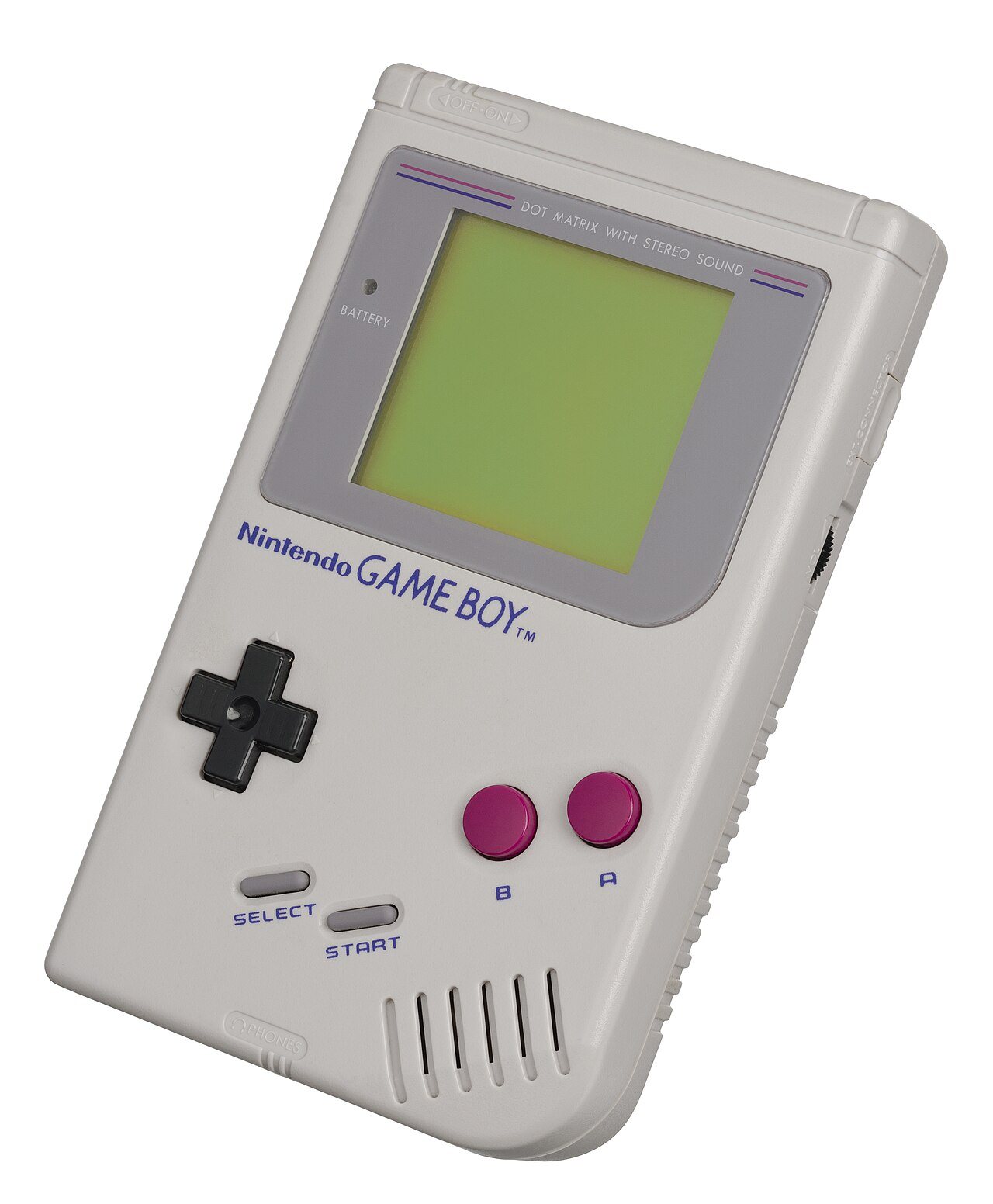
The original Nintendo Game Boy handheld console
The original Nintendo Game Boy. No color, no backlight, no problem. This little gray brick sold over 118 million units worldwide.

Today, the original Game Boy is a collector's item. You can find them at swap meets, retro gaming stores, and your parents' attic. The line was eventually discontinued in the 2000s after spawning the Game Boy Pocket, Game Boy Color, and Game Boy Advance. But the story of how this thing came to exist, how it crushed technologically superior competitors, how it nearly died and then got resurrected by a bunch of fictional pocket monsters, that story is one of the wildest rides in gaming history.

The Man Who Built a Game Boy Before There Was a Game Boy

You can't talk about the Game Boy without talking about Gunpei Yokoi, and you can't talk about Gunpei Yokoi without understanding his philosophy. Yokoi was a maintenance man at Nintendo in the 1960s. Literally. He maintained the machines on the assembly line. One day, the president of Nintendo, Hiroshi Yamauchi, saw Yokoi playing with an extendable arm toy he'd built in his spare time. Yamauchi told him to turn it into a product. That toy became the Ultra Hand, and it sold over a million units. Yokoi was promoted out of maintenance and into product development, and Nintendo's trajectory changed forever.

Yokoi developed a design philosophy he called "lateral thinking with withered technology." The idea was deceptively simple: don't chase cutting-edge components. Instead, use technology that's mature, cheap, well-understood, and abundant. Then find a creative new use for it. When Sharp and Casio were in a price war over digital calculator components in the early 1980s, Yokoi looked at all those cheap LCD screens and semiconductors flooding the market and thought: what if we made games with these? The result was the Game & Watch series, which sold 43.4 million units between 1980 and 1991.

The Game Boy was the next logical step. Yamauchi wanted a portable console that could play interchangeable cartridges, something beyond the single-game limitations of Game & Watch. Yokoi and his R&D1 team got to work. And the decisions they made during development would define the entire handheld gaming market for the next decade.

The Decision That Won the War Before It Started

Here's where the story gets interesting. By the late 1980s, LCD technology had advanced to the point where color screens were possible in handheld devices. Yokoi knew this. His engineers knew this. They could have put a color screen in the Game Boy. They chose not to.

Yokoi's reasoning was pure "withered technology" logic. A color screen in 1989 would drain batteries in a few hours. It would make the unit more expensive. It would generate more heat. And the display quality of affordable color LCDs at the time was honestly not great. So Yokoi went with a monochrome, green-tinted dot matrix screen. It wasn't pretty. It wasn't flashy. But it sipped power. The Game Boy ran for 30 or more hours on four AA batteries. Thirty hours. Think about that for a second.

The other key decision was the processor. The Game Boy used a custom 8-bit Sharp LR35902 CPU running at 4.19 MHz. For context, this was roughly comparable to the processing power of the original NES, a home console from 1983. In 1989, this was ancient. But it was cheap, reliable, and Yokoi's team knew exactly how to squeeze every drop of performance out of it.

The price tag? $89.95 at launch in the United States on July 31, 1989. And it came bundled with a game. Not just any game. The game.

Tetris: The Deal That Changed Everything

The story of how Tetris ended up bundled with the Game Boy is, frankly, the kind of thing that sounds like it was made up for a movie. (They did make a movie about it, actually. Apple TV+ released it in 2023.)

Tetris was created by Alexey Pajitnov, a Soviet computer scientist, in 1985. By the late 1980s, the rights to the game were tangled in a web of licensing deals, sub-licenses, and Cold War politics. Multiple companies claimed they owned the rights to different versions on different platforms. It was a mess.

Enter Henk Rogers, a Dutch-born game developer living in Japan. Rogers had discovered Tetris at the Consumer Electronics Show in January 1988 and immediately understood its potential. He secured the Japanese console rights and brought the game to Nintendo's attention. When he learned that the handheld rights were still up for grabs, he flew to Moscow. In the middle of winter. To negotiate directly with ELORG, the Soviet government's software export agency.

Rogers got the deal done. He secured the handheld rights to Tetris for Nintendo. And then he said something to Minoru Arakawa, the president of Nintendo of America, that might be the single most important piece of marketing advice in gaming history: "If you want to sell Game Boys to little boys, bundle it with Mario. If you want to sell Game Boys to everyone, bundle it with Tetris."

Nintendo bundled it with Tetris.

The results were immediate and staggering. In Japan, the entire initial stock of 300,000 units sold out in two weeks. In the United States, one million units were sold within the first few weeks. The Game Boy didn't just launch well. It launched like a rocket.

The Competition That Should Have Won (But Didn't)

Here's where a lot of people get confused about the Game Boy's story. On paper, it should have been destroyed by its competitors. The Atari Lynx launched just two months after the Game Boy, in September 1989, with a color screen, a more powerful processor, and the ability to link up to 18 units for multiplayer. It cost $179.99. The Sega Game Gear arrived in 1990 in Japan and 1991 in North America, also with a full-color backlit screen, at $149.99.

Both of these handhelds were objectively more impressive from a technical standpoint. The Lynx's screen was gorgeous. The Game Gear was basically a portable Sega Master System. If you put them side by side with a Game Boy, you'd pick one of the competitors every time. The Game Boy looked like a calculator next to them.

Commodore 64 home computer, front and back view
Before the Game Boy, gaming meant being tethered to a machine like the Commodore 64. Portable gaming existed, but nothing with interchangeable cartridges had taken off at this scale.

But here's what Atari and Sega didn't account for. The Lynx ate six AA batteries in four to five hours. The Game Gear was even worse, burning through six AA batteries in three to five hours. Parents buying Christmas gifts in 1989 and 1990 were doing the math. A Game Boy ran for 30 hours on four AAs. A Game Gear ran for maybe four hours on six. That's not a minor difference. That's the difference between a toy you can take on a road trip and a toy that dies before you reach the state line.

And then there was the game library. Nintendo had relationships with nearly every major third-party developer. The Game Boy launched with titles like Super Mario Land, Tetris, Alleyway, and Baseball. Within two years, it had hundreds of games. The Lynx and Game Gear had decent libraries, but nothing close. The Game Boy was where the games were, and in gaming, that's all that matters.

The Atari Lynx sold roughly 3 million units before being discontinued. The Sega Game Gear sold about 10.6 million. The Game Boy? Over 118 million when you include the Game Boy Color. It wasn't even close.

The Mid-90s Slump and the Pocket That Fixed It

By 1995, the Game Boy was starting to show its age. The original hardware was six years old. The SNES and Sega Genesis were dominating home gaming with 16-bit graphics, and the Game Boy's chunky 8-bit look felt increasingly dated. Sales were slowing down. Nintendo was focused on developing the Nintendo 64. The Game Boy wasn't dead, but it was definitely fading.

Nintendo's answer was the Game Boy Pocket, released in Japan in July 1996 and in North America in September 1996. It was smaller, lighter, had a sharper screen (still monochrome, but with a true gray-and-white display instead of the green tint), and ran on just two AAA batteries. It was, in every way, a refinement rather than a reinvention. Same processor, same game compatibility, just a sleeker package.

The Pocket helped, but what really saved the Game Boy was something nobody at Nintendo could have predicted. Something that started as a weird little project by a guy obsessed with collecting bugs as a kid.

Pokemon: The Miracle That Gave the Game Boy a Second Life

Satoshi Tajiri grew up in a suburb of Tokyo that, during his childhood, was still semi-rural. He loved catching insects and tadpoles. As the area urbanized and the fields disappeared, he wanted to give other kids the experience of collecting creatures. He pitched his idea to Nintendo in the early 1990s. It took six years to develop. The project nearly bankrupted his company, Game Freak. Multiple developers quit during production.

Pokemon Red and Green launched in Japan on February 27, 1996. They were released for the Game Boy. Not the upcoming Nintendo 64. Not some new handheld. The Game Boy, a seven-year-old piece of hardware that most people in the industry had written off.

The games were slow to catch on at first. Initial reviews were modest. But word of mouth spread, and by the end of 1996, Red, Green, and Blue (an updated version of Green) had sold 1.04 million copies in Japan. In 1997, that number exploded to 3.65 million, making Pokemon the best-selling game in the country, beating Final Fantasy VII.

When Pokemon Red and Blue launched in North America on September 28, 1998, it was a phenomenon. Two hundred thousand copies sold in the first two weeks. By the end of the year, four million units were gone. The games single-handedly revived Game Boy hardware sales. Stores couldn't keep Game Boys in stock. In 1998, a device that was almost a decade old was suddenly the hottest thing in gaming again.

The timing was perfect for the Game Boy Color, which launched in Japan in October 1998 and in North America in November. It was backward-compatible with every original Game Boy game. Pokemon Gold and Silver, released in 1999 in Japan and 2000 worldwide, would go on to sell 23 million copies. The Game Boy line wasn't just alive. It was thriving.

Game Boy Advance and the End of an Era

The Game Boy Advance launched on March 21, 2001, in Japan and June 11 in North America. It was the first true generational leap for the Game Boy line: a 32-bit ARM7 processor, a larger screen, and graphics roughly comparable to the SNES. It was still backward-compatible with Game Boy and Game Boy Color cartridges, which was huge. Your entire library carried over.

The GBA sold 81.51 million units worldwide across its various models, including the GBA SP (the clamshell redesign that finally added a backlit screen in 2003) and the Game Boy Micro (a tiny, oddly beautiful device released in 2005 that nobody bought). But the writing was on the wall. The Nintendo DS launched in November 2004, with its dual screens and touch input, and it was clear that the Game Boy name was being retired.

Nintendo never officially announced the death of the Game Boy line. There was no press release. The last Game Boy Advance games trickled out in 2007 and 2008, and production of GBA hardware ceased around the same time. The Game Boy just quietly stepped aside, its job done.

The Legacy That Won't Quit

The original Game Boy is one of the most important consumer electronics products ever made. That's not hyperbole. Before the Game Boy, portable gaming was a novelty. After the Game Boy, it was an industry. The entire lineage of handheld gaming, from the PSP to the Nintendo DS to the Switch to the Steam Deck, traces back to that chunky gray rectangle.

Gunpei Yokoi didn't live to see the full extent of what he'd created. He left Nintendo in 1996 after the commercial failure of the Virtual Boy, a 3D headset that was ahead of its time but executed poorly. On October 4, 1997, Yokoi died in a car accident on a highway in Japan. He was 56 years old. The news devastated the gaming community, and tributes to his work continue to this day.

But his philosophy endures. "Lateral thinking with withered technology" is still invoked every time someone asks why Nintendo doesn't chase raw power. The Wii outsold the PlayStation 3 and Xbox 360 with hardware that was essentially a slightly upgraded GameCube. The Nintendo Switch uses a mobile processor that was outdated at launch. And both were massive hits, because Nintendo understood what Yokoi taught them decades ago: it's not about the specs. It's about the experience.

The Game Boy proved that in 1989. A monochrome screen. An 8-bit processor. Four AA batteries. And a little Russian puzzle game that grabbed you by the brain and wouldn't let go. That was enough. That was more than enough. If you had one, you already know. And if you didn't, well. You missed something special.

Frequently Asked Questions

When did the original Game Boy come out?
The Game Boy launched in Japan on April 21, 1989, and in North America on July 31, 1989. The European release followed on September 28, 1990. It launched at $89.95 in the United States, bundled with Tetris.

How many Game Boys were sold?
The original Game Boy and Game Boy Color combined sold over 118.69 million units worldwide. When you include the Game Boy Advance family, the total Game Boy lineage sold over 200 million units.

Why did the Game Boy only have a green screen?
Designer Gunpei Yokoi intentionally chose a monochrome screen to maximize battery life (30+ hours on four AA batteries) and keep the price low. Competitors with color screens like the Sega Game Gear and Atari Lynx lasted only 3 to 5 hours on six batteries.

Who invented the Game Boy?
Gunpei Yokoi led the development of the Game Boy at Nintendo's R&D1 division. Yokoi also created the Game & Watch series and produced franchises like Metroid and Kid Icarus. His design philosophy of "lateral thinking with withered technology" defined Nintendo's approach to hardware for decades.

When was the Game Boy discontinued?
Nintendo never made a formal announcement. The Game Boy Color was last produced around 2003. The Game Boy Advance line continued until around 2008-2010, when remaining stock was sold off. The Nintendo DS effectively replaced the Game Boy brand starting in 2004.

Did Pokemon really save the Game Boy?
Yes. By the mid-1990s, Game Boy sales were declining significantly. Pokemon Red and Green launched in Japan in February 1996 and revived hardware sales almost overnight. When the games reached North America in 1998, they sold four million copies by year's end and made the nearly decade-old Game Boy the hottest gaming device on the market again.

๐Ÿ“– What Happened to the Game Boy, Nintendo's Unbreakable Handheld
_ โ–ก ร—
← Back

What Happened to the Game Boy, Nintendo's Unbreakable Handheld

2026-04-13 by 404 Memory Found

Picture this: it's Christmas morning, 1989. You're sitting on the carpet in your living room, surrounded by torn wrapping paper, and you're holding this chunky gray rectangle that weighs about as much as a can of soup. The screen is a weird greenish tint. There's no backlight. The graphics look like something from five years ago. And you could not care less, because Tetris is falling from the top of that little screen and you are completely, hopelessly, irreversibly hooked.

That gray brick was the Nintendo Game Boy, and it changed everything about how we thought about video games. Not because it was the most powerful. Not because it had the best screen. Not because it looked cool. It changed everything because one man at Nintendo understood something that the rest of the industry didn't: the best technology doesn't always win. Sometimes the best idea wins. And the Game Boy was, from top to bottom, one of the best ideas anyone in gaming ever had.

The original Nintendo Game Boy handheld console
The original Nintendo Game Boy. No color, no backlight, no problem. This little gray brick sold over 118 million units worldwide.

Today, the original Game Boy is a collector's item. You can find them at swap meets, retro gaming stores, and your parents' attic. The line was eventually discontinued in the 2000s after spawning the Game Boy Pocket, Game Boy Color, and Game Boy Advance. But the story of how this thing came to exist, how it crushed technologically superior competitors, how it nearly died and then got resurrected by a bunch of fictional pocket monsters, that story is one of the wildest rides in gaming history.

The Man Who Built a Game Boy Before There Was a Game Boy

You can't talk about the Game Boy without talking about Gunpei Yokoi, and you can't talk about Gunpei Yokoi without understanding his philosophy. Yokoi was a maintenance man at Nintendo in the 1960s. Literally. He maintained the machines on the assembly line. One day, the president of Nintendo, Hiroshi Yamauchi, saw Yokoi playing with an extendable arm toy he'd built in his spare time. Yamauchi told him to turn it into a product. That toy became the Ultra Hand, and it sold over a million units. Yokoi was promoted out of maintenance and into product development, and Nintendo's trajectory changed forever.

Yokoi developed a design philosophy he called "lateral thinking with withered technology." The idea was deceptively simple: don't chase cutting-edge components. Instead, use technology that's mature, cheap, well-understood, and abundant. Then find a creative new use for it. When Sharp and Casio were in a price war over digital calculator components in the early 1980s, Yokoi looked at all those cheap LCD screens and semiconductors flooding the market and thought: what if we made games with these? The result was the Game & Watch series, which sold 43.4 million units between 1980 and 1991.

The Game Boy was the next logical step. Yamauchi wanted a portable console that could play interchangeable cartridges, something beyond the single-game limitations of Game & Watch. Yokoi and his R&D1 team got to work. And the decisions they made during development would define the entire handheld gaming market for the next decade.

The Decision That Won the War Before It Started

Here's where the story gets interesting. By the late 1980s, LCD technology had advanced to the point where color screens were possible in handheld devices. Yokoi knew this. His engineers knew this. They could have put a color screen in the Game Boy. They chose not to.

Yokoi's reasoning was pure "withered technology" logic. A color screen in 1989 would drain batteries in a few hours. It would make the unit more expensive. It would generate more heat. And the display quality of affordable color LCDs at the time was honestly not great. So Yokoi went with a monochrome, green-tinted dot matrix screen. It wasn't pretty. It wasn't flashy. But it sipped power. The Game Boy ran for 30 or more hours on four AA batteries. Thirty hours. Think about that for a second.

The other key decision was the processor. The Game Boy used a custom 8-bit Sharp LR35902 CPU running at 4.19 MHz. For context, this was roughly comparable to the processing power of the original NES, a home console from 1983. In 1989, this was ancient. But it was cheap, reliable, and Yokoi's team knew exactly how to squeeze every drop of performance out of it.

The price tag? $89.95 at launch in the United States on July 31, 1989. And it came bundled with a game. Not just any game. The game.

Tetris: The Deal That Changed Everything

The story of how Tetris ended up bundled with the Game Boy is, frankly, the kind of thing that sounds like it was made up for a movie. (They did make a movie about it, actually. Apple TV+ released it in 2023.)

Tetris was created by Alexey Pajitnov, a Soviet computer scientist, in 1985. By the late 1980s, the rights to the game were tangled in a web of licensing deals, sub-licenses, and Cold War politics. Multiple companies claimed they owned the rights to different versions on different platforms. It was a mess.

Enter Henk Rogers, a Dutch-born game developer living in Japan. Rogers had discovered Tetris at the Consumer Electronics Show in January 1988 and immediately understood its potential. He secured the Japanese console rights and brought the game to Nintendo's attention. When he learned that the handheld rights were still up for grabs, he flew to Moscow. In the middle of winter. To negotiate directly with ELORG, the Soviet government's software export agency.

Rogers got the deal done. He secured the handheld rights to Tetris for Nintendo. And then he said something to Minoru Arakawa, the president of Nintendo of America, that might be the single most important piece of marketing advice in gaming history: "If you want to sell Game Boys to little boys, bundle it with Mario. If you want to sell Game Boys to everyone, bundle it with Tetris."

Nintendo bundled it with Tetris.

The results were immediate and staggering. In Japan, the entire initial stock of 300,000 units sold out in two weeks. In the United States, one million units were sold within the first few weeks. The Game Boy didn't just launch well. It launched like a rocket.

The Competition That Should Have Won (But Didn't)

Here's where a lot of people get confused about the Game Boy's story. On paper, it should have been destroyed by its competitors. The Atari Lynx launched just two months after the Game Boy, in September 1989, with a color screen, a more powerful processor, and the ability to link up to 18 units for multiplayer. It cost $179.99. The Sega Game Gear arrived in 1990 in Japan and 1991 in North America, also with a full-color backlit screen, at $149.99.

Both of these handhelds were objectively more impressive from a technical standpoint. The Lynx's screen was gorgeous. The Game Gear was basically a portable Sega Master System. If you put them side by side with a Game Boy, you'd pick one of the competitors every time. The Game Boy looked like a calculator next to them.

Commodore 64 home computer, front and back view
Before the Game Boy, gaming meant being tethered to a machine like the Commodore 64. Portable gaming existed, but nothing with interchangeable cartridges had taken off at this scale.

But here's what Atari and Sega didn't account for. The Lynx ate six AA batteries in four to five hours. The Game Gear was even worse, burning through six AA batteries in three to five hours. Parents buying Christmas gifts in 1989 and 1990 were doing the math. A Game Boy ran for 30 hours on four AAs. A Game Gear ran for maybe four hours on six. That's not a minor difference. That's the difference between a toy you can take on a road trip and a toy that dies before you reach the state line.

And then there was the game library. Nintendo had relationships with nearly every major third-party developer. The Game Boy launched with titles like Super Mario Land, Tetris, Alleyway, and Baseball. Within two years, it had hundreds of games. The Lynx and Game Gear had decent libraries, but nothing close. The Game Boy was where the games were, and in gaming, that's all that matters.

The Atari Lynx sold roughly 3 million units before being discontinued. The Sega Game Gear sold about 10.6 million. The Game Boy? Over 118 million when you include the Game Boy Color. It wasn't even close.

The Mid-90s Slump and the Pocket That Fixed It

By 1995, the Game Boy was starting to show its age. The original hardware was six years old. The SNES and Sega Genesis were dominating home gaming with 16-bit graphics, and the Game Boy's chunky 8-bit look felt increasingly dated. Sales were slowing down. Nintendo was focused on developing the Nintendo 64. The Game Boy wasn't dead, but it was definitely fading.

Nintendo's answer was the Game Boy Pocket, released in Japan in July 1996 and in North America in September 1996. It was smaller, lighter, had a sharper screen (still monochrome, but with a true gray-and-white display instead of the green tint), and ran on just two AAA batteries. It was, in every way, a refinement rather than a reinvention. Same processor, same game compatibility, just a sleeker package.

The Pocket helped, but what really saved the Game Boy was something nobody at Nintendo could have predicted. Something that started as a weird little project by a guy obsessed with collecting bugs as a kid.

Pokemon: The Miracle That Gave the Game Boy a Second Life

Satoshi Tajiri grew up in a suburb of Tokyo that, during his childhood, was still semi-rural. He loved catching insects and tadpoles. As the area urbanized and the fields disappeared, he wanted to give other kids the experience of collecting creatures. He pitched his idea to Nintendo in the early 1990s. It took six years to develop. The project nearly bankrupted his company, Game Freak. Multiple developers quit during production.

Pokemon Red and Green launched in Japan on February 27, 1996. They were released for the Game Boy. Not the upcoming Nintendo 64. Not some new handheld. The Game Boy, a seven-year-old piece of hardware that most people in the industry had written off.

The games were slow to catch on at first. Initial reviews were modest. But word of mouth spread, and by the end of 1996, Red, Green, and Blue (an updated version of Green) had sold 1.04 million copies in Japan. In 1997, that number exploded to 3.65 million, making Pokemon the best-selling game in the country, beating Final Fantasy VII.

When Pokemon Red and Blue launched in North America on September 28, 1998, it was a phenomenon. Two hundred thousand copies sold in the first two weeks. By the end of the year, four million units were gone. The games single-handedly revived Game Boy hardware sales. Stores couldn't keep Game Boys in stock. In 1998, a device that was almost a decade old was suddenly the hottest thing in gaming again.

The timing was perfect for the Game Boy Color, which launched in Japan in October 1998 and in North America in November. It was backward-compatible with every original Game Boy game. Pokemon Gold and Silver, released in 1999 in Japan and 2000 worldwide, would go on to sell 23 million copies. The Game Boy line wasn't just alive. It was thriving.

Game Boy Advance and the End of an Era

The Game Boy Advance launched on March 21, 2001, in Japan and June 11 in North America. It was the first true generational leap for the Game Boy line: a 32-bit ARM7 processor, a larger screen, and graphics roughly comparable to the SNES. It was still backward-compatible with Game Boy and Game Boy Color cartridges, which was huge. Your entire library carried over.

The GBA sold 81.51 million units worldwide across its various models, including the GBA SP (the clamshell redesign that finally added a backlit screen in 2003) and the Game Boy Micro (a tiny, oddly beautiful device released in 2005 that nobody bought). But the writing was on the wall. The Nintendo DS launched in November 2004, with its dual screens and touch input, and it was clear that the Game Boy name was being retired.

Nintendo never officially announced the death of the Game Boy line. There was no press release. The last Game Boy Advance games trickled out in 2007 and 2008, and production of GBA hardware ceased around the same time. The Game Boy just quietly stepped aside, its job done.

The Legacy That Won't Quit

The original Game Boy is one of the most important consumer electronics products ever made. That's not hyperbole. Before the Game Boy, portable gaming was a novelty. After the Game Boy, it was an industry. The entire lineage of handheld gaming, from the PSP to the Nintendo DS to the Switch to the Steam Deck, traces back to that chunky gray rectangle.

Gunpei Yokoi didn't live to see the full extent of what he'd created. He left Nintendo in 1996 after the commercial failure of the Virtual Boy, a 3D headset that was ahead of its time but executed poorly. On October 4, 1997, Yokoi died in a car accident on a highway in Japan. He was 56 years old. The news devastated the gaming community, and tributes to his work continue to this day.

But his philosophy endures. "Lateral thinking with withered technology" is still invoked every time someone asks why Nintendo doesn't chase raw power. The Wii outsold the PlayStation 3 and Xbox 360 with hardware that was essentially a slightly upgraded GameCube. The Nintendo Switch uses a mobile processor that was outdated at launch. And both were massive hits, because Nintendo understood what Yokoi taught them decades ago: it's not about the specs. It's about the experience.

The Game Boy proved that in 1989. A monochrome screen. An 8-bit processor. Four AA batteries. And a little Russian puzzle game that grabbed you by the brain and wouldn't let go. That was enough. That was more than enough. If you had one, you already know. And if you didn't, well. You missed something special.

Frequently Asked Questions

When did the original Game Boy come out?
The Game Boy launched in Japan on April 21, 1989, and in North America on July 31, 1989. The European release followed on September 28, 1990. It launched at $89.95 in the United States, bundled with Tetris.

How many Game Boys were sold?
The original Game Boy and Game Boy Color combined sold over 118.69 million units worldwide. When you include the Game Boy Advance family, the total Game Boy lineage sold over 200 million units.

Why did the Game Boy only have a green screen?
Designer Gunpei Yokoi intentionally chose a monochrome screen to maximize battery life (30+ hours on four AA batteries) and keep the price low. Competitors with color screens like the Sega Game Gear and Atari Lynx lasted only 3 to 5 hours on six batteries.

Who invented the Game Boy?
Gunpei Yokoi led the development of the Game Boy at Nintendo's R&D1 division. Yokoi also created the Game & Watch series and produced franchises like Metroid and Kid Icarus. His design philosophy of "lateral thinking with withered technology" defined Nintendo's approach to hardware for decades.

When was the Game Boy discontinued?
Nintendo never made a formal announcement. The Game Boy Color was last produced around 2003. The Game Boy Advance line continued until around 2008-2010, when remaining stock was sold off. The Nintendo DS effectively replaced the Game Boy brand starting in 2004.

Did Pokemon really save the Game Boy?
Yes. By the mid-1990s, Game Boy sales were declining significantly. Pokemon Red and Green launched in Japan in February 1996 and revived hardware sales almost overnight. When the games reached North America in 1998, they sold four million copies by year's end and made the nearly decade-old Game Boy the hottest gaming device on the market again.

๐Ÿ“– What Happened to the Game Boy, Nintendo's Unbreakable Handheld

Picture this: it's Christmas morning, 1989. You're sitting on the carpet in your living room, surrounded by torn wrapping paper, and you're holding this chunky gray rectangle that weighs about as much as a can of soup. The screen is a weird greenish tint. There's no backlight. The graphics look like something from five years ago. And you could not care less, because Tetris is falling from the top of that little screen and you are completely, hopelessly, irreversibly hooked.

That gray brick was the Nintendo Game Boy, and it changed everything about how we thought about video games. Not because it was the most powerful. Not because it had the best screen. Not because it looked cool. It changed everything because one man at Nintendo understood something that the rest of the industry didn't: the best technology doesn't always win. Sometimes the best idea wins. And the Game Boy was, from top to bottom, one of the best ideas anyone in gaming ever had.

The original Nintendo Game Boy handheld console
The original Nintendo Game Boy. No color, no backlight, no problem. This little gray brick sold over 118 million units worldwide.

Today, the original Game Boy is a collector's item. You can find them at swap meets, retro gaming stores, and your parents' attic. The line was eventually discontinued in the 2000s after spawning the Game Boy Pocket, Game Boy Color, and Game Boy Advance. But the story of how this thing came to exist, how it crushed technologically superior competitors, how it nearly died and then got resurrected by a bunch of fictional pocket monsters, that story is one of the wildest rides in gaming history.

The Man Who Built a Game Boy Before There Was a Game Boy

You can't talk about the Game Boy without talking about Gunpei Yokoi, and you can't talk about Gunpei Yokoi without understanding his philosophy. Yokoi was a maintenance man at Nintendo in the 1960s. Literally. He maintained the machines on the assembly line. One day, the president of Nintendo, Hiroshi Yamauchi, saw Yokoi playing with an extendable arm toy he'd built in his spare time. Yamauchi told him to turn it into a product. That toy became the Ultra Hand, and it sold over a million units. Yokoi was promoted out of maintenance and into product development, and Nintendo's trajectory changed forever.

Yokoi developed a design philosophy he called "lateral thinking with withered technology." The idea was deceptively simple: don't chase cutting-edge components. Instead, use technology that's mature, cheap, well-understood, and abundant. Then find a creative new use for it. When Sharp and Casio were in a price war over digital calculator components in the early 1980s, Yokoi looked at all those cheap LCD screens and semiconductors flooding the market and thought: what if we made games with these? The result was the Game & Watch series, which sold 43.4 million units between 1980 and 1991.

The Game Boy was the next logical step. Yamauchi wanted a portable console that could play interchangeable cartridges, something beyond the single-game limitations of Game & Watch. Yokoi and his R&D1 team got to work. And the decisions they made during development would define the entire handheld gaming market for the next decade.

The Decision That Won the War Before It Started

Here's where the story gets interesting. By the late 1980s, LCD technology had advanced to the point where color screens were possible in handheld devices. Yokoi knew this. His engineers knew this. They could have put a color screen in the Game Boy. They chose not to.

Yokoi's reasoning was pure "withered technology" logic. A color screen in 1989 would drain batteries in a few hours. It would make the unit more expensive. It would generate more heat. And the display quality of affordable color LCDs at the time was honestly not great. So Yokoi went with a monochrome, green-tinted dot matrix screen. It wasn't pretty. It wasn't flashy. But it sipped power. The Game Boy ran for 30 or more hours on four AA batteries. Thirty hours. Think about that for a second.

The other key decision was the processor. The Game Boy used a custom 8-bit Sharp LR35902 CPU running at 4.19 MHz. For context, this was roughly comparable to the processing power of the original NES, a home console from 1983. In 1989, this was ancient. But it was cheap, reliable, and Yokoi's team knew exactly how to squeeze every drop of performance out of it.

The price tag? $89.95 at launch in the United States on July 31, 1989. And it came bundled with a game. Not just any game. The game.

Tetris: The Deal That Changed Everything

The story of how Tetris ended up bundled with the Game Boy is, frankly, the kind of thing that sounds like it was made up for a movie. (They did make a movie about it, actually. Apple TV+ released it in 2023.)

Tetris was created by Alexey Pajitnov, a Soviet computer scientist, in 1985. By the late 1980s, the rights to the game were tangled in a web of licensing deals, sub-licenses, and Cold War politics. Multiple companies claimed they owned the rights to different versions on different platforms. It was a mess.

Enter Henk Rogers, a Dutch-born game developer living in Japan. Rogers had discovered Tetris at the Consumer Electronics Show in January 1988 and immediately understood its potential. He secured the Japanese console rights and brought the game to Nintendo's attention. When he learned that the handheld rights were still up for grabs, he flew to Moscow. In the middle of winter. To negotiate directly with ELORG, the Soviet government's software export agency.

Rogers got the deal done. He secured the handheld rights to Tetris for Nintendo. And then he said something to Minoru Arakawa, the president of Nintendo of America, that might be the single most important piece of marketing advice in gaming history: "If you want to sell Game Boys to little boys, bundle it with Mario. If you want to sell Game Boys to everyone, bundle it with Tetris."

Nintendo bundled it with Tetris.

The results were immediate and staggering. In Japan, the entire initial stock of 300,000 units sold out in two weeks. In the United States, one million units were sold within the first few weeks. The Game Boy didn't just launch well. It launched like a rocket.

The Competition That Should Have Won (But Didn't)

Here's where a lot of people get confused about the Game Boy's story. On paper, it should have been destroyed by its competitors. The Atari Lynx launched just two months after the Game Boy, in September 1989, with a color screen, a more powerful processor, and the ability to link up to 18 units for multiplayer. It cost $179.99. The Sega Game Gear arrived in 1990 in Japan and 1991 in North America, also with a full-color backlit screen, at $149.99.

Both of these handhelds were objectively more impressive from a technical standpoint. The Lynx's screen was gorgeous. The Game Gear was basically a portable Sega Master System. If you put them side by side with a Game Boy, you'd pick one of the competitors every time. The Game Boy looked like a calculator next to them.

Commodore 64 home computer, front and back view
Before the Game Boy, gaming meant being tethered to a machine like the Commodore 64. Portable gaming existed, but nothing with interchangeable cartridges had taken off at this scale.

But here's what Atari and Sega didn't account for. The Lynx ate six AA batteries in four to five hours. The Game Gear was even worse, burning through six AA batteries in three to five hours. Parents buying Christmas gifts in 1989 and 1990 were doing the math. A Game Boy ran for 30 hours on four AAs. A Game Gear ran for maybe four hours on six. That's not a minor difference. That's the difference between a toy you can take on a road trip and a toy that dies before you reach the state line.

And then there was the game library. Nintendo had relationships with nearly every major third-party developer. The Game Boy launched with titles like Super Mario Land, Tetris, Alleyway, and Baseball. Within two years, it had hundreds of games. The Lynx and Game Gear had decent libraries, but nothing close. The Game Boy was where the games were, and in gaming, that's all that matters.

The Atari Lynx sold roughly 3 million units before being discontinued. The Sega Game Gear sold about 10.6 million. The Game Boy? Over 118 million when you include the Game Boy Color. It wasn't even close.

The Mid-90s Slump and the Pocket That Fixed It

By 1995, the Game Boy was starting to show its age. The original hardware was six years old. The SNES and Sega Genesis were dominating home gaming with 16-bit graphics, and the Game Boy's chunky 8-bit look felt increasingly dated. Sales were slowing down. Nintendo was focused on developing the Nintendo 64. The Game Boy wasn't dead, but it was definitely fading.

Nintendo's answer was the Game Boy Pocket, released in Japan in July 1996 and in North America in September 1996. It was smaller, lighter, had a sharper screen (still monochrome, but with a true gray-and-white display instead of the green tint), and ran on just two AAA batteries. It was, in every way, a refinement rather than a reinvention. Same processor, same game compatibility, just a sleeker package.

The Pocket helped, but what really saved the Game Boy was something nobody at Nintendo could have predicted. Something that started as a weird little project by a guy obsessed with collecting bugs as a kid.

Pokemon: The Miracle That Gave the Game Boy a Second Life

Satoshi Tajiri grew up in a suburb of Tokyo that, during his childhood, was still semi-rural. He loved catching insects and tadpoles. As the area urbanized and the fields disappeared, he wanted to give other kids the experience of collecting creatures. He pitched his idea to Nintendo in the early 1990s. It took six years to develop. The project nearly bankrupted his company, Game Freak. Multiple developers quit during production.

Pokemon Red and Green launched in Japan on February 27, 1996. They were released for the Game Boy. Not the upcoming Nintendo 64. Not some new handheld. The Game Boy, a seven-year-old piece of hardware that most people in the industry had written off.

The games were slow to catch on at first. Initial reviews were modest. But word of mouth spread, and by the end of 1996, Red, Green, and Blue (an updated version of Green) had sold 1.04 million copies in Japan. In 1997, that number exploded to 3.65 million, making Pokemon the best-selling game in the country, beating Final Fantasy VII.

When Pokemon Red and Blue launched in North America on September 28, 1998, it was a phenomenon. Two hundred thousand copies sold in the first two weeks. By the end of the year, four million units were gone. The games single-handedly revived Game Boy hardware sales. Stores couldn't keep Game Boys in stock. In 1998, a device that was almost a decade old was suddenly the hottest thing in gaming again.

The timing was perfect for the Game Boy Color, which launched in Japan in October 1998 and in North America in November. It was backward-compatible with every original Game Boy game. Pokemon Gold and Silver, released in 1999 in Japan and 2000 worldwide, would go on to sell 23 million copies. The Game Boy line wasn't just alive. It was thriving.

Game Boy Advance and the End of an Era

The Game Boy Advance launched on March 21, 2001, in Japan and June 11 in North America. It was the first true generational leap for the Game Boy line: a 32-bit ARM7 processor, a larger screen, and graphics roughly comparable to the SNES. It was still backward-compatible with Game Boy and Game Boy Color cartridges, which was huge. Your entire library carried over.

The GBA sold 81.51 million units worldwide across its various models, including the GBA SP (the clamshell redesign that finally added a backlit screen in 2003) and the Game Boy Micro (a tiny, oddly beautiful device released in 2005 that nobody bought). But the writing was on the wall. The Nintendo DS launched in November 2004, with its dual screens and touch input, and it was clear that the Game Boy name was being retired.

Nintendo never officially announced the death of the Game Boy line. There was no press release. The last Game Boy Advance games trickled out in 2007 and 2008, and production of GBA hardware ceased around the same time. The Game Boy just quietly stepped aside, its job done.

The Legacy That Won't Quit

The original Game Boy is one of the most important consumer electronics products ever made. That's not hyperbole. Before the Game Boy, portable gaming was a novelty. After the Game Boy, it was an industry. The entire lineage of handheld gaming, from the PSP to the Nintendo DS to the Switch to the Steam Deck, traces back to that chunky gray rectangle.

Gunpei Yokoi didn't live to see the full extent of what he'd created. He left Nintendo in 1996 after the commercial failure of the Virtual Boy, a 3D headset that was ahead of its time but executed poorly. On October 4, 1997, Yokoi died in a car accident on a highway in Japan. He was 56 years old. The news devastated the gaming community, and tributes to his work continue to this day.

But his philosophy endures. "Lateral thinking with withered technology" is still invoked every time someone asks why Nintendo doesn't chase raw power. The Wii outsold the PlayStation 3 and Xbox 360 with hardware that was essentially a slightly upgraded GameCube. The Nintendo Switch uses a mobile processor that was outdated at launch. And both were massive hits, because Nintendo understood what Yokoi taught them decades ago: it's not about the specs. It's about the experience.

The Game Boy proved that in 1989. A monochrome screen. An 8-bit processor. Four AA batteries. And a little Russian puzzle game that grabbed you by the brain and wouldn't let go. That was enough. That was more than enough. If you had one, you already know. And if you didn't, well. You missed something special.

Frequently Asked Questions

When did the original Game Boy come out?
The Game Boy launched in Japan on April 21, 1989, and in North America on July 31, 1989. The European release followed on September 28, 1990. It launched at $89.95 in the United States, bundled with Tetris.

How many Game Boys were sold?
The original Game Boy and Game Boy Color combined sold over 118.69 million units worldwide. When you include the Game Boy Advance family, the total Game Boy lineage sold over 200 million units.

Why did the Game Boy only have a green screen?
Designer Gunpei Yokoi intentionally chose a monochrome screen to maximize battery life (30+ hours on four AA batteries) and keep the price low. Competitors with color screens like the Sega Game Gear and Atari Lynx lasted only 3 to 5 hours on six batteries.

Who invented the Game Boy?
Gunpei Yokoi led the development of the Game Boy at Nintendo's R&D1 division. Yokoi also created the Game & Watch series and produced franchises like Metroid and Kid Icarus. His design philosophy of "lateral thinking with withered technology" defined Nintendo's approach to hardware for decades.

When was the Game Boy discontinued?
Nintendo never made a formal announcement. The Game Boy Color was last produced around 2003. The Game Boy Advance line continued until around 2008-2010, when remaining stock was sold off. The Nintendo DS effectively replaced the Game Boy brand starting in 2004.

Did Pokemon really save the Game Boy?
Yes. By the mid-1990s, Game Boy sales were declining significantly. Pokemon Red and Green launched in Japan in February 1996 and revived hardware sales almost overnight. When the games reached North America in 1998, they sold four million copies by year's end and made the nearly decade-old Game Boy the hottest gaming device on the market again.

00:00