What Happened to Counter-Strike, the Mod That Became Bigger Than the Game

What Happened to Counter-Strike, the Mod That Became Bigger Than the Game

Picture this. It's 1999, and you're a college student with a borrowed copy of Half-Life and an internet connection that screams like a wounded animal at 56 kilobits per second. Two young modders, Minh Le and Jess Cliffe, are tinkering away on something in their spare time. They're not making the next blockbuster title. They're not getting venture capital or signing publishing deals. They're just scratching an itch, building a total conversion mod that reimagines Half-Life as a terrorist vs. counter-terrorist tactical shooter. Neither of them could have predicted that their weekend project would eventually sell over 50 million copies worldwide and fundamentally reshape competitive gaming. This is the story of Counter-Strike, and how a mod became bigger than the game it was built on.

The Origin Story: Two Kids and a Dream

Let's rewind to January 1999. The gaming industry was in a very different place. Half-Life had just launched in November 1998, and while it was critically acclaimed, the modding community was still finding its footing. Minh "Gooseman" Le and Jess Cliffe weren't industry veterans. They were passionate gamers who saw potential in Half-Life's engine and decided to build something that didn't exist yet. They wanted to create a competitive, objective-based tactical shooter that emphasized teamwork, positioning, and strategy over raw reflexes.

The mod was officially named on March 15, 1999, during an ICQ chat session. That simple message in a chat window marked the beginning of something that would change gaming forever. But at that moment, it was just an idea. The real work came when Valve released the Half-Life SDK on April 7, 1999. Now Le and Cliffe had access to the actual tools they needed to turn their vision into reality. They started building in earnest, and by June 19, 1999, they released the first beta version to a small group of testers. Some sources point to July 15, 1999, for the public beta 1 release, but either way, the mod was finally in people's hands.

That first beta was rough around the edges, but it contained the seeds of what would become a phenomenon. It had a hostage rescue scenario that became iconic. It had nine weapons that felt distinct and required different tactical approaches. It had four maps that players would memorize, dissect, and dominate over the coming years. And it had one player model for each side, which seems quaint now but was actually a pretty significant detail for team identification. The mod was playable, and more importantly, it was fun in a way that caught people's attention. Word started spreading through forums and gaming websites. People were downloading this little mod and finding something special hidden inside Half-Life.

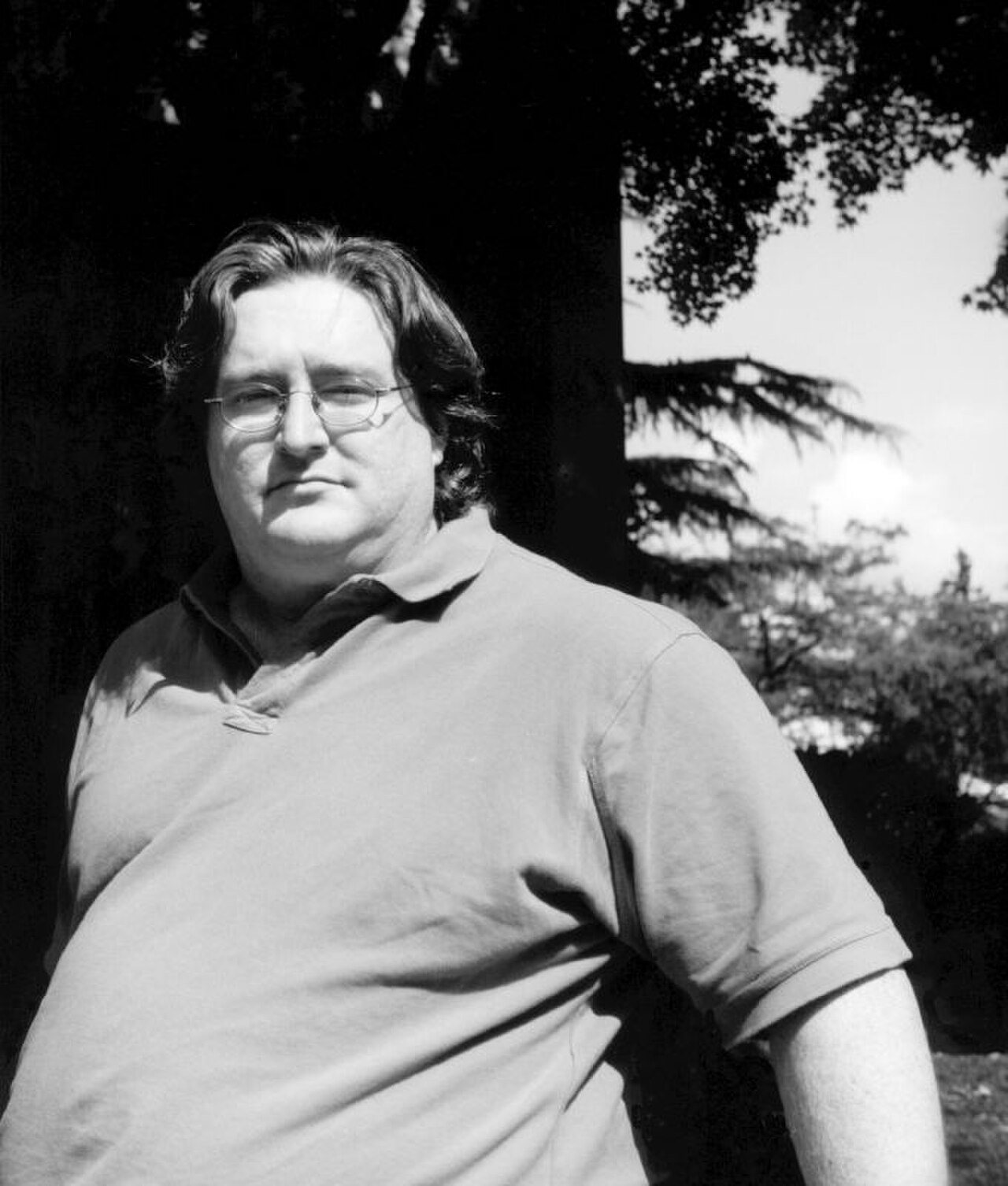
Gabe Newell, co-founder of Valve Corporation, in 2002
Gabe Newell in 2002, around the time Valve was transforming Counter-Strike from a community mod into a commercial powerhouse

The Betas and the Birth of a Community

What happened between that first public beta and the 1.0 release was something that rarely happens in gaming. Le and Cliffe listened to their community. They iterated. They patched. They refined. They went through version after version, each numbered beta bringing improvements that felt substantial. The community grew with each release, not as some passive audience waiting for the next update, but as active participants. Players had forums. They had clan matches. They had strategies that they shared and debated. The mod became less like software and more like a living, breathing thing that evolved based on what its users wanted.

This was a golden age of modding, before corporate interests had fully colonized the space. Anyone with enough dedication could download the tools and create something. Counter-Strike represented the best of that era: a mod made with passion by people who loved games and wanted to make something better. The development went through numerous iterations as the playerbase grew exponentially. Each beta refined the weapon balance, tweaked the maps, and introduced new features that kept the game fresh and compelling.

By the time we hit the mid-betas around version 5.0 in early 2000, something remarkable had happened. Counter-Strike had attracted the attention of Valve Corporation itself. Gabe Newell and the team at Valve weren't just watching this mod succeed. They recognized something rare: they were seeing the future of competitive gaming being built by their community. Rather than shut it down or try to extract value from it, Valve made a pivotal decision. They partnered with Le and Cliffe. They brought them into the fold. This was the moment when Counter-Strike stopped being a hobby project and became an official Valve property.

The Release That Changed Everything

Counter-Strike 1.0 launched on November 9, 2000, and it was the culmination of everything that had come before. This wasn't a mod anymore. This was a retail product that Valve was backing with full marketing support. It was included with Half-Life in some distribution channels. It was available for purchase on its own. It was stable, balanced, and content-complete in a way that the betas never quite were. The moment it hit retail, something shifted in the gaming landscape. Here was this game that nobody was expecting to be huge, that came from the community rather than a major studio, and it was immediately capturing people's imaginations.

The numbers tell the story. By 2008, Counter-Strike had sold over 4.2 million retail copies. That doesn't even count the millions of people who played it through Steam or other digital channels over the years. It was one of the best-selling games in history, and it had started as a hobby project by two guys with a good idea. The competitive scene exploded. People formed clans. Tournaments were organized. LAN parties became a thing where Counter-Strike was the main event. You'd see packed arenas with dozens of computers running the game, with spectators watching matches on projector screens, with real money on the line.

What made Counter-Strike different from everything else was how it played. This wasn't a run-and-gun shooter like Doom or Quake. It required positioning, communication, and strategy. A single player with a good bomb plant could disrupt an entire round. The economy system, where teams earned money for kills and objectives, meant that tactical decision-making extended beyond the moment-to-moment action. Should you buy full weapons or eco-round it? Should you play for map control or rush the enemy position? These questions made Counter-Strike intellectually engaging in a way that pure reflex shooters weren't.

Competitive Gaming Goes Mainstream: The CPL Era

If Counter-Strike 1.0 was the spark, the Cyberathlete Professional League was the accelerant that turned it into a wildfire. The CPL recognized early on that Counter-Strike had something special. They built their competitive infrastructure around the game. Tournaments were organized with serious prize pools. The 2001 CPL World Championship had a prize pool of $150,000, which was an absolutely staggering amount for esports at the time. Teams competed for glory and for cash. Players became celebrities within gaming circles. You had your favorite teams and your favorite players, and you'd follow their performances across different tournaments.

The thing about Counter-Strike's competitive scene was that it felt accessible. You didn't need special hardware. You didn't need to buy exclusive content. You downloaded the game, joined a clan, practiced with your team, and potentially worked your way up to professional competition. The skill ceiling was incredibly high, but the entry barrier was low. Kids in bedrooms across the world were practicing spray patterns and learning smokes and callouts, dreaming of making it big. Some of them actually did. Counter-Strike became proof that esports was viable, that people would watch competitive gaming, that you could build a scene around a single title that would sustain for years.

The pro scene developed regional flavors. Certain countries became known for producing exceptional Counter-Strike talent. The Scandinavian countries produced some of the best teams. Teams like SK Gaming and Fnatic dominated international competition. Players like SpawN, Potti, and earlier legends of the game became household names in gaming communities. Every major tournament was an event. Every new team lineup was analyzed and debated. The game had created something that went beyond the game itself: it had created culture, community, and legitimate competition.

The Steam Transition and Counter-Strike 1.6

In 2003, something happened that cemented Counter-Strike's position in gaming history. Counter-Strike 1.6 launched with Steam on September 12, 2003. Steam was Valve's new digital distribution platform, and it fundamentally changed how PC games were sold and updated. For Counter-Strike, this meant something crucial: the game was now living on Steam, receiving automatic updates, and being part of a larger ecosystem that would eventually dominate PC gaming.

The transition to Steam wasn't seamless. There was genuine friction between players who preferred the old WON (World Opponent Network) servers and those who were forced onto Steam. But Valve was resolute. Steam represented the future, and Counter-Strike would be part of that future. The move turned out to be prescient. As Steam grew to become the dominant digital storefront for PC games, Counter-Strike grew with it. New players were constantly discovering the game because it was right there on Steam, often at a bargain price, with an active community and regular updates.

Counter-Strike 1.6 remained the competitive standard for years. Even as new versions were released, 1.6 remained the game of choice for professional competitions and serious players. The map design, the weapon balance, the feel of the game: it all became iconic. Maps like Dust2, Inferno, and Nuke became legendary battlegrounds. Players spent thousands of hours learning every pixel of these maps, every sightline, every choke point. The competitive meta evolved constantly, with new strategies emerging and old tactics becoming obsolete. But the core game remained fundamentally sound, and that's why it endured for so long.

Expansion and Evolution: Source, Global Offensive, and Beyond

By 2004, Counter-Strike: Source arrived as a modern reimagining of the classic. Source was built on a newer engine, had updated graphics, and introduced new content. It was supposed to be the future. But something interesting happened. The competitive community largely rejected it in favor of 1.6. Source looked prettier, sure, but it didn't feel the same to play. The weapon mechanics were different. The movement was different. The spray patterns were different. For professional players who had spent years mastering 1.6, switching to Source felt like learning a new game. The community split, with some embracing Source and others sticking religiously to 1.6.

This split showed something important about gaming communities. Nostalgia and familiarity matter. Gameplay feel matters more than fancy graphics. The competitive players didn't care that Source looked better. They cared that it played differently, and different was a deal breaker. So Source developed its own following among more casual players and teams that didn't have the professional aspirations of the hardcore crowd. Both versions coexisted, but 1.6 remained the competitive standard for a surprisingly long time.

Then came 2012 and Counter-Strike: Global Offensive. This was Valve's attempt to modernize Counter-Strike for a new generation while still maintaining what made the series great. Global Offensive was built on the Source engine but updated extensively. It had modern graphics, refined gameplay mechanics, and was designed from the ground up to support both casual and competitive play. More importantly, it had Valve's full support and marketing muscle behind it. This was going to be the new Counter-Strike.

Global Offensive succeeded in a way that Source never quite did. It found acceptance among both casual players and the competitive community. Tournaments gradually migrated from 1.6 to CS:GO. The game introduced cosmetics and the infamous loot box system, which generated massive revenue for Valve. Professional teams adopted it. The esports scene rebuilt itself around CS:GO, and it became bigger than ever. Major tournament prize pools grew. Teams became multinational organizations with sponsors and salaries. Counter-Strike had become not just a game but a legitimate esports franchise that rivaled traditional sports in terms of competitive structure and audience engagement.

Gabe Newell presenting at the Game Developers Conference in 2010
Gabe Newell at GDC 2010, where Valve continued to shape the future of PC gaming long after Counter-Strike changed the industry

The Modern Era: Counter-Strike 2

In 2023, Valve released Counter-Strike 2, built on a completely overhauled engine with modern technology and features. But here's where the story gets complicated, and where I get a little heated about corporate decision-making.

Counter-Strike 2 arrived as a free-to-play replacement for Global Offensive, and the transition was rocky. Valve made the controversial decision to retire CS:GO entirely, forcing the competitive scene and millions of players to migrate whether they were ready or not. The new game had different mechanics, different feel, different everything. The professional community had to adapt quickly. There was genuine anger from players who loved CS:GO exactly as it was and didn't want to learn a new game. The move felt like Valve was more concerned with pushing players toward their newer product than with respecting the preferences of their most dedicated fanbase.

That's the reality of modern gaming that gets lost in nostalgic conversations about Counter-Strike's golden age. Back when Le and Cliffe were modding Half-Life, there was no corporate pressure. There were no quarterly earnings calls. There was no need to extract maximum value from every player. They were just making something they loved. But as Counter-Strike grew and became valuable property, it got caught up in the machinery of the game industry. Decisions are made based on revenue potential rather than pure gameplay quality. Players get migrated to new versions whether they like it or not.

That said, Counter-Strike 2 isn't a bad game. It's a competent update that maintains the core identity of the series. But it represents something different from what Counter-Strike was at its best. It's a calculated business decision dressed up as an evolution. The fact that the competitive community has largely embraced it suggests that despite my grumbles, the game still has what makes Counter-Strike special. But there's something bittersweet about seeing a mod that started with pure creative passion become another franchise product managed for maximum quarterly revenue.

Legacy: The Mod That Changed Gaming

Let's step back and look at what Counter-Strike accomplished. Starting as a mod in 1999, it grew to become one of the most successful game franchises in history. Over 50 million copies sold across all versions and platforms. At its peak, Counter-Strike 1.6 had over 319,000 concurrent players, an absolutely staggering number for a game from that era. Professional esports tournaments with prize pools that grew larger every year. A competitive scene that attracted global talent and sponsorship deals.

But beyond the numbers, Counter-Strike proved something crucial about gaming. It proved that gameplay could trump production values. A mod made by two people in their spare time could out-compete games made by hundred-person studios with massive budgets. It proved that communities matter. The mod would never have succeeded without constant feedback and engagement from players. It proved that competition drives gaming. Esports wasn't invented by Counter-Strike, but Counter-Strike helped establish it as a legitimate pursuit for serious gamers.

Counter-Strike also changed how the industry thought about modding. Before Counter-Strike, mods were often seen as cute add-ons that wouldn't impact the bottom line. After Counter-Strike, studios started viewing modding communities as potential goldmines. Valve especially learned to cultivate its modding community, partly because of Counter-Strike's success. Games like Team Fortress 2 and Dota 2 owe their existence to this approach.

The game also created a blueprint for how tactical shooters should play. Every tactical shooter that came after Counter-Strike, from Rainbow Six Siege to Valorant, owes something to the design decisions that Le and Cliffe made. The economy system, the objective-based gameplay, the emphasis on positioning and communication: Counter-Strike popularized them and showed that players loved them.

Here's what keeps me up at night when I think about Counter-Strike. The mod was special because it came from passion. Le and Cliffe weren't trying to create the next big esports phenomenon. They were just trying to make a game they wanted to play. Could that happen again today? Could two people in their bedroom create a mod that would eventually sell 50 million copies? The answer is probably not. The barriers have gotten higher. The market is more saturated. Counter-Strike belongs to a specific moment in gaming history. It was born when modding was accessible and encouraged. It succeeded because of genuine community engagement rather than marketing budgets. Looking back at Counter-Strike isn't just about missing a great game. It's about missing a moment when games could emerge from passion and luck rather than corporate strategy.

Frequently Asked Questions

When did Counter-Strike first come out as a mod?

Counter-Strike was officially named on March 15, 1999, and development began in January 1999. The first public beta was released on June 19, 1999, after Valve released the Half-Life SDK on April 7, 1999.

Why is Counter-Strike 1.6 still considered the best version by many pros?

Counter-Strike 1.6 became the competitive standard and remained unmatched for years because of its weapon balance, movement mechanics, and map design. The spray patterns, the feel of the weapons, and the overall gameplay became deeply familiar to generations of players. When Counter-Strike: Source came out, the competitive community largely rejected it because it felt different, even though it looked better.

What was the CPL and why was it important to Counter-Strike?

The Cyberathlete Professional League (CPL) was the first major esports league to build around Counter-Strike's potential. They organized professional tournaments with substantial prize pools, with the 2001 World Championship offering $150,000. The CPL legitimized competitive gaming and proved that esports could be a viable business and career path.

How many copies of Counter-Strike have been sold across all versions?

The Counter-Strike franchise has sold over 50 million copies across all versions including the original retail releases, Counter-Strike: Source, Counter-Strike: Global Offensive, and Counter-Strike 2. By 2008 alone, the original had sold over 4.2 million retail copies.

What happened to Minh Le and Jess Cliffe after Counter-Strike?

Minh "Gooseman" Le and Jess Cliffe were brought into Valve when the company partnered with them around Beta 5.0 in early 2000. Counter-Strike 1.0 was released in November 2000 as an official Valve product. Both creators benefited from the game's massive success, though their roles evolved over time as Valve took greater control of the franchise.

๐Ÿ“– What Happened to Counter-Strike, the Mod That Became Bigger Than the Game
_ โ–ก ร—
← Back

What Happened to Counter-Strike, the Mod That Became Bigger Than the Game

2026-04-13 by 404 Memory Found

What Happened to Counter-Strike, the Mod That Became Bigger Than the Game

Picture this. It's 1999, and you're a college student with a borrowed copy of Half-Life and an internet connection that screams like a wounded animal at 56 kilobits per second. Two young modders, Minh Le and Jess Cliffe, are tinkering away on something in their spare time. They're not making the next blockbuster title. They're not getting venture capital or signing publishing deals. They're just scratching an itch, building a total conversion mod that reimagines Half-Life as a terrorist vs. counter-terrorist tactical shooter. Neither of them could have predicted that their weekend project would eventually sell over 50 million copies worldwide and fundamentally reshape competitive gaming. This is the story of Counter-Strike, and how a mod became bigger than the game it was built on.

The Origin Story: Two Kids and a Dream

Let's rewind to January 1999. The gaming industry was in a very different place. Half-Life had just launched in November 1998, and while it was critically acclaimed, the modding community was still finding its footing. Minh "Gooseman" Le and Jess Cliffe weren't industry veterans. They were passionate gamers who saw potential in Half-Life's engine and decided to build something that didn't exist yet. They wanted to create a competitive, objective-based tactical shooter that emphasized teamwork, positioning, and strategy over raw reflexes.

The mod was officially named on March 15, 1999, during an ICQ chat session. That simple message in a chat window marked the beginning of something that would change gaming forever. But at that moment, it was just an idea. The real work came when Valve released the Half-Life SDK on April 7, 1999. Now Le and Cliffe had access to the actual tools they needed to turn their vision into reality. They started building in earnest, and by June 19, 1999, they released the first beta version to a small group of testers. Some sources point to July 15, 1999, for the public beta 1 release, but either way, the mod was finally in people's hands.

That first beta was rough around the edges, but it contained the seeds of what would become a phenomenon. It had a hostage rescue scenario that became iconic. It had nine weapons that felt distinct and required different tactical approaches. It had four maps that players would memorize, dissect, and dominate over the coming years. And it had one player model for each side, which seems quaint now but was actually a pretty significant detail for team identification. The mod was playable, and more importantly, it was fun in a way that caught people's attention. Word started spreading through forums and gaming websites. People were downloading this little mod and finding something special hidden inside Half-Life.

Gabe Newell, co-founder of Valve Corporation, in 2002
Gabe Newell in 2002, around the time Valve was transforming Counter-Strike from a community mod into a commercial powerhouse

The Betas and the Birth of a Community

What happened between that first public beta and the 1.0 release was something that rarely happens in gaming. Le and Cliffe listened to their community. They iterated. They patched. They refined. They went through version after version, each numbered beta bringing improvements that felt substantial. The community grew with each release, not as some passive audience waiting for the next update, but as active participants. Players had forums. They had clan matches. They had strategies that they shared and debated. The mod became less like software and more like a living, breathing thing that evolved based on what its users wanted.

This was a golden age of modding, before corporate interests had fully colonized the space. Anyone with enough dedication could download the tools and create something. Counter-Strike represented the best of that era: a mod made with passion by people who loved games and wanted to make something better. The development went through numerous iterations as the playerbase grew exponentially. Each beta refined the weapon balance, tweaked the maps, and introduced new features that kept the game fresh and compelling.

By the time we hit the mid-betas around version 5.0 in early 2000, something remarkable had happened. Counter-Strike had attracted the attention of Valve Corporation itself. Gabe Newell and the team at Valve weren't just watching this mod succeed. They recognized something rare: they were seeing the future of competitive gaming being built by their community. Rather than shut it down or try to extract value from it, Valve made a pivotal decision. They partnered with Le and Cliffe. They brought them into the fold. This was the moment when Counter-Strike stopped being a hobby project and became an official Valve property.

The Release That Changed Everything

Counter-Strike 1.0 launched on November 9, 2000, and it was the culmination of everything that had come before. This wasn't a mod anymore. This was a retail product that Valve was backing with full marketing support. It was included with Half-Life in some distribution channels. It was available for purchase on its own. It was stable, balanced, and content-complete in a way that the betas never quite were. The moment it hit retail, something shifted in the gaming landscape. Here was this game that nobody was expecting to be huge, that came from the community rather than a major studio, and it was immediately capturing people's imaginations.

The numbers tell the story. By 2008, Counter-Strike had sold over 4.2 million retail copies. That doesn't even count the millions of people who played it through Steam or other digital channels over the years. It was one of the best-selling games in history, and it had started as a hobby project by two guys with a good idea. The competitive scene exploded. People formed clans. Tournaments were organized. LAN parties became a thing where Counter-Strike was the main event. You'd see packed arenas with dozens of computers running the game, with spectators watching matches on projector screens, with real money on the line.

What made Counter-Strike different from everything else was how it played. This wasn't a run-and-gun shooter like Doom or Quake. It required positioning, communication, and strategy. A single player with a good bomb plant could disrupt an entire round. The economy system, where teams earned money for kills and objectives, meant that tactical decision-making extended beyond the moment-to-moment action. Should you buy full weapons or eco-round it? Should you play for map control or rush the enemy position? These questions made Counter-Strike intellectually engaging in a way that pure reflex shooters weren't.

Competitive Gaming Goes Mainstream: The CPL Era

If Counter-Strike 1.0 was the spark, the Cyberathlete Professional League was the accelerant that turned it into a wildfire. The CPL recognized early on that Counter-Strike had something special. They built their competitive infrastructure around the game. Tournaments were organized with serious prize pools. The 2001 CPL World Championship had a prize pool of $150,000, which was an absolutely staggering amount for esports at the time. Teams competed for glory and for cash. Players became celebrities within gaming circles. You had your favorite teams and your favorite players, and you'd follow their performances across different tournaments.

The thing about Counter-Strike's competitive scene was that it felt accessible. You didn't need special hardware. You didn't need to buy exclusive content. You downloaded the game, joined a clan, practiced with your team, and potentially worked your way up to professional competition. The skill ceiling was incredibly high, but the entry barrier was low. Kids in bedrooms across the world were practicing spray patterns and learning smokes and callouts, dreaming of making it big. Some of them actually did. Counter-Strike became proof that esports was viable, that people would watch competitive gaming, that you could build a scene around a single title that would sustain for years.

The pro scene developed regional flavors. Certain countries became known for producing exceptional Counter-Strike talent. The Scandinavian countries produced some of the best teams. Teams like SK Gaming and Fnatic dominated international competition. Players like SpawN, Potti, and earlier legends of the game became household names in gaming communities. Every major tournament was an event. Every new team lineup was analyzed and debated. The game had created something that went beyond the game itself: it had created culture, community, and legitimate competition.

The Steam Transition and Counter-Strike 1.6

In 2003, something happened that cemented Counter-Strike's position in gaming history. Counter-Strike 1.6 launched with Steam on September 12, 2003. Steam was Valve's new digital distribution platform, and it fundamentally changed how PC games were sold and updated. For Counter-Strike, this meant something crucial: the game was now living on Steam, receiving automatic updates, and being part of a larger ecosystem that would eventually dominate PC gaming.

The transition to Steam wasn't seamless. There was genuine friction between players who preferred the old WON (World Opponent Network) servers and those who were forced onto Steam. But Valve was resolute. Steam represented the future, and Counter-Strike would be part of that future. The move turned out to be prescient. As Steam grew to become the dominant digital storefront for PC games, Counter-Strike grew with it. New players were constantly discovering the game because it was right there on Steam, often at a bargain price, with an active community and regular updates.

Counter-Strike 1.6 remained the competitive standard for years. Even as new versions were released, 1.6 remained the game of choice for professional competitions and serious players. The map design, the weapon balance, the feel of the game: it all became iconic. Maps like Dust2, Inferno, and Nuke became legendary battlegrounds. Players spent thousands of hours learning every pixel of these maps, every sightline, every choke point. The competitive meta evolved constantly, with new strategies emerging and old tactics becoming obsolete. But the core game remained fundamentally sound, and that's why it endured for so long.

Expansion and Evolution: Source, Global Offensive, and Beyond

By 2004, Counter-Strike: Source arrived as a modern reimagining of the classic. Source was built on a newer engine, had updated graphics, and introduced new content. It was supposed to be the future. But something interesting happened. The competitive community largely rejected it in favor of 1.6. Source looked prettier, sure, but it didn't feel the same to play. The weapon mechanics were different. The movement was different. The spray patterns were different. For professional players who had spent years mastering 1.6, switching to Source felt like learning a new game. The community split, with some embracing Source and others sticking religiously to 1.6.

This split showed something important about gaming communities. Nostalgia and familiarity matter. Gameplay feel matters more than fancy graphics. The competitive players didn't care that Source looked better. They cared that it played differently, and different was a deal breaker. So Source developed its own following among more casual players and teams that didn't have the professional aspirations of the hardcore crowd. Both versions coexisted, but 1.6 remained the competitive standard for a surprisingly long time.

Then came 2012 and Counter-Strike: Global Offensive. This was Valve's attempt to modernize Counter-Strike for a new generation while still maintaining what made the series great. Global Offensive was built on the Source engine but updated extensively. It had modern graphics, refined gameplay mechanics, and was designed from the ground up to support both casual and competitive play. More importantly, it had Valve's full support and marketing muscle behind it. This was going to be the new Counter-Strike.

Global Offensive succeeded in a way that Source never quite did. It found acceptance among both casual players and the competitive community. Tournaments gradually migrated from 1.6 to CS:GO. The game introduced cosmetics and the infamous loot box system, which generated massive revenue for Valve. Professional teams adopted it. The esports scene rebuilt itself around CS:GO, and it became bigger than ever. Major tournament prize pools grew. Teams became multinational organizations with sponsors and salaries. Counter-Strike had become not just a game but a legitimate esports franchise that rivaled traditional sports in terms of competitive structure and audience engagement.

Gabe Newell presenting at the Game Developers Conference in 2010
Gabe Newell at GDC 2010, where Valve continued to shape the future of PC gaming long after Counter-Strike changed the industry

The Modern Era: Counter-Strike 2

In 2023, Valve released Counter-Strike 2, built on a completely overhauled engine with modern technology and features. But here's where the story gets complicated, and where I get a little heated about corporate decision-making.

Counter-Strike 2 arrived as a free-to-play replacement for Global Offensive, and the transition was rocky. Valve made the controversial decision to retire CS:GO entirely, forcing the competitive scene and millions of players to migrate whether they were ready or not. The new game had different mechanics, different feel, different everything. The professional community had to adapt quickly. There was genuine anger from players who loved CS:GO exactly as it was and didn't want to learn a new game. The move felt like Valve was more concerned with pushing players toward their newer product than with respecting the preferences of their most dedicated fanbase.

That's the reality of modern gaming that gets lost in nostalgic conversations about Counter-Strike's golden age. Back when Le and Cliffe were modding Half-Life, there was no corporate pressure. There were no quarterly earnings calls. There was no need to extract maximum value from every player. They were just making something they loved. But as Counter-Strike grew and became valuable property, it got caught up in the machinery of the game industry. Decisions are made based on revenue potential rather than pure gameplay quality. Players get migrated to new versions whether they like it or not.

That said, Counter-Strike 2 isn't a bad game. It's a competent update that maintains the core identity of the series. But it represents something different from what Counter-Strike was at its best. It's a calculated business decision dressed up as an evolution. The fact that the competitive community has largely embraced it suggests that despite my grumbles, the game still has what makes Counter-Strike special. But there's something bittersweet about seeing a mod that started with pure creative passion become another franchise product managed for maximum quarterly revenue.

Legacy: The Mod That Changed Gaming

Let's step back and look at what Counter-Strike accomplished. Starting as a mod in 1999, it grew to become one of the most successful game franchises in history. Over 50 million copies sold across all versions and platforms. At its peak, Counter-Strike 1.6 had over 319,000 concurrent players, an absolutely staggering number for a game from that era. Professional esports tournaments with prize pools that grew larger every year. A competitive scene that attracted global talent and sponsorship deals.

But beyond the numbers, Counter-Strike proved something crucial about gaming. It proved that gameplay could trump production values. A mod made by two people in their spare time could out-compete games made by hundred-person studios with massive budgets. It proved that communities matter. The mod would never have succeeded without constant feedback and engagement from players. It proved that competition drives gaming. Esports wasn't invented by Counter-Strike, but Counter-Strike helped establish it as a legitimate pursuit for serious gamers.

Counter-Strike also changed how the industry thought about modding. Before Counter-Strike, mods were often seen as cute add-ons that wouldn't impact the bottom line. After Counter-Strike, studios started viewing modding communities as potential goldmines. Valve especially learned to cultivate its modding community, partly because of Counter-Strike's success. Games like Team Fortress 2 and Dota 2 owe their existence to this approach.

The game also created a blueprint for how tactical shooters should play. Every tactical shooter that came after Counter-Strike, from Rainbow Six Siege to Valorant, owes something to the design decisions that Le and Cliffe made. The economy system, the objective-based gameplay, the emphasis on positioning and communication: Counter-Strike popularized them and showed that players loved them.

Here's what keeps me up at night when I think about Counter-Strike. The mod was special because it came from passion. Le and Cliffe weren't trying to create the next big esports phenomenon. They were just trying to make a game they wanted to play. Could that happen again today? Could two people in their bedroom create a mod that would eventually sell 50 million copies? The answer is probably not. The barriers have gotten higher. The market is more saturated. Counter-Strike belongs to a specific moment in gaming history. It was born when modding was accessible and encouraged. It succeeded because of genuine community engagement rather than marketing budgets. Looking back at Counter-Strike isn't just about missing a great game. It's about missing a moment when games could emerge from passion and luck rather than corporate strategy.

Frequently Asked Questions

When did Counter-Strike first come out as a mod?

Counter-Strike was officially named on March 15, 1999, and development began in January 1999. The first public beta was released on June 19, 1999, after Valve released the Half-Life SDK on April 7, 1999.

Why is Counter-Strike 1.6 still considered the best version by many pros?

Counter-Strike 1.6 became the competitive standard and remained unmatched for years because of its weapon balance, movement mechanics, and map design. The spray patterns, the feel of the weapons, and the overall gameplay became deeply familiar to generations of players. When Counter-Strike: Source came out, the competitive community largely rejected it because it felt different, even though it looked better.

What was the CPL and why was it important to Counter-Strike?

The Cyberathlete Professional League (CPL) was the first major esports league to build around Counter-Strike's potential. They organized professional tournaments with substantial prize pools, with the 2001 World Championship offering $150,000. The CPL legitimized competitive gaming and proved that esports could be a viable business and career path.

How many copies of Counter-Strike have been sold across all versions?

The Counter-Strike franchise has sold over 50 million copies across all versions including the original retail releases, Counter-Strike: Source, Counter-Strike: Global Offensive, and Counter-Strike 2. By 2008 alone, the original had sold over 4.2 million retail copies.

What happened to Minh Le and Jess Cliffe after Counter-Strike?

Minh "Gooseman" Le and Jess Cliffe were brought into Valve when the company partnered with them around Beta 5.0 in early 2000. Counter-Strike 1.0 was released in November 2000 as an official Valve product. Both creators benefited from the game's massive success, though their roles evolved over time as Valve took greater control of the franchise.

๐Ÿ“– What Happened to Counter-Strike, the Mod That Became Bigger Than the Game

What Happened to Counter-Strike, the Mod That Became Bigger Than the Game

Picture this. It's 1999, and you're a college student with a borrowed copy of Half-Life and an internet connection that screams like a wounded animal at 56 kilobits per second. Two young modders, Minh Le and Jess Cliffe, are tinkering away on something in their spare time. They're not making the next blockbuster title. They're not getting venture capital or signing publishing deals. They're just scratching an itch, building a total conversion mod that reimagines Half-Life as a terrorist vs. counter-terrorist tactical shooter. Neither of them could have predicted that their weekend project would eventually sell over 50 million copies worldwide and fundamentally reshape competitive gaming. This is the story of Counter-Strike, and how a mod became bigger than the game it was built on.

The Origin Story: Two Kids and a Dream

Let's rewind to January 1999. The gaming industry was in a very different place. Half-Life had just launched in November 1998, and while it was critically acclaimed, the modding community was still finding its footing. Minh "Gooseman" Le and Jess Cliffe weren't industry veterans. They were passionate gamers who saw potential in Half-Life's engine and decided to build something that didn't exist yet. They wanted to create a competitive, objective-based tactical shooter that emphasized teamwork, positioning, and strategy over raw reflexes.

The mod was officially named on March 15, 1999, during an ICQ chat session. That simple message in a chat window marked the beginning of something that would change gaming forever. But at that moment, it was just an idea. The real work came when Valve released the Half-Life SDK on April 7, 1999. Now Le and Cliffe had access to the actual tools they needed to turn their vision into reality. They started building in earnest, and by June 19, 1999, they released the first beta version to a small group of testers. Some sources point to July 15, 1999, for the public beta 1 release, but either way, the mod was finally in people's hands.

That first beta was rough around the edges, but it contained the seeds of what would become a phenomenon. It had a hostage rescue scenario that became iconic. It had nine weapons that felt distinct and required different tactical approaches. It had four maps that players would memorize, dissect, and dominate over the coming years. And it had one player model for each side, which seems quaint now but was actually a pretty significant detail for team identification. The mod was playable, and more importantly, it was fun in a way that caught people's attention. Word started spreading through forums and gaming websites. People were downloading this little mod and finding something special hidden inside Half-Life.

Gabe Newell, co-founder of Valve Corporation, in 2002
Gabe Newell in 2002, around the time Valve was transforming Counter-Strike from a community mod into a commercial powerhouse

The Betas and the Birth of a Community

What happened between that first public beta and the 1.0 release was something that rarely happens in gaming. Le and Cliffe listened to their community. They iterated. They patched. They refined. They went through version after version, each numbered beta bringing improvements that felt substantial. The community grew with each release, not as some passive audience waiting for the next update, but as active participants. Players had forums. They had clan matches. They had strategies that they shared and debated. The mod became less like software and more like a living, breathing thing that evolved based on what its users wanted.

This was a golden age of modding, before corporate interests had fully colonized the space. Anyone with enough dedication could download the tools and create something. Counter-Strike represented the best of that era: a mod made with passion by people who loved games and wanted to make something better. The development went through numerous iterations as the playerbase grew exponentially. Each beta refined the weapon balance, tweaked the maps, and introduced new features that kept the game fresh and compelling.

By the time we hit the mid-betas around version 5.0 in early 2000, something remarkable had happened. Counter-Strike had attracted the attention of Valve Corporation itself. Gabe Newell and the team at Valve weren't just watching this mod succeed. They recognized something rare: they were seeing the future of competitive gaming being built by their community. Rather than shut it down or try to extract value from it, Valve made a pivotal decision. They partnered with Le and Cliffe. They brought them into the fold. This was the moment when Counter-Strike stopped being a hobby project and became an official Valve property.

The Release That Changed Everything

Counter-Strike 1.0 launched on November 9, 2000, and it was the culmination of everything that had come before. This wasn't a mod anymore. This was a retail product that Valve was backing with full marketing support. It was included with Half-Life in some distribution channels. It was available for purchase on its own. It was stable, balanced, and content-complete in a way that the betas never quite were. The moment it hit retail, something shifted in the gaming landscape. Here was this game that nobody was expecting to be huge, that came from the community rather than a major studio, and it was immediately capturing people's imaginations.

The numbers tell the story. By 2008, Counter-Strike had sold over 4.2 million retail copies. That doesn't even count the millions of people who played it through Steam or other digital channels over the years. It was one of the best-selling games in history, and it had started as a hobby project by two guys with a good idea. The competitive scene exploded. People formed clans. Tournaments were organized. LAN parties became a thing where Counter-Strike was the main event. You'd see packed arenas with dozens of computers running the game, with spectators watching matches on projector screens, with real money on the line.

What made Counter-Strike different from everything else was how it played. This wasn't a run-and-gun shooter like Doom or Quake. It required positioning, communication, and strategy. A single player with a good bomb plant could disrupt an entire round. The economy system, where teams earned money for kills and objectives, meant that tactical decision-making extended beyond the moment-to-moment action. Should you buy full weapons or eco-round it? Should you play for map control or rush the enemy position? These questions made Counter-Strike intellectually engaging in a way that pure reflex shooters weren't.

Competitive Gaming Goes Mainstream: The CPL Era

If Counter-Strike 1.0 was the spark, the Cyberathlete Professional League was the accelerant that turned it into a wildfire. The CPL recognized early on that Counter-Strike had something special. They built their competitive infrastructure around the game. Tournaments were organized with serious prize pools. The 2001 CPL World Championship had a prize pool of $150,000, which was an absolutely staggering amount for esports at the time. Teams competed for glory and for cash. Players became celebrities within gaming circles. You had your favorite teams and your favorite players, and you'd follow their performances across different tournaments.

The thing about Counter-Strike's competitive scene was that it felt accessible. You didn't need special hardware. You didn't need to buy exclusive content. You downloaded the game, joined a clan, practiced with your team, and potentially worked your way up to professional competition. The skill ceiling was incredibly high, but the entry barrier was low. Kids in bedrooms across the world were practicing spray patterns and learning smokes and callouts, dreaming of making it big. Some of them actually did. Counter-Strike became proof that esports was viable, that people would watch competitive gaming, that you could build a scene around a single title that would sustain for years.

The pro scene developed regional flavors. Certain countries became known for producing exceptional Counter-Strike talent. The Scandinavian countries produced some of the best teams. Teams like SK Gaming and Fnatic dominated international competition. Players like SpawN, Potti, and earlier legends of the game became household names in gaming communities. Every major tournament was an event. Every new team lineup was analyzed and debated. The game had created something that went beyond the game itself: it had created culture, community, and legitimate competition.

The Steam Transition and Counter-Strike 1.6

In 2003, something happened that cemented Counter-Strike's position in gaming history. Counter-Strike 1.6 launched with Steam on September 12, 2003. Steam was Valve's new digital distribution platform, and it fundamentally changed how PC games were sold and updated. For Counter-Strike, this meant something crucial: the game was now living on Steam, receiving automatic updates, and being part of a larger ecosystem that would eventually dominate PC gaming.

The transition to Steam wasn't seamless. There was genuine friction between players who preferred the old WON (World Opponent Network) servers and those who were forced onto Steam. But Valve was resolute. Steam represented the future, and Counter-Strike would be part of that future. The move turned out to be prescient. As Steam grew to become the dominant digital storefront for PC games, Counter-Strike grew with it. New players were constantly discovering the game because it was right there on Steam, often at a bargain price, with an active community and regular updates.

Counter-Strike 1.6 remained the competitive standard for years. Even as new versions were released, 1.6 remained the game of choice for professional competitions and serious players. The map design, the weapon balance, the feel of the game: it all became iconic. Maps like Dust2, Inferno, and Nuke became legendary battlegrounds. Players spent thousands of hours learning every pixel of these maps, every sightline, every choke point. The competitive meta evolved constantly, with new strategies emerging and old tactics becoming obsolete. But the core game remained fundamentally sound, and that's why it endured for so long.

Expansion and Evolution: Source, Global Offensive, and Beyond

By 2004, Counter-Strike: Source arrived as a modern reimagining of the classic. Source was built on a newer engine, had updated graphics, and introduced new content. It was supposed to be the future. But something interesting happened. The competitive community largely rejected it in favor of 1.6. Source looked prettier, sure, but it didn't feel the same to play. The weapon mechanics were different. The movement was different. The spray patterns were different. For professional players who had spent years mastering 1.6, switching to Source felt like learning a new game. The community split, with some embracing Source and others sticking religiously to 1.6.

This split showed something important about gaming communities. Nostalgia and familiarity matter. Gameplay feel matters more than fancy graphics. The competitive players didn't care that Source looked better. They cared that it played differently, and different was a deal breaker. So Source developed its own following among more casual players and teams that didn't have the professional aspirations of the hardcore crowd. Both versions coexisted, but 1.6 remained the competitive standard for a surprisingly long time.

Then came 2012 and Counter-Strike: Global Offensive. This was Valve's attempt to modernize Counter-Strike for a new generation while still maintaining what made the series great. Global Offensive was built on the Source engine but updated extensively. It had modern graphics, refined gameplay mechanics, and was designed from the ground up to support both casual and competitive play. More importantly, it had Valve's full support and marketing muscle behind it. This was going to be the new Counter-Strike.

Global Offensive succeeded in a way that Source never quite did. It found acceptance among both casual players and the competitive community. Tournaments gradually migrated from 1.6 to CS:GO. The game introduced cosmetics and the infamous loot box system, which generated massive revenue for Valve. Professional teams adopted it. The esports scene rebuilt itself around CS:GO, and it became bigger than ever. Major tournament prize pools grew. Teams became multinational organizations with sponsors and salaries. Counter-Strike had become not just a game but a legitimate esports franchise that rivaled traditional sports in terms of competitive structure and audience engagement.

Gabe Newell presenting at the Game Developers Conference in 2010
Gabe Newell at GDC 2010, where Valve continued to shape the future of PC gaming long after Counter-Strike changed the industry

The Modern Era: Counter-Strike 2

In 2023, Valve released Counter-Strike 2, built on a completely overhauled engine with modern technology and features. But here's where the story gets complicated, and where I get a little heated about corporate decision-making.

Counter-Strike 2 arrived as a free-to-play replacement for Global Offensive, and the transition was rocky. Valve made the controversial decision to retire CS:GO entirely, forcing the competitive scene and millions of players to migrate whether they were ready or not. The new game had different mechanics, different feel, different everything. The professional community had to adapt quickly. There was genuine anger from players who loved CS:GO exactly as it was and didn't want to learn a new game. The move felt like Valve was more concerned with pushing players toward their newer product than with respecting the preferences of their most dedicated fanbase.

That's the reality of modern gaming that gets lost in nostalgic conversations about Counter-Strike's golden age. Back when Le and Cliffe were modding Half-Life, there was no corporate pressure. There were no quarterly earnings calls. There was no need to extract maximum value from every player. They were just making something they loved. But as Counter-Strike grew and became valuable property, it got caught up in the machinery of the game industry. Decisions are made based on revenue potential rather than pure gameplay quality. Players get migrated to new versions whether they like it or not.

That said, Counter-Strike 2 isn't a bad game. It's a competent update that maintains the core identity of the series. But it represents something different from what Counter-Strike was at its best. It's a calculated business decision dressed up as an evolution. The fact that the competitive community has largely embraced it suggests that despite my grumbles, the game still has what makes Counter-Strike special. But there's something bittersweet about seeing a mod that started with pure creative passion become another franchise product managed for maximum quarterly revenue.

Legacy: The Mod That Changed Gaming

Let's step back and look at what Counter-Strike accomplished. Starting as a mod in 1999, it grew to become one of the most successful game franchises in history. Over 50 million copies sold across all versions and platforms. At its peak, Counter-Strike 1.6 had over 319,000 concurrent players, an absolutely staggering number for a game from that era. Professional esports tournaments with prize pools that grew larger every year. A competitive scene that attracted global talent and sponsorship deals.

But beyond the numbers, Counter-Strike proved something crucial about gaming. It proved that gameplay could trump production values. A mod made by two people in their spare time could out-compete games made by hundred-person studios with massive budgets. It proved that communities matter. The mod would never have succeeded without constant feedback and engagement from players. It proved that competition drives gaming. Esports wasn't invented by Counter-Strike, but Counter-Strike helped establish it as a legitimate pursuit for serious gamers.

Counter-Strike also changed how the industry thought about modding. Before Counter-Strike, mods were often seen as cute add-ons that wouldn't impact the bottom line. After Counter-Strike, studios started viewing modding communities as potential goldmines. Valve especially learned to cultivate its modding community, partly because of Counter-Strike's success. Games like Team Fortress 2 and Dota 2 owe their existence to this approach.

The game also created a blueprint for how tactical shooters should play. Every tactical shooter that came after Counter-Strike, from Rainbow Six Siege to Valorant, owes something to the design decisions that Le and Cliffe made. The economy system, the objective-based gameplay, the emphasis on positioning and communication: Counter-Strike popularized them and showed that players loved them.

Here's what keeps me up at night when I think about Counter-Strike. The mod was special because it came from passion. Le and Cliffe weren't trying to create the next big esports phenomenon. They were just trying to make a game they wanted to play. Could that happen again today? Could two people in their bedroom create a mod that would eventually sell 50 million copies? The answer is probably not. The barriers have gotten higher. The market is more saturated. Counter-Strike belongs to a specific moment in gaming history. It was born when modding was accessible and encouraged. It succeeded because of genuine community engagement rather than marketing budgets. Looking back at Counter-Strike isn't just about missing a great game. It's about missing a moment when games could emerge from passion and luck rather than corporate strategy.

Frequently Asked Questions

When did Counter-Strike first come out as a mod?

Counter-Strike was officially named on March 15, 1999, and development began in January 1999. The first public beta was released on June 19, 1999, after Valve released the Half-Life SDK on April 7, 1999.

Why is Counter-Strike 1.6 still considered the best version by many pros?

Counter-Strike 1.6 became the competitive standard and remained unmatched for years because of its weapon balance, movement mechanics, and map design. The spray patterns, the feel of the weapons, and the overall gameplay became deeply familiar to generations of players. When Counter-Strike: Source came out, the competitive community largely rejected it because it felt different, even though it looked better.

What was the CPL and why was it important to Counter-Strike?

The Cyberathlete Professional League (CPL) was the first major esports league to build around Counter-Strike's potential. They organized professional tournaments with substantial prize pools, with the 2001 World Championship offering $150,000. The CPL legitimized competitive gaming and proved that esports could be a viable business and career path.

How many copies of Counter-Strike have been sold across all versions?

The Counter-Strike franchise has sold over 50 million copies across all versions including the original retail releases, Counter-Strike: Source, Counter-Strike: Global Offensive, and Counter-Strike 2. By 2008 alone, the original had sold over 4.2 million retail copies.

What happened to Minh Le and Jess Cliffe after Counter-Strike?

Minh "Gooseman" Le and Jess Cliffe were brought into Valve when the company partnered with them around Beta 5.0 in early 2000. Counter-Strike 1.0 was released in November 2000 as an official Valve product. Both creators benefited from the game's massive success, though their roles evolved over time as Valve took greater control of the franchise.

00:00