How Doom Changed Everything About PC Gaming and the Internet

Picture this: December 10, 1993. It is a Friday night. Five guys in a dark office in Mesquite, Texas, the one they nicknamed "Suite 666," are trying to upload a 2.39 megabyte file to an FTP server at the University of Wisconsin. They cannot connect. Not because the server is down, but because thousands of people are already logged in, waiting. The file has not even been uploaded yet, and the server is buckling under the weight of anticipation.

When the upload finally completes, 30 minutes later, 10,000 people try to download the file simultaneously. The university's network crashes. Within hours, universities across the country start banning the game from their networks. Within weeks, system administrators at corporations are writing memos about lost productivity. Within months, the game is everywhere, installed on more PCs than most commercial software, and the five guys in Texas are making over $100,000 a day.

The file was Doom. And nothing about PC gaming, the internet, or the business of making video games was ever the same.

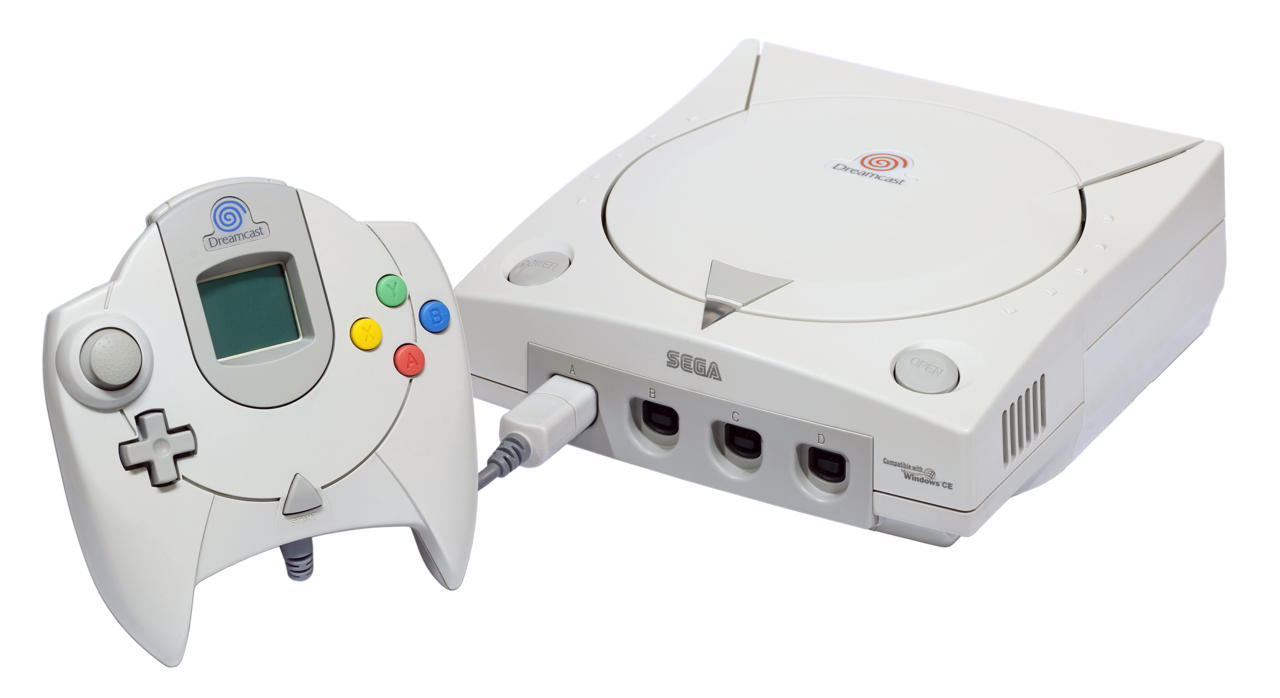
Sega Dreamcast console and controller, a product of the 1990s gaming revolution that Doom helped ignite
The 1990s were a transformative decade for gaming hardware. But it was a shareware game distributed on floppy disks and FTP servers that changed the industry forever.

The Guys Who Built It

To understand Doom, you have to understand the people who made it, because this is not a story about a corporation executing a business plan. This is a story about a small group of obsessives who were, in the most literal sense, building the future in a rented office space.

John Carmack was the engine. A programmer from the Kansas City area, largely self-taught, who had an almost supernatural ability to write code that made computers do things they were not supposed to be able to do. Before Doom, he had already proven this with Wolfenstein 3D, the game that established the first-person shooter as a genre. But Wolfenstein was a proof of concept. Doom was the thing he actually wanted to build.

John Romero was the designer, the showman, the guy who understood not just how games should work but how they should feel. Where Carmack was quiet and methodical, Romero was loud and instinctive. He designed Doom's levels with a sense of pacing and atmosphere that most game designers still struggle to match. The tension of a dark corridor. The relief of finding a shotgun. The panic of hearing a door open behind you.

Adrian Carmack (no relation to John) and Kevin Cloud handled the art. Tom Hall was brought on as a designer but left during development after creative disagreements. Hall wanted Doom to have a story, characters, a narrative arc. Carmack and Romero wanted a game where you moved fast, shot demons, and felt like a force of nature. The story, famously, was "you're a marine on Mars and demons are trying to kill you." That was it. That was enough.

The Engine That Changed Everything

What made Doom technically revolutionary was Carmack's engine. Wolfenstein 3D had used a raycasting technique that created the illusion of 3D space, but it was limited. All walls were the same height. All floors were flat. There was no lighting variation. It felt like navigating a maze, which is exactly what it was.

Doom's engine, the id Tech 1 engine, could render rooms of different heights, staircases, outdoor areas, variable lighting, and a texture-mapped environment that felt genuinely three-dimensional. It used a technique called binary space partitioning, or BSP, to efficiently render complex environments on hardware that, by modern standards, had less processing power than a smart thermostat.

The technical achievement here is hard to overstate. Doom ran on a 386 processor. It looked and felt like nothing that had ever existed on a personal computer. When people saw it for the first time, the reaction was not "oh, that's a nice game." The reaction was closer to disbelief. This should not have been possible on this hardware. But there it was.

The Shareware Gamble

Id Software had used the shareware model before, with Commander Keen and Wolfenstein 3D, both distributed through Apogee Software. The premise was simple: give away the first part of the game for free, and if players liked it, they would pay for the rest. With Doom, id decided to cut out the middleman entirely and self-publish.

Jay Wilbur, id's CEO, made the call. The mainstream gaming press was not particularly interested in covering a shareware game, no matter how good it looked in previews. Retail distribution meant giving up a huge percentage of the revenue. But if id sold directly to customers, they could keep up to 85 percent of the $40 price tag. The math was obvious, if the game was good enough.

So they structured Doom as three episodes. The first episode, "Knee-Deep in the Dead," was free. You could download it from a BBS, copy it from a friend's floppy disk, or grab it from an FTP server. The second and third episodes cost $40 total, ordered directly from id by mail or phone.

The bet paid off in a way that nobody, including id, fully anticipated. Within days of release, the shareware episode had been downloaded and copied millions of times. Id estimated that only about 1 percent of people who played the free episode would pay for the full game. But 1 percent of millions was still an enormous number. The company was processing thousands of mail orders daily, pulling in over $100,000 every single day.

To put that in perspective: Wolfenstein 3D, which was considered a massive hit, had generated about $100,000 per month at its peak. Doom was doing that in a day. By May 1994, the game had sold over 65,000 registered copies directly, and the shareware version had been distributed over a million times. By 1996, the shareware episode alone had been downloaded an estimated 20 million times.

The Night the Internet Broke

The December 10 launch was, in retrospect, one of the first viral events in internet history. This was before the World Wide Web was mainstream. Most people were still on dial-up. Distribution happened through FTP servers, bulletin board systems, and floppy disks passed hand to hand. And yet, the demand was so intense that it overwhelmed infrastructure that was designed for academic use, not for distributing entertainment to millions of people.

The University of Wisconsin incident was just the beginning. Within hours, network administrators at universities and corporations across the country were dealing with Doom-related traffic. The game's multiplayer mode used network broadcast packets, which meant that even computers not running Doom were affected by the traffic. On large networks, this could cause slowdowns or outright crashes.

Carnegie Mellon University reportedly banned Doom multiplayer from its network. Intel issued internal memos about lost productivity. The U.S. military would later develop its own modified version of the game for training purposes, which is one of those facts that sounds made up but is completely real.

Carmack, to his credit, released a patch within hours of the first network complaints, addressing the broadcast packet issue. But the larger problem was not technical. The problem was that Doom was so compelling, so addictive, so unlike anything that existed before it, that people could not stop playing. And when they discovered they could play against each other over a local network, the game became something entirely new.

Palm Pilot Professional PDA, representing the 1990s tech landscape alongside Doom
The 1990s tech landscape was defined by devices trying to make computing personal. But for millions of users, the most personal computing experience was playing Doom on a 386 after midnight.

Deathmatch: The Birth of Competitive Gaming

Doom did not invent multiplayer gaming. But it invented the version of multiplayer gaming that matters. The game's deathmatch mode, a term coined by Romero, dropped up to four players into a level and told them to kill each other. No teams. No objectives. Just pure, fast, chaotic combat.

This was possible because of Carmack's networking code, which allowed Doom to be played over a local area network. LAN parties, which had existed in a limited form before Doom, exploded in popularity because of it. People hauled their desktop computers, their CRT monitors, their keyboards and mice, to offices, basements, and garages, strung Ethernet cables across the floor, and spent entire weekends playing deathmatch.

If you were there, you know the feeling. The weight of a 17-inch CRT on a folding table. The cables taped to the carpet so nobody would trip. The sound of someone yelling from across the room because you just hit them with a rocket launcher. It was social in a way that online gaming, for all its convenience, has never quite replicated. You were in the same room as the people you were competing against. You could hear them react in real time.

The competitive gaming scene that eventually became esports can be traced, with a pretty straight line, back to Doom deathmatch. The first major Doom tournament, held at the 1994 Dallas gaming convention, was one of the earliest organized competitive gaming events. The culture of LAN parties, of competitive FPS gaming, of trash talk and highlight reels and the pursuit of the perfect frag, all of it started here.

The Mod Scene and the Birth of User-Generated Content

One of Carmack's most consequential decisions was to make Doom's engine moddable. The game's data files, called WADs (an acronym for "Where's All the Data"), were stored separately from the engine code. This meant that anyone with the technical inclination could create new levels, new textures, new enemies, and new game modes without touching the engine itself.

The modding community that grew around Doom was enormous and enormously creative. People made everything from new level packs to total conversions that turned Doom into entirely different games. Aliens TC turned it into an Aliens movie simulation. Batman Doom reimagined it as a Batman game. The creativity was limitless, and it was all free, shared through the same BBS networks and FTP servers that had distributed the original game.

This was user-generated content before anyone called it that. It was the open-source ethos applied to entertainment. And it created a pipeline of talent that fed the game industry for decades. Many professional game developers got their start making Doom WADs in their bedrooms. The idea that a game's community could extend and improve the product, that modding was not a threat but an asset, started with Doom.

Carmack would later release the full Doom source code on December 23, 1997, initially under a restrictive non-commercial license. It was re-released under the GNU General Public License in 1999, cementing this philosophy. The engine has since been ported to virtually every computing platform that exists, from calculators to ATMs to pregnancy tests. That last one is real, by the way. Someone got Doom running on a pregnancy test. The game has become a benchmark: if a device has a processor, someone will try to run Doom on it.

The Violence Debate

Doom arrived at a moment when America was starting to pay attention to violence in video games. The 1993 congressional hearings on video game violence, prompted largely by Mortal Kombat and Night Trap, led to the creation of the Entertainment Software Rating Board (ESRB) in 1994. Doom, with its graphic depictions of demon-killing and its first-person perspective, became a lightning rod in the debate.

The game was blamed, unfairly, for inspiring real-world violence. After the Columbine shooting in 1999, media reports emphasized that the perpetrators had been Doom players and had created custom Doom levels. The connection was specious. Millions of people played Doom without committing acts of violence. But the narrative stuck, and it shaped public perception of video games for years.

Looking back, the violence debate was really about the shock of a new medium becoming culturally dominant. The same moral panic had accompanied rock and roll, comic books, and television. Doom was just the latest thing that parents did not understand and therefore feared. The game itself, for all its graphic content, was ultimately about the simple, primal satisfaction of overcoming challenges with fast reflexes and spatial awareness. The demons were not the point. The feeling of mastery was.

The Business Legacy

Doom's financial model proved several things simultaneously. First, that shareware could work at massive scale for high-quality products. Second, that self-publishing was viable if the product was good enough to generate its own word of mouth. Third, that a small team with a brilliant technical lead could compete with, and outperform, studios backed by major publishers.

Id Software licensed the Doom engine to other developers, creating another revenue stream and establishing the practice of engine licensing that companies like Epic Games (with the Unreal Engine) would later turn into a multi-billion-dollar business. The id Tech 1 engine powered games like Heretic, Hexen, and Strife. The principle that a game engine was a product in itself, separate from any individual game, was one of id's most enduring contributions to the industry.

The company's trajectory after Doom was both triumphant and cautionary. Quake (1996) pushed the technology further with true 3D rendering and online multiplayer. Quake III Arena (1999) became a competitive gaming staple. But creative tensions between Carmack and Romero led to Romero's departure in 1996, and the two never worked together again. Romero went on to make Daikatana, one of the most infamous disappointments in gaming history. Carmack continued at id through Doom 3 (2004) and Rage (2011) before leaving to work on virtual reality at Oculus in 2013.

Id Software was acquired by ZeniMax Media in 2009 and is now part of Microsoft through the 2021 Bethesda acquisition. The Doom franchise itself is alive and well. Doom (2016) and Doom Eternal (2020) were critical and commercial successes that proved the core formula, fast movement, big guns, demons, still works. But those games, for all their quality, exist in the shadow of what five people in a dark office in Texas built in 1993.

Why Doom Still Matters

Thirty-plus years later, Doom's influence is so deeply embedded in the fabric of gaming that it is almost invisible. First-person shooters are the dominant genre in gaming. Online multiplayer is the default mode of play. Engine licensing is a foundational business model. Modding communities sustain games for decades. Shareware's "try before you buy" logic lives on in every free-to-play game and demo.

But beyond the industry impact, Doom matters because of what it represented: the moment when a handful of talented, passionate people, working with minimal resources and maximum conviction, created something that changed an entire medium. No focus groups. No corporate strategy. No market research. Just a brilliant programmer, a visionary designer, a small team, and the belief that if you made something extraordinary, the world would find it.

The world found it. At 100,000 downloads per day, crashing university networks and getting banned from corporate offices, the world found it in a way that nobody was prepared for. And that is why, decades later, people are still trying to run Doom on everything from refrigerators to pregnancy tests. The game is not just a classic. It is a proof of concept for an entire way of thinking about what games can be, how they can be distributed, and who gets to make them.

The Sound of Doom

One thing that gets overlooked when people talk about Doom's technical achievements is the sound design. Bobby Prince composed the soundtrack, and he did it by taking obvious inspiration from heavy metal bands like Metallica, Pantera, Slayer, and Alice in Chains, filtering those riffs through MIDI synthesis and creating something that sounded aggressive and propulsive even through a Sound Blaster card and cheap desktop speakers.

The music was not just background noise. It was a pacing mechanism. When a track kicked in with a driving riff, you knew something was about to happen. The quiet moments were genuinely quiet, which made the sudden blast of a shotgun or the growl of an approaching Imp hit harder. Sound design in games was often an afterthought in 1993. In Doom, it was integral to the experience.

And then there were the sound effects. The grunt of the Imp. The scream of the Cacodemon. The mechanical whir of a door opening in a dark corridor. The wet, crunching sound of the chainsaw. These sounds became iconic not because they were technically impressive but because they were perfectly matched to the gameplay. Every audio cue told you something about the world: where enemies were, what was happening behind you, whether you were safe or about to die. If you played Doom in 1993, you can probably still hear that shotgun pump in your head right now.

What the Retail Industry Thought (And How Wrong They Were)

The traditional game retail establishment did not take Doom seriously at first. Shareware was seen as the domain of hobbyists and budget software. Real games came in big boxes with printed manuals and were sold at stores like Electronics Boutique, CompUSA, and Babbage's. The idea that a game distributed for free through BBS networks and university FTP servers could outsell boxed retail products was, to most industry observers, absurd.

Id Software eventually did release a retail version of Doom through GT Interactive in 1995, called "The Ultimate Doom," which included a new fourth episode. It sold well. But by that point, the shareware version had already made id wealthy and had proven a fundamental truth about the emerging digital distribution model: if your product was good enough, you did not need a publisher, a retail chain, or a marketing budget. You just needed an internet connection and a few BBS sysops who were willing to host your file.

This lesson took the rest of the industry almost two decades to fully internalize. Steam launched in 2003. The App Store launched in 2008. The free-to-play model did not become dominant until the early 2010s. Doom proved the viability of all of these concepts in 1993. The infrastructure was not there yet, so nobody could scale the model immediately. But the proof of concept was sitting right there, generating $100,000 a day, for anyone who was paying attention.

The Romero Departure and What Came After

The partnership between Carmack and Romero was one of the most productive creative collaborations in gaming history, and like a lot of great partnerships, it eventually fell apart. Carmack was focused on technology, on pushing the engine forward, on solving the next rendering problem. Romero was focused on design, on spectacle, on building a gaming empire that extended beyond code.

After Doom II shipped in 1994, the tension between these two visions became unmanageable. Quake's development was notoriously contentious, with the team struggling to define what the game should be while Carmack forged ahead on the technical side. Romero left id Software in 1996, and his subsequent venture, Ion Storm, became a cautionary tale. Daikatana, the game that was supposed to prove Romero could build a studio on his own terms, was released in 2000 after years of delays to devastating reviews. The infamous "John Romero's about to make you his..." ad campaign had aged poorly long before the game even shipped.

Carmack, meanwhile, stayed at id and continued to push technology forward through Quake II, Quake III Arena, and Doom 3. His work on 3D rendering techniques, including stencil shadow volumes and megatextures, kept id at the cutting edge of engine technology for over a decade. He left id in 2013 to become CTO at Oculus, pursuing virtual reality, which he saw as the next frontier in the kind of immersive technology that Doom had pioneered twenty years earlier.

The divergent paths of Carmack and Romero after Doom tell you something important about the game itself. It was the product of two very different kinds of genius working together at exactly the right moment, on exactly the right project. Neither of them produced anything quite as culturally significant on their own. That is not a knock on either of them. It is a testament to how rare and how valuable that kind of collaboration actually is.

Frequently Asked Questions

When was Doom released?
Doom was released on December 10, 1993. Id Software uploaded the shareware episode to an FTP server at the University of Wisconsin, where it was immediately downloaded by thousands of users, crashing the server.

How much money did Doom make?
At its peak, Doom was generating over $100,000 per day in direct sales. By 1998, the shareware edition alone had yielded $8.74 million in U.S. revenue from 1.36 million units sold. Total franchise revenue, including engine licensing and sequels, was substantially higher.

What was the shareware model?
Shareware was a distribution method where the first portion of a game was given away for free. Players who enjoyed it could purchase the full version directly from the developer. Doom's first episode was free, and the remaining two episodes cost $40.

Did Doom really crash university networks?
Yes. The game's release overwhelmed the FTP server at the University of Wisconsin. Within hours, multiple universities banned Doom multiplayer from their networks because the game's broadcast packet system was disrupting network traffic for all users.

Who made Doom?
Doom was created by id Software. The core team included programmers John Carmack and John Romero, artists Adrian Carmack and Kevin Cloud, and CEO Jay Wilbur. Tom Hall contributed to early development before departing.

What was Doom's impact on gaming?
Doom popularized the first-person shooter genre, pioneered networked multiplayer deathmatch, established the practice of engine licensing, normalized modding communities, and demonstrated that shareware distribution could work at massive scale. It is widely considered one of the most influential video games ever made.

Can you still play the original Doom?
Yes. The original Doom is available on virtually every modern platform. The source code was released in 1997, and the game has been ported to hundreds of devices. The shareware episode can still be downloaded for free.

๐Ÿ“– How Doom Changed Everything About PC Gaming and the Internet
_ โ–ก ร—
← Back

How Doom Changed Everything About PC Gaming and the Internet

2026-04-05 by 404 Memory Found

Picture this: December 10, 1993. It is a Friday night. Five guys in a dark office in Mesquite, Texas, the one they nicknamed "Suite 666," are trying to upload a 2.39 megabyte file to an FTP server at the University of Wisconsin. They cannot connect. Not because the server is down, but because thousands of people are already logged in, waiting. The file has not even been uploaded yet, and the server is buckling under the weight of anticipation.

When the upload finally completes, 30 minutes later, 10,000 people try to download the file simultaneously. The university's network crashes. Within hours, universities across the country start banning the game from their networks. Within weeks, system administrators at corporations are writing memos about lost productivity. Within months, the game is everywhere, installed on more PCs than most commercial software, and the five guys in Texas are making over $100,000 a day.

The file was Doom. And nothing about PC gaming, the internet, or the business of making video games was ever the same.

Sega Dreamcast console and controller, a product of the 1990s gaming revolution that Doom helped ignite
The 1990s were a transformative decade for gaming hardware. But it was a shareware game distributed on floppy disks and FTP servers that changed the industry forever.

The Guys Who Built It

To understand Doom, you have to understand the people who made it, because this is not a story about a corporation executing a business plan. This is a story about a small group of obsessives who were, in the most literal sense, building the future in a rented office space.

John Carmack was the engine. A programmer from the Kansas City area, largely self-taught, who had an almost supernatural ability to write code that made computers do things they were not supposed to be able to do. Before Doom, he had already proven this with Wolfenstein 3D, the game that established the first-person shooter as a genre. But Wolfenstein was a proof of concept. Doom was the thing he actually wanted to build.

John Romero was the designer, the showman, the guy who understood not just how games should work but how they should feel. Where Carmack was quiet and methodical, Romero was loud and instinctive. He designed Doom's levels with a sense of pacing and atmosphere that most game designers still struggle to match. The tension of a dark corridor. The relief of finding a shotgun. The panic of hearing a door open behind you.

Adrian Carmack (no relation to John) and Kevin Cloud handled the art. Tom Hall was brought on as a designer but left during development after creative disagreements. Hall wanted Doom to have a story, characters, a narrative arc. Carmack and Romero wanted a game where you moved fast, shot demons, and felt like a force of nature. The story, famously, was "you're a marine on Mars and demons are trying to kill you." That was it. That was enough.

The Engine That Changed Everything

What made Doom technically revolutionary was Carmack's engine. Wolfenstein 3D had used a raycasting technique that created the illusion of 3D space, but it was limited. All walls were the same height. All floors were flat. There was no lighting variation. It felt like navigating a maze, which is exactly what it was.

Doom's engine, the id Tech 1 engine, could render rooms of different heights, staircases, outdoor areas, variable lighting, and a texture-mapped environment that felt genuinely three-dimensional. It used a technique called binary space partitioning, or BSP, to efficiently render complex environments on hardware that, by modern standards, had less processing power than a smart thermostat.

The technical achievement here is hard to overstate. Doom ran on a 386 processor. It looked and felt like nothing that had ever existed on a personal computer. When people saw it for the first time, the reaction was not "oh, that's a nice game." The reaction was closer to disbelief. This should not have been possible on this hardware. But there it was.

The Shareware Gamble

Id Software had used the shareware model before, with Commander Keen and Wolfenstein 3D, both distributed through Apogee Software. The premise was simple: give away the first part of the game for free, and if players liked it, they would pay for the rest. With Doom, id decided to cut out the middleman entirely and self-publish.

Jay Wilbur, id's CEO, made the call. The mainstream gaming press was not particularly interested in covering a shareware game, no matter how good it looked in previews. Retail distribution meant giving up a huge percentage of the revenue. But if id sold directly to customers, they could keep up to 85 percent of the $40 price tag. The math was obvious, if the game was good enough.

So they structured Doom as three episodes. The first episode, "Knee-Deep in the Dead," was free. You could download it from a BBS, copy it from a friend's floppy disk, or grab it from an FTP server. The second and third episodes cost $40 total, ordered directly from id by mail or phone.

The bet paid off in a way that nobody, including id, fully anticipated. Within days of release, the shareware episode had been downloaded and copied millions of times. Id estimated that only about 1 percent of people who played the free episode would pay for the full game. But 1 percent of millions was still an enormous number. The company was processing thousands of mail orders daily, pulling in over $100,000 every single day.

To put that in perspective: Wolfenstein 3D, which was considered a massive hit, had generated about $100,000 per month at its peak. Doom was doing that in a day. By May 1994, the game had sold over 65,000 registered copies directly, and the shareware version had been distributed over a million times. By 1996, the shareware episode alone had been downloaded an estimated 20 million times.

The Night the Internet Broke

The December 10 launch was, in retrospect, one of the first viral events in internet history. This was before the World Wide Web was mainstream. Most people were still on dial-up. Distribution happened through FTP servers, bulletin board systems, and floppy disks passed hand to hand. And yet, the demand was so intense that it overwhelmed infrastructure that was designed for academic use, not for distributing entertainment to millions of people.

The University of Wisconsin incident was just the beginning. Within hours, network administrators at universities and corporations across the country were dealing with Doom-related traffic. The game's multiplayer mode used network broadcast packets, which meant that even computers not running Doom were affected by the traffic. On large networks, this could cause slowdowns or outright crashes.

Carnegie Mellon University reportedly banned Doom multiplayer from its network. Intel issued internal memos about lost productivity. The U.S. military would later develop its own modified version of the game for training purposes, which is one of those facts that sounds made up but is completely real.

Carmack, to his credit, released a patch within hours of the first network complaints, addressing the broadcast packet issue. But the larger problem was not technical. The problem was that Doom was so compelling, so addictive, so unlike anything that existed before it, that people could not stop playing. And when they discovered they could play against each other over a local network, the game became something entirely new.

Palm Pilot Professional PDA, representing the 1990s tech landscape alongside Doom
The 1990s tech landscape was defined by devices trying to make computing personal. But for millions of users, the most personal computing experience was playing Doom on a 386 after midnight.

Deathmatch: The Birth of Competitive Gaming

Doom did not invent multiplayer gaming. But it invented the version of multiplayer gaming that matters. The game's deathmatch mode, a term coined by Romero, dropped up to four players into a level and told them to kill each other. No teams. No objectives. Just pure, fast, chaotic combat.

This was possible because of Carmack's networking code, which allowed Doom to be played over a local area network. LAN parties, which had existed in a limited form before Doom, exploded in popularity because of it. People hauled their desktop computers, their CRT monitors, their keyboards and mice, to offices, basements, and garages, strung Ethernet cables across the floor, and spent entire weekends playing deathmatch.

If you were there, you know the feeling. The weight of a 17-inch CRT on a folding table. The cables taped to the carpet so nobody would trip. The sound of someone yelling from across the room because you just hit them with a rocket launcher. It was social in a way that online gaming, for all its convenience, has never quite replicated. You were in the same room as the people you were competing against. You could hear them react in real time.

The competitive gaming scene that eventually became esports can be traced, with a pretty straight line, back to Doom deathmatch. The first major Doom tournament, held at the 1994 Dallas gaming convention, was one of the earliest organized competitive gaming events. The culture of LAN parties, of competitive FPS gaming, of trash talk and highlight reels and the pursuit of the perfect frag, all of it started here.

The Mod Scene and the Birth of User-Generated Content

One of Carmack's most consequential decisions was to make Doom's engine moddable. The game's data files, called WADs (an acronym for "Where's All the Data"), were stored separately from the engine code. This meant that anyone with the technical inclination could create new levels, new textures, new enemies, and new game modes without touching the engine itself.

The modding community that grew around Doom was enormous and enormously creative. People made everything from new level packs to total conversions that turned Doom into entirely different games. Aliens TC turned it into an Aliens movie simulation. Batman Doom reimagined it as a Batman game. The creativity was limitless, and it was all free, shared through the same BBS networks and FTP servers that had distributed the original game.

This was user-generated content before anyone called it that. It was the open-source ethos applied to entertainment. And it created a pipeline of talent that fed the game industry for decades. Many professional game developers got their start making Doom WADs in their bedrooms. The idea that a game's community could extend and improve the product, that modding was not a threat but an asset, started with Doom.

Carmack would later release the full Doom source code on December 23, 1997, initially under a restrictive non-commercial license. It was re-released under the GNU General Public License in 1999, cementing this philosophy. The engine has since been ported to virtually every computing platform that exists, from calculators to ATMs to pregnancy tests. That last one is real, by the way. Someone got Doom running on a pregnancy test. The game has become a benchmark: if a device has a processor, someone will try to run Doom on it.

The Violence Debate

Doom arrived at a moment when America was starting to pay attention to violence in video games. The 1993 congressional hearings on video game violence, prompted largely by Mortal Kombat and Night Trap, led to the creation of the Entertainment Software Rating Board (ESRB) in 1994. Doom, with its graphic depictions of demon-killing and its first-person perspective, became a lightning rod in the debate.

The game was blamed, unfairly, for inspiring real-world violence. After the Columbine shooting in 1999, media reports emphasized that the perpetrators had been Doom players and had created custom Doom levels. The connection was specious. Millions of people played Doom without committing acts of violence. But the narrative stuck, and it shaped public perception of video games for years.

Looking back, the violence debate was really about the shock of a new medium becoming culturally dominant. The same moral panic had accompanied rock and roll, comic books, and television. Doom was just the latest thing that parents did not understand and therefore feared. The game itself, for all its graphic content, was ultimately about the simple, primal satisfaction of overcoming challenges with fast reflexes and spatial awareness. The demons were not the point. The feeling of mastery was.

The Business Legacy

Doom's financial model proved several things simultaneously. First, that shareware could work at massive scale for high-quality products. Second, that self-publishing was viable if the product was good enough to generate its own word of mouth. Third, that a small team with a brilliant technical lead could compete with, and outperform, studios backed by major publishers.

Id Software licensed the Doom engine to other developers, creating another revenue stream and establishing the practice of engine licensing that companies like Epic Games (with the Unreal Engine) would later turn into a multi-billion-dollar business. The id Tech 1 engine powered games like Heretic, Hexen, and Strife. The principle that a game engine was a product in itself, separate from any individual game, was one of id's most enduring contributions to the industry.

The company's trajectory after Doom was both triumphant and cautionary. Quake (1996) pushed the technology further with true 3D rendering and online multiplayer. Quake III Arena (1999) became a competitive gaming staple. But creative tensions between Carmack and Romero led to Romero's departure in 1996, and the two never worked together again. Romero went on to make Daikatana, one of the most infamous disappointments in gaming history. Carmack continued at id through Doom 3 (2004) and Rage (2011) before leaving to work on virtual reality at Oculus in 2013.

Id Software was acquired by ZeniMax Media in 2009 and is now part of Microsoft through the 2021 Bethesda acquisition. The Doom franchise itself is alive and well. Doom (2016) and Doom Eternal (2020) were critical and commercial successes that proved the core formula, fast movement, big guns, demons, still works. But those games, for all their quality, exist in the shadow of what five people in a dark office in Texas built in 1993.

Why Doom Still Matters

Thirty-plus years later, Doom's influence is so deeply embedded in the fabric of gaming that it is almost invisible. First-person shooters are the dominant genre in gaming. Online multiplayer is the default mode of play. Engine licensing is a foundational business model. Modding communities sustain games for decades. Shareware's "try before you buy" logic lives on in every free-to-play game and demo.

But beyond the industry impact, Doom matters because of what it represented: the moment when a handful of talented, passionate people, working with minimal resources and maximum conviction, created something that changed an entire medium. No focus groups. No corporate strategy. No market research. Just a brilliant programmer, a visionary designer, a small team, and the belief that if you made something extraordinary, the world would find it.

The world found it. At 100,000 downloads per day, crashing university networks and getting banned from corporate offices, the world found it in a way that nobody was prepared for. And that is why, decades later, people are still trying to run Doom on everything from refrigerators to pregnancy tests. The game is not just a classic. It is a proof of concept for an entire way of thinking about what games can be, how they can be distributed, and who gets to make them.

The Sound of Doom

One thing that gets overlooked when people talk about Doom's technical achievements is the sound design. Bobby Prince composed the soundtrack, and he did it by taking obvious inspiration from heavy metal bands like Metallica, Pantera, Slayer, and Alice in Chains, filtering those riffs through MIDI synthesis and creating something that sounded aggressive and propulsive even through a Sound Blaster card and cheap desktop speakers.

The music was not just background noise. It was a pacing mechanism. When a track kicked in with a driving riff, you knew something was about to happen. The quiet moments were genuinely quiet, which made the sudden blast of a shotgun or the growl of an approaching Imp hit harder. Sound design in games was often an afterthought in 1993. In Doom, it was integral to the experience.

And then there were the sound effects. The grunt of the Imp. The scream of the Cacodemon. The mechanical whir of a door opening in a dark corridor. The wet, crunching sound of the chainsaw. These sounds became iconic not because they were technically impressive but because they were perfectly matched to the gameplay. Every audio cue told you something about the world: where enemies were, what was happening behind you, whether you were safe or about to die. If you played Doom in 1993, you can probably still hear that shotgun pump in your head right now.

What the Retail Industry Thought (And How Wrong They Were)

The traditional game retail establishment did not take Doom seriously at first. Shareware was seen as the domain of hobbyists and budget software. Real games came in big boxes with printed manuals and were sold at stores like Electronics Boutique, CompUSA, and Babbage's. The idea that a game distributed for free through BBS networks and university FTP servers could outsell boxed retail products was, to most industry observers, absurd.

Id Software eventually did release a retail version of Doom through GT Interactive in 1995, called "The Ultimate Doom," which included a new fourth episode. It sold well. But by that point, the shareware version had already made id wealthy and had proven a fundamental truth about the emerging digital distribution model: if your product was good enough, you did not need a publisher, a retail chain, or a marketing budget. You just needed an internet connection and a few BBS sysops who were willing to host your file.

This lesson took the rest of the industry almost two decades to fully internalize. Steam launched in 2003. The App Store launched in 2008. The free-to-play model did not become dominant until the early 2010s. Doom proved the viability of all of these concepts in 1993. The infrastructure was not there yet, so nobody could scale the model immediately. But the proof of concept was sitting right there, generating $100,000 a day, for anyone who was paying attention.

The Romero Departure and What Came After

The partnership between Carmack and Romero was one of the most productive creative collaborations in gaming history, and like a lot of great partnerships, it eventually fell apart. Carmack was focused on technology, on pushing the engine forward, on solving the next rendering problem. Romero was focused on design, on spectacle, on building a gaming empire that extended beyond code.

After Doom II shipped in 1994, the tension between these two visions became unmanageable. Quake's development was notoriously contentious, with the team struggling to define what the game should be while Carmack forged ahead on the technical side. Romero left id Software in 1996, and his subsequent venture, Ion Storm, became a cautionary tale. Daikatana, the game that was supposed to prove Romero could build a studio on his own terms, was released in 2000 after years of delays to devastating reviews. The infamous "John Romero's about to make you his..." ad campaign had aged poorly long before the game even shipped.

Carmack, meanwhile, stayed at id and continued to push technology forward through Quake II, Quake III Arena, and Doom 3. His work on 3D rendering techniques, including stencil shadow volumes and megatextures, kept id at the cutting edge of engine technology for over a decade. He left id in 2013 to become CTO at Oculus, pursuing virtual reality, which he saw as the next frontier in the kind of immersive technology that Doom had pioneered twenty years earlier.

The divergent paths of Carmack and Romero after Doom tell you something important about the game itself. It was the product of two very different kinds of genius working together at exactly the right moment, on exactly the right project. Neither of them produced anything quite as culturally significant on their own. That is not a knock on either of them. It is a testament to how rare and how valuable that kind of collaboration actually is.

Frequently Asked Questions

When was Doom released?
Doom was released on December 10, 1993. Id Software uploaded the shareware episode to an FTP server at the University of Wisconsin, where it was immediately downloaded by thousands of users, crashing the server.

How much money did Doom make?
At its peak, Doom was generating over $100,000 per day in direct sales. By 1998, the shareware edition alone had yielded $8.74 million in U.S. revenue from 1.36 million units sold. Total franchise revenue, including engine licensing and sequels, was substantially higher.

What was the shareware model?
Shareware was a distribution method where the first portion of a game was given away for free. Players who enjoyed it could purchase the full version directly from the developer. Doom's first episode was free, and the remaining two episodes cost $40.

Did Doom really crash university networks?
Yes. The game's release overwhelmed the FTP server at the University of Wisconsin. Within hours, multiple universities banned Doom multiplayer from their networks because the game's broadcast packet system was disrupting network traffic for all users.

Who made Doom?
Doom was created by id Software. The core team included programmers John Carmack and John Romero, artists Adrian Carmack and Kevin Cloud, and CEO Jay Wilbur. Tom Hall contributed to early development before departing.

What was Doom's impact on gaming?
Doom popularized the first-person shooter genre, pioneered networked multiplayer deathmatch, established the practice of engine licensing, normalized modding communities, and demonstrated that shareware distribution could work at massive scale. It is widely considered one of the most influential video games ever made.

Can you still play the original Doom?
Yes. The original Doom is available on virtually every modern platform. The source code was released in 1997, and the game has been ported to hundreds of devices. The shareware episode can still be downloaded for free.

๐Ÿ“– How Doom Changed Everything About PC Gaming and the Internet

Picture this: December 10, 1993. It is a Friday night. Five guys in a dark office in Mesquite, Texas, the one they nicknamed "Suite 666," are trying to upload a 2.39 megabyte file to an FTP server at the University of Wisconsin. They cannot connect. Not because the server is down, but because thousands of people are already logged in, waiting. The file has not even been uploaded yet, and the server is buckling under the weight of anticipation.

When the upload finally completes, 30 minutes later, 10,000 people try to download the file simultaneously. The university's network crashes. Within hours, universities across the country start banning the game from their networks. Within weeks, system administrators at corporations are writing memos about lost productivity. Within months, the game is everywhere, installed on more PCs than most commercial software, and the five guys in Texas are making over $100,000 a day.

The file was Doom. And nothing about PC gaming, the internet, or the business of making video games was ever the same.

Sega Dreamcast console and controller, a product of the 1990s gaming revolution that Doom helped ignite
The 1990s were a transformative decade for gaming hardware. But it was a shareware game distributed on floppy disks and FTP servers that changed the industry forever.

The Guys Who Built It

To understand Doom, you have to understand the people who made it, because this is not a story about a corporation executing a business plan. This is a story about a small group of obsessives who were, in the most literal sense, building the future in a rented office space.

John Carmack was the engine. A programmer from the Kansas City area, largely self-taught, who had an almost supernatural ability to write code that made computers do things they were not supposed to be able to do. Before Doom, he had already proven this with Wolfenstein 3D, the game that established the first-person shooter as a genre. But Wolfenstein was a proof of concept. Doom was the thing he actually wanted to build.

John Romero was the designer, the showman, the guy who understood not just how games should work but how they should feel. Where Carmack was quiet and methodical, Romero was loud and instinctive. He designed Doom's levels with a sense of pacing and atmosphere that most game designers still struggle to match. The tension of a dark corridor. The relief of finding a shotgun. The panic of hearing a door open behind you.

Adrian Carmack (no relation to John) and Kevin Cloud handled the art. Tom Hall was brought on as a designer but left during development after creative disagreements. Hall wanted Doom to have a story, characters, a narrative arc. Carmack and Romero wanted a game where you moved fast, shot demons, and felt like a force of nature. The story, famously, was "you're a marine on Mars and demons are trying to kill you." That was it. That was enough.

The Engine That Changed Everything

What made Doom technically revolutionary was Carmack's engine. Wolfenstein 3D had used a raycasting technique that created the illusion of 3D space, but it was limited. All walls were the same height. All floors were flat. There was no lighting variation. It felt like navigating a maze, which is exactly what it was.

Doom's engine, the id Tech 1 engine, could render rooms of different heights, staircases, outdoor areas, variable lighting, and a texture-mapped environment that felt genuinely three-dimensional. It used a technique called binary space partitioning, or BSP, to efficiently render complex environments on hardware that, by modern standards, had less processing power than a smart thermostat.

The technical achievement here is hard to overstate. Doom ran on a 386 processor. It looked and felt like nothing that had ever existed on a personal computer. When people saw it for the first time, the reaction was not "oh, that's a nice game." The reaction was closer to disbelief. This should not have been possible on this hardware. But there it was.

The Shareware Gamble

Id Software had used the shareware model before, with Commander Keen and Wolfenstein 3D, both distributed through Apogee Software. The premise was simple: give away the first part of the game for free, and if players liked it, they would pay for the rest. With Doom, id decided to cut out the middleman entirely and self-publish.

Jay Wilbur, id's CEO, made the call. The mainstream gaming press was not particularly interested in covering a shareware game, no matter how good it looked in previews. Retail distribution meant giving up a huge percentage of the revenue. But if id sold directly to customers, they could keep up to 85 percent of the $40 price tag. The math was obvious, if the game was good enough.

So they structured Doom as three episodes. The first episode, "Knee-Deep in the Dead," was free. You could download it from a BBS, copy it from a friend's floppy disk, or grab it from an FTP server. The second and third episodes cost $40 total, ordered directly from id by mail or phone.

The bet paid off in a way that nobody, including id, fully anticipated. Within days of release, the shareware episode had been downloaded and copied millions of times. Id estimated that only about 1 percent of people who played the free episode would pay for the full game. But 1 percent of millions was still an enormous number. The company was processing thousands of mail orders daily, pulling in over $100,000 every single day.

To put that in perspective: Wolfenstein 3D, which was considered a massive hit, had generated about $100,000 per month at its peak. Doom was doing that in a day. By May 1994, the game had sold over 65,000 registered copies directly, and the shareware version had been distributed over a million times. By 1996, the shareware episode alone had been downloaded an estimated 20 million times.

The Night the Internet Broke

The December 10 launch was, in retrospect, one of the first viral events in internet history. This was before the World Wide Web was mainstream. Most people were still on dial-up. Distribution happened through FTP servers, bulletin board systems, and floppy disks passed hand to hand. And yet, the demand was so intense that it overwhelmed infrastructure that was designed for academic use, not for distributing entertainment to millions of people.

The University of Wisconsin incident was just the beginning. Within hours, network administrators at universities and corporations across the country were dealing with Doom-related traffic. The game's multiplayer mode used network broadcast packets, which meant that even computers not running Doom were affected by the traffic. On large networks, this could cause slowdowns or outright crashes.

Carnegie Mellon University reportedly banned Doom multiplayer from its network. Intel issued internal memos about lost productivity. The U.S. military would later develop its own modified version of the game for training purposes, which is one of those facts that sounds made up but is completely real.

Carmack, to his credit, released a patch within hours of the first network complaints, addressing the broadcast packet issue. But the larger problem was not technical. The problem was that Doom was so compelling, so addictive, so unlike anything that existed before it, that people could not stop playing. And when they discovered they could play against each other over a local network, the game became something entirely new.

Palm Pilot Professional PDA, representing the 1990s tech landscape alongside Doom
The 1990s tech landscape was defined by devices trying to make computing personal. But for millions of users, the most personal computing experience was playing Doom on a 386 after midnight.

Deathmatch: The Birth of Competitive Gaming

Doom did not invent multiplayer gaming. But it invented the version of multiplayer gaming that matters. The game's deathmatch mode, a term coined by Romero, dropped up to four players into a level and told them to kill each other. No teams. No objectives. Just pure, fast, chaotic combat.

This was possible because of Carmack's networking code, which allowed Doom to be played over a local area network. LAN parties, which had existed in a limited form before Doom, exploded in popularity because of it. People hauled their desktop computers, their CRT monitors, their keyboards and mice, to offices, basements, and garages, strung Ethernet cables across the floor, and spent entire weekends playing deathmatch.

If you were there, you know the feeling. The weight of a 17-inch CRT on a folding table. The cables taped to the carpet so nobody would trip. The sound of someone yelling from across the room because you just hit them with a rocket launcher. It was social in a way that online gaming, for all its convenience, has never quite replicated. You were in the same room as the people you were competing against. You could hear them react in real time.

The competitive gaming scene that eventually became esports can be traced, with a pretty straight line, back to Doom deathmatch. The first major Doom tournament, held at the 1994 Dallas gaming convention, was one of the earliest organized competitive gaming events. The culture of LAN parties, of competitive FPS gaming, of trash talk and highlight reels and the pursuit of the perfect frag, all of it started here.

The Mod Scene and the Birth of User-Generated Content

One of Carmack's most consequential decisions was to make Doom's engine moddable. The game's data files, called WADs (an acronym for "Where's All the Data"), were stored separately from the engine code. This meant that anyone with the technical inclination could create new levels, new textures, new enemies, and new game modes without touching the engine itself.

The modding community that grew around Doom was enormous and enormously creative. People made everything from new level packs to total conversions that turned Doom into entirely different games. Aliens TC turned it into an Aliens movie simulation. Batman Doom reimagined it as a Batman game. The creativity was limitless, and it was all free, shared through the same BBS networks and FTP servers that had distributed the original game.

This was user-generated content before anyone called it that. It was the open-source ethos applied to entertainment. And it created a pipeline of talent that fed the game industry for decades. Many professional game developers got their start making Doom WADs in their bedrooms. The idea that a game's community could extend and improve the product, that modding was not a threat but an asset, started with Doom.

Carmack would later release the full Doom source code on December 23, 1997, initially under a restrictive non-commercial license. It was re-released under the GNU General Public License in 1999, cementing this philosophy. The engine has since been ported to virtually every computing platform that exists, from calculators to ATMs to pregnancy tests. That last one is real, by the way. Someone got Doom running on a pregnancy test. The game has become a benchmark: if a device has a processor, someone will try to run Doom on it.

The Violence Debate

Doom arrived at a moment when America was starting to pay attention to violence in video games. The 1993 congressional hearings on video game violence, prompted largely by Mortal Kombat and Night Trap, led to the creation of the Entertainment Software Rating Board (ESRB) in 1994. Doom, with its graphic depictions of demon-killing and its first-person perspective, became a lightning rod in the debate.

The game was blamed, unfairly, for inspiring real-world violence. After the Columbine shooting in 1999, media reports emphasized that the perpetrators had been Doom players and had created custom Doom levels. The connection was specious. Millions of people played Doom without committing acts of violence. But the narrative stuck, and it shaped public perception of video games for years.

Looking back, the violence debate was really about the shock of a new medium becoming culturally dominant. The same moral panic had accompanied rock and roll, comic books, and television. Doom was just the latest thing that parents did not understand and therefore feared. The game itself, for all its graphic content, was ultimately about the simple, primal satisfaction of overcoming challenges with fast reflexes and spatial awareness. The demons were not the point. The feeling of mastery was.

The Business Legacy

Doom's financial model proved several things simultaneously. First, that shareware could work at massive scale for high-quality products. Second, that self-publishing was viable if the product was good enough to generate its own word of mouth. Third, that a small team with a brilliant technical lead could compete with, and outperform, studios backed by major publishers.

Id Software licensed the Doom engine to other developers, creating another revenue stream and establishing the practice of engine licensing that companies like Epic Games (with the Unreal Engine) would later turn into a multi-billion-dollar business. The id Tech 1 engine powered games like Heretic, Hexen, and Strife. The principle that a game engine was a product in itself, separate from any individual game, was one of id's most enduring contributions to the industry.

The company's trajectory after Doom was both triumphant and cautionary. Quake (1996) pushed the technology further with true 3D rendering and online multiplayer. Quake III Arena (1999) became a competitive gaming staple. But creative tensions between Carmack and Romero led to Romero's departure in 1996, and the two never worked together again. Romero went on to make Daikatana, one of the most infamous disappointments in gaming history. Carmack continued at id through Doom 3 (2004) and Rage (2011) before leaving to work on virtual reality at Oculus in 2013.

Id Software was acquired by ZeniMax Media in 2009 and is now part of Microsoft through the 2021 Bethesda acquisition. The Doom franchise itself is alive and well. Doom (2016) and Doom Eternal (2020) were critical and commercial successes that proved the core formula, fast movement, big guns, demons, still works. But those games, for all their quality, exist in the shadow of what five people in a dark office in Texas built in 1993.

Why Doom Still Matters

Thirty-plus years later, Doom's influence is so deeply embedded in the fabric of gaming that it is almost invisible. First-person shooters are the dominant genre in gaming. Online multiplayer is the default mode of play. Engine licensing is a foundational business model. Modding communities sustain games for decades. Shareware's "try before you buy" logic lives on in every free-to-play game and demo.

But beyond the industry impact, Doom matters because of what it represented: the moment when a handful of talented, passionate people, working with minimal resources and maximum conviction, created something that changed an entire medium. No focus groups. No corporate strategy. No market research. Just a brilliant programmer, a visionary designer, a small team, and the belief that if you made something extraordinary, the world would find it.

The world found it. At 100,000 downloads per day, crashing university networks and getting banned from corporate offices, the world found it in a way that nobody was prepared for. And that is why, decades later, people are still trying to run Doom on everything from refrigerators to pregnancy tests. The game is not just a classic. It is a proof of concept for an entire way of thinking about what games can be, how they can be distributed, and who gets to make them.

The Sound of Doom

One thing that gets overlooked when people talk about Doom's technical achievements is the sound design. Bobby Prince composed the soundtrack, and he did it by taking obvious inspiration from heavy metal bands like Metallica, Pantera, Slayer, and Alice in Chains, filtering those riffs through MIDI synthesis and creating something that sounded aggressive and propulsive even through a Sound Blaster card and cheap desktop speakers.

The music was not just background noise. It was a pacing mechanism. When a track kicked in with a driving riff, you knew something was about to happen. The quiet moments were genuinely quiet, which made the sudden blast of a shotgun or the growl of an approaching Imp hit harder. Sound design in games was often an afterthought in 1993. In Doom, it was integral to the experience.

And then there were the sound effects. The grunt of the Imp. The scream of the Cacodemon. The mechanical whir of a door opening in a dark corridor. The wet, crunching sound of the chainsaw. These sounds became iconic not because they were technically impressive but because they were perfectly matched to the gameplay. Every audio cue told you something about the world: where enemies were, what was happening behind you, whether you were safe or about to die. If you played Doom in 1993, you can probably still hear that shotgun pump in your head right now.

What the Retail Industry Thought (And How Wrong They Were)

The traditional game retail establishment did not take Doom seriously at first. Shareware was seen as the domain of hobbyists and budget software. Real games came in big boxes with printed manuals and were sold at stores like Electronics Boutique, CompUSA, and Babbage's. The idea that a game distributed for free through BBS networks and university FTP servers could outsell boxed retail products was, to most industry observers, absurd.

Id Software eventually did release a retail version of Doom through GT Interactive in 1995, called "The Ultimate Doom," which included a new fourth episode. It sold well. But by that point, the shareware version had already made id wealthy and had proven a fundamental truth about the emerging digital distribution model: if your product was good enough, you did not need a publisher, a retail chain, or a marketing budget. You just needed an internet connection and a few BBS sysops who were willing to host your file.

This lesson took the rest of the industry almost two decades to fully internalize. Steam launched in 2003. The App Store launched in 2008. The free-to-play model did not become dominant until the early 2010s. Doom proved the viability of all of these concepts in 1993. The infrastructure was not there yet, so nobody could scale the model immediately. But the proof of concept was sitting right there, generating $100,000 a day, for anyone who was paying attention.

The Romero Departure and What Came After

The partnership between Carmack and Romero was one of the most productive creative collaborations in gaming history, and like a lot of great partnerships, it eventually fell apart. Carmack was focused on technology, on pushing the engine forward, on solving the next rendering problem. Romero was focused on design, on spectacle, on building a gaming empire that extended beyond code.

After Doom II shipped in 1994, the tension between these two visions became unmanageable. Quake's development was notoriously contentious, with the team struggling to define what the game should be while Carmack forged ahead on the technical side. Romero left id Software in 1996, and his subsequent venture, Ion Storm, became a cautionary tale. Daikatana, the game that was supposed to prove Romero could build a studio on his own terms, was released in 2000 after years of delays to devastating reviews. The infamous "John Romero's about to make you his..." ad campaign had aged poorly long before the game even shipped.

Carmack, meanwhile, stayed at id and continued to push technology forward through Quake II, Quake III Arena, and Doom 3. His work on 3D rendering techniques, including stencil shadow volumes and megatextures, kept id at the cutting edge of engine technology for over a decade. He left id in 2013 to become CTO at Oculus, pursuing virtual reality, which he saw as the next frontier in the kind of immersive technology that Doom had pioneered twenty years earlier.

The divergent paths of Carmack and Romero after Doom tell you something important about the game itself. It was the product of two very different kinds of genius working together at exactly the right moment, on exactly the right project. Neither of them produced anything quite as culturally significant on their own. That is not a knock on either of them. It is a testament to how rare and how valuable that kind of collaboration actually is.

Frequently Asked Questions

When was Doom released?
Doom was released on December 10, 1993. Id Software uploaded the shareware episode to an FTP server at the University of Wisconsin, where it was immediately downloaded by thousands of users, crashing the server.

How much money did Doom make?
At its peak, Doom was generating over $100,000 per day in direct sales. By 1998, the shareware edition alone had yielded $8.74 million in U.S. revenue from 1.36 million units sold. Total franchise revenue, including engine licensing and sequels, was substantially higher.

What was the shareware model?
Shareware was a distribution method where the first portion of a game was given away for free. Players who enjoyed it could purchase the full version directly from the developer. Doom's first episode was free, and the remaining two episodes cost $40.

Did Doom really crash university networks?
Yes. The game's release overwhelmed the FTP server at the University of Wisconsin. Within hours, multiple universities banned Doom multiplayer from their networks because the game's broadcast packet system was disrupting network traffic for all users.

Who made Doom?
Doom was created by id Software. The core team included programmers John Carmack and John Romero, artists Adrian Carmack and Kevin Cloud, and CEO Jay Wilbur. Tom Hall contributed to early development before departing.

What was Doom's impact on gaming?
Doom popularized the first-person shooter genre, pioneered networked multiplayer deathmatch, established the practice of engine licensing, normalized modding communities, and demonstrated that shareware distribution could work at massive scale. It is widely considered one of the most influential video games ever made.

Can you still play the original Doom?
Yes. The original Doom is available on virtually every modern platform. The source code was released in 1997, and the game has been ported to hundreds of devices. The shareware episode can still be downloaded for free.

00:00