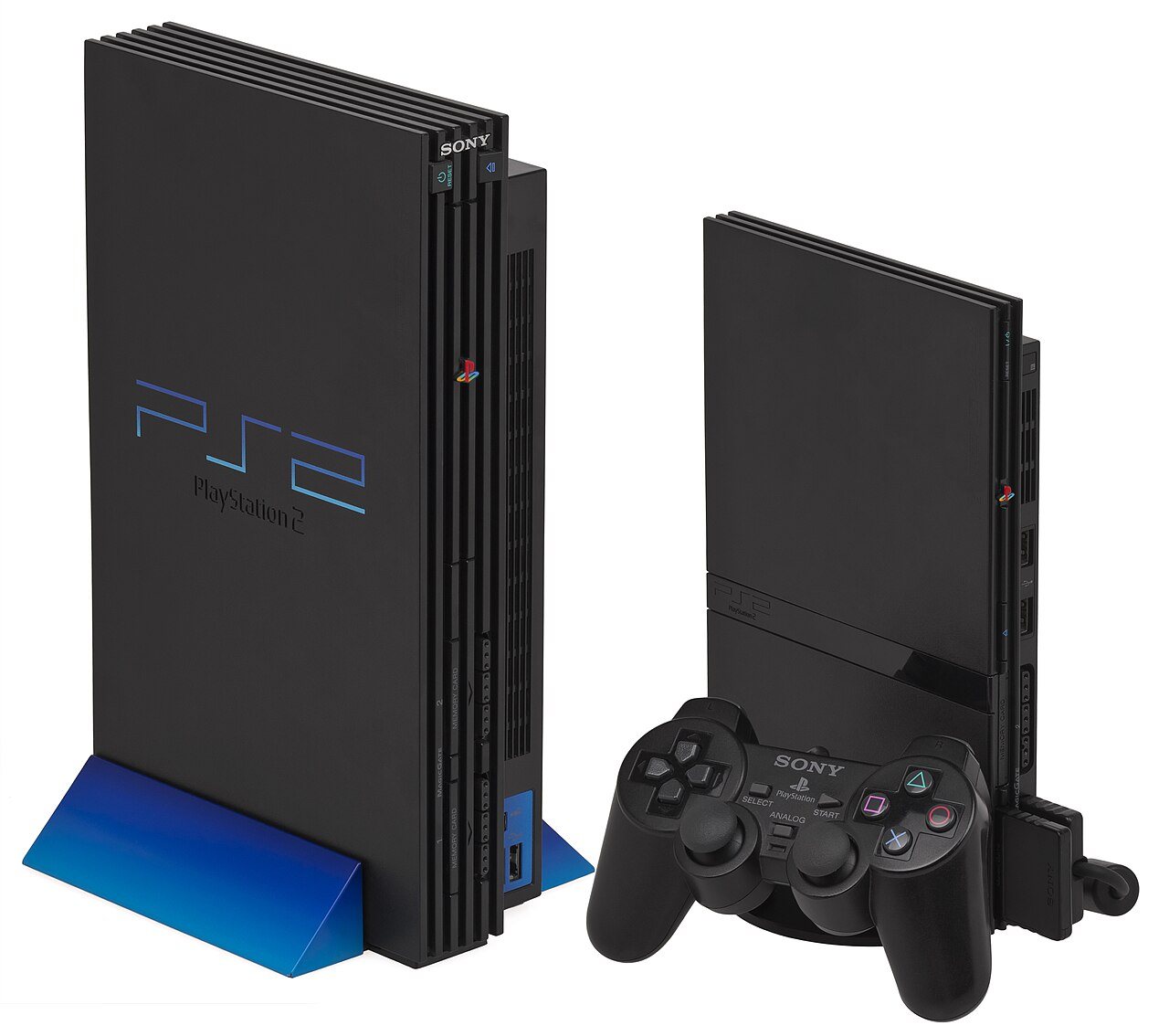
Why did Sony ship only half the consoles it promised?
The PlayStation 2 went on sale in Japan on March 4, 2000 at 39,800 yen, and in North America on October 26, 2000 at $299. The American launch was meant to be the largest in console history, and Sony had told retailers to expect one million units.
In late September 2000, that allocation was cut to 500,000. The bottleneck was the Graphics Synthesizer chip, which Sony was moving to a smaller die and could not turn out in working volume fast enough. Retailers canceled preorders they had already taken.
Stores were cleaned out on launch day. Resale prices on auction sites ran past $1,000 for a machine that listed at $299, and Sony spent the holidays pushing roughly 100,000 units a week into North America. Sony Computer Entertainment America announced in January 2001 that it had finally gotten more than a million consoles onto North American shelves by the end of 2000, which was the original launch target hit about two months late.
Why did Japan put a game console under export control?
In April 2000, Japan's Ministry of International Trade and Industry placed the PlayStation 2 under the Foreign Exchange and Foreign Trade Control Law, the regime that covers dual-use technology. The worry was the console's floating-point performance, which officials considered adaptable to missile guidance.
The rule bit in a strange place. Approval was required for controlled goods worth more than 50,000 yen, and a PlayStation 2 cost 39,800 yen, so one console could leave the country in a suitcase and two could not.
The military commentator Kensuke Ebata told the Asahi Shimbun in 2000 that "there are so many items that have technology for civilians that can also be used for military purposes," and counted the console among them. A Sony Computer Entertainment official told the same newspaper, "We have mixed feelings because our efforts to produce a game console of the highest quality have resulted in legal restrictions." Demand never noticed, and no other home console has been treated as arms-control paperwork.
Did people buy the PS2 as a DVD player?
Plenty did. In 2000 a standalone DVD player still sold for $400 or more, and the PlayStation 2 played DVDs out of the box at $299. For many households in the United States it became the first DVD player in the building, and the games came along with it.
That was the design, not an accident. Ken Kutaragi, who ran Sony's hardware program, had built the machine as a media hub rather than a toy. "You can communicate to a new cybercity. This will be the ideal home server," he told Newsweek in 2000, in the same interview where he reached for a comparison to The Matrix.
The first PlayStation had run a smaller version of the same play, arriving as a CD machine when cartridges were the standard. The DVD move landed harder because the format was young, dedicated players were expensive, and Sony owned a film studio with a direct interest in getting disc players into living rooms. A console that doubled as the cheapest way into a new video format reached buyers who were not shopping for a console at all.
How badly did the Dreamcast, GameCube and Xbox lose?
Badly. The Sega Dreamcast launched first, in September 1999, and sold 9.13 million units before Sega discontinued it in March 2001 and left the hardware business for good. Nintendo's GameCube, released in 2001, finished at about 21.7 million. Microsoft's original Xbox, also a 2001 machine, sold about 24 million. All three together account for roughly 55 million units against the PlayStation 2's 160 million.
The install base then fed itself. No publisher could justify skipping a platform that large, so the PlayStation 2 ended up with more than 4,000 released titles, the deepest library any console has had. Guinness World Records lists Grand Theft Auto: San Andreas as the system's best seller at 17.33 million copies.
Software outlived the hardware. Pro Evolution Soccer 2014, the last new retail game for the system, shipped on November 8, 2013, ten months after Sony had stopped building consoles.
Can you still play a PS2 in 2026?
Yes, with two caveats. Online play is finished: PlayStation 2 multiplayer ran on each publisher's own servers rather than one central service, and the last official server, for Final Fantasy XI, closed on March 31, 2016, with Sony's DNAS authentication system following on April 4, 2016. Any game that had to sign in through DNAS went offline that week.
The second caveat is the disc drive on newer hardware. A PlayStation 5 will not read a PlayStation 2 disc. Sony's official route is the Classics Catalog in PlayStation Plus Premium, which runs a curated set of emulated PS2 titles with save states, rewind and trophy support, and Sony was still adding and reworking titles there through 2026. That catalog holds dozens of games, not thousands.
Where to find one today: a tested console runs about $75 to $150 in 2026, and boxed slimline units go past $200, according to 2026 price guides. Buy from a shop that tests hardware and says so in writing, because the laser and the disc tray are what fail first on a machine this old. Stone Age Gamer stocks tested consoles, controllers, memory cards and cables. Budget for a component or RGB cable too, since composite video on a modern television is the usual reason an old console looks worse than anyone remembers.
Is the Nintendo Switch about to take the record?
It is close enough to matter. Sony's public count sat near 155 million for years, the figure from fiscal reporting that ended in March 2012, until November 26, 2024, when Sony updated its PlayStation history timeline to 160 million and accounted for the consoles built and sold before production ended in January 2013.
The Nintendo Switch reached 155.92 million units by mid-2026, about 4.08 million short, and it is still on sale alongside its successor. Nintendo Life reported in May 2026 that price increases could slow the Switch down before it closes the gap.
What cannot repeat is the situation the PlayStation 2 walked into. In 2001 a console was how most people played games at home, there was no serious mobile market, and one machine could take nearly the whole mainstream audience. Attention now splits across PC, phones, subscriptions and two console families at once. Whoever takes the number eventually, nothing will win a generation by that margin again.
Frequently Asked Questions
How many PS2 consoles were sold?
Sony sold 160 million PlayStation 2 consoles between the launch in March 2000 and the end of production in January 2013. Sony left its public count at roughly 155 million for over a decade and only confirmed the final 160 million total in November 2024, a number that keeps the PlayStation 2 the best-selling console ever made.
When did Sony stop making the PS2?
Sony ended PlayStation 2 production in January 2013, almost 13 years after the console went on sale in Japan on March 4, 2000. The last new retail game for the system, Pro Evolution Soccer 2014, arrived on November 8, 2013, ten months after the final consoles were built.
Can you play PS2 games on a PS5?
A PlayStation 5 cannot read a PlayStation 2 disc. The only official route in 2026 is the Classics Catalog in PlayStation Plus Premium, which offers a curated set of emulated PS2 titles with save states and trophies. Anything outside that catalog needs original PlayStation 2 hardware.