What Happened to RollerCoaster Tycoon, Built by One Man in Assembly

One Guy, Assembly Code, and the Greatest Theme Park Ever Built

Picture this: 1997. Somewhere in a small village near Dunblane, Scotland, a guy named Chris Sawyer is sitting alone at his desk. No team. No studio. No corner office with a whiteboard covered in sprint planning sticky notes. Just one man, a compiler, and what might be the most absurdly ambitious solo development project in the history of video games. He is writing a theme park simulation, from scratch, in x86 assembly language. And he is going to do this for the next two years.

If you played PC games in the late 1990s, you already know how this story ends. RollerCoaster Tycoon became one of the best-selling PC games of its era, moved over four million copies in the United States alone, and generated roughly $180 million in total revenue. Chris Sawyer personally earned around $30 million in royalties. And he did almost all of it by himself, writing 99% of the code in a programming language that most developers considered obsolete even in 1997.

This is the story of how that happened. And honestly, it is kind of insane.

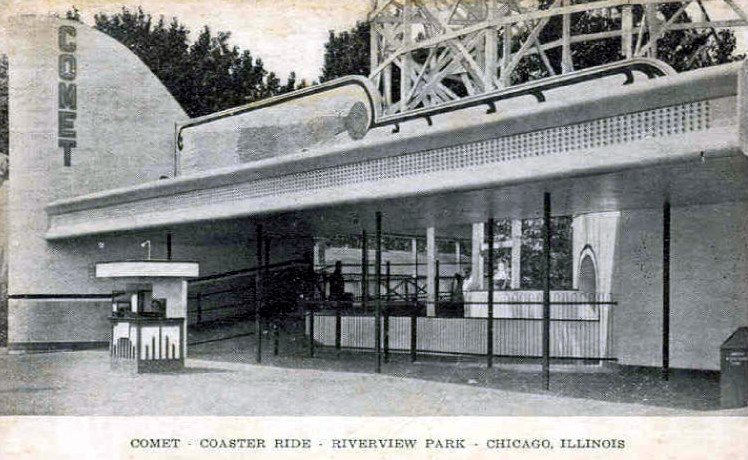
Vintage photograph of the Comet roller coaster at Riverview Park in Chicago, 1942
A vintage roller coaster at Chicagoโ€™s Riverview Park, the kind of real-world inspiration behind RollerCoaster Tycoonโ€™s detailed ride physics.

Before the Tycoon: Transport Tycoon and the Assembly Habit

To understand why Chris Sawyer wrote RollerCoaster Tycoon in assembly, you have to understand what came before it. In 1994, Sawyer released Transport Tycoon through MicroProse, a business simulation where you built transportation networks connecting cities with buses, trains, ships, and planes. It was a hit in Europe, particularly in the UK, and it established Sawyer as a developer who could build deeply complex simulations that were somehow still fun to play.

Transport Tycoon was also written largely in assembly language. This was not a random choice or an act of stubbornness. Sawyer had been programming in assembly since the early 1980s, starting on 8-bit machines where assembly was not optional, it was the only way to get acceptable performance. By the time he moved to PC development, he had built up years of hand-tuned libraries, tools, and routines. His assembly codebase was, in a very real sense, his competitive advantage. He could write machine code faster and more reliably than most developers could write C.

An enhanced version, Transport Tycoon Deluxe, followed in 1995. And then Sawyer started thinking about roller coasters.

The Roller Coaster Obsession

Sawyer has said in interviews that he had been interested in the engineering side of roller coasters for years before starting RollerCoaster Tycoon. The physics of it fascinated him: the way potential energy converts to kinetic energy on a drop, the forces that pin you to your seat on a loop, the precise calculations that determine whether a coaster is thrilling or terrifying. He saw an opportunity to build a game that captured that engineering challenge while wrapping it in the addictive management loop of a tycoon game.

The basic pitch was simple. You manage a theme park. You build rides, set admission prices, hire staff, maintain the grounds, and try to attract enough guests to meet financial targets. Each scenario gave you a park with specific goals: reach a certain guest count, achieve a target park rating, or accumulate a set amount of cash. Some scenarios started you with an empty plot. Others gave you a struggling park that needed to be turned around.

Simple pitch, extraordinary execution.

99% Assembly: The Technical Marvel

Here is the fact that makes every programmer do a double take. Chris Sawyer wrote 99% of RollerCoaster Tycoonโ€™s code in x86 assembly language, using the Microsoft Macro Assembler. The remaining 1% was written in C, and that tiny slice existed solely to interface with Microsoft Windows and DirectX. Everything else, the simulation engine, the pathfinding, the ride physics, the guest AI, the rendering, the UI, all of it was hand-written assembly.

For non-programmers, here is what that means. Most game developers in the late 1990s wrote their code in C or C++, high-level languages that let you express complex ideas in relatively readable syntax. The compiler then translates that code into machine instructions the processor can execute. Assembly language skips the middleman. You are writing instructions that the processor executes directly. It is faster, because there is no compiler making guesses about optimization. It is also dramatically harder, because you are managing memory, registers, and processor states manually. A task that takes 10 lines of C might take 50 or 100 lines of assembly.

Sawyer chose assembly for a practical reason: the game needed to simulate hundreds of individual guests, each with their own preferences, happiness levels, hunger, thirst, and pathfinding logic, while simultaneously running physics calculations on dozens of rides, all rendered in an isometric view that scrolled smoothly on late-1990s hardware. The machines of that era, Pentium and Pentium II processors running at 200 to 400 MHz, did not have power to waste. Assembly let Sawyer squeeze every cycle out of the CPU.

The result was a game that ran beautifully on modest hardware. While competitors struggled with frame rate issues and memory problems, RollerCoaster Tycoon was silky smooth. Guests wandered the paths. Roller coasters climbed, dropped, and looped with fluid animation. Rain fell. Fireworks exploded. And the whole thing ran on a machine that would be considered a calculator by todayโ€™s standards.

MicroProse, Hasbro, and Getting the Game to Market

Sawyer developed RollerCoaster Tycoon over approximately two years in his home near Dunblane, Scotland. The publisher was MicroProse, the same company that had released Transport Tycoon. But MicroProse in the late 1990s was not the MicroProse of the Sid Meier glory days. The company had been acquired by Spectrum HoloByte in 1993, which was then acquired by Hasbro Interactive in 1998. By the time RollerCoaster Tycoon was ready to ship, MicroProse was essentially a brand name within Hasbroโ€™s game division.

The game launched in North America on March 22, 1999. And it took off.

The Sales Explosion

RollerCoaster Tycoon sold over 700,000 copies in 1999 alone, making it the third highest-grossing PC game of the year with $19.6 million in revenue. That is impressive on its own. What makes it extraordinary is the trajectory. The game did not have a massive marketing campaign. It did not have a cinematic trailer or a celebrity endorsement. It sold on word of mouth, positive reviews, and the simple fact that it was incredibly fun.

And the sales kept accelerating. As the game spread into international markets, the numbers climbed. Within three years, RollerCoaster Tycoon had sold more than four million copies in the United States alone. Total worldwide revenue reached approximately $180 million. For Hasbro, the game single-handedly justified the money they had spent acquiring MicroProse. For Chris Sawyer, it meant roughly $30 million in royalties, an almost unheard-of payout for a solo developer.

Two expansion packs followed: Added Attractions (released as Corkscrew Follies in North America) in 1999 and Loopy Landscapes in 2000. Both added new scenarios, rides, and scenery objects. Both sold well. The RollerCoaster Tycoon franchise was, by any measure, a phenomenon.

Wild Thing roller coaster at Valleyfair amusement park
Real-world roller coasters like the Wild Thing at Valleyfair inspired the ride-building mechanics that made RollerCoaster Tycoon so addictive.

Why It Worked: The Design Genius

RollerCoaster Tycoon was not the first theme park management game. Bullfrog Productions had released Theme Park in 1994, and it was a great game. But RollerCoaster Tycoon succeeded because of a handful of design decisions that elevated it from good to unforgettable.

First, the coaster builder itself was genuinely deep. You were not selecting pre-built rides from a menu. You were laying track piece by piece, adjusting elevation, banking turns, adding inversions, and then testing the result with a physics simulation that calculated g-forces, excitement ratings, intensity ratings, and nausea ratings. A well-designed coaster that balanced thrills with comfort would attract long lines. A poorly designed one would make guests vomit on the pathways. There was real skill involved, and players spent hours perfecting their designs.

Second, the guest AI was remarkably detailed for its era. Each guest was an individual with specific traits. Some guests preferred gentle rides. Others craved intensity. Guests got hungry, thirsty, and tired. They complained about litter, long queues, and high prices. They got lost if your paths were confusing. Watching a guestโ€™s thought bubbles became a diagnostic tool: \"Iโ€™m not paying that much to go on Mega Coaster 1,\" a guest might think, and you would know it was time to lower the price.

Third, the scenarios were brilliantly paced. The game started with simple parks on flat terrain and gradually introduced more challenging conditions: hilly landscapes, pre-built parks with problems, strict time limits, limited budgets. Each scenario felt like a puzzle with multiple solutions. The difficulty curve was steep enough to be satisfying but gentle enough to avoid frustration. You always felt like you were learning something.

And fourth, the game had personality. The isometric art style was colorful and detailed. The sound design was full of charming touches: the clatter of a wooden coaster, the screams of riders, the cheerful music that played when things were going well. It was the kind of game where you would look up from your screen and realize three hours had passed. Which, honestly, is the highest compliment you can pay a simulation game.

RollerCoaster Tycoon 2: Sawyer Does It Again

In October 2002, Chris Sawyer released RollerCoaster Tycoon 2, again coded almost entirely in assembly by himself. The sequel was published by Infogrames Interactive, which had acquired Hasbro Interactive in 2001 and would later rebrand as Atari. The game used an enhanced version of the original engine with improved graphics, more ride types, and a scenario editor that let players create and share their own parks.

RollerCoaster Tycoon 2 was well received, though some critics noted that it felt more like an expansion pack than a true sequel. The core gameplay was essentially identical to the original. For most fans, that was fine. The original formula was so strong that \"more of the same\" was exactly what they wanted. The game sold well, though exact figures are harder to pin down than the originalโ€™s.

RollerCoaster Tycoon 3: Sawyer Steps Back

For the third game in the franchise, released in October 2004, Chris Sawyer stepped back from development entirely. He served only as a consultant while Frontier Developments, a UK studio founded by David Braben of Elite fame, handled the actual development. The publisher was Atari.

RollerCoaster Tycoon 3 was a significant technical leap. It moved the series into full 3D, replacing the isometric perspective with a free-roaming camera. A \"Coaster Cam\" let you ride your creations from a first-person viewpoint. Day-night cycles and fireworks shows added visual spectacle. It was, by most accounts, a solid game.

But something was lost in the transition. The charm of the isometric art style, the buttery smoothness that Sawyerโ€™s assembly code had delivered, the feeling that every pixel had been placed with intention, those qualities were harder to replicate in a 3D engine built by a team rather than a single obsessive craftsman. RollerCoaster Tycoon 3 was good. It was not the same.

The Franchise After Sawyer

What happened next is a familiar story in gaming. Atari, perpetually struggling financially, continued to exploit the RollerCoaster Tycoon brand without Sawyerโ€™s involvement. RollerCoaster Tycoon 3D for the Nintendo 3DS arrived in 2012 to mediocre reviews. RollerCoaster Tycoon 4 Mobile launched in 2014 as a free-to-play game stuffed with microtransactions, earning scathing reviews from fans who saw it as a betrayal of everything the franchise stood for. RollerCoaster Tycoon World, a PC title developed by multiple studios after a chaotic development process, launched in early access in 2016 to overwhelmingly negative reception.

Meanwhile, Frontier Developments went on to create Planet Coaster in 2016, a spiritual successor that captured much of the originalโ€™s magic in a modern 3D engine. It was, in many ways, the true follow-up to RollerCoaster Tycoon that fans had been waiting for.

In November 2005, Sawyer sued Atari, claiming the company had failed to pay him certain royalties owed from the franchise. Atari counter-sued in 2007. The two parties settled out of court in February 2008 for an undisclosed sum paid to Sawyer.

The Legacy: Why Assembly Matters

RollerCoaster Tycoonโ€™s development story has become something of a legend in the programming community, and for good reason. It is proof that a single talented individual can compete with entire studios. That choosing the right tool, even an unconventional one, can produce results that brute-force team size cannot. That optimization is not just about making things faster. It is about making things possible.

Chris Sawyer did not write RollerCoaster Tycoon in assembly to show off. He did it because he had decades of experience in the language, because he had a library of proven routines from previous projects, and because the gameโ€™s technical requirements demanded it. The hundreds of simultaneous pathfinding calculations, the real-time physics on dozens of rides, the smooth scrolling across a detailed isometric world, none of that would have been feasible on late-1990s hardware without the kind of fine-grained control that assembly provides.

Today, writing a commercial game in assembly would be considered somewhere between eccentric and reckless. Modern hardware is powerful enough that the performance gains rarely justify the development cost. But in 1999, on a Pentium running at 233 MHz, it was the difference between a game that ran and a game that soared.

And here is the thing that still gets me. When you loaded up RollerCoaster Tycoon for the first time, you did not think about assembly code. You did not think about optimization or register allocation or memory management. You thought about where to put the roller coaster. You thought about whether to build a food court near the entrance or the back of the park. You thought about that one guest who kept getting lost near the hedge maze.

The best technology disappears. You do not notice it. You just notice that the game runs perfectly, that it responds instantly, that everything feels right. Chris Sawyer understood that better than almost anyone. He spent two years writing tens of thousands of lines of assembly code so that millions of players could have the experience of building the perfect theme park without ever thinking about the code underneath.

That is what great engineering looks like.

Frequently Asked Questions

Was RollerCoaster Tycoon really written in assembly language?
\nYes. Chris Sawyer wrote 99% of RollerCoaster Tycoonโ€™s code in x86 assembly language using the Microsoft Macro Assembler (MASM). The remaining 1% was written in C to interface with Microsoft Windows and DirectX.

How many copies did RollerCoaster Tycoon sell?
\nRollerCoaster Tycoon sold over four million copies in the United States alone within three years of release. Total worldwide revenue reached approximately $180 million. Chris Sawyer earned roughly $30 million in royalties.

Did Chris Sawyer make RollerCoaster Tycoon completely alone?
\nSawyer did virtually all of the programming and game design himself. The graphics were created by artist Simon Foster, and the music was composed by Allister Brimble. But the code, simulation engine, ride physics, AI, and overall design were Sawyerโ€™s solo work.

What happened to the RollerCoaster Tycoon franchise after Chris Sawyer?
\nAfter RollerCoaster Tycoon 2, Sawyer stepped back to a consultant role for RCT3, which was developed by Frontier Developments. Subsequent entries made without Sawyerโ€™s involvement, including RCT 4 Mobile and RCT World, were poorly received. Frontier went on to create Planet Coaster in 2016 as a spiritual successor.

Why did Chris Sawyer choose assembly language instead of C or C++?
\nSawyer had been programming in assembly since the 1980s and had built extensive libraries of optimized routines from previous projects like Transport Tycoon. He could write assembly faster and more efficiently than high-level languages, and the gameโ€™s complex simulation demanded the performance that hand-tuned machine code provided on late-1990s hardware.

Is there a connection between RollerCoaster Tycoon and Transport Tycoon?
\nBoth games were created by Chris Sawyer and share a similar development philosophy: complex simulations made accessible through intuitive management interfaces. Sawyer began developing RollerCoaster Tycoon while working on the engine for a Transport Tycoon sequel, reusing and adapting code from his earlier projects.

\n
๐Ÿ“– What Happened to RollerCoaster Tycoon, Built by One Man in Assembly
_ โ–ก ร—
← Back

What Happened to RollerCoaster Tycoon, Built by One Man in Assembly

2026-04-08 by 404 Memory Found

One Guy, Assembly Code, and the Greatest Theme Park Ever Built

Picture this: 1997. Somewhere in a small village near Dunblane, Scotland, a guy named Chris Sawyer is sitting alone at his desk. No team. No studio. No corner office with a whiteboard covered in sprint planning sticky notes. Just one man, a compiler, and what might be the most absurdly ambitious solo development project in the history of video games. He is writing a theme park simulation, from scratch, in x86 assembly language. And he is going to do this for the next two years.

If you played PC games in the late 1990s, you already know how this story ends. RollerCoaster Tycoon became one of the best-selling PC games of its era, moved over four million copies in the United States alone, and generated roughly $180 million in total revenue. Chris Sawyer personally earned around $30 million in royalties. And he did almost all of it by himself, writing 99% of the code in a programming language that most developers considered obsolete even in 1997.

This is the story of how that happened. And honestly, it is kind of insane.

Vintage photograph of the Comet roller coaster at Riverview Park in Chicago, 1942
A vintage roller coaster at Chicagoโ€™s Riverview Park, the kind of real-world inspiration behind RollerCoaster Tycoonโ€™s detailed ride physics.

Before the Tycoon: Transport Tycoon and the Assembly Habit

To understand why Chris Sawyer wrote RollerCoaster Tycoon in assembly, you have to understand what came before it. In 1994, Sawyer released Transport Tycoon through MicroProse, a business simulation where you built transportation networks connecting cities with buses, trains, ships, and planes. It was a hit in Europe, particularly in the UK, and it established Sawyer as a developer who could build deeply complex simulations that were somehow still fun to play.

Transport Tycoon was also written largely in assembly language. This was not a random choice or an act of stubbornness. Sawyer had been programming in assembly since the early 1980s, starting on 8-bit machines where assembly was not optional, it was the only way to get acceptable performance. By the time he moved to PC development, he had built up years of hand-tuned libraries, tools, and routines. His assembly codebase was, in a very real sense, his competitive advantage. He could write machine code faster and more reliably than most developers could write C.

An enhanced version, Transport Tycoon Deluxe, followed in 1995. And then Sawyer started thinking about roller coasters.

The Roller Coaster Obsession

Sawyer has said in interviews that he had been interested in the engineering side of roller coasters for years before starting RollerCoaster Tycoon. The physics of it fascinated him: the way potential energy converts to kinetic energy on a drop, the forces that pin you to your seat on a loop, the precise calculations that determine whether a coaster is thrilling or terrifying. He saw an opportunity to build a game that captured that engineering challenge while wrapping it in the addictive management loop of a tycoon game.

The basic pitch was simple. You manage a theme park. You build rides, set admission prices, hire staff, maintain the grounds, and try to attract enough guests to meet financial targets. Each scenario gave you a park with specific goals: reach a certain guest count, achieve a target park rating, or accumulate a set amount of cash. Some scenarios started you with an empty plot. Others gave you a struggling park that needed to be turned around.

Simple pitch, extraordinary execution.

99% Assembly: The Technical Marvel

Here is the fact that makes every programmer do a double take. Chris Sawyer wrote 99% of RollerCoaster Tycoonโ€™s code in x86 assembly language, using the Microsoft Macro Assembler. The remaining 1% was written in C, and that tiny slice existed solely to interface with Microsoft Windows and DirectX. Everything else, the simulation engine, the pathfinding, the ride physics, the guest AI, the rendering, the UI, all of it was hand-written assembly.

For non-programmers, here is what that means. Most game developers in the late 1990s wrote their code in C or C++, high-level languages that let you express complex ideas in relatively readable syntax. The compiler then translates that code into machine instructions the processor can execute. Assembly language skips the middleman. You are writing instructions that the processor executes directly. It is faster, because there is no compiler making guesses about optimization. It is also dramatically harder, because you are managing memory, registers, and processor states manually. A task that takes 10 lines of C might take 50 or 100 lines of assembly.

Sawyer chose assembly for a practical reason: the game needed to simulate hundreds of individual guests, each with their own preferences, happiness levels, hunger, thirst, and pathfinding logic, while simultaneously running physics calculations on dozens of rides, all rendered in an isometric view that scrolled smoothly on late-1990s hardware. The machines of that era, Pentium and Pentium II processors running at 200 to 400 MHz, did not have power to waste. Assembly let Sawyer squeeze every cycle out of the CPU.

The result was a game that ran beautifully on modest hardware. While competitors struggled with frame rate issues and memory problems, RollerCoaster Tycoon was silky smooth. Guests wandered the paths. Roller coasters climbed, dropped, and looped with fluid animation. Rain fell. Fireworks exploded. And the whole thing ran on a machine that would be considered a calculator by todayโ€™s standards.

MicroProse, Hasbro, and Getting the Game to Market

Sawyer developed RollerCoaster Tycoon over approximately two years in his home near Dunblane, Scotland. The publisher was MicroProse, the same company that had released Transport Tycoon. But MicroProse in the late 1990s was not the MicroProse of the Sid Meier glory days. The company had been acquired by Spectrum HoloByte in 1993, which was then acquired by Hasbro Interactive in 1998. By the time RollerCoaster Tycoon was ready to ship, MicroProse was essentially a brand name within Hasbroโ€™s game division.

The game launched in North America on March 22, 1999. And it took off.

The Sales Explosion

RollerCoaster Tycoon sold over 700,000 copies in 1999 alone, making it the third highest-grossing PC game of the year with $19.6 million in revenue. That is impressive on its own. What makes it extraordinary is the trajectory. The game did not have a massive marketing campaign. It did not have a cinematic trailer or a celebrity endorsement. It sold on word of mouth, positive reviews, and the simple fact that it was incredibly fun.

And the sales kept accelerating. As the game spread into international markets, the numbers climbed. Within three years, RollerCoaster Tycoon had sold more than four million copies in the United States alone. Total worldwide revenue reached approximately $180 million. For Hasbro, the game single-handedly justified the money they had spent acquiring MicroProse. For Chris Sawyer, it meant roughly $30 million in royalties, an almost unheard-of payout for a solo developer.

Two expansion packs followed: Added Attractions (released as Corkscrew Follies in North America) in 1999 and Loopy Landscapes in 2000. Both added new scenarios, rides, and scenery objects. Both sold well. The RollerCoaster Tycoon franchise was, by any measure, a phenomenon.

Wild Thing roller coaster at Valleyfair amusement park
Real-world roller coasters like the Wild Thing at Valleyfair inspired the ride-building mechanics that made RollerCoaster Tycoon so addictive.

Why It Worked: The Design Genius

RollerCoaster Tycoon was not the first theme park management game. Bullfrog Productions had released Theme Park in 1994, and it was a great game. But RollerCoaster Tycoon succeeded because of a handful of design decisions that elevated it from good to unforgettable.

First, the coaster builder itself was genuinely deep. You were not selecting pre-built rides from a menu. You were laying track piece by piece, adjusting elevation, banking turns, adding inversions, and then testing the result with a physics simulation that calculated g-forces, excitement ratings, intensity ratings, and nausea ratings. A well-designed coaster that balanced thrills with comfort would attract long lines. A poorly designed one would make guests vomit on the pathways. There was real skill involved, and players spent hours perfecting their designs.

Second, the guest AI was remarkably detailed for its era. Each guest was an individual with specific traits. Some guests preferred gentle rides. Others craved intensity. Guests got hungry, thirsty, and tired. They complained about litter, long queues, and high prices. They got lost if your paths were confusing. Watching a guestโ€™s thought bubbles became a diagnostic tool: \"Iโ€™m not paying that much to go on Mega Coaster 1,\" a guest might think, and you would know it was time to lower the price.

Third, the scenarios were brilliantly paced. The game started with simple parks on flat terrain and gradually introduced more challenging conditions: hilly landscapes, pre-built parks with problems, strict time limits, limited budgets. Each scenario felt like a puzzle with multiple solutions. The difficulty curve was steep enough to be satisfying but gentle enough to avoid frustration. You always felt like you were learning something.

And fourth, the game had personality. The isometric art style was colorful and detailed. The sound design was full of charming touches: the clatter of a wooden coaster, the screams of riders, the cheerful music that played when things were going well. It was the kind of game where you would look up from your screen and realize three hours had passed. Which, honestly, is the highest compliment you can pay a simulation game.

RollerCoaster Tycoon 2: Sawyer Does It Again

In October 2002, Chris Sawyer released RollerCoaster Tycoon 2, again coded almost entirely in assembly by himself. The sequel was published by Infogrames Interactive, which had acquired Hasbro Interactive in 2001 and would later rebrand as Atari. The game used an enhanced version of the original engine with improved graphics, more ride types, and a scenario editor that let players create and share their own parks.

RollerCoaster Tycoon 2 was well received, though some critics noted that it felt more like an expansion pack than a true sequel. The core gameplay was essentially identical to the original. For most fans, that was fine. The original formula was so strong that \"more of the same\" was exactly what they wanted. The game sold well, though exact figures are harder to pin down than the originalโ€™s.

RollerCoaster Tycoon 3: Sawyer Steps Back

For the third game in the franchise, released in October 2004, Chris Sawyer stepped back from development entirely. He served only as a consultant while Frontier Developments, a UK studio founded by David Braben of Elite fame, handled the actual development. The publisher was Atari.

RollerCoaster Tycoon 3 was a significant technical leap. It moved the series into full 3D, replacing the isometric perspective with a free-roaming camera. A \"Coaster Cam\" let you ride your creations from a first-person viewpoint. Day-night cycles and fireworks shows added visual spectacle. It was, by most accounts, a solid game.

But something was lost in the transition. The charm of the isometric art style, the buttery smoothness that Sawyerโ€™s assembly code had delivered, the feeling that every pixel had been placed with intention, those qualities were harder to replicate in a 3D engine built by a team rather than a single obsessive craftsman. RollerCoaster Tycoon 3 was good. It was not the same.

The Franchise After Sawyer

What happened next is a familiar story in gaming. Atari, perpetually struggling financially, continued to exploit the RollerCoaster Tycoon brand without Sawyerโ€™s involvement. RollerCoaster Tycoon 3D for the Nintendo 3DS arrived in 2012 to mediocre reviews. RollerCoaster Tycoon 4 Mobile launched in 2014 as a free-to-play game stuffed with microtransactions, earning scathing reviews from fans who saw it as a betrayal of everything the franchise stood for. RollerCoaster Tycoon World, a PC title developed by multiple studios after a chaotic development process, launched in early access in 2016 to overwhelmingly negative reception.

Meanwhile, Frontier Developments went on to create Planet Coaster in 2016, a spiritual successor that captured much of the originalโ€™s magic in a modern 3D engine. It was, in many ways, the true follow-up to RollerCoaster Tycoon that fans had been waiting for.

In November 2005, Sawyer sued Atari, claiming the company had failed to pay him certain royalties owed from the franchise. Atari counter-sued in 2007. The two parties settled out of court in February 2008 for an undisclosed sum paid to Sawyer.

The Legacy: Why Assembly Matters

RollerCoaster Tycoonโ€™s development story has become something of a legend in the programming community, and for good reason. It is proof that a single talented individual can compete with entire studios. That choosing the right tool, even an unconventional one, can produce results that brute-force team size cannot. That optimization is not just about making things faster. It is about making things possible.

Chris Sawyer did not write RollerCoaster Tycoon in assembly to show off. He did it because he had decades of experience in the language, because he had a library of proven routines from previous projects, and because the gameโ€™s technical requirements demanded it. The hundreds of simultaneous pathfinding calculations, the real-time physics on dozens of rides, the smooth scrolling across a detailed isometric world, none of that would have been feasible on late-1990s hardware without the kind of fine-grained control that assembly provides.

Today, writing a commercial game in assembly would be considered somewhere between eccentric and reckless. Modern hardware is powerful enough that the performance gains rarely justify the development cost. But in 1999, on a Pentium running at 233 MHz, it was the difference between a game that ran and a game that soared.

And here is the thing that still gets me. When you loaded up RollerCoaster Tycoon for the first time, you did not think about assembly code. You did not think about optimization or register allocation or memory management. You thought about where to put the roller coaster. You thought about whether to build a food court near the entrance or the back of the park. You thought about that one guest who kept getting lost near the hedge maze.

The best technology disappears. You do not notice it. You just notice that the game runs perfectly, that it responds instantly, that everything feels right. Chris Sawyer understood that better than almost anyone. He spent two years writing tens of thousands of lines of assembly code so that millions of players could have the experience of building the perfect theme park without ever thinking about the code underneath.

That is what great engineering looks like.

Frequently Asked Questions

Was RollerCoaster Tycoon really written in assembly language?
\nYes. Chris Sawyer wrote 99% of RollerCoaster Tycoonโ€™s code in x86 assembly language using the Microsoft Macro Assembler (MASM). The remaining 1% was written in C to interface with Microsoft Windows and DirectX.

How many copies did RollerCoaster Tycoon sell?
\nRollerCoaster Tycoon sold over four million copies in the United States alone within three years of release. Total worldwide revenue reached approximately $180 million. Chris Sawyer earned roughly $30 million in royalties.

Did Chris Sawyer make RollerCoaster Tycoon completely alone?
\nSawyer did virtually all of the programming and game design himself. The graphics were created by artist Simon Foster, and the music was composed by Allister Brimble. But the code, simulation engine, ride physics, AI, and overall design were Sawyerโ€™s solo work.

What happened to the RollerCoaster Tycoon franchise after Chris Sawyer?
\nAfter RollerCoaster Tycoon 2, Sawyer stepped back to a consultant role for RCT3, which was developed by Frontier Developments. Subsequent entries made without Sawyerโ€™s involvement, including RCT 4 Mobile and RCT World, were poorly received. Frontier went on to create Planet Coaster in 2016 as a spiritual successor.

Why did Chris Sawyer choose assembly language instead of C or C++?
\nSawyer had been programming in assembly since the 1980s and had built extensive libraries of optimized routines from previous projects like Transport Tycoon. He could write assembly faster and more efficiently than high-level languages, and the gameโ€™s complex simulation demanded the performance that hand-tuned machine code provided on late-1990s hardware.

Is there a connection between RollerCoaster Tycoon and Transport Tycoon?
\nBoth games were created by Chris Sawyer and share a similar development philosophy: complex simulations made accessible through intuitive management interfaces. Sawyer began developing RollerCoaster Tycoon while working on the engine for a Transport Tycoon sequel, reusing and adapting code from his earlier projects.

\n
๐Ÿ“– What Happened to RollerCoaster Tycoon, Built by One Man in Assembly

One Guy, Assembly Code, and the Greatest Theme Park Ever Built

Picture this: 1997. Somewhere in a small village near Dunblane, Scotland, a guy named Chris Sawyer is sitting alone at his desk. No team. No studio. No corner office with a whiteboard covered in sprint planning sticky notes. Just one man, a compiler, and what might be the most absurdly ambitious solo development project in the history of video games. He is writing a theme park simulation, from scratch, in x86 assembly language. And he is going to do this for the next two years.

If you played PC games in the late 1990s, you already know how this story ends. RollerCoaster Tycoon became one of the best-selling PC games of its era, moved over four million copies in the United States alone, and generated roughly $180 million in total revenue. Chris Sawyer personally earned around $30 million in royalties. And he did almost all of it by himself, writing 99% of the code in a programming language that most developers considered obsolete even in 1997.

This is the story of how that happened. And honestly, it is kind of insane.

Vintage photograph of the Comet roller coaster at Riverview Park in Chicago, 1942
A vintage roller coaster at Chicagoโ€™s Riverview Park, the kind of real-world inspiration behind RollerCoaster Tycoonโ€™s detailed ride physics.

Before the Tycoon: Transport Tycoon and the Assembly Habit

To understand why Chris Sawyer wrote RollerCoaster Tycoon in assembly, you have to understand what came before it. In 1994, Sawyer released Transport Tycoon through MicroProse, a business simulation where you built transportation networks connecting cities with buses, trains, ships, and planes. It was a hit in Europe, particularly in the UK, and it established Sawyer as a developer who could build deeply complex simulations that were somehow still fun to play.

Transport Tycoon was also written largely in assembly language. This was not a random choice or an act of stubbornness. Sawyer had been programming in assembly since the early 1980s, starting on 8-bit machines where assembly was not optional, it was the only way to get acceptable performance. By the time he moved to PC development, he had built up years of hand-tuned libraries, tools, and routines. His assembly codebase was, in a very real sense, his competitive advantage. He could write machine code faster and more reliably than most developers could write C.

An enhanced version, Transport Tycoon Deluxe, followed in 1995. And then Sawyer started thinking about roller coasters.

The Roller Coaster Obsession

Sawyer has said in interviews that he had been interested in the engineering side of roller coasters for years before starting RollerCoaster Tycoon. The physics of it fascinated him: the way potential energy converts to kinetic energy on a drop, the forces that pin you to your seat on a loop, the precise calculations that determine whether a coaster is thrilling or terrifying. He saw an opportunity to build a game that captured that engineering challenge while wrapping it in the addictive management loop of a tycoon game.

The basic pitch was simple. You manage a theme park. You build rides, set admission prices, hire staff, maintain the grounds, and try to attract enough guests to meet financial targets. Each scenario gave you a park with specific goals: reach a certain guest count, achieve a target park rating, or accumulate a set amount of cash. Some scenarios started you with an empty plot. Others gave you a struggling park that needed to be turned around.

Simple pitch, extraordinary execution.

99% Assembly: The Technical Marvel

Here is the fact that makes every programmer do a double take. Chris Sawyer wrote 99% of RollerCoaster Tycoonโ€™s code in x86 assembly language, using the Microsoft Macro Assembler. The remaining 1% was written in C, and that tiny slice existed solely to interface with Microsoft Windows and DirectX. Everything else, the simulation engine, the pathfinding, the ride physics, the guest AI, the rendering, the UI, all of it was hand-written assembly.

For non-programmers, here is what that means. Most game developers in the late 1990s wrote their code in C or C++, high-level languages that let you express complex ideas in relatively readable syntax. The compiler then translates that code into machine instructions the processor can execute. Assembly language skips the middleman. You are writing instructions that the processor executes directly. It is faster, because there is no compiler making guesses about optimization. It is also dramatically harder, because you are managing memory, registers, and processor states manually. A task that takes 10 lines of C might take 50 or 100 lines of assembly.

Sawyer chose assembly for a practical reason: the game needed to simulate hundreds of individual guests, each with their own preferences, happiness levels, hunger, thirst, and pathfinding logic, while simultaneously running physics calculations on dozens of rides, all rendered in an isometric view that scrolled smoothly on late-1990s hardware. The machines of that era, Pentium and Pentium II processors running at 200 to 400 MHz, did not have power to waste. Assembly let Sawyer squeeze every cycle out of the CPU.

The result was a game that ran beautifully on modest hardware. While competitors struggled with frame rate issues and memory problems, RollerCoaster Tycoon was silky smooth. Guests wandered the paths. Roller coasters climbed, dropped, and looped with fluid animation. Rain fell. Fireworks exploded. And the whole thing ran on a machine that would be considered a calculator by todayโ€™s standards.

MicroProse, Hasbro, and Getting the Game to Market

Sawyer developed RollerCoaster Tycoon over approximately two years in his home near Dunblane, Scotland. The publisher was MicroProse, the same company that had released Transport Tycoon. But MicroProse in the late 1990s was not the MicroProse of the Sid Meier glory days. The company had been acquired by Spectrum HoloByte in 1993, which was then acquired by Hasbro Interactive in 1998. By the time RollerCoaster Tycoon was ready to ship, MicroProse was essentially a brand name within Hasbroโ€™s game division.

The game launched in North America on March 22, 1999. And it took off.

The Sales Explosion

RollerCoaster Tycoon sold over 700,000 copies in 1999 alone, making it the third highest-grossing PC game of the year with $19.6 million in revenue. That is impressive on its own. What makes it extraordinary is the trajectory. The game did not have a massive marketing campaign. It did not have a cinematic trailer or a celebrity endorsement. It sold on word of mouth, positive reviews, and the simple fact that it was incredibly fun.

And the sales kept accelerating. As the game spread into international markets, the numbers climbed. Within three years, RollerCoaster Tycoon had sold more than four million copies in the United States alone. Total worldwide revenue reached approximately $180 million. For Hasbro, the game single-handedly justified the money they had spent acquiring MicroProse. For Chris Sawyer, it meant roughly $30 million in royalties, an almost unheard-of payout for a solo developer.

Two expansion packs followed: Added Attractions (released as Corkscrew Follies in North America) in 1999 and Loopy Landscapes in 2000. Both added new scenarios, rides, and scenery objects. Both sold well. The RollerCoaster Tycoon franchise was, by any measure, a phenomenon.

Wild Thing roller coaster at Valleyfair amusement park
Real-world roller coasters like the Wild Thing at Valleyfair inspired the ride-building mechanics that made RollerCoaster Tycoon so addictive.

Why It Worked: The Design Genius

RollerCoaster Tycoon was not the first theme park management game. Bullfrog Productions had released Theme Park in 1994, and it was a great game. But RollerCoaster Tycoon succeeded because of a handful of design decisions that elevated it from good to unforgettable.

First, the coaster builder itself was genuinely deep. You were not selecting pre-built rides from a menu. You were laying track piece by piece, adjusting elevation, banking turns, adding inversions, and then testing the result with a physics simulation that calculated g-forces, excitement ratings, intensity ratings, and nausea ratings. A well-designed coaster that balanced thrills with comfort would attract long lines. A poorly designed one would make guests vomit on the pathways. There was real skill involved, and players spent hours perfecting their designs.

Second, the guest AI was remarkably detailed for its era. Each guest was an individual with specific traits. Some guests preferred gentle rides. Others craved intensity. Guests got hungry, thirsty, and tired. They complained about litter, long queues, and high prices. They got lost if your paths were confusing. Watching a guestโ€™s thought bubbles became a diagnostic tool: \"Iโ€™m not paying that much to go on Mega Coaster 1,\" a guest might think, and you would know it was time to lower the price.

Third, the scenarios were brilliantly paced. The game started with simple parks on flat terrain and gradually introduced more challenging conditions: hilly landscapes, pre-built parks with problems, strict time limits, limited budgets. Each scenario felt like a puzzle with multiple solutions. The difficulty curve was steep enough to be satisfying but gentle enough to avoid frustration. You always felt like you were learning something.

And fourth, the game had personality. The isometric art style was colorful and detailed. The sound design was full of charming touches: the clatter of a wooden coaster, the screams of riders, the cheerful music that played when things were going well. It was the kind of game where you would look up from your screen and realize three hours had passed. Which, honestly, is the highest compliment you can pay a simulation game.

RollerCoaster Tycoon 2: Sawyer Does It Again

In October 2002, Chris Sawyer released RollerCoaster Tycoon 2, again coded almost entirely in assembly by himself. The sequel was published by Infogrames Interactive, which had acquired Hasbro Interactive in 2001 and would later rebrand as Atari. The game used an enhanced version of the original engine with improved graphics, more ride types, and a scenario editor that let players create and share their own parks.

RollerCoaster Tycoon 2 was well received, though some critics noted that it felt more like an expansion pack than a true sequel. The core gameplay was essentially identical to the original. For most fans, that was fine. The original formula was so strong that \"more of the same\" was exactly what they wanted. The game sold well, though exact figures are harder to pin down than the originalโ€™s.

RollerCoaster Tycoon 3: Sawyer Steps Back

For the third game in the franchise, released in October 2004, Chris Sawyer stepped back from development entirely. He served only as a consultant while Frontier Developments, a UK studio founded by David Braben of Elite fame, handled the actual development. The publisher was Atari.

RollerCoaster Tycoon 3 was a significant technical leap. It moved the series into full 3D, replacing the isometric perspective with a free-roaming camera. A \"Coaster Cam\" let you ride your creations from a first-person viewpoint. Day-night cycles and fireworks shows added visual spectacle. It was, by most accounts, a solid game.

But something was lost in the transition. The charm of the isometric art style, the buttery smoothness that Sawyerโ€™s assembly code had delivered, the feeling that every pixel had been placed with intention, those qualities were harder to replicate in a 3D engine built by a team rather than a single obsessive craftsman. RollerCoaster Tycoon 3 was good. It was not the same.

The Franchise After Sawyer

What happened next is a familiar story in gaming. Atari, perpetually struggling financially, continued to exploit the RollerCoaster Tycoon brand without Sawyerโ€™s involvement. RollerCoaster Tycoon 3D for the Nintendo 3DS arrived in 2012 to mediocre reviews. RollerCoaster Tycoon 4 Mobile launched in 2014 as a free-to-play game stuffed with microtransactions, earning scathing reviews from fans who saw it as a betrayal of everything the franchise stood for. RollerCoaster Tycoon World, a PC title developed by multiple studios after a chaotic development process, launched in early access in 2016 to overwhelmingly negative reception.

Meanwhile, Frontier Developments went on to create Planet Coaster in 2016, a spiritual successor that captured much of the originalโ€™s magic in a modern 3D engine. It was, in many ways, the true follow-up to RollerCoaster Tycoon that fans had been waiting for.

In November 2005, Sawyer sued Atari, claiming the company had failed to pay him certain royalties owed from the franchise. Atari counter-sued in 2007. The two parties settled out of court in February 2008 for an undisclosed sum paid to Sawyer.

The Legacy: Why Assembly Matters

RollerCoaster Tycoonโ€™s development story has become something of a legend in the programming community, and for good reason. It is proof that a single talented individual can compete with entire studios. That choosing the right tool, even an unconventional one, can produce results that brute-force team size cannot. That optimization is not just about making things faster. It is about making things possible.

Chris Sawyer did not write RollerCoaster Tycoon in assembly to show off. He did it because he had decades of experience in the language, because he had a library of proven routines from previous projects, and because the gameโ€™s technical requirements demanded it. The hundreds of simultaneous pathfinding calculations, the real-time physics on dozens of rides, the smooth scrolling across a detailed isometric world, none of that would have been feasible on late-1990s hardware without the kind of fine-grained control that assembly provides.

Today, writing a commercial game in assembly would be considered somewhere between eccentric and reckless. Modern hardware is powerful enough that the performance gains rarely justify the development cost. But in 1999, on a Pentium running at 233 MHz, it was the difference between a game that ran and a game that soared.

And here is the thing that still gets me. When you loaded up RollerCoaster Tycoon for the first time, you did not think about assembly code. You did not think about optimization or register allocation or memory management. You thought about where to put the roller coaster. You thought about whether to build a food court near the entrance or the back of the park. You thought about that one guest who kept getting lost near the hedge maze.

The best technology disappears. You do not notice it. You just notice that the game runs perfectly, that it responds instantly, that everything feels right. Chris Sawyer understood that better than almost anyone. He spent two years writing tens of thousands of lines of assembly code so that millions of players could have the experience of building the perfect theme park without ever thinking about the code underneath.

That is what great engineering looks like.

Frequently Asked Questions

Was RollerCoaster Tycoon really written in assembly language?
\nYes. Chris Sawyer wrote 99% of RollerCoaster Tycoonโ€™s code in x86 assembly language using the Microsoft Macro Assembler (MASM). The remaining 1% was written in C to interface with Microsoft Windows and DirectX.

How many copies did RollerCoaster Tycoon sell?
\nRollerCoaster Tycoon sold over four million copies in the United States alone within three years of release. Total worldwide revenue reached approximately $180 million. Chris Sawyer earned roughly $30 million in royalties.

Did Chris Sawyer make RollerCoaster Tycoon completely alone?
\nSawyer did virtually all of the programming and game design himself. The graphics were created by artist Simon Foster, and the music was composed by Allister Brimble. But the code, simulation engine, ride physics, AI, and overall design were Sawyerโ€™s solo work.

What happened to the RollerCoaster Tycoon franchise after Chris Sawyer?
\nAfter RollerCoaster Tycoon 2, Sawyer stepped back to a consultant role for RCT3, which was developed by Frontier Developments. Subsequent entries made without Sawyerโ€™s involvement, including RCT 4 Mobile and RCT World, were poorly received. Frontier went on to create Planet Coaster in 2016 as a spiritual successor.

Why did Chris Sawyer choose assembly language instead of C or C++?
\nSawyer had been programming in assembly since the 1980s and had built extensive libraries of optimized routines from previous projects like Transport Tycoon. He could write assembly faster and more efficiently than high-level languages, and the gameโ€™s complex simulation demanded the performance that hand-tuned machine code provided on late-1990s hardware.

Is there a connection between RollerCoaster Tycoon and Transport Tycoon?
\nBoth games were created by Chris Sawyer and share a similar development philosophy: complex simulations made accessible through intuitive management interfaces. Sawyer began developing RollerCoaster Tycoon while working on the engine for a Transport Tycoon sequel, reusing and adapting code from his earlier projects.

\n
00:00