What Happened to the Segway, the Invention That Was Supposed to Change the World

In 2001, venture capitalists predicted the Segway Personal Transporter would generate a billion dollars in sales within a year. By 2020, when production ended, it had sold roughly 140,000 units total across its entire lifetime. That's about 0.014% of the prediction.

The Segway is a fascinating case study in how a genuinely innovative product can fail not because the technology is flawed, but because the assumptions about the world it was entering turned out to be wrong.

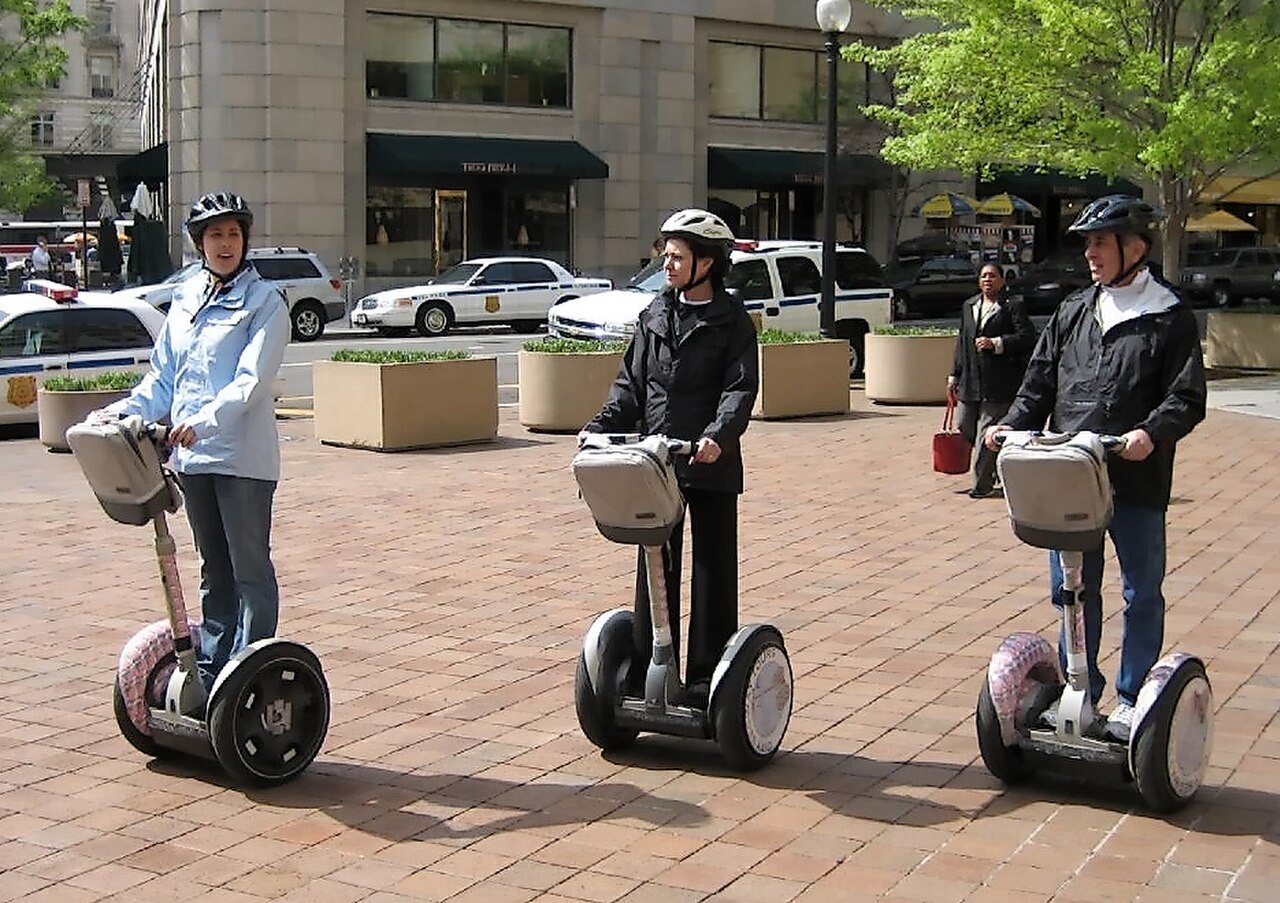
Segway Personal Transporter model from 2006
The Segway PT, once predicted to be as transformative as the automobile. It sold roughly 140,000 units over its entire lifetime.

The Setup

Dean Kamen invented things. Serious things. His company DEKA Research had already created the iBOT, a wheelchair that could climb stairs and balance on two wheels. Kamen wasn't some garage tinkerer playing with hobby projects. He had credibility.

So when Kamen began working on a new personal transportation device in the late 1990s, people paid attention. The project was codenamed "Ginger" internally, which should tell you something about how seriously he took the secrecy. The code name alone generated speculation and hype before anyone outside DEKA had actually seen the thing.

Here's the thing: the technology itself was genuinely impressive. The Segway used gyroscopic sensors and accelerometers to maintain balance. You stood on a platform with two wheels and leaned forward or backward to move. It was intuitive in a way that defied the mechanical complexity underneath. From an engineering standpoint, Kamen solved a real problem: how to make self-balancing personal transportation actually work.

The hype machine ran at full capacity. Steve Jobs allegedly told Kamen it would be "bigger than the PC." John Doerr, the legendary KPCB venture capitalist, invested in Segway and predicted billion-dollar revenues by 2002. Major newspapers speculated about what the mysterious device could be. Some guessed it would be a new form of wheelchair. Others thought it might be a motorcycle replacement. The ambiguity was intentional, and it worked perfectly.

On December 3, 2001, Kamen unveiled the Segway on Good Morning America. America was primed. Investors were ready. The product was real, it worked, and it was unlike anything most people had seen before.

Then it tried to revolutionize transportation at $4,950 per unit, which in 2001 dollars was a significant amount of money. For context, you could buy a used car for that price. You could buy a decent used motorcycle. You were choosing to spend this money on a standing platform with two wheels.

The Assumptions That Broke

The people backing Segway made several logical assumptions. None of them were obviously wrong in December 2001.

Assumption one: cities want to reduce cars. Urban planners and transit advocates had been talking about this forever. Congestion was getting worse. Parking was a nightmare. If you could get more people moving without individual cars, that would solve a lot of problems. A Segway could be that solution. You could navigate urban streets faster than walking, without the carbon footprint of a car.

Assumption two: people who want faster personal transportation will buy whatever works best. If the Segway actually delivered on its promise, people would adopt it. Economics would favor efficiency. Forget bicycles and walking. Segway was the better mousetrap.

Assumption three: the regulatory environment would adapt. Cities would designate paths for Segways. Infrastructure would follow the product. The technology was so obviously useful that governments would clear the way for deployment.

This is where the logic starts to break down.

Dean Kamen's personal Segway, the inventor who created the device
Dean Kamen's own Segway. Kamen, who also invented the iBOT wheelchair, genuinely believed the device would transform urban transportation.

The Problem with Being First

Cities didn't embrace Segways. They banned them. Or more precisely, they weren't sure what to do with them, so they defaulted to no.

Sidewalks? Too crowded. Segways pose a pedestrian safety risk, or at least that was the concern. A person moving at 12 miles per hour toward you on a crowded sidewalk doesn't feel that different from a bicycle, except the Segway rider can't necessarily dismount as quickly. Cities looked at Segways and saw liability.

Bike lanes? The device wasn't a bicycle, so it didn't quite fit the regulations written for bicycles. Were Segways vehicles? Were they pedestrian devices? The regulatory ambiguity was paralyzing. Different cities made different calls. San Francisco banned them from sidewalks. Other cities allowed them in certain areas. None of this was consolidated or predictable.

Here's the thing: Kamen invented a product that didn't have a legal category. The infrastructure was written for cars and pedestrians. Segways lived in the uncomfortable middle. This wasn't a technology problem. This was a regulatory problem. And regulatory problems move slowly.

The first two years still looked okay on paper. Segway sold about 30,000 units by 2003, which wasn't the 50,000 to 100,000 that year-one projections had hoped for, but it was movement. The company could still claim it was building momentum. Early adopters existed. Some tour operators in cities like Boston started using Segways. There was a niche.

But a niche isn't a market transformation. And markets have a way of telling you when you've overestimated their size.

The Long Decline

What happened next wasn't a dramatic crash. It was slower than that. More depressing. The company went through multiple ownership changes as enthusiasm gradually evaporated.

Jimi Heselden, a British businessman who had made his fortune in defense barriers, bought Segway in 2009. He seemed like a natural fit, someone who believed in the product's vision. Then on September 26, 2010, Heselden died in a Segway accident in Yorkshire, England. He was riding the device near a cliff edge on his estate and fell into the River Wharfe.

The irony was brutal. The company's owner died riding its own product. It was the kind of detail that tends to stick in people's minds and overshadow whatever else you're trying to say about your company's potential.

By 2015, Ninebot, a Chinese company that manufactured electric scooters, acquired Segway in April of that year. This was a different kind of pivot. Ninebot wasn't interested in the Segway as a standalone transportation revolution. They were interested in the brand and the technology, but also in pivoting toward products with broader appeal. Electric scooters. Go-karts. Things people actually wanted to ride.

The real question is whether Segway's failure was inevitable or whether different decisions could have changed the trajectory. Kamen created something genuinely innovative. The problem wasn't the engineering. The problem was that cities weren't ready, regulators weren't set up to accommodate it, and the market revealed that most people don't actually want to stand on a platform while moving through urban space. They want to sit. They want to pedal. They want something that fits into an existing category.

Why This Matters

The Segway story shows up in every discussion about innovation for a reason. It's taught in business schools as an example of good technology meeting bad market assumptions. But the more important lesson is something else: being first isn't the same as being right about what people want.

Look at what happened with electric scooters two decades later. The scooter companies, particularly Lime and Bird, faced many of the same regulatory questions that Segway did. But they approached the problem differently. They were willing to operate in a legal gray area while cities figured out what to do. They accepted lower profit margins to move volume. They weren't trying to charge $5,000 per unit. They were trying to become ubiquitous, even if individual scooters didn't make much money.

This is essentially what Uber and Lyft did with ride-sharing. They launched in cities where it was technically illegal, operated anyway, got shut down, lobbied, and eventually forced regulatory adaptation. It's a more aggressive strategy than Kamen's, and it worked.

That's not to say Kamen was wrong to respect regulatory boundaries. It's to say that respecting boundaries and working within them, when those boundaries don't actually exist yet, can slow you down enough that you never reach critical mass.

The End

Segway PT production ended on July 15, 2020. The device had been in production for nearly two decades. Total lifetime sales were estimated around 140,000 units. That's genuinely not nothing. There were tour operators and police departments and tourism attractions that relied on the Segway for nearly twenty years. It found a niche and occupied it reasonably well.

But it didn't revolutionize transportation. It didn't change how cities moved. It didn't become the next generation of personal mobility.

The Segway brand still exists, but under Ninebot's ownership it's become something else entirely. Electric scooters. Ride-on machines. Products that slot into markets that already exist rather than trying to create new ones.

Kamen himself has moved on to other projects. He's been working on water purification and medical devices through DEKA. He's still inventing. He still respects the challenge of building things that actually work, even if they don't always find the market he imagines they will.

FAQ

Why did the Segway fail if the technology was so good?

The technology wasn't the problem. The issues were regulatory, infrastructural, and market-based. Cities banned or restricted Segways on sidewalks because they weren't sure how to categorize them legally. They didn't fit existing transportation categories. Meanwhile, the $4,950 price point meant the addressable market was much smaller than venture capitalists had predicted. People who wanted personal urban mobility could get a motorcycle, a scooter, or a bicycle for less money.

Could the Segway have succeeded with different marketing or pricing?

Possibly, but it would have required accepting a much smaller market. If Segway had positioned itself from the start as a niche product for tourists and specialized use cases, rather than trying to be the future of urban transportation, expectations would have aligned with reality. Alternatively, a lower price point might have expanded the potential market, but that would have required different manufacturing and investment strategies. The company was built around the assumption of massive adoption, and when that didn't materialize, the economics stopped working.

What did cities eventually do about regulating personal mobility devices?

Most cities eventually created categories for electric scooters, bikes, and similar devices, but this took years. By the time regulatory frameworks actually existed, Segway had already lost momentum. Electric scooters came later and benefited from more lenient regulatory environments, partly because regulators had learned from earlier devices like the Segway.

Is the Segway still being manufactured anywhere?

Segway PT production ended in July 2020, but the Segway brand continues under Ninebot. They make electric scooters, go-karts, and other devices. If you want to buy a new Segway product today, you're buying something very different from the original Personal Transporter. The brand survived, but the original product line didn't.

What would happen if the Segway launched today?

It would likely face the same regulatory questions, but with more established precedent. Cities now have frameworks for electric scooters and bikes. A Segway-like device might fit into those categories more easily. That said, the fundamental market question remains: do people want this form of transportation enough to pay for it? The fact that electric scooters dominate the personal mobility space, despite being cheaper and more familiar, suggests that a new Segway wouldn't automatically succeed.

๐Ÿ“– What Happened to the Segway, the Invention That Was Supposed to Change the World
_ โ–ก ร—
← Back

What Happened to the Segway, the Invention That Was Supposed to Change the World

2026-04-14 by 404 Memory Found

In 2001, venture capitalists predicted the Segway Personal Transporter would generate a billion dollars in sales within a year. By 2020, when production ended, it had sold roughly 140,000 units total across its entire lifetime. That's about 0.014% of the prediction.

The Segway is a fascinating case study in how a genuinely innovative product can fail not because the technology is flawed, but because the assumptions about the world it was entering turned out to be wrong.

Segway Personal Transporter model from 2006
The Segway PT, once predicted to be as transformative as the automobile. It sold roughly 140,000 units over its entire lifetime.

The Setup

Dean Kamen invented things. Serious things. His company DEKA Research had already created the iBOT, a wheelchair that could climb stairs and balance on two wheels. Kamen wasn't some garage tinkerer playing with hobby projects. He had credibility.

So when Kamen began working on a new personal transportation device in the late 1990s, people paid attention. The project was codenamed "Ginger" internally, which should tell you something about how seriously he took the secrecy. The code name alone generated speculation and hype before anyone outside DEKA had actually seen the thing.

Here's the thing: the technology itself was genuinely impressive. The Segway used gyroscopic sensors and accelerometers to maintain balance. You stood on a platform with two wheels and leaned forward or backward to move. It was intuitive in a way that defied the mechanical complexity underneath. From an engineering standpoint, Kamen solved a real problem: how to make self-balancing personal transportation actually work.

The hype machine ran at full capacity. Steve Jobs allegedly told Kamen it would be "bigger than the PC." John Doerr, the legendary KPCB venture capitalist, invested in Segway and predicted billion-dollar revenues by 2002. Major newspapers speculated about what the mysterious device could be. Some guessed it would be a new form of wheelchair. Others thought it might be a motorcycle replacement. The ambiguity was intentional, and it worked perfectly.

On December 3, 2001, Kamen unveiled the Segway on Good Morning America. America was primed. Investors were ready. The product was real, it worked, and it was unlike anything most people had seen before.

Then it tried to revolutionize transportation at $4,950 per unit, which in 2001 dollars was a significant amount of money. For context, you could buy a used car for that price. You could buy a decent used motorcycle. You were choosing to spend this money on a standing platform with two wheels.

The Assumptions That Broke

The people backing Segway made several logical assumptions. None of them were obviously wrong in December 2001.

Assumption one: cities want to reduce cars. Urban planners and transit advocates had been talking about this forever. Congestion was getting worse. Parking was a nightmare. If you could get more people moving without individual cars, that would solve a lot of problems. A Segway could be that solution. You could navigate urban streets faster than walking, without the carbon footprint of a car.

Assumption two: people who want faster personal transportation will buy whatever works best. If the Segway actually delivered on its promise, people would adopt it. Economics would favor efficiency. Forget bicycles and walking. Segway was the better mousetrap.

Assumption three: the regulatory environment would adapt. Cities would designate paths for Segways. Infrastructure would follow the product. The technology was so obviously useful that governments would clear the way for deployment.

This is where the logic starts to break down.

Dean Kamen's personal Segway, the inventor who created the device
Dean Kamen's own Segway. Kamen, who also invented the iBOT wheelchair, genuinely believed the device would transform urban transportation.

The Problem with Being First

Cities didn't embrace Segways. They banned them. Or more precisely, they weren't sure what to do with them, so they defaulted to no.

Sidewalks? Too crowded. Segways pose a pedestrian safety risk, or at least that was the concern. A person moving at 12 miles per hour toward you on a crowded sidewalk doesn't feel that different from a bicycle, except the Segway rider can't necessarily dismount as quickly. Cities looked at Segways and saw liability.

Bike lanes? The device wasn't a bicycle, so it didn't quite fit the regulations written for bicycles. Were Segways vehicles? Were they pedestrian devices? The regulatory ambiguity was paralyzing. Different cities made different calls. San Francisco banned them from sidewalks. Other cities allowed them in certain areas. None of this was consolidated or predictable.

Here's the thing: Kamen invented a product that didn't have a legal category. The infrastructure was written for cars and pedestrians. Segways lived in the uncomfortable middle. This wasn't a technology problem. This was a regulatory problem. And regulatory problems move slowly.

The first two years still looked okay on paper. Segway sold about 30,000 units by 2003, which wasn't the 50,000 to 100,000 that year-one projections had hoped for, but it was movement. The company could still claim it was building momentum. Early adopters existed. Some tour operators in cities like Boston started using Segways. There was a niche.

But a niche isn't a market transformation. And markets have a way of telling you when you've overestimated their size.

The Long Decline

What happened next wasn't a dramatic crash. It was slower than that. More depressing. The company went through multiple ownership changes as enthusiasm gradually evaporated.

Jimi Heselden, a British businessman who had made his fortune in defense barriers, bought Segway in 2009. He seemed like a natural fit, someone who believed in the product's vision. Then on September 26, 2010, Heselden died in a Segway accident in Yorkshire, England. He was riding the device near a cliff edge on his estate and fell into the River Wharfe.

The irony was brutal. The company's owner died riding its own product. It was the kind of detail that tends to stick in people's minds and overshadow whatever else you're trying to say about your company's potential.

By 2015, Ninebot, a Chinese company that manufactured electric scooters, acquired Segway in April of that year. This was a different kind of pivot. Ninebot wasn't interested in the Segway as a standalone transportation revolution. They were interested in the brand and the technology, but also in pivoting toward products with broader appeal. Electric scooters. Go-karts. Things people actually wanted to ride.

The real question is whether Segway's failure was inevitable or whether different decisions could have changed the trajectory. Kamen created something genuinely innovative. The problem wasn't the engineering. The problem was that cities weren't ready, regulators weren't set up to accommodate it, and the market revealed that most people don't actually want to stand on a platform while moving through urban space. They want to sit. They want to pedal. They want something that fits into an existing category.

Why This Matters

The Segway story shows up in every discussion about innovation for a reason. It's taught in business schools as an example of good technology meeting bad market assumptions. But the more important lesson is something else: being first isn't the same as being right about what people want.

Look at what happened with electric scooters two decades later. The scooter companies, particularly Lime and Bird, faced many of the same regulatory questions that Segway did. But they approached the problem differently. They were willing to operate in a legal gray area while cities figured out what to do. They accepted lower profit margins to move volume. They weren't trying to charge $5,000 per unit. They were trying to become ubiquitous, even if individual scooters didn't make much money.

This is essentially what Uber and Lyft did with ride-sharing. They launched in cities where it was technically illegal, operated anyway, got shut down, lobbied, and eventually forced regulatory adaptation. It's a more aggressive strategy than Kamen's, and it worked.

That's not to say Kamen was wrong to respect regulatory boundaries. It's to say that respecting boundaries and working within them, when those boundaries don't actually exist yet, can slow you down enough that you never reach critical mass.

The End

Segway PT production ended on July 15, 2020. The device had been in production for nearly two decades. Total lifetime sales were estimated around 140,000 units. That's genuinely not nothing. There were tour operators and police departments and tourism attractions that relied on the Segway for nearly twenty years. It found a niche and occupied it reasonably well.

But it didn't revolutionize transportation. It didn't change how cities moved. It didn't become the next generation of personal mobility.

The Segway brand still exists, but under Ninebot's ownership it's become something else entirely. Electric scooters. Ride-on machines. Products that slot into markets that already exist rather than trying to create new ones.

Kamen himself has moved on to other projects. He's been working on water purification and medical devices through DEKA. He's still inventing. He still respects the challenge of building things that actually work, even if they don't always find the market he imagines they will.

FAQ

Why did the Segway fail if the technology was so good?

The technology wasn't the problem. The issues were regulatory, infrastructural, and market-based. Cities banned or restricted Segways on sidewalks because they weren't sure how to categorize them legally. They didn't fit existing transportation categories. Meanwhile, the $4,950 price point meant the addressable market was much smaller than venture capitalists had predicted. People who wanted personal urban mobility could get a motorcycle, a scooter, or a bicycle for less money.

Could the Segway have succeeded with different marketing or pricing?

Possibly, but it would have required accepting a much smaller market. If Segway had positioned itself from the start as a niche product for tourists and specialized use cases, rather than trying to be the future of urban transportation, expectations would have aligned with reality. Alternatively, a lower price point might have expanded the potential market, but that would have required different manufacturing and investment strategies. The company was built around the assumption of massive adoption, and when that didn't materialize, the economics stopped working.

What did cities eventually do about regulating personal mobility devices?

Most cities eventually created categories for electric scooters, bikes, and similar devices, but this took years. By the time regulatory frameworks actually existed, Segway had already lost momentum. Electric scooters came later and benefited from more lenient regulatory environments, partly because regulators had learned from earlier devices like the Segway.

Is the Segway still being manufactured anywhere?

Segway PT production ended in July 2020, but the Segway brand continues under Ninebot. They make electric scooters, go-karts, and other devices. If you want to buy a new Segway product today, you're buying something very different from the original Personal Transporter. The brand survived, but the original product line didn't.

What would happen if the Segway launched today?

It would likely face the same regulatory questions, but with more established precedent. Cities now have frameworks for electric scooters and bikes. A Segway-like device might fit into those categories more easily. That said, the fundamental market question remains: do people want this form of transportation enough to pay for it? The fact that electric scooters dominate the personal mobility space, despite being cheaper and more familiar, suggests that a new Segway wouldn't automatically succeed.

๐Ÿ“– What Happened to the Segway, the Invention That Was Supposed to Change the World

In 2001, venture capitalists predicted the Segway Personal Transporter would generate a billion dollars in sales within a year. By 2020, when production ended, it had sold roughly 140,000 units total across its entire lifetime. That's about 0.014% of the prediction.

The Segway is a fascinating case study in how a genuinely innovative product can fail not because the technology is flawed, but because the assumptions about the world it was entering turned out to be wrong.

Segway Personal Transporter model from 2006
The Segway PT, once predicted to be as transformative as the automobile. It sold roughly 140,000 units over its entire lifetime.

The Setup

Dean Kamen invented things. Serious things. His company DEKA Research had already created the iBOT, a wheelchair that could climb stairs and balance on two wheels. Kamen wasn't some garage tinkerer playing with hobby projects. He had credibility.

So when Kamen began working on a new personal transportation device in the late 1990s, people paid attention. The project was codenamed "Ginger" internally, which should tell you something about how seriously he took the secrecy. The code name alone generated speculation and hype before anyone outside DEKA had actually seen the thing.

Here's the thing: the technology itself was genuinely impressive. The Segway used gyroscopic sensors and accelerometers to maintain balance. You stood on a platform with two wheels and leaned forward or backward to move. It was intuitive in a way that defied the mechanical complexity underneath. From an engineering standpoint, Kamen solved a real problem: how to make self-balancing personal transportation actually work.

The hype machine ran at full capacity. Steve Jobs allegedly told Kamen it would be "bigger than the PC." John Doerr, the legendary KPCB venture capitalist, invested in Segway and predicted billion-dollar revenues by 2002. Major newspapers speculated about what the mysterious device could be. Some guessed it would be a new form of wheelchair. Others thought it might be a motorcycle replacement. The ambiguity was intentional, and it worked perfectly.

On December 3, 2001, Kamen unveiled the Segway on Good Morning America. America was primed. Investors were ready. The product was real, it worked, and it was unlike anything most people had seen before.

Then it tried to revolutionize transportation at $4,950 per unit, which in 2001 dollars was a significant amount of money. For context, you could buy a used car for that price. You could buy a decent used motorcycle. You were choosing to spend this money on a standing platform with two wheels.

The Assumptions That Broke

The people backing Segway made several logical assumptions. None of them were obviously wrong in December 2001.

Assumption one: cities want to reduce cars. Urban planners and transit advocates had been talking about this forever. Congestion was getting worse. Parking was a nightmare. If you could get more people moving without individual cars, that would solve a lot of problems. A Segway could be that solution. You could navigate urban streets faster than walking, without the carbon footprint of a car.

Assumption two: people who want faster personal transportation will buy whatever works best. If the Segway actually delivered on its promise, people would adopt it. Economics would favor efficiency. Forget bicycles and walking. Segway was the better mousetrap.

Assumption three: the regulatory environment would adapt. Cities would designate paths for Segways. Infrastructure would follow the product. The technology was so obviously useful that governments would clear the way for deployment.

This is where the logic starts to break down.

Dean Kamen's personal Segway, the inventor who created the device
Dean Kamen's own Segway. Kamen, who also invented the iBOT wheelchair, genuinely believed the device would transform urban transportation.

The Problem with Being First

Cities didn't embrace Segways. They banned them. Or more precisely, they weren't sure what to do with them, so they defaulted to no.

Sidewalks? Too crowded. Segways pose a pedestrian safety risk, or at least that was the concern. A person moving at 12 miles per hour toward you on a crowded sidewalk doesn't feel that different from a bicycle, except the Segway rider can't necessarily dismount as quickly. Cities looked at Segways and saw liability.

Bike lanes? The device wasn't a bicycle, so it didn't quite fit the regulations written for bicycles. Were Segways vehicles? Were they pedestrian devices? The regulatory ambiguity was paralyzing. Different cities made different calls. San Francisco banned them from sidewalks. Other cities allowed them in certain areas. None of this was consolidated or predictable.

Here's the thing: Kamen invented a product that didn't have a legal category. The infrastructure was written for cars and pedestrians. Segways lived in the uncomfortable middle. This wasn't a technology problem. This was a regulatory problem. And regulatory problems move slowly.

The first two years still looked okay on paper. Segway sold about 30,000 units by 2003, which wasn't the 50,000 to 100,000 that year-one projections had hoped for, but it was movement. The company could still claim it was building momentum. Early adopters existed. Some tour operators in cities like Boston started using Segways. There was a niche.

But a niche isn't a market transformation. And markets have a way of telling you when you've overestimated their size.

The Long Decline

What happened next wasn't a dramatic crash. It was slower than that. More depressing. The company went through multiple ownership changes as enthusiasm gradually evaporated.

Jimi Heselden, a British businessman who had made his fortune in defense barriers, bought Segway in 2009. He seemed like a natural fit, someone who believed in the product's vision. Then on September 26, 2010, Heselden died in a Segway accident in Yorkshire, England. He was riding the device near a cliff edge on his estate and fell into the River Wharfe.

The irony was brutal. The company's owner died riding its own product. It was the kind of detail that tends to stick in people's minds and overshadow whatever else you're trying to say about your company's potential.

By 2015, Ninebot, a Chinese company that manufactured electric scooters, acquired Segway in April of that year. This was a different kind of pivot. Ninebot wasn't interested in the Segway as a standalone transportation revolution. They were interested in the brand and the technology, but also in pivoting toward products with broader appeal. Electric scooters. Go-karts. Things people actually wanted to ride.

The real question is whether Segway's failure was inevitable or whether different decisions could have changed the trajectory. Kamen created something genuinely innovative. The problem wasn't the engineering. The problem was that cities weren't ready, regulators weren't set up to accommodate it, and the market revealed that most people don't actually want to stand on a platform while moving through urban space. They want to sit. They want to pedal. They want something that fits into an existing category.

Why This Matters

The Segway story shows up in every discussion about innovation for a reason. It's taught in business schools as an example of good technology meeting bad market assumptions. But the more important lesson is something else: being first isn't the same as being right about what people want.

Look at what happened with electric scooters two decades later. The scooter companies, particularly Lime and Bird, faced many of the same regulatory questions that Segway did. But they approached the problem differently. They were willing to operate in a legal gray area while cities figured out what to do. They accepted lower profit margins to move volume. They weren't trying to charge $5,000 per unit. They were trying to become ubiquitous, even if individual scooters didn't make much money.

This is essentially what Uber and Lyft did with ride-sharing. They launched in cities where it was technically illegal, operated anyway, got shut down, lobbied, and eventually forced regulatory adaptation. It's a more aggressive strategy than Kamen's, and it worked.

That's not to say Kamen was wrong to respect regulatory boundaries. It's to say that respecting boundaries and working within them, when those boundaries don't actually exist yet, can slow you down enough that you never reach critical mass.

The End

Segway PT production ended on July 15, 2020. The device had been in production for nearly two decades. Total lifetime sales were estimated around 140,000 units. That's genuinely not nothing. There were tour operators and police departments and tourism attractions that relied on the Segway for nearly twenty years. It found a niche and occupied it reasonably well.

But it didn't revolutionize transportation. It didn't change how cities moved. It didn't become the next generation of personal mobility.

The Segway brand still exists, but under Ninebot's ownership it's become something else entirely. Electric scooters. Ride-on machines. Products that slot into markets that already exist rather than trying to create new ones.

Kamen himself has moved on to other projects. He's been working on water purification and medical devices through DEKA. He's still inventing. He still respects the challenge of building things that actually work, even if they don't always find the market he imagines they will.

FAQ

Why did the Segway fail if the technology was so good?

The technology wasn't the problem. The issues were regulatory, infrastructural, and market-based. Cities banned or restricted Segways on sidewalks because they weren't sure how to categorize them legally. They didn't fit existing transportation categories. Meanwhile, the $4,950 price point meant the addressable market was much smaller than venture capitalists had predicted. People who wanted personal urban mobility could get a motorcycle, a scooter, or a bicycle for less money.

Could the Segway have succeeded with different marketing or pricing?

Possibly, but it would have required accepting a much smaller market. If Segway had positioned itself from the start as a niche product for tourists and specialized use cases, rather than trying to be the future of urban transportation, expectations would have aligned with reality. Alternatively, a lower price point might have expanded the potential market, but that would have required different manufacturing and investment strategies. The company was built around the assumption of massive adoption, and when that didn't materialize, the economics stopped working.

What did cities eventually do about regulating personal mobility devices?

Most cities eventually created categories for electric scooters, bikes, and similar devices, but this took years. By the time regulatory frameworks actually existed, Segway had already lost momentum. Electric scooters came later and benefited from more lenient regulatory environments, partly because regulators had learned from earlier devices like the Segway.

Is the Segway still being manufactured anywhere?

Segway PT production ended in July 2020, but the Segway brand continues under Ninebot. They make electric scooters, go-karts, and other devices. If you want to buy a new Segway product today, you're buying something very different from the original Personal Transporter. The brand survived, but the original product line didn't.

What would happen if the Segway launched today?

It would likely face the same regulatory questions, but with more established precedent. Cities now have frameworks for electric scooters and bikes. A Segway-like device might fit into those categories more easily. That said, the fundamental market question remains: do people want this form of transportation enough to pay for it? The fact that electric scooters dominate the personal mobility space, despite being cheaper and more familiar, suggests that a new Segway wouldn't automatically succeed.

00:00