Why the Microsoft Zune Actually Failed: The $2 Billion Lesson Nobody Learned

2026-03-24 by 404 Memory Found

In November 2006, Microsoft marched into the portable music player market with all the confidence of a company that had already conquered desktop computing, gaming consoles, and office productivity software. The Zune — Microsoft's answer to Apple's iPod — was supposed to be the device that finally cracked Cupertino's iron grip on digital music. Five years and an estimated $2 billion later, the Zune was dead, holding a pathetic 2% market share while Apple cruised along at 73%. But the real story of why the Zune failed isn't the simple "iPod was better" narrative that most people remember. It's a masterclass in how even the world's most powerful tech company can get timing, strategy, and market psychology catastrophically wrong.

The Zune Wasn't Actually a Bad Product

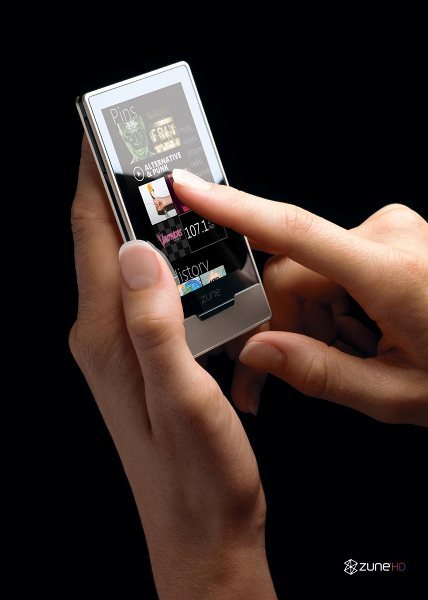
Here's the thing that gets lost in every "lol Zune" joke on the internet: the hardware itself was genuinely decent. The original Zune 30 had a 30GB hard drive, a 3-inch screen (larger than the iPod's), built-in FM radio, and a feature called "squirting" — yes, that was the actual term Microsoft used — that let you wirelessly share songs with other Zune users via Wi-Fi. On paper, it was competitive. The Zune HD, released in 2009, was arguably ahead of its time with an OLED touchscreen, HD video output, and an interface that previewed the design language Microsoft would later use in Windows Phone. Critics actually praised it. CNET gave the Zune HD 4 out of 5 stars. The problem was never really about specs or build quality.

The Zune Marketplace subscription service — $14.99 per month for unlimited downloads — was genuinely innovative for its time. While iTunes locked you into buying individual songs at $0.99 each, Microsoft was essentially offering what Spotify would later perfect. They were just about seven years too early, and attached to the wrong hardware.

Timing: The Single Biggest Reason the Zune Died

When Microsoft launched the Zune in November 2006, the iPod wasn't just a music player — it was a cultural phenomenon. Apple had sold over 100 million iPods by that point. The white earbuds were a fashion statement. The iTunes ecosystem had locked in millions of users with purchased music libraries they couldn't easily transfer. Microsoft wasn't just competing with a product; they were competing with an identity.

But the timing disaster went deeper than just being late to a market Apple already owned. On January 9, 2007 — barely two months after the Zune's launch — Steve Jobs walked onto a stage in San Francisco and unveiled the iPhone. In a single keynote, Jobs didn't just introduce a new phone. He made the entire category of standalone MP3 players obsolete. Why carry a separate music device when your phone could do everything the Zune did, plus make calls, browse the web, and run apps?

The Zune team at Microsoft saw this coming, too. Robbie Bach, the president of Microsoft's Entertainment and Devices division who oversaw the Zune, later admitted in interviews that the iPhone announcement was a gut punch. The team knew immediately that the standalone MP3 player market had an expiration date. But by that point, Microsoft had already committed hundreds of millions of dollars to the Zune platform, manufacturing deals were signed, and the corporate machine couldn't pivot fast enough.

Microsoft Zune player with accessories

The "Chasing" Problem: Microsoft's Own Executives Knew It

In 2012, Robbie Bach gave a remarkably candid interview where he called the Zune a "chasing" product. That single word explains more about the Zune's failure than any market analysis could. Microsoft didn't create the Zune because they had a revolutionary vision for portable music. They created it because Apple was making billions from the iPod and Microsoft wanted a piece of that revenue stream.

This "chasing" mentality infected every decision. The Zune's design language borrowed heavily from the iPod's minimalist aesthetic rather than forging its own identity. The Zune Marketplace was clearly modeled after the iTunes Store. Even the name "Zune" was chosen through focus groups trying to find something as catchy as "iPod" — a process that, by definition, produces something derivative rather than original.

Compare this to how Apple approached the iPod in 2001. Apple wasn't chasing anyone. MP3 players existed — the Diamond Rio, the Creative Nomad, various others — but Apple reimagined the entire experience from hardware to software to content purchasing. The iPod succeeded because it felt like something genuinely new. The Zune felt like Microsoft's version of something that already existed, and consumers could smell the difference.

The Ecosystem Gap That Microsoft Couldn't Close

By 2006, Apple had built something far more powerful than a music player — they'd built an ecosystem. iTunes had over 2 billion song downloads by the time the Zune launched. Users had invested hundreds of dollars in music purchases that were locked into Apple's FairPlay DRM system. Switching to Zune meant abandoning that entire library. It was like asking someone to throw away their CD collection and start over.

Microsoft tried to counter this with the Zune Pass subscription model and the Zune Marketplace, but they were fighting against a deeply entrenched network effect. The more people owned iPods, the more developers created iPod accessories, the more cars added iPod integration, the more the iPod became the default. By one estimate, the iPod accessory market alone was worth $1 billion by 2006. Good luck competing with that when your user base numbers in the low millions.

The wireless sharing feature — the much-mocked "squirting" — was supposed to create its own network effect. The idea was compelling: beam a song to a friend's Zune, they listen three times or keep it for three days, then they're prompted to buy it. It was social music sharing before social media made it mainstream. The problem? You needed to actually find another Zune owner to share with, and with only 2% market share, the chances of running into one in the wild were roughly equivalent to spotting a unicorn at a Starbucks.

Microsoft's Internal Culture Worked Against the Zune

One of the most overlooked factors in the Zune's failure was Microsoft's own corporate culture in the mid-2000s. Under Steve Ballmer's leadership, Microsoft operated with a stack-ranking system where employees were rated against each other, fostering internal competition rather than collaboration. The Zune team had to compete for resources and attention against the Xbox division, the Windows team, and the Office group — all of which were considered more strategically important.

Former Microsoft employees have described the Zune team as something of an internal underdog. They didn't get the A-team engineers. They didn't get the marketing budget they needed. And critically, they didn't get the cross-divisional support that could have made the Zune a truly integrated part of the Microsoft ecosystem. Imagine if, in 2006, every Windows PC had come with Zune software pre-installed and deeply integrated into the OS, the way iTunes was baked into every Mac. Microsoft had the distribution power to make that happen, but internal politics and competing priorities meant the Zune remained a silo.

Apple, by contrast, operated under Steve Jobs' famously centralized leadership. When Jobs decided the iPod was a priority, every part of Apple aligned behind it. The Mac team built iTunes integration. The retail team designed in-store iPod experiences. The marketing team created the iconic silhouette ads. The Zune never got that kind of unified institutional support.

Apple iPod 5th generation in white

The Marketing Misfire: "Welcome to the Social"

Apple's iPod marketing was iconic: the silhouette dancers against vibrant colored backgrounds, set to hip music, communicating joy and coolness without saying a word about technical specifications. Microsoft's Zune marketing? "Welcome to the Social." It was a tagline that meant nothing to anyone. What social? The social of three people in your zip code who also owned Zunes?

The Zune's marketing budget was substantial — Microsoft reportedly spent $100 million on the initial launch campaign — but the messaging was confused. Was the Zune a music player? A social device? A lifestyle statement? Microsoft tried to make it all three and succeeded at none. The brown color option for the original Zune, while actually quite distinctive and popular among the small Zune community, became an easy punchline. "Microsoft made a brown music player" was the kind of joke that wrote itself.

Meanwhile, the Zune's limited availability hurt its visibility. While the iPod was sold in Apple Stores, Best Buy, Target, Walmart, and essentially everywhere on earth, the Zune was primarily a US-only product. Microsoft never launched it in Europe, Asia, or Latin America, voluntarily cutting itself off from the global market. For a company that sold Windows in virtually every country on the planet, this geographic restriction was baffling.

The Price Problem: Not Cheap Enough to Be an Alternative

At launch, the Zune 30 was priced at $249.99 — just $10 less than the comparable 30GB iPod. This pricing strategy was a fundamental error. If you're the challenger brand entering a market dominated by an entrenched incumbent, you need to either be significantly cheaper or significantly better. The Zune was neither. It was roughly the same price for a roughly similar experience, minus the massive ecosystem advantage. There was simply no compelling financial reason for a consumer to choose the Zune over the iPod.

Microsoft could have pursued an aggressive loss-leader strategy — selling the Zune at $149 or even $99 and making up the difference through Zune Marketplace purchases and subscriptions. This is exactly the strategy they used successfully with the Xbox, selling consoles below cost and recouping through game sales and Xbox Live subscriptions. But Microsoft either couldn't or wouldn't apply that same playbook to the Zune. The razor-and-blade model was sitting right there, proven by their own gaming division, and they ignored it.

Then vs Now: The Zune's Ideas Were Ahead of Their Time

Here's the cruel irony of the Zune story: many of its most innovative features became industry standards — just not on the Zune. The subscription-based music model that Zune Pass pioneered at $14.99/month is now the dominant way people consume music, through Spotify ($10.99/month), Apple Music ($10.99/month), and others. The wireless sharing concept that the Zune introduced eventually evolved into AirDrop and Bluetooth sharing. The social music features that "Welcome to the Social" tried to promote are now built into every streaming platform.

Even the Zune's design language survived in an unexpected way. The "Metro" interface that debuted on the Zune HD — with its bold typography, clean lines, and tile-based navigation — became the foundation for Windows Phone's interface, and later influenced Windows 8 and Windows 10's design. The Zune's aesthetic DNA is literally in the Start menu you use today.

The Zune Pass eventually evolved into Xbox Music, then Groove Music, and while Microsoft ultimately exited the music streaming business entirely in 2017 (redirecting users to Spotify), the subscription model proved to be the future. Microsoft was just too early, attached to the wrong hardware, in the wrong market, at the wrong time.

The Final Numbers: A $2 Billion Lesson

Let's look at the cold, hard data. Between its 2006 launch and its 2011 discontinuation, the Zune's lifetime sales figures tell a brutal story. By mid-2007, Microsoft had sold approximately 1.2 million Zune players. By May 2008, the cumulative total reached about 2 million units. For context, Apple sold 10.6 million iPods in the 2006 holiday quarter alone — in a single three-month period, Apple moved five times more iPods than Microsoft sold Zunes in nearly two years.

Market share data from NPD Group showed that in the US portable media player market from January to September 2009, Microsoft held just 2% compared to Apple's 73%, SanDisk's 9%, and Sony's 3%. Microsoft's estimated total investment in the Zune project — including hardware development, the Zune Marketplace, marketing campaigns, and the Zune software — ranged from $1.5 billion to $2 billion over five years. By any return-on-investment calculation, the Zune was a catastrophic financial failure.

On March 15, 2011, Microsoft quietly announced that no new Zune hardware would be developed. On October 3, 2011, the Zune hardware line was officially discontinued. The Zune Marketplace limped on until 2015 before being fully shuttered. What was supposed to be Microsoft's iPod killer died not with a bang, but with a press release that most people didn't even notice.

What the Zune's Failure Actually Teaches Us

The Zune's failure wasn't about making a bad product. It was about entering the wrong market at the wrong time with the wrong strategy for the wrong reasons. Microsoft built the Zune because they saw Apple making money and wanted some of it — not because they had a unique vision for how people should experience music. They priced it to match the competition rather than disrupt it. They marketed it with empty slogans rather than genuine cultural positioning. And they launched it just months before the iPhone made the entire product category irrelevant.

Perhaps the biggest lesson is about ecosystem lock-in. By 2006, the iPod wasn't just a device — it was a platform. Users had invested in iTunes libraries, iPod accessories, and Apple's broader ecosystem. Competing against a platform requires either a dramatically superior product or a completely different value proposition. The Zune offered neither. It was, as Robbie Bach admitted, a chasing product. And in technology, the one doing the chasing almost never catches up.

The Zune does have one small consolation: it's become a genuine collector's item. Working Zune HDs sell for $200-400 on eBay, and there's a small but passionate community of Zune enthusiasts who still use their devices daily. In death, the Zune finally achieved the cult status it could never manage in life — it just took about fifteen years longer than Microsoft hoped.

Why did the Microsoft Zune fail?

The Microsoft Zune failed due to a combination of poor market timing, insufficient product differentiation from the iPod, a lack of ecosystem advantages, and the emergence of the iPhone which rendered standalone MP3 players obsolete. Microsoft entered the market five years after the iPod had established dominance, priced the Zune nearly identically to Apple's offerings without providing a compelling reason to switch, and failed to build the accessory ecosystem and content library that made the iPod so sticky. The device held only 2% market share at its peak before being discontinued in 2011.

How many Zunes were sold in total?

Microsoft never released official lifetime sales figures for the Zune, but based on available data, total sales were estimated at approximately 2-3 million units over the product's five-year lifespan from 2006 to 2011. By comparison, Apple sold over 300 million iPods during the same general timeframe. The Zune's highest confirmed sales figure was 2 million units as of May 2008, roughly 18 months after launch, and retailer GameStop dropped the product that same year due to insufficient demand.

Was the Zune actually better than the iPod?

In some specific ways, yes. The original Zune had a larger screen, FM radio, and wireless sharing — features the iPod lacked. The Zune HD featured an OLED touchscreen and HD video output before the iPod Touch did. The Zune Pass subscription service was genuinely ahead of its time, offering unlimited music streaming years before Spotify existed. However, the iPod had a vastly superior ecosystem including iTunes, a massive accessory market, and deeper software integration. For most consumers, the total iPod experience was significantly better than the total Zune experience, even if individual hardware specs sometimes favored Microsoft's device.

How much money did Microsoft lose on the Zune?

While Microsoft never disclosed exact financials for the Zune division specifically, industry analysts estimated the total investment at between $1.5 billion and $2 billion over five years, covering hardware R&D, the Zune Marketplace platform, marketing campaigns (including a reported $100 million launch campaign), and ongoing software development. Given the device's minimal sales volume and tiny market share, it's reasonable to conclude that Microsoft lost the vast majority of that investment. The Zune was consistently cited as one of Microsoft's most expensive product failures until the $7.6 billion Nokia acquisition writedown in 2015.

Related Posts:
← Back to Blog

Why the Microsoft Zune Actually Failed: The $2 Billion Lesson Nobody Learned | 404 Memory Found

📖 Why the Microsoft Zune Actually Failed: The $2 Billion Lesson Nobody Learned

In November 2006, Microsoft marched into the portable music player market with all the confidence of a company that had already conquered desktop computing, gaming consoles, and office productivity software. The Zune — Microsoft's answer to Apple's iPod — was supposed to be the device that finally cracked Cupertino's iron grip on digital music. Five years and an estimated $2 billion later, the Zune was dead, holding a pathetic 2% market share while Apple cruised along at 73%. But the real story of why the Zune failed isn't the simple "iPod was better" narrative that most people remember. It's a masterclass in how even the world's most powerful tech company can get timing, strategy, and market psychology catastrophically wrong.

The Zune Wasn't Actually a Bad Product

Here's the thing that gets lost in every "lol Zune" joke on the internet: the hardware itself was genuinely decent. The original Zune 30 had a 30GB hard drive, a 3-inch screen (larger than the iPod's), built-in FM radio, and a feature called "squirting" — yes, that was the actual term Microsoft used — that let you wirelessly share songs with other Zune users via Wi-Fi. On paper, it was competitive. The Zune HD, released in 2009, was arguably ahead of its time with an OLED touchscreen, HD video output, and an interface that previewed the design language Microsoft would later use in Windows Phone. Critics actually praised it. CNET gave the Zune HD 4 out of 5 stars. The problem was never really about specs or build quality.

The Zune Marketplace subscription service — $14.99 per month for unlimited downloads — was genuinely innovative for its time. While iTunes locked you into buying individual songs at $0.99 each, Microsoft was essentially offering what Spotify would later perfect. They were just about seven years too early, and attached to the wrong hardware.

Timing: The Single Biggest Reason the Zune Died

When Microsoft launched the Zune in November 2006, the iPod wasn't just a music player — it was a cultural phenomenon. Apple had sold over 100 million iPods by that point. The white earbuds were a fashion statement. The iTunes ecosystem had locked in millions of users with purchased music libraries they couldn't easily transfer. Microsoft wasn't just competing with a product; they were competing with an identity.

But the timing disaster went deeper than just being late to a market Apple already owned. On January 9, 2007 — barely two months after the Zune's launch — Steve Jobs walked onto a stage in San Francisco and unveiled the iPhone. In a single keynote, Jobs didn't just introduce a new phone. He made the entire category of standalone MP3 players obsolete. Why carry a separate music device when your phone could do everything the Zune did, plus make calls, browse the web, and run apps?

The Zune team at Microsoft saw this coming, too. Robbie Bach, the president of Microsoft's Entertainment and Devices division who oversaw the Zune, later admitted in interviews that the iPhone announcement was a gut punch. The team knew immediately that the standalone MP3 player market had an expiration date. But by that point, Microsoft had already committed hundreds of millions of dollars to the Zune platform, manufacturing deals were signed, and the corporate machine couldn't pivot fast enough.

Microsoft Zune player with accessories

The "Chasing" Problem: Microsoft's Own Executives Knew It

In 2012, Robbie Bach gave a remarkably candid interview where he called the Zune a "chasing" product. That single word explains more about the Zune's failure than any market analysis could. Microsoft didn't create the Zune because they had a revolutionary vision for portable music. They created it because Apple was making billions from the iPod and Microsoft wanted a piece of that revenue stream.

This "chasing" mentality infected every decision. The Zune's design language borrowed heavily from the iPod's minimalist aesthetic rather than forging its own identity. The Zune Marketplace was clearly modeled after the iTunes Store. Even the name "Zune" was chosen through focus groups trying to find something as catchy as "iPod" — a process that, by definition, produces something derivative rather than original.

Compare this to how Apple approached the iPod in 2001. Apple wasn't chasing anyone. MP3 players existed — the Diamond Rio, the Creative Nomad, various others — but Apple reimagined the entire experience from hardware to software to content purchasing. The iPod succeeded because it felt like something genuinely new. The Zune felt like Microsoft's version of something that already existed, and consumers could smell the difference.

The Ecosystem Gap That Microsoft Couldn't Close

By 2006, Apple had built something far more powerful than a music player — they'd built an ecosystem. iTunes had over 2 billion song downloads by the time the Zune launched. Users had invested hundreds of dollars in music purchases that were locked into Apple's FairPlay DRM system. Switching to Zune meant abandoning that entire library. It was like asking someone to throw away their CD collection and start over.

Microsoft tried to counter this with the Zune Pass subscription model and the Zune Marketplace, but they were fighting against a deeply entrenched network effect. The more people owned iPods, the more developers created iPod accessories, the more cars added iPod integration, the more the iPod became the default. By one estimate, the iPod accessory market alone was worth $1 billion by 2006. Good luck competing with that when your user base numbers in the low millions.

The wireless sharing feature — the much-mocked "squirting" — was supposed to create its own network effect. The idea was compelling: beam a song to a friend's Zune, they listen three times or keep it for three days, then they're prompted to buy it. It was social music sharing before social media made it mainstream. The problem? You needed to actually find another Zune owner to share with, and with only 2% market share, the chances of running into one in the wild were roughly equivalent to spotting a unicorn at a Starbucks.

Microsoft's Internal Culture Worked Against the Zune

One of the most overlooked factors in the Zune's failure was Microsoft's own corporate culture in the mid-2000s. Under Steve Ballmer's leadership, Microsoft operated with a stack-ranking system where employees were rated against each other, fostering internal competition rather than collaboration. The Zune team had to compete for resources and attention against the Xbox division, the Windows team, and the Office group — all of which were considered more strategically important.

Former Microsoft employees have described the Zune team as something of an internal underdog. They didn't get the A-team engineers. They didn't get the marketing budget they needed. And critically, they didn't get the cross-divisional support that could have made the Zune a truly integrated part of the Microsoft ecosystem. Imagine if, in 2006, every Windows PC had come with Zune software pre-installed and deeply integrated into the OS, the way iTunes was baked into every Mac. Microsoft had the distribution power to make that happen, but internal politics and competing priorities meant the Zune remained a silo.

Apple, by contrast, operated under Steve Jobs' famously centralized leadership. When Jobs decided the iPod was a priority, every part of Apple aligned behind it. The Mac team built iTunes integration. The retail team designed in-store iPod experiences. The marketing team created the iconic silhouette ads. The Zune never got that kind of unified institutional support.

Apple iPod 5th generation in white

The Marketing Misfire: "Welcome to the Social"

Apple's iPod marketing was iconic: the silhouette dancers against vibrant colored backgrounds, set to hip music, communicating joy and coolness without saying a word about technical specifications. Microsoft's Zune marketing? "Welcome to the Social." It was a tagline that meant nothing to anyone. What social? The social of three people in your zip code who also owned Zunes?

The Zune's marketing budget was substantial — Microsoft reportedly spent $100 million on the initial launch campaign — but the messaging was confused. Was the Zune a music player? A social device? A lifestyle statement? Microsoft tried to make it all three and succeeded at none. The brown color option for the original Zune, while actually quite distinctive and popular among the small Zune community, became an easy punchline. "Microsoft made a brown music player" was the kind of joke that wrote itself.

Meanwhile, the Zune's limited availability hurt its visibility. While the iPod was sold in Apple Stores, Best Buy, Target, Walmart, and essentially everywhere on earth, the Zune was primarily a US-only product. Microsoft never launched it in Europe, Asia, or Latin America, voluntarily cutting itself off from the global market. For a company that sold Windows in virtually every country on the planet, this geographic restriction was baffling.

The Price Problem: Not Cheap Enough to Be an Alternative

At launch, the Zune 30 was priced at $249.99 — just $10 less than the comparable 30GB iPod. This pricing strategy was a fundamental error. If you're the challenger brand entering a market dominated by an entrenched incumbent, you need to either be significantly cheaper or significantly better. The Zune was neither. It was roughly the same price for a roughly similar experience, minus the massive ecosystem advantage. There was simply no compelling financial reason for a consumer to choose the Zune over the iPod.

Microsoft could have pursued an aggressive loss-leader strategy — selling the Zune at $149 or even $99 and making up the difference through Zune Marketplace purchases and subscriptions. This is exactly the strategy they used successfully with the Xbox, selling consoles below cost and recouping through game sales and Xbox Live subscriptions. But Microsoft either couldn't or wouldn't apply that same playbook to the Zune. The razor-and-blade model was sitting right there, proven by their own gaming division, and they ignored it.

Then vs Now: The Zune's Ideas Were Ahead of Their Time

Here's the cruel irony of the Zune story: many of its most innovative features became industry standards — just not on the Zune. The subscription-based music model that Zune Pass pioneered at $14.99/month is now the dominant way people consume music, through Spotify ($10.99/month), Apple Music ($10.99/month), and others. The wireless sharing concept that the Zune introduced eventually evolved into AirDrop and Bluetooth sharing. The social music features that "Welcome to the Social" tried to promote are now built into every streaming platform.

Even the Zune's design language survived in an unexpected way. The "Metro" interface that debuted on the Zune HD — with its bold typography, clean lines, and tile-based navigation — became the foundation for Windows Phone's interface, and later influenced Windows 8 and Windows 10's design. The Zune's aesthetic DNA is literally in the Start menu you use today.

The Zune Pass eventually evolved into Xbox Music, then Groove Music, and while Microsoft ultimately exited the music streaming business entirely in 2017 (redirecting users to Spotify), the subscription model proved to be the future. Microsoft was just too early, attached to the wrong hardware, in the wrong market, at the wrong time.

The Final Numbers: A $2 Billion Lesson

Let's look at the cold, hard data. Between its 2006 launch and its 2011 discontinuation, the Zune's lifetime sales figures tell a brutal story. By mid-2007, Microsoft had sold approximately 1.2 million Zune players. By May 2008, the cumulative total reached about 2 million units. For context, Apple sold 10.6 million iPods in the 2006 holiday quarter alone — in a single three-month period, Apple moved five times more iPods than Microsoft sold Zunes in nearly two years.

Market share data from NPD Group showed that in the US portable media player market from January to September 2009, Microsoft held just 2% compared to Apple's 73%, SanDisk's 9%, and Sony's 3%. Microsoft's estimated total investment in the Zune project — including hardware development, the Zune Marketplace, marketing campaigns, and the Zune software — ranged from $1.5 billion to $2 billion over five years. By any return-on-investment calculation, the Zune was a catastrophic financial failure.

On March 15, 2011, Microsoft quietly announced that no new Zune hardware would be developed. On October 3, 2011, the Zune hardware line was officially discontinued. The Zune Marketplace limped on until 2015 before being fully shuttered. What was supposed to be Microsoft's iPod killer died not with a bang, but with a press release that most people didn't even notice.

What the Zune's Failure Actually Teaches Us

The Zune's failure wasn't about making a bad product. It was about entering the wrong market at the wrong time with the wrong strategy for the wrong reasons. Microsoft built the Zune because they saw Apple making money and wanted some of it — not because they had a unique vision for how people should experience music. They priced it to match the competition rather than disrupt it. They marketed it with empty slogans rather than genuine cultural positioning. And they launched it just months before the iPhone made the entire product category irrelevant.

Perhaps the biggest lesson is about ecosystem lock-in. By 2006, the iPod wasn't just a device — it was a platform. Users had invested in iTunes libraries, iPod accessories, and Apple's broader ecosystem. Competing against a platform requires either a dramatically superior product or a completely different value proposition. The Zune offered neither. It was, as Robbie Bach admitted, a chasing product. And in technology, the one doing the chasing almost never catches up.

The Zune does have one small consolation: it's become a genuine collector's item. Working Zune HDs sell for $200-400 on eBay, and there's a small but passionate community of Zune enthusiasts who still use their devices daily. In death, the Zune finally achieved the cult status it could never manage in life — it just took about fifteen years longer than Microsoft hoped.

Why did the Microsoft Zune fail?

The Microsoft Zune failed due to a combination of poor market timing, insufficient product differentiation from the iPod, a lack of ecosystem advantages, and the emergence of the iPhone which rendered standalone MP3 players obsolete. Microsoft entered the market five years after the iPod had established dominance, priced the Zune nearly identically to Apple's offerings without providing a compelling reason to switch, and failed to build the accessory ecosystem and content library that made the iPod so sticky. The device held only 2% market share at its peak before being discontinued in 2011.

How many Zunes were sold in total?

Microsoft never released official lifetime sales figures for the Zune, but based on available data, total sales were estimated at approximately 2-3 million units over the product's five-year lifespan from 2006 to 2011. By comparison, Apple sold over 300 million iPods during the same general timeframe. The Zune's highest confirmed sales figure was 2 million units as of May 2008, roughly 18 months after launch, and retailer GameStop dropped the product that same year due to insufficient demand.

Was the Zune actually better than the iPod?

In some specific ways, yes. The original Zune had a larger screen, FM radio, and wireless sharing — features the iPod lacked. The Zune HD featured an OLED touchscreen and HD video output before the iPod Touch did. The Zune Pass subscription service was genuinely ahead of its time, offering unlimited music streaming years before Spotify existed. However, the iPod had a vastly superior ecosystem including iTunes, a massive accessory market, and deeper software integration. For most consumers, the total iPod experience was significantly better than the total Zune experience, even if individual hardware specs sometimes favored Microsoft's device.

How much money did Microsoft lose on the Zune?

While Microsoft never disclosed exact financials for the Zune division specifically, industry analysts estimated the total investment at between $1.5 billion and $2 billion over five years, covering hardware R&D, the Zune Marketplace platform, marketing campaigns (including a reported $100 million launch campaign), and ongoing software development. Given the device's minimal sales volume and tiny market share, it's reasonable to conclude that Microsoft lost the vast majority of that investment. The Zune was consistently cited as one of Microsoft's most expensive product failures until the $7.6 billion Nokia acquisition writedown in 2015.

← Back to Blog
00:00