How much money was Apple actually losing in 1996 and 1997?
The numbers sit in Apple's own filings and they are worse than most people remember. Apple Computer lost $816 million in the fiscal year that ended in September 1996. It lost another $1.04 billion in fiscal 1997. Two years, roughly $1.86 billion gone.
Share went with the cash. Apple's worldwide share of personal computer shipments fell to 3.6 percent in 1997 from 5.7 percent a year earlier, and its share in the United States fell to 4.6 percent from 7.4 percent.
Gil Amelio, chief executive from February 1996, cut about 4,100 jobs in March 1997 to slow the burn. It was not enough. The stock sat at a 12-year low and the board pushed Amelio out on July 9, 1997.
Steve Jobs put the position plainly years later. Apple was "90 days from being insolvent," he told Walter Isaacson for the 2011 biography Steve Jobs. That sentence is the source of almost every 90-days headline written since.
Why did buying NeXT matter more than the software Apple paid for?
On December 20, 1996, Apple announced it would buy NeXT Software for $429 million in cash plus 1.5 million Apple shares for its founder. Apple's own accounting later recorded the total purchase price at $427 million once assumed liabilities were counted.
The stated reason was the operating system. Apple had spent years trying to replace the aging Mac OS with an in-house project called Copland and had cancelled it. NeXTSTEP was finished and shipping. It became the base of Mac OS X in 2001 and of every version of macOS and iOS since.
The unstated reason was the man attached to it. "I'm not just buying software, I'm buying Steve," Amelio said of the deal. He was right, and it cost him the job seven months later.
NeXT also supplied the executives who ran the recovery. Avie Tevanian took over software engineering at Apple and Jon Rubinstein took over hardware, and both stayed for the decade that produced the iMac and the iPod.
What did Steve Jobs cut to stop the bleeding?
Jobs became interim chief executive in September 1997 and started deleting products. The tool was a two-by-two grid on a whiteboard: consumer and professional down one axis, desktop and portable across the other. Four boxes, four computers.
Anything outside the grid went. Apple ended the Mac clone licensing program that let Power Computing and Motorola sell cheaper Mac compatibles into Apple's own customer base. It killed the Newton MessagePad in February 1998. It had already watched the Bandai Pippin, the games console Apple licensed its technology to, sell roughly 42,000 units out of the 100,000 built before the machine was discontinued in 1997.
The grid then filled in: the Power Macintosh G3 and the PowerBook G3 for professionals, the iMac and later the iBook for everyone else.
Cutting is the part of this story that business writers like, and it was real. On its own it would not have met payroll. Apple needed cash before the new plan could pay for itself.
What did Microsoft actually get for its $150 million?
On August 6, 1997, at Macworld Expo in Boston, Jobs announced that Microsoft would buy $150 million of Apple non-voting preferred stock. Bill Gates appeared on a screen above the stage and the room booed.
The money was the smallest part of the deal. Microsoft committed to keep building Microsoft Office for the Mac for five years, which mattered because the customers Apple had left were design and publishing shops that could not walk away from Office. Apple agreed to ship Internet Explorer as the default browser on the Mac, a useful prize while Microsoft was still fighting Netscape for the web. The two also signed a broad patent cross-license and closed their long-running dispute over the Macintosh interface.
Jobs talked the crowd down with a line he repeated for years: "We have to let go of this notion that for Apple to win, Microsoft has to lose."
The timing suited Microsoft as well. The United States Department of Justice was building an antitrust case, and a Microsoft with a living competitor was an easier defendant than one without.
Which product actually ended the crisis?
Apple launched the "Think Different" campaign in September 1997: black and white portraits, Albert Einstein and Mahatma Gandhi and Martin Luther King Jr. among them, and not a computer in the frame. It was aimed at Apple's own staff as much as at buyers.
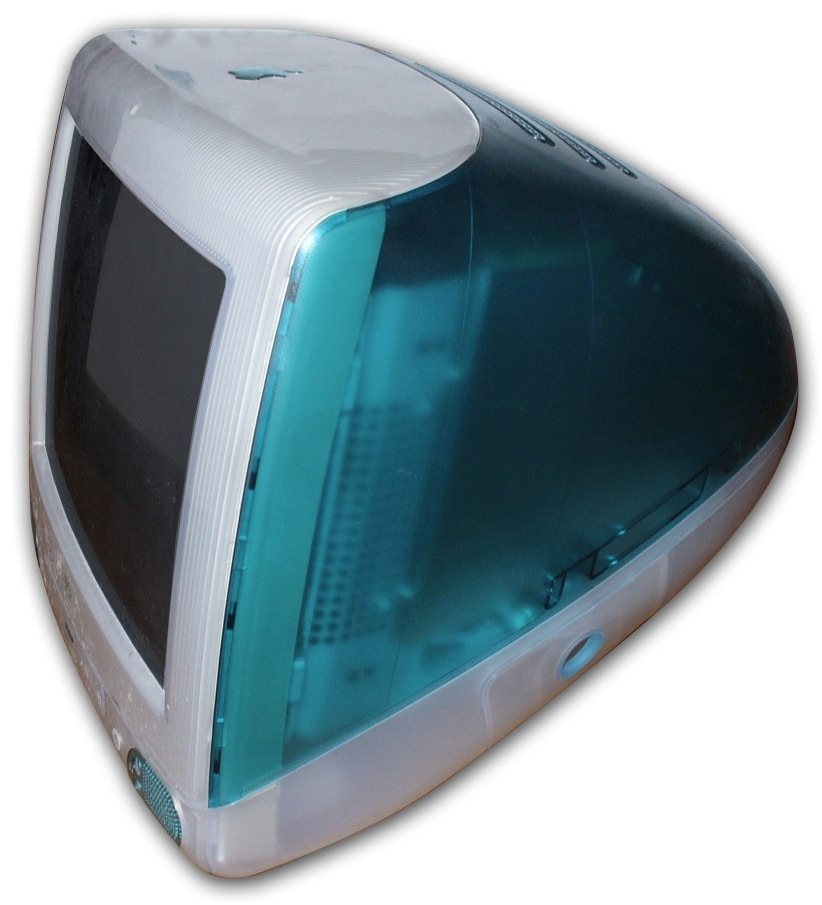
The money came back with hardware. Jobs introduced the iMac G3 in May 1998 and it reached stores that August: one translucent Bondi blue shell, a handle moulded into the top, no floppy drive, and a shape nothing in the beige-box market could answer.
The result showed up in the next annual report. Apple reported net income of $309 million for fiscal 1998, against the $1.04 billion loss of the year before, and its first profitable year since 1995.
Michael Dell had told a Gartner Symposium audience in October 1997 what he would do if he ran Apple: "I'd shut it down and give the money back to the shareholders." Twelve months later Apple was making money again.
Who owns Apple today, and what is the company worth?
Apple Inc. is a public company, traded on Nasdaq as AAPL and owned by its shareholders. No founder, family or parent company controls it, and the largest holders are index fund managers. It has never filed for bankruptcy protection.
The scale no longer lines up with 1997 in any useful way. Apple reported revenue of about $416 billion for fiscal 2025, which is more than a billion dollars a day, and its market value crossed $4 trillion on October 28, 2025, the third company in history to reach that mark after Nvidia and Microsoft.
Microsoft is not among the shareholders. It converted its preferred stock into common shares by 2001, sold the whole position by 2003 for a reported $550 million, and missed everything after that. "I wish we'd maintained that 5% ownership," Gates wrote in his 2025 memoir Source Code.
The lifeline that kept Apple alive in 1997 is now smaller than the revenue the company books before lunch.
Frequently Asked Questions
How close was Apple to bankruptcy in 1997?
Apple lost $1.04 billion in the fiscal year that ended in September 1997, on top of $816 million lost in fiscal 1996, and its stock was at a 12-year low. Steve Jobs later told biographer Walter Isaacson that Apple was "90 days from being insolvent" at that point. Apple never actually filed for bankruptcy protection.
Why did Microsoft invest $150 million in Apple?
Microsoft bought $150 million of Apple non-voting preferred stock on August 6, 1997, and in the same agreement settled a long patent dispute, won a commitment that Internet Explorer would be the default browser on the Mac, and promised five more years of Microsoft Office for the Mac. A Microsoft facing a United States antitrust case in 1997 also had good reason to keep Apple alive as a visible competitor.
What did Steve Jobs do first when he returned to Apple in 1997?
After Apple bought NeXT in December 1996 and Gil Amelio was pushed out in July 1997, Steve Jobs became interim chief executive that September and cut the product line to four computers using a consumer-versus-professional, desktop-versus-portable grid. He also ended Mac clone licensing, killed the Newton MessagePad in February 1998, and secured the Microsoft investment announced in August 1997.