What Happened to Commodore, the Company That Won and Lost

The Best-Selling Home Computer Company You Barely Remember

In 1983, Commodore International had roughly 50% of the U.S. home computer market. Not 50% of some niche subcategory. Half of all home computers sold in America had the Commodore logo on them. The Commodore 64, their flagship machine, would go on to become the best-selling single computer model of all time according to the Guinness Book of World Records, with estimated sales somewhere in the range of 12.5 to 17 million units, depending on which source you trust. Some claims push that number to 30 million, though those figures are disputed by historians who have dug into the actual production records.

By 1994, Commodore was bankrupt.

That's a ten-year slide from total dominance to complete collapse. And the reasons behind it aren't the usual "technology moved on" story. Commodore didn't lose because a better product showed up. They lost because the people running the company after its visionary founder left seemed determined to destroy it from the inside.

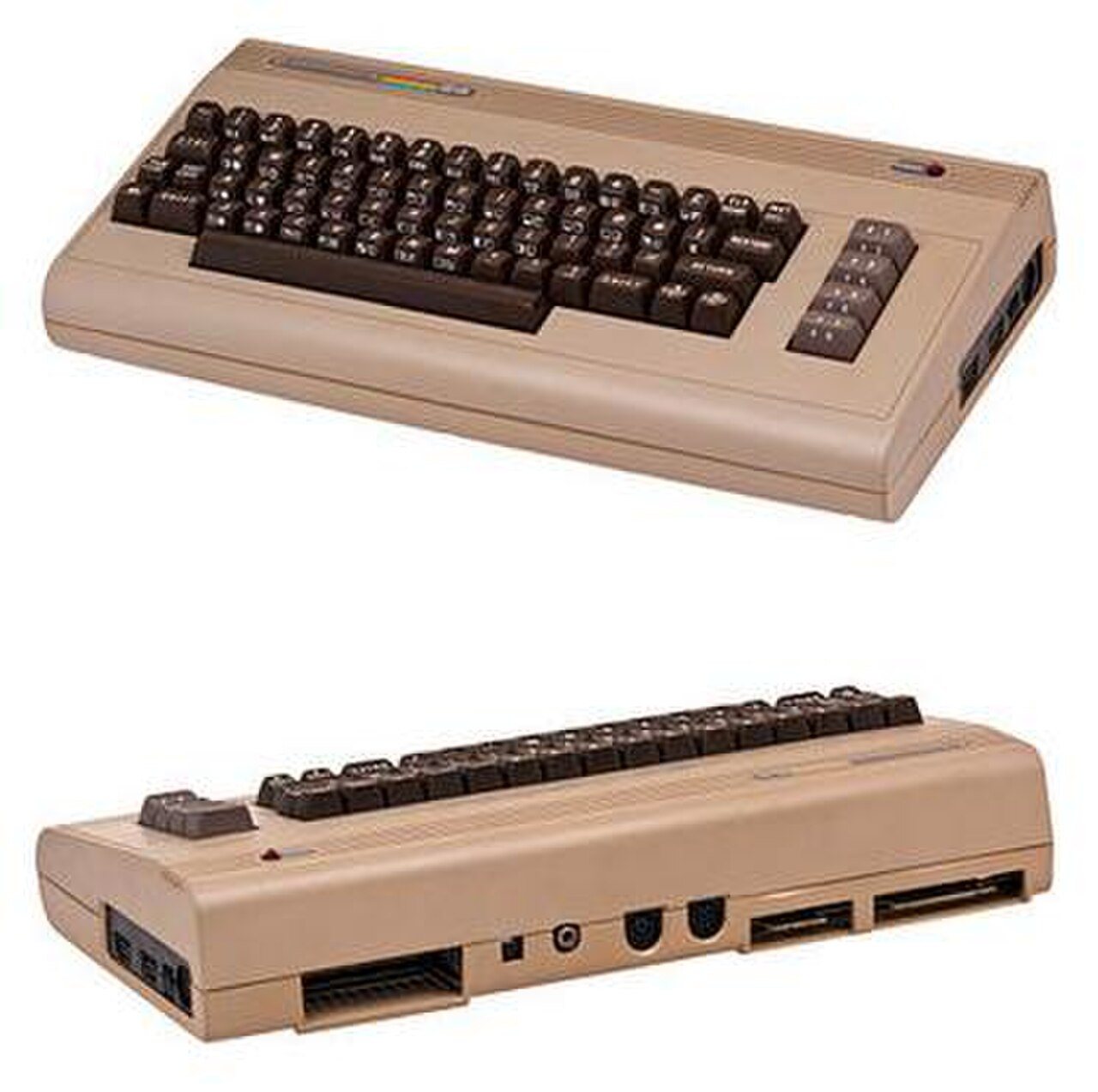
Commodore 64 computer showing front and back panels
The Commodore 64. At its peak, it dominated the home computer market and outsold every competitor.

Jack Tramiel Built Commodore by Waging Price Wars

You can't understand Commodore without understanding Jack Tramiel. Born Idek Tramielski in Lodz, Poland in 1928, Tramiel survived the Auschwitz concentration camp as a teenager. He immigrated to the United States after the war, joined the Army, learned to repair typewriters, and eventually founded a typewriter repair company in the Bronx in 1954. That company became Commodore Business Machines.

Tramiel's entire business philosophy fit into a single phrase he repeated constantly: "We need to build computers for the masses, not the classes." He meant it. While Apple was positioning the Apple II as a premium product and IBM was selling PCs to businesses at premium prices, Tramiel was slashing costs and margins to put a computer in every living room.

The Commodore PET arrived in 1977, the same year as the Apple II and the TRS-80. It was one of the first commercially available personal computers, an all-in-one unit with a built-in monitor, keyboard, and cassette drive. The PET found its niche primarily in education, particularly in Canada, where it became a classroom staple. The VIC-20 followed in 1981 and became the first computer to sell one million units, a milestone that seemed remarkable at the time but was about to be dwarfed.

Then came the Commodore 64 in August 1982, priced at $595. Within a year, aggressive pricing pushed it below $200, and the home computer price war of 1983 began in earnest.

Tramiel's strategy was brutally simple. Commodore owned their own chip fabrication facility, MOS Technology, which they had acquired in 1976. This meant they could produce the C64's custom chips, the SID sound chip and VIC-II graphics chip, at a fraction of what competitors paid for off-the-shelf components. Tramiel used this vertical integration as a weapon, dropping prices until competitors simply couldn't keep up.

The SID chip deserves special mention. Designed by Bob Yannes, who would later found Ensoniq, it was a genuine synthesizer on a chip. Three voices, multiple waveforms, a programmable filter. The C64's sound capabilities were so far ahead of anything else in its price range that musicians and demo scene programmers were still finding new tricks for the SID chip well into the 2000s. It wasn't just a beeper. It was an instrument.

The casualties of Tramiel's price war were significant. Texas Instruments exited the home computer market in October 1983, booking a $330 million loss on the TI-99/4A. Mattel shut down its Intellivision computer expansion. Coleco's Adam computer was a disaster. Atari's home computer division was bleeding money. The home computer shakeout of 1983 and 1984 killed or wounded nearly every competitor, and Commodore was the one doing most of the killing.

The Departure That Started the Decline

In January 1984, Jack Tramiel resigned from Commodore. The official story was a disagreement with Irving Gould, the chairman and majority shareholder who had bankrolled the company since the 1960s. The specifics vary depending on who's telling it, but the core issue was control. Tramiel wanted to bring his sons into the business. Gould didn't want that. Tramiel wanted to move into business computers. Gould had different priorities. After years of tension, Tramiel walked.

Within months, Tramiel bought the consumer division of Atari from Warner Communications for roughly $50 in cash and $240 million in assumed liabilities. He then began competing against his former company. That detail matters because Commodore's greatest asset, the man who understood pricing strategy, manufacturing economics, and the consumer market better than anyone in the industry, was now working for the other side.

What Tramiel left behind was a company with massive market share, a profitable product line, and no one at the top who understood how to sustain it. Gould's approach to management was primarily financial. He understood balance sheets and investment returns. What he didn't understand, or didn't care about, was product vision. And in the personal computer business of the mid-1980s, product vision was everything.

The Amiga Was a Masterpiece That Nobody Marketed

Here's where the story gets painful for anyone who cares about technology being recognized for what it actually is.

In 1985, Commodore released the Amiga 1000. The machine had a complicated origin. It was originally designed by a small company called Hi-Torro (later renamed Amiga Corporation) founded by Jay Miner, the engineer who had designed the Atari 2600's graphics chip. Commodore acquired Amiga Corporation in 1984, beating out a competing offer from Atari (now run by Tramiel), in a transaction that generated lasting bitterness between the two companies.

From a technical standpoint, the Amiga 1000 was years ahead of everything else on the market. It had a custom chipset, with three co-processors named Agnus, Denise, and Paula, that handled graphics, sound, and I/O independently from the main CPU. This meant it could do things that IBM PCs and Macs simply couldn't. Preemptive multitasking. Stereo sound as standard. A color palette of 4,096 colors when most PCs were stuck with 16. Hardware scrolling and sprite capabilities that made game developers weep with joy. Video capabilities that made it the default choice for TV production and desktop video throughout the late 1980s and early 1990s.

The Video Toaster, a third-party hardware and software package developed by NewTek, was used to produce the special effects on shows like "Babylon 5" and "SeaQuest DSV." NewTek chose the Amiga specifically because no other consumer hardware could handle real-time video switching and 3D rendering at that price point. A broadcast-quality video production setup that would have cost $50,000 or more with dedicated hardware could be built around an Amiga for a few thousand dollars. This was not an incremental improvement. It was an order-of-magnitude shift in the economics of video production.

In 1994, BYTE magazine wrote: "The Amiga was so far ahead of its time that almost nobody, including Commodore's marketing department, could fully articulate what it was all about. Today, it's obvious the Amiga was the first multimedia computer, but in those days it was derided as a game machine."

That BYTE quote captures the central tragedy. Commodore had the most technically advanced personal computer on the market and couldn't figure out how to sell it. Their marketing was inconsistent, underfunded, and confused. They positioned the Amiga 500 as a game machine in one campaign and a business tool in another. They never established a clear identity the way Apple did with the Macintosh or IBM did with the PC.

The comparison to Apple is instructive. In 1984, Apple aired the famous "1984" Super Bowl commercial and established the Macintosh as a creative, rebellious alternative to IBM. Apple spent $1.5 million on that single ad. Commodore had a technically superior product in the Amiga and marketed it with the creative energy of a regional car dealership. The ads they did produce were generic, forgettable, and badly targeted. Commodore seemed unable to decide whether they were selling to gamers, video professionals, or businesses, so they failed to convince any of those audiences.

Mehdi Ali and the Slow-Motion Destruction

If Jack Tramiel was the builder, Mehdi Ali was the demolition crew.

Ali joined Commodore in 1986 as a special adviser and became president in 1989. His background was in management consulting, not technology, and it showed. Under Ali, Commodore's already weak marketing got worse. Research and development funding was cut repeatedly. And Ali's compensation became a point of genuine outrage within the company and among industry observers.

In 1989, Ali earned $1.38 million in salary. By 1990, that figure had risen to approximately $2 million in base salary alone, not counting bonuses. For context, John Akers, the CEO of IBM, one of the largest technology companies on Earth, earned $713,000 that same year. Ali was running a company with a fraction of IBM's revenue and paying himself nearly three times what the IBM chief was making. The engineers who were actually building Commodore's products noticed. The resentment was deep and widespread.

Netscape Navigator 2 browser screenshot from the mid-1990s
By the time the web era arrived with browsers like Netscape Navigator, Commodore had already been dead for over a year.

The strategic decisions under Ali's leadership ranged from questionable to self-destructive. The Amiga 600, released in 1992, was a cost-reduced replacement for the popular Amiga 500. The problem was that nobody wanted it. It was only marginally cheaper than the 500 but less capable in several ways, with fewer expansion slots and an incompatible form factor that broke compatibility with many peripherals. Meanwhile, the Amiga 1200, which was genuinely excellent and featured the new AGA chipset, couldn't be manufactured in sufficient quantities to meet demand. Commodore was simultaneously overproducing a product nobody wanted and underproducing one that everyone did. This is not a complex problem to diagnose. It is, however, a very difficult problem to solve when the people making decisions aren't listening to the people who understand the market.

The CD32, released in 1993, was actually an interesting product: the world's first 32-bit CD-ROM based game console. It sold reasonably well in Europe, where Commodore still had significant brand recognition. But it couldn't be sold in the United States due to a patent dispute with Cadtrak Corporation, which obtained a $10 million judgment against Commodore. Rather than settle the patent issue and get the CD32 into the massive American market, Commodore's management let the injunction stand. The CD32's European success couldn't save the company alone.

Ali also reportedly sabotaged a licensing deal with Sun Microsystems, not once but twice, that would have allowed Sun to license Commodore's hardware designs. The details of these negotiations aren't fully documented, but multiple former Commodore employees have described them in interviews and written accounts as potentially transformative deals that Ali killed for reasons that were never adequately explained.

By the end, Commodore's engineers actively despised the executive team. Dave Haynie, one of Commodore's most respected hardware engineers, filmed a documentary called "The Deathbed Vigil" on the day Commodore's offices closed in West Chester, Pennsylvania. He walked through the empty halls with a camera, interviewing colleagues as they packed boxes and said goodbye. It's a raw, bitter document of talented people watching their life's work get destroyed by people who didn't understand it.

The Numbers Tell the Final Story

In fiscal year 1993, Commodore reported a loss of $357 million. That's not a typo. A company that had dominated the home computer market a decade earlier lost over a third of a billion dollars in a single year. Revenue had been declining for years. The C64, which had been printing money throughout the mid-1980s, was finally winding down. The Amiga product line, while technologically excellent, was generating nowhere near enough volume to sustain the company, partly because of the marketing and distribution failures described above.

On April 26, 1994, Commodore shut down its Amiga division. Three days later, on April 29, the company filed for voluntary liquidation in the Bahamas, where it was incorporated. It was not acquired. It was not restructured. It simply ceased to exist.

The brand and technology were eventually purchased at auction by a German company called Escom in April 1995 for approximately $14 million. To put that in perspective, Commodore's annual revenue had been over $1 billion at its peak in the late 1980s. Escom itself went bankrupt the following year, and the Commodore assets passed through several more owners over the next decade, including Gateway 2000 (which bought the Amiga technology in 1997) and various smaller companies that licensed the name without ever producing anything significant.

Why Commodore Matters More Than You Think

The standard narrative about Commodore is that it was a casualty of the IBM PC standard. The PC won, everything else lost, end of story. That narrative is wrong, or at least deeply incomplete.

Commodore's actual technical trajectory, from the C64 through the Amiga line, represented a genuinely different approach to personal computing. The custom chipset architecture of the Amiga anticipated how modern computers work, with dedicated hardware for specific tasks rather than forcing the CPU to do everything. The concept of a GPU handling graphics independently? The Amiga had a version of that in 1985. The idea that a personal computer should handle audio and video as first-class capabilities? The Amiga was built around that premise years before "multimedia PC" became a marketing buzzword in the early 1990s.

This is essentially what happened with dedicated graphics cards in the late 1990s and early 2000s. Nvidia and ATI didn't invent the concept of offloading graphics processing to specialized hardware. They just brought it to the IBM PC platform a decade after the Amiga had already proven it worked.

The Amiga's operating system, AmigaOS, was also remarkably advanced. It offered preemptive multitasking and a microkernel architecture in 1985, at a time when Mac OS was cooperative-multitasking only (and wouldn't get preemptive multitasking until OS X in 2001) and Windows was still a graphical shell on top of DOS. The AmigaOS was lean, fast, and efficient in ways that inspired admiration from developers who worked with it and frustration from those same developers when they realized the company behind it was incapable of capitalizing on its advantages.

The difference between Commodore and, say, Apple in the 1990s is that Apple had Steve Jobs come back. Commodore had Mehdi Ali. Apple nearly went bankrupt in 1997 and was rescued by a visionary leader who understood both technology and marketing. Commodore went bankrupt in 1994 under a president who understood neither.

They weren't stupid, the engineers who built the Amiga. They just didn't get to choose who ran the company.

The Collector's Market and the Community That Refused to Die

One of the more interesting postscripts to the Commodore story is that the community never really went away. Retro computing enthusiasts have kept the C64 and Amiga alive through emulation, hardware preservation, and new software development. The C64 homebrew scene is still active, with new games and demos being released regularly. The demo scene, in particular, continues to push the C64's SID chip and VIC-II graphics to produce audiovisual experiences that seem physically impossible on 1982 hardware.

New Amiga-compatible hardware, like the Vampire accelerator cards and the MiSTer FPGA project, continues to be developed by a small but dedicated community. These aren't museum pieces. People are actively using and developing for these platforms decades after the parent company ceased to exist.

Working Commodore 64 units regularly sell for $50 to $200 on the collector's market, depending on condition and included accessories. Rare variants and boxed sets with original packaging can fetch significantly more. Amiga systems, particularly the Amiga 1200 and 4000 models, have become genuinely expensive collector's items, with prices regularly exceeding $500 to $1,000.

The THEC64, a licensed full-size recreation of the Commodore 64 with built-in games, a working keyboard, and HDMI output, was released in 2019 and sold well enough to prove that the nostalgia market for Commodore remains real, even among people who weren't alive when the originals were sold. A mini version preceded it in 2018. Both were well-received, which says something about the enduring appeal of a product line that officially died 25 years before the recreations hit shelves.

Which brings us to the real question this story raises. Not "what killed Commodore?" but "what could Commodore have become?" If Tramiel had stayed, or if the post-Tramiel leadership had been even marginally competent, would Commodore be a name that sits alongside Apple and Microsoft today? The technology was there. The market position was there. The engineering talent was there. What wasn't there was the leadership to hold it all together. And in the end, that's the most common way great companies die. Not from external competition, but from internal failure. The technology doesn't betray you. The people do.

Frequently Asked Questions

How many Commodore 64s were sold?

The Guinness Book of World Records cites approximately 30 million units, making it the best-selling single computer model in history. However, independent researchers and historians place the more realistic figure somewhere between 12.5 and 17 million units. The discrepancy comes from Commodore's inconsistent record-keeping and the difficulty of tracking sales across dozens of international markets over a decade of production.

When did Commodore go bankrupt?

Commodore shut down its Amiga division on April 26, 1994, and filed for voluntary liquidation on April 29, 1994. The company's assets were eventually sold at auction to the German company Escom in April 1995 for approximately $14 million.

Why did Jack Tramiel leave Commodore?

Tramiel resigned in January 1984 following a dispute with Irving Gould, the chairman and majority shareholder. The conflict centered on corporate control, including Tramiel's desire to bring his sons into company management. Within months, Tramiel purchased the consumer division of Atari and began competing against Commodore directly.

What made the Amiga so special?

The Amiga used a custom chipset architecture that handled graphics, sound, and I/O independently from the CPU. This gave it preemptive multitasking, a 4,096-color palette, and stereo sound at a time when most PCs had 16 colors and a single-channel beeper. It became the standard platform for TV and video production in the late 1980s and early 1990s thanks to products like the NewTek Video Toaster.

Does Commodore still exist?

The Commodore brand name has changed hands multiple times since the original company's bankruptcy. Various companies have licensed the name for products like smartphones and retro gaming devices, but none have any meaningful connection to the original Commodore International or its engineering team. The Amiga technology was purchased by Gateway 2000 in 1997 and has passed through several owners since then.

What was the Commodore 64 competing against?

The C64's main competitors were the Apple II, the Atari 800, the TRS-80, the Sinclair ZX Spectrum (primarily in Europe), and eventually the IBM PC and its clones. Commodore's aggressive pricing strategy, enabled by their ownership of chip manufacturer MOS Technology, allowed them to undercut nearly all competitors on price while offering comparable or superior capabilities.

What was the Commodore demo scene?

The demo scene is a computer art subculture that produces audiovisual presentations called "demos" designed to push hardware to its absolute limits. The Commodore 64 demo scene has been active continuously since the 1980s, with programmers discovering new tricks for the SID sound chip and VIC-II graphics processor that the original designers never intended. It remains one of the most active retro computing communities in the world.

๐Ÿ“– What Happened to Commodore, the Company That Won and Lost
_ โ–ก ร—
← Back

What Happened to Commodore, the Company That Won and Lost

2026-04-05 by 404 Memory Found

The Best-Selling Home Computer Company You Barely Remember

In 1983, Commodore International had roughly 50% of the U.S. home computer market. Not 50% of some niche subcategory. Half of all home computers sold in America had the Commodore logo on them. The Commodore 64, their flagship machine, would go on to become the best-selling single computer model of all time according to the Guinness Book of World Records, with estimated sales somewhere in the range of 12.5 to 17 million units, depending on which source you trust. Some claims push that number to 30 million, though those figures are disputed by historians who have dug into the actual production records.

By 1994, Commodore was bankrupt.

That's a ten-year slide from total dominance to complete collapse. And the reasons behind it aren't the usual "technology moved on" story. Commodore didn't lose because a better product showed up. They lost because the people running the company after its visionary founder left seemed determined to destroy it from the inside.

Commodore 64 computer showing front and back panels
The Commodore 64. At its peak, it dominated the home computer market and outsold every competitor.

Jack Tramiel Built Commodore by Waging Price Wars

You can't understand Commodore without understanding Jack Tramiel. Born Idek Tramielski in Lodz, Poland in 1928, Tramiel survived the Auschwitz concentration camp as a teenager. He immigrated to the United States after the war, joined the Army, learned to repair typewriters, and eventually founded a typewriter repair company in the Bronx in 1954. That company became Commodore Business Machines.

Tramiel's entire business philosophy fit into a single phrase he repeated constantly: "We need to build computers for the masses, not the classes." He meant it. While Apple was positioning the Apple II as a premium product and IBM was selling PCs to businesses at premium prices, Tramiel was slashing costs and margins to put a computer in every living room.

The Commodore PET arrived in 1977, the same year as the Apple II and the TRS-80. It was one of the first commercially available personal computers, an all-in-one unit with a built-in monitor, keyboard, and cassette drive. The PET found its niche primarily in education, particularly in Canada, where it became a classroom staple. The VIC-20 followed in 1981 and became the first computer to sell one million units, a milestone that seemed remarkable at the time but was about to be dwarfed.

Then came the Commodore 64 in August 1982, priced at $595. Within a year, aggressive pricing pushed it below $200, and the home computer price war of 1983 began in earnest.

Tramiel's strategy was brutally simple. Commodore owned their own chip fabrication facility, MOS Technology, which they had acquired in 1976. This meant they could produce the C64's custom chips, the SID sound chip and VIC-II graphics chip, at a fraction of what competitors paid for off-the-shelf components. Tramiel used this vertical integration as a weapon, dropping prices until competitors simply couldn't keep up.

The SID chip deserves special mention. Designed by Bob Yannes, who would later found Ensoniq, it was a genuine synthesizer on a chip. Three voices, multiple waveforms, a programmable filter. The C64's sound capabilities were so far ahead of anything else in its price range that musicians and demo scene programmers were still finding new tricks for the SID chip well into the 2000s. It wasn't just a beeper. It was an instrument.

The casualties of Tramiel's price war were significant. Texas Instruments exited the home computer market in October 1983, booking a $330 million loss on the TI-99/4A. Mattel shut down its Intellivision computer expansion. Coleco's Adam computer was a disaster. Atari's home computer division was bleeding money. The home computer shakeout of 1983 and 1984 killed or wounded nearly every competitor, and Commodore was the one doing most of the killing.

The Departure That Started the Decline

In January 1984, Jack Tramiel resigned from Commodore. The official story was a disagreement with Irving Gould, the chairman and majority shareholder who had bankrolled the company since the 1960s. The specifics vary depending on who's telling it, but the core issue was control. Tramiel wanted to bring his sons into the business. Gould didn't want that. Tramiel wanted to move into business computers. Gould had different priorities. After years of tension, Tramiel walked.

Within months, Tramiel bought the consumer division of Atari from Warner Communications for roughly $50 in cash and $240 million in assumed liabilities. He then began competing against his former company. That detail matters because Commodore's greatest asset, the man who understood pricing strategy, manufacturing economics, and the consumer market better than anyone in the industry, was now working for the other side.

What Tramiel left behind was a company with massive market share, a profitable product line, and no one at the top who understood how to sustain it. Gould's approach to management was primarily financial. He understood balance sheets and investment returns. What he didn't understand, or didn't care about, was product vision. And in the personal computer business of the mid-1980s, product vision was everything.

The Amiga Was a Masterpiece That Nobody Marketed

Here's where the story gets painful for anyone who cares about technology being recognized for what it actually is.

In 1985, Commodore released the Amiga 1000. The machine had a complicated origin. It was originally designed by a small company called Hi-Torro (later renamed Amiga Corporation) founded by Jay Miner, the engineer who had designed the Atari 2600's graphics chip. Commodore acquired Amiga Corporation in 1984, beating out a competing offer from Atari (now run by Tramiel), in a transaction that generated lasting bitterness between the two companies.

From a technical standpoint, the Amiga 1000 was years ahead of everything else on the market. It had a custom chipset, with three co-processors named Agnus, Denise, and Paula, that handled graphics, sound, and I/O independently from the main CPU. This meant it could do things that IBM PCs and Macs simply couldn't. Preemptive multitasking. Stereo sound as standard. A color palette of 4,096 colors when most PCs were stuck with 16. Hardware scrolling and sprite capabilities that made game developers weep with joy. Video capabilities that made it the default choice for TV production and desktop video throughout the late 1980s and early 1990s.

The Video Toaster, a third-party hardware and software package developed by NewTek, was used to produce the special effects on shows like "Babylon 5" and "SeaQuest DSV." NewTek chose the Amiga specifically because no other consumer hardware could handle real-time video switching and 3D rendering at that price point. A broadcast-quality video production setup that would have cost $50,000 or more with dedicated hardware could be built around an Amiga for a few thousand dollars. This was not an incremental improvement. It was an order-of-magnitude shift in the economics of video production.

In 1994, BYTE magazine wrote: "The Amiga was so far ahead of its time that almost nobody, including Commodore's marketing department, could fully articulate what it was all about. Today, it's obvious the Amiga was the first multimedia computer, but in those days it was derided as a game machine."

That BYTE quote captures the central tragedy. Commodore had the most technically advanced personal computer on the market and couldn't figure out how to sell it. Their marketing was inconsistent, underfunded, and confused. They positioned the Amiga 500 as a game machine in one campaign and a business tool in another. They never established a clear identity the way Apple did with the Macintosh or IBM did with the PC.

The comparison to Apple is instructive. In 1984, Apple aired the famous "1984" Super Bowl commercial and established the Macintosh as a creative, rebellious alternative to IBM. Apple spent $1.5 million on that single ad. Commodore had a technically superior product in the Amiga and marketed it with the creative energy of a regional car dealership. The ads they did produce were generic, forgettable, and badly targeted. Commodore seemed unable to decide whether they were selling to gamers, video professionals, or businesses, so they failed to convince any of those audiences.

Mehdi Ali and the Slow-Motion Destruction

If Jack Tramiel was the builder, Mehdi Ali was the demolition crew.

Ali joined Commodore in 1986 as a special adviser and became president in 1989. His background was in management consulting, not technology, and it showed. Under Ali, Commodore's already weak marketing got worse. Research and development funding was cut repeatedly. And Ali's compensation became a point of genuine outrage within the company and among industry observers.

In 1989, Ali earned $1.38 million in salary. By 1990, that figure had risen to approximately $2 million in base salary alone, not counting bonuses. For context, John Akers, the CEO of IBM, one of the largest technology companies on Earth, earned $713,000 that same year. Ali was running a company with a fraction of IBM's revenue and paying himself nearly three times what the IBM chief was making. The engineers who were actually building Commodore's products noticed. The resentment was deep and widespread.

Netscape Navigator 2 browser screenshot from the mid-1990s
By the time the web era arrived with browsers like Netscape Navigator, Commodore had already been dead for over a year.

The strategic decisions under Ali's leadership ranged from questionable to self-destructive. The Amiga 600, released in 1992, was a cost-reduced replacement for the popular Amiga 500. The problem was that nobody wanted it. It was only marginally cheaper than the 500 but less capable in several ways, with fewer expansion slots and an incompatible form factor that broke compatibility with many peripherals. Meanwhile, the Amiga 1200, which was genuinely excellent and featured the new AGA chipset, couldn't be manufactured in sufficient quantities to meet demand. Commodore was simultaneously overproducing a product nobody wanted and underproducing one that everyone did. This is not a complex problem to diagnose. It is, however, a very difficult problem to solve when the people making decisions aren't listening to the people who understand the market.

The CD32, released in 1993, was actually an interesting product: the world's first 32-bit CD-ROM based game console. It sold reasonably well in Europe, where Commodore still had significant brand recognition. But it couldn't be sold in the United States due to a patent dispute with Cadtrak Corporation, which obtained a $10 million judgment against Commodore. Rather than settle the patent issue and get the CD32 into the massive American market, Commodore's management let the injunction stand. The CD32's European success couldn't save the company alone.

Ali also reportedly sabotaged a licensing deal with Sun Microsystems, not once but twice, that would have allowed Sun to license Commodore's hardware designs. The details of these negotiations aren't fully documented, but multiple former Commodore employees have described them in interviews and written accounts as potentially transformative deals that Ali killed for reasons that were never adequately explained.

By the end, Commodore's engineers actively despised the executive team. Dave Haynie, one of Commodore's most respected hardware engineers, filmed a documentary called "The Deathbed Vigil" on the day Commodore's offices closed in West Chester, Pennsylvania. He walked through the empty halls with a camera, interviewing colleagues as they packed boxes and said goodbye. It's a raw, bitter document of talented people watching their life's work get destroyed by people who didn't understand it.

The Numbers Tell the Final Story

In fiscal year 1993, Commodore reported a loss of $357 million. That's not a typo. A company that had dominated the home computer market a decade earlier lost over a third of a billion dollars in a single year. Revenue had been declining for years. The C64, which had been printing money throughout the mid-1980s, was finally winding down. The Amiga product line, while technologically excellent, was generating nowhere near enough volume to sustain the company, partly because of the marketing and distribution failures described above.

On April 26, 1994, Commodore shut down its Amiga division. Three days later, on April 29, the company filed for voluntary liquidation in the Bahamas, where it was incorporated. It was not acquired. It was not restructured. It simply ceased to exist.

The brand and technology were eventually purchased at auction by a German company called Escom in April 1995 for approximately $14 million. To put that in perspective, Commodore's annual revenue had been over $1 billion at its peak in the late 1980s. Escom itself went bankrupt the following year, and the Commodore assets passed through several more owners over the next decade, including Gateway 2000 (which bought the Amiga technology in 1997) and various smaller companies that licensed the name without ever producing anything significant.

Why Commodore Matters More Than You Think

The standard narrative about Commodore is that it was a casualty of the IBM PC standard. The PC won, everything else lost, end of story. That narrative is wrong, or at least deeply incomplete.

Commodore's actual technical trajectory, from the C64 through the Amiga line, represented a genuinely different approach to personal computing. The custom chipset architecture of the Amiga anticipated how modern computers work, with dedicated hardware for specific tasks rather than forcing the CPU to do everything. The concept of a GPU handling graphics independently? The Amiga had a version of that in 1985. The idea that a personal computer should handle audio and video as first-class capabilities? The Amiga was built around that premise years before "multimedia PC" became a marketing buzzword in the early 1990s.

This is essentially what happened with dedicated graphics cards in the late 1990s and early 2000s. Nvidia and ATI didn't invent the concept of offloading graphics processing to specialized hardware. They just brought it to the IBM PC platform a decade after the Amiga had already proven it worked.

The Amiga's operating system, AmigaOS, was also remarkably advanced. It offered preemptive multitasking and a microkernel architecture in 1985, at a time when Mac OS was cooperative-multitasking only (and wouldn't get preemptive multitasking until OS X in 2001) and Windows was still a graphical shell on top of DOS. The AmigaOS was lean, fast, and efficient in ways that inspired admiration from developers who worked with it and frustration from those same developers when they realized the company behind it was incapable of capitalizing on its advantages.

The difference between Commodore and, say, Apple in the 1990s is that Apple had Steve Jobs come back. Commodore had Mehdi Ali. Apple nearly went bankrupt in 1997 and was rescued by a visionary leader who understood both technology and marketing. Commodore went bankrupt in 1994 under a president who understood neither.

They weren't stupid, the engineers who built the Amiga. They just didn't get to choose who ran the company.

The Collector's Market and the Community That Refused to Die

One of the more interesting postscripts to the Commodore story is that the community never really went away. Retro computing enthusiasts have kept the C64 and Amiga alive through emulation, hardware preservation, and new software development. The C64 homebrew scene is still active, with new games and demos being released regularly. The demo scene, in particular, continues to push the C64's SID chip and VIC-II graphics to produce audiovisual experiences that seem physically impossible on 1982 hardware.

New Amiga-compatible hardware, like the Vampire accelerator cards and the MiSTer FPGA project, continues to be developed by a small but dedicated community. These aren't museum pieces. People are actively using and developing for these platforms decades after the parent company ceased to exist.

Working Commodore 64 units regularly sell for $50 to $200 on the collector's market, depending on condition and included accessories. Rare variants and boxed sets with original packaging can fetch significantly more. Amiga systems, particularly the Amiga 1200 and 4000 models, have become genuinely expensive collector's items, with prices regularly exceeding $500 to $1,000.

The THEC64, a licensed full-size recreation of the Commodore 64 with built-in games, a working keyboard, and HDMI output, was released in 2019 and sold well enough to prove that the nostalgia market for Commodore remains real, even among people who weren't alive when the originals were sold. A mini version preceded it in 2018. Both were well-received, which says something about the enduring appeal of a product line that officially died 25 years before the recreations hit shelves.

Which brings us to the real question this story raises. Not "what killed Commodore?" but "what could Commodore have become?" If Tramiel had stayed, or if the post-Tramiel leadership had been even marginally competent, would Commodore be a name that sits alongside Apple and Microsoft today? The technology was there. The market position was there. The engineering talent was there. What wasn't there was the leadership to hold it all together. And in the end, that's the most common way great companies die. Not from external competition, but from internal failure. The technology doesn't betray you. The people do.

Frequently Asked Questions

How many Commodore 64s were sold?

The Guinness Book of World Records cites approximately 30 million units, making it the best-selling single computer model in history. However, independent researchers and historians place the more realistic figure somewhere between 12.5 and 17 million units. The discrepancy comes from Commodore's inconsistent record-keeping and the difficulty of tracking sales across dozens of international markets over a decade of production.

When did Commodore go bankrupt?

Commodore shut down its Amiga division on April 26, 1994, and filed for voluntary liquidation on April 29, 1994. The company's assets were eventually sold at auction to the German company Escom in April 1995 for approximately $14 million.

Why did Jack Tramiel leave Commodore?

Tramiel resigned in January 1984 following a dispute with Irving Gould, the chairman and majority shareholder. The conflict centered on corporate control, including Tramiel's desire to bring his sons into company management. Within months, Tramiel purchased the consumer division of Atari and began competing against Commodore directly.

What made the Amiga so special?

The Amiga used a custom chipset architecture that handled graphics, sound, and I/O independently from the CPU. This gave it preemptive multitasking, a 4,096-color palette, and stereo sound at a time when most PCs had 16 colors and a single-channel beeper. It became the standard platform for TV and video production in the late 1980s and early 1990s thanks to products like the NewTek Video Toaster.

Does Commodore still exist?

The Commodore brand name has changed hands multiple times since the original company's bankruptcy. Various companies have licensed the name for products like smartphones and retro gaming devices, but none have any meaningful connection to the original Commodore International or its engineering team. The Amiga technology was purchased by Gateway 2000 in 1997 and has passed through several owners since then.

What was the Commodore 64 competing against?

The C64's main competitors were the Apple II, the Atari 800, the TRS-80, the Sinclair ZX Spectrum (primarily in Europe), and eventually the IBM PC and its clones. Commodore's aggressive pricing strategy, enabled by their ownership of chip manufacturer MOS Technology, allowed them to undercut nearly all competitors on price while offering comparable or superior capabilities.

What was the Commodore demo scene?

The demo scene is a computer art subculture that produces audiovisual presentations called "demos" designed to push hardware to its absolute limits. The Commodore 64 demo scene has been active continuously since the 1980s, with programmers discovering new tricks for the SID sound chip and VIC-II graphics processor that the original designers never intended. It remains one of the most active retro computing communities in the world.

๐Ÿ“– What Happened to Commodore, the Company That Won and Lost

The Best-Selling Home Computer Company You Barely Remember

In 1983, Commodore International had roughly 50% of the U.S. home computer market. Not 50% of some niche subcategory. Half of all home computers sold in America had the Commodore logo on them. The Commodore 64, their flagship machine, would go on to become the best-selling single computer model of all time according to the Guinness Book of World Records, with estimated sales somewhere in the range of 12.5 to 17 million units, depending on which source you trust. Some claims push that number to 30 million, though those figures are disputed by historians who have dug into the actual production records.

By 1994, Commodore was bankrupt.

That's a ten-year slide from total dominance to complete collapse. And the reasons behind it aren't the usual "technology moved on" story. Commodore didn't lose because a better product showed up. They lost because the people running the company after its visionary founder left seemed determined to destroy it from the inside.

Commodore 64 computer showing front and back panels
The Commodore 64. At its peak, it dominated the home computer market and outsold every competitor.

Jack Tramiel Built Commodore by Waging Price Wars

You can't understand Commodore without understanding Jack Tramiel. Born Idek Tramielski in Lodz, Poland in 1928, Tramiel survived the Auschwitz concentration camp as a teenager. He immigrated to the United States after the war, joined the Army, learned to repair typewriters, and eventually founded a typewriter repair company in the Bronx in 1954. That company became Commodore Business Machines.

Tramiel's entire business philosophy fit into a single phrase he repeated constantly: "We need to build computers for the masses, not the classes." He meant it. While Apple was positioning the Apple II as a premium product and IBM was selling PCs to businesses at premium prices, Tramiel was slashing costs and margins to put a computer in every living room.

The Commodore PET arrived in 1977, the same year as the Apple II and the TRS-80. It was one of the first commercially available personal computers, an all-in-one unit with a built-in monitor, keyboard, and cassette drive. The PET found its niche primarily in education, particularly in Canada, where it became a classroom staple. The VIC-20 followed in 1981 and became the first computer to sell one million units, a milestone that seemed remarkable at the time but was about to be dwarfed.

Then came the Commodore 64 in August 1982, priced at $595. Within a year, aggressive pricing pushed it below $200, and the home computer price war of 1983 began in earnest.

Tramiel's strategy was brutally simple. Commodore owned their own chip fabrication facility, MOS Technology, which they had acquired in 1976. This meant they could produce the C64's custom chips, the SID sound chip and VIC-II graphics chip, at a fraction of what competitors paid for off-the-shelf components. Tramiel used this vertical integration as a weapon, dropping prices until competitors simply couldn't keep up.

The SID chip deserves special mention. Designed by Bob Yannes, who would later found Ensoniq, it was a genuine synthesizer on a chip. Three voices, multiple waveforms, a programmable filter. The C64's sound capabilities were so far ahead of anything else in its price range that musicians and demo scene programmers were still finding new tricks for the SID chip well into the 2000s. It wasn't just a beeper. It was an instrument.

The casualties of Tramiel's price war were significant. Texas Instruments exited the home computer market in October 1983, booking a $330 million loss on the TI-99/4A. Mattel shut down its Intellivision computer expansion. Coleco's Adam computer was a disaster. Atari's home computer division was bleeding money. The home computer shakeout of 1983 and 1984 killed or wounded nearly every competitor, and Commodore was the one doing most of the killing.

The Departure That Started the Decline

In January 1984, Jack Tramiel resigned from Commodore. The official story was a disagreement with Irving Gould, the chairman and majority shareholder who had bankrolled the company since the 1960s. The specifics vary depending on who's telling it, but the core issue was control. Tramiel wanted to bring his sons into the business. Gould didn't want that. Tramiel wanted to move into business computers. Gould had different priorities. After years of tension, Tramiel walked.

Within months, Tramiel bought the consumer division of Atari from Warner Communications for roughly $50 in cash and $240 million in assumed liabilities. He then began competing against his former company. That detail matters because Commodore's greatest asset, the man who understood pricing strategy, manufacturing economics, and the consumer market better than anyone in the industry, was now working for the other side.

What Tramiel left behind was a company with massive market share, a profitable product line, and no one at the top who understood how to sustain it. Gould's approach to management was primarily financial. He understood balance sheets and investment returns. What he didn't understand, or didn't care about, was product vision. And in the personal computer business of the mid-1980s, product vision was everything.

The Amiga Was a Masterpiece That Nobody Marketed

Here's where the story gets painful for anyone who cares about technology being recognized for what it actually is.

In 1985, Commodore released the Amiga 1000. The machine had a complicated origin. It was originally designed by a small company called Hi-Torro (later renamed Amiga Corporation) founded by Jay Miner, the engineer who had designed the Atari 2600's graphics chip. Commodore acquired Amiga Corporation in 1984, beating out a competing offer from Atari (now run by Tramiel), in a transaction that generated lasting bitterness between the two companies.

From a technical standpoint, the Amiga 1000 was years ahead of everything else on the market. It had a custom chipset, with three co-processors named Agnus, Denise, and Paula, that handled graphics, sound, and I/O independently from the main CPU. This meant it could do things that IBM PCs and Macs simply couldn't. Preemptive multitasking. Stereo sound as standard. A color palette of 4,096 colors when most PCs were stuck with 16. Hardware scrolling and sprite capabilities that made game developers weep with joy. Video capabilities that made it the default choice for TV production and desktop video throughout the late 1980s and early 1990s.

The Video Toaster, a third-party hardware and software package developed by NewTek, was used to produce the special effects on shows like "Babylon 5" and "SeaQuest DSV." NewTek chose the Amiga specifically because no other consumer hardware could handle real-time video switching and 3D rendering at that price point. A broadcast-quality video production setup that would have cost $50,000 or more with dedicated hardware could be built around an Amiga for a few thousand dollars. This was not an incremental improvement. It was an order-of-magnitude shift in the economics of video production.

In 1994, BYTE magazine wrote: "The Amiga was so far ahead of its time that almost nobody, including Commodore's marketing department, could fully articulate what it was all about. Today, it's obvious the Amiga was the first multimedia computer, but in those days it was derided as a game machine."

That BYTE quote captures the central tragedy. Commodore had the most technically advanced personal computer on the market and couldn't figure out how to sell it. Their marketing was inconsistent, underfunded, and confused. They positioned the Amiga 500 as a game machine in one campaign and a business tool in another. They never established a clear identity the way Apple did with the Macintosh or IBM did with the PC.

The comparison to Apple is instructive. In 1984, Apple aired the famous "1984" Super Bowl commercial and established the Macintosh as a creative, rebellious alternative to IBM. Apple spent $1.5 million on that single ad. Commodore had a technically superior product in the Amiga and marketed it with the creative energy of a regional car dealership. The ads they did produce were generic, forgettable, and badly targeted. Commodore seemed unable to decide whether they were selling to gamers, video professionals, or businesses, so they failed to convince any of those audiences.

Mehdi Ali and the Slow-Motion Destruction

If Jack Tramiel was the builder, Mehdi Ali was the demolition crew.

Ali joined Commodore in 1986 as a special adviser and became president in 1989. His background was in management consulting, not technology, and it showed. Under Ali, Commodore's already weak marketing got worse. Research and development funding was cut repeatedly. And Ali's compensation became a point of genuine outrage within the company and among industry observers.

In 1989, Ali earned $1.38 million in salary. By 1990, that figure had risen to approximately $2 million in base salary alone, not counting bonuses. For context, John Akers, the CEO of IBM, one of the largest technology companies on Earth, earned $713,000 that same year. Ali was running a company with a fraction of IBM's revenue and paying himself nearly three times what the IBM chief was making. The engineers who were actually building Commodore's products noticed. The resentment was deep and widespread.

Netscape Navigator 2 browser screenshot from the mid-1990s
By the time the web era arrived with browsers like Netscape Navigator, Commodore had already been dead for over a year.

The strategic decisions under Ali's leadership ranged from questionable to self-destructive. The Amiga 600, released in 1992, was a cost-reduced replacement for the popular Amiga 500. The problem was that nobody wanted it. It was only marginally cheaper than the 500 but less capable in several ways, with fewer expansion slots and an incompatible form factor that broke compatibility with many peripherals. Meanwhile, the Amiga 1200, which was genuinely excellent and featured the new AGA chipset, couldn't be manufactured in sufficient quantities to meet demand. Commodore was simultaneously overproducing a product nobody wanted and underproducing one that everyone did. This is not a complex problem to diagnose. It is, however, a very difficult problem to solve when the people making decisions aren't listening to the people who understand the market.

The CD32, released in 1993, was actually an interesting product: the world's first 32-bit CD-ROM based game console. It sold reasonably well in Europe, where Commodore still had significant brand recognition. But it couldn't be sold in the United States due to a patent dispute with Cadtrak Corporation, which obtained a $10 million judgment against Commodore. Rather than settle the patent issue and get the CD32 into the massive American market, Commodore's management let the injunction stand. The CD32's European success couldn't save the company alone.

Ali also reportedly sabotaged a licensing deal with Sun Microsystems, not once but twice, that would have allowed Sun to license Commodore's hardware designs. The details of these negotiations aren't fully documented, but multiple former Commodore employees have described them in interviews and written accounts as potentially transformative deals that Ali killed for reasons that were never adequately explained.

By the end, Commodore's engineers actively despised the executive team. Dave Haynie, one of Commodore's most respected hardware engineers, filmed a documentary called "The Deathbed Vigil" on the day Commodore's offices closed in West Chester, Pennsylvania. He walked through the empty halls with a camera, interviewing colleagues as they packed boxes and said goodbye. It's a raw, bitter document of talented people watching their life's work get destroyed by people who didn't understand it.

The Numbers Tell the Final Story

In fiscal year 1993, Commodore reported a loss of $357 million. That's not a typo. A company that had dominated the home computer market a decade earlier lost over a third of a billion dollars in a single year. Revenue had been declining for years. The C64, which had been printing money throughout the mid-1980s, was finally winding down. The Amiga product line, while technologically excellent, was generating nowhere near enough volume to sustain the company, partly because of the marketing and distribution failures described above.

On April 26, 1994, Commodore shut down its Amiga division. Three days later, on April 29, the company filed for voluntary liquidation in the Bahamas, where it was incorporated. It was not acquired. It was not restructured. It simply ceased to exist.

The brand and technology were eventually purchased at auction by a German company called Escom in April 1995 for approximately $14 million. To put that in perspective, Commodore's annual revenue had been over $1 billion at its peak in the late 1980s. Escom itself went bankrupt the following year, and the Commodore assets passed through several more owners over the next decade, including Gateway 2000 (which bought the Amiga technology in 1997) and various smaller companies that licensed the name without ever producing anything significant.

Why Commodore Matters More Than You Think

The standard narrative about Commodore is that it was a casualty of the IBM PC standard. The PC won, everything else lost, end of story. That narrative is wrong, or at least deeply incomplete.

Commodore's actual technical trajectory, from the C64 through the Amiga line, represented a genuinely different approach to personal computing. The custom chipset architecture of the Amiga anticipated how modern computers work, with dedicated hardware for specific tasks rather than forcing the CPU to do everything. The concept of a GPU handling graphics independently? The Amiga had a version of that in 1985. The idea that a personal computer should handle audio and video as first-class capabilities? The Amiga was built around that premise years before "multimedia PC" became a marketing buzzword in the early 1990s.

This is essentially what happened with dedicated graphics cards in the late 1990s and early 2000s. Nvidia and ATI didn't invent the concept of offloading graphics processing to specialized hardware. They just brought it to the IBM PC platform a decade after the Amiga had already proven it worked.

The Amiga's operating system, AmigaOS, was also remarkably advanced. It offered preemptive multitasking and a microkernel architecture in 1985, at a time when Mac OS was cooperative-multitasking only (and wouldn't get preemptive multitasking until OS X in 2001) and Windows was still a graphical shell on top of DOS. The AmigaOS was lean, fast, and efficient in ways that inspired admiration from developers who worked with it and frustration from those same developers when they realized the company behind it was incapable of capitalizing on its advantages.

The difference between Commodore and, say, Apple in the 1990s is that Apple had Steve Jobs come back. Commodore had Mehdi Ali. Apple nearly went bankrupt in 1997 and was rescued by a visionary leader who understood both technology and marketing. Commodore went bankrupt in 1994 under a president who understood neither.

They weren't stupid, the engineers who built the Amiga. They just didn't get to choose who ran the company.

The Collector's Market and the Community That Refused to Die

One of the more interesting postscripts to the Commodore story is that the community never really went away. Retro computing enthusiasts have kept the C64 and Amiga alive through emulation, hardware preservation, and new software development. The C64 homebrew scene is still active, with new games and demos being released regularly. The demo scene, in particular, continues to push the C64's SID chip and VIC-II graphics to produce audiovisual experiences that seem physically impossible on 1982 hardware.

New Amiga-compatible hardware, like the Vampire accelerator cards and the MiSTer FPGA project, continues to be developed by a small but dedicated community. These aren't museum pieces. People are actively using and developing for these platforms decades after the parent company ceased to exist.

Working Commodore 64 units regularly sell for $50 to $200 on the collector's market, depending on condition and included accessories. Rare variants and boxed sets with original packaging can fetch significantly more. Amiga systems, particularly the Amiga 1200 and 4000 models, have become genuinely expensive collector's items, with prices regularly exceeding $500 to $1,000.

The THEC64, a licensed full-size recreation of the Commodore 64 with built-in games, a working keyboard, and HDMI output, was released in 2019 and sold well enough to prove that the nostalgia market for Commodore remains real, even among people who weren't alive when the originals were sold. A mini version preceded it in 2018. Both were well-received, which says something about the enduring appeal of a product line that officially died 25 years before the recreations hit shelves.

Which brings us to the real question this story raises. Not "what killed Commodore?" but "what could Commodore have become?" If Tramiel had stayed, or if the post-Tramiel leadership had been even marginally competent, would Commodore be a name that sits alongside Apple and Microsoft today? The technology was there. The market position was there. The engineering talent was there. What wasn't there was the leadership to hold it all together. And in the end, that's the most common way great companies die. Not from external competition, but from internal failure. The technology doesn't betray you. The people do.

Frequently Asked Questions

How many Commodore 64s were sold?

The Guinness Book of World Records cites approximately 30 million units, making it the best-selling single computer model in history. However, independent researchers and historians place the more realistic figure somewhere between 12.5 and 17 million units. The discrepancy comes from Commodore's inconsistent record-keeping and the difficulty of tracking sales across dozens of international markets over a decade of production.

When did Commodore go bankrupt?

Commodore shut down its Amiga division on April 26, 1994, and filed for voluntary liquidation on April 29, 1994. The company's assets were eventually sold at auction to the German company Escom in April 1995 for approximately $14 million.

Why did Jack Tramiel leave Commodore?

Tramiel resigned in January 1984 following a dispute with Irving Gould, the chairman and majority shareholder. The conflict centered on corporate control, including Tramiel's desire to bring his sons into company management. Within months, Tramiel purchased the consumer division of Atari and began competing against Commodore directly.

What made the Amiga so special?

The Amiga used a custom chipset architecture that handled graphics, sound, and I/O independently from the CPU. This gave it preemptive multitasking, a 4,096-color palette, and stereo sound at a time when most PCs had 16 colors and a single-channel beeper. It became the standard platform for TV and video production in the late 1980s and early 1990s thanks to products like the NewTek Video Toaster.

Does Commodore still exist?

The Commodore brand name has changed hands multiple times since the original company's bankruptcy. Various companies have licensed the name for products like smartphones and retro gaming devices, but none have any meaningful connection to the original Commodore International or its engineering team. The Amiga technology was purchased by Gateway 2000 in 1997 and has passed through several owners since then.

What was the Commodore 64 competing against?

The C64's main competitors were the Apple II, the Atari 800, the TRS-80, the Sinclair ZX Spectrum (primarily in Europe), and eventually the IBM PC and its clones. Commodore's aggressive pricing strategy, enabled by their ownership of chip manufacturer MOS Technology, allowed them to undercut nearly all competitors on price while offering comparable or superior capabilities.

What was the Commodore demo scene?

The demo scene is a computer art subculture that produces audiovisual presentations called "demos" designed to push hardware to its absolute limits. The Commodore 64 demo scene has been active continuously since the 1980s, with programmers discovering new tricks for the SID sound chip and VIC-II graphics processor that the original designers never intended. It remains one of the most active retro computing communities in the world.

00:00