What Happened to Arcades: The Rise, Fall, and Unlikely Return of Quarter-Powered Gaming

What Happened to Arcades: The Rise, Fall, and Unlikely Return of Quarter-Powered Gaming

Picture this: It's 1981, and you've got three dollars in your pocket, a best friend who smells like soda and arcade dust, and zero responsibilities except maybe getting home before the streetlights come on. You push through glass doors that stick slightly because they're perpetually grimy, and you're immediately assaulted by the most beautiful noise you've ever heard. Bleeps. Bloops. The mechanical whirring of change machines. A high score table somewhere declaring that TODD is still the king of Galaga, which has absolutely destroyed your self-esteem. The air is thick with cigarette smoke and possibility. You can practically taste the carpet. This was the arcade, and for about five glorious minutes of human history, it was the most important place on Earth.

I grew up thinking arcades would last forever. They felt like a permanent fixture of civilization, like libraries or parking lots. You passed them on the way to anywhere worth going. Malls had them. Bowling alleys had them. Beach boardwalks had them. That one weird little shop downtown had them. And then, somehow, they just sort of disappeared. One day you turned around and realized that the last arcade you visited wasn't actually the last arcade you'd ever visit, but you didn't know it was the last one at the time. That's how it worked. That's how they all closed.

But here's the thing: the story of what happened to arcades isn't just a story about video games or technology or entertainment trends. It's a story about money and nostalgia and the specific weirdness of American culture in the late twentieth century. It's about the fact that at one point in our history, more people were spending money in arcades than in movie theaters, and barely anyone remembers that now. So let's rewind.

The Golden Age Exploded Out of Nowhere

When I say arcades came out of nowhere, I mean that literally nobody expected video games to become the most culturally dominant entertainment force of the early 1980s. Before 1978, arcade games basically didn't exist in any meaningful way. There were some scattered machines, sure, but nothing that made anyone think, "Yes, this is the future." And then Taito released Space Invaders in 1978, and absolutely everything changed.

Here's what happened: Space Invaders was simple. You controlled a little cannon at the bottom of the screen. Aliens moved down from the top. You shot the aliens. The aliens moved faster. You shot faster. You died. But the genius part wasn't the concept. The genius part was that it was addictive in a way that nothing had ever been before. People couldn't stop playing it. They lined up for it. They brought their friends to watch them play it. They spent money they probably didn't have playing it. And arcade owners, who suddenly realized they had literal money printing machines on their floors, started buying more machines and putting them everywhere.

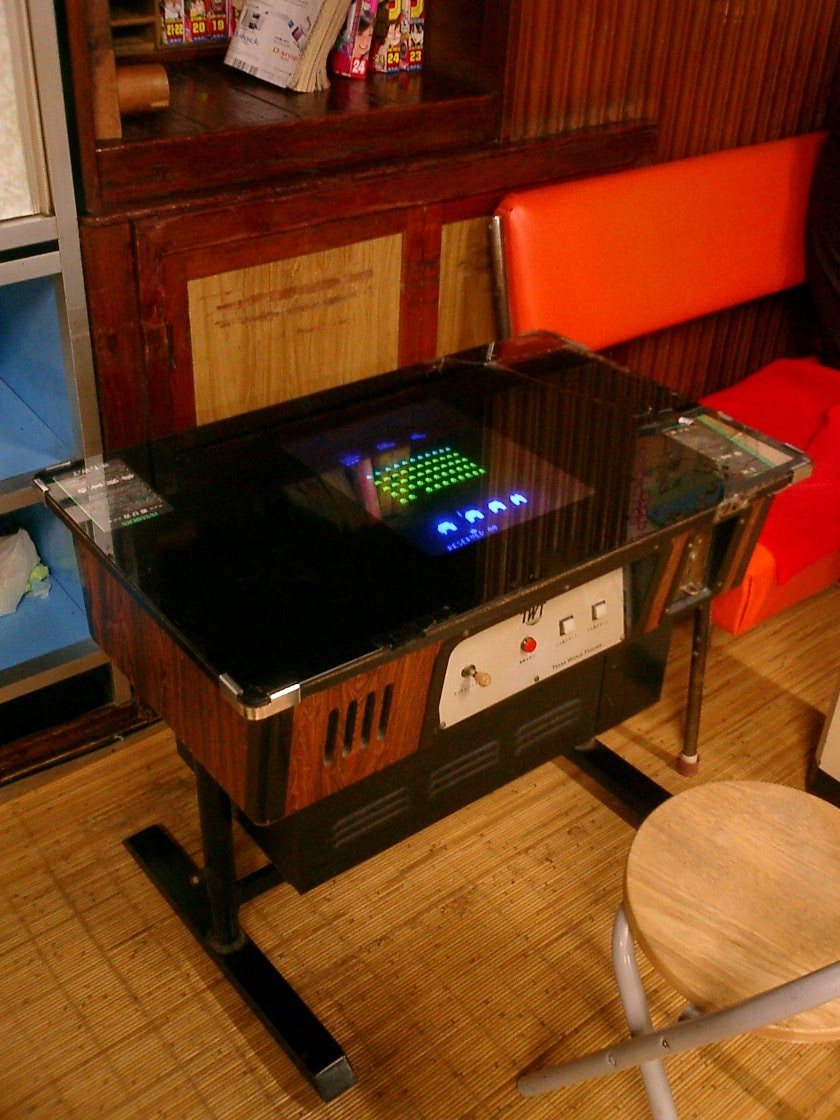
Space Invaders arcade cabinet in a Japanese gaming establishment
Space Invaders launched the golden age of arcades in 1978, transforming video games from a novelty into a cultural phenomenon that would dominate entertainment for the next decade.

The golden age didn't really start until after 1978, but once it started, it moved fast. Pac-Man hit in 1980 from Namco (published by Midway in North America), and if Space Invaders was the reason people went to arcades, Pac-Man was the reason they stayed and brought their entire family. Pac-Man made over a billion dollars by 1981. Let me say that again: one billion dollars. In 1981. From a game where you moved a yellow circle around eating dots. By 1982, there were seven billion coins collected in Pac-Man machines worldwide. Seven billion. The machine had become so ubiquitous that there were approximately 400,000 Pac-Man cabinets installed globally.

And here's where it gets interesting. There's this whole story that gets told about how Space Invaders caused a shortage of 100-yen coins in Japan because people were using so much currency to play the game that there literally weren't enough coins in circulation. It's a great story. It's a fun story. It's also completely false. That's an urban legend that people keep repeating because it sounds plausible and amazing. The Japanese Mint's PR office confirmed that increased yen production in the late 1970s had nothing to do with Space Invaders, and the game's own designer, Toshiro Nishikado, described it as a wild rumor. The actual story is somehow less dramatic but still impressive: arcades were just extraordinarily profitable, and nobody had anticipated that level of profitability.

By 1982, the arcade industry in the United States alone was pulling in eight billion dollars annually. Eight billion. To put that in perspective, the entire American film industry was making three billion dollars a year. The music industry was making four billion dollars a year. Arcades were outearning Hollywood. Arcades were outearning pop music. A bunch of machines that did nothing but display blocky graphics and beep noises were the most profitable entertainment sector in the entire country. There were 10,000 arcades scattered across North America. The number of arcades had doubled between 1980 and 1982. Kids were cutting school to spend quarters. Parents were confused about why their children suddenly cared about a pizza-eating cartoon character.

And Then It All Crashed

The brutal part about this story is that the decline started almost immediately after the peak. We're not talking about a slow fade over decades. We're talking about a sharp drop that started in 1982 and accelerated from there. In 1981, arcades were pulling in eight billion dollars. By 1983, that number had dropped to five billion. By 1984, it was down to four billion. By the end of the 1980s, arcades were a fraction of what they'd been at their peak. Something had gone catastrophically wrong.

The easy answer is that home consoles killed the arcades. The Atari 2600 came out in 1977, before the arcade boom even really started, but it was terrible at first. The games were worse. The graphics were worse. The sound was worse. If you wanted to play a real video game, you went to an arcade. But then technology improved, and licensing happened, and suddenly you could play versions of Space Invaders and Pac-Man on your television at home. Not the exact same versions, sure. The graphics weren't as good. The gameplay was slightly different. But they were close enough, and more importantly, they were free after the initial hardware investment.

The Nintendo Entertainment System, which launched in North America in 1985, delivered the real blow. The NES proved that home gaming wasn't just a cheap imitation of the arcade experience. It was its own thing, with its own identity and its own library of games that couldn't be found in any arcade. Super Mario Bros. didn't need an arcade cabinet. The Legend of Zelda didn't need quarters. Home consoles stopped being arcade substitutes and started being something entirely different and better in their own way.

But it goes deeper than that. The arcade industry had gotten bloated and weird. The market was oversaturated with machines. Every shopping mall had three different arcades competing with each other. Arcade operators had been making so much money so quickly that some of them had gotten sloppy. Games broke down. Cabinets weren't maintained properly. Quarters got jammed. And more importantly, the novelty started wearing off. The miracle of watching a machine play a game on a screen became normal. The games themselves got more complex and expensive. The quarter-eating increased. If you played Pac-Man a lot, you knew exactly how much money you were dumping into it. Quarters add up fast.

And here's the part that I get genuinely heated about: the arcade industry also became kind of exploitative. Operators knew that kids were addicted to these games, and they started making them harder and less fair specifically so people would have to spend more money to get the same amount of playtime. Games were designed not to be beaten, but to be constantly fed with quarters. The business model worked great when there was no alternative, but the moment home consoles became viable, suddenly people realized they could play at their own pace, fail without losing money, and pause whenever they wanted. The arcade model of extracting maximum quarters from minimum entertainment suddenly looked pretty hostile.

The Fighting Game Renaissance Briefly Changed Everything

And here's where it gets interesting. Right when you thought arcades were completely finished, Capcom released Street Fighter II in 1991, and suddenly people cared again. Not the same way they cared in 1981, but they cared. Street Fighter II brought arcade fighting to a level of sophistication and competition that had never existed before. This wasn't a game you played alone to get a high score. This was a game you played against other human beings, in public, where everyone watching could judge your skill level.

The machine became a gathering place again, but for a different reason. These weren't kids spending their allowance. These were competitive players who would travel to different arcades to find better opponents. There were actual tournaments. There were sponsorships. There were players who got legitimately famous. Mortal Kombat added to the phenomenon in 1992, bringing violence and shock value to fighting games in a way that Street Fighter hadn't. The combination of Street Fighter and Mortal Kombat created a brief window where arcades were culturally relevant again.

Street Fighter II arcade cabinet
Street Fighter II's release in 1991 sparked an unexpected arcade renaissance with competitive fighting games, briefly returning arcades to cultural prominence in the early 1990s.

But I want to be honest: this renaissance was regional and demographic-specific. It wasn't a return to the golden age. It wasn't children and adults and families all gathering together. It was mostly young men in specific cities with strong arcade communities. In Japan, arcades never really died the same way they did in North America, so the fighting game scene there was able to grow organically. Japanese game centers, sometimes called game sentos, evolved into social destinations that served a broader cultural purpose. In America, the fighting game revival extended the life of arcades, but it couldn't save them. By 1999, arcade revenue had dropped to 1.3 billion dollars. The fighting game scene kept some arcades alive and created a small but devoted community of competitive players, but the broader arcade culture was gone.

The Mall Arcade Died and Nobody Noticed

I want to talk about mall arcades specifically because I think they deserve their own funeral. The mall arcade was where most people experienced arcades in their childhood. You'd go to the mall, get some money from your parents, find the arcade tucked between the food court and the movie theater, and spend two hours of pure contentment while your parents shopped for clothes they'd never wear. Mall arcades were the gateway drug to arcade culture.

The mall arcade decline happened in stages. First, the big dedicated arcade chains started closing. Then the mall operators realized that dedicated arcade spaces were expensive and didn't drive traffic the way they used to. Then they started replacing arcades with other stores. Then they started making arcades smaller. Then they started putting them in food courts where nobody really wanted to hang out. Then they were just gone, and when I walk through a mall now, I get confused because something essential is missing from the mall experience, and I can't quite figure out what it is until I remember: there are no arcades anymore.

The standalone neighborhood arcades died for similar reasons. The economics just didn't work. Real estate costs went up. Game replacement costs went up. Labor costs went up. But the amount people were willing to spend on quarters stayed the same or went down. An arcade operator in 2005 was basically running a museum of games from the 1980s and 1990s, which nobody cared about because they could play better games on better hardware at home.

The weirdest part about the arcade collapse is that it happened in real time but nobody really acknowledged it. There was no moment where someone said, "We're closing all the arcades." It was just a slow dissolution. You'd go back to a mall from your childhood and the arcade would be a cell phone store. You'd check on an arcade you used to visit and there would be a sign saying "Available for Lease." Within about fifteen years of the early 1990s fighting game peak, arcades had basically vanished from the cultural landscape.

The Unlikely Revival and Where We Are Now

And then something unexpected happened. People got nostalgic. And I don't mean the normal kind of nostalgia where you think about good times you had. I mean the specific kind of nostalgia that happens when you realize something you loved is completely gone, and you start investing emotional energy in bringing it back.

Dave & Buster's, which started as a sports bar and arcade hybrid in 1982, became one of the primary vehicles for arcade revival. It wasn't a pure arcade experience. It was arcades mixed with alcohol and appetizers and a sports bar atmosphere. But it meant that adults who loved arcades could go to an arcade without feeling weird about it. You were an adult hanging out at a bar that happened to have games. That was fine. That was normal. And Dave & Buster's locations proliferated.

Then the barcade phenomenon started. These were spaces that were explicitly designed as bars first and arcades second, but they featured real vintage arcade machines alongside craft cocktails. The appeal was partly nostalgic and partly about the specific aesthetic of vintage arcade cabinets. A cabinet from 1982 looks cooler in some ways than a modern machine. It has weight. It has history. It smells like old electronics and possibility.

More recently, Round1 Entertainment and similar operations have brought some of the Japanese arcade philosophy to North America. Round1 locations feature a mix of arcade games, crane machines, and a general arcade-focused atmosphere. They're designed for families and groups, not just hardcore gamers. They've successfully created arcade spaces that feel relevant to contemporary culture rather than trapped in the past.

The modern arcade revival isn't a return to the golden age, and I don't think anyone expects it to be. The cultural moment that made arcades the dominant entertainment format of 1982 is gone forever. Home gaming is too good. Mobile gaming exists. Streaming exists. The reasons people went to arcades in 1982 aren't compelling anymore for most people. But arcades have survived, adapted, and found a new role as experience spaces and nostalgia destinations rather than the cutting edge of gaming technology.

And honestly, that's kind of beautiful. There's something specific about playing Galaga on an original cabinet that you can't replicate on a modern system. The weight of the joystick. The specific feel of the buttons. The way the screen glows. The fact that you can see yourself reflected in the screen between levels. These are things that matter to people who experienced arcades the first time around, and they're starting to matter again to people who didn't.

What I Miss Most

I've been thinking about what I actually miss about the arcade experience, and I don't think it's the games themselves. The games were great, sure, but they're still available in various forms. What I miss is the specificity of the experience. I miss the particular smell of a 1980s arcade. I miss the specific way conversations happened in those spaces. I miss the way you could watch someone play a game and understand their skill level immediately. I miss the ritualistic feeling of putting a quarter in a machine and resetting to the start screen. I miss the way high scores meant something in a community where maybe fifty people were playing the same machine.

I miss the fact that gaming was a social activity that happened in public spaces. Now gaming is something that happens alone or online, and while that has its own value, it's a different thing entirely. The arcade was about showing off and being shown up and learning from watching other people and the constant feedback of a community. That's gone in a way that can't really be replicated, even if arcades themselves are coming back.

But I'm also weirdly optimistic about where we are now. The fact that arcades are returning, even in a different form, suggests that people genuinely value that experience. It's not just nostalgic old people trying to relive the past. It's families and young people discovering what made arcades special. It's a recognition that there's something about communal gaming and shared physical spaces that matters, even in an age of hyper-connected digital entertainment.

FAQ: Understanding Arcade History and Culture

Why did arcades become so popular in the early 1980s?

Arcades exploded in popularity because Space Invaders and Pac-Man offered something completely new: addictive, simple games that required no explanation and could hook a player immediately. The arcade business model of charging quarters per play was also perfect for this moment in consumer culture. People had never experienced anything like these games before, and the community aspect of playing in public spaces made them even more appealing. The combination of novelty, accessibility, and profitability created the perfect storm for expansion.

Is the story about Space Invaders causing a yen shortage in Japan actually true?

No, this is an urban legend. While Space Invaders was extraordinarily popular and consumed enormous numbers of coins, it did not create a national shortage of 100-yen coins in Japan. The Japanese Mint confirmed that increased yen production in the late 1970s was unrelated to the game, and Space Invaders designer Toshiro Nishikado himself described it as a wild rumor. The myth persists because it captures something true about how dominant the game became, but the economic data doesn't support it.

What's the difference between the original arcade golden age and the modern arcade revival?

The original golden age was driven by cutting-edge technology and widespread accessibility. Arcades were the best way to play games, period. The modern revival is driven by nostalgia, craft culture (think barcades), and the specific experience of communal gaming. Modern arcades are intentional destinations rather than ubiquitous gathering spaces, and they typically serve adults and families rather than being the universal experience they once were.

Did home consoles really kill arcades?

Home consoles were a major factor, but they weren't the only reason. Market oversaturation, unsustainable business models that prioritized quarter-extraction over player experience, rising operating costs, and changing consumer preferences all played roles. The NES proved that home gaming could be its own thing, not just a lesser version of arcades. Home consoles provided a viable alternative that made the arcade's pay-per-play model less compelling, but the industry had structural problems before consoles delivered the final blow.

Are arcades coming back, or is this just a temporary revival?

Arcades are unlikely to return to their 1982 dominance as a primary gaming platform, but they've found a stable niche as experiential entertainment spaces. Places like Dave & Buster's, barcades, and Round1 locations suggest that the arcade concept has lasting appeal when adapted to contemporary contexts. The question isn't whether arcades will become mainstream again, but whether they'll continue to serve as valued community spaces and nostalgia destinations.

Why did Japan keep its arcade culture while North America lost it?

Japanese arcades, known as game centers, were understood primarily as social spaces and community gathering places, not just profit-maximizing operations. When the games themselves became less cutting-edge compared to home consoles, the spaces remained culturally valuable. North American arcades were primarily defined by their newest games and highest profit margins, so when those advantages disappeared, the spaces themselves lost their reason to exist.

๐Ÿ“– What Happened to Arcades: The Rise, Fall, and Unlikely Return of Quarter-Powered Gaming
_ โ–ก ร—
← Back

What Happened to Arcades: The Rise, Fall, and Unlikely Return of Quarter-Powered Gaming

2026-04-13 by 404 Memory Found

What Happened to Arcades: The Rise, Fall, and Unlikely Return of Quarter-Powered Gaming

Picture this: It's 1981, and you've got three dollars in your pocket, a best friend who smells like soda and arcade dust, and zero responsibilities except maybe getting home before the streetlights come on. You push through glass doors that stick slightly because they're perpetually grimy, and you're immediately assaulted by the most beautiful noise you've ever heard. Bleeps. Bloops. The mechanical whirring of change machines. A high score table somewhere declaring that TODD is still the king of Galaga, which has absolutely destroyed your self-esteem. The air is thick with cigarette smoke and possibility. You can practically taste the carpet. This was the arcade, and for about five glorious minutes of human history, it was the most important place on Earth.

I grew up thinking arcades would last forever. They felt like a permanent fixture of civilization, like libraries or parking lots. You passed them on the way to anywhere worth going. Malls had them. Bowling alleys had them. Beach boardwalks had them. That one weird little shop downtown had them. And then, somehow, they just sort of disappeared. One day you turned around and realized that the last arcade you visited wasn't actually the last arcade you'd ever visit, but you didn't know it was the last one at the time. That's how it worked. That's how they all closed.

But here's the thing: the story of what happened to arcades isn't just a story about video games or technology or entertainment trends. It's a story about money and nostalgia and the specific weirdness of American culture in the late twentieth century. It's about the fact that at one point in our history, more people were spending money in arcades than in movie theaters, and barely anyone remembers that now. So let's rewind.

The Golden Age Exploded Out of Nowhere

When I say arcades came out of nowhere, I mean that literally nobody expected video games to become the most culturally dominant entertainment force of the early 1980s. Before 1978, arcade games basically didn't exist in any meaningful way. There were some scattered machines, sure, but nothing that made anyone think, "Yes, this is the future." And then Taito released Space Invaders in 1978, and absolutely everything changed.

Here's what happened: Space Invaders was simple. You controlled a little cannon at the bottom of the screen. Aliens moved down from the top. You shot the aliens. The aliens moved faster. You shot faster. You died. But the genius part wasn't the concept. The genius part was that it was addictive in a way that nothing had ever been before. People couldn't stop playing it. They lined up for it. They brought their friends to watch them play it. They spent money they probably didn't have playing it. And arcade owners, who suddenly realized they had literal money printing machines on their floors, started buying more machines and putting them everywhere.

Space Invaders arcade cabinet in a Japanese gaming establishment
Space Invaders launched the golden age of arcades in 1978, transforming video games from a novelty into a cultural phenomenon that would dominate entertainment for the next decade.

The golden age didn't really start until after 1978, but once it started, it moved fast. Pac-Man hit in 1980 from Namco (published by Midway in North America), and if Space Invaders was the reason people went to arcades, Pac-Man was the reason they stayed and brought their entire family. Pac-Man made over a billion dollars by 1981. Let me say that again: one billion dollars. In 1981. From a game where you moved a yellow circle around eating dots. By 1982, there were seven billion coins collected in Pac-Man machines worldwide. Seven billion. The machine had become so ubiquitous that there were approximately 400,000 Pac-Man cabinets installed globally.

And here's where it gets interesting. There's this whole story that gets told about how Space Invaders caused a shortage of 100-yen coins in Japan because people were using so much currency to play the game that there literally weren't enough coins in circulation. It's a great story. It's a fun story. It's also completely false. That's an urban legend that people keep repeating because it sounds plausible and amazing. The Japanese Mint's PR office confirmed that increased yen production in the late 1970s had nothing to do with Space Invaders, and the game's own designer, Toshiro Nishikado, described it as a wild rumor. The actual story is somehow less dramatic but still impressive: arcades were just extraordinarily profitable, and nobody had anticipated that level of profitability.

By 1982, the arcade industry in the United States alone was pulling in eight billion dollars annually. Eight billion. To put that in perspective, the entire American film industry was making three billion dollars a year. The music industry was making four billion dollars a year. Arcades were outearning Hollywood. Arcades were outearning pop music. A bunch of machines that did nothing but display blocky graphics and beep noises were the most profitable entertainment sector in the entire country. There were 10,000 arcades scattered across North America. The number of arcades had doubled between 1980 and 1982. Kids were cutting school to spend quarters. Parents were confused about why their children suddenly cared about a pizza-eating cartoon character.

And Then It All Crashed

The brutal part about this story is that the decline started almost immediately after the peak. We're not talking about a slow fade over decades. We're talking about a sharp drop that started in 1982 and accelerated from there. In 1981, arcades were pulling in eight billion dollars. By 1983, that number had dropped to five billion. By 1984, it was down to four billion. By the end of the 1980s, arcades were a fraction of what they'd been at their peak. Something had gone catastrophically wrong.

The easy answer is that home consoles killed the arcades. The Atari 2600 came out in 1977, before the arcade boom even really started, but it was terrible at first. The games were worse. The graphics were worse. The sound was worse. If you wanted to play a real video game, you went to an arcade. But then technology improved, and licensing happened, and suddenly you could play versions of Space Invaders and Pac-Man on your television at home. Not the exact same versions, sure. The graphics weren't as good. The gameplay was slightly different. But they were close enough, and more importantly, they were free after the initial hardware investment.

The Nintendo Entertainment System, which launched in North America in 1985, delivered the real blow. The NES proved that home gaming wasn't just a cheap imitation of the arcade experience. It was its own thing, with its own identity and its own library of games that couldn't be found in any arcade. Super Mario Bros. didn't need an arcade cabinet. The Legend of Zelda didn't need quarters. Home consoles stopped being arcade substitutes and started being something entirely different and better in their own way.

But it goes deeper than that. The arcade industry had gotten bloated and weird. The market was oversaturated with machines. Every shopping mall had three different arcades competing with each other. Arcade operators had been making so much money so quickly that some of them had gotten sloppy. Games broke down. Cabinets weren't maintained properly. Quarters got jammed. And more importantly, the novelty started wearing off. The miracle of watching a machine play a game on a screen became normal. The games themselves got more complex and expensive. The quarter-eating increased. If you played Pac-Man a lot, you knew exactly how much money you were dumping into it. Quarters add up fast.

And here's the part that I get genuinely heated about: the arcade industry also became kind of exploitative. Operators knew that kids were addicted to these games, and they started making them harder and less fair specifically so people would have to spend more money to get the same amount of playtime. Games were designed not to be beaten, but to be constantly fed with quarters. The business model worked great when there was no alternative, but the moment home consoles became viable, suddenly people realized they could play at their own pace, fail without losing money, and pause whenever they wanted. The arcade model of extracting maximum quarters from minimum entertainment suddenly looked pretty hostile.

The Fighting Game Renaissance Briefly Changed Everything

And here's where it gets interesting. Right when you thought arcades were completely finished, Capcom released Street Fighter II in 1991, and suddenly people cared again. Not the same way they cared in 1981, but they cared. Street Fighter II brought arcade fighting to a level of sophistication and competition that had never existed before. This wasn't a game you played alone to get a high score. This was a game you played against other human beings, in public, where everyone watching could judge your skill level.

The machine became a gathering place again, but for a different reason. These weren't kids spending their allowance. These were competitive players who would travel to different arcades to find better opponents. There were actual tournaments. There were sponsorships. There were players who got legitimately famous. Mortal Kombat added to the phenomenon in 1992, bringing violence and shock value to fighting games in a way that Street Fighter hadn't. The combination of Street Fighter and Mortal Kombat created a brief window where arcades were culturally relevant again.

Street Fighter II arcade cabinet
Street Fighter II's release in 1991 sparked an unexpected arcade renaissance with competitive fighting games, briefly returning arcades to cultural prominence in the early 1990s.

But I want to be honest: this renaissance was regional and demographic-specific. It wasn't a return to the golden age. It wasn't children and adults and families all gathering together. It was mostly young men in specific cities with strong arcade communities. In Japan, arcades never really died the same way they did in North America, so the fighting game scene there was able to grow organically. Japanese game centers, sometimes called game sentos, evolved into social destinations that served a broader cultural purpose. In America, the fighting game revival extended the life of arcades, but it couldn't save them. By 1999, arcade revenue had dropped to 1.3 billion dollars. The fighting game scene kept some arcades alive and created a small but devoted community of competitive players, but the broader arcade culture was gone.

The Mall Arcade Died and Nobody Noticed

I want to talk about mall arcades specifically because I think they deserve their own funeral. The mall arcade was where most people experienced arcades in their childhood. You'd go to the mall, get some money from your parents, find the arcade tucked between the food court and the movie theater, and spend two hours of pure contentment while your parents shopped for clothes they'd never wear. Mall arcades were the gateway drug to arcade culture.

The mall arcade decline happened in stages. First, the big dedicated arcade chains started closing. Then the mall operators realized that dedicated arcade spaces were expensive and didn't drive traffic the way they used to. Then they started replacing arcades with other stores. Then they started making arcades smaller. Then they started putting them in food courts where nobody really wanted to hang out. Then they were just gone, and when I walk through a mall now, I get confused because something essential is missing from the mall experience, and I can't quite figure out what it is until I remember: there are no arcades anymore.

The standalone neighborhood arcades died for similar reasons. The economics just didn't work. Real estate costs went up. Game replacement costs went up. Labor costs went up. But the amount people were willing to spend on quarters stayed the same or went down. An arcade operator in 2005 was basically running a museum of games from the 1980s and 1990s, which nobody cared about because they could play better games on better hardware at home.

The weirdest part about the arcade collapse is that it happened in real time but nobody really acknowledged it. There was no moment where someone said, "We're closing all the arcades." It was just a slow dissolution. You'd go back to a mall from your childhood and the arcade would be a cell phone store. You'd check on an arcade you used to visit and there would be a sign saying "Available for Lease." Within about fifteen years of the early 1990s fighting game peak, arcades had basically vanished from the cultural landscape.

The Unlikely Revival and Where We Are Now

And then something unexpected happened. People got nostalgic. And I don't mean the normal kind of nostalgia where you think about good times you had. I mean the specific kind of nostalgia that happens when you realize something you loved is completely gone, and you start investing emotional energy in bringing it back.

Dave & Buster's, which started as a sports bar and arcade hybrid in 1982, became one of the primary vehicles for arcade revival. It wasn't a pure arcade experience. It was arcades mixed with alcohol and appetizers and a sports bar atmosphere. But it meant that adults who loved arcades could go to an arcade without feeling weird about it. You were an adult hanging out at a bar that happened to have games. That was fine. That was normal. And Dave & Buster's locations proliferated.

Then the barcade phenomenon started. These were spaces that were explicitly designed as bars first and arcades second, but they featured real vintage arcade machines alongside craft cocktails. The appeal was partly nostalgic and partly about the specific aesthetic of vintage arcade cabinets. A cabinet from 1982 looks cooler in some ways than a modern machine. It has weight. It has history. It smells like old electronics and possibility.

More recently, Round1 Entertainment and similar operations have brought some of the Japanese arcade philosophy to North America. Round1 locations feature a mix of arcade games, crane machines, and a general arcade-focused atmosphere. They're designed for families and groups, not just hardcore gamers. They've successfully created arcade spaces that feel relevant to contemporary culture rather than trapped in the past.

The modern arcade revival isn't a return to the golden age, and I don't think anyone expects it to be. The cultural moment that made arcades the dominant entertainment format of 1982 is gone forever. Home gaming is too good. Mobile gaming exists. Streaming exists. The reasons people went to arcades in 1982 aren't compelling anymore for most people. But arcades have survived, adapted, and found a new role as experience spaces and nostalgia destinations rather than the cutting edge of gaming technology.

And honestly, that's kind of beautiful. There's something specific about playing Galaga on an original cabinet that you can't replicate on a modern system. The weight of the joystick. The specific feel of the buttons. The way the screen glows. The fact that you can see yourself reflected in the screen between levels. These are things that matter to people who experienced arcades the first time around, and they're starting to matter again to people who didn't.

What I Miss Most

I've been thinking about what I actually miss about the arcade experience, and I don't think it's the games themselves. The games were great, sure, but they're still available in various forms. What I miss is the specificity of the experience. I miss the particular smell of a 1980s arcade. I miss the specific way conversations happened in those spaces. I miss the way you could watch someone play a game and understand their skill level immediately. I miss the ritualistic feeling of putting a quarter in a machine and resetting to the start screen. I miss the way high scores meant something in a community where maybe fifty people were playing the same machine.

I miss the fact that gaming was a social activity that happened in public spaces. Now gaming is something that happens alone or online, and while that has its own value, it's a different thing entirely. The arcade was about showing off and being shown up and learning from watching other people and the constant feedback of a community. That's gone in a way that can't really be replicated, even if arcades themselves are coming back.

But I'm also weirdly optimistic about where we are now. The fact that arcades are returning, even in a different form, suggests that people genuinely value that experience. It's not just nostalgic old people trying to relive the past. It's families and young people discovering what made arcades special. It's a recognition that there's something about communal gaming and shared physical spaces that matters, even in an age of hyper-connected digital entertainment.

FAQ: Understanding Arcade History and Culture

Why did arcades become so popular in the early 1980s?

Arcades exploded in popularity because Space Invaders and Pac-Man offered something completely new: addictive, simple games that required no explanation and could hook a player immediately. The arcade business model of charging quarters per play was also perfect for this moment in consumer culture. People had never experienced anything like these games before, and the community aspect of playing in public spaces made them even more appealing. The combination of novelty, accessibility, and profitability created the perfect storm for expansion.

Is the story about Space Invaders causing a yen shortage in Japan actually true?

No, this is an urban legend. While Space Invaders was extraordinarily popular and consumed enormous numbers of coins, it did not create a national shortage of 100-yen coins in Japan. The Japanese Mint confirmed that increased yen production in the late 1970s was unrelated to the game, and Space Invaders designer Toshiro Nishikado himself described it as a wild rumor. The myth persists because it captures something true about how dominant the game became, but the economic data doesn't support it.

What's the difference between the original arcade golden age and the modern arcade revival?

The original golden age was driven by cutting-edge technology and widespread accessibility. Arcades were the best way to play games, period. The modern revival is driven by nostalgia, craft culture (think barcades), and the specific experience of communal gaming. Modern arcades are intentional destinations rather than ubiquitous gathering spaces, and they typically serve adults and families rather than being the universal experience they once were.

Did home consoles really kill arcades?

Home consoles were a major factor, but they weren't the only reason. Market oversaturation, unsustainable business models that prioritized quarter-extraction over player experience, rising operating costs, and changing consumer preferences all played roles. The NES proved that home gaming could be its own thing, not just a lesser version of arcades. Home consoles provided a viable alternative that made the arcade's pay-per-play model less compelling, but the industry had structural problems before consoles delivered the final blow.

Are arcades coming back, or is this just a temporary revival?

Arcades are unlikely to return to their 1982 dominance as a primary gaming platform, but they've found a stable niche as experiential entertainment spaces. Places like Dave & Buster's, barcades, and Round1 locations suggest that the arcade concept has lasting appeal when adapted to contemporary contexts. The question isn't whether arcades will become mainstream again, but whether they'll continue to serve as valued community spaces and nostalgia destinations.

Why did Japan keep its arcade culture while North America lost it?

Japanese arcades, known as game centers, were understood primarily as social spaces and community gathering places, not just profit-maximizing operations. When the games themselves became less cutting-edge compared to home consoles, the spaces remained culturally valuable. North American arcades were primarily defined by their newest games and highest profit margins, so when those advantages disappeared, the spaces themselves lost their reason to exist.

๐Ÿ“– What Happened to Arcades: The Rise, Fall, and Unlikely Return of Quarter-Powered Gaming

What Happened to Arcades: The Rise, Fall, and Unlikely Return of Quarter-Powered Gaming

Picture this: It's 1981, and you've got three dollars in your pocket, a best friend who smells like soda and arcade dust, and zero responsibilities except maybe getting home before the streetlights come on. You push through glass doors that stick slightly because they're perpetually grimy, and you're immediately assaulted by the most beautiful noise you've ever heard. Bleeps. Bloops. The mechanical whirring of change machines. A high score table somewhere declaring that TODD is still the king of Galaga, which has absolutely destroyed your self-esteem. The air is thick with cigarette smoke and possibility. You can practically taste the carpet. This was the arcade, and for about five glorious minutes of human history, it was the most important place on Earth.

I grew up thinking arcades would last forever. They felt like a permanent fixture of civilization, like libraries or parking lots. You passed them on the way to anywhere worth going. Malls had them. Bowling alleys had them. Beach boardwalks had them. That one weird little shop downtown had them. And then, somehow, they just sort of disappeared. One day you turned around and realized that the last arcade you visited wasn't actually the last arcade you'd ever visit, but you didn't know it was the last one at the time. That's how it worked. That's how they all closed.

But here's the thing: the story of what happened to arcades isn't just a story about video games or technology or entertainment trends. It's a story about money and nostalgia and the specific weirdness of American culture in the late twentieth century. It's about the fact that at one point in our history, more people were spending money in arcades than in movie theaters, and barely anyone remembers that now. So let's rewind.

The Golden Age Exploded Out of Nowhere

When I say arcades came out of nowhere, I mean that literally nobody expected video games to become the most culturally dominant entertainment force of the early 1980s. Before 1978, arcade games basically didn't exist in any meaningful way. There were some scattered machines, sure, but nothing that made anyone think, "Yes, this is the future." And then Taito released Space Invaders in 1978, and absolutely everything changed.

Here's what happened: Space Invaders was simple. You controlled a little cannon at the bottom of the screen. Aliens moved down from the top. You shot the aliens. The aliens moved faster. You shot faster. You died. But the genius part wasn't the concept. The genius part was that it was addictive in a way that nothing had ever been before. People couldn't stop playing it. They lined up for it. They brought their friends to watch them play it. They spent money they probably didn't have playing it. And arcade owners, who suddenly realized they had literal money printing machines on their floors, started buying more machines and putting them everywhere.

Space Invaders arcade cabinet in a Japanese gaming establishment
Space Invaders launched the golden age of arcades in 1978, transforming video games from a novelty into a cultural phenomenon that would dominate entertainment for the next decade.

The golden age didn't really start until after 1978, but once it started, it moved fast. Pac-Man hit in 1980 from Namco (published by Midway in North America), and if Space Invaders was the reason people went to arcades, Pac-Man was the reason they stayed and brought their entire family. Pac-Man made over a billion dollars by 1981. Let me say that again: one billion dollars. In 1981. From a game where you moved a yellow circle around eating dots. By 1982, there were seven billion coins collected in Pac-Man machines worldwide. Seven billion. The machine had become so ubiquitous that there were approximately 400,000 Pac-Man cabinets installed globally.

And here's where it gets interesting. There's this whole story that gets told about how Space Invaders caused a shortage of 100-yen coins in Japan because people were using so much currency to play the game that there literally weren't enough coins in circulation. It's a great story. It's a fun story. It's also completely false. That's an urban legend that people keep repeating because it sounds plausible and amazing. The Japanese Mint's PR office confirmed that increased yen production in the late 1970s had nothing to do with Space Invaders, and the game's own designer, Toshiro Nishikado, described it as a wild rumor. The actual story is somehow less dramatic but still impressive: arcades were just extraordinarily profitable, and nobody had anticipated that level of profitability.

By 1982, the arcade industry in the United States alone was pulling in eight billion dollars annually. Eight billion. To put that in perspective, the entire American film industry was making three billion dollars a year. The music industry was making four billion dollars a year. Arcades were outearning Hollywood. Arcades were outearning pop music. A bunch of machines that did nothing but display blocky graphics and beep noises were the most profitable entertainment sector in the entire country. There were 10,000 arcades scattered across North America. The number of arcades had doubled between 1980 and 1982. Kids were cutting school to spend quarters. Parents were confused about why their children suddenly cared about a pizza-eating cartoon character.

And Then It All Crashed

The brutal part about this story is that the decline started almost immediately after the peak. We're not talking about a slow fade over decades. We're talking about a sharp drop that started in 1982 and accelerated from there. In 1981, arcades were pulling in eight billion dollars. By 1983, that number had dropped to five billion. By 1984, it was down to four billion. By the end of the 1980s, arcades were a fraction of what they'd been at their peak. Something had gone catastrophically wrong.

The easy answer is that home consoles killed the arcades. The Atari 2600 came out in 1977, before the arcade boom even really started, but it was terrible at first. The games were worse. The graphics were worse. The sound was worse. If you wanted to play a real video game, you went to an arcade. But then technology improved, and licensing happened, and suddenly you could play versions of Space Invaders and Pac-Man on your television at home. Not the exact same versions, sure. The graphics weren't as good. The gameplay was slightly different. But they were close enough, and more importantly, they were free after the initial hardware investment.

The Nintendo Entertainment System, which launched in North America in 1985, delivered the real blow. The NES proved that home gaming wasn't just a cheap imitation of the arcade experience. It was its own thing, with its own identity and its own library of games that couldn't be found in any arcade. Super Mario Bros. didn't need an arcade cabinet. The Legend of Zelda didn't need quarters. Home consoles stopped being arcade substitutes and started being something entirely different and better in their own way.

But it goes deeper than that. The arcade industry had gotten bloated and weird. The market was oversaturated with machines. Every shopping mall had three different arcades competing with each other. Arcade operators had been making so much money so quickly that some of them had gotten sloppy. Games broke down. Cabinets weren't maintained properly. Quarters got jammed. And more importantly, the novelty started wearing off. The miracle of watching a machine play a game on a screen became normal. The games themselves got more complex and expensive. The quarter-eating increased. If you played Pac-Man a lot, you knew exactly how much money you were dumping into it. Quarters add up fast.

And here's the part that I get genuinely heated about: the arcade industry also became kind of exploitative. Operators knew that kids were addicted to these games, and they started making them harder and less fair specifically so people would have to spend more money to get the same amount of playtime. Games were designed not to be beaten, but to be constantly fed with quarters. The business model worked great when there was no alternative, but the moment home consoles became viable, suddenly people realized they could play at their own pace, fail without losing money, and pause whenever they wanted. The arcade model of extracting maximum quarters from minimum entertainment suddenly looked pretty hostile.

The Fighting Game Renaissance Briefly Changed Everything

And here's where it gets interesting. Right when you thought arcades were completely finished, Capcom released Street Fighter II in 1991, and suddenly people cared again. Not the same way they cared in 1981, but they cared. Street Fighter II brought arcade fighting to a level of sophistication and competition that had never existed before. This wasn't a game you played alone to get a high score. This was a game you played against other human beings, in public, where everyone watching could judge your skill level.

The machine became a gathering place again, but for a different reason. These weren't kids spending their allowance. These were competitive players who would travel to different arcades to find better opponents. There were actual tournaments. There were sponsorships. There were players who got legitimately famous. Mortal Kombat added to the phenomenon in 1992, bringing violence and shock value to fighting games in a way that Street Fighter hadn't. The combination of Street Fighter and Mortal Kombat created a brief window where arcades were culturally relevant again.

Street Fighter II arcade cabinet
Street Fighter II's release in 1991 sparked an unexpected arcade renaissance with competitive fighting games, briefly returning arcades to cultural prominence in the early 1990s.

But I want to be honest: this renaissance was regional and demographic-specific. It wasn't a return to the golden age. It wasn't children and adults and families all gathering together. It was mostly young men in specific cities with strong arcade communities. In Japan, arcades never really died the same way they did in North America, so the fighting game scene there was able to grow organically. Japanese game centers, sometimes called game sentos, evolved into social destinations that served a broader cultural purpose. In America, the fighting game revival extended the life of arcades, but it couldn't save them. By 1999, arcade revenue had dropped to 1.3 billion dollars. The fighting game scene kept some arcades alive and created a small but devoted community of competitive players, but the broader arcade culture was gone.

The Mall Arcade Died and Nobody Noticed

I want to talk about mall arcades specifically because I think they deserve their own funeral. The mall arcade was where most people experienced arcades in their childhood. You'd go to the mall, get some money from your parents, find the arcade tucked between the food court and the movie theater, and spend two hours of pure contentment while your parents shopped for clothes they'd never wear. Mall arcades were the gateway drug to arcade culture.

The mall arcade decline happened in stages. First, the big dedicated arcade chains started closing. Then the mall operators realized that dedicated arcade spaces were expensive and didn't drive traffic the way they used to. Then they started replacing arcades with other stores. Then they started making arcades smaller. Then they started putting them in food courts where nobody really wanted to hang out. Then they were just gone, and when I walk through a mall now, I get confused because something essential is missing from the mall experience, and I can't quite figure out what it is until I remember: there are no arcades anymore.

The standalone neighborhood arcades died for similar reasons. The economics just didn't work. Real estate costs went up. Game replacement costs went up. Labor costs went up. But the amount people were willing to spend on quarters stayed the same or went down. An arcade operator in 2005 was basically running a museum of games from the 1980s and 1990s, which nobody cared about because they could play better games on better hardware at home.

The weirdest part about the arcade collapse is that it happened in real time but nobody really acknowledged it. There was no moment where someone said, "We're closing all the arcades." It was just a slow dissolution. You'd go back to a mall from your childhood and the arcade would be a cell phone store. You'd check on an arcade you used to visit and there would be a sign saying "Available for Lease." Within about fifteen years of the early 1990s fighting game peak, arcades had basically vanished from the cultural landscape.

The Unlikely Revival and Where We Are Now

And then something unexpected happened. People got nostalgic. And I don't mean the normal kind of nostalgia where you think about good times you had. I mean the specific kind of nostalgia that happens when you realize something you loved is completely gone, and you start investing emotional energy in bringing it back.

Dave & Buster's, which started as a sports bar and arcade hybrid in 1982, became one of the primary vehicles for arcade revival. It wasn't a pure arcade experience. It was arcades mixed with alcohol and appetizers and a sports bar atmosphere. But it meant that adults who loved arcades could go to an arcade without feeling weird about it. You were an adult hanging out at a bar that happened to have games. That was fine. That was normal. And Dave & Buster's locations proliferated.

Then the barcade phenomenon started. These were spaces that were explicitly designed as bars first and arcades second, but they featured real vintage arcade machines alongside craft cocktails. The appeal was partly nostalgic and partly about the specific aesthetic of vintage arcade cabinets. A cabinet from 1982 looks cooler in some ways than a modern machine. It has weight. It has history. It smells like old electronics and possibility.

More recently, Round1 Entertainment and similar operations have brought some of the Japanese arcade philosophy to North America. Round1 locations feature a mix of arcade games, crane machines, and a general arcade-focused atmosphere. They're designed for families and groups, not just hardcore gamers. They've successfully created arcade spaces that feel relevant to contemporary culture rather than trapped in the past.

The modern arcade revival isn't a return to the golden age, and I don't think anyone expects it to be. The cultural moment that made arcades the dominant entertainment format of 1982 is gone forever. Home gaming is too good. Mobile gaming exists. Streaming exists. The reasons people went to arcades in 1982 aren't compelling anymore for most people. But arcades have survived, adapted, and found a new role as experience spaces and nostalgia destinations rather than the cutting edge of gaming technology.

And honestly, that's kind of beautiful. There's something specific about playing Galaga on an original cabinet that you can't replicate on a modern system. The weight of the joystick. The specific feel of the buttons. The way the screen glows. The fact that you can see yourself reflected in the screen between levels. These are things that matter to people who experienced arcades the first time around, and they're starting to matter again to people who didn't.

What I Miss Most

I've been thinking about what I actually miss about the arcade experience, and I don't think it's the games themselves. The games were great, sure, but they're still available in various forms. What I miss is the specificity of the experience. I miss the particular smell of a 1980s arcade. I miss the specific way conversations happened in those spaces. I miss the way you could watch someone play a game and understand their skill level immediately. I miss the ritualistic feeling of putting a quarter in a machine and resetting to the start screen. I miss the way high scores meant something in a community where maybe fifty people were playing the same machine.

I miss the fact that gaming was a social activity that happened in public spaces. Now gaming is something that happens alone or online, and while that has its own value, it's a different thing entirely. The arcade was about showing off and being shown up and learning from watching other people and the constant feedback of a community. That's gone in a way that can't really be replicated, even if arcades themselves are coming back.

But I'm also weirdly optimistic about where we are now. The fact that arcades are returning, even in a different form, suggests that people genuinely value that experience. It's not just nostalgic old people trying to relive the past. It's families and young people discovering what made arcades special. It's a recognition that there's something about communal gaming and shared physical spaces that matters, even in an age of hyper-connected digital entertainment.

FAQ: Understanding Arcade History and Culture

Why did arcades become so popular in the early 1980s?

Arcades exploded in popularity because Space Invaders and Pac-Man offered something completely new: addictive, simple games that required no explanation and could hook a player immediately. The arcade business model of charging quarters per play was also perfect for this moment in consumer culture. People had never experienced anything like these games before, and the community aspect of playing in public spaces made them even more appealing. The combination of novelty, accessibility, and profitability created the perfect storm for expansion.

Is the story about Space Invaders causing a yen shortage in Japan actually true?

No, this is an urban legend. While Space Invaders was extraordinarily popular and consumed enormous numbers of coins, it did not create a national shortage of 100-yen coins in Japan. The Japanese Mint confirmed that increased yen production in the late 1970s was unrelated to the game, and Space Invaders designer Toshiro Nishikado himself described it as a wild rumor. The myth persists because it captures something true about how dominant the game became, but the economic data doesn't support it.

What's the difference between the original arcade golden age and the modern arcade revival?

The original golden age was driven by cutting-edge technology and widespread accessibility. Arcades were the best way to play games, period. The modern revival is driven by nostalgia, craft culture (think barcades), and the specific experience of communal gaming. Modern arcades are intentional destinations rather than ubiquitous gathering spaces, and they typically serve adults and families rather than being the universal experience they once were.

Did home consoles really kill arcades?

Home consoles were a major factor, but they weren't the only reason. Market oversaturation, unsustainable business models that prioritized quarter-extraction over player experience, rising operating costs, and changing consumer preferences all played roles. The NES proved that home gaming could be its own thing, not just a lesser version of arcades. Home consoles provided a viable alternative that made the arcade's pay-per-play model less compelling, but the industry had structural problems before consoles delivered the final blow.

Are arcades coming back, or is this just a temporary revival?

Arcades are unlikely to return to their 1982 dominance as a primary gaming platform, but they've found a stable niche as experiential entertainment spaces. Places like Dave & Buster's, barcades, and Round1 locations suggest that the arcade concept has lasting appeal when adapted to contemporary contexts. The question isn't whether arcades will become mainstream again, but whether they'll continue to serve as valued community spaces and nostalgia destinations.

Why did Japan keep its arcade culture while North America lost it?

Japanese arcades, known as game centers, were understood primarily as social spaces and community gathering places, not just profit-maximizing operations. When the games themselves became less cutting-edge compared to home consoles, the spaces remained culturally valuable. North American arcades were primarily defined by their newest games and highest profit margins, so when those advantages disappeared, the spaces themselves lost their reason to exist.

00:00