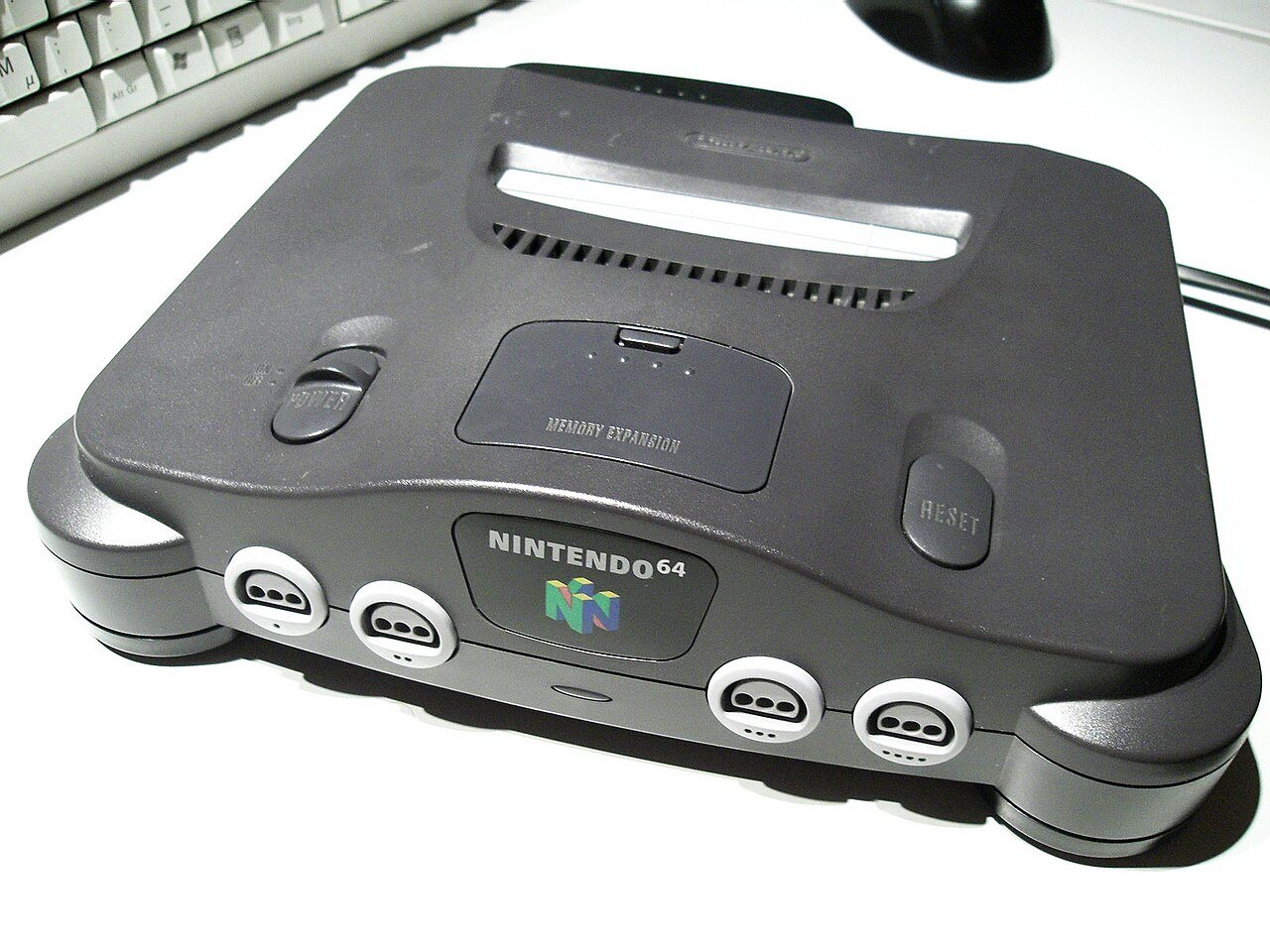
Picture this: 1997. You're standing in an Electronics Boutique at the mall, and you've got birthday money burning a hole in your pocket. One N64 game. That's what you can afford. The cartridge you grab is heavier than you expect, substantial in that way that only cartridges ever were, and the label catches the fluorescent light just right. GoldenEye 007. You had absolutely no idea you were holding the game that would prove first-person shooters could work on a console. You just knew it looked cool and your friend's older brother said it was amazing.
For anyone who lived through the late 1990s, GoldenEye 007 wasn't just a game. It was the game. It was the reason you bought an N64. It was what happened at every sleepover, every birthday party, every afternoon when four people could scrape together enough controllers. Before Halo made online shooters mainstream, before Call of Duty became a cultural force, before anyone used the word "esports" without getting laughed at, GoldenEye 007 was the biggest multiplayer experience most of us had ever known. And then, for nearly two decades, it basically vanished.
The GoldenEye 007 history is one of the most frustrating stories in gaming. It's a story about creative brilliance colliding with corporate licensing nightmares, about a game so good that it transcended everything around it, and about how the business side of entertainment can lock away something an entire generation loved. But before we get to the frustrating part, we need to talk about the miracle that was GoldenEye's creation. Because what happened at a small British studio in the English countryside shouldn't have been possible.
Ten People, Zero Experience, One Masterpiece
Rare was a British video game developer based in Twycross, Leicestershire, known primarily for making licensed games that were, at best, competent. Not revolutionary. Not boundary-pushing. Just solid, professional work that publishers could rely on. When Nintendo approached them about making a game based on the upcoming James Bond film GoldenEye, it was treated as another licensed project. Another IP to turn into something playable. Another job.
The original concept, proposed by director Martin Hollis, started as a side-scrolling action game for the Super Nintendo. A 2D shooter. Perfectly respectable. Perfectly forgettable. Then the Nintendo 64 appeared on the horizon, and Hollis had an idea that most people in the industry would have called delusional: what if they made a 3D first-person shooter instead?
Here's the thing you have to understand about 1995. FPS games on consoles were considered basically impossible. The mouse and keyboard setup that powered Doom and Quake felt essential to the genre. How could you possibly control a first-person camera with an analog stick? The entire industry had essentially agreed it couldn't be done well. Martin Hollis and his team decided to find out if everyone was wrong.
The team that took on this challenge was tiny. About ten people total. And here's the detail that still blows my mind: for all but two of them, GoldenEye was their first game ever. First-time developers, working on hardware that didn't fully exist yet, building a game engine from scratch using graphics textbooks because they couldn't afford middleware. They were learning 3D programming while simultaneously inventing solutions that nobody in the industry had figured out. The whole thing cost about $2 million to make, which even in 1990s money was almost nothing for what they accomplished.
The development took about two and a half years. During that time, the team was working in relative isolation at Rare's rural studio, building something that nobody outside those walls fully understood. They drew inspiration from Doom, the 1993 id Software classic that defined the FPS genre, and from Virtua Cop, the 1994 arcade shooter that proved gunplay could feel visceral and satisfying. But GoldenEye wasn't copying either game. It was taking the best ideas from both and building something entirely new on top of them.
The Game That Proved Everyone Wrong
GoldenEye 007 launched on August 25, 1997, two years after the film it was based on. In the world of licensed games, releasing two years late was usually a death sentence. Movie tie-in games were supposed to ride the marketing wave of the film's release. A game arriving two years after the movie had left theaters should have been irrelevant. Instead, it was revolutionary.
The first thing you noticed when you loaded up GoldenEye was that the controls actually worked. The N64's analog stick, that weird little mushroom cap that felt like nothing else in gaming, turned out to be perfect for camera control when someone actually bothered to design around it. Rare had cracked something that the entire industry thought was impossible. Moving through 3D spaces felt natural, responsive, intuitive. The game just felt right in your hands.
But the controls were just the foundation. The real revelation was the game design. Unlike most shooters of the era, GoldenEye wasn't just about killing everything that moved. It was about completing objectives. In the Facility level, you could charge in guns blazing, or you could use your watch laser on a security camera, slip through the shadows, and complete your mission without anyone knowing you were there. The game supported stealth in an era when stealth mechanics in shooters were practically unheard of.
Each level was designed like a puzzle box. Guards called for reinforcements if you weren't careful. Difficulty settings didn't just make enemies tougher. They actually changed the levels themselves, adding new objectives, new security systems, new challenges. The same stage became a genuinely different experience on Agent versus 00 Agent difficulty. You could spend dozens of hours mastering the campaign, and people did. People absolutely did.
The single-player campaign alone would have made GoldenEye legendary. Sixteen missions, each feeling distinct and purposeful. The level design was phenomenal. The weapons had weight and kick. The gunshot sounds cracked through your television speakers with satisfying sharpness. When you fired the PP7 and watched a guard react, stagger, grab his arm where you'd hit him, it sold the impact in a way that no console game had managed before. Playing GoldenEye was a full sensory experience, and it was unlike anything else available on any console.
The game won Console Game of the Year at the AIAS awards. Publications that had been skeptical about FPS games on consoles suddenly had to reconsider everything they thought they knew. Rare had done the impossible. And then the impossible got even more impossible.
The Multiplayer That Almost Didn't Exist
And here's where it gets really wild. The multiplayer mode in GoldenEye 007, the thing that turned it from a great game into a cultural phenomenon, wasn't part of the original plan. It wasn't in the design document. Management didn't request it. A programmer named Steve Ellis basically built it as a side project during the final weeks of development. He wanted to see if split-screen deathmatches could work on the N64, so he just started coding it. Without asking permission from Rare's management. Without telling Nintendo. He and a few team members just made it happen in roughly six weeks.
Think about that for a second. The defining multiplayer experience of an entire console generation was created essentially in secret, as an unauthorized side project, by a programmer who was curious whether it could be done. Nobody approved it. Nobody budgeted for it. Nobody even knew it was happening until it was basically finished.
And it was incredible. Four players, split-screen, on one television. Characters from the campaign. Maps based on single-player levels. A weapon selection that made every match feel chaotic and unpredictable. Proximity Mines in the Facility bathroom. Power Weapons on the Complex. Slappers Only on whatever map someone had the audacity to suggest. Every match was different. Every match was ridiculous and fun and endlessly replayable.
Four controllers plugged into one console, four friends crowded around a television, arguing about whether Oddjob was cheating because he was too short to hit. That was the peak of multiplayer gaming for an entire generation, and it happened almost by accident.
Here's a detail I love: Shigeru Miyamoto at Nintendo caught wind of the multiplayer and had concerns. He sent a fax to Rare suggesting that there was too much close-up killing, that watching friends shoot each other in the face at point-blank range felt uncomfortable. Rather than toning down the violence, the team came up with the iconic curtain call credits sequence. At the end of the single-player campaign, all the characters, heroes and villains alike, come out and take a bow, like actors at the end of a play. The message was clear: this was all a performance. Nobody really got hurt. Even Jaws bowed. Even Oddjob bowed. It became one of the most beloved touches in the entire game, and it came directly from Miyamoto's discomfort with the violence.
Eight Million Copies and a Cultural Takeover
GoldenEye 007 sold 8 million copies worldwide, making it the third best-selling game on the Nintendo 64. But that number doesn't begin to capture how dominant it was culturally. Every gamer of a certain age played GoldenEye. It was universal in a way that very few games ever achieve. It wasn't just popular. It was the shared language of a generation.
The game had literally invented new conventions for how FPS games could work on consoles. The analog stick control scheme became the template that every subsequent console shooter would build on. Objective-based mission design became standard. The idea that difficulty should modify level design, not just enemy health, influenced game designers for years afterward. Rare's spiritual successor, Perfect Dark, launched in 2000 and expanded on everything GoldenEye had accomplished, adding AI-controlled bots called Simulants to the multiplayer and pushing the N64 hardware to its absolute limits.
What made the GoldenEye N64 experience special was that it felt complete. The campaign was meaty and substantial. The multiplayer was pure joy. The character models were iconic. The sound design was incredible. Nothing felt like an afterthought. Nothing was there to fill time or pad a feature list. Every element served a purpose.
And the multiplayer, oh man. GoldenEye multiplayer didn't require you to adjust configuration files or understand network settings. You didn't need a broadband connection or a separate screen for each player. You plugged in four controllers and started playing. That simplicity was revolutionary. It made competitive FPS gaming accessible to anyone who could hold a controller, and it turned living rooms across the country into arenas.
Licensing Hell: How Corporations Killed Access
Here's where the story turns cruel. GoldenEye 007 was based on a James Bond film. That detail, the one that made the game appealing in the first place, became the thing that made it nearly impossible to play for almost two decades.
The rights situation was a nightmare. Nintendo published the original game. Rare developed it. MGM and Eon Productions owned the James Bond property. Microsoft acquired Rare in 2002, gaining the studio but not the game's publishing rights. Everyone had a piece of the puzzle and nobody had the complete picture. As long as physical copies were circulating on the secondhand market, nobody really cared. But when the N64 faded from mainstream relevance, maintaining the overlapping licensing agreements became more trouble than it was worth.
By the late 2000s, GoldenEye was becoming a ghost. New copies were gone from store shelves. Used cartridges commanded premium prices. The game couldn't be sold digitally because the licensing parties couldn't agree on terms. A completed Xbox 360 remaster sat finished and ready to ship, but it never came out. A fully functional game, complete and playable, locked in a vault because four corporations couldn't sort out the paperwork.
A finished remaster, ready to release, trapped in licensing purgatory for years. This is what corporate rights management did to one of the greatest games ever created.
For years, the only way to play GoldenEye was to own an N64 and a physical cartridge. People hunted through garage sales, swap meets, and eBay listings. Prices climbed. Hardware degraded. A cultural artifact that had defined an entire console generation was slowly becoming inaccessible. It was like watching someone lock a beloved album in a safe and throw away the combination.
The Long Absence and the Growing Legend
Something strange happened during GoldenEye's years of inaccessibility. The game became more legendary precisely because nobody could play it. People who had experienced it as kids talked about it with a reverence that bordered on religious. "You had to be there," they'd say, and they meant it. The memory of sitting in a room with three friends, all of you crammed around a 27-inch CRT television, screen divided into four tiny quadrants, that memory became sacred.
GoldenEye became a rallying point for discussions about game preservation. Why couldn't one of the most important games ever made be legally purchased and played? Why did corporate licensing agreements take precedence over cultural access? The game illustrated, better than almost any other example, how the business structures of entertainment could lock away things that mattered to millions of people.
Meanwhile, the FPS genre had evolved dramatically. Halo had redefined console shooters in 2001. Call of Duty had become a global phenomenon. Online multiplayer had replaced local split-screen as the default way to play competitively. The world that GoldenEye had helped create had moved far beyond what GoldenEye itself could offer technically. But none of that erased what the game had accomplished. None of it diminished the memories.
Fan communities kept the game alive through emulation, speedrunning, and modding. Speedrunners discovered glitches and techniques that the developers never anticipated, completing levels in times that seemed physically impossible. Modders recreated GoldenEye's levels in other engines. An entire underground ecosystem existed around a game that its rights holders seemed content to let disappear.
The Return: January 27, 2023
On January 27, 2023, after years of negotiations that probably required more lawyers than the original game had developers, GoldenEye 007 finally came back. Remasters launched on Nintendo Switch through Nintendo Switch Online and on Xbox through Game Pass. The licensing nightmare had somehow been untangled. The game was playable again, legally, officially, on modern hardware.
The Switch version offered online multiplayer, which meant you could play with people anywhere in the world. The Xbox version featured widescreen support and up to 4K resolution on supported hardware with local split-screen. All the characters were there. All the maps. All the weapons and modes. The game that had haunted gaming culture for two decades was suddenly accessible again.
And here's the bittersweet truth about the resurrection: while everyone celebrated that the game was back, everyone also understood that the world had changed. The experience that made GoldenEye special, four friends in one room, one television, split-screen chaos, was inseparable from the era that produced it. You could play GoldenEye online with strangers in 2023, and it was fun. But it wasn't the same. The magic of GoldenEye wasn't just in the code. It was in the context: the physical togetherness, the limited hardware, the shared screen, the elbowing and the trash talk and the pizza getting cold because nobody wanted to pause.
Still, the remaster proved something important. The game design held up. The levels were still brilliant. The mechanics were still satisfying. GoldenEye's achievement wasn't dependent on nostalgia. Play it for the first time in 2023 or 2024, with no childhood memories attached, and you'll still find a remarkably well-designed shooter with levels that reward exploration and mastery. The graphics are charming rather than impressive. The AI is simple by modern standards. But the fundamental design is timeless.
What GoldenEye 007 Really Meant
Understanding what happened to GoldenEye means understanding what it actually was beneath the surface. On one level, it was a movie tie-in game that arrived two years late. On another level, it was the most important FPS ever made for consoles. On yet another level, it was a cultural event: a perfect collision of talent, timing, hardware capability, and creative freedom that produced something nobody could have predicted or planned.
A team of ten people, mostly first-timers, working in a rural English studio with no budget for fancy tools, building an engine from graphics textbooks and sheer determination, created something that an entire generation grew up with. They proved that FPS games could work on consoles. They proved that licensed games didn't have to be disposable. They proved that four people in a living room could create memories that would outlast the hardware, the publisher, and even the studio itself.
The game sold 8 million copies on a budget of roughly $2 million. That's one of the most remarkable return-on-investment stories in entertainment history. And the cultural impact extends far beyond what sales figures can capture. Every console FPS that came after GoldenEye was building on the foundation Rare laid. The control schemes. The mission design. The understanding that console players wanted accessible, immediate, social experiences. All of it traces back to a tiny team in Twycross who didn't know they were supposed to fail.
What happened to GoldenEye 007 is ultimately a story about the tension between creative achievement and corporate control. The people who made it created something extraordinary. The corporations who owned the various rights to it made that creation inaccessible for nearly twenty years. But the game survived anyway, in the memories of millions of people who experienced something genuine and irreplaceable when they played it. No licensing agreement could ever erase that.
Frequently Asked Questions
Who developed GoldenEye 007? GoldenEye 007 was developed by Rare, a British studio based in Twycross, Leicestershire. The game was directed by Martin Hollis. The development team consisted of about ten people, and for all but two of them, it was their first video game. Development took approximately two and a half years.
Was the multiplayer mode planned from the start? No. Programmer Steve Ellis created the multiplayer mode during the final weeks of development, without permission from Rare's management or Nintendo. He built it in roughly six weeks as an unauthorized side project. The mode became the game's most celebrated feature and one of the defining multiplayer experiences in gaming history.
How many copies did GoldenEye 007 sell? GoldenEye 007 sold approximately 8 million copies worldwide, making it the third best-selling game on the Nintendo 64. The game was developed on a budget of roughly $2 million.
Why was GoldenEye unavailable for so long? The game was based on the James Bond franchise, owned by MGM and Eon Productions. Nintendo published the original. Microsoft acquired Rare in 2002. These overlapping rights made it impossible for any single party to re-release the game without agreement from all the others. A completed Xbox 360 remaster was finished but never released because the licensing parties couldn't reach terms. The situation wasn't resolved until 2023.
When did the GoldenEye remaster come out? GoldenEye 007 was re-released on January 27, 2023, on Nintendo Switch through Nintendo Switch Online and on Xbox through Game Pass. The Switch version included online multiplayer. The Xbox version featured enhanced resolution and local split-screen support.
What did Shigeru Miyamoto think of GoldenEye? Miyamoto sent a fax to the development team expressing concern that there was too much close-up killing in the game. Rather than reducing the violence, the team created the iconic curtain call credits sequence at the end of the single-player campaign, where all characters take a bow as if they were actors in a performance. This touch became one of the most beloved features in the game.
How did GoldenEye influence modern FPS games? GoldenEye established the template for console FPS design. Its analog stick control scheme became the industry standard. Its objective-based mission structure influenced countless subsequent shooters. Its demonstration that FPS games could work brilliantly on consoles paved the way for Halo, Call of Duty, and every major console shooter that followed.
What was Perfect Dark? Perfect Dark was Rare's spiritual successor to GoldenEye, released in 2000 for the N64. It expanded on GoldenEye's design with more complex missions, additional weapons, and AI-controlled bots called Simulants in the multiplayer mode. While critically acclaimed, it arrived late in the N64's lifecycle and never achieved the same cultural penetration as GoldenEye.