The Origin Story: Three Teachers and a Teletype
On December 3, 1971, a student teacher named Don Rawitsch sat in front of a teletype terminal connected to an HP 2100 minicomputer in Minneapolis and watched his 8th graders play a game about dying on the frontier. Two weeks earlier, that game hadn't existed. Within three decades, it would sell over 65 million copies. The Oregon Trail game history begins not with a software company or a business plan, but with a frustrated teacher trying to make the westward expansion interesting to teenagers.
Rawitsch was a history major at Carleton College in Northfield, Minnesota, working as a student teacher at Jordan Junior High School. His supervising teacher had assigned him a unit on the Western Expansion of the Mid-19th Century, and he'd been planning a board game about the Oregon Trail. Sheets of paper laid out on his apartment floor, trail routes drawn by hand, random event cards scattered around. His roommates, Bill Heinemann and Paul Dillenberger, both math students with programming experience, walked in and made an observation that would change educational computing: this would work better as a computer program.
The three of them built the game in two weeks. They coded it in HP Time-Shared BASIC on a teletype connected to the Minneapolis school district's shared HP 2100 minicomputer. The video game industry barely existed in 1971. There were no resources for game development, no frameworks, no tutorials. They worked from their own programming knowledge and their understanding of what would engage students. The result was a text-based simulation that asked players to make the same kinds of decisions that actual frontier travelers had faced: how much food to buy, how fast to travel, when to rest, how to cross rivers.
The constraints of the hardware shaped everything about the design. Text-only output meant no graphics. Shared computing resources meant the program had to be efficient. Limited memory meant every decision point had to matter. Those limitations forced Rawitsch, Heinemann, and Dillenberger to distill the frontier experience down to its essential calculations. What they ended up with was pure game theory wrapped in historical context, and it worked.
MECC and the Institutional Pipeline
The Oregon Trail computer game might have stayed a local classroom experiment. Instead, it became infrastructure.
In 1973, the state of Minnesota established the Minnesota Educational Computing Consortium, known as MECC. The organization's mission was straightforward: take advantage of falling computer costs to put educational software in front of students across the state. MECC wasn't a startup. It wasn't venture-backed. It was a state-funded educational cooperative with a public mission and institutional relationships with every school district in Minnesota.
Don Rawitsch had joined MECC in 1974. He brought the Oregon Trail code with him. By 1975, MECC had ported it to their mainframe systems and made it available to schools statewide. The game became the most popular piece of software in their entire catalog, drawing thousands of players monthly. For context, this was years before personal computers existed in any meaningful way. Students accessed the game through terminals connected to shared mainframes. Playing Oregon Trail meant scheduling time on limited hardware, which made it feel like an event rather than a routine.
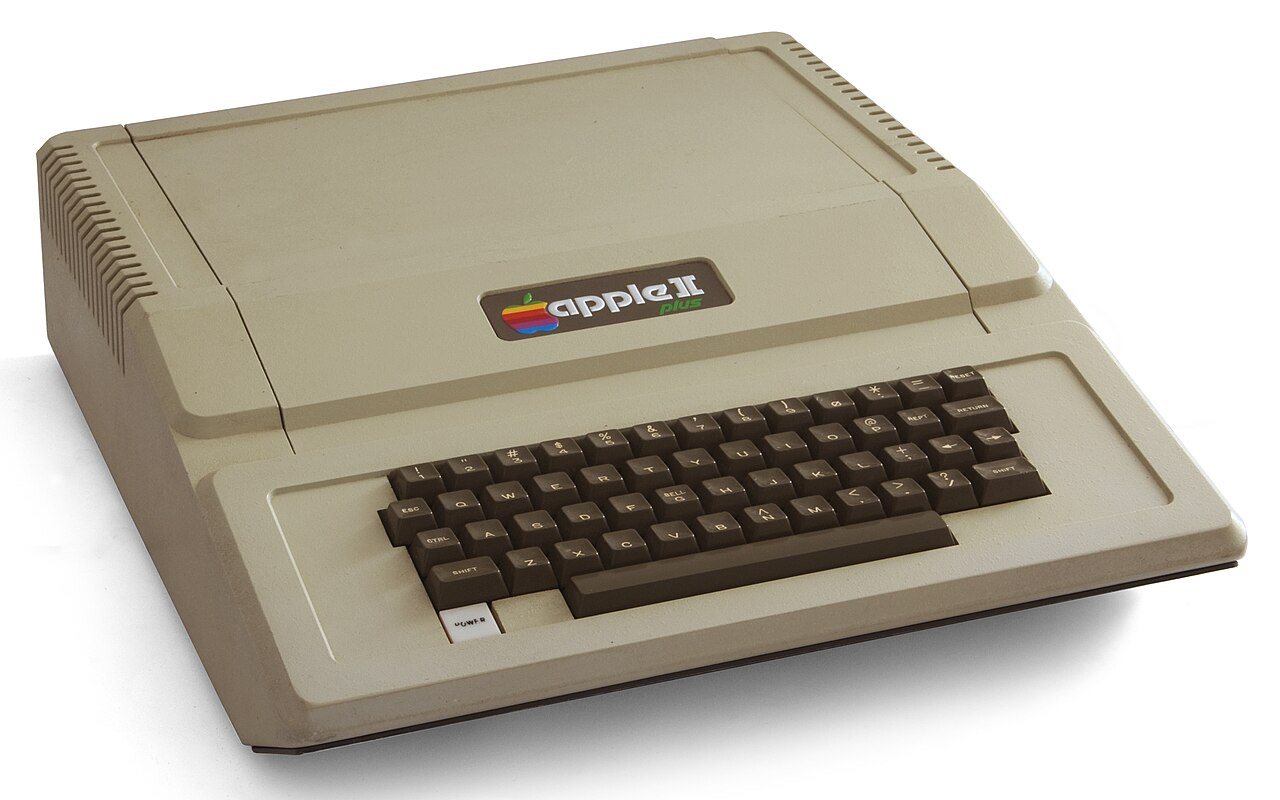
The numbers reveal the scale of what MECC accomplished. By the early 1980s, Oregon Trail accounted for roughly one-third of MECC's annual revenue, which hovered around $30 million. That means Oregon Trail alone was generating approximately $10 million per year for an educational nonprofit. More importantly, MECC had negotiated a contract with Apple in 1978 to supply 500 computers to Minnesota schools. That contract tied the Oregon Trail directly to the Apple II ecosystem at exactly the moment that ecosystem was about to expand nationally.
In 1979, MECC released Oregon Trail on the Apple II, distributed on a floppy disk labeled "Elementary Volume 6." The Apple II was becoming the computer of choice for American schools. It was affordable enough for district budgets. Teachers could use it for multiple subjects. By choosing to support this platform, MECC positioned Oregon Trail precisely where it needed to be to reach millions of students.
What's notable about MECC's approach is what they chose not to do. They didn't lock the software down with restrictive licensing. They didn't price it beyond school budgets. They didn't treat Oregon Trail as intellectual property to be maximized. They treated it as educational infrastructure to be distributed. The game succeeded because the organization behind it was designed for distribution, not extraction.
The 1985 Version: When Oregon Trail Became Universal
The 1985 release of Oregon Trail for the Apple II is the version most people remember. It had actual graphics: a pixelated covered wagon, green landscapes, river crossing animations, and the iconic death screens that were somehow both morbid and hilarious to an 11-year-old sitting in a school computer lab. "You have died of dysentery" became a phrase that transcended the game itself, entering the broader cultural vocabulary.
The 1985 version succeeded because it balanced accessibility with depth. The core mechanics remained unchanged from the 1971 original: manage your resources, set your pace, make decisions about hunting, trading, and river crossings. But the graphics made the experience more immersive without making it more complicated. Students could visualize what was happening. The covered wagon actually moved across the screen. Animals appeared when you hunted. Rivers looked like rivers.
Between 1985 and 1995, Oregon Trail achieved something unusual in software: near-universal cultural penetration within its target demographic. Nearly every American school child encountered it at some point. The game was discussed in newspaper articles, referenced on television, mentioned by parents who'd heard about it from their kids. Oregon Trail wasn't just popular educational software. It was the shared experience of an entire generation's relationship with computers.
The game worked as pedagogy because it respected its players. It didn't explain the westward expansion through text boxes or quizzes. It made students experience the economic and physical realities of frontier travel through consequential decision-making. If you went too fast, your oxen tired and people died. If you didn't buy enough food, you starved. If you tried to ford a deep river without adequate preparation, you lost supplies and sometimes lives. The game taught systems thinking through play: every decision had cascading consequences, and the only way to learn was to make mistakes and adjust.
This is essentially what modern game designers call "experiential learning," except MECC was doing it in 1985 without the vocabulary or the academic framework. They just knew it worked because students were engaged, and teachers reported better outcomes.
The Acquisition: When Mission Changed
In October 1995, SoftKey International acquired MECC for $370 million in stock. The deal made financial sense from SoftKey's perspective. MECC was profitable, had established distribution channels into schools, and owned the most recognized educational software brand in America. For SoftKey, it was a strategic consolidation play in a market they were attempting to dominate.
But the acquisition represented a fundamental shift in how Oregon Trail would be managed. MECC had been a nonprofit cooperative focused on educational access. SoftKey was a for-profit company focused on growth through acquisition and revenue optimization. The incentive structure changed completely. The question was no longer "how do we get this software into as many schools as possible?" It became "how do we extract maximum revenue from this software asset?"
SoftKey eventually became The Learning Company, which continued acquiring educational software publishers throughout the late 1990s. Oregon Trail was ported to Windows, Macintosh, and eventually CD-ROM formats. New versions were released with updated graphics and expanded features. The brand was extended into sequels and spinoffs. From a purely commercial standpoint, the strategy made sense.
The problem was subtler. Fragmenting Oregon Trail across platforms and versions dissolved the singular shared experience that had made it culturally powerful. A kid playing Oregon Trail II on a home Windows PC in 1998 had a different experience than a kid playing the 1985 Apple II version in a school lab. The game was being optimized for commercial distribution rather than for the institutional channels that had made it pervasive.
The Learning Company Collapse
The Learning Company went public during the dot-com era, positioning itself as an educational technology play with significant growth potential. The stock was promoted aggressively. But the company had serious operational problems beneath the surface. Acquisitions hadn't integrated smoothly. Revenue recognition practices were questionable. The company's growth story was built on buying other companies rather than organic expansion.
Mattel acquired The Learning Company in 1999 for $3.5 billion. Within a year, the acquisition was recognized as one of the worst in corporate history. The Learning Company lost $206 million in its first quarter under Mattel's ownership. By 2000, Mattel was writing down the entire acquisition. The CEO who approved the deal was forced out. The Learning Company was eventually sold off for a fraction of what Mattel had paid.
During this period, Oregon Trail was minimized. It became a legacy product in a portfolio being liquidated. The game that had been MECC's crown jewel became a line item in a bankruptcy proceeding. The irony is pointed: the game that had thrived under a nonprofit's stewardship became collateral damage in a series of corporate disasters driven by exactly the kind of speculative excess that nonprofits are designed to avoid.
By the mid-2000s, Oregon Trail's ownership had been scattered through multiple asset sales. Different companies held rights to different versions. The coherent development history that had stretched from 1971 to 1995 under MECC's care essentially ended. The game wasn't abandoned, exactly. It kept appearing in new forms, on new platforms, through new publishers. But the institutional continuity was gone.
Why Oregon Trail Worked When Most Educational Games Failed
The educational software market has always been littered with failures. Most educational games feel like homework wearing a costume. They prioritize curriculum compliance over engagement. They teach through repetition rather than experience. They treat students as passive recipients of information rather than active decision-makers.
Oregon Trail succeeded because it inverted this formula. The game didn't explain the westward expansion. It simulated the decision-making environment that real frontier travelers faced. The mechanics weren't educational scaffolding. They were the education itself. Understanding resource management, risk assessment, and trade-off analysis was the point, and the frontier setting provided the context that made those abstract concepts tangible.
The game also benefited from what might be called "institutional fit." MECC understood schools. They understood budgets, scheduling, hardware constraints, and teacher needs. They didn't try to sell Oregon Trail through consumer channels or mass marketing. They sold it through relationships with school districts, through integration with school hardware purchases, through a distribution model that matched how schools actually acquired software. The game reached students because the organization delivering it was designed to reach schools.
There's also a design lesson in the original's simplicity. Because the 1971 version was text-only, players had to engage their imagination. You weren't watching a story unfold on screen. You were making decisions about scenarios you had to visualize. That active engagement, that requirement for imagination, may have been more pedagogically effective than the graphically richer versions that followed.
The Digital Afterlife
Oregon Trail was inducted into the World Video Game Hall of Fame in 2016. The recognition placed it alongside Pac-Man, Tetris, and Doom as one of the most culturally significant games ever created. For a text-based educational simulation coded on a teletype in 1971, that's a remarkable trajectory.
The internet, which had marginalized Oregon Trail as an active teaching tool, paradoxically became its preservation mechanism. Emulators, web-based ports, and digital archives made various versions of the game accessible again. New generations could play it, not because a teacher assigned it, but because they wanted to understand what had been so important to their parents' generation.
Modern mobile versions have been released, including a 2021 Apple Arcade version commemorating the game's 50th anniversary. These versions update the graphics and interface while preserving the core mechanics. The franchise has generated over 65 million copies sold across all versions and platforms, making it one of the most successful educational products ever created.
What the digital afterlife revealed was that Oregon Trail's appeal wasn't primarily nostalgic. The core mechanic of managing resources under uncertainty, making calculated trade-offs between competing priorities, and living with the consequences of your decisions is genuinely timeless. It maps onto fundamental principles of decision theory and systems thinking. The frontier setting provided flavor, but the underlying structure was universal.
What Oregon Trail Teaches About Software Stewardship
The arc of the Oregon Trail game history offers a case study in how institutional values shape software outcomes. Under MECC's nonprofit stewardship, the game was treated as a public good. It was priced for accessibility, distributed through institutional channels, and maintained with educational mission as the primary objective. The result was three decades of cultural relevance and near-universal adoption in American schools.
Under commercial ownership, the game was treated as an asset. It was fragmented across platforms, extended into sequels of varying quality, and eventually caught up in corporate collapses that had nothing to do with the game itself. The software didn't fail. The organizations managing it failed, or more precisely, they succeeded at objectives that were misaligned with what had made the game valuable.
In the current era of debates about tech companies, platform governance, and the tension between public benefit and private profit, Oregon Trail provides a historical data point. The game worked best when it was managed by an organization whose mission was aligned with its users' needs. It declined when that alignment broke.
The 65 million copies figure is impressive, but the more meaningful statistic is harder to quantify: how many students learned to think in systems because a text-based game on a teletype made them manage oxen and ford rivers. That's the real legacy of what happened to Oregon Trail, and it's a legacy that no corporate restructuring can diminish.
Frequently Asked Questions
Who created Oregon Trail? Don Rawitsch, Bill Heinemann, and Paul Dillenberger created Oregon Trail on December 3, 1971. They were student teachers at Carleton College in Northfield, Minnesota. Rawitsch was teaching 8th grade history at Jordan Junior High School in Minneapolis and wanted to make the westward expansion more engaging for his students.
What computer was Oregon Trail originally written for? The original version was written for an HP 2100 minicomputer using HP Time-Shared BASIC. Players accessed it through a teletype terminal. The game was entirely text-based with no graphics.
What was MECC? MECC, the Minnesota Educational Computing Consortium, was a state-funded educational organization founded in 1973. MECC distributed Oregon Trail and other educational software to schools across Minnesota and eventually nationwide. MECC was acquired by SoftKey in October 1995 for $370 million in stock.
How many copies of Oregon Trail were sold? Over 65 million copies of Oregon Trail have been sold across all versions and platforms from 1971 through the present day, making it one of the most successful educational games in history.
What was the most popular version of Oregon Trail? The 1985 Apple II version is the most widely remembered. It featured color graphics, a visible covered wagon, hunting animations, and the famous "You have died of dysentery" death screen. This version was ubiquitous in American school computer labs throughout the late 1980s and early 1990s.
Why did Oregon Trail decline in popularity? Several factors contributed. The rise of home computers and the internet gave students access to more graphically sophisticated games. After MECC was acquired by SoftKey in 1995, the game's institutional distribution model was replaced by a commercial one. The subsequent collapse of The Learning Company, which inherited Oregon Trail through corporate acquisitions, scattered the game's ownership across multiple entities.
Is Oregon Trail still available today? Yes. Various versions are available including mobile apps, web-based emulations of classic versions, and a 2021 Apple Arcade release commemorating the 50th anniversary. The original versions can also be played through browser-based emulators and digital preservation sites.
Why was Oregon Trail inducted into the Video Game Hall of Fame? Oregon Trail was inducted into the World Video Game Hall of Fame in 2016 for its cultural impact, its influence on educational computing, and its longevity. The game demonstrated that educational software could be both engaging and pedagogically effective, influencing how an entire generation experienced computers in schools.
What made Oregon Trail different from other educational games? Most educational games teach through repetition or direct instruction. Oregon Trail taught through simulation and consequential decision-making. Players experienced the economic and physical realities of frontier travel by managing resources, assessing risks, and living with the outcomes of their choices. The game made abstract concepts like systems thinking and trade-off analysis tangible through play.