The iPod Wasn't the First MP3 Player. Here's Why It Won.

2026-04-03 by 404 Memory Found

Picture this: 2001, and your portable music setup probably involved either a Discman that skipped like it was tap dancing on a trampoline or a bulky MP3 player that made you feel like you were carrying around hospital equipment. Sony had dominated the personal audio space for two decades with the Walkman, this iconic little device that basically invented portable music. But then something shifted. On October 23, 2001, Steve Jobs walked onto a stage and announced something that would reshape not just how we listened to music, but what the concept of a music player could actually be.

The iPod, he told us, was "1,000 songs in your pocket." Simple slogan, sure, but for anyone who'd spent years managing massive CD collections or wrestling with the terrible interfaces on those early MP3 players, it sounded like someone had finally gotten the plot. The device hit stores on November 10, 2001, with a $399 price tag and a 5GB hard drive, and that is kind of insane when you think about it, because hard drives were expensive back then. This wasn't some budget gadget. This was a luxury product targeting Mac users specifically, which meant Apple was basically saying, "If you've got a Mac and disposable income, we've got something that will change your relationship with music." And they were right.

When MP3 Players Were Still a Joke

Here's the thing people sometimes forget: the iPod wasn't actually the first MP3 player. It wasn't even close. The Diamond Rio PMP300 came out way back in 1998, and while it seems quaint now, it was genuinely revolutionary at the time. It proved you could shrink music down and carry it around without a disc. Then in 2000, Creative released the Nomad Jukebox, which actually had a hard drive and could hold hundreds of songs. So why do we celebrate the iPod as the moment everything changed?

Because while those earlier devices existed, they were kind of terrible in ways that made people not really want to use them. The interfaces were confusing. Getting music onto them was a nightmare involving sketchy software and file format compatibility nightmares. The Nomad Jukebox was massive, like carrying around a portable CD changer from a 1990s car. These were products that technically did what they advertised, but they didn't actually solve the problem. They were solutions in search of a real use case.

Meanwhile, Apple had something different brewing. Tony Fadell had pitched the concept of an MP3 player built around a hard drive to other companies first, and they all passed. But when he brought it to Steve Jobs, something clicked. Jobs didn't just want to make an MP3 player. He wanted to make the MP3 player, the one that would feel inevitable in retrospect. Jon Rubinstein led the hardware side of things, and what they built was something that took the best components available at the time: Toshiba's 1.8-inch hard drive, a scroll wheel interface that actually made sense, and FireWire connectivity that was blindingly fast compared to USB 2.0 speeds.

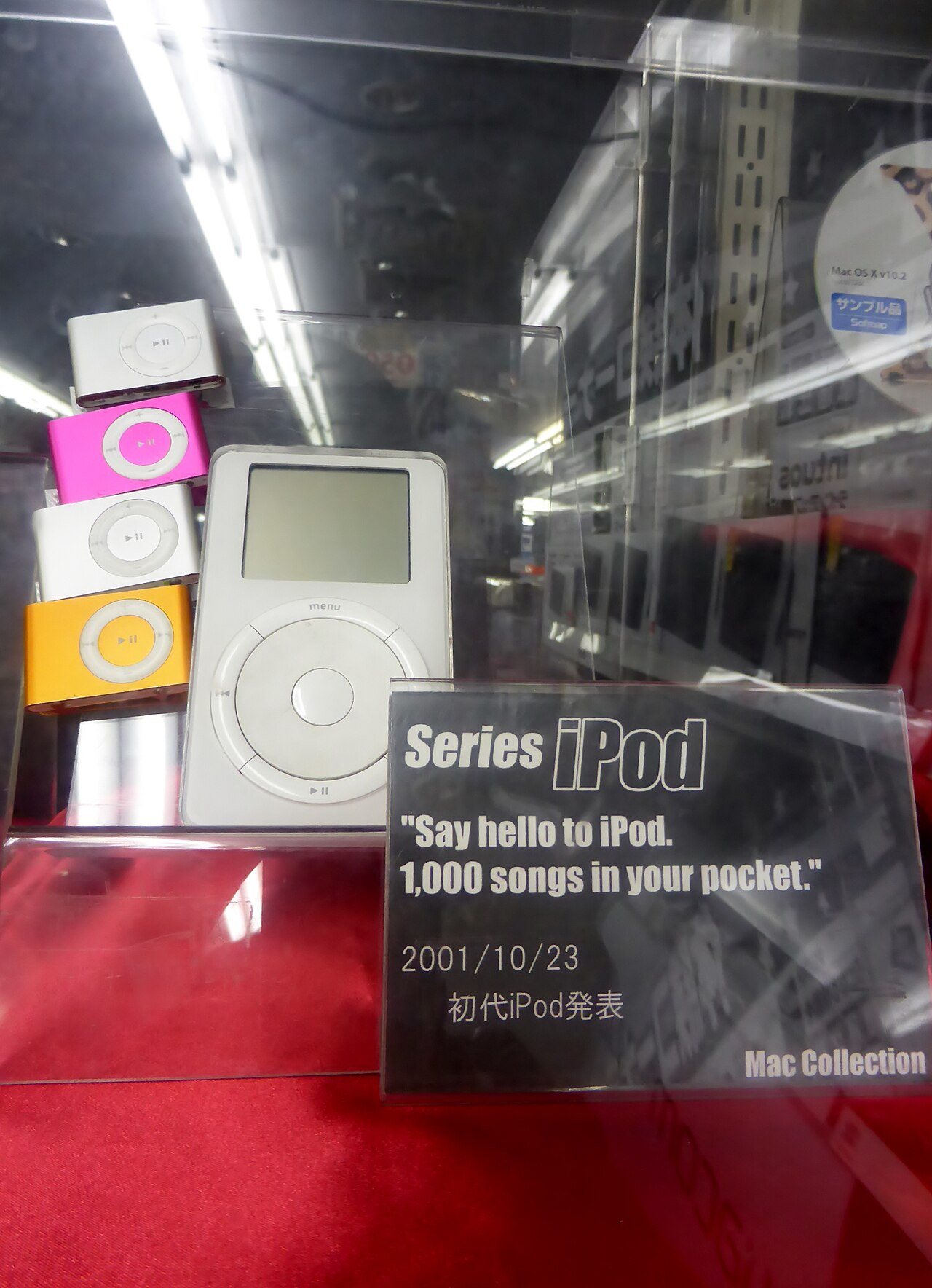
An original first-generation iPod from 2001
An original first-generation iPod from 2001. The device that put 1,000 songs in your pocket and changed the music industry forever.

That mechanical scroll wheel is worth mentioning because it was genuinely clever. You rolled your thumb around it to navigate menus and play your music. It felt good under your thumb, tactile in a way that touchscreens and buttons didn't quite capture. It was a small interaction, something you'd do hundreds of times a day, and Apple had spent engineering cycles getting it right. That's the kind of detail that separates a product from a device that just works. The original iPod was a device that felt good to use, which meant you actually wanted to carry it around and pull it out of your pocket.

The thing that really separated the iPod from its competitors was the ecosystem they built around it. And here's where it gets interesting. Apple didn't just make the hardware. They made iTunes, their media player software that made organizing and syncing music feel natural instead of like running software from a startup you'd never heard of. Plug your iPod in over FireWire, and iTunes would manage everything. It was frictionless in a way that made you wonder how everyone else was getting it so wrong.

The iTunes Revolution

But here's the thing about 2001 and 2002: there was this huge elephant in the room, and its name was the recording industry. People were downloading music illegally like crazy. Napster had blown up and subsequently gotten sued into oblivion, leaving behind this hunger for digital music that the major labels were absolutely terrified of. When you bought a CD, the artists got paid a small cut. When you downloaded music illegally, they got nothing. So the labels were paranoid, hostile, and completely unwilling to embrace digital distribution.

Until Steve Jobs showed up. In April 2003, the iTunes Store opened. Jobs had somehow convinced the major record labels that they should sell their music digitally, at 99 cents per song, with copy protection built in. It sounds quaint now, but at the time this was basically a miracle. The labels agreed because Jobs convinced them that copy protection would keep people from wholesale piracy, and because 99 cents was more profitable per song than the micro-fractions of a cent they made from CD sales. It was a legitimate win for everyone involved. Artists made money. The labels made money. Apple made money. And people who wanted to buy music legally finally had a good option.

The iPod became the hardware that made digital music collection feel less like theft and more like actually owning something. You could see your music library grow in iTunes. You could organize it however you wanted. You could burn CDs if you really needed physical media. The whole thing was elegant, and it made the iPod feel like an essential part of a legitimate music-listening lifestyle. Suddenly, going digital wasn't something you did because it was free and convenient. It was something you did because it was the right way to do things.

And the iTunes Store became insanely profitable. Not just for Apple, but it proved that people would pay for digital music if the system wasn't actively hostile to them. The labels learned a lesson they mostly ignored until streaming took over, but in that brief window from 2003 to maybe 2010, the iTunes Store showed that a paid digital music system could work.

The Click Wheel and the Lineup

But Apple wasn't content to rest on their laurels with a single product. In 2004, they introduced the iPod Mini, a smaller device with a capacitive click wheel instead of the original mechanical scroll wheel. The click wheel was a breakthrough. It meant you could have a smaller form factor without sacrificing control. You could navigate menus faster. It felt more responsive. And then they put that click wheel into the fourth-generation full-sized iPod, which meant you had basically the perfect music player hardware.

The fourth-generation iPod came in 20GB and 40GB versions. It had a monochrome LCD display because color screens would have destroyed battery life. The whole device was about 6.3 ounces, which is nothing. You could fit it in your pocket next to your keys and your wallet and forget it was there. But the battery lasted about 12 hours on a charge, which meant you could listen to music all day without thinking about it.

And here's where Apple got really creative. They understood that not everyone wanted a massive hard drive in their pocket. So they made the iPod Shuffle in January 2005, a device the size of a matchbox that held maybe 512MB or 1GB of music, no screen at all. It just shuffled songs randomly. Sounds limiting, right? But it was perfect for working out, for commuting on a bike, for situations where you didn't need to control what you listened to. You just wanted music.

That same year they introduced the iPod Nano in September, which replaced the Mini. It had a color display, was absurdly thin, and used flash memory instead of a hard drive. It became one of the best-selling music players Apple ever made. By the middle of the 2000s, Apple had basically covered every conceivable use case for a dedicated music player. You wanted tons of storage? iPod Classic. You wanted something small and colorful? Nano. You wanted the smallest possible device? Shuffle. They had the market completely segmented, and they dominated every segment.

The Silhouettes and Cultural Dominance

In 2003, Apple started running an advertising campaign that became iconic. The Silhouettes campaign. You'd see colorful backgrounds, bright neon greens and hot pinks, and silhouettes of people dancing with iPods. The white earbuds became the universal symbol of the device. Those earbuds were basically terrible by modern standards, but they were instantly recognizable. When you saw someone with white earbuds, you immediately knew they had an iPod. Apple had created a status symbol that signified cultural awareness and a certain aesthetic sensibility.

The campaign ran for years and became absolutely massive. You'd see it everywhere: billboards, magazine ads, bus stops, subway stations. And it worked because the iPod itself had become a cultural touchstone. Having an iPod meant you were someone who cared about music, who was tech-savvy enough to embrace digital distribution, who was fashionable enough to carry what was essentially a luxury consumer electronic. It was the must-have gadget of the 2000s in a way that's hard to overstate.

By 2007, the iPod had something like 70 percent market share of the digital music player market. That's basically total dominance. Other companies tried to compete. Samsung made players. Microsoft eventually released the Zune, which was actually a pretty decent device, but it came too late and with an inferior ecosystem. Creative made players with bigger screens and supposedly more features, but they lacked the integration with iTunes and the overall polish of the Apple product.

What Apple had done was essentially create a closed ecosystem that worked so well that most consumers didn't even think about alternatives. You bought an iPod, you used iTunes, you shopped on the iTunes Store for your music. It was all woven together so tightly that the idea of using a Samsung music player with some random Windows software just seemed wrong.

The Physical Experience of Owning an iPod

One of the things that's easy to forget about the iPod now is how good the physical experience of owning one actually was. The packaging was famously minimalist. You'd open the box and there would be the iPod, perfectly centered, with the earbuds and the cable underneath. It felt expensive. It felt like someone had thought carefully about how you'd first interact with this device, about the emotional impact of opening the package.

And then you'd pick it up. The weight was perfect, not too light like it was cheap plastic, but light enough that you could forget about it in your pocket. The scroll wheel had this perfect resistance to it. The screen would light up and show you your music library in this clean, organized way that made you actually want to scroll through your collection. Holding it felt good. Using it felt good.

The earbuds, the white ones, they were weird and uncomfortable for a lot of people, but they had this distinctive look. They became the signature accessory. And because they were relatively cheap to replace, you didn't feel devastated if you lost them or broke them. Apple sold replacement earbuds and better third-party options flooded the market. But those white earbuds remained iconic, the symbol of the iPod generation.

And the sounds. The click wheel made this subtle clicking sound as you navigated menus. The device would make a little chime when it connected to your computer. When you plugged in the earbuds, there was this satisfying connection. It was never about audiophile-grade sound. It was about having your whole music collection at your fingertips with acceptable fidelity and incredible convenience.

Windows Support and Going Global

Here's a moment that mattered more than people probably realized at the time. In 2002, Apple released the second-generation iPod, and for the first time, they added Windows support. Now, this might sound like a small thing, but it was actually massive. The first iPod was Mac-only, which meant it was inherently limited to Mac users. But by opening it up to Windows users, Apple quadrupled their addressable market.

And the Windows market was huge. The vast majority of personal computers in 2002 ran Windows. So suddenly, you didn't have to be a Mac enthusiast to own an iPod. You could be any regular person with a Dell or a HP laptop and still have access to the best music player on the market. It's one of the key reasons the iPod became so dominant. They weren't just selling to the Apple faithful. They were selling to everyone.

Peak iPod sales came in fiscal year 2008, when Apple sold 54.8 million units. Think about that for a second. They sold more iPods in a single year than most companies sell electronics in their entire existence. The device had become not just a market leader but a cultural juggernaut. Over 450 million iPods were sold across all models and generations. That's nearly one for every 15 people on the planet.

The Beginning of the End

But here's the thing about being on top of the world: you can very easily become the victim of your own success. And Apple, fortunately for them, was never really the complacent type. Because while the iPod was making them hundreds of millions of dollars, they were already working on the device that would make the iPod obsolete. The iPhone was in development, and when it launched in 2007, everything changed.

The iPhone had a touchscreen. It had internet connectivity. It could play music but it could also do basically everything else you might want a handheld device to do. And critically, it had access to iTunes. So you could manage your music library on your iPhone. You didn't need a separate device anymore. The iPod became redundant, which is the kind of thing that would devastate most companies but Apple treated it as basically fine because they were the ones making the iPhones.

It took a few years for people to fully transition away from dedicated iPod devices. There was still demand for the iPod Classic, the big high-storage model for people who had massive music libraries. But eventually, as smartphones got better storage and better battery life, even that became unnecessary. Apple discontinued the iPod Classic on September 9, 2014. Tim Cook later explained it was because the parts were simply unavailable and consumer interest had shrunk.

By May 2022, the last iPod model, the iPod Touch, was discontinued. An era ended. But the thing is, the iPod didn't really go away. It transformed. Every iPhone is basically an iPod. The ecosystem that Apple built around music and iTunes transformed into the ecosystem around the iPhone and the App Store. The thing that made the iPod great, the tight integration between hardware and software and content, all of that got absorbed into the smartphone.

What Made It Actually Matter

So why do people still talk about the iPod with this kind of affection and nostalgia? It wasn't because it was the first MP3 player. It wasn't even the most technically advanced in a lot of respects. It mattered because Apple understood something fundamental about how people actually wanted to interact with technology.

They understood that you didn't want to spend hours configuring software. You wanted to plug in your device and have it just work. They understood that you'd pay a premium for something that was designed well and felt good in your hand. They understood that the experience of using something mattered as much as the specs on the box. And they understood that you'd be willing to participate in a closed ecosystem if that ecosystem actually offered real value.

The iPod basically invented the model of the tech company as lifestyle brand. Before the iPod, tech companies made products. Apple, with the iPod, showed that you could make something that people actually wanted to own as a statement about who they were. The white earbuds became iconic not because they were technically superior, but because they were distinctive and they signified cultural membership. You had an iPod because you were the kind of person who owned an iPod.

The iPod also fundamentally changed the music industry. By proving that people would pay for digital music through iTunes, it created a model that persisted for over a decade and that influenced streaming services that came later. Spotify and Apple Music and YouTube Music, they all exist in part because the iPod and iTunes showed that digital music distribution was viable and valuable.

The first-generation iPod with its mechanical scroll wheel and monochrome display
The first-generation iPod with its mechanical scroll wheel and monochrome display. The scroll wheel, which you physically turned with your thumb, was replaced by touch-sensitive versions in later models.

The iPod probably won't come back as a device. The iPhone does everything it did and more. But the legacy of the iPod lives on in how we think about music, how we think about consumer electronics, and how we think about the relationship between the devices we carry and our identities. It was a product that mattered beyond its function, and in the tech world, that's something you can count on one hand.

Frequently Asked Questions

When did the original iPod launch?

Steve Jobs announced the iPod on October 23, 2001. It became available for purchase on November 10, 2001. This was Mac-only initially, with Windows support added in 2002 with the second-generation model.

How much storage did the first iPod have?

The original iPod came with a 5GB hard drive, which Apple marketed as holding "1,000 songs." The device cost $399 at launch, which was genuinely expensive for a consumer electronics device in 2001.

Why was the iPod better than earlier MP3 players like the Creative Nomad?

While devices like the Diamond Rio and Creative Nomad Jukebox existed first, the iPod succeeded because of superior design, better software integration with iTunes, and a tighter ecosystem. Apple made the whole experience, from unboxing to syncing to buying music, feel seamless and premium.

What was the click wheel?

The click wheel was a capacitive touch interface that replaced the mechanical scroll wheel, introduced with the iPod Mini in 2004 and then added to the fourth-generation full-sized iPod. It allowed faster menu navigation and worked better in smaller form factors.

How did the iTunes Store change the music industry?

The iTunes Store, launched April 28, 2003, was the first legitimate digital music store to convince major record labels to sell music online at 99 cents per song. It proved people would pay for digital music and influenced how music distribution worked for the next fifteen years.

When did iPod sales peak?

Peak iPod sales occurred in fiscal year 2008, when Apple sold 54.8 million units. The device dominated the portable music player market with over 70 percent market share during its peak years.

When did Apple discontinue the iPod?

The iPod Classic was discontinued on September 9, 2014. The iPod Touch, the final model, was discontinued in May 2022, ending the iPod product line entirely.

How many total iPods were sold?

Apple sold over 450 million iPods across all models and generations throughout the product's lifespan, making it one of the best-selling consumer electronics devices of all time.

Related Posts:
← Back to Blog

The iPod Wasn't the First MP3 Player. Here's Why It Won. | 404 Memory Found

📖 The iPod Wasn't the First MP3 Player. Here's Why It Won.

Picture this: 2001, and your portable music setup probably involved either a Discman that skipped like it was tap dancing on a trampoline or a bulky MP3 player that made you feel like you were carrying around hospital equipment. Sony had dominated the personal audio space for two decades with the Walkman, this iconic little device that basically invented portable music. But then something shifted. On October 23, 2001, Steve Jobs walked onto a stage and announced something that would reshape not just how we listened to music, but what the concept of a music player could actually be.

The iPod, he told us, was "1,000 songs in your pocket." Simple slogan, sure, but for anyone who'd spent years managing massive CD collections or wrestling with the terrible interfaces on those early MP3 players, it sounded like someone had finally gotten the plot. The device hit stores on November 10, 2001, with a $399 price tag and a 5GB hard drive, and that is kind of insane when you think about it, because hard drives were expensive back then. This wasn't some budget gadget. This was a luxury product targeting Mac users specifically, which meant Apple was basically saying, "If you've got a Mac and disposable income, we've got something that will change your relationship with music." And they were right.

When MP3 Players Were Still a Joke

Here's the thing people sometimes forget: the iPod wasn't actually the first MP3 player. It wasn't even close. The Diamond Rio PMP300 came out way back in 1998, and while it seems quaint now, it was genuinely revolutionary at the time. It proved you could shrink music down and carry it around without a disc. Then in 2000, Creative released the Nomad Jukebox, which actually had a hard drive and could hold hundreds of songs. So why do we celebrate the iPod as the moment everything changed?

Because while those earlier devices existed, they were kind of terrible in ways that made people not really want to use them. The interfaces were confusing. Getting music onto them was a nightmare involving sketchy software and file format compatibility nightmares. The Nomad Jukebox was massive, like carrying around a portable CD changer from a 1990s car. These were products that technically did what they advertised, but they didn't actually solve the problem. They were solutions in search of a real use case.

Meanwhile, Apple had something different brewing. Tony Fadell had pitched the concept of an MP3 player built around a hard drive to other companies first, and they all passed. But when he brought it to Steve Jobs, something clicked. Jobs didn't just want to make an MP3 player. He wanted to make the MP3 player, the one that would feel inevitable in retrospect. Jon Rubinstein led the hardware side of things, and what they built was something that took the best components available at the time: Toshiba's 1.8-inch hard drive, a scroll wheel interface that actually made sense, and FireWire connectivity that was blindingly fast compared to USB 2.0 speeds.

An original first-generation iPod from 2001
An original first-generation iPod from 2001. The device that put 1,000 songs in your pocket and changed the music industry forever.

That mechanical scroll wheel is worth mentioning because it was genuinely clever. You rolled your thumb around it to navigate menus and play your music. It felt good under your thumb, tactile in a way that touchscreens and buttons didn't quite capture. It was a small interaction, something you'd do hundreds of times a day, and Apple had spent engineering cycles getting it right. That's the kind of detail that separates a product from a device that just works. The original iPod was a device that felt good to use, which meant you actually wanted to carry it around and pull it out of your pocket.

The thing that really separated the iPod from its competitors was the ecosystem they built around it. And here's where it gets interesting. Apple didn't just make the hardware. They made iTunes, their media player software that made organizing and syncing music feel natural instead of like running software from a startup you'd never heard of. Plug your iPod in over FireWire, and iTunes would manage everything. It was frictionless in a way that made you wonder how everyone else was getting it so wrong.

The iTunes Revolution

But here's the thing about 2001 and 2002: there was this huge elephant in the room, and its name was the recording industry. People were downloading music illegally like crazy. Napster had blown up and subsequently gotten sued into oblivion, leaving behind this hunger for digital music that the major labels were absolutely terrified of. When you bought a CD, the artists got paid a small cut. When you downloaded music illegally, they got nothing. So the labels were paranoid, hostile, and completely unwilling to embrace digital distribution.

Until Steve Jobs showed up. In April 2003, the iTunes Store opened. Jobs had somehow convinced the major record labels that they should sell their music digitally, at 99 cents per song, with copy protection built in. It sounds quaint now, but at the time this was basically a miracle. The labels agreed because Jobs convinced them that copy protection would keep people from wholesale piracy, and because 99 cents was more profitable per song than the micro-fractions of a cent they made from CD sales. It was a legitimate win for everyone involved. Artists made money. The labels made money. Apple made money. And people who wanted to buy music legally finally had a good option.

The iPod became the hardware that made digital music collection feel less like theft and more like actually owning something. You could see your music library grow in iTunes. You could organize it however you wanted. You could burn CDs if you really needed physical media. The whole thing was elegant, and it made the iPod feel like an essential part of a legitimate music-listening lifestyle. Suddenly, going digital wasn't something you did because it was free and convenient. It was something you did because it was the right way to do things.

And the iTunes Store became insanely profitable. Not just for Apple, but it proved that people would pay for digital music if the system wasn't actively hostile to them. The labels learned a lesson they mostly ignored until streaming took over, but in that brief window from 2003 to maybe 2010, the iTunes Store showed that a paid digital music system could work.

The Click Wheel and the Lineup

But Apple wasn't content to rest on their laurels with a single product. In 2004, they introduced the iPod Mini, a smaller device with a capacitive click wheel instead of the original mechanical scroll wheel. The click wheel was a breakthrough. It meant you could have a smaller form factor without sacrificing control. You could navigate menus faster. It felt more responsive. And then they put that click wheel into the fourth-generation full-sized iPod, which meant you had basically the perfect music player hardware.

The fourth-generation iPod came in 20GB and 40GB versions. It had a monochrome LCD display because color screens would have destroyed battery life. The whole device was about 6.3 ounces, which is nothing. You could fit it in your pocket next to your keys and your wallet and forget it was there. But the battery lasted about 12 hours on a charge, which meant you could listen to music all day without thinking about it.

And here's where Apple got really creative. They understood that not everyone wanted a massive hard drive in their pocket. So they made the iPod Shuffle in January 2005, a device the size of a matchbox that held maybe 512MB or 1GB of music, no screen at all. It just shuffled songs randomly. Sounds limiting, right? But it was perfect for working out, for commuting on a bike, for situations where you didn't need to control what you listened to. You just wanted music.

That same year they introduced the iPod Nano in September, which replaced the Mini. It had a color display, was absurdly thin, and used flash memory instead of a hard drive. It became one of the best-selling music players Apple ever made. By the middle of the 2000s, Apple had basically covered every conceivable use case for a dedicated music player. You wanted tons of storage? iPod Classic. You wanted something small and colorful? Nano. You wanted the smallest possible device? Shuffle. They had the market completely segmented, and they dominated every segment.

The Silhouettes and Cultural Dominance

In 2003, Apple started running an advertising campaign that became iconic. The Silhouettes campaign. You'd see colorful backgrounds, bright neon greens and hot pinks, and silhouettes of people dancing with iPods. The white earbuds became the universal symbol of the device. Those earbuds were basically terrible by modern standards, but they were instantly recognizable. When you saw someone with white earbuds, you immediately knew they had an iPod. Apple had created a status symbol that signified cultural awareness and a certain aesthetic sensibility.

The campaign ran for years and became absolutely massive. You'd see it everywhere: billboards, magazine ads, bus stops, subway stations. And it worked because the iPod itself had become a cultural touchstone. Having an iPod meant you were someone who cared about music, who was tech-savvy enough to embrace digital distribution, who was fashionable enough to carry what was essentially a luxury consumer electronic. It was the must-have gadget of the 2000s in a way that's hard to overstate.

By 2007, the iPod had something like 70 percent market share of the digital music player market. That's basically total dominance. Other companies tried to compete. Samsung made players. Microsoft eventually released the Zune, which was actually a pretty decent device, but it came too late and with an inferior ecosystem. Creative made players with bigger screens and supposedly more features, but they lacked the integration with iTunes and the overall polish of the Apple product.

What Apple had done was essentially create a closed ecosystem that worked so well that most consumers didn't even think about alternatives. You bought an iPod, you used iTunes, you shopped on the iTunes Store for your music. It was all woven together so tightly that the idea of using a Samsung music player with some random Windows software just seemed wrong.

The Physical Experience of Owning an iPod

One of the things that's easy to forget about the iPod now is how good the physical experience of owning one actually was. The packaging was famously minimalist. You'd open the box and there would be the iPod, perfectly centered, with the earbuds and the cable underneath. It felt expensive. It felt like someone had thought carefully about how you'd first interact with this device, about the emotional impact of opening the package.

And then you'd pick it up. The weight was perfect, not too light like it was cheap plastic, but light enough that you could forget about it in your pocket. The scroll wheel had this perfect resistance to it. The screen would light up and show you your music library in this clean, organized way that made you actually want to scroll through your collection. Holding it felt good. Using it felt good.

The earbuds, the white ones, they were weird and uncomfortable for a lot of people, but they had this distinctive look. They became the signature accessory. And because they were relatively cheap to replace, you didn't feel devastated if you lost them or broke them. Apple sold replacement earbuds and better third-party options flooded the market. But those white earbuds remained iconic, the symbol of the iPod generation.

And the sounds. The click wheel made this subtle clicking sound as you navigated menus. The device would make a little chime when it connected to your computer. When you plugged in the earbuds, there was this satisfying connection. It was never about audiophile-grade sound. It was about having your whole music collection at your fingertips with acceptable fidelity and incredible convenience.

Windows Support and Going Global

Here's a moment that mattered more than people probably realized at the time. In 2002, Apple released the second-generation iPod, and for the first time, they added Windows support. Now, this might sound like a small thing, but it was actually massive. The first iPod was Mac-only, which meant it was inherently limited to Mac users. But by opening it up to Windows users, Apple quadrupled their addressable market.

And the Windows market was huge. The vast majority of personal computers in 2002 ran Windows. So suddenly, you didn't have to be a Mac enthusiast to own an iPod. You could be any regular person with a Dell or a HP laptop and still have access to the best music player on the market. It's one of the key reasons the iPod became so dominant. They weren't just selling to the Apple faithful. They were selling to everyone.

Peak iPod sales came in fiscal year 2008, when Apple sold 54.8 million units. Think about that for a second. They sold more iPods in a single year than most companies sell electronics in their entire existence. The device had become not just a market leader but a cultural juggernaut. Over 450 million iPods were sold across all models and generations. That's nearly one for every 15 people on the planet.

The Beginning of the End

But here's the thing about being on top of the world: you can very easily become the victim of your own success. And Apple, fortunately for them, was never really the complacent type. Because while the iPod was making them hundreds of millions of dollars, they were already working on the device that would make the iPod obsolete. The iPhone was in development, and when it launched in 2007, everything changed.

The iPhone had a touchscreen. It had internet connectivity. It could play music but it could also do basically everything else you might want a handheld device to do. And critically, it had access to iTunes. So you could manage your music library on your iPhone. You didn't need a separate device anymore. The iPod became redundant, which is the kind of thing that would devastate most companies but Apple treated it as basically fine because they were the ones making the iPhones.

It took a few years for people to fully transition away from dedicated iPod devices. There was still demand for the iPod Classic, the big high-storage model for people who had massive music libraries. But eventually, as smartphones got better storage and better battery life, even that became unnecessary. Apple discontinued the iPod Classic on September 9, 2014. Tim Cook later explained it was because the parts were simply unavailable and consumer interest had shrunk.

By May 2022, the last iPod model, the iPod Touch, was discontinued. An era ended. But the thing is, the iPod didn't really go away. It transformed. Every iPhone is basically an iPod. The ecosystem that Apple built around music and iTunes transformed into the ecosystem around the iPhone and the App Store. The thing that made the iPod great, the tight integration between hardware and software and content, all of that got absorbed into the smartphone.

What Made It Actually Matter

So why do people still talk about the iPod with this kind of affection and nostalgia? It wasn't because it was the first MP3 player. It wasn't even the most technically advanced in a lot of respects. It mattered because Apple understood something fundamental about how people actually wanted to interact with technology.

They understood that you didn't want to spend hours configuring software. You wanted to plug in your device and have it just work. They understood that you'd pay a premium for something that was designed well and felt good in your hand. They understood that the experience of using something mattered as much as the specs on the box. And they understood that you'd be willing to participate in a closed ecosystem if that ecosystem actually offered real value.

The iPod basically invented the model of the tech company as lifestyle brand. Before the iPod, tech companies made products. Apple, with the iPod, showed that you could make something that people actually wanted to own as a statement about who they were. The white earbuds became iconic not because they were technically superior, but because they were distinctive and they signified cultural membership. You had an iPod because you were the kind of person who owned an iPod.

The iPod also fundamentally changed the music industry. By proving that people would pay for digital music through iTunes, it created a model that persisted for over a decade and that influenced streaming services that came later. Spotify and Apple Music and YouTube Music, they all exist in part because the iPod and iTunes showed that digital music distribution was viable and valuable.

The first-generation iPod with its mechanical scroll wheel and monochrome display
The first-generation iPod with its mechanical scroll wheel and monochrome display. The scroll wheel, which you physically turned with your thumb, was replaced by touch-sensitive versions in later models.

The iPod probably won't come back as a device. The iPhone does everything it did and more. But the legacy of the iPod lives on in how we think about music, how we think about consumer electronics, and how we think about the relationship between the devices we carry and our identities. It was a product that mattered beyond its function, and in the tech world, that's something you can count on one hand.

Frequently Asked Questions

When did the original iPod launch?

Steve Jobs announced the iPod on October 23, 2001. It became available for purchase on November 10, 2001. This was Mac-only initially, with Windows support added in 2002 with the second-generation model.

How much storage did the first iPod have?

The original iPod came with a 5GB hard drive, which Apple marketed as holding "1,000 songs." The device cost $399 at launch, which was genuinely expensive for a consumer electronics device in 2001.

Why was the iPod better than earlier MP3 players like the Creative Nomad?

While devices like the Diamond Rio and Creative Nomad Jukebox existed first, the iPod succeeded because of superior design, better software integration with iTunes, and a tighter ecosystem. Apple made the whole experience, from unboxing to syncing to buying music, feel seamless and premium.

What was the click wheel?

The click wheel was a capacitive touch interface that replaced the mechanical scroll wheel, introduced with the iPod Mini in 2004 and then added to the fourth-generation full-sized iPod. It allowed faster menu navigation and worked better in smaller form factors.

How did the iTunes Store change the music industry?

The iTunes Store, launched April 28, 2003, was the first legitimate digital music store to convince major record labels to sell music online at 99 cents per song. It proved people would pay for digital music and influenced how music distribution worked for the next fifteen years.

When did iPod sales peak?

Peak iPod sales occurred in fiscal year 2008, when Apple sold 54.8 million units. The device dominated the portable music player market with over 70 percent market share during its peak years.

When did Apple discontinue the iPod?

The iPod Classic was discontinued on September 9, 2014. The iPod Touch, the final model, was discontinued in May 2022, ending the iPod product line entirely.

How many total iPods were sold?

Apple sold over 450 million iPods across all models and generations throughout the product's lifespan, making it one of the best-selling consumer electronics devices of all time.

← Back to Blog
00:00