What Happened to the Sony Discman, the CD Player That Changed Music

Picture this. It is 1996, and you are sitting in the back seat of your parents' minivan on a road trip to your aunt's house three hours away. You have got a Sony Discman balanced on your knee, a burnt CD of songs you recorded off the radio using Windows Sound Recorder, and a pair of those terrible foam-pad headphones that came in the box. Every time your dad hits a pothole, the music skips. You press the disc down with your thumb through the closed lid, hoping that somehow applying pressure will keep the laser on track. It does not work. It never works. But you do it anyway, because this is the closest thing to freedom you have ever felt.

If you grew up in the 1990s, you know exactly what I am talking about. The Sony Discman was not just a portable CD player. It was a rite of passage. It was the device that sat between the cassette Walkman and the iPod, bridging two completely different eras of how we listened to music. And for about fifteen years, it was everywhere. School buses, gym locker rooms, airport terminals, and every single car that did not have a CD player built into the dashboard. The Discman was the soundtrack device of an entire generation.

And then it vanished. Not with a dramatic death or a corporate scandal. It just quietly stopped being relevant. So what happened?
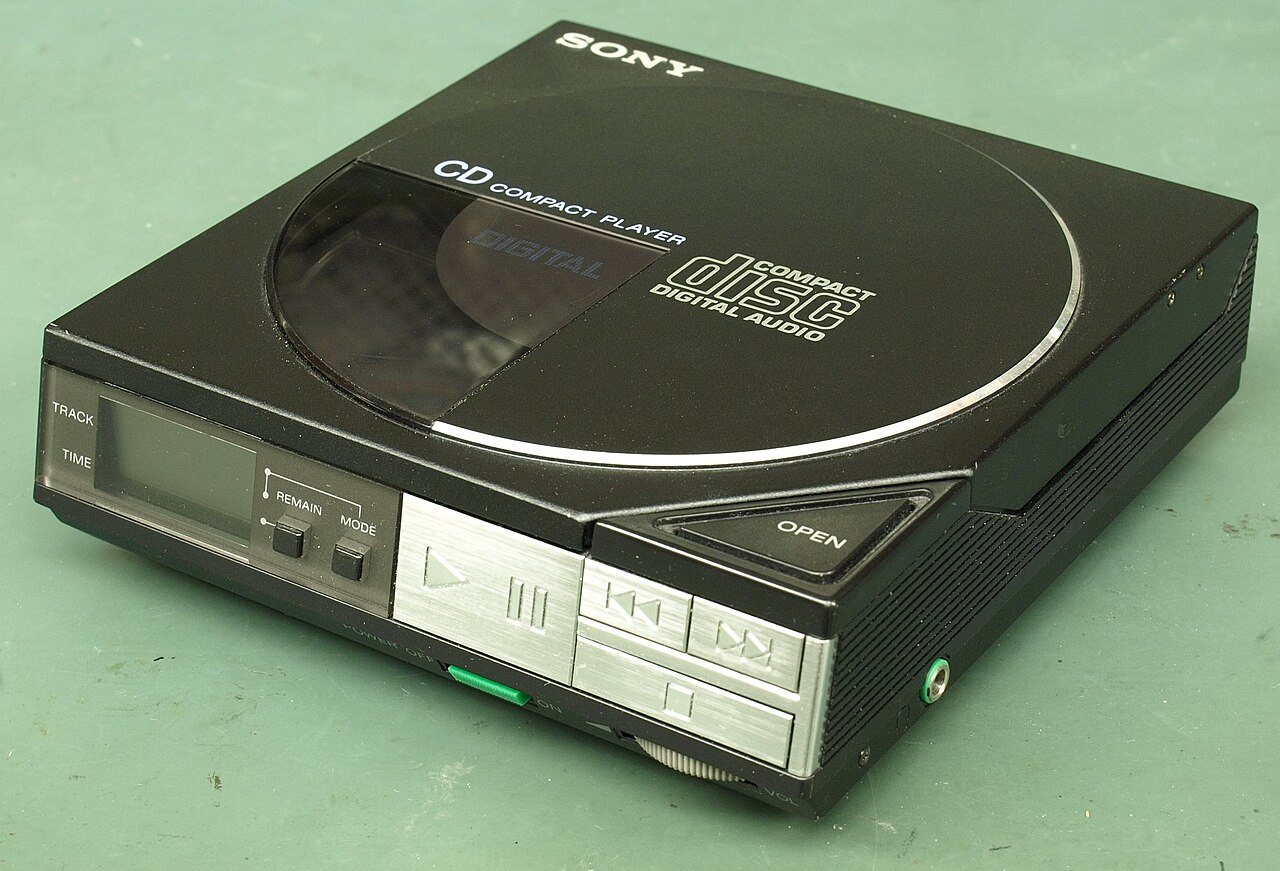
The original Sony D-50 Discman portable CD player from 1984
The Sony D-50, released in November 1984, was the world's first portable CD player. It retailed for around $350 and was roughly the size of four stacked CD cases.

The Birth of the Discman: November 1984

The story of the Discman starts with a guy named Kozo Ohsone, the same Sony engineer who had led the development of the original Walkman. Ohsone looked at the compact disc, which Sony had co-developed with Philips and launched commercially in 1982, and asked a simple question: can we make this portable? The answer, at first, was basically "not really." CD players in 1982 were large, expensive, and extremely sensitive to vibration. The idea of carrying one around in your bag seemed borderline absurd.

But Sony did it anyway. In November 1984, they released the D-50, also known as the D-5 in some markets. It was the world's first portable CD player. It cost 49,800 yen in Japan, which translated to about $350 in the United States. For context, that is roughly $1,050 in today's money. You were paying a thousand bucks, adjusted for inflation, to carry around a device that skipped if you looked at it wrong. And people bought it. Not in massive numbers at first, but enough that Sony knew they were onto something.

The D-50 was not exactly pocket-sized. It was about the dimensions of four CD jewel cases stacked on top of each other, and it weighed just over a pound. The battery life was rough. The skip problem was real from day one. But here is the thing: it played compact discs. Away from your home stereo. In 1984, that was genuinely revolutionary. CDs themselves were still a new format, and most people were still buying cassettes. The idea that you could take this shiny, futuristic silver disc and play it on the bus was the kind of thing that made you the coolest person in your friend group.

The 1990s: When Everyone Had One

The Discman did not really become a mass-market product until the early 1990s. Through the late 1980s, Sony kept iterating on the design, making it smaller, lighter, and cheaper. By 1990, you could get a basic portable CD player for under $200. By the mid-90s, the price had dropped to around $50 to $100 for a decent model, and that is when the floodgates opened.

And it was not just Sony anymore. Panasonic, Aiwa, Philips, JVC, and a dozen other brands were making portable CD players. The market exploded. By the mid-1990s, portable CD players were outselling portable cassette players for the first time. The Walkman, Sony's own legendary product, was being cannibalized by its younger sibling. Which is kind of insane when you think about it. Sony was essentially competing with itself, and the CD player was winning.

The 1990s Discman experience was defined by a few universal truths. First, the skip problem. Every single person who owned a portable CD player has a skip story. Walking too fast? Skip. Jogging? Forget about it. Riding a bike? You might as well have been listening to a remix. The mechanical reality of a portable CD player is that a tiny laser has to read data off a spinning disc, and any vibration disrupts that process. It was a fundamental engineering challenge that Sony and every other manufacturer struggled with for years.

Second, the accessories. The car cassette adapter was maybe the most important peripheral of the 1990s. If your car had a tape deck but no CD player, you could buy this little gadget that looked like a cassette tape with a wire coming out of it, plug it into your Discman's headphone jack, and suddenly your car stereo was playing CDs. It was janky, the audio quality was mediocre at best, and the wire was always getting caught on the gear shift. But it worked. And for millions of people, it was the bridge between old car technology and new music technology.

Third, the CD binder. Nobody carried around jewel cases. You had a zippered nylon binder, usually black, that held anywhere from 24 to 128 discs in those clear plastic sleeves. Your entire music collection, organized however you wanted. Mine was organized by genre, then alphabetically, which in retrospect was way too much effort for a thirteen-year-old. But that binder was sacred. Losing your CD binder was a genuine tragedy. People mourned those things.

The Anti-Skip Revolution: ESP and G-Protection

Sony knew the skipping problem was killing them. People loved the idea of portable CD music but hated the reality of it. So in the early 1990s, they started working on electronic skip protection, which they branded as ESP. The concept was clever: instead of playing music directly from the disc in real time, the player would read ahead and store several seconds of audio in a RAM buffer. If the laser got knocked off track by a bump or vibration, the player could keep playing from the buffer while the laser found its place again.

The first generation of ESP, which showed up around 1992 to 1994, gave you about three seconds of buffer. Three seconds. That sounds pathetic now, but at the time it was a revelation. Three seconds of bump protection meant that a casual walk would not cause skips anymore. It did not help much on a bumpy bus ride, but for everyday carrying, it was a game changer.

By the mid-1990s, the buffer had grown to ten seconds, then twenty, then forty. Sony's D-777 model from 1995 featured a ten-second anti-skip buffer, and it was considered a premium feature. The RAM required to store that much uncompressed CD audio was expensive. We are talking about an era when a desktop computer might have 4 to 8 megabytes of RAM total, and Sony was cramming 1.5 megabytes of buffer RAM into a portable music player just to solve the skip problem.

By the late 1990s and early 2000s, anti-skip technology had gotten legitimately good. Sony introduced G-Protection, their advanced version of ESP, and buffer times climbed to 45 seconds, then 60, then 120 for MP3-CD players. The skip problem that had defined the Discman experience for a decade was, for all practical purposes, solved. You could jog with a late-model Discman and it would keep playing. The irony is that by the time they finally fixed the biggest complaint about portable CD players, the format was already on its way out.
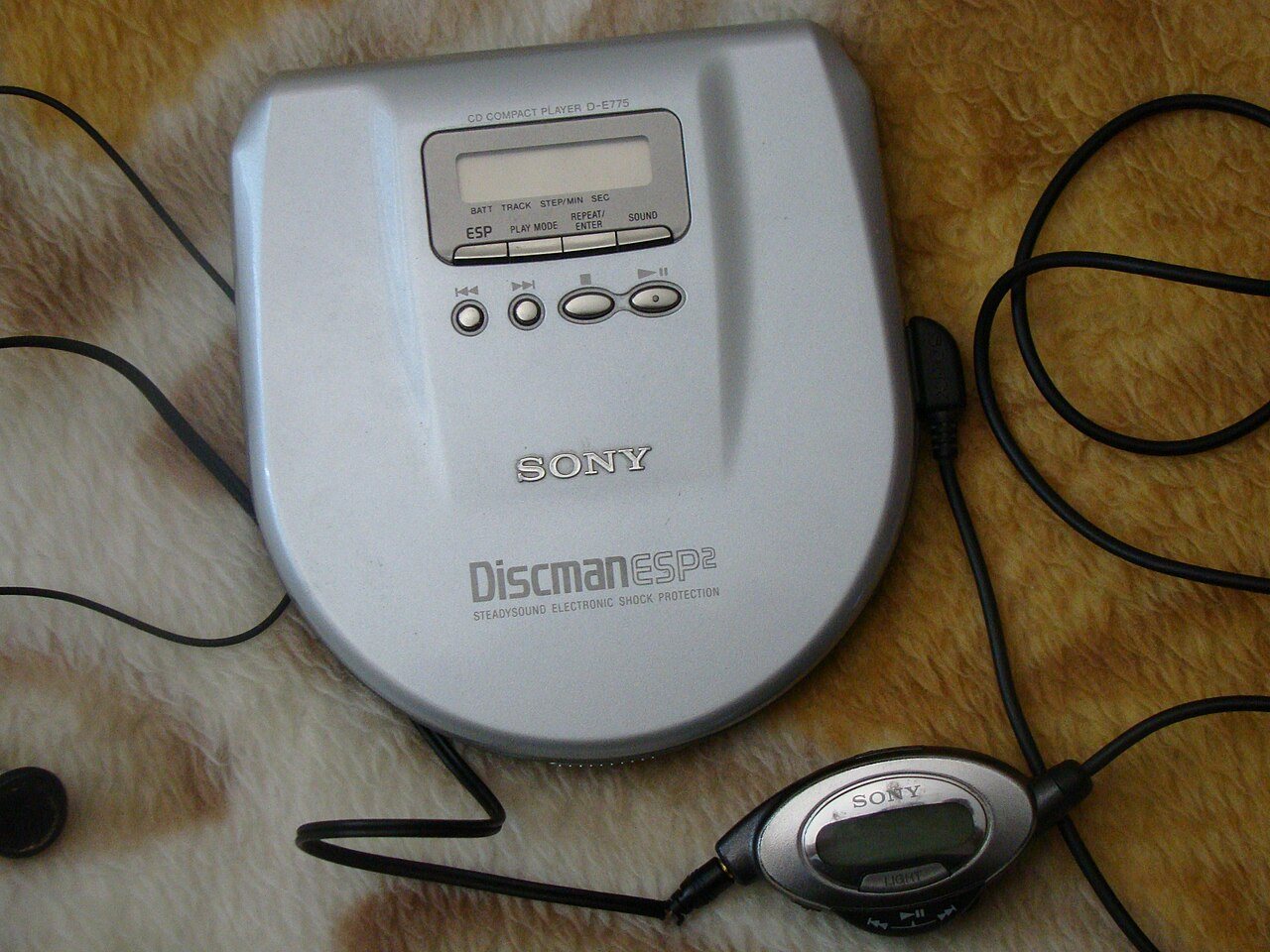
A later-model Sony Discman D-E775 with advanced anti-skip protection
A later-generation Sony Discman, the D-E775. By this era, anti-skip protection had evolved from a three-second buffer to over forty seconds of shock resistance.

The Name Game: Discman to CD Walkman

Here is a detail that most people do not know. Sony actually retired the "Discman" brand name in 2000. After that, all of their portable CD players were marketed under the "CD Walkman" name, folding them back into the Walkman family. The reasoning made sense from a branding perspective. "Walkman" was one of the most recognized brand names on the planet, and Sony wanted to consolidate everything portable under that umbrella. But culturally, nobody cared. Everyone still called them Discmans. The name had become generic, like Kleenex or Band-Aid. You did not say "hand me my CD Walkman." You said "where's my Discman?" And that is how most people still remember them.

The Peak: 1997 to 2001

The golden age of the Discman, if you want to pin it down, was roughly 1997 to 2001. This was the period when portable CD players were at their cheapest, most reliable, and most ubiquitous. The skip protection was good enough for daily use. The prices had dropped to a point where a basic model cost $30 to $40 at Walmart. And CDs themselves were at the absolute peak of their commercial dominance. In 1999, the U.S. music industry hit its all-time peak for CD revenue, with CD sales generating roughly $13 billion of the industry's record $14.6 billion total. The format had never been bigger, and it would never be this big again.

Think about what the world looked like during peak Discman era. Napster had just launched but had not yet destroyed the music industry's business model. The iPod did not exist yet. Streaming was a fantasy. If you wanted to listen to music away from your home stereo or car, you had two choices: a portable cassette player or a portable CD player. And by 1999, the choice was obvious. CD audio quality was vastly superior to cassette. CDs did not degrade with repeated plays. You could skip to any track instantly instead of fast-forwarding through tape. The Discman had won.

Every high school hallway in America during this period had the same scene. Kids with Discman players clipped to their belts or stuffed in backpack front pockets, headphone cables running up under their shirts to those earbuds that hooked over your ears. Teachers confiscating them during class. The battery compartment always slightly loose because you had opened it so many times to swap in fresh AAs. The lid hinge getting wobbly after a year of use. These were shared experiences for an entire generation.

The Fall: How the iPod Changed Everything

On October 23, 2001, Apple introduced the iPod. And just like that, the Discman was living on borrowed time.

The iPod did not kill the Discman overnight. The first iPod cost $399, only worked with Macs, and held 5 gigabytes of music, which was about 1,000 songs. For most people, that was not an immediate upgrade from a $40 Discman and a binder full of CDs. But the iPod represented something that the Discman could never match: the entire concept of carrying your whole music library in your pocket. No discs. No skipping. No bulk. No CD binder. Just a smooth white rectangle that held everything.

The transition took a few years. From 2001 to about 2005, portable CD players and MP3 players coexisted. Some manufacturers tried to split the difference with MP3-CD players, devices that could read discs burned with MP3 files, fitting 10 to 12 albums on a single CD-R. That bought the format a little extra time. But once the iPod Mini launched in 2004 at $249, and especially once the iPod Nano hit in September 2005 starting at $199 for the 2GB model, the math stopped working for portable CD players. Why carry a bulky disc player and a binder of CDs when you could carry a device the size of a credit card that held your entire collection?

Sony, to their credit, saw this coming. They had launched their own digital music players, including the ill-fated Network Walkman line that used Sony's proprietary ATRAC format instead of MP3, which was a disaster of a decision. But even Sony could not save the Discman from the march of technology. Portable CD player sales declined steadily through the mid-2000s, and by 2010, Sony had quietly discontinued their CD Walkman line entirely.

Then vs Now: The Discman's Unexpected Afterlife

Here is the part of the story that nobody predicted. The Discman, and portable CD players in general, have experienced a genuine nostalgia-driven revival. Starting around 2020, vintage Discman models began showing up on eBay and in thrift stores at premium prices. A mint-condition Sony D-50 from 1984 can sell for $500 or more. Even common 1990s models that originally cost $40 are going for $80 to $150 if they are in good working condition.

Part of this is the broader vinyl-style nostalgia trend. Just as vinyl records came back as a physical, tactile alternative to streaming, CDs are experiencing their own smaller-scale comeback. CD sales in the U.S. actually increased in 2021 and 2022 after years of decline, driven largely by younger buyers who never owned CDs the first time around. There is something appealing about the physical ritual: opening the jewel case, reading the liner notes, placing the disc in the tray. It is the same impulse that drives vinyl collectors, just with a different format.

But here is the honest truth. The Discman is not coming back in any meaningful commercial sense. It served its purpose brilliantly for about fifteen years, bridging the gap between analog portable audio and digital portable audio. It gave an entire generation the experience of personal, portable, high-quality music. And then technology moved on. The skipping, the bulk, the limited capacity, the battery drain: these were not problems to be solved. They were fundamental limitations of the format. The Discman did not fail. It was simply surpassed by something better.

And if you were there for it, if you spent your teenage years pressing down on that lid and praying the skip protection would hold through one more song, you know that no amount of streaming convenience will ever fully replace the feeling. There was something about music that required effort. Music that you had to carry, protect, organize, and occasionally smack on the side to get working again. That relationship with your music collection, physical and fragile and personal, is something that a Spotify playlist will never replicate. The Discman gave us that. And for that, it deserves to be remembered.

Frequently Asked Questions

When was the first Sony Discman released?

The first Sony Discman, the D-50 (also called the D-5 in some markets), was released in November 1984. It retailed for approximately $350 in the United States, which is about $1,050 adjusted for inflation. It was the world's first portable CD player and was developed under the leadership of Kozo Ohsone, who had also led the development of the original Sony Walkman.

Why did portable CD players skip so much?

Portable CD players work by using a laser to read data off a spinning disc. Any vibration or sudden movement can cause the laser to lose its tracking position on the disc, resulting in an audible skip or interruption. Sony and other manufacturers eventually developed electronic skip protection (ESP), which buffered several seconds of audio in RAM so the music could continue playing while the laser recovered. Early ESP systems provided about three seconds of protection, while later models offered 40 to 120 seconds.

When did Sony stop making portable CD players?

Sony discontinued their portable CD player line (branded as "CD Walkman" after 2000) around 2010 to 2011. The decline was driven by the rise of digital music players, particularly Apple's iPod, which launched in October 2001 and offered a fundamentally superior portable music experience by eliminating the need for physical discs entirely.

Are old Discman players worth anything today?

Yes, vintage Sony Discman models have become collectible. The original 1984 D-50 in good working condition can sell for $500 or more. Common 1990s models typically sell for $80 to $150 depending on condition. The value is driven by nostalgia collectors and the broader revival of interest in physical media formats.

What replaced the Discman?

The Discman was replaced by digital music players, most notably the Apple iPod (launched October 2001). MP3 players could store hundreds or thousands of songs without physical discs, eliminating the skipping problem and dramatically reducing the size and weight of portable music devices. Later, smartphones with music playback capabilities and streaming services like Spotify replaced dedicated music players entirely.

๐Ÿ“– What Happened to the Sony Discman, the CD Player That Changed Music
_ โ–ก ร—
← Back

What Happened to the Sony Discman, the CD Player That Changed Music

2026-05-06 by 404 Memory Found

Picture this. It is 1996, and you are sitting in the back seat of your parents' minivan on a road trip to your aunt's house three hours away. You have got a Sony Discman balanced on your knee, a burnt CD of songs you recorded off the radio using Windows Sound Recorder, and a pair of those terrible foam-pad headphones that came in the box. Every time your dad hits a pothole, the music skips. You press the disc down with your thumb through the closed lid, hoping that somehow applying pressure will keep the laser on track. It does not work. It never works. But you do it anyway, because this is the closest thing to freedom you have ever felt.

If you grew up in the 1990s, you know exactly what I am talking about. The Sony Discman was not just a portable CD player. It was a rite of passage. It was the device that sat between the cassette Walkman and the iPod, bridging two completely different eras of how we listened to music. And for about fifteen years, it was everywhere. School buses, gym locker rooms, airport terminals, and every single car that did not have a CD player built into the dashboard. The Discman was the soundtrack device of an entire generation.

And then it vanished. Not with a dramatic death or a corporate scandal. It just quietly stopped being relevant. So what happened?

The original Sony D-50 Discman portable CD player from 1984
The Sony D-50, released in November 1984, was the world's first portable CD player. It retailed for around $350 and was roughly the size of four stacked CD cases.

The Birth of the Discman: November 1984

The story of the Discman starts with a guy named Kozo Ohsone, the same Sony engineer who had led the development of the original Walkman. Ohsone looked at the compact disc, which Sony had co-developed with Philips and launched commercially in 1982, and asked a simple question: can we make this portable? The answer, at first, was basically "not really." CD players in 1982 were large, expensive, and extremely sensitive to vibration. The idea of carrying one around in your bag seemed borderline absurd.

But Sony did it anyway. In November 1984, they released the D-50, also known as the D-5 in some markets. It was the world's first portable CD player. It cost 49,800 yen in Japan, which translated to about $350 in the United States. For context, that is roughly $1,050 in today's money. You were paying a thousand bucks, adjusted for inflation, to carry around a device that skipped if you looked at it wrong. And people bought it. Not in massive numbers at first, but enough that Sony knew they were onto something.

The D-50 was not exactly pocket-sized. It was about the dimensions of four CD jewel cases stacked on top of each other, and it weighed just over a pound. The battery life was rough. The skip problem was real from day one. But here is the thing: it played compact discs. Away from your home stereo. In 1984, that was genuinely revolutionary. CDs themselves were still a new format, and most people were still buying cassettes. The idea that you could take this shiny, futuristic silver disc and play it on the bus was the kind of thing that made you the coolest person in your friend group.

The 1990s: When Everyone Had One

The Discman did not really become a mass-market product until the early 1990s. Through the late 1980s, Sony kept iterating on the design, making it smaller, lighter, and cheaper. By 1990, you could get a basic portable CD player for under $200. By the mid-90s, the price had dropped to around $50 to $100 for a decent model, and that is when the floodgates opened.

And it was not just Sony anymore. Panasonic, Aiwa, Philips, JVC, and a dozen other brands were making portable CD players. The market exploded. By the mid-1990s, portable CD players were outselling portable cassette players for the first time. The Walkman, Sony's own legendary product, was being cannibalized by its younger sibling. Which is kind of insane when you think about it. Sony was essentially competing with itself, and the CD player was winning.

The 1990s Discman experience was defined by a few universal truths. First, the skip problem. Every single person who owned a portable CD player has a skip story. Walking too fast? Skip. Jogging? Forget about it. Riding a bike? You might as well have been listening to a remix. The mechanical reality of a portable CD player is that a tiny laser has to read data off a spinning disc, and any vibration disrupts that process. It was a fundamental engineering challenge that Sony and every other manufacturer struggled with for years.

Second, the accessories. The car cassette adapter was maybe the most important peripheral of the 1990s. If your car had a tape deck but no CD player, you could buy this little gadget that looked like a cassette tape with a wire coming out of it, plug it into your Discman's headphone jack, and suddenly your car stereo was playing CDs. It was janky, the audio quality was mediocre at best, and the wire was always getting caught on the gear shift. But it worked. And for millions of people, it was the bridge between old car technology and new music technology.

Third, the CD binder. Nobody carried around jewel cases. You had a zippered nylon binder, usually black, that held anywhere from 24 to 128 discs in those clear plastic sleeves. Your entire music collection, organized however you wanted. Mine was organized by genre, then alphabetically, which in retrospect was way too much effort for a thirteen-year-old. But that binder was sacred. Losing your CD binder was a genuine tragedy. People mourned those things.

The Anti-Skip Revolution: ESP and G-Protection

Sony knew the skipping problem was killing them. People loved the idea of portable CD music but hated the reality of it. So in the early 1990s, they started working on electronic skip protection, which they branded as ESP. The concept was clever: instead of playing music directly from the disc in real time, the player would read ahead and store several seconds of audio in a RAM buffer. If the laser got knocked off track by a bump or vibration, the player could keep playing from the buffer while the laser found its place again.

The first generation of ESP, which showed up around 1992 to 1994, gave you about three seconds of buffer. Three seconds. That sounds pathetic now, but at the time it was a revelation. Three seconds of bump protection meant that a casual walk would not cause skips anymore. It did not help much on a bumpy bus ride, but for everyday carrying, it was a game changer.

By the mid-1990s, the buffer had grown to ten seconds, then twenty, then forty. Sony's D-777 model from 1995 featured a ten-second anti-skip buffer, and it was considered a premium feature. The RAM required to store that much uncompressed CD audio was expensive. We are talking about an era when a desktop computer might have 4 to 8 megabytes of RAM total, and Sony was cramming 1.5 megabytes of buffer RAM into a portable music player just to solve the skip problem.

By the late 1990s and early 2000s, anti-skip technology had gotten legitimately good. Sony introduced G-Protection, their advanced version of ESP, and buffer times climbed to 45 seconds, then 60, then 120 for MP3-CD players. The skip problem that had defined the Discman experience for a decade was, for all practical purposes, solved. You could jog with a late-model Discman and it would keep playing. The irony is that by the time they finally fixed the biggest complaint about portable CD players, the format was already on its way out.

A later-model Sony Discman D-E775 with advanced anti-skip protection
A later-generation Sony Discman, the D-E775. By this era, anti-skip protection had evolved from a three-second buffer to over forty seconds of shock resistance.

The Name Game: Discman to CD Walkman

Here is a detail that most people do not know. Sony actually retired the "Discman" brand name in 2000. After that, all of their portable CD players were marketed under the "CD Walkman" name, folding them back into the Walkman family. The reasoning made sense from a branding perspective. "Walkman" was one of the most recognized brand names on the planet, and Sony wanted to consolidate everything portable under that umbrella. But culturally, nobody cared. Everyone still called them Discmans. The name had become generic, like Kleenex or Band-Aid. You did not say "hand me my CD Walkman." You said "where's my Discman?" And that is how most people still remember them.

The Peak: 1997 to 2001

The golden age of the Discman, if you want to pin it down, was roughly 1997 to 2001. This was the period when portable CD players were at their cheapest, most reliable, and most ubiquitous. The skip protection was good enough for daily use. The prices had dropped to a point where a basic model cost $30 to $40 at Walmart. And CDs themselves were at the absolute peak of their commercial dominance. In 1999, the U.S. music industry hit its all-time peak for CD revenue, with CD sales generating roughly $13 billion of the industry's record $14.6 billion total. The format had never been bigger, and it would never be this big again.

Think about what the world looked like during peak Discman era. Napster had just launched but had not yet destroyed the music industry's business model. The iPod did not exist yet. Streaming was a fantasy. If you wanted to listen to music away from your home stereo or car, you had two choices: a portable cassette player or a portable CD player. And by 1999, the choice was obvious. CD audio quality was vastly superior to cassette. CDs did not degrade with repeated plays. You could skip to any track instantly instead of fast-forwarding through tape. The Discman had won.

Every high school hallway in America during this period had the same scene. Kids with Discman players clipped to their belts or stuffed in backpack front pockets, headphone cables running up under their shirts to those earbuds that hooked over your ears. Teachers confiscating them during class. The battery compartment always slightly loose because you had opened it so many times to swap in fresh AAs. The lid hinge getting wobbly after a year of use. These were shared experiences for an entire generation.

The Fall: How the iPod Changed Everything

On October 23, 2001, Apple introduced the iPod. And just like that, the Discman was living on borrowed time.

The iPod did not kill the Discman overnight. The first iPod cost $399, only worked with Macs, and held 5 gigabytes of music, which was about 1,000 songs. For most people, that was not an immediate upgrade from a $40 Discman and a binder full of CDs. But the iPod represented something that the Discman could never match: the entire concept of carrying your whole music library in your pocket. No discs. No skipping. No bulk. No CD binder. Just a smooth white rectangle that held everything.

The transition took a few years. From 2001 to about 2005, portable CD players and MP3 players coexisted. Some manufacturers tried to split the difference with MP3-CD players, devices that could read discs burned with MP3 files, fitting 10 to 12 albums on a single CD-R. That bought the format a little extra time. But once the iPod Mini launched in 2004 at $249, and especially once the iPod Nano hit in September 2005 starting at $199 for the 2GB model, the math stopped working for portable CD players. Why carry a bulky disc player and a binder of CDs when you could carry a device the size of a credit card that held your entire collection?

Sony, to their credit, saw this coming. They had launched their own digital music players, including the ill-fated Network Walkman line that used Sony's proprietary ATRAC format instead of MP3, which was a disaster of a decision. But even Sony could not save the Discman from the march of technology. Portable CD player sales declined steadily through the mid-2000s, and by 2010, Sony had quietly discontinued their CD Walkman line entirely.

Then vs Now: The Discman's Unexpected Afterlife

Here is the part of the story that nobody predicted. The Discman, and portable CD players in general, have experienced a genuine nostalgia-driven revival. Starting around 2020, vintage Discman models began showing up on eBay and in thrift stores at premium prices. A mint-condition Sony D-50 from 1984 can sell for $500 or more. Even common 1990s models that originally cost $40 are going for $80 to $150 if they are in good working condition.

Part of this is the broader vinyl-style nostalgia trend. Just as vinyl records came back as a physical, tactile alternative to streaming, CDs are experiencing their own smaller-scale comeback. CD sales in the U.S. actually increased in 2021 and 2022 after years of decline, driven largely by younger buyers who never owned CDs the first time around. There is something appealing about the physical ritual: opening the jewel case, reading the liner notes, placing the disc in the tray. It is the same impulse that drives vinyl collectors, just with a different format.

But here is the honest truth. The Discman is not coming back in any meaningful commercial sense. It served its purpose brilliantly for about fifteen years, bridging the gap between analog portable audio and digital portable audio. It gave an entire generation the experience of personal, portable, high-quality music. And then technology moved on. The skipping, the bulk, the limited capacity, the battery drain: these were not problems to be solved. They were fundamental limitations of the format. The Discman did not fail. It was simply surpassed by something better.

And if you were there for it, if you spent your teenage years pressing down on that lid and praying the skip protection would hold through one more song, you know that no amount of streaming convenience will ever fully replace the feeling. There was something about music that required effort. Music that you had to carry, protect, organize, and occasionally smack on the side to get working again. That relationship with your music collection, physical and fragile and personal, is something that a Spotify playlist will never replicate. The Discman gave us that. And for that, it deserves to be remembered.

Frequently Asked Questions

When was the first Sony Discman released?

The first Sony Discman, the D-50 (also called the D-5 in some markets), was released in November 1984. It retailed for approximately $350 in the United States, which is about $1,050 adjusted for inflation. It was the world's first portable CD player and was developed under the leadership of Kozo Ohsone, who had also led the development of the original Sony Walkman.

Why did portable CD players skip so much?

Portable CD players work by using a laser to read data off a spinning disc. Any vibration or sudden movement can cause the laser to lose its tracking position on the disc, resulting in an audible skip or interruption. Sony and other manufacturers eventually developed electronic skip protection (ESP), which buffered several seconds of audio in RAM so the music could continue playing while the laser recovered. Early ESP systems provided about three seconds of protection, while later models offered 40 to 120 seconds.

When did Sony stop making portable CD players?

Sony discontinued their portable CD player line (branded as "CD Walkman" after 2000) around 2010 to 2011. The decline was driven by the rise of digital music players, particularly Apple's iPod, which launched in October 2001 and offered a fundamentally superior portable music experience by eliminating the need for physical discs entirely.

Are old Discman players worth anything today?

Yes, vintage Sony Discman models have become collectible. The original 1984 D-50 in good working condition can sell for $500 or more. Common 1990s models typically sell for $80 to $150 depending on condition. The value is driven by nostalgia collectors and the broader revival of interest in physical media formats.

What replaced the Discman?

The Discman was replaced by digital music players, most notably the Apple iPod (launched October 2001). MP3 players could store hundreds or thousands of songs without physical discs, eliminating the skipping problem and dramatically reducing the size and weight of portable music devices. Later, smartphones with music playback capabilities and streaming services like Spotify replaced dedicated music players entirely.

๐Ÿ“– What Happened to the Sony Discman, the CD Player That Changed Music

Picture this. It is 1996, and you are sitting in the back seat of your parents' minivan on a road trip to your aunt's house three hours away. You have got a Sony Discman balanced on your knee, a burnt CD of songs you recorded off the radio using Windows Sound Recorder, and a pair of those terrible foam-pad headphones that came in the box. Every time your dad hits a pothole, the music skips. You press the disc down with your thumb through the closed lid, hoping that somehow applying pressure will keep the laser on track. It does not work. It never works. But you do it anyway, because this is the closest thing to freedom you have ever felt.

If you grew up in the 1990s, you know exactly what I am talking about. The Sony Discman was not just a portable CD player. It was a rite of passage. It was the device that sat between the cassette Walkman and the iPod, bridging two completely different eras of how we listened to music. And for about fifteen years, it was everywhere. School buses, gym locker rooms, airport terminals, and every single car that did not have a CD player built into the dashboard. The Discman was the soundtrack device of an entire generation.

And then it vanished. Not with a dramatic death or a corporate scandal. It just quietly stopped being relevant. So what happened?

The original Sony D-50 Discman portable CD player from 1984
The Sony D-50, released in November 1984, was the world's first portable CD player. It retailed for around $350 and was roughly the size of four stacked CD cases.

The Birth of the Discman: November 1984

The story of the Discman starts with a guy named Kozo Ohsone, the same Sony engineer who had led the development of the original Walkman. Ohsone looked at the compact disc, which Sony had co-developed with Philips and launched commercially in 1982, and asked a simple question: can we make this portable? The answer, at first, was basically "not really." CD players in 1982 were large, expensive, and extremely sensitive to vibration. The idea of carrying one around in your bag seemed borderline absurd.

But Sony did it anyway. In November 1984, they released the D-50, also known as the D-5 in some markets. It was the world's first portable CD player. It cost 49,800 yen in Japan, which translated to about $350 in the United States. For context, that is roughly $1,050 in today's money. You were paying a thousand bucks, adjusted for inflation, to carry around a device that skipped if you looked at it wrong. And people bought it. Not in massive numbers at first, but enough that Sony knew they were onto something.

The D-50 was not exactly pocket-sized. It was about the dimensions of four CD jewel cases stacked on top of each other, and it weighed just over a pound. The battery life was rough. The skip problem was real from day one. But here is the thing: it played compact discs. Away from your home stereo. In 1984, that was genuinely revolutionary. CDs themselves were still a new format, and most people were still buying cassettes. The idea that you could take this shiny, futuristic silver disc and play it on the bus was the kind of thing that made you the coolest person in your friend group.

The 1990s: When Everyone Had One

The Discman did not really become a mass-market product until the early 1990s. Through the late 1980s, Sony kept iterating on the design, making it smaller, lighter, and cheaper. By 1990, you could get a basic portable CD player for under $200. By the mid-90s, the price had dropped to around $50 to $100 for a decent model, and that is when the floodgates opened.

And it was not just Sony anymore. Panasonic, Aiwa, Philips, JVC, and a dozen other brands were making portable CD players. The market exploded. By the mid-1990s, portable CD players were outselling portable cassette players for the first time. The Walkman, Sony's own legendary product, was being cannibalized by its younger sibling. Which is kind of insane when you think about it. Sony was essentially competing with itself, and the CD player was winning.

The 1990s Discman experience was defined by a few universal truths. First, the skip problem. Every single person who owned a portable CD player has a skip story. Walking too fast? Skip. Jogging? Forget about it. Riding a bike? You might as well have been listening to a remix. The mechanical reality of a portable CD player is that a tiny laser has to read data off a spinning disc, and any vibration disrupts that process. It was a fundamental engineering challenge that Sony and every other manufacturer struggled with for years.

Second, the accessories. The car cassette adapter was maybe the most important peripheral of the 1990s. If your car had a tape deck but no CD player, you could buy this little gadget that looked like a cassette tape with a wire coming out of it, plug it into your Discman's headphone jack, and suddenly your car stereo was playing CDs. It was janky, the audio quality was mediocre at best, and the wire was always getting caught on the gear shift. But it worked. And for millions of people, it was the bridge between old car technology and new music technology.

Third, the CD binder. Nobody carried around jewel cases. You had a zippered nylon binder, usually black, that held anywhere from 24 to 128 discs in those clear plastic sleeves. Your entire music collection, organized however you wanted. Mine was organized by genre, then alphabetically, which in retrospect was way too much effort for a thirteen-year-old. But that binder was sacred. Losing your CD binder was a genuine tragedy. People mourned those things.

The Anti-Skip Revolution: ESP and G-Protection

Sony knew the skipping problem was killing them. People loved the idea of portable CD music but hated the reality of it. So in the early 1990s, they started working on electronic skip protection, which they branded as ESP. The concept was clever: instead of playing music directly from the disc in real time, the player would read ahead and store several seconds of audio in a RAM buffer. If the laser got knocked off track by a bump or vibration, the player could keep playing from the buffer while the laser found its place again.

The first generation of ESP, which showed up around 1992 to 1994, gave you about three seconds of buffer. Three seconds. That sounds pathetic now, but at the time it was a revelation. Three seconds of bump protection meant that a casual walk would not cause skips anymore. It did not help much on a bumpy bus ride, but for everyday carrying, it was a game changer.

By the mid-1990s, the buffer had grown to ten seconds, then twenty, then forty. Sony's D-777 model from 1995 featured a ten-second anti-skip buffer, and it was considered a premium feature. The RAM required to store that much uncompressed CD audio was expensive. We are talking about an era when a desktop computer might have 4 to 8 megabytes of RAM total, and Sony was cramming 1.5 megabytes of buffer RAM into a portable music player just to solve the skip problem.

By the late 1990s and early 2000s, anti-skip technology had gotten legitimately good. Sony introduced G-Protection, their advanced version of ESP, and buffer times climbed to 45 seconds, then 60, then 120 for MP3-CD players. The skip problem that had defined the Discman experience for a decade was, for all practical purposes, solved. You could jog with a late-model Discman and it would keep playing. The irony is that by the time they finally fixed the biggest complaint about portable CD players, the format was already on its way out.

A later-model Sony Discman D-E775 with advanced anti-skip protection
A later-generation Sony Discman, the D-E775. By this era, anti-skip protection had evolved from a three-second buffer to over forty seconds of shock resistance.

The Name Game: Discman to CD Walkman

Here is a detail that most people do not know. Sony actually retired the "Discman" brand name in 2000. After that, all of their portable CD players were marketed under the "CD Walkman" name, folding them back into the Walkman family. The reasoning made sense from a branding perspective. "Walkman" was one of the most recognized brand names on the planet, and Sony wanted to consolidate everything portable under that umbrella. But culturally, nobody cared. Everyone still called them Discmans. The name had become generic, like Kleenex or Band-Aid. You did not say "hand me my CD Walkman." You said "where's my Discman?" And that is how most people still remember them.

The Peak: 1997 to 2001

The golden age of the Discman, if you want to pin it down, was roughly 1997 to 2001. This was the period when portable CD players were at their cheapest, most reliable, and most ubiquitous. The skip protection was good enough for daily use. The prices had dropped to a point where a basic model cost $30 to $40 at Walmart. And CDs themselves were at the absolute peak of their commercial dominance. In 1999, the U.S. music industry hit its all-time peak for CD revenue, with CD sales generating roughly $13 billion of the industry's record $14.6 billion total. The format had never been bigger, and it would never be this big again.

Think about what the world looked like during peak Discman era. Napster had just launched but had not yet destroyed the music industry's business model. The iPod did not exist yet. Streaming was a fantasy. If you wanted to listen to music away from your home stereo or car, you had two choices: a portable cassette player or a portable CD player. And by 1999, the choice was obvious. CD audio quality was vastly superior to cassette. CDs did not degrade with repeated plays. You could skip to any track instantly instead of fast-forwarding through tape. The Discman had won.

Every high school hallway in America during this period had the same scene. Kids with Discman players clipped to their belts or stuffed in backpack front pockets, headphone cables running up under their shirts to those earbuds that hooked over your ears. Teachers confiscating them during class. The battery compartment always slightly loose because you had opened it so many times to swap in fresh AAs. The lid hinge getting wobbly after a year of use. These were shared experiences for an entire generation.

The Fall: How the iPod Changed Everything

On October 23, 2001, Apple introduced the iPod. And just like that, the Discman was living on borrowed time.

The iPod did not kill the Discman overnight. The first iPod cost $399, only worked with Macs, and held 5 gigabytes of music, which was about 1,000 songs. For most people, that was not an immediate upgrade from a $40 Discman and a binder full of CDs. But the iPod represented something that the Discman could never match: the entire concept of carrying your whole music library in your pocket. No discs. No skipping. No bulk. No CD binder. Just a smooth white rectangle that held everything.

The transition took a few years. From 2001 to about 2005, portable CD players and MP3 players coexisted. Some manufacturers tried to split the difference with MP3-CD players, devices that could read discs burned with MP3 files, fitting 10 to 12 albums on a single CD-R. That bought the format a little extra time. But once the iPod Mini launched in 2004 at $249, and especially once the iPod Nano hit in September 2005 starting at $199 for the 2GB model, the math stopped working for portable CD players. Why carry a bulky disc player and a binder of CDs when you could carry a device the size of a credit card that held your entire collection?

Sony, to their credit, saw this coming. They had launched their own digital music players, including the ill-fated Network Walkman line that used Sony's proprietary ATRAC format instead of MP3, which was a disaster of a decision. But even Sony could not save the Discman from the march of technology. Portable CD player sales declined steadily through the mid-2000s, and by 2010, Sony had quietly discontinued their CD Walkman line entirely.

Then vs Now: The Discman's Unexpected Afterlife

Here is the part of the story that nobody predicted. The Discman, and portable CD players in general, have experienced a genuine nostalgia-driven revival. Starting around 2020, vintage Discman models began showing up on eBay and in thrift stores at premium prices. A mint-condition Sony D-50 from 1984 can sell for $500 or more. Even common 1990s models that originally cost $40 are going for $80 to $150 if they are in good working condition.

Part of this is the broader vinyl-style nostalgia trend. Just as vinyl records came back as a physical, tactile alternative to streaming, CDs are experiencing their own smaller-scale comeback. CD sales in the U.S. actually increased in 2021 and 2022 after years of decline, driven largely by younger buyers who never owned CDs the first time around. There is something appealing about the physical ritual: opening the jewel case, reading the liner notes, placing the disc in the tray. It is the same impulse that drives vinyl collectors, just with a different format.

But here is the honest truth. The Discman is not coming back in any meaningful commercial sense. It served its purpose brilliantly for about fifteen years, bridging the gap between analog portable audio and digital portable audio. It gave an entire generation the experience of personal, portable, high-quality music. And then technology moved on. The skipping, the bulk, the limited capacity, the battery drain: these were not problems to be solved. They were fundamental limitations of the format. The Discman did not fail. It was simply surpassed by something better.

And if you were there for it, if you spent your teenage years pressing down on that lid and praying the skip protection would hold through one more song, you know that no amount of streaming convenience will ever fully replace the feeling. There was something about music that required effort. Music that you had to carry, protect, organize, and occasionally smack on the side to get working again. That relationship with your music collection, physical and fragile and personal, is something that a Spotify playlist will never replicate. The Discman gave us that. And for that, it deserves to be remembered.

Frequently Asked Questions

When was the first Sony Discman released?

The first Sony Discman, the D-50 (also called the D-5 in some markets), was released in November 1984. It retailed for approximately $350 in the United States, which is about $1,050 adjusted for inflation. It was the world's first portable CD player and was developed under the leadership of Kozo Ohsone, who had also led the development of the original Sony Walkman.

Why did portable CD players skip so much?

Portable CD players work by using a laser to read data off a spinning disc. Any vibration or sudden movement can cause the laser to lose its tracking position on the disc, resulting in an audible skip or interruption. Sony and other manufacturers eventually developed electronic skip protection (ESP), which buffered several seconds of audio in RAM so the music could continue playing while the laser recovered. Early ESP systems provided about three seconds of protection, while later models offered 40 to 120 seconds.

When did Sony stop making portable CD players?

Sony discontinued their portable CD player line (branded as "CD Walkman" after 2000) around 2010 to 2011. The decline was driven by the rise of digital music players, particularly Apple's iPod, which launched in October 2001 and offered a fundamentally superior portable music experience by eliminating the need for physical discs entirely.

Are old Discman players worth anything today?

Yes, vintage Sony Discman models have become collectible. The original 1984 D-50 in good working condition can sell for $500 or more. Common 1990s models typically sell for $80 to $150 depending on condition. The value is driven by nostalgia collectors and the broader revival of interest in physical media formats.

What replaced the Discman?

The Discman was replaced by digital music players, most notably the Apple iPod (launched October 2001). MP3 players could store hundreds or thousands of songs without physical discs, eliminating the skipping problem and dramatically reducing the size and weight of portable music devices. Later, smartphones with music playback capabilities and streaming services like Spotify replaced dedicated music players entirely.

00:00