What Happened to MiniDisc, Sony's Forgotten Music Format

The Format That Won Japan and Lost Everything Else

At the height of MiniDisc's popularity in Japan, during the late 1990s, the format was outselling recordable CDs by a wide margin. Sony had built something so compelling that Japanese consumers were choosing it over the format that had already conquered the rest of the world. And yet, two decades later, MiniDisc is remembered primarily as a failure, a footnote in the graveyard of obsolete media formats, right up there with Betamax and the Laserdisc.

The real story is more complicated, and more interesting. MiniDisc wasn't killed by the iPod. It wasn't a technological dead-end. It was killed by strategy: by DRM restrictions, by Sony's inability to negotiate pre-recorded content deals outside Japan, by a retail price that felt like a punch to the wallet, and by the fundamental wrong-place-wrong-time problem of arriving just as the industry was about to transform completely.

Look, MiniDisc matters because it represents something specific about how companies fail. Sony didn't lack vision. They didn't lack engineering talent. What they lacked was the ability to execute globally, and the willingness to make hard choices about control.

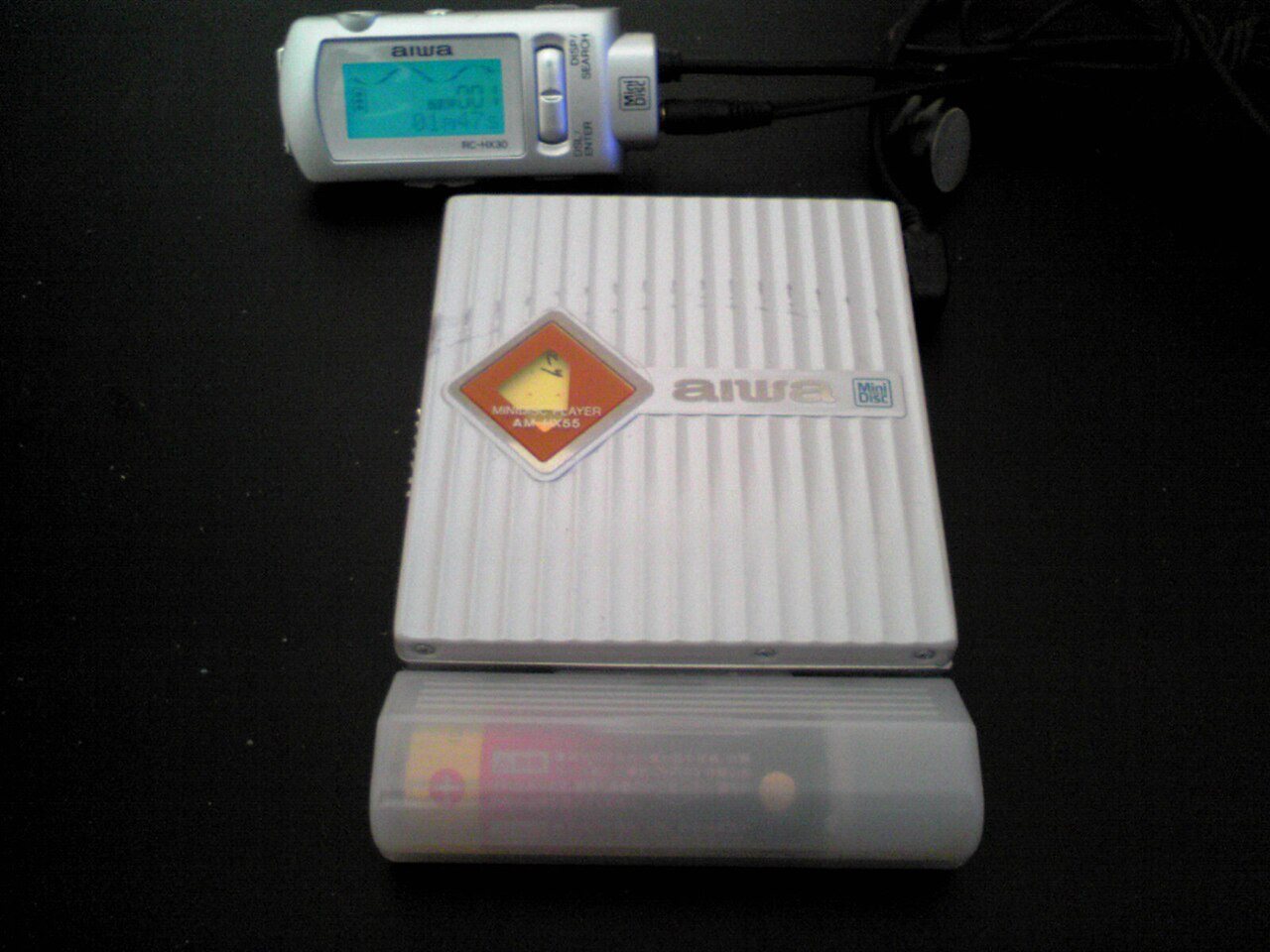
Aiwa MiniDisc portable player, one of many third-party MiniDisc devices from the late 1990s
A portable MiniDisc player from Aiwa. By the late 1990s, multiple manufacturers were producing MiniDisc hardware, though Sony dominated the market.

The Birth of an Idea

Sony announced MiniDisc in September 1992. The company had already conquered portable audio with the Walkman cassette player, a product that essentially created the category of personal mobile music. They were looking for the next evolution. CDs were getting smaller in players but not small enough. They were also read-only for consumers and fragile enough to skip if you looked at them wrong. Sony wanted something different: a format that was tiny, recordable, and durable enough to withstand the punishment of daily commuting.

The technology was magneto-optical storage. Unlike CDs, which used physical pits pressed into polycarbonate, MiniDisc used a magnetic layer that could be written and rewritten thousands of times. The disc itself was about two and a half inches across, sealed in a protective plastic cartridge that made it genuinely pocket-friendly. Sony imagined it as the natural successor to the cassette Walkman.

They weren't entirely wrong about that. The problem was execution and timing.

MiniDisc used a proprietary compression algorithm called ATRAC, short for Adaptive Transform Acoustic Coding. This is important because it allowed roughly 74 or 80 minutes of near-CD-quality audio to fit on a disc with only about 140 megabytes of storage capacity, compared to the 650 megabytes a standard CD held. The compression was lossy, meaning it permanently discarded some audio data. But it was lossy in a smart way. Sony's researchers had studied psychoacoustics, the science of how human ears perceive sound, and optimized the algorithm to remove data that most listeners wouldn't notice was missing.

The first MiniDisc devices hit shelves in November 1992 in Japan and December 1992 in North America and Europe. By 1997, the technology was mature and the devices worked well. The question was whether the world outside Japan would adopt them.

Japan's Love Affair with MiniDisc

In Japan, MiniDisc took off. The format captured a substantial share of the Japanese portable audio market at its peak. In some years during the late 1990s, more MiniDisc units sold in Japan than in the rest of the world combined. This wasn't random.

Japanese commuters spent hours on trains and subways. They were willing to adopt new technology if it solved a real problem. MiniDisc solved several: it was small, it held a lot of music, it was shockproof, and crucially, it let you record music yourself. Recording was a bigger deal in Japan because of how the culture consumed media. Students would record songs off the radio or from borrowed CDs. Music fans would create custom compilations. MiniDisc made this faster and more reliable than cassettes, with better audio quality.

Sony's market position in Japan was also just stronger. They had distribution networks, relationships with retailers, and cultural cachet that didn't translate as directly to the American market. In the Japanese music industry, MiniDisc was positioned as the legitimate, high-quality alternative to dubbing cassettes.

Record labels in Japan actually supported MiniDisc pre-recorded releases. This is the key difference. By the late 1990s, major Japanese labels were pressing pre-recorded MiniDisc albums. You could walk into a record store in Tokyo and buy a new album on MiniDisc the same day it came out on CD. This created a virtuous cycle: more music available in the format meant more incentive to buy a player, which meant more pressure on labels to release new content.

For a moment, it looked like Japan had found its next standard.

Why America Said No Thanks

The United States was a different story entirely. When Sony launched MiniDisc in North America in December 1992, the pricing was brutal. A playback-only portable unit cost $549. The recording model cost $750. A single blank MiniDisc cartridge cost around $17, compared to a couple of dollars for a CD-R blank by the mid-1990s.

Americans had already standardized on CDs and were rapidly adopting CD-R for recording. The technology was cheap, it worked fine, and blank media was abundant. Consumers looked at MiniDisc and asked: why would I spend several times as much for something smaller? The only compelling answer would have been a selection of pre-recorded titles in the stores. And that answer didn't exist.

Here's the thing: major American record labels weren't interested in pressing MiniDisc albums. They saw MiniDisc as a Sony proprietary format and viewed it with suspicion. They were wary of the ATRAC compression. They were wary of the whole proposition. And they were just uninterested in fragmenting the market further when CDs were selling perfectly well.

This was the strategic bottleneck that killed MiniDisc outside Japan. If the American labels had released albums on MiniDisc, the entire trajectory could have been different. Not that CD-R wouldn't have still existed. Not that the iPod wouldn't have eventually changed everything. But MiniDisc could have become a legitimate mainstream format. Instead, it remained a niche product that early adopters and audio enthusiasts bought while most people never even saw one in person.

The Sony Walkman product family showing CD, cassette, FM radio, and MiniDisc portable players
The Sony Walkman family: CD, cassette, FM radio, and MiniDisc. Sony envisioned MiniDisc as the natural successor to the cassette Walkman.

The Technical Brilliance That Wasn't Enough

Let's pause on the commercial challenges and acknowledge what Sony actually accomplished technically. ATRAC compression was genuinely sophisticated for its era. The team that built it understood psychoacoustics at a level that most audio engineers couldn't match. The 5:1 compression ratio was aggressive by the standards of the time, reducing CD-quality audio from about 1.4 megabits per second down to around 292 kilobits per second.

Modern listeners with trained ears and good headphones would probably hear the difference between ATRAC-compressed music and uncompressed audio. The algorithm did throw away data permanently. But in the late 1990s, on the portable devices of the era, with the headphones people actually used, most casual listeners couldn't reliably tell. It was good engineering applied to a real problem.

The other technical advantages were real too. MiniDisc players were genuinely shock-resistant because the format used a buffer memory system that read ahead and stored several seconds of audio in RAM. CD players would skip if jostled. MiniDisc players kept playing. For someone jogging or riding a crowded subway, this mattered enormously.

And the re-recordability was genuinely useful for the music fans Sony was targeting. You could record your favorite songs, erase them, record something else. You could create custom compilations and edit track names on the tiny screen. This is essentially what playlists on streaming services do today, except instead of licensing your access, MiniDisc required you to own the hardware and do the recording yourself.

But technical elegance is not the same as market success. Sony built a better mousetrap. The world had already committed to a different mousetrap and was quietly building an entirely new kind of mousetrap altogether.

The DRM Problem That Poisoned Everything

Here's where Sony made a decision that haunted the format for its entire lifespan. MiniDisc included SCMS, the Serial Copy Management System. This meant you could make a digital recording from a CD onto a MiniDisc, but you couldn't then make a digital copy of that MiniDisc recording onto another MiniDisc. One generation of digital copying, and that was it.

On paper, this made sense. Sony was trying to address label concerns about unlimited digital piracy. In practice, it made MiniDisc less appealing to exactly the users who would have been most enthusiastic about it. The restrictions were the opposite of the value proposition. People wanted to record their music and share it and move it around freely. MiniDisc said: you can do this, but only once, and only according to specific rules.

This is the recurring mistake of hardware manufacturers who try to protect their media partners at the expense of their customers. The restrictions make the product worse for legitimate users without actually stopping determined pirates. People who want to pirate will find a way around any protection scheme. People who don't will just buy the product that imposes fewer restrictions on their behavior.

By the late 1990s, file-sharing software like Napster was already emerging. The restrictive nature of MiniDisc made it look backward to early adopters who wanted full control over their own music libraries. If Sony had made MiniDisc recordings fully copyable, would it have changed the format's fate? Probably not entirely, since the pricing and content problems were more fundamental. But it would have removed one more obstacle to adoption and might have built more goodwill among the enthusiast community.

NetMD and Hi-MD: Two Solutions to the Wrong Problem

By the early 2000s, Sony was aware that MiniDisc was stagnating outside Japan. They responded with NetMD in 2001, which added USB connectivity to MiniDisc players. You could now transfer music from your computer to a MiniDisc via USB cable, using Sony's SonicStage software.

Here's the problem: NetMD actually highlighted why MiniDisc was becoming unnecessary. If you were already at your computer managing music files, why would you transfer them to a MiniDisc when you could transfer them to an MP3 player that didn't require proprietary compression or copy-protection restrictions? MP3 players were getting smaller, cheaper, and more capable every year.

Sony had created a solution that inadvertently proved the superiority of the competing approach.

In 2004, Sony released Hi-MD, which increased storage capacity to 1 gigabyte per disc and allowed uncompressed PCM recording. This was supposed to be the format's definitive comeback. Except by 2004, the iPod had been on the market for three years. It was already clear that portable music was going to be digital files on hard drives and flash memory, not physical discs of any kind.

The real question is whether Sony ever understood that the core problem wasn't MiniDisc the technology but MiniDisc the market strategy. They kept trying to solve the problem by adding features. What they needed to do was abandon the proprietary ecosystem entirely and make devices that played whatever formats consumers wanted. But that would have meant admitting that their control-oriented approach had failed, and Sony in the early 2000s wasn't ready for that admission.

The iPod Changes the Conversation

Apple released the first iPod on October 23, 2001. It held 5 gigabytes of music, roughly 1,000 songs. It used a FireWire connection to sync from iTunes. It cost $399. In terms of raw portability and battery life, it wasn't necessarily better than the best MiniDisc players of the same era.

What it was better at was integration. The iPod worked with iTunes, which worked with the music you already had on your computer, in whatever format you had it. You could buy an iPod and it did exactly what you expected without restrictions or proprietary compression mandates or expensive blank media. The experience was seamless in a way that Sony's proprietary stack could never manage.

Within a few years, the iPod became the dominant portable music player globally. MiniDisc didn't lose because it was technically inferior. It lost because the entire market realized that the future of portable audio wasn't about specific formats or specific physical media types. It was about devices that could handle any reasonable format and connect easily to the computer that was increasingly becoming the hub of everyone's digital life.

Sony could have built the iPod before Apple. They had better brand recognition in consumer electronics, better distribution networks, better relationships with record labels, and decades more experience in portable audio. They didn't build it because they were too invested in the proprietary path. They believed in format control and licensing revenue. Apple believed in simplicity and interoperability. The market made its choice.

The Quiet End

MiniDisc continued on for over a decade after the iPod's launch, though each year the market shrank further. Japan kept buying, but even there the numbers declined steadily. Sony manufactured its last MiniDisc player in March 2013, more than twenty years after the format's introduction. The company continued producing blank MiniDisc media, specifically the MDW80T model, for the Japanese market for years afterward, only announcing the end of blank disc production in early 2025.

It's a strange epilogue. Billions of dollars spent on development, marketing, manufacturing, and licensing deals across more than three decades. All of it wound down not because the format failed catastrophically in a single moment but because the world simply, gradually, moved on to something different.

The Collector Revival

In the last few years, MiniDisc has experienced something between a genuine revival and a nostalgia-driven trend. This is largely a Gen Z phenomenon, playing out mostly on TikTok and Instagram, where young people who were born long after MiniDisc's commercial peak have started seeking out the devices and the media. They find the hardware aesthetically appealing. They like the idea of a format that's physical and tactile but smaller and sleeker than vinyl or even CD. They appreciate that recording to MiniDisc requires deliberate choice and intention, which contrasts sharply with the infinite, effortless nature of streaming.

This revival has driven up prices in the used market. A decent portable MiniDisc recorder that might have sold for $30 five years ago now goes for $100 to $200 or more. Some rare models, particularly Sony's high-end units like the MZ-RH1, have become genuinely expensive collector's items. People are investing in MiniDisc hardware as a deliberate choice for how to engage with music.

The economics of this market are tiny. We're talking about thousands of units globally, not millions. But the community is real and growing. There are sellers specializing in refurbished MiniDisc players. There are detailed online guides to the best recording devices and the best blank media. There are forums where people share their recording setups and custom disc labels.

This is essentially what happened to vinyl records a decade earlier, except without the corporate marketing push that fueled the vinyl revival. Young people discovered MiniDisc through parents' closets, thrift stores, and internet nostalgia content, and decided it was interesting. The format itself matters less than the object and the ritual of using it.

What MiniDisc Teaches Us

MiniDisc was a format designed for a world that was already becoming obsolete. Sony built something technically sophisticated at exactly the moment when the industry was beginning to realize that proprietary formats and physical media were both heading toward irrelevance. Sony had defensible reasons for their choices. Those reasons just weren't good enough.

The format teaches several lessons. First, technical superiority is not sufficient for market success. MiniDisc was a better-engineered product than CD-R in several measurable ways. It didn't matter. CD-R was good enough for most people and dramatically cheaper.

Second, lock-in strategies can backfire catastrophically. SCMS copy protection was supposed to reassure the music industry. It actually made MiniDisc less attractive to the consumers Sony needed most. Restrictions that protect partners at the expense of customers rarely work out well in the long run.

Third, you cannot win a format war alone. Sony could have succeeded globally with MiniDisc if they'd convinced the American record labels to release pre-recorded content. They couldn't close those deals. That was the turning point, not the technology, not the price, but the absence of content in the format's most important potential market.

And finally, sometimes timing is the most important variable, and it's the one you control least. MiniDisc arrived at the precise moment when computers were about to become the center of how people managed and consumed music. A format that required its own dedicated hardware ecosystem was always going to struggle against a future where everything lived on a hard drive.

Frequently Asked Questions

Can you still buy MiniDisc players?

Only used. You can find them through online marketplaces, specialty retailers, and auction sites. Prices range from about $30 for basic playback-only models to several hundred dollars for sought-after recording units like the Sony MZ-RH1. No new MiniDisc players have been manufactured since March 2013.

Can you still buy blank MiniDisc media?

Sony continued producing its MDW80T blank MiniDisc for the Japanese market long after discontinuing hardware, but announced the end of blank disc production in early 2025. Remaining new-old-stock blanks can still be found through specialty sellers and online marketplaces, though prices have risen as supply dwindles. Expect to pay $10 to $20 or more per blank disc.

Is MiniDisc sound quality better than CD?

No. Standard MiniDisc uses ATRAC lossy compression, which permanently removes audio data during encoding. A lossless CD recording will always contain more information. However, ATRAC was specifically designed to be perceptually transparent for casual listening, and most people cannot reliably distinguish between a MiniDisc recording and the CD original on typical portable equipment. Hi-MD, introduced in 2004, did support uncompressed PCM recording at full CD quality.

Why didn't Sony just make devices that played MP3 files?

Sony was deeply committed to the ATRAC ecosystem and the licensing revenue it generated from other manufacturers. Creating a MiniDisc player that handled MP3 or other open formats would have undercut their own proprietary advantage. By the time Sony began supporting MP3 playback in later devices, the iPod had already established the market standard and the window of opportunity had closed.

Did MiniDisc ever have a real chance in the United States?

Possibly, but success would have required fundamentally different decisions. If American record labels had released pre-recorded MiniDisc albums and the initial hardware pricing had been lower, adoption could have been stronger. More realistically, MiniDisc was always likely to be niche in the US because CD-R solved the same basic problem at a fraction of the cost. The real market opportunity was Japan, where Sony did succeed. The mistake was assuming that domestic success would translate globally without the content deals to support it.

Why is MiniDisc trending on TikTok?

Gen Z users have discovered MiniDisc through secondhand markets and have become aesthetically and practically interested in the format. The appeal combines several factors: the hardware is compact and visually distinctive, the recording process is intentional and tactile, and the format is rare enough to feel exclusive. This mirrors the broader trend of younger consumers seeking physical, analog-adjacent alternatives to purely digital music consumption.

Did other companies make MiniDisc devices?

Yes. Sony licensed the MiniDisc format to other manufacturers including Aiwa, Sharp, Panasonic, Kenwood, and others. Some of these companies produced excellent devices that occasionally innovated beyond Sony's own designs, particularly Sharp's portable recorders. However, Sony always dominated market share. Third-party manufacturers gradually exited the market as MiniDisc sales declined, leaving Sony as the sole remaining manufacturer by the late 2000s.

What is the most sought-after MiniDisc player for collectors?

The Sony MZ-RH1, released in 2006, is generally considered the most desirable MiniDisc device among collectors and enthusiasts. It was the last high-end portable MiniDisc recorder Sony produced, and it was the only device that could upload recordings from MiniDisc to a computer in real time via USB. Working units in good condition regularly sell for $300 to $500 or more.

๐Ÿ“– What Happened to MiniDisc, Sony's Forgotten Music Format
_ โ–ก ร—
← Back

What Happened to MiniDisc, Sony's Forgotten Music Format

2026-04-07 by 404 Memory Found

The Format That Won Japan and Lost Everything Else

At the height of MiniDisc's popularity in Japan, during the late 1990s, the format was outselling recordable CDs by a wide margin. Sony had built something so compelling that Japanese consumers were choosing it over the format that had already conquered the rest of the world. And yet, two decades later, MiniDisc is remembered primarily as a failure, a footnote in the graveyard of obsolete media formats, right up there with Betamax and the Laserdisc.

The real story is more complicated, and more interesting. MiniDisc wasn't killed by the iPod. It wasn't a technological dead-end. It was killed by strategy: by DRM restrictions, by Sony's inability to negotiate pre-recorded content deals outside Japan, by a retail price that felt like a punch to the wallet, and by the fundamental wrong-place-wrong-time problem of arriving just as the industry was about to transform completely.

Look, MiniDisc matters because it represents something specific about how companies fail. Sony didn't lack vision. They didn't lack engineering talent. What they lacked was the ability to execute globally, and the willingness to make hard choices about control.

Aiwa MiniDisc portable player, one of many third-party MiniDisc devices from the late 1990s
A portable MiniDisc player from Aiwa. By the late 1990s, multiple manufacturers were producing MiniDisc hardware, though Sony dominated the market.

The Birth of an Idea

Sony announced MiniDisc in September 1992. The company had already conquered portable audio with the Walkman cassette player, a product that essentially created the category of personal mobile music. They were looking for the next evolution. CDs were getting smaller in players but not small enough. They were also read-only for consumers and fragile enough to skip if you looked at them wrong. Sony wanted something different: a format that was tiny, recordable, and durable enough to withstand the punishment of daily commuting.

The technology was magneto-optical storage. Unlike CDs, which used physical pits pressed into polycarbonate, MiniDisc used a magnetic layer that could be written and rewritten thousands of times. The disc itself was about two and a half inches across, sealed in a protective plastic cartridge that made it genuinely pocket-friendly. Sony imagined it as the natural successor to the cassette Walkman.

They weren't entirely wrong about that. The problem was execution and timing.

MiniDisc used a proprietary compression algorithm called ATRAC, short for Adaptive Transform Acoustic Coding. This is important because it allowed roughly 74 or 80 minutes of near-CD-quality audio to fit on a disc with only about 140 megabytes of storage capacity, compared to the 650 megabytes a standard CD held. The compression was lossy, meaning it permanently discarded some audio data. But it was lossy in a smart way. Sony's researchers had studied psychoacoustics, the science of how human ears perceive sound, and optimized the algorithm to remove data that most listeners wouldn't notice was missing.

The first MiniDisc devices hit shelves in November 1992 in Japan and December 1992 in North America and Europe. By 1997, the technology was mature and the devices worked well. The question was whether the world outside Japan would adopt them.

Japan's Love Affair with MiniDisc

In Japan, MiniDisc took off. The format captured a substantial share of the Japanese portable audio market at its peak. In some years during the late 1990s, more MiniDisc units sold in Japan than in the rest of the world combined. This wasn't random.

Japanese commuters spent hours on trains and subways. They were willing to adopt new technology if it solved a real problem. MiniDisc solved several: it was small, it held a lot of music, it was shockproof, and crucially, it let you record music yourself. Recording was a bigger deal in Japan because of how the culture consumed media. Students would record songs off the radio or from borrowed CDs. Music fans would create custom compilations. MiniDisc made this faster and more reliable than cassettes, with better audio quality.

Sony's market position in Japan was also just stronger. They had distribution networks, relationships with retailers, and cultural cachet that didn't translate as directly to the American market. In the Japanese music industry, MiniDisc was positioned as the legitimate, high-quality alternative to dubbing cassettes.

Record labels in Japan actually supported MiniDisc pre-recorded releases. This is the key difference. By the late 1990s, major Japanese labels were pressing pre-recorded MiniDisc albums. You could walk into a record store in Tokyo and buy a new album on MiniDisc the same day it came out on CD. This created a virtuous cycle: more music available in the format meant more incentive to buy a player, which meant more pressure on labels to release new content.

For a moment, it looked like Japan had found its next standard.

Why America Said No Thanks

The United States was a different story entirely. When Sony launched MiniDisc in North America in December 1992, the pricing was brutal. A playback-only portable unit cost $549. The recording model cost $750. A single blank MiniDisc cartridge cost around $17, compared to a couple of dollars for a CD-R blank by the mid-1990s.

Americans had already standardized on CDs and were rapidly adopting CD-R for recording. The technology was cheap, it worked fine, and blank media was abundant. Consumers looked at MiniDisc and asked: why would I spend several times as much for something smaller? The only compelling answer would have been a selection of pre-recorded titles in the stores. And that answer didn't exist.

Here's the thing: major American record labels weren't interested in pressing MiniDisc albums. They saw MiniDisc as a Sony proprietary format and viewed it with suspicion. They were wary of the ATRAC compression. They were wary of the whole proposition. And they were just uninterested in fragmenting the market further when CDs were selling perfectly well.

This was the strategic bottleneck that killed MiniDisc outside Japan. If the American labels had released albums on MiniDisc, the entire trajectory could have been different. Not that CD-R wouldn't have still existed. Not that the iPod wouldn't have eventually changed everything. But MiniDisc could have become a legitimate mainstream format. Instead, it remained a niche product that early adopters and audio enthusiasts bought while most people never even saw one in person.

The Sony Walkman product family showing CD, cassette, FM radio, and MiniDisc portable players
The Sony Walkman family: CD, cassette, FM radio, and MiniDisc. Sony envisioned MiniDisc as the natural successor to the cassette Walkman.

The Technical Brilliance That Wasn't Enough

Let's pause on the commercial challenges and acknowledge what Sony actually accomplished technically. ATRAC compression was genuinely sophisticated for its era. The team that built it understood psychoacoustics at a level that most audio engineers couldn't match. The 5:1 compression ratio was aggressive by the standards of the time, reducing CD-quality audio from about 1.4 megabits per second down to around 292 kilobits per second.

Modern listeners with trained ears and good headphones would probably hear the difference between ATRAC-compressed music and uncompressed audio. The algorithm did throw away data permanently. But in the late 1990s, on the portable devices of the era, with the headphones people actually used, most casual listeners couldn't reliably tell. It was good engineering applied to a real problem.

The other technical advantages were real too. MiniDisc players were genuinely shock-resistant because the format used a buffer memory system that read ahead and stored several seconds of audio in RAM. CD players would skip if jostled. MiniDisc players kept playing. For someone jogging or riding a crowded subway, this mattered enormously.

And the re-recordability was genuinely useful for the music fans Sony was targeting. You could record your favorite songs, erase them, record something else. You could create custom compilations and edit track names on the tiny screen. This is essentially what playlists on streaming services do today, except instead of licensing your access, MiniDisc required you to own the hardware and do the recording yourself.

But technical elegance is not the same as market success. Sony built a better mousetrap. The world had already committed to a different mousetrap and was quietly building an entirely new kind of mousetrap altogether.

The DRM Problem That Poisoned Everything

Here's where Sony made a decision that haunted the format for its entire lifespan. MiniDisc included SCMS, the Serial Copy Management System. This meant you could make a digital recording from a CD onto a MiniDisc, but you couldn't then make a digital copy of that MiniDisc recording onto another MiniDisc. One generation of digital copying, and that was it.

On paper, this made sense. Sony was trying to address label concerns about unlimited digital piracy. In practice, it made MiniDisc less appealing to exactly the users who would have been most enthusiastic about it. The restrictions were the opposite of the value proposition. People wanted to record their music and share it and move it around freely. MiniDisc said: you can do this, but only once, and only according to specific rules.

This is the recurring mistake of hardware manufacturers who try to protect their media partners at the expense of their customers. The restrictions make the product worse for legitimate users without actually stopping determined pirates. People who want to pirate will find a way around any protection scheme. People who don't will just buy the product that imposes fewer restrictions on their behavior.

By the late 1990s, file-sharing software like Napster was already emerging. The restrictive nature of MiniDisc made it look backward to early adopters who wanted full control over their own music libraries. If Sony had made MiniDisc recordings fully copyable, would it have changed the format's fate? Probably not entirely, since the pricing and content problems were more fundamental. But it would have removed one more obstacle to adoption and might have built more goodwill among the enthusiast community.

NetMD and Hi-MD: Two Solutions to the Wrong Problem

By the early 2000s, Sony was aware that MiniDisc was stagnating outside Japan. They responded with NetMD in 2001, which added USB connectivity to MiniDisc players. You could now transfer music from your computer to a MiniDisc via USB cable, using Sony's SonicStage software.

Here's the problem: NetMD actually highlighted why MiniDisc was becoming unnecessary. If you were already at your computer managing music files, why would you transfer them to a MiniDisc when you could transfer them to an MP3 player that didn't require proprietary compression or copy-protection restrictions? MP3 players were getting smaller, cheaper, and more capable every year.

Sony had created a solution that inadvertently proved the superiority of the competing approach.

In 2004, Sony released Hi-MD, which increased storage capacity to 1 gigabyte per disc and allowed uncompressed PCM recording. This was supposed to be the format's definitive comeback. Except by 2004, the iPod had been on the market for three years. It was already clear that portable music was going to be digital files on hard drives and flash memory, not physical discs of any kind.

The real question is whether Sony ever understood that the core problem wasn't MiniDisc the technology but MiniDisc the market strategy. They kept trying to solve the problem by adding features. What they needed to do was abandon the proprietary ecosystem entirely and make devices that played whatever formats consumers wanted. But that would have meant admitting that their control-oriented approach had failed, and Sony in the early 2000s wasn't ready for that admission.

The iPod Changes the Conversation

Apple released the first iPod on October 23, 2001. It held 5 gigabytes of music, roughly 1,000 songs. It used a FireWire connection to sync from iTunes. It cost $399. In terms of raw portability and battery life, it wasn't necessarily better than the best MiniDisc players of the same era.

What it was better at was integration. The iPod worked with iTunes, which worked with the music you already had on your computer, in whatever format you had it. You could buy an iPod and it did exactly what you expected without restrictions or proprietary compression mandates or expensive blank media. The experience was seamless in a way that Sony's proprietary stack could never manage.

Within a few years, the iPod became the dominant portable music player globally. MiniDisc didn't lose because it was technically inferior. It lost because the entire market realized that the future of portable audio wasn't about specific formats or specific physical media types. It was about devices that could handle any reasonable format and connect easily to the computer that was increasingly becoming the hub of everyone's digital life.

Sony could have built the iPod before Apple. They had better brand recognition in consumer electronics, better distribution networks, better relationships with record labels, and decades more experience in portable audio. They didn't build it because they were too invested in the proprietary path. They believed in format control and licensing revenue. Apple believed in simplicity and interoperability. The market made its choice.

The Quiet End

MiniDisc continued on for over a decade after the iPod's launch, though each year the market shrank further. Japan kept buying, but even there the numbers declined steadily. Sony manufactured its last MiniDisc player in March 2013, more than twenty years after the format's introduction. The company continued producing blank MiniDisc media, specifically the MDW80T model, for the Japanese market for years afterward, only announcing the end of blank disc production in early 2025.

It's a strange epilogue. Billions of dollars spent on development, marketing, manufacturing, and licensing deals across more than three decades. All of it wound down not because the format failed catastrophically in a single moment but because the world simply, gradually, moved on to something different.

The Collector Revival

In the last few years, MiniDisc has experienced something between a genuine revival and a nostalgia-driven trend. This is largely a Gen Z phenomenon, playing out mostly on TikTok and Instagram, where young people who were born long after MiniDisc's commercial peak have started seeking out the devices and the media. They find the hardware aesthetically appealing. They like the idea of a format that's physical and tactile but smaller and sleeker than vinyl or even CD. They appreciate that recording to MiniDisc requires deliberate choice and intention, which contrasts sharply with the infinite, effortless nature of streaming.

This revival has driven up prices in the used market. A decent portable MiniDisc recorder that might have sold for $30 five years ago now goes for $100 to $200 or more. Some rare models, particularly Sony's high-end units like the MZ-RH1, have become genuinely expensive collector's items. People are investing in MiniDisc hardware as a deliberate choice for how to engage with music.

The economics of this market are tiny. We're talking about thousands of units globally, not millions. But the community is real and growing. There are sellers specializing in refurbished MiniDisc players. There are detailed online guides to the best recording devices and the best blank media. There are forums where people share their recording setups and custom disc labels.

This is essentially what happened to vinyl records a decade earlier, except without the corporate marketing push that fueled the vinyl revival. Young people discovered MiniDisc through parents' closets, thrift stores, and internet nostalgia content, and decided it was interesting. The format itself matters less than the object and the ritual of using it.

What MiniDisc Teaches Us

MiniDisc was a format designed for a world that was already becoming obsolete. Sony built something technically sophisticated at exactly the moment when the industry was beginning to realize that proprietary formats and physical media were both heading toward irrelevance. Sony had defensible reasons for their choices. Those reasons just weren't good enough.

The format teaches several lessons. First, technical superiority is not sufficient for market success. MiniDisc was a better-engineered product than CD-R in several measurable ways. It didn't matter. CD-R was good enough for most people and dramatically cheaper.

Second, lock-in strategies can backfire catastrophically. SCMS copy protection was supposed to reassure the music industry. It actually made MiniDisc less attractive to the consumers Sony needed most. Restrictions that protect partners at the expense of customers rarely work out well in the long run.

Third, you cannot win a format war alone. Sony could have succeeded globally with MiniDisc if they'd convinced the American record labels to release pre-recorded content. They couldn't close those deals. That was the turning point, not the technology, not the price, but the absence of content in the format's most important potential market.

And finally, sometimes timing is the most important variable, and it's the one you control least. MiniDisc arrived at the precise moment when computers were about to become the center of how people managed and consumed music. A format that required its own dedicated hardware ecosystem was always going to struggle against a future where everything lived on a hard drive.

Frequently Asked Questions

Can you still buy MiniDisc players?

Only used. You can find them through online marketplaces, specialty retailers, and auction sites. Prices range from about $30 for basic playback-only models to several hundred dollars for sought-after recording units like the Sony MZ-RH1. No new MiniDisc players have been manufactured since March 2013.

Can you still buy blank MiniDisc media?

Sony continued producing its MDW80T blank MiniDisc for the Japanese market long after discontinuing hardware, but announced the end of blank disc production in early 2025. Remaining new-old-stock blanks can still be found through specialty sellers and online marketplaces, though prices have risen as supply dwindles. Expect to pay $10 to $20 or more per blank disc.

Is MiniDisc sound quality better than CD?

No. Standard MiniDisc uses ATRAC lossy compression, which permanently removes audio data during encoding. A lossless CD recording will always contain more information. However, ATRAC was specifically designed to be perceptually transparent for casual listening, and most people cannot reliably distinguish between a MiniDisc recording and the CD original on typical portable equipment. Hi-MD, introduced in 2004, did support uncompressed PCM recording at full CD quality.

Why didn't Sony just make devices that played MP3 files?

Sony was deeply committed to the ATRAC ecosystem and the licensing revenue it generated from other manufacturers. Creating a MiniDisc player that handled MP3 or other open formats would have undercut their own proprietary advantage. By the time Sony began supporting MP3 playback in later devices, the iPod had already established the market standard and the window of opportunity had closed.

Did MiniDisc ever have a real chance in the United States?

Possibly, but success would have required fundamentally different decisions. If American record labels had released pre-recorded MiniDisc albums and the initial hardware pricing had been lower, adoption could have been stronger. More realistically, MiniDisc was always likely to be niche in the US because CD-R solved the same basic problem at a fraction of the cost. The real market opportunity was Japan, where Sony did succeed. The mistake was assuming that domestic success would translate globally without the content deals to support it.

Why is MiniDisc trending on TikTok?

Gen Z users have discovered MiniDisc through secondhand markets and have become aesthetically and practically interested in the format. The appeal combines several factors: the hardware is compact and visually distinctive, the recording process is intentional and tactile, and the format is rare enough to feel exclusive. This mirrors the broader trend of younger consumers seeking physical, analog-adjacent alternatives to purely digital music consumption.

Did other companies make MiniDisc devices?

Yes. Sony licensed the MiniDisc format to other manufacturers including Aiwa, Sharp, Panasonic, Kenwood, and others. Some of these companies produced excellent devices that occasionally innovated beyond Sony's own designs, particularly Sharp's portable recorders. However, Sony always dominated market share. Third-party manufacturers gradually exited the market as MiniDisc sales declined, leaving Sony as the sole remaining manufacturer by the late 2000s.

What is the most sought-after MiniDisc player for collectors?

The Sony MZ-RH1, released in 2006, is generally considered the most desirable MiniDisc device among collectors and enthusiasts. It was the last high-end portable MiniDisc recorder Sony produced, and it was the only device that could upload recordings from MiniDisc to a computer in real time via USB. Working units in good condition regularly sell for $300 to $500 or more.

๐Ÿ“– What Happened to MiniDisc, Sony's Forgotten Music Format

The Format That Won Japan and Lost Everything Else

At the height of MiniDisc's popularity in Japan, during the late 1990s, the format was outselling recordable CDs by a wide margin. Sony had built something so compelling that Japanese consumers were choosing it over the format that had already conquered the rest of the world. And yet, two decades later, MiniDisc is remembered primarily as a failure, a footnote in the graveyard of obsolete media formats, right up there with Betamax and the Laserdisc.

The real story is more complicated, and more interesting. MiniDisc wasn't killed by the iPod. It wasn't a technological dead-end. It was killed by strategy: by DRM restrictions, by Sony's inability to negotiate pre-recorded content deals outside Japan, by a retail price that felt like a punch to the wallet, and by the fundamental wrong-place-wrong-time problem of arriving just as the industry was about to transform completely.

Look, MiniDisc matters because it represents something specific about how companies fail. Sony didn't lack vision. They didn't lack engineering talent. What they lacked was the ability to execute globally, and the willingness to make hard choices about control.

Aiwa MiniDisc portable player, one of many third-party MiniDisc devices from the late 1990s
A portable MiniDisc player from Aiwa. By the late 1990s, multiple manufacturers were producing MiniDisc hardware, though Sony dominated the market.

The Birth of an Idea

Sony announced MiniDisc in September 1992. The company had already conquered portable audio with the Walkman cassette player, a product that essentially created the category of personal mobile music. They were looking for the next evolution. CDs were getting smaller in players but not small enough. They were also read-only for consumers and fragile enough to skip if you looked at them wrong. Sony wanted something different: a format that was tiny, recordable, and durable enough to withstand the punishment of daily commuting.

The technology was magneto-optical storage. Unlike CDs, which used physical pits pressed into polycarbonate, MiniDisc used a magnetic layer that could be written and rewritten thousands of times. The disc itself was about two and a half inches across, sealed in a protective plastic cartridge that made it genuinely pocket-friendly. Sony imagined it as the natural successor to the cassette Walkman.

They weren't entirely wrong about that. The problem was execution and timing.

MiniDisc used a proprietary compression algorithm called ATRAC, short for Adaptive Transform Acoustic Coding. This is important because it allowed roughly 74 or 80 minutes of near-CD-quality audio to fit on a disc with only about 140 megabytes of storage capacity, compared to the 650 megabytes a standard CD held. The compression was lossy, meaning it permanently discarded some audio data. But it was lossy in a smart way. Sony's researchers had studied psychoacoustics, the science of how human ears perceive sound, and optimized the algorithm to remove data that most listeners wouldn't notice was missing.

The first MiniDisc devices hit shelves in November 1992 in Japan and December 1992 in North America and Europe. By 1997, the technology was mature and the devices worked well. The question was whether the world outside Japan would adopt them.

Japan's Love Affair with MiniDisc

In Japan, MiniDisc took off. The format captured a substantial share of the Japanese portable audio market at its peak. In some years during the late 1990s, more MiniDisc units sold in Japan than in the rest of the world combined. This wasn't random.

Japanese commuters spent hours on trains and subways. They were willing to adopt new technology if it solved a real problem. MiniDisc solved several: it was small, it held a lot of music, it was shockproof, and crucially, it let you record music yourself. Recording was a bigger deal in Japan because of how the culture consumed media. Students would record songs off the radio or from borrowed CDs. Music fans would create custom compilations. MiniDisc made this faster and more reliable than cassettes, with better audio quality.

Sony's market position in Japan was also just stronger. They had distribution networks, relationships with retailers, and cultural cachet that didn't translate as directly to the American market. In the Japanese music industry, MiniDisc was positioned as the legitimate, high-quality alternative to dubbing cassettes.

Record labels in Japan actually supported MiniDisc pre-recorded releases. This is the key difference. By the late 1990s, major Japanese labels were pressing pre-recorded MiniDisc albums. You could walk into a record store in Tokyo and buy a new album on MiniDisc the same day it came out on CD. This created a virtuous cycle: more music available in the format meant more incentive to buy a player, which meant more pressure on labels to release new content.

For a moment, it looked like Japan had found its next standard.

Why America Said No Thanks

The United States was a different story entirely. When Sony launched MiniDisc in North America in December 1992, the pricing was brutal. A playback-only portable unit cost $549. The recording model cost $750. A single blank MiniDisc cartridge cost around $17, compared to a couple of dollars for a CD-R blank by the mid-1990s.

Americans had already standardized on CDs and were rapidly adopting CD-R for recording. The technology was cheap, it worked fine, and blank media was abundant. Consumers looked at MiniDisc and asked: why would I spend several times as much for something smaller? The only compelling answer would have been a selection of pre-recorded titles in the stores. And that answer didn't exist.

Here's the thing: major American record labels weren't interested in pressing MiniDisc albums. They saw MiniDisc as a Sony proprietary format and viewed it with suspicion. They were wary of the ATRAC compression. They were wary of the whole proposition. And they were just uninterested in fragmenting the market further when CDs were selling perfectly well.

This was the strategic bottleneck that killed MiniDisc outside Japan. If the American labels had released albums on MiniDisc, the entire trajectory could have been different. Not that CD-R wouldn't have still existed. Not that the iPod wouldn't have eventually changed everything. But MiniDisc could have become a legitimate mainstream format. Instead, it remained a niche product that early adopters and audio enthusiasts bought while most people never even saw one in person.

The Sony Walkman product family showing CD, cassette, FM radio, and MiniDisc portable players
The Sony Walkman family: CD, cassette, FM radio, and MiniDisc. Sony envisioned MiniDisc as the natural successor to the cassette Walkman.

The Technical Brilliance That Wasn't Enough

Let's pause on the commercial challenges and acknowledge what Sony actually accomplished technically. ATRAC compression was genuinely sophisticated for its era. The team that built it understood psychoacoustics at a level that most audio engineers couldn't match. The 5:1 compression ratio was aggressive by the standards of the time, reducing CD-quality audio from about 1.4 megabits per second down to around 292 kilobits per second.

Modern listeners with trained ears and good headphones would probably hear the difference between ATRAC-compressed music and uncompressed audio. The algorithm did throw away data permanently. But in the late 1990s, on the portable devices of the era, with the headphones people actually used, most casual listeners couldn't reliably tell. It was good engineering applied to a real problem.

The other technical advantages were real too. MiniDisc players were genuinely shock-resistant because the format used a buffer memory system that read ahead and stored several seconds of audio in RAM. CD players would skip if jostled. MiniDisc players kept playing. For someone jogging or riding a crowded subway, this mattered enormously.

And the re-recordability was genuinely useful for the music fans Sony was targeting. You could record your favorite songs, erase them, record something else. You could create custom compilations and edit track names on the tiny screen. This is essentially what playlists on streaming services do today, except instead of licensing your access, MiniDisc required you to own the hardware and do the recording yourself.

But technical elegance is not the same as market success. Sony built a better mousetrap. The world had already committed to a different mousetrap and was quietly building an entirely new kind of mousetrap altogether.

The DRM Problem That Poisoned Everything

Here's where Sony made a decision that haunted the format for its entire lifespan. MiniDisc included SCMS, the Serial Copy Management System. This meant you could make a digital recording from a CD onto a MiniDisc, but you couldn't then make a digital copy of that MiniDisc recording onto another MiniDisc. One generation of digital copying, and that was it.

On paper, this made sense. Sony was trying to address label concerns about unlimited digital piracy. In practice, it made MiniDisc less appealing to exactly the users who would have been most enthusiastic about it. The restrictions were the opposite of the value proposition. People wanted to record their music and share it and move it around freely. MiniDisc said: you can do this, but only once, and only according to specific rules.

This is the recurring mistake of hardware manufacturers who try to protect their media partners at the expense of their customers. The restrictions make the product worse for legitimate users without actually stopping determined pirates. People who want to pirate will find a way around any protection scheme. People who don't will just buy the product that imposes fewer restrictions on their behavior.

By the late 1990s, file-sharing software like Napster was already emerging. The restrictive nature of MiniDisc made it look backward to early adopters who wanted full control over their own music libraries. If Sony had made MiniDisc recordings fully copyable, would it have changed the format's fate? Probably not entirely, since the pricing and content problems were more fundamental. But it would have removed one more obstacle to adoption and might have built more goodwill among the enthusiast community.

NetMD and Hi-MD: Two Solutions to the Wrong Problem

By the early 2000s, Sony was aware that MiniDisc was stagnating outside Japan. They responded with NetMD in 2001, which added USB connectivity to MiniDisc players. You could now transfer music from your computer to a MiniDisc via USB cable, using Sony's SonicStage software.

Here's the problem: NetMD actually highlighted why MiniDisc was becoming unnecessary. If you were already at your computer managing music files, why would you transfer them to a MiniDisc when you could transfer them to an MP3 player that didn't require proprietary compression or copy-protection restrictions? MP3 players were getting smaller, cheaper, and more capable every year.

Sony had created a solution that inadvertently proved the superiority of the competing approach.

In 2004, Sony released Hi-MD, which increased storage capacity to 1 gigabyte per disc and allowed uncompressed PCM recording. This was supposed to be the format's definitive comeback. Except by 2004, the iPod had been on the market for three years. It was already clear that portable music was going to be digital files on hard drives and flash memory, not physical discs of any kind.

The real question is whether Sony ever understood that the core problem wasn't MiniDisc the technology but MiniDisc the market strategy. They kept trying to solve the problem by adding features. What they needed to do was abandon the proprietary ecosystem entirely and make devices that played whatever formats consumers wanted. But that would have meant admitting that their control-oriented approach had failed, and Sony in the early 2000s wasn't ready for that admission.

The iPod Changes the Conversation

Apple released the first iPod on October 23, 2001. It held 5 gigabytes of music, roughly 1,000 songs. It used a FireWire connection to sync from iTunes. It cost $399. In terms of raw portability and battery life, it wasn't necessarily better than the best MiniDisc players of the same era.

What it was better at was integration. The iPod worked with iTunes, which worked with the music you already had on your computer, in whatever format you had it. You could buy an iPod and it did exactly what you expected without restrictions or proprietary compression mandates or expensive blank media. The experience was seamless in a way that Sony's proprietary stack could never manage.

Within a few years, the iPod became the dominant portable music player globally. MiniDisc didn't lose because it was technically inferior. It lost because the entire market realized that the future of portable audio wasn't about specific formats or specific physical media types. It was about devices that could handle any reasonable format and connect easily to the computer that was increasingly becoming the hub of everyone's digital life.

Sony could have built the iPod before Apple. They had better brand recognition in consumer electronics, better distribution networks, better relationships with record labels, and decades more experience in portable audio. They didn't build it because they were too invested in the proprietary path. They believed in format control and licensing revenue. Apple believed in simplicity and interoperability. The market made its choice.

The Quiet End

MiniDisc continued on for over a decade after the iPod's launch, though each year the market shrank further. Japan kept buying, but even there the numbers declined steadily. Sony manufactured its last MiniDisc player in March 2013, more than twenty years after the format's introduction. The company continued producing blank MiniDisc media, specifically the MDW80T model, for the Japanese market for years afterward, only announcing the end of blank disc production in early 2025.

It's a strange epilogue. Billions of dollars spent on development, marketing, manufacturing, and licensing deals across more than three decades. All of it wound down not because the format failed catastrophically in a single moment but because the world simply, gradually, moved on to something different.

The Collector Revival

In the last few years, MiniDisc has experienced something between a genuine revival and a nostalgia-driven trend. This is largely a Gen Z phenomenon, playing out mostly on TikTok and Instagram, where young people who were born long after MiniDisc's commercial peak have started seeking out the devices and the media. They find the hardware aesthetically appealing. They like the idea of a format that's physical and tactile but smaller and sleeker than vinyl or even CD. They appreciate that recording to MiniDisc requires deliberate choice and intention, which contrasts sharply with the infinite, effortless nature of streaming.

This revival has driven up prices in the used market. A decent portable MiniDisc recorder that might have sold for $30 five years ago now goes for $100 to $200 or more. Some rare models, particularly Sony's high-end units like the MZ-RH1, have become genuinely expensive collector's items. People are investing in MiniDisc hardware as a deliberate choice for how to engage with music.

The economics of this market are tiny. We're talking about thousands of units globally, not millions. But the community is real and growing. There are sellers specializing in refurbished MiniDisc players. There are detailed online guides to the best recording devices and the best blank media. There are forums where people share their recording setups and custom disc labels.

This is essentially what happened to vinyl records a decade earlier, except without the corporate marketing push that fueled the vinyl revival. Young people discovered MiniDisc through parents' closets, thrift stores, and internet nostalgia content, and decided it was interesting. The format itself matters less than the object and the ritual of using it.

What MiniDisc Teaches Us

MiniDisc was a format designed for a world that was already becoming obsolete. Sony built something technically sophisticated at exactly the moment when the industry was beginning to realize that proprietary formats and physical media were both heading toward irrelevance. Sony had defensible reasons for their choices. Those reasons just weren't good enough.

The format teaches several lessons. First, technical superiority is not sufficient for market success. MiniDisc was a better-engineered product than CD-R in several measurable ways. It didn't matter. CD-R was good enough for most people and dramatically cheaper.

Second, lock-in strategies can backfire catastrophically. SCMS copy protection was supposed to reassure the music industry. It actually made MiniDisc less attractive to the consumers Sony needed most. Restrictions that protect partners at the expense of customers rarely work out well in the long run.

Third, you cannot win a format war alone. Sony could have succeeded globally with MiniDisc if they'd convinced the American record labels to release pre-recorded content. They couldn't close those deals. That was the turning point, not the technology, not the price, but the absence of content in the format's most important potential market.

And finally, sometimes timing is the most important variable, and it's the one you control least. MiniDisc arrived at the precise moment when computers were about to become the center of how people managed and consumed music. A format that required its own dedicated hardware ecosystem was always going to struggle against a future where everything lived on a hard drive.

Frequently Asked Questions

Can you still buy MiniDisc players?

Only used. You can find them through online marketplaces, specialty retailers, and auction sites. Prices range from about $30 for basic playback-only models to several hundred dollars for sought-after recording units like the Sony MZ-RH1. No new MiniDisc players have been manufactured since March 2013.

Can you still buy blank MiniDisc media?

Sony continued producing its MDW80T blank MiniDisc for the Japanese market long after discontinuing hardware, but announced the end of blank disc production in early 2025. Remaining new-old-stock blanks can still be found through specialty sellers and online marketplaces, though prices have risen as supply dwindles. Expect to pay $10 to $20 or more per blank disc.

Is MiniDisc sound quality better than CD?

No. Standard MiniDisc uses ATRAC lossy compression, which permanently removes audio data during encoding. A lossless CD recording will always contain more information. However, ATRAC was specifically designed to be perceptually transparent for casual listening, and most people cannot reliably distinguish between a MiniDisc recording and the CD original on typical portable equipment. Hi-MD, introduced in 2004, did support uncompressed PCM recording at full CD quality.

Why didn't Sony just make devices that played MP3 files?

Sony was deeply committed to the ATRAC ecosystem and the licensing revenue it generated from other manufacturers. Creating a MiniDisc player that handled MP3 or other open formats would have undercut their own proprietary advantage. By the time Sony began supporting MP3 playback in later devices, the iPod had already established the market standard and the window of opportunity had closed.

Did MiniDisc ever have a real chance in the United States?

Possibly, but success would have required fundamentally different decisions. If American record labels had released pre-recorded MiniDisc albums and the initial hardware pricing had been lower, adoption could have been stronger. More realistically, MiniDisc was always likely to be niche in the US because CD-R solved the same basic problem at a fraction of the cost. The real market opportunity was Japan, where Sony did succeed. The mistake was assuming that domestic success would translate globally without the content deals to support it.

Why is MiniDisc trending on TikTok?

Gen Z users have discovered MiniDisc through secondhand markets and have become aesthetically and practically interested in the format. The appeal combines several factors: the hardware is compact and visually distinctive, the recording process is intentional and tactile, and the format is rare enough to feel exclusive. This mirrors the broader trend of younger consumers seeking physical, analog-adjacent alternatives to purely digital music consumption.

Did other companies make MiniDisc devices?

Yes. Sony licensed the MiniDisc format to other manufacturers including Aiwa, Sharp, Panasonic, Kenwood, and others. Some of these companies produced excellent devices that occasionally innovated beyond Sony's own designs, particularly Sharp's portable recorders. However, Sony always dominated market share. Third-party manufacturers gradually exited the market as MiniDisc sales declined, leaving Sony as the sole remaining manufacturer by the late 2000s.

What is the most sought-after MiniDisc player for collectors?

The Sony MZ-RH1, released in 2006, is generally considered the most desirable MiniDisc device among collectors and enthusiasts. It was the last high-end portable MiniDisc recorder Sony produced, and it was the only device that could upload recordings from MiniDisc to a computer in real time via USB. Working units in good condition regularly sell for $300 to $500 or more.

00:00