What Happened to TiVo? The DVR That Changed Television Forever

2026-03-27 by 404 Memory Found

Before TiVo, watching television meant being a prisoner of the broadcast schedule. If your favorite show aired at 8 PM on Thursday, you watched it at 8 PM on Thursday — or you missed it. The VCR offered a theoretical escape, but anyone who ever tried to program one knows the reality: blinking 12:00 clocks, mangled tapes, and recordings that started halfway through the wrong show.

Then, in 1999, a small Silicon Valley startup shipped a box that changed everything. It let you pause live TV. Rewind a play you just missed. Record entire seasons of shows without touching a tape. Skip commercials with a casual flick of the thumb. The company was TiVo, and within a few years, its name had become a verb — "I'll just TiVo it" — synonymous with recording television itself.

But TiVo's story is one of the cruelest in tech history: the company that invented an entirely new category of consumer electronics, changed how hundreds of millions of people watch TV, and still ended up losing everything to the cable companies it tried to partner with.

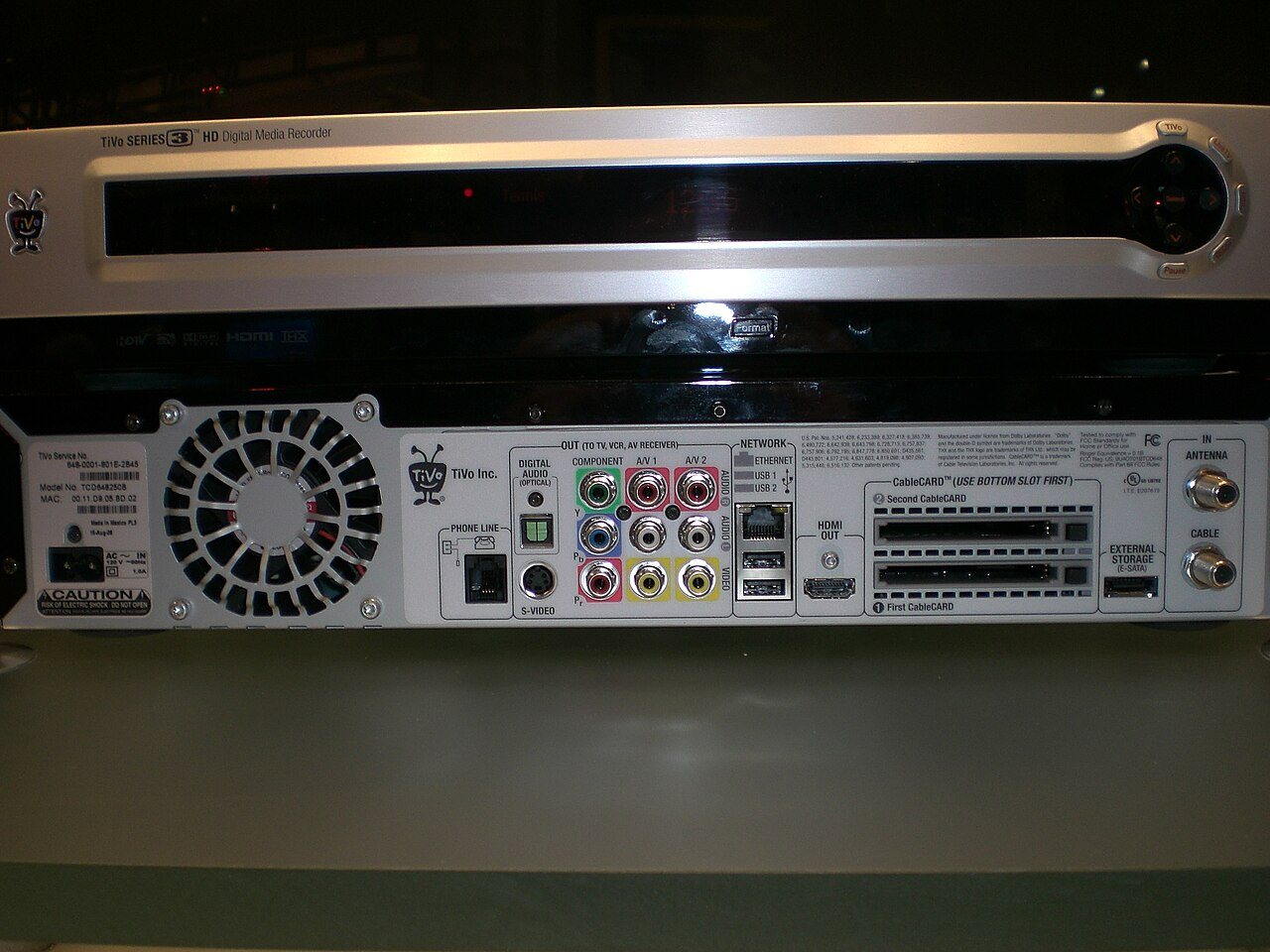
TiVo Series 3 HD DVR unit, the device that brought high-definition recording to living rooms
A TiVo Series 3 HD — the device that brought high-definition DVR recording to living rooms and became one of TiVo's most popular models.

Born at Silicon Graphics, Raised on a Radical Idea

TiVo's origin story begins not in a garage, but inside the offices of Silicon Graphics Inc. (SGI), the company famous for building the workstations that rendered the dinosaurs in Jurassic Park. In the mid-1990s, two SGI engineers — Mike Ramsay and Jim Barton — had been working on Time Warner's ambitious Full Service Network, an early experiment in interactive television deployed in Orlando, Florida, in 1994.

The Full Service Network was ahead of its time and ultimately too expensive to scale, but it planted a seed. Ramsay and Barton saw that digital video, stored on hard drives instead of magnetic tape, could fundamentally change how people interacted with television. In August 1997, they incorporated a company called Teleworld, Inc. Their original vision was broader — a networked home entertainment hub — but at the suggestion of advisor Randy Komisar, they narrowed their focus to something more specific and revolutionary: a device that could record digitized television onto a hard disk, giving viewers total control over when and how they watched.

The engineering challenge was enormous. In the late 1990s, hard drives were expensive and relatively small. Video compression was still primitive compared to modern standards. The team had to build not just the hardware, but an entire software platform — the now-iconic TiVo interface with its cheerful "bloop" sounds — plus a backend service that could download program guide data nightly over a phone line. Yes, a phone line. The first TiVos literally called home every night using a built-in modem to update their channel listings.

The Launch That Almost Wasn't

Teleworld renamed itself TiVo Inc. on July 21, 1999, choosing a name that was short, punchy, and — critically — easy to say. After exhibiting a prototype at the Consumer Electronics Show in January 1999, CEO Mike Ramsay made a bold call: the first TiVo would ship on March 31, 1999, despite engineers estimating they needed four to five more months of work. It was an insane deadline, but Ramsay knew the company was in a race. A competitor called ReplayTV, founded by another Silicon Valley entrepreneur named Anthony Wood (who would later create Roku), was developing a nearly identical product.

TiVo and its manufacturing partner Philips Electronics met the deadline — barely. The first units shipped on March 31, 1999, priced at approximately $500 for a 14-hour model and $999 for the 30-hour version. Buyers also committed to a $9.95 monthly subscription fee to access TiVo's electronic program guide and recording features. It was expensive by any measure, but early adopters didn't care. The reviews were euphoric.

The device worked exactly as promised. You could pause live television — a concept so mind-bending in 1999 that people literally didn't believe it until they saw it demonstrated. You could rewind a play in a football game and watch it again in slow motion while the game continued recording in the background. You could set it to record every episode of The Sopranos automatically, and it would find them regardless of schedule changes. TiVo even had a feature called "Thumbs Up / Thumbs Down" that learned your viewing preferences and recorded shows it thought you'd like — a primitive but effective recommendation engine years before Netflix's algorithm existed.

Going Public Into the Dot-Com Frenzy

TiVo's IPO on September 30, 1999, was perfectly timed to catch the tail end of the dot-com bubble. The stock opened strong, and the company raised capital to fund expansion. But like nearly every hardware startup of that era, TiVo was burning cash at an alarming rate. Building and shipping physical devices is expensive. So is maintaining a service infrastructure. So is the marketing needed to explain an entirely new product category to consumers who had never heard of a "digital video recorder."

By the end of 2000, TiVo was in just 150,000 U.S. households. The numbers were growing, but not fast enough. The dot-com crash hammered the stock price. And a much bigger problem was emerging on the horizon: the cable companies were watching.

The DirecTV Deal — TiVo's Golden Age

TiVo's first major breakthrough came through a partnership with DirecTV, the satellite television provider. Starting in 2000, DirecTV offered a co-branded "DirecTV TiVo" receiver — later called the DirecTV DVR — that combined satellite reception with TiVo's recording software. It was a genuine hit. Millions of DirecTV subscribers adopted the device, and for many Americans, this was their first exposure to TiVo's technology.

The partnership drove TiVo's subscriber count upward dramatically. In June 2000, AOL acquired a 15 percent stake in the company, providing both capital and mainstream credibility. By November 2003, TiVo signed up its one-millionth subscriber. The brand was becoming a cultural phenomenon. "TiVo" appeared in sitcom dialogue, late-night monologues, and newspaper headlines. Time magazine named TiVo one of the greatest inventions of the year. The word entered the dictionary as a verb.

But there was a dark side to TiVo's success that most consumers never saw: the company had never turned a profit. By the time it hit one million subscribers, TiVo had accumulated more than $550 million in debt. Each subscriber cost more to acquire than they generated in revenue. The hardware was sold at or below cost, the service infrastructure was expensive to maintain, and the monthly subscription fee wasn't enough to close the gap.

The Cable Companies Strike Back

The existential threat to TiVo wasn't another startup — it was the cable industry itself. Companies like Comcast, Time Warner Cable, and Cox Communications realized that DVR functionality was something they could build directly into their own set-top boxes. Why would a cable subscriber pay $500 plus $10 a month for a standalone TiVo when their cable company could rent them a DVR for $5 a month with no upfront cost, bundled right into their existing cable bill?

The cable company DVRs were, by almost every measure, inferior to TiVo. The interfaces were clunky. The recommendation features were nonexistent. The remote controls were ugly. But none of that mattered. The cable DVRs had two overwhelming advantages: they were cheap, and they were convenient. A Comcast subscriber could add DVR service with a single phone call. No installation, no separate box, no separate subscription.

TiVo tried desperately to partner with cable companies rather than compete against them. The strategy was sound in theory: license TiVo's superior software to the cable operators and let them deploy it on their own hardware. But cable companies wanted nothing to do with it. They preferred their own inferior software because it gave them complete control over the user experience — and the revenue.

TiVo's iconic peanut-shaped remote control with its distinctive thumbs up and thumbs down buttons
TiVo's iconic "peanut" remote control — designed to feel natural in the hand and featuring the distinctive Thumbs Up and Thumbs Down buttons that powered TiVo's recommendation engine.

Peak and Decline: The Numbers Tell the Story

TiVo's subscriber count peaked at approximately 4.36 million in January 2006. That number included both standalone TiVo subscribers and those using TiVo through the DirecTV partnership. But the DirecTV relationship was already souring. In 2005, DirecTV — now owned by Rupert Murdoch's News Corporation — began developing its own DVR technology and phasing out TiVo-powered boxes. By 2007, DirecTV had largely replaced TiVo with its own "DirecTV Plus DVR," and millions of subscribers who had been counted as TiVo users quietly disappeared from the company's rolls.

Meanwhile, the standalone DVR market was being devoured by cable company offerings. By 2010, cable and satellite DVRs were in over 40 million American homes. TiVo's retail subscriber base, meaning people who bought a TiVo box on their own, had dwindled to around 2 million. The company that had invented the entire category now controlled a tiny fraction of it.

The Patent Wars: TiVo's Unlikely Lifeline

If TiVo had depended solely on hardware sales and subscriptions, it almost certainly would have gone bankrupt in the late 2000s. What saved the company — or at least kept it alive — was its patent portfolio.

TiVo held foundational patents on DVR technology, most critically U.S. Patent No. 6,233,389, known as the "Time Warp" patent, which covered the basic concept of recording a broadcast signal to a hard drive while simultaneously allowing playback. In 2004, TiVo sued EchoStar Communications (the parent company of Dish Network) for patent infringement. The case dragged on for years, but TiVo eventually won a decisive victory.

On April 29, 2011, EchoStar and Dish Network agreed to pay TiVo $500 million to settle all pending patent litigation. The settlement included an initial payment of $300 million, with the remaining $200 million distributed in six annual installments between 2012 and 2017. It was a staggering sum — and it fundamentally changed TiVo's business. The company began aggressively licensing its patent portfolio to other companies, including AT&T, Verizon, and Cisco. By some estimates, TiVo's total patent licensing revenue eventually exceeded $1.6 billion.

TiVo had become something it never intended to be: a patent licensing company that happened to still sell DVRs.

Acquisition, Merger, and the End of TiVo Hardware

On April 29, 2016, Rovi Corporation — a media technology and patent licensing firm — announced it would acquire TiVo Inc. for $1.1 billion. The deal, which closed on September 8, 2016, combined Rovi's intellectual property portfolio with TiVo's patents and brand. The merged entity operated under the TiVo name and held over 6,000 pending and registered patents.

But the Rovi acquisition made it clear where TiVo's real value lay: not in the beloved DVR boxes, but in the intellectual property. The TiVo brand was worth keeping, but the hardware business was increasingly an afterthought.

Then, in December 2019, TiVo Corporation announced a merger with Xperi Corporation, a deal valued at approximately $3 billion. The merger closed on June 1, 2020, and the combined company operated under the Xperi name, though it continued to sell entertainment services under the TiVo brand alongside Xperi's DTS audio and IMAX Enhanced brands.

In October 2022, Xperi completed a spinoff, separating its product business from its intellectual property licensing arm. The IP business became Adeia Inc., while the product side kept the Xperi name. TiVo, as a brand, lived on under Xperi — but the writing was on the wall. In October 2025, Xperi officially discontinued TiVo DVR hardware products, ending a 26-year run.

Why TiVo Really Lost

TiVo's failure wasn't a failure of vision or technology. It was a failure of business model in the face of structural market forces. The core problems were:

  • The cable companies controlled the customer relationship. TiVo needed cable subscribers to buy a separate box and pay a separate fee. The cable companies could simply bundle inferior DVR functionality into their existing service at minimal incremental cost. Convenience and price beat quality every time.
  • The DirecTV dependency was fragile. When DirecTV decided to build its own DVR, TiVo lost millions of subscribers overnight with no way to replace them.
  • Hardware economics were brutal. Selling physical devices at razor-thin margins (or losses) while trying to recoup costs through monthly subscriptions is one of the hardest business models in consumer electronics. TiVo never achieved the scale needed to make it work.
  • Streaming killed the DVR category entirely. The final blow came not from cable DVRs but from Netflix, Hulu, and the streaming revolution. Why record shows to watch later when you can stream anything on demand? The very concept of "time-shifting" — TiVo's entire reason for existence — became irrelevant when content was available anytime, anywhere.

TiVo's Legacy

Despite its commercial failure, TiVo's impact on television and technology is immeasurable. Every DVR that followed — including the cable company boxes that killed TiVo's hardware business — was built on concepts TiVo pioneered. The idea that you should be able to pause, rewind, and record live TV is now so fundamental that it's difficult to imagine a world without it.

TiVo also pioneered the concept of the "recommendation engine" in consumer electronics. Its Thumbs Up / Thumbs Down system was a precursor to the algorithmic recommendations that now power Netflix, Spotify, YouTube, and virtually every content platform on earth. TiVo was doing collaborative filtering in living rooms before most people had heard the term.

And TiVo gave us something intangible but profound: it was the first device that made people feel like they were in control of their television, not the other way around. For a generation of early adopters, that first moment of pausing live TV was genuinely magical — a glimpse of a future where technology served the viewer, not the broadcaster.

The TiVo box is gone now. But every time you hit pause on a live broadcast, skip ahead in a recorded show, or let an algorithm decide what you should watch next, you're living in the world TiVo built.

FAQ

When was TiVo founded?
TiVo was incorporated on August 4, 1997, as Teleworld, Inc. by Mike Ramsay and Jim Barton. The company renamed itself TiVo Inc. on July 21, 1999.

When did the first TiVo ship?
The first TiVo DVR shipped on March 31, 1999, manufactured in partnership with Philips Electronics. It was priced at approximately $500 for the 14-hour model.

How many subscribers did TiVo have at its peak?
TiVo's subscriber count peaked at approximately 4.36 million in January 2006, including both standalone subscribers and DirecTV TiVo users.

How much did TiVo win in patent lawsuits?
TiVo's most significant patent victory was a $500 million settlement with Dish Network and EchoStar in 2011. Total patent licensing revenue over the company's lifetime exceeded $1.6 billion.

Who bought TiVo?
Rovi Corporation acquired TiVo for $1.1 billion in 2016. The combined company later merged with Xperi Corporation in a $3 billion deal that closed in June 2020.

Can you still buy a TiVo?
No. Xperi discontinued TiVo DVR hardware products in October 2025. The TiVo brand continues as a streaming and entertainment platform under Xperi, but the iconic DVR boxes are no longer manufactured or sold.

What killed TiVo?
TiVo was squeezed from two directions: cable companies offering cheaper bundled DVRs, and streaming services eliminating the need for DVRs altogether. The loss of the DirecTV partnership in the mid-2000s also removed millions of subscribers from TiVo's base.

Related Posts:
← Back to Blog

What Happened to TiVo? The DVR That Changed Television Forever | 404 Memory Found

📖 What Happened to TiVo? The DVR That Changed Television Forever

Before TiVo, watching television meant being a prisoner of the broadcast schedule. If your favorite show aired at 8 PM on Thursday, you watched it at 8 PM on Thursday — or you missed it. The VCR offered a theoretical escape, but anyone who ever tried to program one knows the reality: blinking 12:00 clocks, mangled tapes, and recordings that started halfway through the wrong show.

Then, in 1999, a small Silicon Valley startup shipped a box that changed everything. It let you pause live TV. Rewind a play you just missed. Record entire seasons of shows without touching a tape. Skip commercials with a casual flick of the thumb. The company was TiVo, and within a few years, its name had become a verb — "I'll just TiVo it" — synonymous with recording television itself.

But TiVo's story is one of the cruelest in tech history: the company that invented an entirely new category of consumer electronics, changed how hundreds of millions of people watch TV, and still ended up losing everything to the cable companies it tried to partner with.

TiVo Series 3 HD DVR unit, the device that brought high-definition recording to living rooms
A TiVo Series 3 HD — the device that brought high-definition DVR recording to living rooms and became one of TiVo's most popular models.

Born at Silicon Graphics, Raised on a Radical Idea

TiVo's origin story begins not in a garage, but inside the offices of Silicon Graphics Inc. (SGI), the company famous for building the workstations that rendered the dinosaurs in Jurassic Park. In the mid-1990s, two SGI engineers — Mike Ramsay and Jim Barton — had been working on Time Warner's ambitious Full Service Network, an early experiment in interactive television deployed in Orlando, Florida, in 1994.

The Full Service Network was ahead of its time and ultimately too expensive to scale, but it planted a seed. Ramsay and Barton saw that digital video, stored on hard drives instead of magnetic tape, could fundamentally change how people interacted with television. In August 1997, they incorporated a company called Teleworld, Inc. Their original vision was broader — a networked home entertainment hub — but at the suggestion of advisor Randy Komisar, they narrowed their focus to something more specific and revolutionary: a device that could record digitized television onto a hard disk, giving viewers total control over when and how they watched.

The engineering challenge was enormous. In the late 1990s, hard drives were expensive and relatively small. Video compression was still primitive compared to modern standards. The team had to build not just the hardware, but an entire software platform — the now-iconic TiVo interface with its cheerful "bloop" sounds — plus a backend service that could download program guide data nightly over a phone line. Yes, a phone line. The first TiVos literally called home every night using a built-in modem to update their channel listings.

The Launch That Almost Wasn't

Teleworld renamed itself TiVo Inc. on July 21, 1999, choosing a name that was short, punchy, and — critically — easy to say. After exhibiting a prototype at the Consumer Electronics Show in January 1999, CEO Mike Ramsay made a bold call: the first TiVo would ship on March 31, 1999, despite engineers estimating they needed four to five more months of work. It was an insane deadline, but Ramsay knew the company was in a race. A competitor called ReplayTV, founded by another Silicon Valley entrepreneur named Anthony Wood (who would later create Roku), was developing a nearly identical product.

TiVo and its manufacturing partner Philips Electronics met the deadline — barely. The first units shipped on March 31, 1999, priced at approximately $500 for a 14-hour model and $999 for the 30-hour version. Buyers also committed to a $9.95 monthly subscription fee to access TiVo's electronic program guide and recording features. It was expensive by any measure, but early adopters didn't care. The reviews were euphoric.

The device worked exactly as promised. You could pause live television — a concept so mind-bending in 1999 that people literally didn't believe it until they saw it demonstrated. You could rewind a play in a football game and watch it again in slow motion while the game continued recording in the background. You could set it to record every episode of The Sopranos automatically, and it would find them regardless of schedule changes. TiVo even had a feature called "Thumbs Up / Thumbs Down" that learned your viewing preferences and recorded shows it thought you'd like — a primitive but effective recommendation engine years before Netflix's algorithm existed.

Going Public Into the Dot-Com Frenzy

TiVo's IPO on September 30, 1999, was perfectly timed to catch the tail end of the dot-com bubble. The stock opened strong, and the company raised capital to fund expansion. But like nearly every hardware startup of that era, TiVo was burning cash at an alarming rate. Building and shipping physical devices is expensive. So is maintaining a service infrastructure. So is the marketing needed to explain an entirely new product category to consumers who had never heard of a "digital video recorder."

By the end of 2000, TiVo was in just 150,000 U.S. households. The numbers were growing, but not fast enough. The dot-com crash hammered the stock price. And a much bigger problem was emerging on the horizon: the cable companies were watching.

The DirecTV Deal — TiVo's Golden Age

TiVo's first major breakthrough came through a partnership with DirecTV, the satellite television provider. Starting in 2000, DirecTV offered a co-branded "DirecTV TiVo" receiver — later called the DirecTV DVR — that combined satellite reception with TiVo's recording software. It was a genuine hit. Millions of DirecTV subscribers adopted the device, and for many Americans, this was their first exposure to TiVo's technology.

The partnership drove TiVo's subscriber count upward dramatically. In June 2000, AOL acquired a 15 percent stake in the company, providing both capital and mainstream credibility. By November 2003, TiVo signed up its one-millionth subscriber. The brand was becoming a cultural phenomenon. "TiVo" appeared in sitcom dialogue, late-night monologues, and newspaper headlines. Time magazine named TiVo one of the greatest inventions of the year. The word entered the dictionary as a verb.

But there was a dark side to TiVo's success that most consumers never saw: the company had never turned a profit. By the time it hit one million subscribers, TiVo had accumulated more than $550 million in debt. Each subscriber cost more to acquire than they generated in revenue. The hardware was sold at or below cost, the service infrastructure was expensive to maintain, and the monthly subscription fee wasn't enough to close the gap.

The Cable Companies Strike Back

The existential threat to TiVo wasn't another startup — it was the cable industry itself. Companies like Comcast, Time Warner Cable, and Cox Communications realized that DVR functionality was something they could build directly into their own set-top boxes. Why would a cable subscriber pay $500 plus $10 a month for a standalone TiVo when their cable company could rent them a DVR for $5 a month with no upfront cost, bundled right into their existing cable bill?

The cable company DVRs were, by almost every measure, inferior to TiVo. The interfaces were clunky. The recommendation features were nonexistent. The remote controls were ugly. But none of that mattered. The cable DVRs had two overwhelming advantages: they were cheap, and they were convenient. A Comcast subscriber could add DVR service with a single phone call. No installation, no separate box, no separate subscription.

TiVo tried desperately to partner with cable companies rather than compete against them. The strategy was sound in theory: license TiVo's superior software to the cable operators and let them deploy it on their own hardware. But cable companies wanted nothing to do with it. They preferred their own inferior software because it gave them complete control over the user experience — and the revenue.

TiVo's iconic peanut-shaped remote control with its distinctive thumbs up and thumbs down buttons
TiVo's iconic "peanut" remote control — designed to feel natural in the hand and featuring the distinctive Thumbs Up and Thumbs Down buttons that powered TiVo's recommendation engine.

Peak and Decline: The Numbers Tell the Story

TiVo's subscriber count peaked at approximately 4.36 million in January 2006. That number included both standalone TiVo subscribers and those using TiVo through the DirecTV partnership. But the DirecTV relationship was already souring. In 2005, DirecTV — now owned by Rupert Murdoch's News Corporation — began developing its own DVR technology and phasing out TiVo-powered boxes. By 2007, DirecTV had largely replaced TiVo with its own "DirecTV Plus DVR," and millions of subscribers who had been counted as TiVo users quietly disappeared from the company's rolls.

Meanwhile, the standalone DVR market was being devoured by cable company offerings. By 2010, cable and satellite DVRs were in over 40 million American homes. TiVo's retail subscriber base, meaning people who bought a TiVo box on their own, had dwindled to around 2 million. The company that had invented the entire category now controlled a tiny fraction of it.

The Patent Wars: TiVo's Unlikely Lifeline

If TiVo had depended solely on hardware sales and subscriptions, it almost certainly would have gone bankrupt in the late 2000s. What saved the company — or at least kept it alive — was its patent portfolio.

TiVo held foundational patents on DVR technology, most critically U.S. Patent No. 6,233,389, known as the "Time Warp" patent, which covered the basic concept of recording a broadcast signal to a hard drive while simultaneously allowing playback. In 2004, TiVo sued EchoStar Communications (the parent company of Dish Network) for patent infringement. The case dragged on for years, but TiVo eventually won a decisive victory.

On April 29, 2011, EchoStar and Dish Network agreed to pay TiVo $500 million to settle all pending patent litigation. The settlement included an initial payment of $300 million, with the remaining $200 million distributed in six annual installments between 2012 and 2017. It was a staggering sum — and it fundamentally changed TiVo's business. The company began aggressively licensing its patent portfolio to other companies, including AT&T, Verizon, and Cisco. By some estimates, TiVo's total patent licensing revenue eventually exceeded $1.6 billion.

TiVo had become something it never intended to be: a patent licensing company that happened to still sell DVRs.

Acquisition, Merger, and the End of TiVo Hardware

On April 29, 2016, Rovi Corporation — a media technology and patent licensing firm — announced it would acquire TiVo Inc. for $1.1 billion. The deal, which closed on September 8, 2016, combined Rovi's intellectual property portfolio with TiVo's patents and brand. The merged entity operated under the TiVo name and held over 6,000 pending and registered patents.

But the Rovi acquisition made it clear where TiVo's real value lay: not in the beloved DVR boxes, but in the intellectual property. The TiVo brand was worth keeping, but the hardware business was increasingly an afterthought.

Then, in December 2019, TiVo Corporation announced a merger with Xperi Corporation, a deal valued at approximately $3 billion. The merger closed on June 1, 2020, and the combined company operated under the Xperi name, though it continued to sell entertainment services under the TiVo brand alongside Xperi's DTS audio and IMAX Enhanced brands.

In October 2022, Xperi completed a spinoff, separating its product business from its intellectual property licensing arm. The IP business became Adeia Inc., while the product side kept the Xperi name. TiVo, as a brand, lived on under Xperi — but the writing was on the wall. In October 2025, Xperi officially discontinued TiVo DVR hardware products, ending a 26-year run.

Why TiVo Really Lost

TiVo's failure wasn't a failure of vision or technology. It was a failure of business model in the face of structural market forces. The core problems were:

  • The cable companies controlled the customer relationship. TiVo needed cable subscribers to buy a separate box and pay a separate fee. The cable companies could simply bundle inferior DVR functionality into their existing service at minimal incremental cost. Convenience and price beat quality every time.
  • The DirecTV dependency was fragile. When DirecTV decided to build its own DVR, TiVo lost millions of subscribers overnight with no way to replace them.
  • Hardware economics were brutal. Selling physical devices at razor-thin margins (or losses) while trying to recoup costs through monthly subscriptions is one of the hardest business models in consumer electronics. TiVo never achieved the scale needed to make it work.
  • Streaming killed the DVR category entirely. The final blow came not from cable DVRs but from Netflix, Hulu, and the streaming revolution. Why record shows to watch later when you can stream anything on demand? The very concept of "time-shifting" — TiVo's entire reason for existence — became irrelevant when content was available anytime, anywhere.

TiVo's Legacy

Despite its commercial failure, TiVo's impact on television and technology is immeasurable. Every DVR that followed — including the cable company boxes that killed TiVo's hardware business — was built on concepts TiVo pioneered. The idea that you should be able to pause, rewind, and record live TV is now so fundamental that it's difficult to imagine a world without it.

TiVo also pioneered the concept of the "recommendation engine" in consumer electronics. Its Thumbs Up / Thumbs Down system was a precursor to the algorithmic recommendations that now power Netflix, Spotify, YouTube, and virtually every content platform on earth. TiVo was doing collaborative filtering in living rooms before most people had heard the term.

And TiVo gave us something intangible but profound: it was the first device that made people feel like they were in control of their television, not the other way around. For a generation of early adopters, that first moment of pausing live TV was genuinely magical — a glimpse of a future where technology served the viewer, not the broadcaster.

The TiVo box is gone now. But every time you hit pause on a live broadcast, skip ahead in a recorded show, or let an algorithm decide what you should watch next, you're living in the world TiVo built.

FAQ

When was TiVo founded?
TiVo was incorporated on August 4, 1997, as Teleworld, Inc. by Mike Ramsay and Jim Barton. The company renamed itself TiVo Inc. on July 21, 1999.

When did the first TiVo ship?
The first TiVo DVR shipped on March 31, 1999, manufactured in partnership with Philips Electronics. It was priced at approximately $500 for the 14-hour model.

How many subscribers did TiVo have at its peak?
TiVo's subscriber count peaked at approximately 4.36 million in January 2006, including both standalone subscribers and DirecTV TiVo users.

How much did TiVo win in patent lawsuits?
TiVo's most significant patent victory was a $500 million settlement with Dish Network and EchoStar in 2011. Total patent licensing revenue over the company's lifetime exceeded $1.6 billion.

Who bought TiVo?
Rovi Corporation acquired TiVo for $1.1 billion in 2016. The combined company later merged with Xperi Corporation in a $3 billion deal that closed in June 2020.

Can you still buy a TiVo?
No. Xperi discontinued TiVo DVR hardware products in October 2025. The TiVo brand continues as a streaming and entertainment platform under Xperi, but the iconic DVR boxes are no longer manufactured or sold.

What killed TiVo?
TiVo was squeezed from two directions: cable companies offering cheaper bundled DVRs, and streaming services eliminating the need for DVRs altogether. The loss of the DirecTV partnership in the mid-2000s also removed millions of subscribers from TiVo's base.

← Back to Blog
00:00