What Happened to Boo.com? The $135M Fashion Dot-Com Flop

2026-04-02 by 404 Memory Found

By the late 1990s, venture capitalists had developed a particular kind of fever. They were convinced that three things could be purchased with unlimited capital: patience, user acquisition, and the ability to rewrite the laws of retail. One group of Swedish entrepreneurs believed they had found the ultimate test case: selling designer handbags and limited-edition sneakers to people across an entire continent simultaneously, over connections that moved at 56 kilobits per second.

This is the story of Boo.com, a company that raised $135 million, employed over 400 people, and managed to spend its entire runway in roughly six months of operation. Not a bankruptcy after years of struggle. Not a slow fade into irrelevance. Six months. The mathematics here are almost impressive: approximately $1 million per week in operating costs, burning through venture capital at a speed that would make even modern startups pause.

How Three Swedes Built Credibility, Then Destroyed It

Ernst Malmsten, Kajsa Leander, and Patrik Hedelin weren't first-time entrepreneurs. They had created Bokus.com in 1997, which became the third largest online bookstore in Europe before the company sold to Bertelsmann. Books were, in retrospect, the perfect early internet product: standardized, their size didn't matter much when shipped in a box, and consumers had already accepted buying them sight-unseen through mail catalogs. The success of Bokus gave these three founders something that money alone couldn't buy: evidence that they understood how to build something real.

So when they announced Boo.com in 1998, the doors to capital opened. J.P. Morgan backed them. Goldman Sachs backed them. Bernard Arnault, the chairman of LVMH, backed them with personal capital. The Benetton family backed them. This wasn't a scrappy bootstrapped startup. This was a company built on the assumption that pedigree and firepower could solve any problem.

The valuation climbed. At its peak, Boo.com was worth $390 million, even as losses accelerated and the service remained perpetually "nearly ready." Money tends to attract more money during boom periods. Venture capitalists in 1998 and 1999 were operating under a unique form of logic: the company that grew fastest won, profitability was for old industries, and any vision that required enough capital to matter was therefore worth pursuing.

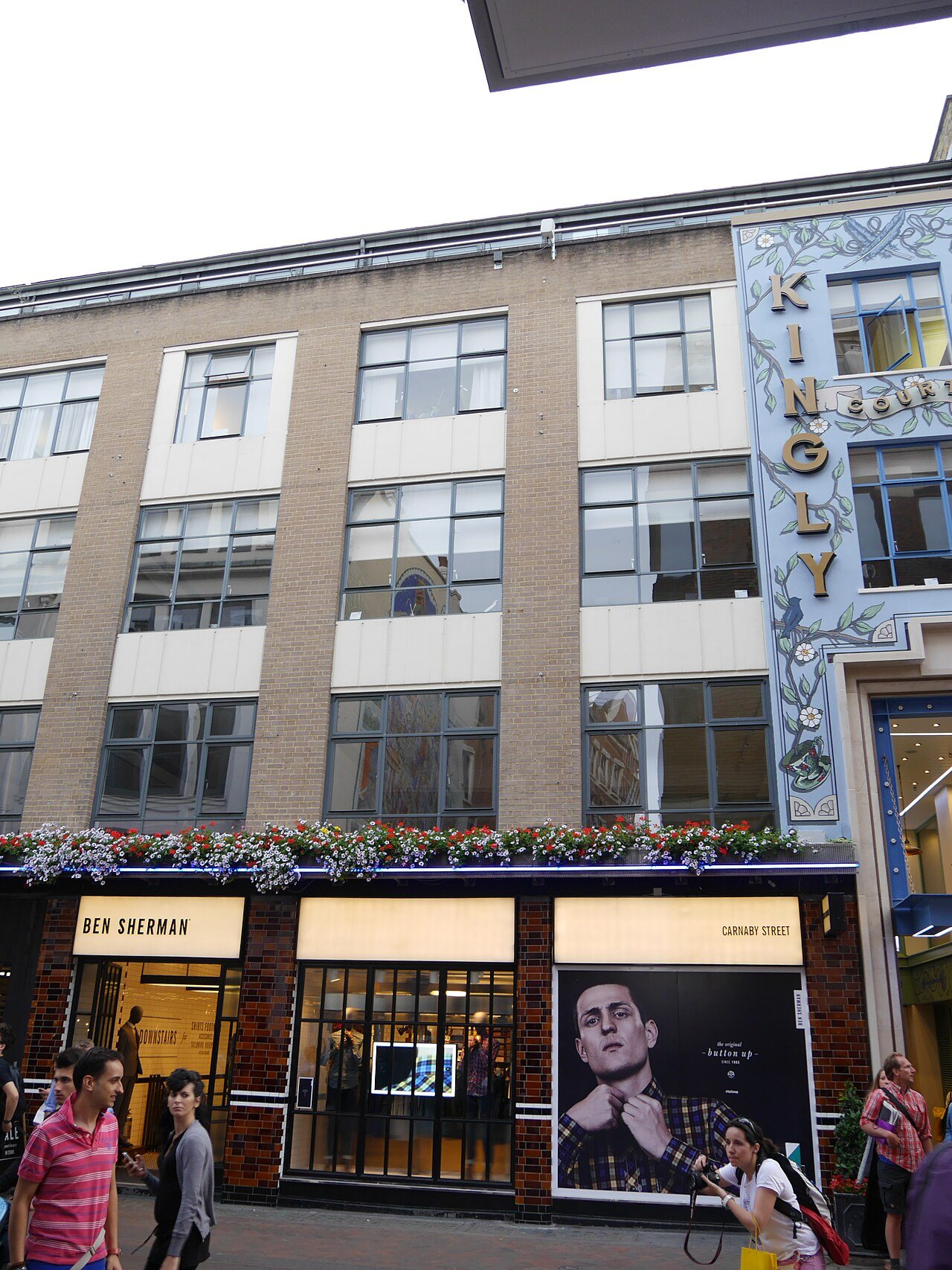
Carnaby Street in London, 1968, the historic heart of British fashion
Carnaby Street, London, 1968. Decades before Boo.com tried to move fashion retail onto the internet, this neighborhood was already the beating heart of British style.

Here's the thing: Boo.com wasn't fundamentally wrong about the future. Fashion retail would eventually move online. Companies like ASOS, Farfetch, and Net-a-Porter would prove that the model worked. The lesson of Boo.com isn't that the concept was broken. It's that Boo.com was catastrophically, impossibly early, and the founders were operating with the assumption that capital could erase the problem of infrastructure.

The Vision That Made Investors Salivate

The pitch was elegant: a single website where Europeans and Americans could buy high-end designer clothing, sportswear, and limited-edition sneakers. Not a catalog. Not a marketplace. A unified, integrated shopping experience. They would launch simultaneously in 18 countries. They would build proprietary 3D technology that let customers rotate products in real time. They would hire custom developers, lease expensive office space across continents, and create an experience so polished that it could command premium markups on luxury goods.

The execution plan required spending $25 million on marketing before the site even launched. This is where the logic starts to break down. A startup's job is to find product-market fit, to discover what people actually want to buy. Instead, Boo.com decided to spend roughly a fifth of its entire funding telling people about something that hadn't launched yet. It was a bet that brand awareness, spending, and sheer force of will could substitute for actually having a functioning product.

The centerpiece of the brand identity was Miss Boo, a virtual shopping assistant avatar. This cartoon character would guide users through the store, offer recommendations, and provide a personality to the brand. The technology required to render Miss Boo in the user's browser meant the website itself became dependent on JavaScript and Flash, technologies that required plugins, added complexity, and slowed load times to a crawl.

The 3D product rotation technology sounded impressive in a pitch deck. In practice, it was a disaster. Most users were on dial-up connections that delivered data at 56 kilobits per second. A single image-based 3D product carousel required loading dozens of high-resolution images. The average load time for a product page reportedly exceeded 30 seconds. Users didn't wait. They left. This is essentially what the mobile optimization crisis became fifteen years later, when companies learned the hard way that bandwidth constraints always win.

The Launch That Nobody Could Access

November 3, 1999. After months of delays and hype, Boo.com went live. The site was supposed to be a seamless, elegant shopping experience. Instead, it was a masterclass in how to build something that nobody could use, for technical reasons the builders chose to ignore.

The website only worked properly on Windows browsers. Mac users couldn't navigate the site. This eliminated a significant portion of the potential audience, particularly in creative industries where Macs had stronger penetration. If you're going to bet $135 million on a global retail platform, you test across different browsers before launch. Boo.com didn't.

The site required JavaScript and Flash to function. Some corporate firewalls blocked Flash. Some antivirus software disabled JavaScript. Users trying to shop were met with blank pages, broken navigation, and spinning loading icons. The technology that was supposed to be cutting-edge and differentiated became the primary barrier to actually completing a transaction.

Look, the founders weren't stupid. They had proven they could build something. They just didn't see what was coming: that bandwidth constraints wouldn't disappear as fast as optimists predicted, that consumers wouldn't wait 30 seconds for a page to load, that technology differentiation in the form of 3D product viewers was a luxury that dial-up internet simply couldn't support.

Spending Like the Downturn Would Never Come

The burn rate was staggering. At peak operation, Boo.com was spending approximately $1 million per week in operating costs. This covered salaries for over 400 employees spread across multiple continents, expensive office space in major cities, marketing campaigns, technology infrastructure, and the continuous development cycle required to rebuild the website as they discovered, week by week, that their original vision didn't work.

The company was built on the assumption that capital was infinite. That if they spent enough money and moved fast enough, they could overcome any obstacle. Venture capitalists were reinforcing this assumption. The late 1990s tech boom had created an environment where constraints supposedly didn't exist, where the question wasn't "can we afford this" but "can we move fast enough to capture the market before someone else does."

The real question is what exactly Boo.com was building during those final months. They had a website that barely worked. They had enormous expenses. They didn't have organic revenue or user growth metrics that showed any trajectory toward profitability. What they had was a slowly cooling furnace of venture capital, and the knowledge that in a matter of months, they would run out of money.

A photograph from The Story of the Internet exhibition documenting the early web era
From "The Story of the Internet" exhibition. The late 1990s promised a digital revolution in retail, but most consumers were still on dial-up connections that could barely load a product page.

By early 2000, the warning signs were unmistakable. The dot-com bubble was beginning to show the first visible cracks. Companies that had been valued in the hundreds of millions of dollars suddenly couldn't raise additional funding. The easy money was drying up. For companies like Boo.com that had built their entire model on continuous capital infusion, this shift was existential.

The Collapse

Boo.com was placed into receivership on May 18, 2000. Less than seven months after launch. The company had spent $135 million in funding and had generated virtually no meaningful revenue. Over 400 people lost their jobs. Many of them hadn't been paid for months as the company attempted to stretch its remaining capital to keep operations running.

The assets were liquidated quickly. Fashionmall.com purchased the brand name, domain, and intellectual property for approximately $372,500. To put that in perspective, it represents a 99.9% reduction from the peak valuation of $390 million. It's what happens when you're trying to sell technology that doesn't work to an industry that has moved on.

In 2005, CNET ranked Boo.com as the sixth greatest dot-com flop. It wasn't even the most spectacular failure of the era, which speaks to how many spectacular failures there were. Hundreds of companies raised tens of millions of dollars, burned through the capital at incredible speeds, and vanished without a trace. Boo.com was simply one of the most visible.

What Boo.com Actually Proved

The lesson of Boo.com isn't that online fashion retail was a bad idea. ASOS, founded in 2000, would eventually prove that the model worked if you built it carefully and didn't spend $25 million on marketing before launching. Net-a-Porter, also founded in 2000, proved it worked for luxury goods. Farfetch proved it worked for connecting boutiques with a global audience.

The lesson is about timing, constraints, and the particular form of blindness that unlimited capital can create. Boo.com's founders and investors believed they could overcome technological limitations through spending. They believed they could build a global luxury retail experience when the global internet didn't have the bandwidth to support it. They believed they could launch in 18 countries simultaneously with a website that barely worked in one.

These weren't delusional people. They had proven capability. They had legitimate insight that online fashion retail would become important. They just fundamentally misunderstood what was possible given the constraints of 1999 internet infrastructure, and their funding gave them enough runway to be catastrophically wrong for an extended period.

The modern parallel is worth noting. Every few years, a company raises enormous capital to disrupt an industry, builds something that doesn't quite work, and burns through the money before discovering that the fundamental constraint wasn't capital or ideas but something more basic: a mismatch between their vision and what was actually possible. Boo.com is a high-profile example, but the pattern keeps repeating. Companies that raise too much money too fast often make the same mistake: assuming that capital is a substitute for insight, for product-market fit, or for understanding what consumers actually want.

Boo.com wanted to prove that fashion retail could move online. They were right about the future. They were just wrong about when that future would arrive, and that difference proved fatal.

Frequently Asked Questions

Why did Boo.com spend $25 million on marketing before launching?

The founders believed that brand awareness and anticipation could drive immediate traffic and sales once the site launched. This was a fundamental misreading of how online commerce actually works. Consumers need to trust a platform, need to experience a functioning product, and need to develop repeat purchasing behavior. Marketing can amplify demand, but it can't substitute for a product that works. The spending was a bet that hype could overcome technical limitations.

Why couldn't Boo.com work on Mac browsers?

The website was built primarily for Windows and Internet Explorer, using JavaScript and Flash technologies that behaved differently across platforms. The developers focused on implementing complex features like 3D product rotation and the Miss Boo animated assistant rather than ensuring basic cross-browser compatibility. By 1999, this was already an avoidable oversight. A functioning site on all browsers would have been far more valuable than a flashy site that only worked on some of them.

Was the 3D product rotation technology actually innovative?

Technically, yes. The technology existed and worked. The problem was that it required loading dozens of high-resolution images for each product, which made pages take over 30 seconds to load on dial-up connections. Innovation doesn't matter if it makes the product unusable. This is a pattern that repeats throughout technology history: building complex features that your actual users can't access on their actual hardware.

Could Boo.com have survived with less money?

Possibly. With a smaller budget, the founders would have been forced to launch a simpler product, test it with a smaller market, and iterate based on what users actually wanted. Instead, they built an overly complex global platform that couldn't deliver on its promises. Constraints often force better decision-making. This is essentially what every early-stage company that scales successfully learns: ship something simple, measure what works, and build from there.

Who eventually proved that online fashion retail could work?

Several companies succeeded where Boo.com failed, primarily by launching at the right time and with more disciplined approaches. ASOS launched in 2000 and grew into a multi-billion dollar company by starting simple and scaling gradually. Net-a-Porter, also founded in 2000, proved the luxury segment could work online. Farfetch connected physical boutiques to global buyers. The key difference in every case was patience, iterative development, and waiting for broadband internet to become mainstream before attempting bandwidth-heavy features.

Related Posts:
← Back to Blog

What Happened to Boo.com? The $135M Fashion Dot-Com Flop | 404 Memory Found

📖 What Happened to Boo.com? The $135M Fashion Dot-Com Flop

By the late 1990s, venture capitalists had developed a particular kind of fever. They were convinced that three things could be purchased with unlimited capital: patience, user acquisition, and the ability to rewrite the laws of retail. One group of Swedish entrepreneurs believed they had found the ultimate test case: selling designer handbags and limited-edition sneakers to people across an entire continent simultaneously, over connections that moved at 56 kilobits per second.

This is the story of Boo.com, a company that raised $135 million, employed over 400 people, and managed to spend its entire runway in roughly six months of operation. Not a bankruptcy after years of struggle. Not a slow fade into irrelevance. Six months. The mathematics here are almost impressive: approximately $1 million per week in operating costs, burning through venture capital at a speed that would make even modern startups pause.

How Three Swedes Built Credibility, Then Destroyed It

Ernst Malmsten, Kajsa Leander, and Patrik Hedelin weren't first-time entrepreneurs. They had created Bokus.com in 1997, which became the third largest online bookstore in Europe before the company sold to Bertelsmann. Books were, in retrospect, the perfect early internet product: standardized, their size didn't matter much when shipped in a box, and consumers had already accepted buying them sight-unseen through mail catalogs. The success of Bokus gave these three founders something that money alone couldn't buy: evidence that they understood how to build something real.

So when they announced Boo.com in 1998, the doors to capital opened. J.P. Morgan backed them. Goldman Sachs backed them. Bernard Arnault, the chairman of LVMH, backed them with personal capital. The Benetton family backed them. This wasn't a scrappy bootstrapped startup. This was a company built on the assumption that pedigree and firepower could solve any problem.

The valuation climbed. At its peak, Boo.com was worth $390 million, even as losses accelerated and the service remained perpetually "nearly ready." Money tends to attract more money during boom periods. Venture capitalists in 1998 and 1999 were operating under a unique form of logic: the company that grew fastest won, profitability was for old industries, and any vision that required enough capital to matter was therefore worth pursuing.

Carnaby Street in London, 1968, the historic heart of British fashion
Carnaby Street, London, 1968. Decades before Boo.com tried to move fashion retail onto the internet, this neighborhood was already the beating heart of British style.

Here's the thing: Boo.com wasn't fundamentally wrong about the future. Fashion retail would eventually move online. Companies like ASOS, Farfetch, and Net-a-Porter would prove that the model worked. The lesson of Boo.com isn't that the concept was broken. It's that Boo.com was catastrophically, impossibly early, and the founders were operating with the assumption that capital could erase the problem of infrastructure.

The Vision That Made Investors Salivate

The pitch was elegant: a single website where Europeans and Americans could buy high-end designer clothing, sportswear, and limited-edition sneakers. Not a catalog. Not a marketplace. A unified, integrated shopping experience. They would launch simultaneously in 18 countries. They would build proprietary 3D technology that let customers rotate products in real time. They would hire custom developers, lease expensive office space across continents, and create an experience so polished that it could command premium markups on luxury goods.

The execution plan required spending $25 million on marketing before the site even launched. This is where the logic starts to break down. A startup's job is to find product-market fit, to discover what people actually want to buy. Instead, Boo.com decided to spend roughly a fifth of its entire funding telling people about something that hadn't launched yet. It was a bet that brand awareness, spending, and sheer force of will could substitute for actually having a functioning product.

The centerpiece of the brand identity was Miss Boo, a virtual shopping assistant avatar. This cartoon character would guide users through the store, offer recommendations, and provide a personality to the brand. The technology required to render Miss Boo in the user's browser meant the website itself became dependent on JavaScript and Flash, technologies that required plugins, added complexity, and slowed load times to a crawl.

The 3D product rotation technology sounded impressive in a pitch deck. In practice, it was a disaster. Most users were on dial-up connections that delivered data at 56 kilobits per second. A single image-based 3D product carousel required loading dozens of high-resolution images. The average load time for a product page reportedly exceeded 30 seconds. Users didn't wait. They left. This is essentially what the mobile optimization crisis became fifteen years later, when companies learned the hard way that bandwidth constraints always win.

The Launch That Nobody Could Access

November 3, 1999. After months of delays and hype, Boo.com went live. The site was supposed to be a seamless, elegant shopping experience. Instead, it was a masterclass in how to build something that nobody could use, for technical reasons the builders chose to ignore.

The website only worked properly on Windows browsers. Mac users couldn't navigate the site. This eliminated a significant portion of the potential audience, particularly in creative industries where Macs had stronger penetration. If you're going to bet $135 million on a global retail platform, you test across different browsers before launch. Boo.com didn't.

The site required JavaScript and Flash to function. Some corporate firewalls blocked Flash. Some antivirus software disabled JavaScript. Users trying to shop were met with blank pages, broken navigation, and spinning loading icons. The technology that was supposed to be cutting-edge and differentiated became the primary barrier to actually completing a transaction.

Look, the founders weren't stupid. They had proven they could build something. They just didn't see what was coming: that bandwidth constraints wouldn't disappear as fast as optimists predicted, that consumers wouldn't wait 30 seconds for a page to load, that technology differentiation in the form of 3D product viewers was a luxury that dial-up internet simply couldn't support.

Spending Like the Downturn Would Never Come

The burn rate was staggering. At peak operation, Boo.com was spending approximately $1 million per week in operating costs. This covered salaries for over 400 employees spread across multiple continents, expensive office space in major cities, marketing campaigns, technology infrastructure, and the continuous development cycle required to rebuild the website as they discovered, week by week, that their original vision didn't work.

The company was built on the assumption that capital was infinite. That if they spent enough money and moved fast enough, they could overcome any obstacle. Venture capitalists were reinforcing this assumption. The late 1990s tech boom had created an environment where constraints supposedly didn't exist, where the question wasn't "can we afford this" but "can we move fast enough to capture the market before someone else does."

The real question is what exactly Boo.com was building during those final months. They had a website that barely worked. They had enormous expenses. They didn't have organic revenue or user growth metrics that showed any trajectory toward profitability. What they had was a slowly cooling furnace of venture capital, and the knowledge that in a matter of months, they would run out of money.

A photograph from The Story of the Internet exhibition documenting the early web era
From "The Story of the Internet" exhibition. The late 1990s promised a digital revolution in retail, but most consumers were still on dial-up connections that could barely load a product page.

By early 2000, the warning signs were unmistakable. The dot-com bubble was beginning to show the first visible cracks. Companies that had been valued in the hundreds of millions of dollars suddenly couldn't raise additional funding. The easy money was drying up. For companies like Boo.com that had built their entire model on continuous capital infusion, this shift was existential.

The Collapse

Boo.com was placed into receivership on May 18, 2000. Less than seven months after launch. The company had spent $135 million in funding and had generated virtually no meaningful revenue. Over 400 people lost their jobs. Many of them hadn't been paid for months as the company attempted to stretch its remaining capital to keep operations running.

The assets were liquidated quickly. Fashionmall.com purchased the brand name, domain, and intellectual property for approximately $372,500. To put that in perspective, it represents a 99.9% reduction from the peak valuation of $390 million. It's what happens when you're trying to sell technology that doesn't work to an industry that has moved on.

In 2005, CNET ranked Boo.com as the sixth greatest dot-com flop. It wasn't even the most spectacular failure of the era, which speaks to how many spectacular failures there were. Hundreds of companies raised tens of millions of dollars, burned through the capital at incredible speeds, and vanished without a trace. Boo.com was simply one of the most visible.

What Boo.com Actually Proved

The lesson of Boo.com isn't that online fashion retail was a bad idea. ASOS, founded in 2000, would eventually prove that the model worked if you built it carefully and didn't spend $25 million on marketing before launching. Net-a-Porter, also founded in 2000, proved it worked for luxury goods. Farfetch proved it worked for connecting boutiques with a global audience.

The lesson is about timing, constraints, and the particular form of blindness that unlimited capital can create. Boo.com's founders and investors believed they could overcome technological limitations through spending. They believed they could build a global luxury retail experience when the global internet didn't have the bandwidth to support it. They believed they could launch in 18 countries simultaneously with a website that barely worked in one.

These weren't delusional people. They had proven capability. They had legitimate insight that online fashion retail would become important. They just fundamentally misunderstood what was possible given the constraints of 1999 internet infrastructure, and their funding gave them enough runway to be catastrophically wrong for an extended period.

The modern parallel is worth noting. Every few years, a company raises enormous capital to disrupt an industry, builds something that doesn't quite work, and burns through the money before discovering that the fundamental constraint wasn't capital or ideas but something more basic: a mismatch between their vision and what was actually possible. Boo.com is a high-profile example, but the pattern keeps repeating. Companies that raise too much money too fast often make the same mistake: assuming that capital is a substitute for insight, for product-market fit, or for understanding what consumers actually want.

Boo.com wanted to prove that fashion retail could move online. They were right about the future. They were just wrong about when that future would arrive, and that difference proved fatal.

Frequently Asked Questions

Why did Boo.com spend $25 million on marketing before launching?

The founders believed that brand awareness and anticipation could drive immediate traffic and sales once the site launched. This was a fundamental misreading of how online commerce actually works. Consumers need to trust a platform, need to experience a functioning product, and need to develop repeat purchasing behavior. Marketing can amplify demand, but it can't substitute for a product that works. The spending was a bet that hype could overcome technical limitations.

Why couldn't Boo.com work on Mac browsers?

The website was built primarily for Windows and Internet Explorer, using JavaScript and Flash technologies that behaved differently across platforms. The developers focused on implementing complex features like 3D product rotation and the Miss Boo animated assistant rather than ensuring basic cross-browser compatibility. By 1999, this was already an avoidable oversight. A functioning site on all browsers would have been far more valuable than a flashy site that only worked on some of them.

Was the 3D product rotation technology actually innovative?

Technically, yes. The technology existed and worked. The problem was that it required loading dozens of high-resolution images for each product, which made pages take over 30 seconds to load on dial-up connections. Innovation doesn't matter if it makes the product unusable. This is a pattern that repeats throughout technology history: building complex features that your actual users can't access on their actual hardware.

Could Boo.com have survived with less money?

Possibly. With a smaller budget, the founders would have been forced to launch a simpler product, test it with a smaller market, and iterate based on what users actually wanted. Instead, they built an overly complex global platform that couldn't deliver on its promises. Constraints often force better decision-making. This is essentially what every early-stage company that scales successfully learns: ship something simple, measure what works, and build from there.

Who eventually proved that online fashion retail could work?

Several companies succeeded where Boo.com failed, primarily by launching at the right time and with more disciplined approaches. ASOS launched in 2000 and grew into a multi-billion dollar company by starting simple and scaling gradually. Net-a-Porter, also founded in 2000, proved the luxury segment could work online. Farfetch connected physical boutiques to global buyers. The key difference in every case was patience, iterative development, and waiting for broadband internet to become mainstream before attempting bandwidth-heavy features.

← Back to Blog
00:00