The AOL-Time Warner Merger: The Worst Deal in Corporate History

2026-03-31 by 404 Memory Found

On January 10, 2000, Steve Case and Gerald Levin stood side by side at a press conference in New York and announced the largest merger in corporate history. AOL, a company that delivered the internet through phone lines and free trial CDs, was acquiring Time Warner, the media conglomerate behind CNN, HBO, Warner Bros., and Time magazine. The deal was valued at $182 billion.

The logic seemed obvious. Time Warner had the content. AOL had the audience. Combine them, and you'd have a vertically integrated media empire that could deliver movies, news, and music directly to 30 million American living rooms through AOL's dial-up service. It was the kind of deal that made Wall Street analysts use words like "transformative" and "paradigm shift" without a trace of irony.

Three years later, the combined company posted a loss of $98.7 billion, the largest annual loss in corporate history. By 2003, they had quietly dropped "AOL" from the company name. By 2009, they had formally split apart. Over $200 billion in shareholder value had evaporated. Ted Turner, who had merged his Turner Broadcasting into Time Warner in 1995, estimated he lost roughly 80% of his wealth, approximately $8 billion.

The AOL-Time Warner merger is routinely called the worst deal in business history. The interesting question is not whether it failed. It's why anyone thought it would work.

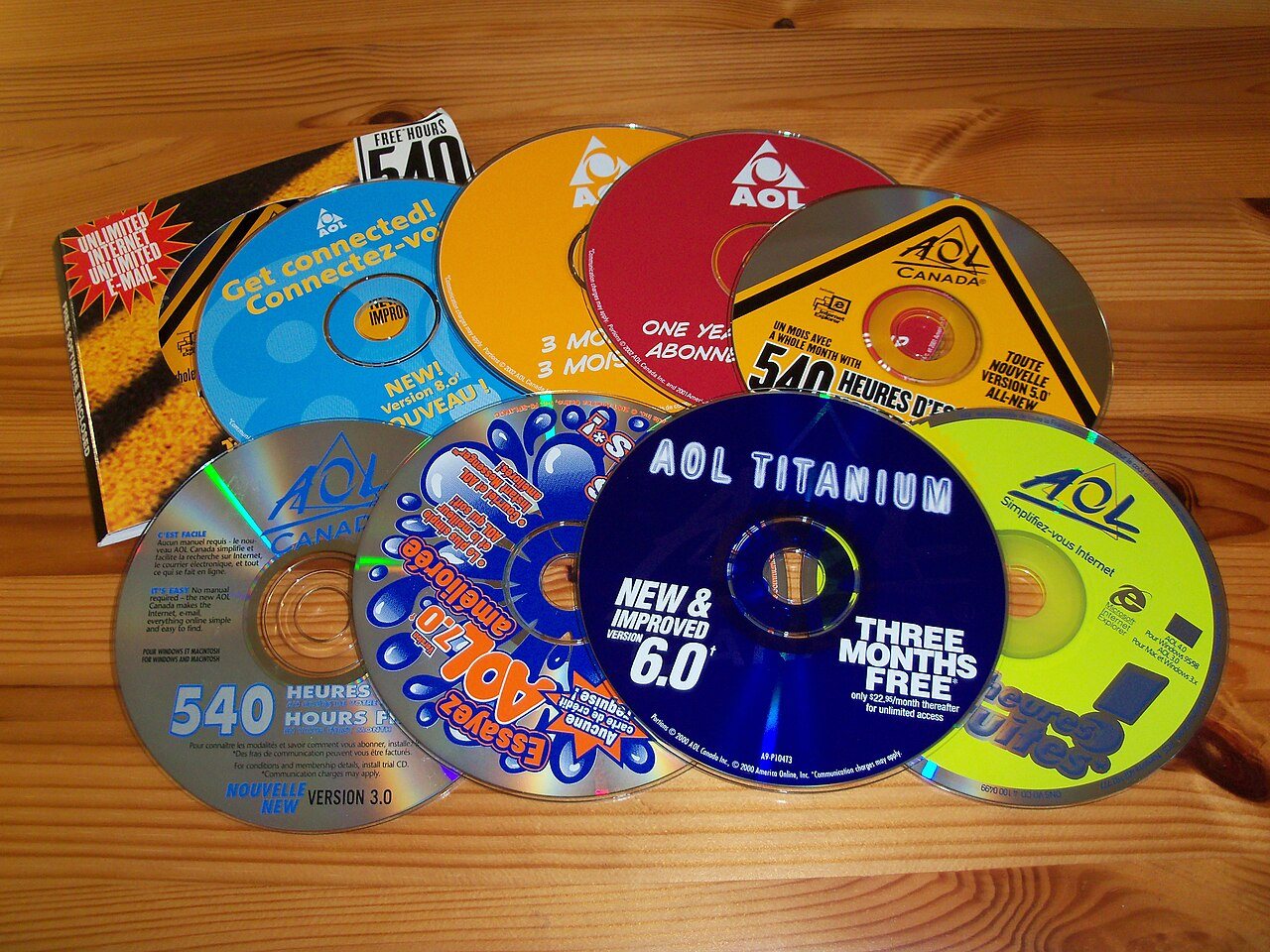
A collection of AOL free trial CDs, the ubiquitous marketing tool that helped AOL reach 30 million subscribers
AOL's promotional free trial CDs became one of the most aggressive marketing campaigns in tech history, helping the company reach 30 million subscribers before the merger.

The Numbers That Made It Look Brilliant

To understand why this deal happened, you need to understand what AOL looked like in January 2000. The company had roughly 30 million subscribers paying around $21.95 per month. Its market capitalization was approximately $163 billion. For context, Time Warner, a company that owned HBO, CNN, Warner Bros. film studio, Time magazine, and the second-largest cable system in the United States, was valued at roughly $83 billion. AOL, a company that mailed people plastic CDs, was worth nearly twice as much as all of that combined.

This was the dot-com bubble at its most inflated. The NASDAQ had peaked at 5,048 on March 10, 2000, just two months after the merger announcement. Internet companies were being valued not on earnings but on "eyeballs," unique visitors, and subscriber growth curves. By those metrics, AOL was a rocket ship.

Steve Case, AOL's CEO, understood something that many people have since given him credit for: the stock was overvalued, and it wouldn't stay that way forever. The merger was, in a very real sense, AOL using its inflated stock to buy real assets before the music stopped. Case has never quite put it that way publicly, but the structure of the deal tells the story. AOL shareholders received 55% of the new company despite AOL contributing less than 30% of the combined revenue. It was a stock swap, and AOL's stock was the currency.

Gerald Levin, Time Warner's CEO, believed the internet was going to transform media and that Time Warner needed a digital distribution partner. He pushed the deal through despite significant resistance from within his own company. Levin reportedly didn't even consult Time Warner's board before entering into serious negotiations.

The Broadband Problem Nobody Wanted to Talk About

Here is the fact that should have killed the deal before it started: at the time of the merger, only about 3% of American households had broadband internet. The other 97% were on dial-up or not online at all. AOL's entire business model was built on dial-up subscriptions.

Broadband was already arriving. Cable companies were rolling out high-speed internet service. DSL was expanding through phone companies. The trajectory was obvious to anyone paying attention. Within a few years, dial-up would begin its decline, and with it, the primary reason 30 million people paid AOL every month.

The merger was supposed to solve this problem. Time Warner owned Road Runner, one of the largest cable broadband providers in the country. The idea was that AOL would transition its subscribers from dial-up to broadband over Time Warner's cable lines. AOL would become the internet service people accessed through their cable modems instead of through their phone lines.

It never happened. Time Warner's cable division had its own priorities and its own revenue targets. Road Runner was already a functioning broadband service. The cable operators had no interest in making AOL the default interface for their broadband customers. Why would they? They were already selling internet access directly. Adding AOL as a middleman only complicated things and cut into their margins.

This was the central failure of the merger's thesis. The "synergies" that justified the $182 billion price tag depended on different divisions of the combined company cooperating in ways that went against their individual business interests. That almost never works in large mergers, and it certainly didn't work here.

A Culture Clash for the History Books

Even if the business logic had held up, the execution was doomed by something more fundamental: the two companies genuinely despised each other.

AOL's culture was fast, aggressive, and deal-oriented. Time Warner's culture was deliberate, creative, and fiefdom-based. HBO operated like a separate country. CNN operated like a separate country. Warner Bros. operated like a separate country. These divisions had spent decades building walls around their operations, and they had no intention of tearing them down because some dial-up company had bought their parent corporation.

Time Warner executives reportedly referred to their AOL counterparts as "Assholes Online." The contempt was not subtle. AOL people were seen as overpaid internet cowboys who didn't understand the media business. Time Warner people were seen by AOL as dinosaurs who didn't understand the internet. Both characterizations contained some truth, which made the resentment worse.

The promised integration never materialized. AOL was supposed to sell advertising across Time Warner's properties. Time Warner's content was supposed to flow through AOL's platform. Instead, each division continued operating exactly as it had before the merger, only now with an extra layer of corporate bureaucracy and a shared sense of mutual resentment.

The Time Warner Center building at Columbus Circle in New York City
The Time Warner Center at Columbus Circle in Manhattan. By the time this building opened in 2004, the AOL name had already been scrubbed from the corporate identity.

The Collapse in Numbers

The merger officially closed on January 11, 2001. Within weeks, the dot-com bubble burst in earnest. The NASDAQ, which had peaked near 5,048 in March 2000, fell below 2,000 by early 2001 and would eventually bottom out around 1,114 in October 2002.

AOL's advertising revenue, which had been growing aggressively through the late '90s, collapsed. The company had been booking revenue from advertising deals in ways that regulators later questioned. In October 2002, the SEC and Department of Justice began investigating AOL's accounting practices, particularly around "round-trip" advertising deals where AOL would buy services from a company and that company would simultaneously buy advertising from AOL, inflating revenue figures on both sides.

Meanwhile, AOL's subscriber base, the crown jewel of the merger, started shrinking. Subscribers peaked at approximately 26.7 million in 2002, then began a decline that would never reverse. As broadband adoption accelerated, fewer people needed AOL's dial-up service. And unlike the merger thesis predicted, those departing subscribers weren't switching to AOL-branded broadband over Time Warner's cables. They were just leaving.

In 2002, the combined company took a goodwill write-down of $99 billion. That single accounting entry remains one of the largest in corporate history. It was the company formally acknowledging that the assets it had acquired in the merger were worth roughly $99 billion less than what it had paid for them.

The total loss for 2002 was $98.7 billion. To put that in perspective, that was more than the GDP of most countries at the time. It remains the largest annual corporate loss ever recorded.

The Leadership Exodus

Gerald Levin stepped down as CEO in May 2002, just sixteen months after the merger closed. He was replaced by Richard Parsons, a Time Warner veteran who had quietly opposed the merger from the beginning. Steve Case resigned as chairman in January 2003, under pressure from the board and from Time Warner executives who blamed AOL for the catastrophe.

Ted Turner, who had been vice chairman and the company's largest individual shareholder, saw his stake decline from roughly $10 billion to approximately $2 billion. He has called the merger "the biggest mistake of my life" and estimated his personal loss at about $8 billion. Turner largely stepped away from the company's operations after the merger, losing the influence he had spent decades building.

The company quietly dropped "AOL" from its name in October 2003, becoming simply Time Warner again. It was a small but telling admission. The AOL brand, which had been worth enough to justify 55% ownership of the combined entity just three years earlier, was now toxic enough that the company wanted it off the letterhead.

What Actually Went Wrong

The standard explanation for the AOL-Time Warner failure is that the dot-com bubble burst and took AOL's value with it. That is true but incomplete. The merger would have struggled even in a healthy market, because its core assumptions were flawed.

First, the idea that dial-up subscribers would seamlessly transition to broadband through Time Warner's cable systems assumed a level of corporate cooperation that never existed and was never incentivized. Second, the idea that AOL's platform would become the default interface for consuming Time Warner's content assumed that AOL's platform was good enough to justify that role. It wasn't. AOL's software was designed for dial-up. It was slow, cluttered, and increasingly irrelevant in a broadband world.

Third, and most fundamentally, the merger assumed that bundling content and distribution under one roof would create value. This is essentially what TikTok's algorithm does today, matching content to audience through a single platform. But AOL wasn't an algorithm. It was a gated community built on a 56k modem connection. The concept was right. The execution was two technology generations too early.

The final separation came in 2009, when Time Warner formally spun off AOL as an independent company. AOL was subsequently acquired by Verizon in 2015 for $4.4 billion, a fraction of the $163 billion market cap it had held in 2000. Verizon merged AOL with Yahoo into a subsidiary called Oath, which was later renamed Verizon Media, and then sold to Apollo Global Management in 2021 for roughly $5 billion.

The Lesson That Keeps Repeating

The AOL-Time Warner merger is often treated as a cautionary tale about dot-com excess, and it is. But it is also a cautionary tale about something more specific: the danger of using inflated currency to buy real assets and then failing to integrate them. The deal made Steve Case's shareholders temporarily rich and Gerald Levin's shareholders permanently poorer. The "synergies" were a story told to justify a price that only made sense if you believed AOL's stock price reflected actual value.

Every few years, a version of this story repeats itself. A high-flying company with an inflated valuation acquires a mature business with real assets, promises transformative synergies, and watches as the cultures clash, the integration stalls, and the market corrects. The names change. The pattern doesn't.

Which is probably the most useful thing the AOL-Time Warner merger ever produced: a case study that business schools will teach for the next hundred years, about what happens when you mistake momentum for gravity.

Frequently Asked Questions

How much was the AOL-Time Warner merger worth?

The merger was valued at approximately $182 billion when announced in January 2000, making it the largest corporate merger in history at that time. Adjusted for inflation, that would be over $330 billion in 2026 dollars. AOL shareholders received 55% of the combined company, despite AOL contributing less than 30% of combined revenue.

How much money did the AOL-Time Warner merger lose?

The combined company posted a loss of $98.7 billion in 2002, still the largest annual corporate loss ever recorded. Over $200 billion in shareholder value was destroyed between the merger's completion in January 2001 and the company's eventual separation. The company took a goodwill write-down of approximately $99 billion in 2002 alone.

Why did the AOL-Time Warner merger fail?

The merger failed for multiple overlapping reasons: the dot-com bubble burst shortly after the deal closed, AOL's dial-up subscriber base began declining as broadband adoption accelerated, the promised "synergies" between AOL's internet platform and Time Warner's content never materialized, and a severe culture clash between the two companies prevented meaningful integration.

What happened to AOL after the merger?

Time Warner dropped "AOL" from its corporate name in 2003 and formally spun off AOL as an independent company in 2009. Verizon acquired AOL in 2015 for $4.4 billion and merged it with Yahoo into a subsidiary. That unit was sold to Apollo Global Management in 2021 for approximately $5 billion. The AOL dial-up service was finally discontinued in 2025.

How many subscribers did AOL have at its peak?

AOL's subscriber base peaked at approximately 26.7 million in 2002. At that point, roughly half of all internet-connected American households were accessing the internet through AOL's dial-up service. Subscribers declined steadily after 2002 as broadband adoption accelerated, dropping to about 2 million by the time Verizon acquired AOL in 2015.

Related Posts:
← Back to Blog

The AOL-Time Warner Merger: The Worst Deal in Corporate History | 404 Memory Found

📖 The AOL-Time Warner Merger: The Worst Deal in Corporate History

On January 10, 2000, Steve Case and Gerald Levin stood side by side at a press conference in New York and announced the largest merger in corporate history. AOL, a company that delivered the internet through phone lines and free trial CDs, was acquiring Time Warner, the media conglomerate behind CNN, HBO, Warner Bros., and Time magazine. The deal was valued at $182 billion.

The logic seemed obvious. Time Warner had the content. AOL had the audience. Combine them, and you'd have a vertically integrated media empire that could deliver movies, news, and music directly to 30 million American living rooms through AOL's dial-up service. It was the kind of deal that made Wall Street analysts use words like "transformative" and "paradigm shift" without a trace of irony.

Three years later, the combined company posted a loss of $98.7 billion, the largest annual loss in corporate history. By 2003, they had quietly dropped "AOL" from the company name. By 2009, they had formally split apart. Over $200 billion in shareholder value had evaporated. Ted Turner, who had merged his Turner Broadcasting into Time Warner in 1995, estimated he lost roughly 80% of his wealth, approximately $8 billion.

The AOL-Time Warner merger is routinely called the worst deal in business history. The interesting question is not whether it failed. It's why anyone thought it would work.

A collection of AOL free trial CDs, the ubiquitous marketing tool that helped AOL reach 30 million subscribers
AOL's promotional free trial CDs became one of the most aggressive marketing campaigns in tech history, helping the company reach 30 million subscribers before the merger.

The Numbers That Made It Look Brilliant

To understand why this deal happened, you need to understand what AOL looked like in January 2000. The company had roughly 30 million subscribers paying around $21.95 per month. Its market capitalization was approximately $163 billion. For context, Time Warner, a company that owned HBO, CNN, Warner Bros. film studio, Time magazine, and the second-largest cable system in the United States, was valued at roughly $83 billion. AOL, a company that mailed people plastic CDs, was worth nearly twice as much as all of that combined.

This was the dot-com bubble at its most inflated. The NASDAQ had peaked at 5,048 on March 10, 2000, just two months after the merger announcement. Internet companies were being valued not on earnings but on "eyeballs," unique visitors, and subscriber growth curves. By those metrics, AOL was a rocket ship.

Steve Case, AOL's CEO, understood something that many people have since given him credit for: the stock was overvalued, and it wouldn't stay that way forever. The merger was, in a very real sense, AOL using its inflated stock to buy real assets before the music stopped. Case has never quite put it that way publicly, but the structure of the deal tells the story. AOL shareholders received 55% of the new company despite AOL contributing less than 30% of the combined revenue. It was a stock swap, and AOL's stock was the currency.

Gerald Levin, Time Warner's CEO, believed the internet was going to transform media and that Time Warner needed a digital distribution partner. He pushed the deal through despite significant resistance from within his own company. Levin reportedly didn't even consult Time Warner's board before entering into serious negotiations.

The Broadband Problem Nobody Wanted to Talk About

Here is the fact that should have killed the deal before it started: at the time of the merger, only about 3% of American households had broadband internet. The other 97% were on dial-up or not online at all. AOL's entire business model was built on dial-up subscriptions.

Broadband was already arriving. Cable companies were rolling out high-speed internet service. DSL was expanding through phone companies. The trajectory was obvious to anyone paying attention. Within a few years, dial-up would begin its decline, and with it, the primary reason 30 million people paid AOL every month.

The merger was supposed to solve this problem. Time Warner owned Road Runner, one of the largest cable broadband providers in the country. The idea was that AOL would transition its subscribers from dial-up to broadband over Time Warner's cable lines. AOL would become the internet service people accessed through their cable modems instead of through their phone lines.

It never happened. Time Warner's cable division had its own priorities and its own revenue targets. Road Runner was already a functioning broadband service. The cable operators had no interest in making AOL the default interface for their broadband customers. Why would they? They were already selling internet access directly. Adding AOL as a middleman only complicated things and cut into their margins.

This was the central failure of the merger's thesis. The "synergies" that justified the $182 billion price tag depended on different divisions of the combined company cooperating in ways that went against their individual business interests. That almost never works in large mergers, and it certainly didn't work here.

A Culture Clash for the History Books

Even if the business logic had held up, the execution was doomed by something more fundamental: the two companies genuinely despised each other.

AOL's culture was fast, aggressive, and deal-oriented. Time Warner's culture was deliberate, creative, and fiefdom-based. HBO operated like a separate country. CNN operated like a separate country. Warner Bros. operated like a separate country. These divisions had spent decades building walls around their operations, and they had no intention of tearing them down because some dial-up company had bought their parent corporation.

Time Warner executives reportedly referred to their AOL counterparts as "Assholes Online." The contempt was not subtle. AOL people were seen as overpaid internet cowboys who didn't understand the media business. Time Warner people were seen by AOL as dinosaurs who didn't understand the internet. Both characterizations contained some truth, which made the resentment worse.

The promised integration never materialized. AOL was supposed to sell advertising across Time Warner's properties. Time Warner's content was supposed to flow through AOL's platform. Instead, each division continued operating exactly as it had before the merger, only now with an extra layer of corporate bureaucracy and a shared sense of mutual resentment.

The Time Warner Center building at Columbus Circle in New York City
The Time Warner Center at Columbus Circle in Manhattan. By the time this building opened in 2004, the AOL name had already been scrubbed from the corporate identity.

The Collapse in Numbers

The merger officially closed on January 11, 2001. Within weeks, the dot-com bubble burst in earnest. The NASDAQ, which had peaked near 5,048 in March 2000, fell below 2,000 by early 2001 and would eventually bottom out around 1,114 in October 2002.

AOL's advertising revenue, which had been growing aggressively through the late '90s, collapsed. The company had been booking revenue from advertising deals in ways that regulators later questioned. In October 2002, the SEC and Department of Justice began investigating AOL's accounting practices, particularly around "round-trip" advertising deals where AOL would buy services from a company and that company would simultaneously buy advertising from AOL, inflating revenue figures on both sides.

Meanwhile, AOL's subscriber base, the crown jewel of the merger, started shrinking. Subscribers peaked at approximately 26.7 million in 2002, then began a decline that would never reverse. As broadband adoption accelerated, fewer people needed AOL's dial-up service. And unlike the merger thesis predicted, those departing subscribers weren't switching to AOL-branded broadband over Time Warner's cables. They were just leaving.

In 2002, the combined company took a goodwill write-down of $99 billion. That single accounting entry remains one of the largest in corporate history. It was the company formally acknowledging that the assets it had acquired in the merger were worth roughly $99 billion less than what it had paid for them.

The total loss for 2002 was $98.7 billion. To put that in perspective, that was more than the GDP of most countries at the time. It remains the largest annual corporate loss ever recorded.

The Leadership Exodus

Gerald Levin stepped down as CEO in May 2002, just sixteen months after the merger closed. He was replaced by Richard Parsons, a Time Warner veteran who had quietly opposed the merger from the beginning. Steve Case resigned as chairman in January 2003, under pressure from the board and from Time Warner executives who blamed AOL for the catastrophe.

Ted Turner, who had been vice chairman and the company's largest individual shareholder, saw his stake decline from roughly $10 billion to approximately $2 billion. He has called the merger "the biggest mistake of my life" and estimated his personal loss at about $8 billion. Turner largely stepped away from the company's operations after the merger, losing the influence he had spent decades building.

The company quietly dropped "AOL" from its name in October 2003, becoming simply Time Warner again. It was a small but telling admission. The AOL brand, which had been worth enough to justify 55% ownership of the combined entity just three years earlier, was now toxic enough that the company wanted it off the letterhead.

What Actually Went Wrong

The standard explanation for the AOL-Time Warner failure is that the dot-com bubble burst and took AOL's value with it. That is true but incomplete. The merger would have struggled even in a healthy market, because its core assumptions were flawed.

First, the idea that dial-up subscribers would seamlessly transition to broadband through Time Warner's cable systems assumed a level of corporate cooperation that never existed and was never incentivized. Second, the idea that AOL's platform would become the default interface for consuming Time Warner's content assumed that AOL's platform was good enough to justify that role. It wasn't. AOL's software was designed for dial-up. It was slow, cluttered, and increasingly irrelevant in a broadband world.

Third, and most fundamentally, the merger assumed that bundling content and distribution under one roof would create value. This is essentially what TikTok's algorithm does today, matching content to audience through a single platform. But AOL wasn't an algorithm. It was a gated community built on a 56k modem connection. The concept was right. The execution was two technology generations too early.

The final separation came in 2009, when Time Warner formally spun off AOL as an independent company. AOL was subsequently acquired by Verizon in 2015 for $4.4 billion, a fraction of the $163 billion market cap it had held in 2000. Verizon merged AOL with Yahoo into a subsidiary called Oath, which was later renamed Verizon Media, and then sold to Apollo Global Management in 2021 for roughly $5 billion.

The Lesson That Keeps Repeating

The AOL-Time Warner merger is often treated as a cautionary tale about dot-com excess, and it is. But it is also a cautionary tale about something more specific: the danger of using inflated currency to buy real assets and then failing to integrate them. The deal made Steve Case's shareholders temporarily rich and Gerald Levin's shareholders permanently poorer. The "synergies" were a story told to justify a price that only made sense if you believed AOL's stock price reflected actual value.

Every few years, a version of this story repeats itself. A high-flying company with an inflated valuation acquires a mature business with real assets, promises transformative synergies, and watches as the cultures clash, the integration stalls, and the market corrects. The names change. The pattern doesn't.

Which is probably the most useful thing the AOL-Time Warner merger ever produced: a case study that business schools will teach for the next hundred years, about what happens when you mistake momentum for gravity.

Frequently Asked Questions

How much was the AOL-Time Warner merger worth?

The merger was valued at approximately $182 billion when announced in January 2000, making it the largest corporate merger in history at that time. Adjusted for inflation, that would be over $330 billion in 2026 dollars. AOL shareholders received 55% of the combined company, despite AOL contributing less than 30% of combined revenue.

How much money did the AOL-Time Warner merger lose?

The combined company posted a loss of $98.7 billion in 2002, still the largest annual corporate loss ever recorded. Over $200 billion in shareholder value was destroyed between the merger's completion in January 2001 and the company's eventual separation. The company took a goodwill write-down of approximately $99 billion in 2002 alone.

Why did the AOL-Time Warner merger fail?

The merger failed for multiple overlapping reasons: the dot-com bubble burst shortly after the deal closed, AOL's dial-up subscriber base began declining as broadband adoption accelerated, the promised "synergies" between AOL's internet platform and Time Warner's content never materialized, and a severe culture clash between the two companies prevented meaningful integration.

What happened to AOL after the merger?

Time Warner dropped "AOL" from its corporate name in 2003 and formally spun off AOL as an independent company in 2009. Verizon acquired AOL in 2015 for $4.4 billion and merged it with Yahoo into a subsidiary. That unit was sold to Apollo Global Management in 2021 for approximately $5 billion. The AOL dial-up service was finally discontinued in 2025.

How many subscribers did AOL have at its peak?

AOL's subscriber base peaked at approximately 26.7 million in 2002. At that point, roughly half of all internet-connected American households were accessing the internet through AOL's dial-up service. Subscribers declined steadily after 2002 as broadband adoption accelerated, dropping to about 2 million by the time Verizon acquired AOL in 2015.

← Back to Blog
00:00