What Happened to Ask Jeeves? The Search Engine With a Butler

2026-03-27 by 404 Memory Found

In the late 1990s, when most search engines required you to think like a computer — stringing together keywords separated by Boolean operators and hoping for the best — one search engine had a radically different pitch. Just type your question in plain English, the way you'd ask a real person, and a cartoon butler named Jeeves would find the answer for you.

It was called Ask Jeeves, and for a brief, glorious window of internet history, it was one of the most beloved sites on the web. Teachers recommended it to students. Grandparents could actually use it. The Jeeves character appeared as a balloon in the Macy's Thanksgiving Day Parade from 2000 to 2004 — the first internet-born character to earn that distinction. The company's IPO was one of the most successful of the entire dot-com era.

And then Google happened. This is the story of the search engine that tried to be your butler — and what went wrong when the internet decided it didn't need one.

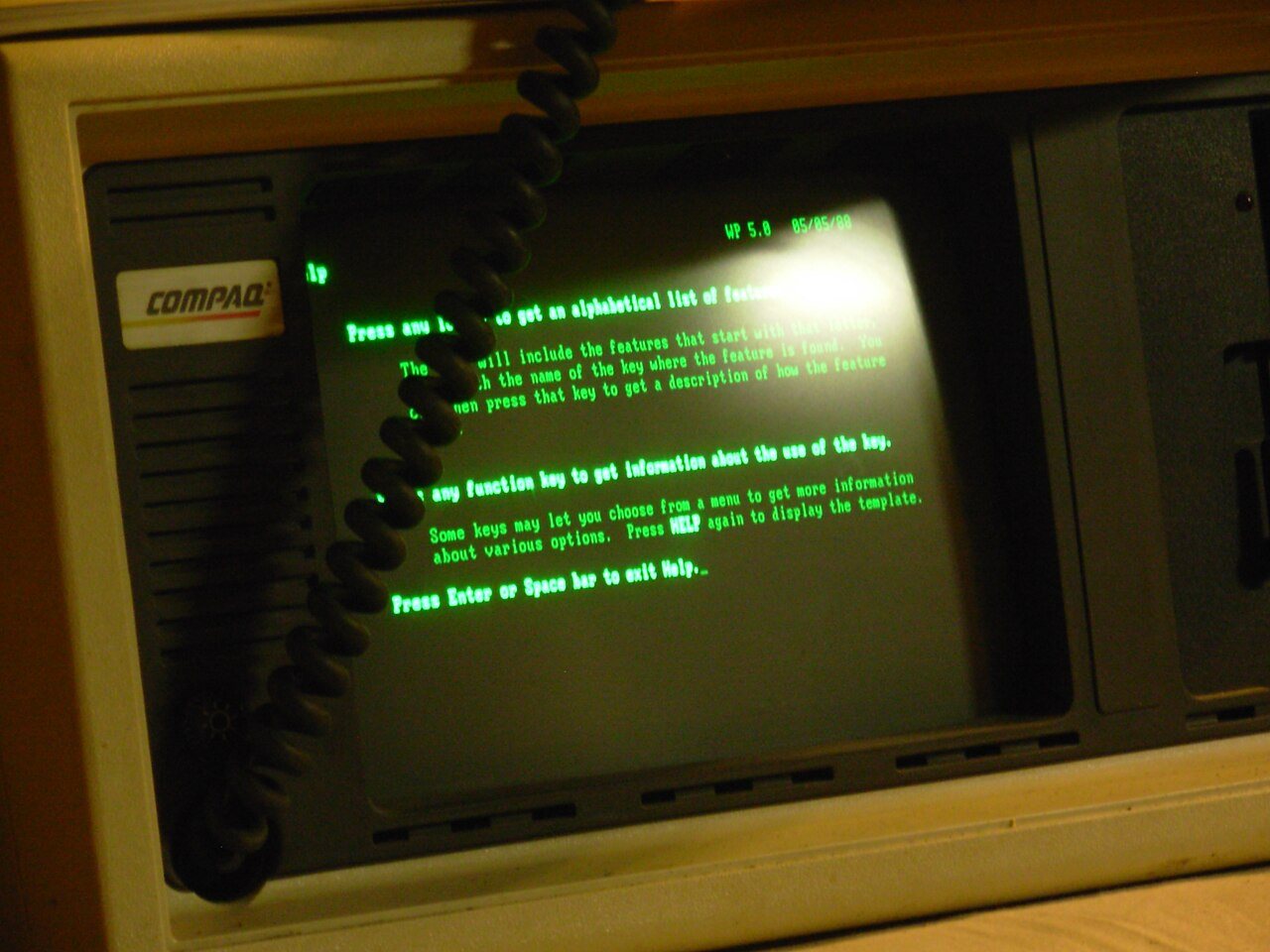
A vintage Compaq Portable computer running WordPerfect, representative of the early computing era from which search engines like Ask Jeeves emerged
In the era of early personal computing and text-based interfaces, search engines like Ask Jeeves promised to make finding information as easy as asking a question in plain English.

Two Berkeley Entrepreneurs and a P.G. Wodehouse Character

Ask Jeeves was founded in 1996 by Garrett Gruener and David Warthen in Berkeley, California. Gruener was a venture capitalist with a background in technology investing. Warthen was a database architect who had spent years thinking about how to structure and retrieve information. Together, they saw a gap in the market that seemed obvious in hindsight: most people don't think in keywords.

When a normal person wants to know something, they form a question: "What's the tallest building in the world?" or "How do I remove a red wine stain?" The dominant search engines of the mid-1990s — AltaVista, Lycos, Excite, HotBot — were built for power users who understood how to construct effective keyword queries. For everyone else, search was frustrating, confusing, and often useless.

Gruener and Warthen's insight was to build a search engine that understood natural language — or at least appeared to. The original software was designed and implemented by Gary Chevsky, who built a system that could parse questions, match them against a curated database of question-answer pairs, and return relevant results. It wasn't true natural language processing in the modern AI sense — it was more like a very sophisticated pattern-matching system combined with human editorial curation — but it worked well enough to feel almost magical.

The name "Jeeves" came from P.G. Wodehouse's famous fictional valet — Bertie Wooster's unflappable gentleman's gentleman who could solve any problem with quiet competence. It was a perfect metaphor for what the search engine promised: ask your question, and the butler would handle the rest.

Launch and the Natural Language Promise

Ask Jeeves launched as a beta in mid-April 1997 and went fully live on June 1, 1997. The interface was disarmingly simple: a search box, an illustration of Jeeves (a proper English butler in a suit), and the invitation to "just type a question." That was it. No complicated search syntax. No advanced options. Just ask.

Behind the scenes, the system worked through a combination of technology and human effort. A team of editors maintained a massive database of question templates and associated answers. When you typed "What is the population of France?", the system would match your question against its templates, identify the intent, and either serve a direct answer or redirect you to a relevant web page. For questions it couldn't match, it would fall back to a traditional keyword search.

This hybrid approach — part curated knowledge base, part search engine — gave Ask Jeeves a remarkably high satisfaction rate for common questions. It was especially popular with two demographics that other search engines largely ignored: children doing homework and older adults who were new to the internet. Teachers loved it. Libraries put it on their recommended resources lists. It became many people's first search engine.

The IPO: Internet Gold Rush at Its Finest

By 1998, Ask Jeeves was growing rapidly. The site reached 300,000 searches per day in October 1998. By May 1999, that figure had grown to one million daily searches. By October 1999, it had doubled again to two million.

On July 1, 1999, Ask Jeeves went public on the NASDAQ under the ticker symbol ASKJ. The IPO was a sensation. Shares were priced at $14 and soared past $80 on the first day of trading — a gain of over 470%. At one point during the dot-com frenzy, shares reached as high as $190.50. The IPO ranked at the time as one of the most successful first-day performances in stock market history.

The market was valuing Ask Jeeves at billions of dollars — for a company that was not yet profitable and was competing against much larger, better-funded rivals. But in the summer of 1999, profitability was an afterthought. The internet was going to change everything, and Ask Jeeves had the friendliest front door to the entire World Wide Web.

"People don't want to learn how to search. They just want answers." — Garrett Gruener, Ask Jeeves co-founder

Surviving the Dot-Com Crash

When the dot-com bubble burst in 2000, Ask Jeeves nearly went with it. The company's stock price cratered from its highs above $190 to single digits. Revenue — which depended heavily on advertising — dried up as the broader internet ad market collapsed. Layoffs followed. The future looked grim.

But unlike hundreds of other dot-com companies, Ask Jeeves didn't die. The company managed to survive through cost-cutting, a renewed focus on search quality, and a series of strategic acquisitions. In September 2001, Ask Jeeves acquired Teoma Technologies, a search engine founded by Professor Apostolos Gerasoulis and colleagues at Rutgers University. Teoma used a sophisticated link-analysis algorithm that ranked websites according to their authority within specific subject communities — a genuinely innovative approach that gave Ask Jeeves a real technological edge in search quality.

By 2003, Ask Jeeves was profitable again. The company had weathered the storm that killed Pets.com, Webvan, and countless other high-profile dot-com failures. The Jeeves butler mascot was still smiling, and the company was processing millions of searches per day.

The IAC Acquisition and the Death of Jeeves

In March 2005, Barry Diller's IAC/InterActiveCorp announced it was acquiring Ask Jeeves for approximately $1.85 billion in stock — roughly $27.40 per share. The deal closed in July 2005. For a company that had been trading in single digits just a few years earlier, it was a remarkable outcome for shareholders.

But under IAC's ownership, Ask Jeeves underwent a transformation that would prove fatal to its identity. The most visible change came in February 2006, when IAC dropped the "Jeeves" name entirely. The butler mascot was retired. The search engine was rebranded simply as "Ask.com."

The rationale was strategic: IAC wanted Ask to be taken seriously as a search engine, not perceived as a novelty or a children's tool. The Jeeves character, executives argued, made the brand seem lightweight and unsophisticated. To compete with Google, they needed a more mature image.

It was a catastrophic miscalculation. Jeeves wasn't a weakness — he was the entire brand. The butler was what made Ask Jeeves memorable, approachable, and different. Without Jeeves, Ask.com was just another search engine, and not a particularly good one compared to Google. The rebranding stripped away the one thing that made people choose Ask Jeeves in the first place: its personality.

An internet cafe with multiple computer terminals, representative of the early 2000s era when search engines like Ask Jeeves competed for users
In internet cafes and computer labs around the world, Ask Jeeves was often the search engine of choice for users who didn't want to learn complex keyword syntax.

The Google Problem

Even if Ask Jeeves had kept its butler, it's unclear whether it could have survived the Google juggernaut. Google's rise was not just about better technology — though PageRank was genuinely revolutionary — it was about a fundamental shift in user expectations.

Google taught people that search didn't need to be conversational. You didn't need to ask a butler. You could just type a few words — "tallest building world" — and get the right answer instantly. Google was faster, more accurate, and got better with every query thanks to its machine learning systems. By 2004, Google controlled over 35% of the U.S. search market. By 2006, it was above 50%. By 2010, it was above 65%.

Ask Jeeves' natural language approach — which had been its greatest differentiator — became less relevant as Google got better at understanding intent from keyword fragments. The irony is that Google would eventually adopt conversational search with Google Assistant and AI-powered search, effectively validating Ask Jeeves' original vision. But by then, it was far too late.

The Slow Fade: 2006-2010

After the rebranding, Ask.com tried several strategies to stay relevant. It invested in search technology, improved its results quality, and launched features like "binoculars" previews that let you see a website before clicking. Some of these innovations were genuinely good — Ask.com's search results in the 2007-2008 period were surprisingly competitive with Google for many queries.

But market share told the real story. Ask.com hovered around 1-2% of the U.S. search market — a rounding error compared to Google. The company couldn't attract enough users to generate the advertising revenue needed to fund the massive infrastructure and R&D investment that search engines require. It was a classic chicken-and-egg problem: fewer users meant less data, which meant less ability to improve results, which meant fewer users.

In late 2010, IAC effectively gave up on competing in web search. Ask.com laid off most of its engineering staff and outsourced its web search results to third-party providers. The company pivoted to a question-and-answer model, attempting to leverage its brand heritage as "the place where you ask questions." It was an acknowledgment that the search engine war was over, and Google had won.

Ask.com Today: A Shadow of Its Former Self

As of the mid-2020s, Ask.com still exists — you can visit the site and type in a search query. But it's a hollow shell of the product that once challenged Google and delighted millions. The search results are powered by third-party technology. The Jeeves character makes occasional cameo appearances in marketing materials, a ghost of the brand's former identity.

The site primarily generates revenue through advertising and toolbar installations — far from the ambitious search engine that once promised to understand your questions in plain English. IAC, its parent company, has long since shifted its focus to other properties like Match.com, Angi, and Dotdash Meredith.

What Ask Jeeves Got Right (and Wrong)

Looking back, Ask Jeeves' story is more nuanced than a simple tale of failure. The company actually got several things remarkably right:

Natural language search was the right vision. Ask Jeeves bet that people would prefer to search in natural language rather than keywords. It took twenty years, but the entire industry eventually moved in that direction. Google's AI-powered search, Apple's Siri, Amazon's Alexa, and the current wave of AI chatbots all validate Gruener and Warthen's original insight.

Brand personality matters in tech. The Jeeves character gave the search engine a warmth and approachability that no competitor could match. People felt a connection to Jeeves. Removing him in 2006 was a textbook case of a company destroying its own differentiation in pursuit of "professionalism."

But execution couldn't keep pace with the vision. Ask Jeeves' natural language technology was impressive for its time but fundamentally limited. It relied heavily on human curation rather than algorithmic understanding. Google's approach — using vast computing power and mathematical models to understand the web — was more scalable and ultimately more effective.

And timing is everything. Ask Jeeves arrived too late to dominate the way Google did, and too early to leverage the AI technology that would have made its natural language approach truly work. In a different timeline — one where large language models existed in 1997 — Ask Jeeves might have been the one processing 8.5 billion searches per day.

The Numbers Behind Ask Jeeves

  • 1996: Founded in Berkeley, California by Garrett Gruener and David Warthen
  • June 1, 1997: Full public launch
  • October 1998: 300,000 searches per day
  • May 1999: 1 million searches per day
  • July 1, 1999: IPO at $14/share, surging past $80 on first day
  • Late 1999: Stock peaks at approximately $190.50
  • 2001: Acquires Teoma search technology from Rutgers University
  • 2003: Returns to profitability
  • July 2005: Acquired by IAC/InterActiveCorp for approximately $1.85 billion
  • February 2006: Rebranded from Ask Jeeves to Ask.com; Jeeves character retired
  • Late 2010: Exits web search; outsources results to third-party providers

FAQ

Who was Jeeves?
Jeeves was a cartoon butler mascot based on the fictional character Jeeves from P.G. Wodehouse's novels and stories. In Wodehouse's works, Jeeves is the brilliant valet to the hapless Bertie Wooster, always able to solve any problem. The search engine used Jeeves as a metaphor for a helpful assistant who could answer any question.

Why did they get rid of Jeeves?
In February 2006, IAC/InterActiveCorp (which had acquired Ask Jeeves in 2005) rebranded the search engine as Ask.com and retired the Jeeves character. The rationale was that the butler mascot made the brand seem unserious and prevented it from being taken seriously as a search engine competitor. Many brand experts consider this a mistake that destroyed the company's main differentiator.

Is Ask.com still a search engine?
Ask.com still exists as a website, but it no longer operates its own search technology. Since 2010, the site has outsourced its web search results to third-party providers and primarily functions as an advertising-supported question-and-answer site.

How much was Ask Jeeves worth at its peak?
At the height of the dot-com bubble in late 1999, Ask Jeeves' stock reached approximately $190.50 per share. The company was eventually acquired by IAC in 2005 for approximately $1.85 billion in stock.

Was Ask Jeeves the first natural language search engine?
Ask Jeeves was among the first consumer search engines to focus on natural language queries — allowing users to type full questions in plain English rather than keyword strings. While not the first attempt at natural language processing in search, it was the first to make the concept mainstream and accessible to ordinary internet users.

Could Ask Jeeves have beaten Google?
It's unlikely. Google's PageRank algorithm and its ability to improve results through massive data analysis represented a fundamentally superior approach to search at the time. However, Ask Jeeves' vision of natural language search was validated decades later by AI assistants and large language models, suggesting the concept was right even if the technology wasn't ready.

Did Ask Jeeves bring Jeeves back?
The Jeeves character has made occasional appearances in Ask.com marketing since his retirement, but has never been fully restored as the brand's mascot. The 2006 removal remains one of the most debated branding decisions in internet history.

Related Posts:
← Back to Blog

What Happened to Ask Jeeves? The Search Engine With a Butler | 404 Memory Found

📖 What Happened to Ask Jeeves? The Search Engine With a Butler

In the late 1990s, when most search engines required you to think like a computer — stringing together keywords separated by Boolean operators and hoping for the best — one search engine had a radically different pitch. Just type your question in plain English, the way you'd ask a real person, and a cartoon butler named Jeeves would find the answer for you.

It was called Ask Jeeves, and for a brief, glorious window of internet history, it was one of the most beloved sites on the web. Teachers recommended it to students. Grandparents could actually use it. The Jeeves character appeared as a balloon in the Macy's Thanksgiving Day Parade from 2000 to 2004 — the first internet-born character to earn that distinction. The company's IPO was one of the most successful of the entire dot-com era.

And then Google happened. This is the story of the search engine that tried to be your butler — and what went wrong when the internet decided it didn't need one.

A vintage Compaq Portable computer running WordPerfect, representative of the early computing era from which search engines like Ask Jeeves emerged
In the era of early personal computing and text-based interfaces, search engines like Ask Jeeves promised to make finding information as easy as asking a question in plain English.

Two Berkeley Entrepreneurs and a P.G. Wodehouse Character

Ask Jeeves was founded in 1996 by Garrett Gruener and David Warthen in Berkeley, California. Gruener was a venture capitalist with a background in technology investing. Warthen was a database architect who had spent years thinking about how to structure and retrieve information. Together, they saw a gap in the market that seemed obvious in hindsight: most people don't think in keywords.

When a normal person wants to know something, they form a question: "What's the tallest building in the world?" or "How do I remove a red wine stain?" The dominant search engines of the mid-1990s — AltaVista, Lycos, Excite, HotBot — were built for power users who understood how to construct effective keyword queries. For everyone else, search was frustrating, confusing, and often useless.

Gruener and Warthen's insight was to build a search engine that understood natural language — or at least appeared to. The original software was designed and implemented by Gary Chevsky, who built a system that could parse questions, match them against a curated database of question-answer pairs, and return relevant results. It wasn't true natural language processing in the modern AI sense — it was more like a very sophisticated pattern-matching system combined with human editorial curation — but it worked well enough to feel almost magical.

The name "Jeeves" came from P.G. Wodehouse's famous fictional valet — Bertie Wooster's unflappable gentleman's gentleman who could solve any problem with quiet competence. It was a perfect metaphor for what the search engine promised: ask your question, and the butler would handle the rest.

Launch and the Natural Language Promise

Ask Jeeves launched as a beta in mid-April 1997 and went fully live on June 1, 1997. The interface was disarmingly simple: a search box, an illustration of Jeeves (a proper English butler in a suit), and the invitation to "just type a question." That was it. No complicated search syntax. No advanced options. Just ask.

Behind the scenes, the system worked through a combination of technology and human effort. A team of editors maintained a massive database of question templates and associated answers. When you typed "What is the population of France?", the system would match your question against its templates, identify the intent, and either serve a direct answer or redirect you to a relevant web page. For questions it couldn't match, it would fall back to a traditional keyword search.

This hybrid approach — part curated knowledge base, part search engine — gave Ask Jeeves a remarkably high satisfaction rate for common questions. It was especially popular with two demographics that other search engines largely ignored: children doing homework and older adults who were new to the internet. Teachers loved it. Libraries put it on their recommended resources lists. It became many people's first search engine.

The IPO: Internet Gold Rush at Its Finest

By 1998, Ask Jeeves was growing rapidly. The site reached 300,000 searches per day in October 1998. By May 1999, that figure had grown to one million daily searches. By October 1999, it had doubled again to two million.

On July 1, 1999, Ask Jeeves went public on the NASDAQ under the ticker symbol ASKJ. The IPO was a sensation. Shares were priced at $14 and soared past $80 on the first day of trading — a gain of over 470%. At one point during the dot-com frenzy, shares reached as high as $190.50. The IPO ranked at the time as one of the most successful first-day performances in stock market history.

The market was valuing Ask Jeeves at billions of dollars — for a company that was not yet profitable and was competing against much larger, better-funded rivals. But in the summer of 1999, profitability was an afterthought. The internet was going to change everything, and Ask Jeeves had the friendliest front door to the entire World Wide Web.

"People don't want to learn how to search. They just want answers." — Garrett Gruener, Ask Jeeves co-founder

Surviving the Dot-Com Crash

When the dot-com bubble burst in 2000, Ask Jeeves nearly went with it. The company's stock price cratered from its highs above $190 to single digits. Revenue — which depended heavily on advertising — dried up as the broader internet ad market collapsed. Layoffs followed. The future looked grim.

But unlike hundreds of other dot-com companies, Ask Jeeves didn't die. The company managed to survive through cost-cutting, a renewed focus on search quality, and a series of strategic acquisitions. In September 2001, Ask Jeeves acquired Teoma Technologies, a search engine founded by Professor Apostolos Gerasoulis and colleagues at Rutgers University. Teoma used a sophisticated link-analysis algorithm that ranked websites according to their authority within specific subject communities — a genuinely innovative approach that gave Ask Jeeves a real technological edge in search quality.

By 2003, Ask Jeeves was profitable again. The company had weathered the storm that killed Pets.com, Webvan, and countless other high-profile dot-com failures. The Jeeves butler mascot was still smiling, and the company was processing millions of searches per day.

The IAC Acquisition and the Death of Jeeves

In March 2005, Barry Diller's IAC/InterActiveCorp announced it was acquiring Ask Jeeves for approximately $1.85 billion in stock — roughly $27.40 per share. The deal closed in July 2005. For a company that had been trading in single digits just a few years earlier, it was a remarkable outcome for shareholders.

But under IAC's ownership, Ask Jeeves underwent a transformation that would prove fatal to its identity. The most visible change came in February 2006, when IAC dropped the "Jeeves" name entirely. The butler mascot was retired. The search engine was rebranded simply as "Ask.com."

The rationale was strategic: IAC wanted Ask to be taken seriously as a search engine, not perceived as a novelty or a children's tool. The Jeeves character, executives argued, made the brand seem lightweight and unsophisticated. To compete with Google, they needed a more mature image.

It was a catastrophic miscalculation. Jeeves wasn't a weakness — he was the entire brand. The butler was what made Ask Jeeves memorable, approachable, and different. Without Jeeves, Ask.com was just another search engine, and not a particularly good one compared to Google. The rebranding stripped away the one thing that made people choose Ask Jeeves in the first place: its personality.

An internet cafe with multiple computer terminals, representative of the early 2000s era when search engines like Ask Jeeves competed for users
In internet cafes and computer labs around the world, Ask Jeeves was often the search engine of choice for users who didn't want to learn complex keyword syntax.

The Google Problem

Even if Ask Jeeves had kept its butler, it's unclear whether it could have survived the Google juggernaut. Google's rise was not just about better technology — though PageRank was genuinely revolutionary — it was about a fundamental shift in user expectations.

Google taught people that search didn't need to be conversational. You didn't need to ask a butler. You could just type a few words — "tallest building world" — and get the right answer instantly. Google was faster, more accurate, and got better with every query thanks to its machine learning systems. By 2004, Google controlled over 35% of the U.S. search market. By 2006, it was above 50%. By 2010, it was above 65%.

Ask Jeeves' natural language approach — which had been its greatest differentiator — became less relevant as Google got better at understanding intent from keyword fragments. The irony is that Google would eventually adopt conversational search with Google Assistant and AI-powered search, effectively validating Ask Jeeves' original vision. But by then, it was far too late.

The Slow Fade: 2006-2010

After the rebranding, Ask.com tried several strategies to stay relevant. It invested in search technology, improved its results quality, and launched features like "binoculars" previews that let you see a website before clicking. Some of these innovations were genuinely good — Ask.com's search results in the 2007-2008 period were surprisingly competitive with Google for many queries.

But market share told the real story. Ask.com hovered around 1-2% of the U.S. search market — a rounding error compared to Google. The company couldn't attract enough users to generate the advertising revenue needed to fund the massive infrastructure and R&D investment that search engines require. It was a classic chicken-and-egg problem: fewer users meant less data, which meant less ability to improve results, which meant fewer users.

In late 2010, IAC effectively gave up on competing in web search. Ask.com laid off most of its engineering staff and outsourced its web search results to third-party providers. The company pivoted to a question-and-answer model, attempting to leverage its brand heritage as "the place where you ask questions." It was an acknowledgment that the search engine war was over, and Google had won.

Ask.com Today: A Shadow of Its Former Self

As of the mid-2020s, Ask.com still exists — you can visit the site and type in a search query. But it's a hollow shell of the product that once challenged Google and delighted millions. The search results are powered by third-party technology. The Jeeves character makes occasional cameo appearances in marketing materials, a ghost of the brand's former identity.

The site primarily generates revenue through advertising and toolbar installations — far from the ambitious search engine that once promised to understand your questions in plain English. IAC, its parent company, has long since shifted its focus to other properties like Match.com, Angi, and Dotdash Meredith.

What Ask Jeeves Got Right (and Wrong)

Looking back, Ask Jeeves' story is more nuanced than a simple tale of failure. The company actually got several things remarkably right:

Natural language search was the right vision. Ask Jeeves bet that people would prefer to search in natural language rather than keywords. It took twenty years, but the entire industry eventually moved in that direction. Google's AI-powered search, Apple's Siri, Amazon's Alexa, and the current wave of AI chatbots all validate Gruener and Warthen's original insight.

Brand personality matters in tech. The Jeeves character gave the search engine a warmth and approachability that no competitor could match. People felt a connection to Jeeves. Removing him in 2006 was a textbook case of a company destroying its own differentiation in pursuit of "professionalism."

But execution couldn't keep pace with the vision. Ask Jeeves' natural language technology was impressive for its time but fundamentally limited. It relied heavily on human curation rather than algorithmic understanding. Google's approach — using vast computing power and mathematical models to understand the web — was more scalable and ultimately more effective.

And timing is everything. Ask Jeeves arrived too late to dominate the way Google did, and too early to leverage the AI technology that would have made its natural language approach truly work. In a different timeline — one where large language models existed in 1997 — Ask Jeeves might have been the one processing 8.5 billion searches per day.

The Numbers Behind Ask Jeeves

  • 1996: Founded in Berkeley, California by Garrett Gruener and David Warthen
  • June 1, 1997: Full public launch
  • October 1998: 300,000 searches per day
  • May 1999: 1 million searches per day
  • July 1, 1999: IPO at $14/share, surging past $80 on first day
  • Late 1999: Stock peaks at approximately $190.50
  • 2001: Acquires Teoma search technology from Rutgers University
  • 2003: Returns to profitability
  • July 2005: Acquired by IAC/InterActiveCorp for approximately $1.85 billion
  • February 2006: Rebranded from Ask Jeeves to Ask.com; Jeeves character retired
  • Late 2010: Exits web search; outsources results to third-party providers

FAQ

Who was Jeeves?
Jeeves was a cartoon butler mascot based on the fictional character Jeeves from P.G. Wodehouse's novels and stories. In Wodehouse's works, Jeeves is the brilliant valet to the hapless Bertie Wooster, always able to solve any problem. The search engine used Jeeves as a metaphor for a helpful assistant who could answer any question.

Why did they get rid of Jeeves?
In February 2006, IAC/InterActiveCorp (which had acquired Ask Jeeves in 2005) rebranded the search engine as Ask.com and retired the Jeeves character. The rationale was that the butler mascot made the brand seem unserious and prevented it from being taken seriously as a search engine competitor. Many brand experts consider this a mistake that destroyed the company's main differentiator.

Is Ask.com still a search engine?
Ask.com still exists as a website, but it no longer operates its own search technology. Since 2010, the site has outsourced its web search results to third-party providers and primarily functions as an advertising-supported question-and-answer site.

How much was Ask Jeeves worth at its peak?
At the height of the dot-com bubble in late 1999, Ask Jeeves' stock reached approximately $190.50 per share. The company was eventually acquired by IAC in 2005 for approximately $1.85 billion in stock.

Was Ask Jeeves the first natural language search engine?
Ask Jeeves was among the first consumer search engines to focus on natural language queries — allowing users to type full questions in plain English rather than keyword strings. While not the first attempt at natural language processing in search, it was the first to make the concept mainstream and accessible to ordinary internet users.

Could Ask Jeeves have beaten Google?
It's unlikely. Google's PageRank algorithm and its ability to improve results through massive data analysis represented a fundamentally superior approach to search at the time. However, Ask Jeeves' vision of natural language search was validated decades later by AI assistants and large language models, suggesting the concept was right even if the technology wasn't ready.

Did Ask Jeeves bring Jeeves back?
The Jeeves character has made occasional appearances in Ask.com marketing since his retirement, but has never been fully restored as the brand's mascot. The 2006 removal remains one of the most debated branding decisions in internet history.

← Back to Blog
00:00