Which route to pick, and what each one costs
There are five honest ways to play Sega Genesis games in 2026, and they split by budget and patience rather than by taste.
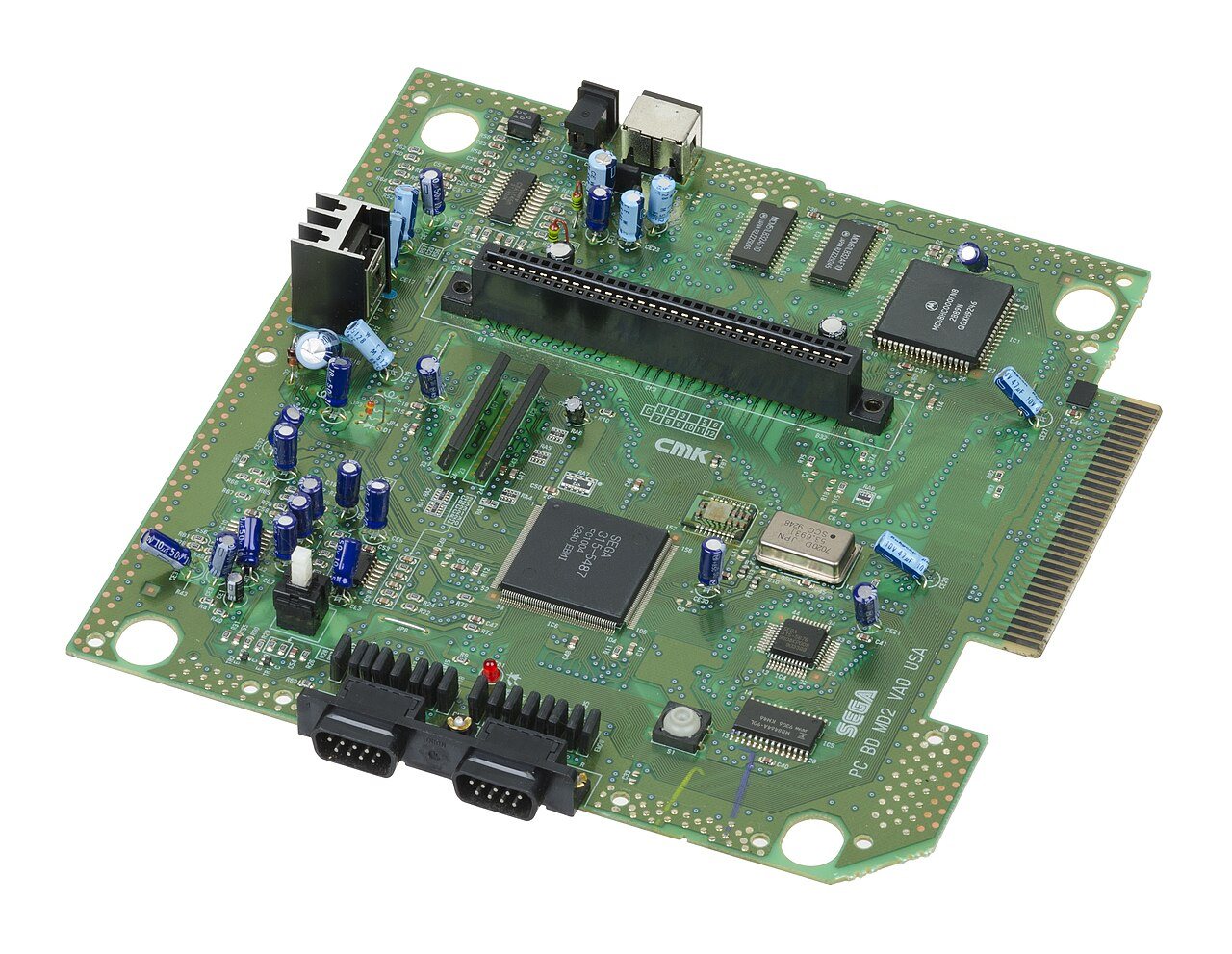
A used console and a shelf of cartridges is the most faithful. PriceCharting listed a loose Sega Genesis Model 2 at about $65 in September 2026, with a complete boxed one near $120.
A subscription is the cheapest way in. Nintendo Switch Online plus the Expansion Pack costs $49.99 a year for an individual membership and carries a Sega Genesis library alongside the Nintendo 64 one.
The Sega Genesis Mini, Sega's own plug-and-play box, sits in the middle: no cartridges to hunt, HDMI in the box, and emulation Sega supervised itself.
The last two routes are for people who want more than a starter set. A flash cart puts a whole backed-up library on one SD card inside a real console. A Linux handheld from a maker such as Anbernic runs the same games on a screen the size of a Game Boy, at the cost of doing the file work yourself.
Is a used Sega Genesis still worth buying?
Yes, if you want the real machine and you know what to check. The console launched in North America on August 14, 1989 at $189.99 with Altered Beast packed in, and it was built solidly enough that a large share of them still power on 37 years later.
Prices have stayed within reach. PriceCharting had the Model 2 at roughly $65 loose and about $120 complete in September 2026, well under half of the 1989 sticker price before any inflation math.
Three things separate a good unit from a bad one. Look at the cartridge slot for bent or corroded pins, confirm the seller has the correct Sega power supply for that model, because the Model 1 and Model 2 use different adapters, and check which AV connector the console carries, since the two models do not share a cable.
Cartridges are the other half of the cost. Genesis carts were sold in hard plastic clamshell cases, so complete copies survive in real numbers, and the common sports and platform titles are still some of the cheapest 16-bit software anywhere.
How do you get a 1989 console onto a 2026 television?
This is the part that surprises people who dig the box out of a closet. The Genesis outputs analog video only, and most televisions sold in the last decade have dropped composite inputs entirely.
There are three fixes, in rising order of cost. A generic composite to HDMI converter box works, but it adds input lag and cannot invent detail that was never in the signal. A dedicated retro upscaler is the enthusiast answer and produces a sharp, low lag picture from the console's RGB or S-video output. A clone console with a real cartridge slot and an HDMI port avoids the question altogether, and several models are still manufactured new.
If you keep the original hardware, the single best upgrade is the cable. RGB SCART or component out of a modified console looks dramatically cleaner than the composite lead that came in the box in 1989, and it costs less than the console did.
Sound is worth a thought too. The Genesis ran a Yamaha FM synthesis chip, and cheap converter boxes can flatten it into mush.
Is the Sega Genesis Mini still around, and should you buy one?
The Sega Genesis Mini arrived on September 19, 2019 at $80, and it was the first Sega branded plug-and-play box that reviewers took seriously. Kotaku wrote in 2019 that the earlier licensed clones were "full of emulation problems and mediocre games," while the Mini's software came from M2, the Japanese studio known for accurate retro ports.
A follow-up, the Genesis Mini 2, came in 2022. Sega has not released another Genesis box since, and the company's classic hardware producer explained why when he was asked about a Saturn or Dreamcast version.
"The development of new boards has been stagnant due to the Coronavirus and, of course, it would be a fairly expensive product in terms of cost," Yosuke Okunari told Famitsu in 2022. The tooling costs he described have not gone away, which is the same commercial logic that ended Sega's own console business after Sega stopped making consoles in 2001.
So the Mini is a used purchase now, like the 1989 hardware it copies. It is the right pick for someone who wants a set of well chosen games on a modern television tonight, and the wrong pick for someone who already owns cartridges.
What does a flash cart add that a mini console cannot?
A flash cart is a cartridge with a microSD slot in the end of it. You load game files onto the card, put the cart in a real Genesis, and the console runs them off original hardware with original controllers and original video output.
The better models do more than that. Depending on the cart, they add region switching for Japanese and European releases, save state support, in game cheats, and compatibility with the add-on libraries, so a single cartridge can also cover Master System, Sega CD and 32X software.
The rule the specialist shops repeat is worth repeating here: use backups of cartridges you actually own. Downloading game files you never bought is not something a flash cart makes legal, whatever a forum tells you.
Where to find one today
A loose Genesis Model 2 ran about $65 in September 2026 and a complete boxed one about $120, according to PriceCharting. Specialist retro dealers charge more than a garage sale but sell tested consoles, cleaned cartridges and flash carts with support behind them, which is the difference between playing tonight and troubleshooting a dead capacitor: Stone Age Gamer's Genesis flash carts.
Can you play Genesis games without owning any Sega hardware?
Yes, and it is the cheapest legal start. Nintendo Switch Online plus the Expansion Pack costs $49.99 a year for an individual plan and includes a Sega Genesis library that any subscriber can play on a Switch, with rewind and save states built in.
Sega also sells a large official Genesis collection on PC, which bundles dozens of the same games with save states, rewind and online play, and it goes on sale often enough that patience pays.
Handheld emulation boxes from Anbernic and its competitors are the fourth option. A 1989 console is trivial work for a modern mobile chip, so Genesis games run at full speed on hardware that costs less than a new game, but the devices ship empty and you supply the files, with the same ownership rule as a flash cart.
None of these three routes gives you the cartridge slot, the click of the power switch, or the resale value of the real console. All three get you playing in an afternoon.
Frequently Asked Questions
What is the best way to play Sega Genesis games in 2026?
For most people in 2026, the best way to play Sega Genesis games is a used Sega Genesis Model 2, which PriceCharting listed at about $65 loose in September 2026, connected through a retro upscaler or an HDMI capable clone console. If you do not want old hardware, Nintendo Switch Online plus the Expansion Pack costs $49.99 a year and includes a Sega Genesis library.
How much is a Sega Genesis worth today?
A Sega Genesis Model 2 console was worth roughly $65 loose and about $120 complete in its box in September 2026, according to PriceCharting. That is well below the $189.99 the console cost at its North American launch on August 14, 1989, and common Genesis cartridges remain among the cheapest 16-bit games on the market.
Can you still buy a new Sega Genesis Mini?
Sega no longer manufactures the Sega Genesis Mini, which launched on September 19, 2019 at $80, or its 2022 follow-up the Genesis Mini 2, so both are used purchases in 2026. Sega's classic hardware producer Yosuke Okunari told Famitsu in 2022 that new board development had stalled and that mini consoles had become expensive to build.