Which Game Boy model fits what you actually want to play?
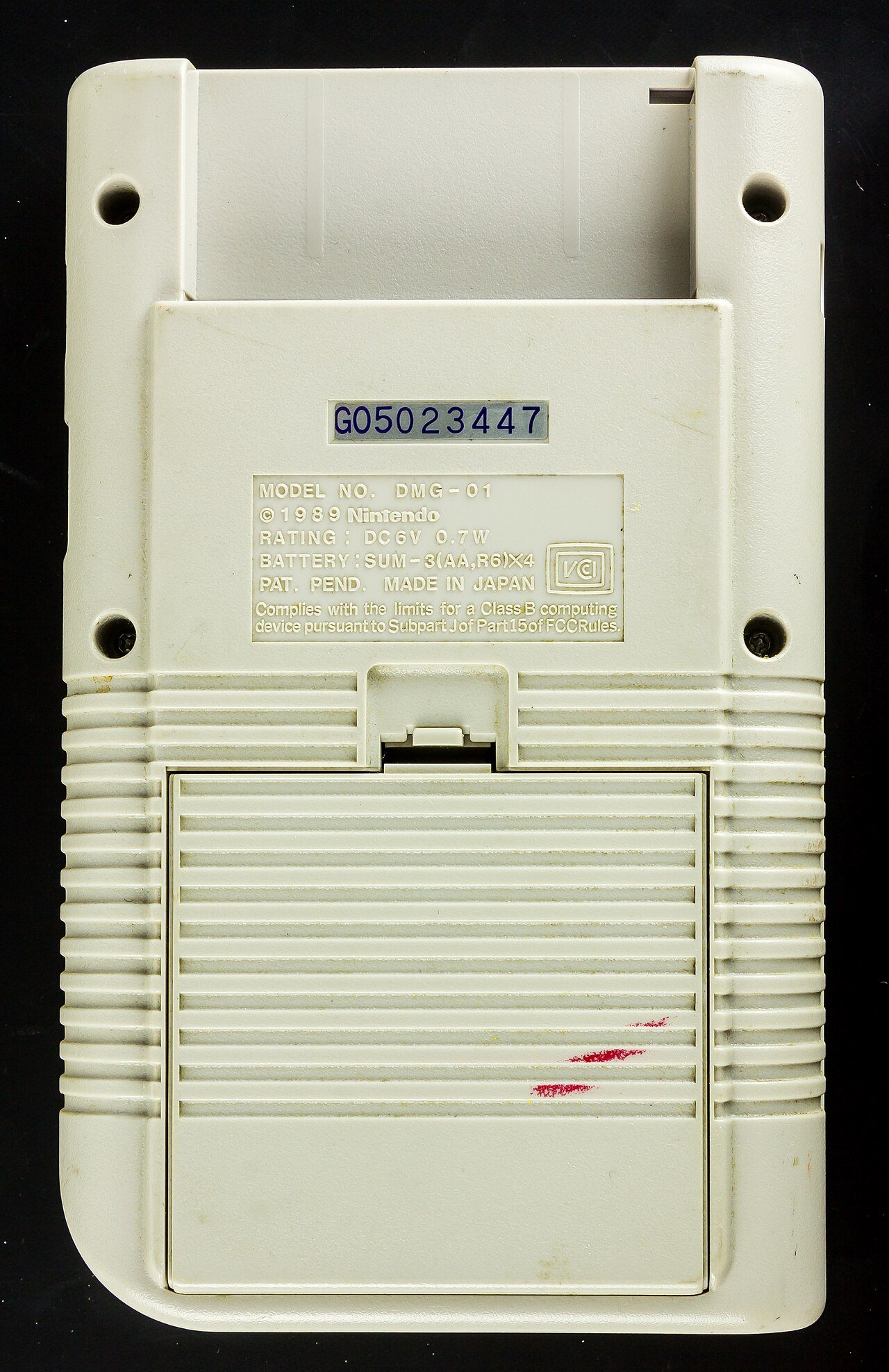
Four machines share the name, and they are not interchangeable. The original DMG-01 Game Boy reached the United States on July 31, 1989 at $89.95, ran on four AA batteries, and used an unlit green screen that needs a lamp or a window to read.
The Game Boy Pocket followed in 1996 at $69.99, roughly half the bulk, with a true black and white display that is still unlit. The Game Boy Color arrived on November 18, 1998 at $79.95 and runs both its own cartridges and the older monochrome ones.
The Game Boy Advance SP, released in February 2003 at $99.99, is the model most first-time buyers end up happy with. It folds shut, charges from a wall adapter instead of eating AAs, and plays Game Boy, Game Boy Color and Game Boy Advance cartridges. Nintendo cut it to $79.99 in September 2004. The later AGS-101 revision carries a backlit screen that is far brighter than the front-lit AGS-001, and buyers pay more for it.
Gunpei Yokoi, who led the original design, never apologized for the gray brick. "Once you start playing the game, the colors aren't important," he said in a 1997 interview translated by Shmuplations.
What does a working Game Boy cost in 2026?
BGR put a bare original Game Boy in good working order at about $70 in 2026. That is the handheld on its own: no box, no manual, usually no game.
Completeness is what moves the number. A Game Boy with its original box and documentation can pass $300, and a sealed unit that was never opened has gone for close to $2,000 at auction, according to the same 2026 report.
Those upper figures are collector prices, and they are not what a player should pay. Nintendo shipped 118.69 million Game Boy and Game Boy Color units worldwide before production stopped, so the supply of ordinary, scuffed, perfectly playable handhelds is deep.
Nintendo ended production of the Game Boy and the Game Boy Color on March 31, 2003. Every unit on the market in 2026 is at least 23 years old, none of them carry a warranty from Nintendo, and the price on the listing tells you nothing about whether the screen still shows all 144 rows. What the seller can prove is worth more than the number.
What fails on a Game Boy that sat in a closet for 25 years?
Three faults account for most dead units. The first is missing vertical lines on the LCD, where the connection to the screen ribbon has degraded and whole columns of pixels drop out. It is repairable, but it is a repair, not a scratch.
The second is battery corrosion. Alkaline cells left in the compartment since the Clinton administration leak, and the blue-green crust on the terminals stops current before it reaches the board. Light corrosion cleans off. Deep corrosion eats the contacts and the traces under them.
The third is the shell and everything bolted to it: a cracked screen lens, a scratchy speaker, buttons that need two presses, a missing battery cover. Battery covers went missing on most of these handhelds decades ago.
Ask any seller for three things before money moves. A photo of the handheld powered on with a game running, not a title screen alone. A photo of the open battery bay. A plain answer on whether the sound works. A seller who will not power the unit on is selling you a repair project.
Is a refurbished or modded Game Boy worth the premium?
Refurbishers do the work most buyers cannot: a backlit IPS panel dropped into a 1989 shell, fresh capacitors, a new speaker, cleaned contacts, sometimes a new case. It costs more than a stock unit, and for anyone who plans to play indoors it solves the machine's single worst flaw, which is that the original screen is unlit.
The tradeoff is that a modded handheld is no longer original, and the two markets price differently. A collector paying for a boxed 1989 unit wants nothing touched. A player wants the screen fixed.
Watch for the reshell that is not disclosed. A Game Boy in a color Nintendo never sold, in condition too perfect for its age, with soft or shallow molded lettering and panel gaps that do not line up, has almost certainly been put in an aftermarket case. That is not fraud by itself, since the board inside is usually genuine Nintendo, but it should be stated in the listing and it should be reflected in the price. Ask who did the work and whether the mainboard is the original.
Should you just buy a new handheld instead?
Start with the cheap answer, because it is usually the right one: a used Game Boy Advance SP with the backlit AGS-101 screen plays the entire Game Boy, Game Boy Color and Game Boy Advance library on original cartridges and costs less than anything built this decade.
Above that sits the Analogue Pocket, which takes real Game Boy cartridges and puts them on a modern screen. It launched at $199, moved to $219.99, and went to $239.99 in March 2026. Analogue was blunt about why: "Analogue Pocket is now $239.99 due to recent tariff announcements," the company said in the statement Engadget reported that month.
The cheapest route runs through emulation boxes rather than cartridges. An Anbernic handheld costs a fraction of a Pocket and plays files instead of carts, which is a different hobby with a different legal footing. If what you miss is a backlit color screen from the 1990s, the Sega Game Gear got there first and drained six AAs doing it.
Where to find one today
Budget about $70 for a tested, working original Game Boy in 2026, more for a Game Boy Advance SP with the backlit screen, and well past $300 if you want the box and papers with it. Buy from a shop that tests hardware and says so in writing rather than from a listing that shows a powered-off screen, because a unit that arrives with dropped LCD lines is worth a fraction of what you paid. Specialist retro dealers list Game Boy hardware and accessories by system, including Stone Age Gamer's Game Boy console section. Whatever you buy, take the batteries out before it goes back in a drawer.
Frequently Asked Questions
How much does a Game Boy cost in 2026?
A bare original Nintendo Game Boy in good working condition runs about $70 in 2026, according to BGR. A complete example with its box and documentation can pass $300, and a sealed unit has gone for close to $2,000 at auction. Nintendo's own 1989 launch price in the United States was $89.95.
What should you check before buying a used Game Boy?
Before buying a used Nintendo Game Boy, check the LCD for missing vertical lines, check the battery compartment for blue-green corrosion, and confirm the speaker works. Ask for a photo of the handheld powered on with a game running. Nintendo stopped making the Game Boy and Game Boy Color on March 31, 2003, so nothing sold today carries a factory warranty.
Do Game Boy Advance systems play original Game Boy games?
Yes. The Game Boy Advance and the Game Boy Advance SP, released in February 2003 at $99.99, play Game Boy, Game Boy Color and Game Boy Advance cartridges. The Game Boy Advance SP is the practical choice for anyone who wants a lit screen, since its later AGS-101 revision is backlit while the earlier AGS-001 is only front-lit.