Why Did Sega Stop Making Consoles? The Dreamcast Story

2026-03-23 by 404 Memory Found

Sega Was Supposed to Win the Console Wars

If you grew up in the early 90s, Sega wasn't just a company — it was an attitude. "Genesis does what Nintendon't" wasn't just a slogan, it was a declaration of war. And for a brief, glorious moment, Sega was actually winning. The Sega Genesis (or Mega Drive, depending on where you lived) was outselling Nintendo. Sonic the Hedgehog was giving Mario a serious run for his money. Sega was cool, edgy, and everything Nintendo wasn't.

So what happened? How did a company that once commanded nearly 65% of the North American console market end up abandoning hardware entirely? The answer involves a series of catastrophic business decisions, internal power struggles, and one absolutely brilliant console that arrived just a little too late. This is the story of why Sega stopped making consoles — and why the Dreamcast deserved so much better.

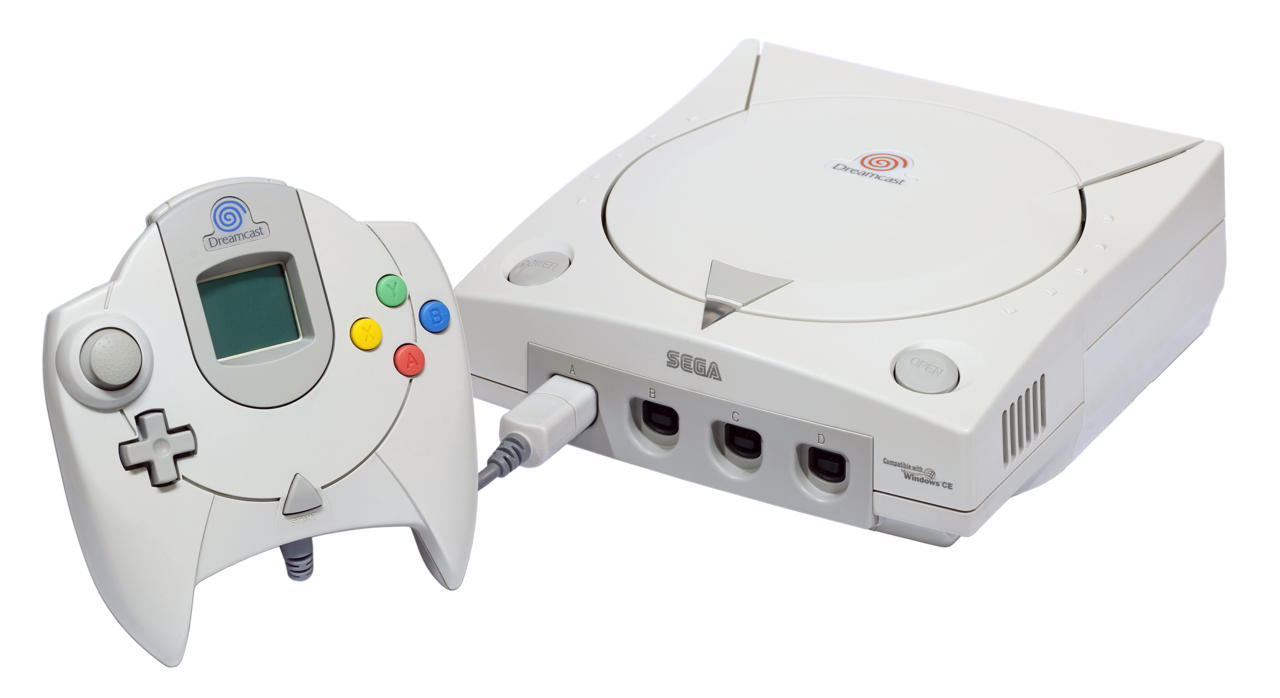
Sega Dreamcast console with controller and VMU — the last Sega console ever made
The Sega Dreamcast (1999) — Sega's final and most innovative home console

The Saturn Disaster: Where Everything Started Going Wrong

Before we talk about the Dreamcast, we need to talk about the Sega Saturn — because that's where the real damage began. The Saturn launched in North America in May 1995, four months ahead of schedule, in a surprise move that was supposed to give Sega a head start over Sony's PlayStation. Instead, it was a disaster of epic proportions.

Retailers were furious because they weren't given advance warning. Major chains like KB Toys and Walmart refused to stock the Saturn at all. Third-party developers were blindsided and didn't have games ready. And the Saturn's architecture was notoriously difficult to program for — it had dual CPUs that were a nightmare for developers to optimize. Meanwhile, Sony's PlayStation was cheaper ($299 vs Saturn's $399), easier to develop for, and had a killer lineup of games.

The Saturn was also hurt by Sega's own internal chaos. Sega of Japan and Sega of America were in constant conflict over strategy. Sega of Japan pushed the Saturn as a 2D powerhouse, while the market was clearly moving toward 3D gaming. By the time Sega realized they needed to pivot, it was too late. The Saturn sold roughly 9.5 million units worldwide — compared to PlayStation's 102 million. It was a bloodbath.

But perhaps the most damaging thing about the Saturn era wasn't the sales numbers — it was the trust that was destroyed. Retailers didn't trust Sega anymore. Developers didn't trust Sega anymore. And crucially, consumers were starting to lose faith too. This erosion of trust would haunt the Dreamcast before it even launched.

The Dreamcast: A Console Ahead of Its Time

Despite everything, Sega wasn't ready to give up. In 1999, they launched the Dreamcast — and honestly, it was incredible. The Dreamcast was the first sixth-generation console, beating the PlayStation 2, Xbox, and GameCube to market. It was the first console with a built-in modem for online gaming. It had a visual memory unit (VMU) that doubled as a mini portable gaming device. The controller was innovative, the graphics were stunning for the time, and the launch lineup was genuinely impressive.

Soul Calibur on Dreamcast was better than the arcade version — something almost unheard of at the time. Sonic Adventure felt like the future of 3D platforming. Crazy Taxi, Jet Set Radio, Shenmue, Power Stone — the Dreamcast library was stacked with creative, original titles that pushed boundaries in ways other consoles simply weren't.

And the online capabilities? This was 1999, remember. Most people were still on dial-up. But Sega had the vision to include a 56K modem in every Dreamcast, and games like Phantasy Star Online and NFL 2K pioneered online console gaming years before Xbox Live existed. Sega literally invented the modern online gaming console experience.

The Dreamcast launched on September 9, 1999 (9/9/99) in North America and set a record for the most successful hardware launch in history at that point, generating $98.4 million in its first 24 hours. It seemed like Sega might actually pull off the comeback.

What Killed the Dreamcast: The PS2 Hype Machine

So if the Dreamcast was so good, why did Sega stop making consoles? The short answer is: the PlayStation 2. The longer answer involves financial bleeding, piracy, and a devastating loss of third-party support.

Sony announced the PS2 in early 1999, and the hype was absolutely nuclear. The PS2 promised to be significantly more powerful than the Dreamcast, it would play DVDs (which were expensive standalone devices at the time), and it would be backward compatible with the massive PS1 library. Even though the PS2 wouldn't launch until March 2000 in Japan and October 2000 in North America, the mere announcement caused Dreamcast sales to slow dramatically. People were willing to wait.

Electronic Arts — the biggest third-party publisher in the world — refused to make games for the Dreamcast. EA's absence was devastating. No Madden, no FIFA, no NBA Live on Dreamcast. For sports gaming fans, this was a dealbreaker. EA reportedly wanted exclusive licensing deals that Sega wouldn't agree to, but the result was the same: a massive hole in the Dreamcast library.

Piracy was another nail in the coffin. The Dreamcast used GD-ROM discs, and a workaround was discovered that allowed people to play burned games without any hardware modification. You literally just burned a disc and put it in. This was catastrophic for Sega's software revenue — the very revenue they needed to offset the losses from selling hardware below cost (a standard industry practice where you lose money on consoles and make it back on game licensing fees).

By late 2000, Sega was hemorrhaging money. The company had already been weakened by the Saturn's failure, and they simply didn't have the financial reserves to weather another console war. On January 31, 2001, Sega announced it would discontinue the Dreamcast and exit the hardware business entirely. The console that had launched with so much promise just 16 months earlier was dead.

Sega Genesis Model 2 console with controller — Sega's best-selling console before the Dreamcast
The Sega Genesis (Model 2) — Sega's golden era before the console wars took a turn

Then vs Now: Sega's Second Life as a Software Company

After exiting the hardware business, Sega reinvented itself as a third-party software publisher — and against all odds, it worked. The company that once fought Nintendo and Sony as a hardware rival started making games for their former competitors' platforms.

In the years following the Dreamcast's death, Sega released Sonic games on Nintendo consoles (something that would have been unthinkable in the 90s), developed acclaimed franchises like Yakuza (now Like a Dragon), Total War, and Persona (through their acquisition of Atlus in 2013). Today, Sega Sammy Holdings is a profitable entertainment conglomerate worth billions.

Compare that to where Sega was in 2001 — bleeding cash, demoralized, and forced to abandon its identity as a console maker — and the turnaround is remarkable. The Sega of 2026 is a completely different company: no hardware, no console wars, just games across every platform imaginable.

But the Dreamcast's influence lived on in surprising ways. Xbox Live, which launched in 2002, essentially perfected the online console gaming model that Sega pioneered. The indie game renaissance of the 2010s echoed the Dreamcast's commitment to creative, quirky titles. And the Dreamcast's loyal fanbase has kept the console alive through homebrew games and community projects — new Dreamcast games are still being made in 2026.

The gaming landscape today — with digital distribution, online multiplayer, and indie games thriving — is basically the world the Dreamcast was trying to build in 1999. Sega was just too early, too broke, and too beaten down by their own mistakes to see it through.

Frequently Asked Questions

When did Sega stop making consoles?

Sega officially announced the discontinuation of the Dreamcast on January 31, 2001. The last Dreamcast units were manufactured in 2001, making it Sega's final home console. After this, Sega transitioned to being a third-party software publisher, making games for PlayStation, Xbox, Nintendo, and PC platforms.

Was the Sega Dreamcast a failure?

Commercially, yes — the Dreamcast sold approximately 10.6 million units worldwide, far below what Sega needed to remain profitable in the hardware business. However, critically and culturally, the Dreamcast is considered one of the most innovative and beloved consoles ever made. Its online gaming capabilities, creative library, and ahead-of-its-time features have earned it a cult following that persists decades later.

Could Sega ever make a new console?

While Sega has occasionally teased nostalgia products like the Sega Genesis Mini (a plug-and-play retro console), the company has shown no serious interest in returning to the home console market. Sega's current business model as a multi-platform publisher is far more profitable and less risky than competing against PlayStation, Xbox, and Nintendo in the hardware space. The era of Sega consoles is almost certainly over for good.

What was the best-selling Sega console?

The Sega Genesis (Mega Drive) was Sega's best-selling home console, with approximately 30.75 million units sold worldwide. At its peak in the early 1990s, the Genesis held a majority market share in North America, driven largely by the popularity of Sonic the Hedgehog and Sega's aggressive "cool" marketing campaigns targeting older teens.

Related Posts:
← Back to Blog

Why Did Sega Stop Making Consoles? The Dreamcast Story | 404 Memory Found

📖 Why Did Sega Stop Making Consoles? The Dreamcast Story

Sega Was Supposed to Win the Console Wars

If you grew up in the early 90s, Sega wasn't just a company — it was an attitude. "Genesis does what Nintendon't" wasn't just a slogan, it was a declaration of war. And for a brief, glorious moment, Sega was actually winning. The Sega Genesis (or Mega Drive, depending on where you lived) was outselling Nintendo. Sonic the Hedgehog was giving Mario a serious run for his money. Sega was cool, edgy, and everything Nintendo wasn't.

So what happened? How did a company that once commanded nearly 65% of the North American console market end up abandoning hardware entirely? The answer involves a series of catastrophic business decisions, internal power struggles, and one absolutely brilliant console that arrived just a little too late. This is the story of why Sega stopped making consoles — and why the Dreamcast deserved so much better.

Sega Dreamcast console with controller and VMU — the last Sega console ever made
The Sega Dreamcast (1999) — Sega's final and most innovative home console

The Saturn Disaster: Where Everything Started Going Wrong

Before we talk about the Dreamcast, we need to talk about the Sega Saturn — because that's where the real damage began. The Saturn launched in North America in May 1995, four months ahead of schedule, in a surprise move that was supposed to give Sega a head start over Sony's PlayStation. Instead, it was a disaster of epic proportions.

Retailers were furious because they weren't given advance warning. Major chains like KB Toys and Walmart refused to stock the Saturn at all. Third-party developers were blindsided and didn't have games ready. And the Saturn's architecture was notoriously difficult to program for — it had dual CPUs that were a nightmare for developers to optimize. Meanwhile, Sony's PlayStation was cheaper ($299 vs Saturn's $399), easier to develop for, and had a killer lineup of games.

The Saturn was also hurt by Sega's own internal chaos. Sega of Japan and Sega of America were in constant conflict over strategy. Sega of Japan pushed the Saturn as a 2D powerhouse, while the market was clearly moving toward 3D gaming. By the time Sega realized they needed to pivot, it was too late. The Saturn sold roughly 9.5 million units worldwide — compared to PlayStation's 102 million. It was a bloodbath.

But perhaps the most damaging thing about the Saturn era wasn't the sales numbers — it was the trust that was destroyed. Retailers didn't trust Sega anymore. Developers didn't trust Sega anymore. And crucially, consumers were starting to lose faith too. This erosion of trust would haunt the Dreamcast before it even launched.

The Dreamcast: A Console Ahead of Its Time

Despite everything, Sega wasn't ready to give up. In 1999, they launched the Dreamcast — and honestly, it was incredible. The Dreamcast was the first sixth-generation console, beating the PlayStation 2, Xbox, and GameCube to market. It was the first console with a built-in modem for online gaming. It had a visual memory unit (VMU) that doubled as a mini portable gaming device. The controller was innovative, the graphics were stunning for the time, and the launch lineup was genuinely impressive.

Soul Calibur on Dreamcast was better than the arcade version — something almost unheard of at the time. Sonic Adventure felt like the future of 3D platforming. Crazy Taxi, Jet Set Radio, Shenmue, Power Stone — the Dreamcast library was stacked with creative, original titles that pushed boundaries in ways other consoles simply weren't.

And the online capabilities? This was 1999, remember. Most people were still on dial-up. But Sega had the vision to include a 56K modem in every Dreamcast, and games like Phantasy Star Online and NFL 2K pioneered online console gaming years before Xbox Live existed. Sega literally invented the modern online gaming console experience.

The Dreamcast launched on September 9, 1999 (9/9/99) in North America and set a record for the most successful hardware launch in history at that point, generating $98.4 million in its first 24 hours. It seemed like Sega might actually pull off the comeback.

What Killed the Dreamcast: The PS2 Hype Machine

So if the Dreamcast was so good, why did Sega stop making consoles? The short answer is: the PlayStation 2. The longer answer involves financial bleeding, piracy, and a devastating loss of third-party support.

Sony announced the PS2 in early 1999, and the hype was absolutely nuclear. The PS2 promised to be significantly more powerful than the Dreamcast, it would play DVDs (which were expensive standalone devices at the time), and it would be backward compatible with the massive PS1 library. Even though the PS2 wouldn't launch until March 2000 in Japan and October 2000 in North America, the mere announcement caused Dreamcast sales to slow dramatically. People were willing to wait.

Electronic Arts — the biggest third-party publisher in the world — refused to make games for the Dreamcast. EA's absence was devastating. No Madden, no FIFA, no NBA Live on Dreamcast. For sports gaming fans, this was a dealbreaker. EA reportedly wanted exclusive licensing deals that Sega wouldn't agree to, but the result was the same: a massive hole in the Dreamcast library.

Piracy was another nail in the coffin. The Dreamcast used GD-ROM discs, and a workaround was discovered that allowed people to play burned games without any hardware modification. You literally just burned a disc and put it in. This was catastrophic for Sega's software revenue — the very revenue they needed to offset the losses from selling hardware below cost (a standard industry practice where you lose money on consoles and make it back on game licensing fees).

By late 2000, Sega was hemorrhaging money. The company had already been weakened by the Saturn's failure, and they simply didn't have the financial reserves to weather another console war. On January 31, 2001, Sega announced it would discontinue the Dreamcast and exit the hardware business entirely. The console that had launched with so much promise just 16 months earlier was dead.

Sega Genesis Model 2 console with controller — Sega's best-selling console before the Dreamcast
The Sega Genesis (Model 2) — Sega's golden era before the console wars took a turn

Then vs Now: Sega's Second Life as a Software Company

After exiting the hardware business, Sega reinvented itself as a third-party software publisher — and against all odds, it worked. The company that once fought Nintendo and Sony as a hardware rival started making games for their former competitors' platforms.

In the years following the Dreamcast's death, Sega released Sonic games on Nintendo consoles (something that would have been unthinkable in the 90s), developed acclaimed franchises like Yakuza (now Like a Dragon), Total War, and Persona (through their acquisition of Atlus in 2013). Today, Sega Sammy Holdings is a profitable entertainment conglomerate worth billions.

Compare that to where Sega was in 2001 — bleeding cash, demoralized, and forced to abandon its identity as a console maker — and the turnaround is remarkable. The Sega of 2026 is a completely different company: no hardware, no console wars, just games across every platform imaginable.

But the Dreamcast's influence lived on in surprising ways. Xbox Live, which launched in 2002, essentially perfected the online console gaming model that Sega pioneered. The indie game renaissance of the 2010s echoed the Dreamcast's commitment to creative, quirky titles. And the Dreamcast's loyal fanbase has kept the console alive through homebrew games and community projects — new Dreamcast games are still being made in 2026.

The gaming landscape today — with digital distribution, online multiplayer, and indie games thriving — is basically the world the Dreamcast was trying to build in 1999. Sega was just too early, too broke, and too beaten down by their own mistakes to see it through.

Frequently Asked Questions

When did Sega stop making consoles?

Sega officially announced the discontinuation of the Dreamcast on January 31, 2001. The last Dreamcast units were manufactured in 2001, making it Sega's final home console. After this, Sega transitioned to being a third-party software publisher, making games for PlayStation, Xbox, Nintendo, and PC platforms.

Was the Sega Dreamcast a failure?

Commercially, yes — the Dreamcast sold approximately 10.6 million units worldwide, far below what Sega needed to remain profitable in the hardware business. However, critically and culturally, the Dreamcast is considered one of the most innovative and beloved consoles ever made. Its online gaming capabilities, creative library, and ahead-of-its-time features have earned it a cult following that persists decades later.

Could Sega ever make a new console?

While Sega has occasionally teased nostalgia products like the Sega Genesis Mini (a plug-and-play retro console), the company has shown no serious interest in returning to the home console market. Sega's current business model as a multi-platform publisher is far more profitable and less risky than competing against PlayStation, Xbox, and Nintendo in the hardware space. The era of Sega consoles is almost certainly over for good.

What was the best-selling Sega console?

The Sega Genesis (Mega Drive) was Sega's best-selling home console, with approximately 30.75 million units sold worldwide. At its peak in the early 1990s, the Genesis held a majority market share in North America, driven largely by the popularity of Sonic the Hedgehog and Sega's aggressive "cool" marketing campaigns targeting older teens.

← Back to Blog
00:00