Is Sega still making games in 2026?
Yes. Sega is owned by Sega Sammy Holdings, and the division that holds the game business, Entertainment Contents, reported sales of 326.6 billion yen for the fiscal year ended March 31, 2026, up from 321.5 billion yen the year before. The consumer games area inside it accounted for 219.9 billion yen.
Sega Sammy reports in yen, so most figures here stay in yen. What matters for the question is the direction. Sega shipped 22.95 million full game copies in that fiscal year, down from 31.45 million a year earlier, a fall of 27 percent. Segment operating income dropped to 32.4 billion yen from 40.8 billion yen.
So the answer is yes, with a wobble. Sega walked away from the console business after the Dreamcast and turned itself into a publisher, and the publisher is still shipping. Sega Sammy forecasts 357.0 billion yen in Entertainment Contents sales for the year ending March 2027, built on four new full game releases from its main franchises.
Who owns Sega now, and why does a pachinko company matter?
Sega Sammy Holdings was established in October 2004 through the management integration of Sega and Sammy Corporation. Sammy built pachislot and pachinko machines, the Japanese gambling cabinets, and that side of the house has been the group's profit engine for most of the years since.
The split in the fiscal year ended March 2026 is worth sitting with. The Pachislot and Pachinko Machines segment sold 132.0 billion yen and delivered 32.1 billion yen of operating income. Entertainment Contents sold 326.6 billion yen and delivered 32.4 billion yen. Games bring in roughly two and a half times the revenue for about the same profit.
Group wide, Sega Sammy booked 487.5 billion yen in sales and 47.1 billion yen in operating income, then closed the year with a net loss of 5.7 billion yen after 58.8 billion yen of extraordinary losses. The company that lost the Saturn generation and then watched the PlayStation 2 bury its last console now runs a games publisher inside a gambling machine business.
What Sega bought after it stopped building hardware
Two acquisitions define modern Sega. In 2014 Sega Sammy took over the game division of the collapsed Index Corporation and rebuilt it as Atlus, which brought the Persona and Shin Megami Tensei series in house. That purchase aged well. Atlus role playing games are now among the most reliable earners Sega has.
The second one has not aged well at all. Sega acquired Rovio Entertainment, the Finnish studio behind Angry Birds, as a subsidiary in 2023. Rovio's sales were 309 million euros in the fiscal year ended March 2023, before the deal closed. By the fiscal year ended March 2026 they were 181 million euros, and Sega Sammy forecasts 158 million euros for the year ending March 2027.
That decline is a large part of why the group posted 58.8 billion yen in extraordinary losses in the fiscal year ended March 2026, driven by impairment charges on Rovio and on Stakelogic, an online casino supplier Sega Sammy bought the same year. The mobile bet has cost real money.
Sonic earns more at the box office than most Sega games do
The clearest sign that Sega changed shape is where Sonic makes his money. Sonic the Hedgehog 3 opened in the United States on December 20, 2024 and finished its run on March 27, 2025 with 236.1 million dollars domestic and 492.2 million dollars worldwide. No Sega game release in that window came close to that kind of gross.
The films feed a licensing business that has grown every year. Sega Sammy's licensing revenue reached 20.8 billion yen in the fiscal year ended March 2026, up from 17.5 billion yen, spread across 748 licensees. On Sega Sammy's own chart that line rises without a down year, from 5.7 billion yen at the left edge to 20.8 billion yen at the right.
The pipeline is already on the calendar. Sega Sammy's own results materials list The Angry Birds Movie 3 for December 23, 2026 and Sonic the Hedgehog 4 for March 19, 2027, with a Golden Axe project listed as licensing out. Sega is now a character company that also publishes games.
The 2024 layoffs and the studios Sega let go
The restructuring has been real. On March 28, 2024 Sega announced roughly 240 job cuts across Sega Europe, Total War maker Creative Assembly and mobile studio Hardlight, and confirmed that Relic Entertainment, the Company of Heroes developer, would leave the group as an independent studio backed by an outside investor.
The cuts did not stop there. In May 2026 Sega Sammy confirmed it had canceled Super Game, the multi year attempt at a big online service title, and lowered the priority of free to play development after new titles underperformed. More than 100 developers were moved off free to play work and onto full game teams built around the main franchises.
Read together, the two moves say the same thing. Sega tried to be a live service company, it did not work, and it has retreated to what it is good at, which is making finished single purchase games with characters people already know.
Will Sega make a new console?
Nothing in the company's own filings points that way. Sega Sammy reports three segments, Entertainment Contents, Pachislot and Pachinko Machines, and a Gaming segment covering overseas online casino operations that sold 25.3 billion yen and lost 7.2 billion yen in the fiscal year ended March 2026. There is no consumer hardware line anywhere in the structure.
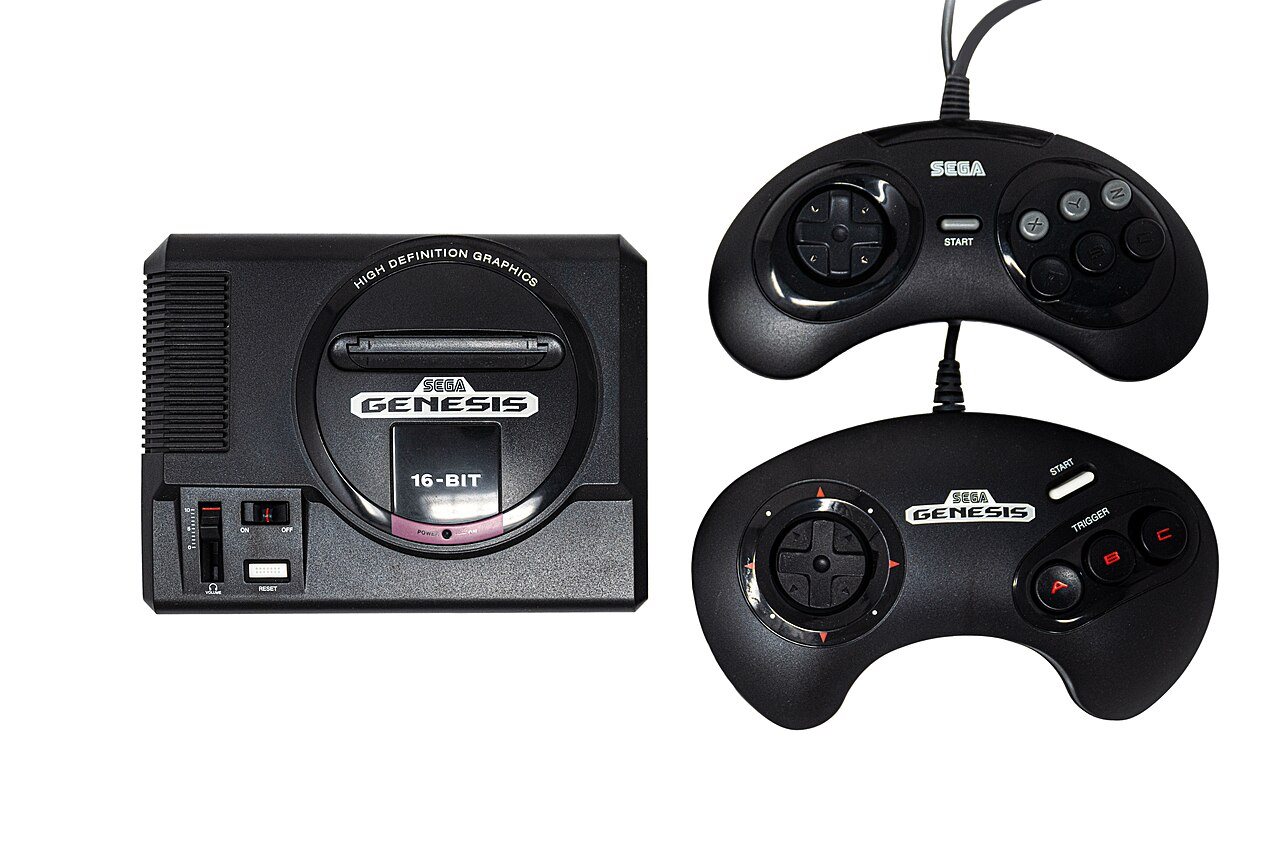
The closest Sega has come since 2001 is plug and play nostalgia. The Sega Genesis Mini arrived in the United States on September 19, 2019 at 79.99 dollars with 42 built in games, and had sold more than 300,000 units by the end of March 2020. A Genesis Mini 2 followed worldwide on October 27, 2022 with 60 Genesis and Sega CD games. Before that Sega had licensed the name to AtGames, whose 2017 Sega Genesis Flashback was panned, and dropped that partnership to build the Mini itself. Handheld rumors surface every year or two, but Sega has announced nothing.
If you want one of the Minis today, Sega no longer sells either model, so the second-hand market is the route; specialist shops such as Stone Age Gamer also carry flash carts and accessories that make original hardware easier to live with. The original listed at 79.99 dollars in 2019, and the Mini 2 was made in smaller numbers, so sealed second models are the harder find. Check that a listing includes the power supply and a controller.
Frequently Asked Questions
Is Sega still around in 2026?
Yes. Sega operates as part of Sega Sammy Holdings, which reported 487.5 billion yen in group sales for the fiscal year ended March 31, 2026. Its Entertainment Contents division, which contains the game business, accounted for 326.6 billion yen of that.
Does Sega still own Sonic?
Yes. Sega owns Sonic outright and licenses him out for films and merchandise. Sonic the Hedgehog 3 grossed 492.2 million dollars worldwide after its December 20, 2024 release, and Sega Sammy's materials list Sonic the Hedgehog 4 for March 19, 2027.
What was the last Sega console?
The Dreamcast was the last home console Sega manufactured, and the company has not shipped a successor. The nearest thing since is the Sega Genesis Mini line, a plug and play reissue that launched in the United States in September 2019 at 79.99 dollars.