What Happened to Kozmo.com? The Delivery App That Existed Before Your Phone Did

2026-03-31 by 404 Memory Found

In March 1998, two 28-year-old Korean American investment bankers quit Chase Manhattan Bank to build a delivery company for the internet age. Joseph Park and Yong Kang had a simple thesis: people want things delivered fast. Their company was called Kozmo.com, and over the next three years it would raise roughly $280 million, expand to 11 cities, sign a $150 million deal with Starbucks, employ thousands of bike messengers and drivers, and then collapse entirely. The story of Kozmo is not really a story about failure. It's a story about being right at the wrong time.

The Premise That Wouldn't Die

Kozmo launched with an absurdly appealing promise: free one-hour delivery of videos, games, DVDs, music, magazines, books, food, and Starbucks coffee. No minimum order. No delivery fee. The site's mascot was a cartoon dog, and the brand tone was relentlessly cheerful, full of the kind of casual irreverence that venture capitalists in 1998 found irresistible.

The target customer was a specific archetype: the young urban professional who wanted to watch a movie tonight but didn't want to leave the apartment. Who wanted snacks but couldn't be bothered to walk to the bodega. Who lived in Manhattan or San Francisco or Boston and considered convenience not a luxury but a baseline expectation. Kozmo understood this customer perfectly. The company's early marketing leaned hard into the lifestyle angle, positioning itself not as a delivery service but as a concierge for the internet age.

What's remarkable in hindsight is how right they were about the behavior they were trying to enable. People do want things delivered quickly. They do buy entertainment and snacks on impulse. The smartphone hadn't been invented yet, and the demand curve was already there, waiting for someone to service it. Kozmo just had the unlucky timing of being born a decade before the technology and logistics infrastructure existed to make the model work.

But in 1998 and 1999, timing felt less important than momentum. Venture capital was flooding the internet space. The NASDAQ was climbing toward its March 2000 peak. Returns seemed infinite. Profitability was treated like an optional future concern, something you'd figure out after you'd captured enough market share. The prevailing wisdom, articulated by dozens of venture capitalists and echoed by the business press, was that the internet would change everything, and the companies that moved fastest would win. Speed mattered more than margins. Growth mattered more than cash flow. The land grab was on.

The Impossible Growth Machine

The capital came from serious institutional sources. Amazon invested $60 million in 2000, which itself seemed like validation from the most successful dot-com survivor. Flatiron Partners, Oak Investment Partners, and Chase Capital Partners all believed in the model. The total haul landed somewhere between $250 million and $280 million, depending on which accounting you trust.

At peak operations, Kozmo employed between 3,000 and 4,000 people across 11 cities: New York, San Francisco, Boston, Seattle, Chicago, Houston, Atlanta, Portland, Washington D.C., San Diego, and Los Angeles. The company had 18 fulfillment locations. Bike messengers and drivers crisscrossed urban grids carrying DVDs, candy bars, and magazines to customers who had placed orders through a desktop web browser. No GPS tracking. No algorithmic routing. Just people on bikes with bags, navigating traffic in cities that weren't designed for rapid delivery logistics.

Then in February 2000, Kozmo signed the Starbucks deal. A five-year co-marketing agreement worth $150 million, structured so that Kozmo would pay Starbucks to promote its delivery service inside up to 500 coffee shop locations. Starbucks stores would host drop-boxes for video returns. The logic was straightforward: Starbucks had massive foot traffic, Kozmo needed customer acquisition, and the partnership would create a virtuous cycle of awareness and orders.

On paper, it was genius. In practice, it amplified an already unsustainable unit economics problem. Kozmo ended up paying Starbucks roughly $15 million before the deal fell apart in early 2001.

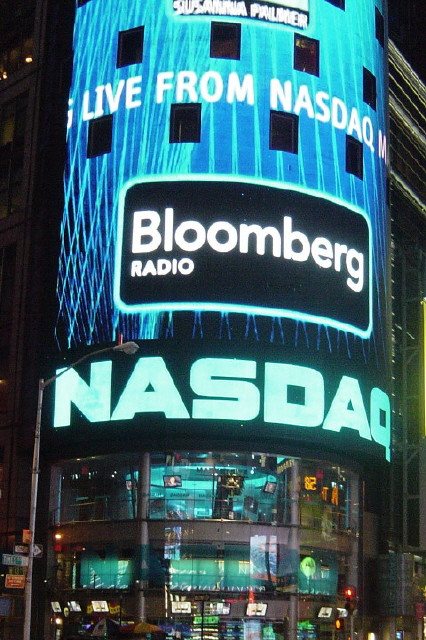
NASDAQ sign illuminated in Times Square, New York City, 2004
The NASDAQ MarketSite in Times Square, where dot-com companies like Kozmo hoped to eventually list. The index peaked in March 2000 before the bubble burst, taking hundreds of internet startups with it.

The Math That Never Worked

The economics were brutal, and they were brutal in a way that should have been obvious to anyone who spent ten minutes with a calculator. Every delivered order lost money. A customer could order a single $5 DVD, and Kozmo would pay a messenger to deliver it within the hour, for free. The delivery cost alone exceeded the margin on most items. But this wasn't a secret. The company knew. The investors knew. Everyone involved understood that individual transactions were unprofitable.

The theory was that scale would fix everything. Get enough customers ordering enough items, and eventually the delivery routes would become efficient enough, the average order values would climb high enough, and the brand would become powerful enough that you could start charging for delivery or raising prices. This is the "grow now, profit later" playbook, and in 1999, it was the dominant strategy in Silicon Valley and on Sand Hill Road.

Volume growth just made the losses bigger, faster. This is the central paradox of businesses with negative unit economics: the more successful you are at acquiring customers, the more money you lose. Scale doesn't solve the problem. Scale magnifies it. If you lose $3 on every delivery and you do 1,000 deliveries a day, you lose $3,000 a day. If you scale to 10,000 deliveries, you lose $30,000. The math is relentless.

Business analysts pointed this out at the time. Henry Blodget, then at Merrill Lynch, was among the Wall Street voices questioning whether any of these delivery companies could ever reach profitability. The model was openly criticized. One-hour point-to-point delivery of small, low-margin objects is extremely expensive, and no amount of customer acquisition fixes the underlying cost structure. But in the late 1990s, criticism of dot-com business models was often dismissed as a failure of imagination. The believers believed. The skeptics were told they didn't understand the internet.

There was a deeper structural problem too. Kozmo's product catalog was broad but shallow. DVDs, magazines, snacks, coffee. These are low-margin items with low average order values. A grocery delivery company can at least hope that customers order $50 or $100 worth of groceries per delivery, spreading the delivery cost across a meaningful basket. Kozmo's customers were ordering one DVD and a bag of chips. The unit economics were underwater from the first click.

The Collapse Sequence

In August 2000, Kozmo quietly withdrew its IPO filing, a $150 million offering that would have been the company's lifeline. The market window had closed. The NASDAQ had peaked at 5,048 on March 10, 2000, and by the time Kozmo was ready to go public, the index was in free fall. Investors who had once believed in infinite growth narratives were now asking uncomfortable questions about revenue, margins, and when exactly the company might achieve profitability. The answers were not reassuring.

The IPO withdrawal was the first domino. Without public market capital, Kozmo was entirely dependent on private funding rounds, and the appetite for funding unprofitable delivery companies had evaporated. The company began a series of increasingly desperate cost-cutting measures.

In January 2001, the company attempted to restructure. Management tried to pivot toward profitability, cutting operations in several cities and beginning to charge delivery fees for the first time. This was a tacit admission that the core model, free delivery on any order, was broken. But the pivot came too late. The cash reserves were depleted, and no new investors were willing to step in.

By February 2001, Kozmo had pulled out of San Diego, Houston, and several other markets. The 11-city empire was shrinking rapidly. Employees were laid off in waves. The energy that had defined the company's early days, the sense that they were building something revolutionary, had been replaced by a grimmer reality of conference calls about runway and burn rate.

In April 2001, less than three years after its founding, Kozmo ceased all operations. The company laid off its remaining workforce, roughly 1,100 employees at that point. Workers at many of the 18 locations found out about the shutdown only after arriving for their scheduled shifts and finding the doors locked. The bike messengers disappeared. The warehouses closed. The cartoon dog mascot went silent.

Except the idea didn't die. It just went dormant.

What They Got Right

The core insight at Kozmo was sound: consumers want convenience, and they want it now. That insight turned out to be so powerful that it became the foundation of multi-billion-dollar companies built more than a decade later.

DoorDash, founded in 2013, took the same basic idea and added GPS, mobile phones, data analytics, and a more realistic understanding of unit economics. Instacart, founded in 2012, applied the logic to groceries. Gopuff, which started in 2013 as a college campus delivery service, essentially rebuilt the Kozmo model with smartphones and dark stores. The parallels are almost eerie. Gopuff delivers snacks, drinks, and convenience items within 30 minutes. That's Kozmo's pitch, word for word, with a better tech stack.

The difference is smartphones. Without a mobile app, Kozmo had to rely on a desktop web experience clunky enough that ordering felt almost as effortful as just walking to the store. Users had to be sitting at their computers, navigate a website, enter their address, browse a catalog, and complete a checkout process designed for the limitations of late-1990s web development. With smartphones, the friction drops to nearly zero. Three taps and your order is placed. Push notifications remind you to reorder. Location services autofill your address. The entire user experience problem that Kozmo struggled with became trivially solvable.

The difference is also logistics infrastructure. Modern delivery companies have access to GPS tracking, algorithmic routing, real-time demand forecasting, and network density models that didn't exist in 2001. A modern delivery platform can look at incoming orders, cluster them by geography, assign them to the nearest available driver, and optimize the route in real time. Kozmo dispatchers were working with paper maps and radio calls. The efficiency gap is enormous.

And the difference is the business model itself. Modern delivery companies charge delivery fees. They implement surge pricing during peak demand. They set minimum order amounts to ensure each delivery covers its costs. They use gig economy labor models that shift costs and risks away from the company. They were more honest about unit economics from the start, in ways that Kozmo never had to be, because the capital markets of 1999 didn't demand it.

A Webvan delivery vehicle, another dot-com era delivery company that failed
Webvan, the online grocery delivery company founded in 1996, shared Kozmo's fate. It raised over $800 million, built automated warehouses, expanded aggressively, and shut down in 2001 when the unit economics proved unsustainable.

The Documentary Record

In 2001, director Wonsuk Chin released e-Dreams, a documentary that captured Kozmo's rise and fall in real time. The film followed Joseph Park and Yong Kang through the company's chaotic growth phase, documented the frenetic energy of their New York warehouse operations, and filmed the moment the founders realized the company was done.

What makes e-Dreams valuable is that it humanizes the failure. The founders weren't trying to waste hundreds of millions of dollars. They were solving a real problem. The investors who funded them weren't reckless, they were working with incomplete information about what the internet could and couldn't do in 2000. The employees who lost their jobs were casualties of a systemic failure, not individual incompetence.

The documentary is a reminder that the line between "visionary" and "premature" often comes down to timing.

The Peer Group

Kozmo wasn't alone. It existed alongside an entire ecosystem of dot-com delivery companies that all flamed out in roughly the same window.

Webvan was the most spectacular parallel case. Founded in 1996 by Louis Borders, co-founder of the Borders bookstore chain, Webvan raised over $800 million in total funding, including a $375 million IPO in November 1999. The company built enormous automated warehouses, each costing roughly $35 million, in multiple cities. The idea was that automation would solve the delivery cost problem. It didn't. Webvan's warehouses were designed for volume that never materialized, and the company was spending $210 million per quarter while generating a fraction of that in revenue. It shut down in July 2001, just three months after Kozmo.

UrbanFetch, a New York competitor to Kozmo that promised delivery in under an hour, lasted barely a year before running out of money in 2000. Streamline.com, a Boston-based grocery delivery startup that had been operating since 1993, also folded in 2000 despite having a longer track record and more conservative growth strategy.

The pattern was consistent: identify real demand, raise capital, grow aggressively, discover that the unit economics don't work, run out of money, shut down. Each company believed it was the exception. None of them were.

What's interesting is that the demand these companies identified was completely real. People did want groceries delivered. People did want entertainment brought to their door. People did want the convenience of not leaving their apartment. The market existed. The technology and cost structure to serve it profitably did not. Not yet. That distinction, between a real market and a viable business, is the central lesson of the entire dot-com delivery cohort.

The Lesson That Keeps Getting Relearned

The Kozmo story matters because the pattern keeps repeating. Entrepreneurs identify a real consumer need. They build a company around it. They raise capital from investors excited about the vision. They expand rapidly, assuming that growth will eventually solve the economics problem. And then, when growth slows or capital dries up, the math becomes impossible to ignore.

Look at the rapid grocery delivery companies that launched in 2020 and 2021. Gorillas, Getir, Flink, Jokr. They promised 10-minute delivery of groceries using dark stores and gig workers. They raised billions in venture funding. They expanded to dozens of cities across Europe and the United States. And by 2023, most of them had scaled back dramatically, merged with competitors, or shut down entirely. Gorillas sold to Getir. Flink retreated from most markets. Jokr pivoted away from the U.S. entirely. The unit economics, once again, didn't work at the prices consumers were willing to pay.

The parallels to Kozmo are almost painfully direct. Young founders. Massive fundraises. Rapid geographic expansion. Free or subsidized delivery. Losses on every order, covered by venture capital, justified by the promise that scale would eventually fix the math. It's the same playbook, executed with better technology, and it still didn't work in most cases.

The companies that did survive the shakeout, DoorDash, Instacart, Uber Eats, did so by making hard choices that Kozmo never had the chance to make. They raised prices. They cut unprofitable markets. They negotiated better terms with restaurants and retailers. They built advertising businesses on top of their delivery platforms. They found ways to make the unit economics work, but it required years of iteration and billions of dollars in cumulative losses before they got there.

The lesson from Kozmo is not "don't try to build a delivery company." The lesson is that consumer demand and business viability are two different things. You can be completely right about what people want and completely wrong about whether you can deliver it profitably. The gap between those two realities is where companies go to die.

The Final Accounting

Joseph Park and Yong Kang had the right instinct about what consumers wanted. They just had the misfortune of trying to build it in 1998, with desktop browsers, without GPS, without smartphones, without the gig economy, and without the decade of logistics innovation that would eventually make on-demand delivery a viable business.

Twenty years later, a thousand companies with better timing, better technology, and more realistic capital structures would prove the Kozmo founders were right about the market. But by then, Park and Kang were long gone from the delivery space.

That's not really a failure of vision. It's just the way innovation works sometimes. The people who identify the opportunity aren't always the people who get to capture it. You plant the seeds. Someone else harvests the crop.

FAQ

What was Kozmo.com?

Kozmo.com was an online delivery company founded in 1998 that promised free one-hour delivery of entertainment, snacks, and other convenience items. It operated in 11 major U.S. cities before shutting down in April 2001 after burning through roughly $280 million in venture capital.

Who founded Kozmo.com?

Kozmo was founded by Joseph Park and Yong Kang, both 28-year-old Korean American investment bankers who left Chase Manhattan Bank to launch the company in New York City in March 1998.

How much money did Kozmo raise?

Kozmo raised between $250 million and $280 million in total venture funding. Major investors included Amazon ($60 million in 2000), Flatiron Partners, Oak Investment Partners, and Chase Capital Partners. The company also signed a $150 million co-marketing deal with Starbucks, though only about $15 million was paid out before the partnership dissolved.

Why did Kozmo fail?

Kozmo failed because its unit economics were unsustainable. The company offered free delivery with no minimum order, meaning every transaction lost money. When the dot-com bubble burst and capital markets closed, Kozmo had no path to profitability and no way to raise additional funding. The technology infrastructure needed to make on-demand delivery profitable, including smartphones, GPS, and algorithmic logistics, didn't exist yet.

Is there a documentary about Kozmo?

Yes. e-Dreams (2001), directed by Wonsuk Chin, is a documentary that follows the rise and fall of Kozmo.com. It captures the company's founding, rapid growth, and eventual collapse, and provides a human perspective on what happens when a promising startup runs out of money and options.

How is Kozmo different from DoorDash or Instacart?

Kozmo and modern delivery companies share the same core idea, but the execution differs dramatically. DoorDash and Instacart benefit from smartphones (frictionless ordering), GPS and algorithmic routing (efficient delivery), gig economy labor models (flexible costs), and more realistic pricing (delivery fees, surge pricing, minimum orders). Kozmo had none of these advantages and relied on free delivery funded entirely by venture capital.

Related Posts:
← Back to Blog

What Happened to Kozmo.com? The Delivery App That Existed Before Your Phone Did | 404 Memory Found

📖 What Happened to Kozmo.com? The Delivery App That Existed Before Your Phone Did

In March 1998, two 28-year-old Korean American investment bankers quit Chase Manhattan Bank to build a delivery company for the internet age. Joseph Park and Yong Kang had a simple thesis: people want things delivered fast. Their company was called Kozmo.com, and over the next three years it would raise roughly $280 million, expand to 11 cities, sign a $150 million deal with Starbucks, employ thousands of bike messengers and drivers, and then collapse entirely. The story of Kozmo is not really a story about failure. It's a story about being right at the wrong time.

The Premise That Wouldn't Die

Kozmo launched with an absurdly appealing promise: free one-hour delivery of videos, games, DVDs, music, magazines, books, food, and Starbucks coffee. No minimum order. No delivery fee. The site's mascot was a cartoon dog, and the brand tone was relentlessly cheerful, full of the kind of casual irreverence that venture capitalists in 1998 found irresistible.

The target customer was a specific archetype: the young urban professional who wanted to watch a movie tonight but didn't want to leave the apartment. Who wanted snacks but couldn't be bothered to walk to the bodega. Who lived in Manhattan or San Francisco or Boston and considered convenience not a luxury but a baseline expectation. Kozmo understood this customer perfectly. The company's early marketing leaned hard into the lifestyle angle, positioning itself not as a delivery service but as a concierge for the internet age.

What's remarkable in hindsight is how right they were about the behavior they were trying to enable. People do want things delivered quickly. They do buy entertainment and snacks on impulse. The smartphone hadn't been invented yet, and the demand curve was already there, waiting for someone to service it. Kozmo just had the unlucky timing of being born a decade before the technology and logistics infrastructure existed to make the model work.

But in 1998 and 1999, timing felt less important than momentum. Venture capital was flooding the internet space. The NASDAQ was climbing toward its March 2000 peak. Returns seemed infinite. Profitability was treated like an optional future concern, something you'd figure out after you'd captured enough market share. The prevailing wisdom, articulated by dozens of venture capitalists and echoed by the business press, was that the internet would change everything, and the companies that moved fastest would win. Speed mattered more than margins. Growth mattered more than cash flow. The land grab was on.

The Impossible Growth Machine

The capital came from serious institutional sources. Amazon invested $60 million in 2000, which itself seemed like validation from the most successful dot-com survivor. Flatiron Partners, Oak Investment Partners, and Chase Capital Partners all believed in the model. The total haul landed somewhere between $250 million and $280 million, depending on which accounting you trust.

At peak operations, Kozmo employed between 3,000 and 4,000 people across 11 cities: New York, San Francisco, Boston, Seattle, Chicago, Houston, Atlanta, Portland, Washington D.C., San Diego, and Los Angeles. The company had 18 fulfillment locations. Bike messengers and drivers crisscrossed urban grids carrying DVDs, candy bars, and magazines to customers who had placed orders through a desktop web browser. No GPS tracking. No algorithmic routing. Just people on bikes with bags, navigating traffic in cities that weren't designed for rapid delivery logistics.

Then in February 2000, Kozmo signed the Starbucks deal. A five-year co-marketing agreement worth $150 million, structured so that Kozmo would pay Starbucks to promote its delivery service inside up to 500 coffee shop locations. Starbucks stores would host drop-boxes for video returns. The logic was straightforward: Starbucks had massive foot traffic, Kozmo needed customer acquisition, and the partnership would create a virtuous cycle of awareness and orders.

On paper, it was genius. In practice, it amplified an already unsustainable unit economics problem. Kozmo ended up paying Starbucks roughly $15 million before the deal fell apart in early 2001.

NASDAQ sign illuminated in Times Square, New York City, 2004
The NASDAQ MarketSite in Times Square, where dot-com companies like Kozmo hoped to eventually list. The index peaked in March 2000 before the bubble burst, taking hundreds of internet startups with it.

The Math That Never Worked

The economics were brutal, and they were brutal in a way that should have been obvious to anyone who spent ten minutes with a calculator. Every delivered order lost money. A customer could order a single $5 DVD, and Kozmo would pay a messenger to deliver it within the hour, for free. The delivery cost alone exceeded the margin on most items. But this wasn't a secret. The company knew. The investors knew. Everyone involved understood that individual transactions were unprofitable.

The theory was that scale would fix everything. Get enough customers ordering enough items, and eventually the delivery routes would become efficient enough, the average order values would climb high enough, and the brand would become powerful enough that you could start charging for delivery or raising prices. This is the "grow now, profit later" playbook, and in 1999, it was the dominant strategy in Silicon Valley and on Sand Hill Road.

Volume growth just made the losses bigger, faster. This is the central paradox of businesses with negative unit economics: the more successful you are at acquiring customers, the more money you lose. Scale doesn't solve the problem. Scale magnifies it. If you lose $3 on every delivery and you do 1,000 deliveries a day, you lose $3,000 a day. If you scale to 10,000 deliveries, you lose $30,000. The math is relentless.

Business analysts pointed this out at the time. Henry Blodget, then at Merrill Lynch, was among the Wall Street voices questioning whether any of these delivery companies could ever reach profitability. The model was openly criticized. One-hour point-to-point delivery of small, low-margin objects is extremely expensive, and no amount of customer acquisition fixes the underlying cost structure. But in the late 1990s, criticism of dot-com business models was often dismissed as a failure of imagination. The believers believed. The skeptics were told they didn't understand the internet.

There was a deeper structural problem too. Kozmo's product catalog was broad but shallow. DVDs, magazines, snacks, coffee. These are low-margin items with low average order values. A grocery delivery company can at least hope that customers order $50 or $100 worth of groceries per delivery, spreading the delivery cost across a meaningful basket. Kozmo's customers were ordering one DVD and a bag of chips. The unit economics were underwater from the first click.

The Collapse Sequence

In August 2000, Kozmo quietly withdrew its IPO filing, a $150 million offering that would have been the company's lifeline. The market window had closed. The NASDAQ had peaked at 5,048 on March 10, 2000, and by the time Kozmo was ready to go public, the index was in free fall. Investors who had once believed in infinite growth narratives were now asking uncomfortable questions about revenue, margins, and when exactly the company might achieve profitability. The answers were not reassuring.

The IPO withdrawal was the first domino. Without public market capital, Kozmo was entirely dependent on private funding rounds, and the appetite for funding unprofitable delivery companies had evaporated. The company began a series of increasingly desperate cost-cutting measures.

In January 2001, the company attempted to restructure. Management tried to pivot toward profitability, cutting operations in several cities and beginning to charge delivery fees for the first time. This was a tacit admission that the core model, free delivery on any order, was broken. But the pivot came too late. The cash reserves were depleted, and no new investors were willing to step in.

By February 2001, Kozmo had pulled out of San Diego, Houston, and several other markets. The 11-city empire was shrinking rapidly. Employees were laid off in waves. The energy that had defined the company's early days, the sense that they were building something revolutionary, had been replaced by a grimmer reality of conference calls about runway and burn rate.

In April 2001, less than three years after its founding, Kozmo ceased all operations. The company laid off its remaining workforce, roughly 1,100 employees at that point. Workers at many of the 18 locations found out about the shutdown only after arriving for their scheduled shifts and finding the doors locked. The bike messengers disappeared. The warehouses closed. The cartoon dog mascot went silent.

Except the idea didn't die. It just went dormant.

What They Got Right

The core insight at Kozmo was sound: consumers want convenience, and they want it now. That insight turned out to be so powerful that it became the foundation of multi-billion-dollar companies built more than a decade later.

DoorDash, founded in 2013, took the same basic idea and added GPS, mobile phones, data analytics, and a more realistic understanding of unit economics. Instacart, founded in 2012, applied the logic to groceries. Gopuff, which started in 2013 as a college campus delivery service, essentially rebuilt the Kozmo model with smartphones and dark stores. The parallels are almost eerie. Gopuff delivers snacks, drinks, and convenience items within 30 minutes. That's Kozmo's pitch, word for word, with a better tech stack.

The difference is smartphones. Without a mobile app, Kozmo had to rely on a desktop web experience clunky enough that ordering felt almost as effortful as just walking to the store. Users had to be sitting at their computers, navigate a website, enter their address, browse a catalog, and complete a checkout process designed for the limitations of late-1990s web development. With smartphones, the friction drops to nearly zero. Three taps and your order is placed. Push notifications remind you to reorder. Location services autofill your address. The entire user experience problem that Kozmo struggled with became trivially solvable.

The difference is also logistics infrastructure. Modern delivery companies have access to GPS tracking, algorithmic routing, real-time demand forecasting, and network density models that didn't exist in 2001. A modern delivery platform can look at incoming orders, cluster them by geography, assign them to the nearest available driver, and optimize the route in real time. Kozmo dispatchers were working with paper maps and radio calls. The efficiency gap is enormous.

And the difference is the business model itself. Modern delivery companies charge delivery fees. They implement surge pricing during peak demand. They set minimum order amounts to ensure each delivery covers its costs. They use gig economy labor models that shift costs and risks away from the company. They were more honest about unit economics from the start, in ways that Kozmo never had to be, because the capital markets of 1999 didn't demand it.

A Webvan delivery vehicle, another dot-com era delivery company that failed
Webvan, the online grocery delivery company founded in 1996, shared Kozmo's fate. It raised over $800 million, built automated warehouses, expanded aggressively, and shut down in 2001 when the unit economics proved unsustainable.

The Documentary Record

In 2001, director Wonsuk Chin released e-Dreams, a documentary that captured Kozmo's rise and fall in real time. The film followed Joseph Park and Yong Kang through the company's chaotic growth phase, documented the frenetic energy of their New York warehouse operations, and filmed the moment the founders realized the company was done.

What makes e-Dreams valuable is that it humanizes the failure. The founders weren't trying to waste hundreds of millions of dollars. They were solving a real problem. The investors who funded them weren't reckless, they were working with incomplete information about what the internet could and couldn't do in 2000. The employees who lost their jobs were casualties of a systemic failure, not individual incompetence.

The documentary is a reminder that the line between "visionary" and "premature" often comes down to timing.

The Peer Group

Kozmo wasn't alone. It existed alongside an entire ecosystem of dot-com delivery companies that all flamed out in roughly the same window.

Webvan was the most spectacular parallel case. Founded in 1996 by Louis Borders, co-founder of the Borders bookstore chain, Webvan raised over $800 million in total funding, including a $375 million IPO in November 1999. The company built enormous automated warehouses, each costing roughly $35 million, in multiple cities. The idea was that automation would solve the delivery cost problem. It didn't. Webvan's warehouses were designed for volume that never materialized, and the company was spending $210 million per quarter while generating a fraction of that in revenue. It shut down in July 2001, just three months after Kozmo.

UrbanFetch, a New York competitor to Kozmo that promised delivery in under an hour, lasted barely a year before running out of money in 2000. Streamline.com, a Boston-based grocery delivery startup that had been operating since 1993, also folded in 2000 despite having a longer track record and more conservative growth strategy.

The pattern was consistent: identify real demand, raise capital, grow aggressively, discover that the unit economics don't work, run out of money, shut down. Each company believed it was the exception. None of them were.

What's interesting is that the demand these companies identified was completely real. People did want groceries delivered. People did want entertainment brought to their door. People did want the convenience of not leaving their apartment. The market existed. The technology and cost structure to serve it profitably did not. Not yet. That distinction, between a real market and a viable business, is the central lesson of the entire dot-com delivery cohort.

The Lesson That Keeps Getting Relearned

The Kozmo story matters because the pattern keeps repeating. Entrepreneurs identify a real consumer need. They build a company around it. They raise capital from investors excited about the vision. They expand rapidly, assuming that growth will eventually solve the economics problem. And then, when growth slows or capital dries up, the math becomes impossible to ignore.

Look at the rapid grocery delivery companies that launched in 2020 and 2021. Gorillas, Getir, Flink, Jokr. They promised 10-minute delivery of groceries using dark stores and gig workers. They raised billions in venture funding. They expanded to dozens of cities across Europe and the United States. And by 2023, most of them had scaled back dramatically, merged with competitors, or shut down entirely. Gorillas sold to Getir. Flink retreated from most markets. Jokr pivoted away from the U.S. entirely. The unit economics, once again, didn't work at the prices consumers were willing to pay.

The parallels to Kozmo are almost painfully direct. Young founders. Massive fundraises. Rapid geographic expansion. Free or subsidized delivery. Losses on every order, covered by venture capital, justified by the promise that scale would eventually fix the math. It's the same playbook, executed with better technology, and it still didn't work in most cases.

The companies that did survive the shakeout, DoorDash, Instacart, Uber Eats, did so by making hard choices that Kozmo never had the chance to make. They raised prices. They cut unprofitable markets. They negotiated better terms with restaurants and retailers. They built advertising businesses on top of their delivery platforms. They found ways to make the unit economics work, but it required years of iteration and billions of dollars in cumulative losses before they got there.

The lesson from Kozmo is not "don't try to build a delivery company." The lesson is that consumer demand and business viability are two different things. You can be completely right about what people want and completely wrong about whether you can deliver it profitably. The gap between those two realities is where companies go to die.

The Final Accounting

Joseph Park and Yong Kang had the right instinct about what consumers wanted. They just had the misfortune of trying to build it in 1998, with desktop browsers, without GPS, without smartphones, without the gig economy, and without the decade of logistics innovation that would eventually make on-demand delivery a viable business.

Twenty years later, a thousand companies with better timing, better technology, and more realistic capital structures would prove the Kozmo founders were right about the market. But by then, Park and Kang were long gone from the delivery space.

That's not really a failure of vision. It's just the way innovation works sometimes. The people who identify the opportunity aren't always the people who get to capture it. You plant the seeds. Someone else harvests the crop.

FAQ

What was Kozmo.com?

Kozmo.com was an online delivery company founded in 1998 that promised free one-hour delivery of entertainment, snacks, and other convenience items. It operated in 11 major U.S. cities before shutting down in April 2001 after burning through roughly $280 million in venture capital.

Who founded Kozmo.com?

Kozmo was founded by Joseph Park and Yong Kang, both 28-year-old Korean American investment bankers who left Chase Manhattan Bank to launch the company in New York City in March 1998.

How much money did Kozmo raise?

Kozmo raised between $250 million and $280 million in total venture funding. Major investors included Amazon ($60 million in 2000), Flatiron Partners, Oak Investment Partners, and Chase Capital Partners. The company also signed a $150 million co-marketing deal with Starbucks, though only about $15 million was paid out before the partnership dissolved.

Why did Kozmo fail?

Kozmo failed because its unit economics were unsustainable. The company offered free delivery with no minimum order, meaning every transaction lost money. When the dot-com bubble burst and capital markets closed, Kozmo had no path to profitability and no way to raise additional funding. The technology infrastructure needed to make on-demand delivery profitable, including smartphones, GPS, and algorithmic logistics, didn't exist yet.

Is there a documentary about Kozmo?

Yes. e-Dreams (2001), directed by Wonsuk Chin, is a documentary that follows the rise and fall of Kozmo.com. It captures the company's founding, rapid growth, and eventual collapse, and provides a human perspective on what happens when a promising startup runs out of money and options.

How is Kozmo different from DoorDash or Instacart?

Kozmo and modern delivery companies share the same core idea, but the execution differs dramatically. DoorDash and Instacart benefit from smartphones (frictionless ordering), GPS and algorithmic routing (efficient delivery), gig economy labor models (flexible costs), and more realistic pricing (delivery fees, surge pricing, minimum orders). Kozmo had none of these advantages and relied on free delivery funded entirely by venture capital.

← Back to Blog
00:00