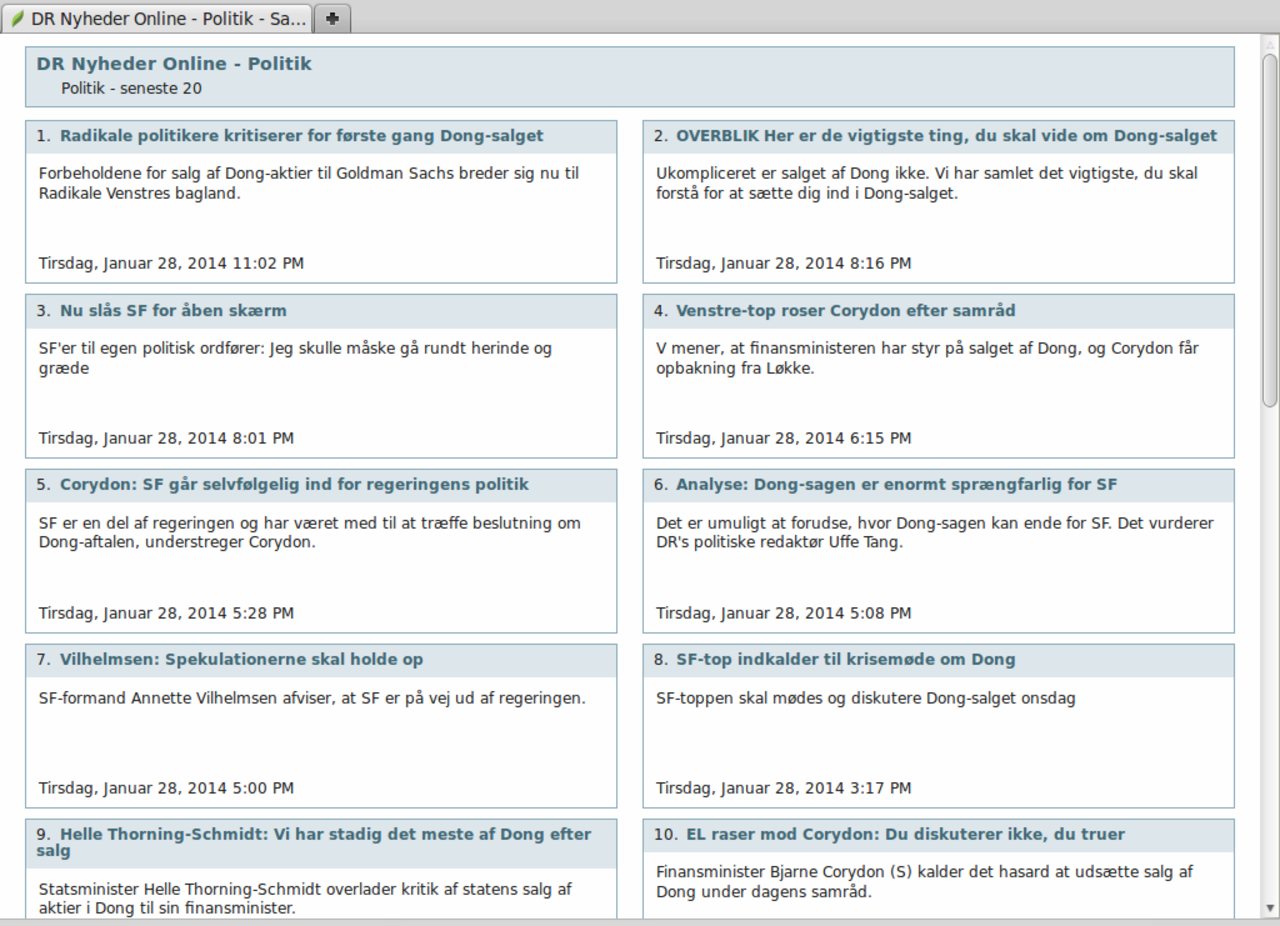
In 1999, a software format called RSS quietly became the backbone of how information moved across the early web. It stood for Really Simple Syndication, and the name was accurate. You subscribed to a website's feed, and new content showed up in your reader automatically. No algorithms deciding what you should see. No engagement optimization. Just a chronological list of everything published by the sources you chose to follow.
By 2005, Google had built a product around this idea. It was called Google Reader. And for the better part of a decade, it was the single most important tool for anyone who took reading the internet seriously.
Then Google killed it. The backlash was enormous, the petitions gathered hundreds of thousands of signatures, and none of it mattered. Google Reader shut down on July 1, 2013, and the way millions of people consumed information on the internet changed permanently.
The question worth asking isn't just why Google killed it. It's what we lost when they did.
Built in 20% Time, Loved by Millions
Google Reader started as what Google used to call a "20% time" project. The concept was simple: Google engineers could spend one-fifth of their work hours on personal projects that might benefit the company. Gmail came out of 20% time. So did Google News. And so did Reader.
The engineer behind it was Chris Wetherell. In late 2004 and early 2005, Wetherell built an internal prototype called "Fusion" that aggregated RSS feeds into a clean, fast web interface. Google liked it enough to ship it publicly on October 7, 2005, through Google Labs, their testing ground for experimental products.
The initial version was basic. You could add RSS feeds, read articles, and star items for later. But it worked well, it was fast, and it was free. That combination, attached to the Google brand, was enough. Within a year, Google Reader had become the dominant RSS client on the web, pulling users away from established players like Bloglines and NewsGator.
Why People Loved It
To understand why Google Reader inspired the kind of loyalty that most software products never achieve, you need to understand what it replaced.
Before RSS readers, keeping up with websites meant visiting them individually. You had bookmarks, maybe dozens of them, and you would click through each one to see if anything new had been posted. It was like checking your physical mailbox twenty times a day. RSS readers collapsed that entire ritual into a single interface. You opened one page, and everything new from every source was right there, waiting.
Google Reader did this better than anything else. It was fast, even on slow connections. It synced across devices, which in 2006 was not something you could take for granted. It had keyboard shortcuts for power users. You could fly through hundreds of articles using just J and K to move between items, S to star, V to open in a new tab. People who used Reader heavily, and there were a lot of them, developed muscle memory for these shortcuts the way gamers develop muscle memory for controller inputs.
The design was deliberately minimal. White background, clean typography, no distractions. It looked like what Gmail would look like if Gmail only showed you things you specifically asked to see. There was no recommendation engine, no trending section, no "you might also like" sidebar. Just your feeds, in order, newest first.
The Social Layer That Changed Everything
In 2007, Google added a feature that transformed Reader from a reading tool into something closer to a social network. They called it "shared items." You could click a button on any article, and it would appear in a public feed that your contacts could follow. Your friends could see what you were reading, and you could see what they were reading.
This sounds minor. It wasn't.
Shared items created an entirely new way to discover information. Instead of relying on search engines or link aggregators like Digg and Reddit, you were getting recommendations from people you actually knew and trusted. A journalist friend might share a long-form investigation. A developer friend might share a technical deep-dive. A designer friend might share a portfolio that blew your mind. The signal-to-noise ratio was extraordinary because the curation was human, personal, and unoptimized.
Reader's sharing feature was, in retrospect, one of the purest social products the internet has ever produced. No likes, no follower counts, no virality mechanics. Just people showing other people things they found interesting.
Then Google+ Happened
In October 2011, Google gutted Reader's social features. The shared items page disappeared. The note-sharing function was removed. In their place, Google added a "+1" button that pushed content to Google+, the company's new social network that nobody wanted but Google was determined to make work.
The backlash was immediate and intense. Users who had built entire information workflows around shared items suddenly had nothing. The communities that had formed organically through Reader's social layer were scattered overnight. There was no migration path. Google didn't offer a way to export your shared items history or recreate those connections on Google+.
Look, this is where the logic starts to break down. Google had a product with a deeply engaged user base that was doing social sharing in a way that felt natural and valuable. Instead of building on that, they stripped it out and replaced it with a redirect to a social network that users were actively avoiding. The decision made sense only if you were sitting in a meeting where the entire strategy was "everything must serve Google+." Which, apparently, is exactly what was happening.
The Shutdown
On March 13, 2013, Google announced that Reader would be shutting down on July 1. The official explanation was that the product had experienced "declining use" and that Google wanted to focus on fewer products. This was part of a broader cleanup under CEO Larry Page, who was consolidating Google's sprawling product portfolio.
The numbers told a more complicated story. Google Reader's top feed had 24 million subscribers in March 2013. The product still accounted for a significant portion of RSS traffic across the web. According to Mediafed, which tracked feed readership, Google Reader held roughly 16% of all RSS consumption in 2011. "Declining" is relative. Reader was declining from its peak, sure. But it was still enormous by any reasonable standard.
The real issue wasn't usage. It was strategic priority. Google+ was Larry Page's bet on social. Reader was an old product that predated the Google+ vision, had its own social features that competed with Google+, and was maintained by a small team. In the zero-sum game of Google's internal resource allocation, Reader lost.
A petition to save Google Reader gathered over 200,000 signatures within days. It didn't matter. Google shut it down on schedule.
The Immediate Aftermath
The shutdown triggered one of the largest user migrations in web history. Feedly, a relatively small RSS reader at the time, gained 500,000 new users in the 48 hours after Google's announcement, and 3 million within two weeks. NewsBlur went from roughly 1,500 subscribers to over 60,000 almost overnight, crashing its servers repeatedly in the process. The Old Reader, Inoreader, and several other services saw similar surges.
But here's the thing that the migration numbers don't capture: most Google Reader users didn't migrate anywhere. They just stopped using RSS. The product that had been their window into the internet disappeared, and they found other ways to get information. They went to Twitter. They went to Facebook. They went to whatever algorithmic feed was put in front of them by default.
Which brings us to the real consequence.
What We Actually Lost
Google Reader's shutdown didn't just kill an app. It accelerated the death of a model for how information could work on the internet.
The RSS model was user-controlled. You chose your sources. You saw everything they published, in chronological order. Nobody was optimizing for your engagement. Nobody was boosting content because it generated outrage clicks. Nobody was inserting sponsored posts between articles from sources you had specifically chosen to follow.
The model that replaced it, the algorithmic feed, works on fundamentally different principles. Platforms decide what you see based on what they calculate will keep you on the platform longest. The content that reaches you is filtered through engagement metrics, not editorial judgment. The result is a reading experience that's optimized for the platform's business model, not for your understanding of the world.
This is essentially what happened across the entire internet between 2013 and 2016. The open, user-controlled information layer gave way to closed, algorithm-controlled platforms. Google Reader didn't cause that transition, but its death was one of the clearest signals that the old model was finished.
The Infrastructure Nobody Saw
Here is something that gets lost in the conversation about Google Reader: it wasn't just a consumer product. It was infrastructure.
Google Reader served as the backend for a huge number of third-party applications. Reeder, a popular iOS app, pulled its data from Google Reader's API. So did Flipboard, Pulse, and dozens of other reading apps. When developers built RSS-related products, they didn't build their own feed-fetching and syncing systems. They plugged into Google Reader. It was the plumbing behind a significant portion of the RSS ecosystem.
When Google shut down Reader, it didn't just close a website. It pulled the rug out from under an entire category of applications. Developers had to scramble to build their own backend infrastructure or find alternative sync services. Some managed. Many didn't. The number of RSS-related apps in the App Store dropped noticeably in the months following the shutdown, not because the apps couldn't function, but because the infrastructure they depended on was gone.
This is a pattern that becomes important when you think about Google's role in the tech ecosystem more broadly. When Google builds something and makes it available as a platform, developers and businesses build on top of it. When Google kills that thing, the damage extends far beyond the product's direct users. It erodes trust in Google as a platform provider, which has real economic consequences.
The Iran Connection
One of the most overlooked aspects of Google Reader's social features was their political significance. In Iran, where the government aggressively censored news websites and social media platforms, Google Reader's shared items feature became an important channel for distributing uncensored information. The Iranian government could block individual websites, but blocking Google Reader meant blocking Gmail, Google Search, and dozens of other Google services that the country's economy depended on.
Iranian users built elaborate sharing networks inside Reader. Journalists, activists, and ordinary citizens used shared items to circulate news that wouldn't appear in state media. When Google stripped the social features in October 2011, it cut off a communication channel that people were using to stay informed in an environment where staying informed could be dangerous.
Google almost certainly didn't intend for Reader to become a tool for circumventing government censorship. But it had become one, and removing its social features without offering an alternative had consequences that extended well beyond the typical Silicon Valley product decision.
Why Nobody Has Replaced It
In the years since Reader's death, many products have tried to fill the gap. Feedly is probably the most successful, with millions of active users and a sustainable business model built on premium subscriptions. Inoreader offers a feature-rich alternative that power users tend to prefer. NetNewsWire went open source and remains popular among Mac and iOS users. NewsBlur has a dedicated community.
But none of them have achieved what Google Reader achieved, which was making RSS feel like a normal, mainstream way to read the internet. The reason is straightforward: none of them are Google. Google Reader worked because it was backed by Google's infrastructure, integrated with Google's authentication system, and carried the implicit promise that it would be maintained and improved by one of the most resourceful companies on earth. That promise turned out to be false, but while it held, it gave Reader a gravity that no independent service can replicate.
There is also a chicken-and-egg problem. Fewer people use RSS because fewer products support it well. Fewer products support it well because fewer people use it. Google Reader was the product that broke this cycle by being so good and so well-known that it pulled people into the RSS ecosystem. Without a comparable draw, the cycle reinforces itself.
What It Tells Us About the Modern Internet
The internet of 2026 looks very different from the internet of 2010, and Google Reader's death is one of the clearest markers of how and why it changed. In 2010, the dominant model was still one where users actively chose their information sources. You subscribed to blogs, you followed RSS feeds, you curated your own reading list. The information came to you, but you decided what "you" meant in that context.
Today, the dominant model is one where platforms choose for you. TikTok's For You page, Instagram's algorithmic feed, Twitter's timeline ranking, YouTube's recommendation engine. The content that reaches you is selected by systems optimized for engagement, not comprehension. The result is an information environment that's more engaging, in the technical sense of keeping your eyes on the screen, but arguably less informative.
Google Reader represented the last mainstream expression of the old model. Its death didn't cause the transition to algorithmic feeds, but it removed one of the strongest arguments against it. As long as Reader existed, you could point to it and say, "Here is a product used by millions of people that proves user-controlled information consumption works at scale." Once it was gone, that argument became theoretical.
The Google Product Graveyard Problem
Google Reader's shutdown also crystallized something that has become a defining characteristic of Google as a company: they will kill anything.
The list of discontinued Google products is staggering. Google+, the very social network that Reader was sacrificed to support, was itself shut down in 2019. Google Wave, Google Buzz, Google Hangouts, Google Allo, Google Inbox, Google Play Music, Picasa, Google Code, Google Spaces. The pattern is consistent. Google launches products, attracts users, loses interest, and shuts them down.
Reader became the canonical example. Whenever Google launches something new, the first response from a significant portion of the internet is some variation of "looks great, can't wait for them to kill it." That skepticism is not unfounded. It's learned behavior, and Google Reader taught the lesson.
RSS Didn't Die, But It Changed
Here is a thing that surprises people: RSS is not dead. It's still the backbone of podcast distribution. Most news sites still publish RSS feeds. Feedly has millions of users. Inoreader, NewsBlur, Miniflux, and NetNewsWire all have active, dedicated user bases.
What changed is that RSS went from a mainstream technology to a niche one. Before Google Reader's death, RSS was something normal internet users encountered regularly. Browsers had built-in feed readers. Firefox displayed a special icon when a site had an RSS feed. Safari had a dedicated RSS view. After Reader died, those features started disappearing. Firefox removed its built-in feed reader. Safari dropped RSS support. The technology didn't stop working. It just stopped being visible to anyone who wasn't specifically looking for it.
The people who still use RSS tend to be journalists, researchers, developers, and information professionals. People who need to monitor large numbers of sources efficiently and who don't trust algorithms to do it for them. They were always Reader's core audience, and they found alternatives. But the casual reader, the person who subscribed to ten or fifteen feeds and checked them over morning coffee, largely moved on to Twitter, Facebook, or Apple News.
The Lesson That Google Keeps Not Learning
Chris Wetherell, Reader's original creator, has spoken publicly about what went wrong. The core issue, as he sees it, is that Google's incentive structure doesn't reward maintaining products. It rewards launching them. Engineers get promoted for shipping new things, not for keeping old things running well. Reader was a stable, mature product that didn't need constant development. In Google's culture, that made it invisible.
The irony is thick. Google built one of the best information products the internet has ever seen. It worked well, people loved it, and it solved a real problem elegantly. And Google killed it because it wasn't growing fast enough, because it didn't fit into a social strategy that itself would be dead within six years, and because nobody internally had the career incentive to fight for it.
They weren't stupid. They just didn't see what they had. Or rather, they saw it, measured it against the wrong benchmarks, and decided it didn't matter.
Frequently Asked Questions
When did Google Reader launch and shut down?
Google Reader launched on October 7, 2005, through Google Labs. Google announced its shutdown on March 13, 2013, and the service officially closed on July 1, 2013.
How many people used Google Reader?
Google never released precise user numbers, but its top feed had 24 million subscribers as of March 2013. Estimates placed monthly active users in the tens of millions at its peak around 2010.
Why did Google shut down Google Reader?
Google cited declining usage, but the real driver was a strategic shift toward Google+ under CEO Larry Page. Reader's social features competed with Google+, and the product didn't align with Google's consolidated product vision.
What happened to RSS after Google Reader died?
RSS continued to function as a technology and remains the backbone of podcast distribution. However, it shifted from a mainstream to a niche tool. Most casual users moved to algorithmic feeds on social media platforms instead of adopting alternative RSS readers.
What are the best Google Reader alternatives today?
Feedly is the most popular successor, with millions of users. Inoreader, NewsBlur, Miniflux, and NetNewsWire are all well-regarded alternatives. Each offers a different balance of features, pricing, and philosophy.
Did the petition to save Google Reader work?
No. A petition gathered over 200,000 signatures within days of the shutdown announcement, but Google proceeded with the closure on schedule. The petition did, however, demonstrate the depth of user loyalty that Google was choosing to walk away from.