What Happened to Flickr, the Photo Site Yahoo Left to Die

In 2011, Flickr hosted approximately 6 billion photographs. By 2017, when Verizon finally sold the company to SmugMug, that number had barely budged despite being one of the internet's oldest and most fundamental photo repositories. The company had effectively stopped growing years earlier, yet the archive itself sat there like a fossil, preserved but inert. This is the story of what happens when a bold new platform gets acquired by a company that doesn't understand what made it bold in the first place.

A Game That Accidentally Became a Photo Site

Flickr's origin story is deceptively simple: it was an accident, a feature that escaped from something else entirely. In 2002, a small Vancouver-based game company called Ludicorp was working on an online multiplayer game called "Game Neverending." Stewart Butterfield, Caterina Fake, and Jason Classon needed a way for players to trade items and show them off to each other. They built a photo-sharing tool into the game as a workaround for that problem. Nothing revolutionary, just a practical solution to a game design problem.

The weird part: people stopped playing the game and just started using the photo tool.

This is the kind of moment that happens in tech more often than you'd think, but rarely with such clarity. The photo feature was so much more useful, so much more interesting, that it completely overshadowed the actual game. By 2004, Butterfield and Fake realized what they had. They shut down Game Neverending, kept the photo tool, refined it obsessively, and officially launched Flickr on February 10, 2004.

Here's the thing: Flickr launched as an invitation-only beta. This sounds like a marketing gimmick now, but in 2004 it was genius. The early users were photo enthusiasts, photographers, and digital archivists. They were people who cared deeply about organization, metadata, and community. Flickr wasn't trying to be mainstream immediately. It was building credibility with the people who actually understood photography.

The core insight Butterfield and Fake had was this: people wanted to share photos, but they also wanted to own the moment of sharing. They wanted to organize them, control them, explain them, preserve them for posterity. Most web companies in 2004 treated photos as disposable content, temporary artifacts in the stream. Flickr treated them as artifacts worth preserving and contextualizing. That's why the photo tool from a failed game became something people genuinely cared about, something worth building a platform around.

In the early days, Flickr's growth was organic and almost quiet. The team didn't launch with massive marketing. They launched with a product that photographers needed, and photographers told other photographers. By 2005, a year after launch, Flickr had become the standard for photo-sharing among enthusiasts. Professional photographers, hobbyists, and people who just cared about their digital memories all gravitated toward the platform. The features were thoughtfully designed. The interface was clean. The philosophy was clear: your photos matter, and we're going to treat them that way.

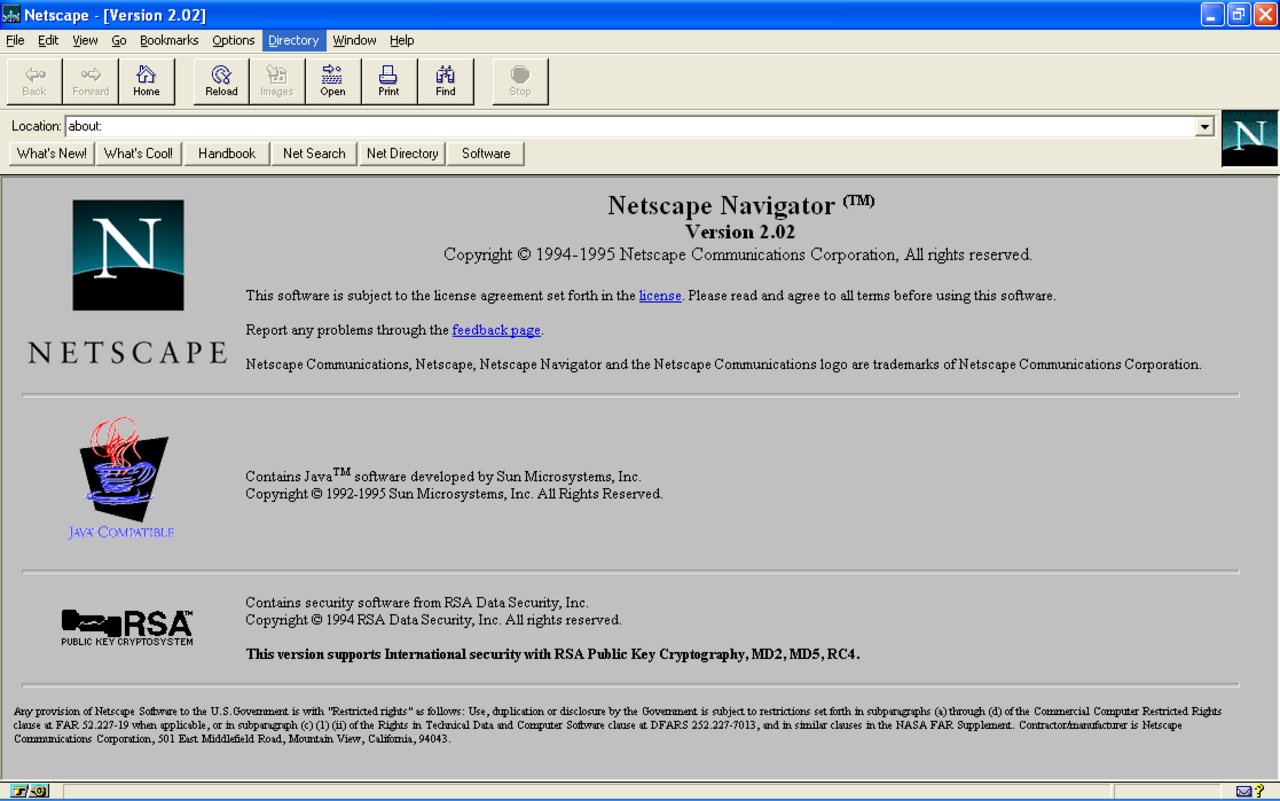
Netscape Navigator browser screenshot from the early web era
The early web browser experience, circa mid-1990s. Flickr emerged from this era and briefly defined what photo-sharing could be.

What Made Flickr Special

If you used Flickr between 2004 and 2008, you experienced something that basically doesn't exist anymore. The platform wasn't trying to monetize you directly. It wasn't pushing ads into your face. It was building tools for photographers, and photographers were building a genuine community around those tools. The incentives were aligned in a way that is increasingly rare on the internet.

Start with tags. This seems obvious now because every platform uses tagging, but Flickr invented the concept of social tagging at scale. Before Flickr, metadata was something librarians created, something formal and controlled and removed from the users themselves. Flickr showed that communities could create metadata collaboratively, that users would tag their own photos with detail and care, and that tags could be discovered and traversed across millions of images. You could click "sunset" and travel through hundreds of thousands of photographs. The tag became a navigational tool and a form of folk taxonomy that was legitimately useful. It was democratic metadata, created by the people who understood the photos best.

Then there was Creative Commons integration. Flickr didn't just allow people to share photos. It allowed them to designate which creative rights came with those photos. Photographers could say: use this for non-commercial purposes with attribution, or use this freely with no restrictions, or don't use this at all, I'm keeping full copyright. This sounds bureaucratic. It was actually revolutionary. It gave photographers control and it gave the internet a massive repository of images that creators and writers and journalists could legally use. This was 2004, before Creative Commons was mainstream, before Wikipedia existed at scale, before anyone really thought about how the internet would actually produce content. Flickr was ahead of this curve by years.

The API was something else entirely. Flickr published an open API that let developers build things on top of the platform. This wasn't done grudgingly. This wasn't a afterthought. This was a core design philosophy. You could write a script that organized your photos, that edited them, that displayed them in custom ways. You could build websites powered by Flickr photos. You could create tools that Flickr itself would never create because they were too niche or specific. The platform became an ecosystem instead of just a silo. Developers got excited about building on Flickr because the API was good and the company wasn't being hostile to third-party tools.

The community aspects were genuinely thriving. Groups were organized by geography, by interest, by photographic style. Photographers would enter weekly competitions. Comments were thoughtful and constructive. People learned from each other. The platform attracted serious amateurs and professionals who treated the site as something worth investing time in. You could spend an hour on Flickr just discovering amazing photography from people you'd never heard of. For a moment in web history, Flickr felt like a space where the incentive structures were actually aligned: the company made money by serving photographers well, and photographers thrived because the company understood their needs and wasn't trying to exploit them.

What's remarkable about this period is that Flickr was profitable. By 2005, roughly a year after launch, the company was generating real revenue from premium subscriptions. Users were willing to pay for better features, more storage, more control. This wasn't a company losing money and desperately seeking an exit. This was a company that had found a sustainable business model based on actually serving its users. That's a rarity. That's something most web companies never achieve. And then Yahoo showed up.

Yahoo Writes a Check

In March 2005, roughly one year after launch, Yahoo acquired Flickr for somewhere between 22 and 35 million dollars. Estimates vary because Yahoo never disclosed the exact number, which is itself telling. The acquisition wasn't controversial at the time. It looked smart: a hot startup with genuine growth, acquired by a company that could give it resources and reach. This was during the height of web 2.0 venture activity. Acquisitions like this happened constantly.

Yahoo's strategic logic was straightforward: Flickr was building an index of the world's photographs, with rich metadata created by users themselves. Yahoo owned one of the web's major search engines. If you could attach that photo index to Yahoo's search infrastructure, you could create a search product that indexed images better than anyone else. You could search for photos by geography, by tagging, by community recommendation. This was a play for search dominance in a growing sector. It made sense in a board meeting. It made sense to investors. It made sense on a spreadsheet.

The problem was that Yahoo thought it understood what Flickr was better than it actually did. Yahoo saw an image repository. Flickr's actual product was community and tools and creative control and a philosophy that respected photographers. Yahoo was buying technology and reach. It was acquiring the wrong thing.

Butterfield and Fake stayed on briefly to run the product. The first year post-acquisition wasn't catastrophic. Flickr kept growing. It kept shipping features. Yahoo gave it resources, and the product improved in some ways. New servers. Better infrastructure. The ability to hire more engineers. In the short term, acquisition resources looked like success.

But the incentive structures shifted almost immediately. Yahoo needed to monetize this. Yahoo needed to integrate this into the broader Yahoo ecosystem. Yahoo needed to make this profitable on a scale that would move the needle for a company Yahoo's size. And that's when the story turns.

Death by a Thousand Paper Cuts

The first major mistake was the Yahoo ID migration. Yahoo forced Flickr users to convert their Flickr accounts into Yahoo IDs. This was presented as integration, as streamlining, as progress. What it actually did was tie Flickr into Yahoo's dying authentication system and signal to users that Flickr was no longer its own thing. It was now a subsidiary, a property, a feature that was being absorbed into the larger machine.

Users hated it. You'd have a Flickr identity, something you'd built, something that represented your photography and your community. Then Yahoo would tell you that identity was being merged into your Yahoo ID, a generic corporate login that also gave you access to Yahoo Mail and Yahoo News and Yahoo's dozen other failing properties. This wasn't integration. This was identity erasure.

But more importantly, it signaled to the team that the company's priorities had shifted. Flickr wasn't being run as a product anymore. It was being managed as an asset to be integrated into a larger portfolio. The people making decisions weren't thinking about photographers. They were thinking about corporate structure and platform unification and synergy.

The talent drain started immediately after. Butterfield and Fake left in 2008, roughly three years after the acquisition. Both would later go on to other things, and both would succeed dramatically. But at Flickr, their departure created a power vacuum. The people who understood the culture, who had the vision, who could fight for the product's soul within a larger organization, they were gone. What remained was a team executing against Yahoo's business priorities instead of Flickr's product priorities.

Resources dried up. Not immediately, not in a dramatic way. But the resources that were allocated to Flickr were increasingly constrained by what Yahoo thought made sense for its broader strategy. Flickr didn't get the investment it needed to compete with the inevitable mobile shift that was coming. The team couldn't innovate quickly because they had to work through Yahoo's bureaucratic processes. When talented engineers started leaving for startups and Google and Facebook, they weren't being replaced at the same rate. The team got smaller. The roadmap got slower. The pace of innovation decelerated to a crawl.

The features that made Flickr distinctive started getting ignored. The API that developers loved wasn't getting improved. The tagging infrastructure that made the platform unique wasn't being enhanced. New photographers were looking for tools that Flickr wasn't building because Flickr didn't have the resources or the mandate to build them. Instagram would eventually eat Flickr's lunch, but that's not because Instagram was technically superior. It's because Instagram had a focused team building for the moment, while Flickr had a fractured team building to corporate requirements.

Look, this is what happens when a strategic buyer acquires a company. The buyer has its own priorities, its own roadmap, its own financial constraints. A startup that was optimizing for product excellence suddenly has to optimize for integration into a larger system. Sometimes that works out. Usually it doesn't. In Flickr's case, it didn't.

By 2010, Flickr was coasting. It was still the largest photo-sharing platform in the world. It had the most photos, the best archive, the most sophisticated features. But it wasn't exciting anymore. It wasn't innovating. It was just sitting there, slowly losing momentum, while the world moved on to the next thing.

Garmin GPS device from the era of dedicated hardware before smartphones
Dedicated devices like this Garmin GPS were everywhere in the mid-2000s. Then smartphones arrived, and the companies that failed to adapt, Flickr included, got left behind.

The Mobile Miss

Here's a timeline that matters. In 2007, Apple released the iPhone. The phone had a camera. It was basic by today's standards, 2 megapixels, no flash, no optical zoom, but it existed, and people started using it to take photos. In October 2010, Kevin Systrom and Mike Krieger launched Instagram as an iPhone app. Instagram let you take a photo on your phone, apply a filter, and share it instantly to a social network. It was elegant. It was frictionless. It understood what the mobile moment actually meant.

Flickr didn't launch an official iPhone app until late 2009, and the original version was mediocre. This matters because Flickr's entire advantage was that it understood photographers and photography. But Instagram understood something more important: they understood the moment when the photographer became casual, when taking photos stopped being something you did with special equipment and started being something you did because you had a phone in your pocket. They understood that the smartphone camera was going to fundamentally change how people thought about photography.

Flickr assumed that photographers wanted tools. Instagram understood that everyone with a phone is a photographer now. Instagram made it effortless to take a photo, make it look good, and share it. The user experience was elegant. The filters made ordinary photos look interesting and cohesive. The sharing infrastructure meant that your friends would instantly see what you posted. All of this was frictionless.

Flickr required you to upload photos from your computer. Or you used their half-baked mobile app. Or you used a third-party solution like Shoebox. Or you used your phone's camera app and then used Instagram, which was faster and more fun. This is essentially what every company that dominated the desktop web had to learn in the 2000s: mobile wasn't a secondary platform that you could address later. Mobile was going to be the primary platform for an entire generation of users. If you didn't build mobile-first, you were building for the past.

Instagram grew explosively. By 2012, it had 100 million users. By 2014, when Facebook bought it for $1 billion, it had become clear that Instagram had won the photo-sharing war. Flickr was no longer the destination. It was the archive. It was where photographers went to backup their photos and manage their portfolios. It was no longer where moments happened.

This wasn't because Flickr's features were bad. This wasn't because Instagram had better photographers. Instagram won because they understood that mobile-first wasn't an option, it was the inevitability. And they built for that inevitability before it arrived. Flickr was still treating mobile as a secondary feature in 2010, and by then it was too late.

The Mayer Hail Mary

Marissa Mayer became CEO of Yahoo in July 2012. She was young, she was competent, she understood technology. She came in with a theory that Yahoo could be revived, that there were products inside Yahoo that could be saved if they were just run better. Flickr was one of those products. She saw potential in the archive, in the community, in the technical infrastructure.

In March 2013, Yahoo announced that Flickr would offer 1 terabyte of free storage. For context, this is roughly what you'd pay $120 per year for on most cloud storage platforms. The strategy was bold: flood the market with free storage, get people to use Flickr again, rebuild the user base. It was a Hail Mary pass, and Mayer had the resources to make it work. She was willing to burn cash to revive products she believed in.

For a moment, it looked like it might actually work. Users started uploading photos again. The platform got attention. The Flickr forums lit up with activity. Maybe, just maybe, Yahoo had realized the mistake and was going to fix it. Maybe the archive was going to become relevant again.

Then the limitations became apparent. Yes, you got 1 terabyte of free storage. But the mobile app still wasn't great. The community features that made Flickr special were still neglected. The API that developers loved still wasn't being improved. You could store unlimited photos, but the tools for organizing them, sharing them, discovering them were all still basically frozen in 2010. You had vast storage but limited tools to use it.

The real question is: why did Mayer think free storage was the answer when the actual problem was that Flickr had stopped innovating? You could offer unlimited storage, but if the product wasn't changing, if the team wasn't shipping new features, if the vision wasn't evolving, users would still leave. And they did. The bump from 1TB free storage lasted a few months. Then the growth plateaued again.

Mayer's theory was right: Flickr could have been saved. But it required more than throwing storage at the problem. It required giving the team the autonomy to innovate, the resources to build for mobile properly, the mandate to compete with Instagram and Facebook on their own terms. It required someone to admit that the product had been neglected and was going to need years of serious investment to recover. It required strategic focus and competitive aggression.

Yahoo wasn't willing to make that commitment. So by 2015, Flickr was stagnating again. Yahoo's stock was declining. The company was being dismantled. And Flickr was, once again, left to fend for itself.

SmugMug and the Afterlife

In June 2017, Verizon bought Yahoo's operating assets for $4.5 billion. Verizon had no interest in running a photo platform. They acquired Yahoo for patents, for intellectual property, for the user base and the search business. Flickr was a footnote in that deal.

In April 2018, SmugMug, a company that has been quietly running a professional photo platform since 2002, acquired Flickr from Verizon. The purchase price was never disclosed, but Verizon was essentially giving away the company at that point. The data center costs alone were more valuable than whatever they could get in a fire sale.

SmugMug's approach has been straightforward: salvage what can be salvaged, shut down what doesn't make sense, return the service to sustainability. Within a few months of taking over, they ended the 1TB free storage plan. Flickr now allows free users to store up to 1000 photos for free. You can still view all your photos, but you can only upload 1000 of them for free. Premium users get unlimited storage and features.

This is actually a sensible business model. It's sustainable. It doesn't bankrupt the company. It allows serious photographers to continue using the platform while generating actual revenue. But it's also an admission of defeat. Flickr isn't trying to dominate anymore. It's trying to survive.

SmugMug has kept the site running. They've fixed some technical debt. They've kept the archive intact. If you used Flickr in 2008 and you login today, all your photos are still there, still organized, still accessible. The company respects the history and the data in a way that Yahoo fundamentally didn't. But Flickr isn't a growth story anymore. It's a legacy property. It's where photographers store their work, where the history of digital photography lives, where creative licensing models were first tested at scale.

The site still hosts billions of photos. It still has features that no other platform offers. The API still exists. The community still exists, though it's much smaller. Flickr isn't dead. But it's not the future anymore. It's the past. It's the archive. It's the proof that even great ideas can get squashed by companies that don't understand them.

The Stewart Butterfield Footnote

Here's something worth noting: after Butterfield left Flickr, he went on to found Slack. Slack started as an internal communication tool for a gaming company called Tiny Spoon that also failed. When the game company shut down, the team realized that the communication tool was more valuable than the actual product. They spun it out, refined it, and by 2014 it had become one of the fastest-growing software products in history. The pattern is identical to Flickr.

This is essentially the same pattern as Flickr. A tool built for one purpose, accidentally becoming more valuable than the original product, getting spun out and polished into something genuinely important. The difference is that Slack remained independent, remained focused, remained willing to iterate and improve based on what users actually needed. Slack had the autonomy to be great.

Butterfield learned from the Flickr experience. When Slack was acquired by Salesforce for $27.7 billion in 2021, he made sure the integration was handled carefully. Slack remained its own product. It kept its own CEO. It maintained its independence within a larger organization. He wasn't going to let what happened to Flickr happen to Slack. He'd seen what happened when a thriving product gets absorbed into a larger corporate structure.

The pattern recognition here is: great products that start as accidents can thrive or die depending entirely on how they're managed post-acquisition. Flickr had every advantage. It had users who cared. It had technology that worked. It had a team that understood the vision. What it didn't have was a parent company that respected what had been built.

FAQ

Is Flickr still around? Yes. SmugMug acquired it in 2018 and continues to operate it. You can still upload photos, organize them, share them, browse other people's work. The site isn't dead, but it's not growing either.

Can I still access my old Flickr photos? Yes. Unless you deleted them, they're still there. Flickr kept all the data intact through the transitions. This is one thing Yahoo and Verizon got right: they didn't erase the archive.

What's the free tier now? Free users can upload up to 1000 photos. You can view and organize all of them, but you can't upload the 1001st until you delete something or upgrade. Premium users get unlimited uploads and storage.

Why didn't Yahoo just sell Flickr earlier? Because they were convinced it was valuable as part of a larger portfolio. They thought the photo index plus search was a winning combination. They were wrong. But admitting you're wrong and selling a major property you acquired is hard, especially if you paid 30 million dollars for it. So Yahoo held onto Flickr, slowly starving it, until it was essentially worthless.

Did Instagram copy Flickr? Not really. Instagram was designed from scratch for mobile. The founders weren't trying to improve Flickr. They were building for a different platform, a different use case, a different user. But Flickr had shown that photo-sharing could work as a business, that people cared about photography online, that community mattered. Instagram took those lessons and applied them to a mobile-first world.

Is there a lesson here? Several. First: acquisition by a larger company usually kills startups unless the parent company respects what's been built. Second: mobile disruption was real and predictable, and every company that didn't take it seriously got demolished. Third: the best product doesn't always win. The product that understands the moment it's operating in wins. Flickr understood the 2004 moment perfectly. It failed to understand the 2010 moment. By then, it was too late.

๐Ÿ“– What Happened to Flickr, the Photo Site Yahoo Left to Die
_ โ–ก ร—
← Back

What Happened to Flickr, the Photo Site Yahoo Left to Die

2026-04-10 by 404 Memory Found

In 2011, Flickr hosted approximately 6 billion photographs. By 2017, when Verizon finally sold the company to SmugMug, that number had barely budged despite being one of the internet's oldest and most fundamental photo repositories. The company had effectively stopped growing years earlier, yet the archive itself sat there like a fossil, preserved but inert. This is the story of what happens when a bold new platform gets acquired by a company that doesn't understand what made it bold in the first place.

A Game That Accidentally Became a Photo Site

Flickr's origin story is deceptively simple: it was an accident, a feature that escaped from something else entirely. In 2002, a small Vancouver-based game company called Ludicorp was working on an online multiplayer game called "Game Neverending." Stewart Butterfield, Caterina Fake, and Jason Classon needed a way for players to trade items and show them off to each other. They built a photo-sharing tool into the game as a workaround for that problem. Nothing revolutionary, just a practical solution to a game design problem.

The weird part: people stopped playing the game and just started using the photo tool.

This is the kind of moment that happens in tech more often than you'd think, but rarely with such clarity. The photo feature was so much more useful, so much more interesting, that it completely overshadowed the actual game. By 2004, Butterfield and Fake realized what they had. They shut down Game Neverending, kept the photo tool, refined it obsessively, and officially launched Flickr on February 10, 2004.

Here's the thing: Flickr launched as an invitation-only beta. This sounds like a marketing gimmick now, but in 2004 it was genius. The early users were photo enthusiasts, photographers, and digital archivists. They were people who cared deeply about organization, metadata, and community. Flickr wasn't trying to be mainstream immediately. It was building credibility with the people who actually understood photography.

The core insight Butterfield and Fake had was this: people wanted to share photos, but they also wanted to own the moment of sharing. They wanted to organize them, control them, explain them, preserve them for posterity. Most web companies in 2004 treated photos as disposable content, temporary artifacts in the stream. Flickr treated them as artifacts worth preserving and contextualizing. That's why the photo tool from a failed game became something people genuinely cared about, something worth building a platform around.

In the early days, Flickr's growth was organic and almost quiet. The team didn't launch with massive marketing. They launched with a product that photographers needed, and photographers told other photographers. By 2005, a year after launch, Flickr had become the standard for photo-sharing among enthusiasts. Professional photographers, hobbyists, and people who just cared about their digital memories all gravitated toward the platform. The features were thoughtfully designed. The interface was clean. The philosophy was clear: your photos matter, and we're going to treat them that way.

Netscape Navigator browser screenshot from the early web era
The early web browser experience, circa mid-1990s. Flickr emerged from this era and briefly defined what photo-sharing could be.

What Made Flickr Special

If you used Flickr between 2004 and 2008, you experienced something that basically doesn't exist anymore. The platform wasn't trying to monetize you directly. It wasn't pushing ads into your face. It was building tools for photographers, and photographers were building a genuine community around those tools. The incentives were aligned in a way that is increasingly rare on the internet.

Start with tags. This seems obvious now because every platform uses tagging, but Flickr invented the concept of social tagging at scale. Before Flickr, metadata was something librarians created, something formal and controlled and removed from the users themselves. Flickr showed that communities could create metadata collaboratively, that users would tag their own photos with detail and care, and that tags could be discovered and traversed across millions of images. You could click "sunset" and travel through hundreds of thousands of photographs. The tag became a navigational tool and a form of folk taxonomy that was legitimately useful. It was democratic metadata, created by the people who understood the photos best.

Then there was Creative Commons integration. Flickr didn't just allow people to share photos. It allowed them to designate which creative rights came with those photos. Photographers could say: use this for non-commercial purposes with attribution, or use this freely with no restrictions, or don't use this at all, I'm keeping full copyright. This sounds bureaucratic. It was actually revolutionary. It gave photographers control and it gave the internet a massive repository of images that creators and writers and journalists could legally use. This was 2004, before Creative Commons was mainstream, before Wikipedia existed at scale, before anyone really thought about how the internet would actually produce content. Flickr was ahead of this curve by years.

The API was something else entirely. Flickr published an open API that let developers build things on top of the platform. This wasn't done grudgingly. This wasn't a afterthought. This was a core design philosophy. You could write a script that organized your photos, that edited them, that displayed them in custom ways. You could build websites powered by Flickr photos. You could create tools that Flickr itself would never create because they were too niche or specific. The platform became an ecosystem instead of just a silo. Developers got excited about building on Flickr because the API was good and the company wasn't being hostile to third-party tools.

The community aspects were genuinely thriving. Groups were organized by geography, by interest, by photographic style. Photographers would enter weekly competitions. Comments were thoughtful and constructive. People learned from each other. The platform attracted serious amateurs and professionals who treated the site as something worth investing time in. You could spend an hour on Flickr just discovering amazing photography from people you'd never heard of. For a moment in web history, Flickr felt like a space where the incentive structures were actually aligned: the company made money by serving photographers well, and photographers thrived because the company understood their needs and wasn't trying to exploit them.

What's remarkable about this period is that Flickr was profitable. By 2005, roughly a year after launch, the company was generating real revenue from premium subscriptions. Users were willing to pay for better features, more storage, more control. This wasn't a company losing money and desperately seeking an exit. This was a company that had found a sustainable business model based on actually serving its users. That's a rarity. That's something most web companies never achieve. And then Yahoo showed up.

Yahoo Writes a Check

In March 2005, roughly one year after launch, Yahoo acquired Flickr for somewhere between 22 and 35 million dollars. Estimates vary because Yahoo never disclosed the exact number, which is itself telling. The acquisition wasn't controversial at the time. It looked smart: a hot startup with genuine growth, acquired by a company that could give it resources and reach. This was during the height of web 2.0 venture activity. Acquisitions like this happened constantly.

Yahoo's strategic logic was straightforward: Flickr was building an index of the world's photographs, with rich metadata created by users themselves. Yahoo owned one of the web's major search engines. If you could attach that photo index to Yahoo's search infrastructure, you could create a search product that indexed images better than anyone else. You could search for photos by geography, by tagging, by community recommendation. This was a play for search dominance in a growing sector. It made sense in a board meeting. It made sense to investors. It made sense on a spreadsheet.

The problem was that Yahoo thought it understood what Flickr was better than it actually did. Yahoo saw an image repository. Flickr's actual product was community and tools and creative control and a philosophy that respected photographers. Yahoo was buying technology and reach. It was acquiring the wrong thing.

Butterfield and Fake stayed on briefly to run the product. The first year post-acquisition wasn't catastrophic. Flickr kept growing. It kept shipping features. Yahoo gave it resources, and the product improved in some ways. New servers. Better infrastructure. The ability to hire more engineers. In the short term, acquisition resources looked like success.

But the incentive structures shifted almost immediately. Yahoo needed to monetize this. Yahoo needed to integrate this into the broader Yahoo ecosystem. Yahoo needed to make this profitable on a scale that would move the needle for a company Yahoo's size. And that's when the story turns.

Death by a Thousand Paper Cuts

The first major mistake was the Yahoo ID migration. Yahoo forced Flickr users to convert their Flickr accounts into Yahoo IDs. This was presented as integration, as streamlining, as progress. What it actually did was tie Flickr into Yahoo's dying authentication system and signal to users that Flickr was no longer its own thing. It was now a subsidiary, a property, a feature that was being absorbed into the larger machine.

Users hated it. You'd have a Flickr identity, something you'd built, something that represented your photography and your community. Then Yahoo would tell you that identity was being merged into your Yahoo ID, a generic corporate login that also gave you access to Yahoo Mail and Yahoo News and Yahoo's dozen other failing properties. This wasn't integration. This was identity erasure.

But more importantly, it signaled to the team that the company's priorities had shifted. Flickr wasn't being run as a product anymore. It was being managed as an asset to be integrated into a larger portfolio. The people making decisions weren't thinking about photographers. They were thinking about corporate structure and platform unification and synergy.

The talent drain started immediately after. Butterfield and Fake left in 2008, roughly three years after the acquisition. Both would later go on to other things, and both would succeed dramatically. But at Flickr, their departure created a power vacuum. The people who understood the culture, who had the vision, who could fight for the product's soul within a larger organization, they were gone. What remained was a team executing against Yahoo's business priorities instead of Flickr's product priorities.

Resources dried up. Not immediately, not in a dramatic way. But the resources that were allocated to Flickr were increasingly constrained by what Yahoo thought made sense for its broader strategy. Flickr didn't get the investment it needed to compete with the inevitable mobile shift that was coming. The team couldn't innovate quickly because they had to work through Yahoo's bureaucratic processes. When talented engineers started leaving for startups and Google and Facebook, they weren't being replaced at the same rate. The team got smaller. The roadmap got slower. The pace of innovation decelerated to a crawl.

The features that made Flickr distinctive started getting ignored. The API that developers loved wasn't getting improved. The tagging infrastructure that made the platform unique wasn't being enhanced. New photographers were looking for tools that Flickr wasn't building because Flickr didn't have the resources or the mandate to build them. Instagram would eventually eat Flickr's lunch, but that's not because Instagram was technically superior. It's because Instagram had a focused team building for the moment, while Flickr had a fractured team building to corporate requirements.

Look, this is what happens when a strategic buyer acquires a company. The buyer has its own priorities, its own roadmap, its own financial constraints. A startup that was optimizing for product excellence suddenly has to optimize for integration into a larger system. Sometimes that works out. Usually it doesn't. In Flickr's case, it didn't.

By 2010, Flickr was coasting. It was still the largest photo-sharing platform in the world. It had the most photos, the best archive, the most sophisticated features. But it wasn't exciting anymore. It wasn't innovating. It was just sitting there, slowly losing momentum, while the world moved on to the next thing.

Garmin GPS device from the era of dedicated hardware before smartphones
Dedicated devices like this Garmin GPS were everywhere in the mid-2000s. Then smartphones arrived, and the companies that failed to adapt, Flickr included, got left behind.

The Mobile Miss

Here's a timeline that matters. In 2007, Apple released the iPhone. The phone had a camera. It was basic by today's standards, 2 megapixels, no flash, no optical zoom, but it existed, and people started using it to take photos. In October 2010, Kevin Systrom and Mike Krieger launched Instagram as an iPhone app. Instagram let you take a photo on your phone, apply a filter, and share it instantly to a social network. It was elegant. It was frictionless. It understood what the mobile moment actually meant.

Flickr didn't launch an official iPhone app until late 2009, and the original version was mediocre. This matters because Flickr's entire advantage was that it understood photographers and photography. But Instagram understood something more important: they understood the moment when the photographer became casual, when taking photos stopped being something you did with special equipment and started being something you did because you had a phone in your pocket. They understood that the smartphone camera was going to fundamentally change how people thought about photography.

Flickr assumed that photographers wanted tools. Instagram understood that everyone with a phone is a photographer now. Instagram made it effortless to take a photo, make it look good, and share it. The user experience was elegant. The filters made ordinary photos look interesting and cohesive. The sharing infrastructure meant that your friends would instantly see what you posted. All of this was frictionless.

Flickr required you to upload photos from your computer. Or you used their half-baked mobile app. Or you used a third-party solution like Shoebox. Or you used your phone's camera app and then used Instagram, which was faster and more fun. This is essentially what every company that dominated the desktop web had to learn in the 2000s: mobile wasn't a secondary platform that you could address later. Mobile was going to be the primary platform for an entire generation of users. If you didn't build mobile-first, you were building for the past.

Instagram grew explosively. By 2012, it had 100 million users. By 2014, when Facebook bought it for $1 billion, it had become clear that Instagram had won the photo-sharing war. Flickr was no longer the destination. It was the archive. It was where photographers went to backup their photos and manage their portfolios. It was no longer where moments happened.

This wasn't because Flickr's features were bad. This wasn't because Instagram had better photographers. Instagram won because they understood that mobile-first wasn't an option, it was the inevitability. And they built for that inevitability before it arrived. Flickr was still treating mobile as a secondary feature in 2010, and by then it was too late.

The Mayer Hail Mary

Marissa Mayer became CEO of Yahoo in July 2012. She was young, she was competent, she understood technology. She came in with a theory that Yahoo could be revived, that there were products inside Yahoo that could be saved if they were just run better. Flickr was one of those products. She saw potential in the archive, in the community, in the technical infrastructure.

In March 2013, Yahoo announced that Flickr would offer 1 terabyte of free storage. For context, this is roughly what you'd pay $120 per year for on most cloud storage platforms. The strategy was bold: flood the market with free storage, get people to use Flickr again, rebuild the user base. It was a Hail Mary pass, and Mayer had the resources to make it work. She was willing to burn cash to revive products she believed in.

For a moment, it looked like it might actually work. Users started uploading photos again. The platform got attention. The Flickr forums lit up with activity. Maybe, just maybe, Yahoo had realized the mistake and was going to fix it. Maybe the archive was going to become relevant again.

Then the limitations became apparent. Yes, you got 1 terabyte of free storage. But the mobile app still wasn't great. The community features that made Flickr special were still neglected. The API that developers loved still wasn't being improved. You could store unlimited photos, but the tools for organizing them, sharing them, discovering them were all still basically frozen in 2010. You had vast storage but limited tools to use it.

The real question is: why did Mayer think free storage was the answer when the actual problem was that Flickr had stopped innovating? You could offer unlimited storage, but if the product wasn't changing, if the team wasn't shipping new features, if the vision wasn't evolving, users would still leave. And they did. The bump from 1TB free storage lasted a few months. Then the growth plateaued again.

Mayer's theory was right: Flickr could have been saved. But it required more than throwing storage at the problem. It required giving the team the autonomy to innovate, the resources to build for mobile properly, the mandate to compete with Instagram and Facebook on their own terms. It required someone to admit that the product had been neglected and was going to need years of serious investment to recover. It required strategic focus and competitive aggression.

Yahoo wasn't willing to make that commitment. So by 2015, Flickr was stagnating again. Yahoo's stock was declining. The company was being dismantled. And Flickr was, once again, left to fend for itself.

SmugMug and the Afterlife

In June 2017, Verizon bought Yahoo's operating assets for $4.5 billion. Verizon had no interest in running a photo platform. They acquired Yahoo for patents, for intellectual property, for the user base and the search business. Flickr was a footnote in that deal.

In April 2018, SmugMug, a company that has been quietly running a professional photo platform since 2002, acquired Flickr from Verizon. The purchase price was never disclosed, but Verizon was essentially giving away the company at that point. The data center costs alone were more valuable than whatever they could get in a fire sale.

SmugMug's approach has been straightforward: salvage what can be salvaged, shut down what doesn't make sense, return the service to sustainability. Within a few months of taking over, they ended the 1TB free storage plan. Flickr now allows free users to store up to 1000 photos for free. You can still view all your photos, but you can only upload 1000 of them for free. Premium users get unlimited storage and features.

This is actually a sensible business model. It's sustainable. It doesn't bankrupt the company. It allows serious photographers to continue using the platform while generating actual revenue. But it's also an admission of defeat. Flickr isn't trying to dominate anymore. It's trying to survive.

SmugMug has kept the site running. They've fixed some technical debt. They've kept the archive intact. If you used Flickr in 2008 and you login today, all your photos are still there, still organized, still accessible. The company respects the history and the data in a way that Yahoo fundamentally didn't. But Flickr isn't a growth story anymore. It's a legacy property. It's where photographers store their work, where the history of digital photography lives, where creative licensing models were first tested at scale.

The site still hosts billions of photos. It still has features that no other platform offers. The API still exists. The community still exists, though it's much smaller. Flickr isn't dead. But it's not the future anymore. It's the past. It's the archive. It's the proof that even great ideas can get squashed by companies that don't understand them.

The Stewart Butterfield Footnote

Here's something worth noting: after Butterfield left Flickr, he went on to found Slack. Slack started as an internal communication tool for a gaming company called Tiny Spoon that also failed. When the game company shut down, the team realized that the communication tool was more valuable than the actual product. They spun it out, refined it, and by 2014 it had become one of the fastest-growing software products in history. The pattern is identical to Flickr.

This is essentially the same pattern as Flickr. A tool built for one purpose, accidentally becoming more valuable than the original product, getting spun out and polished into something genuinely important. The difference is that Slack remained independent, remained focused, remained willing to iterate and improve based on what users actually needed. Slack had the autonomy to be great.

Butterfield learned from the Flickr experience. When Slack was acquired by Salesforce for $27.7 billion in 2021, he made sure the integration was handled carefully. Slack remained its own product. It kept its own CEO. It maintained its independence within a larger organization. He wasn't going to let what happened to Flickr happen to Slack. He'd seen what happened when a thriving product gets absorbed into a larger corporate structure.

The pattern recognition here is: great products that start as accidents can thrive or die depending entirely on how they're managed post-acquisition. Flickr had every advantage. It had users who cared. It had technology that worked. It had a team that understood the vision. What it didn't have was a parent company that respected what had been built.

FAQ

Is Flickr still around? Yes. SmugMug acquired it in 2018 and continues to operate it. You can still upload photos, organize them, share them, browse other people's work. The site isn't dead, but it's not growing either.

Can I still access my old Flickr photos? Yes. Unless you deleted them, they're still there. Flickr kept all the data intact through the transitions. This is one thing Yahoo and Verizon got right: they didn't erase the archive.

What's the free tier now? Free users can upload up to 1000 photos. You can view and organize all of them, but you can't upload the 1001st until you delete something or upgrade. Premium users get unlimited uploads and storage.

Why didn't Yahoo just sell Flickr earlier? Because they were convinced it was valuable as part of a larger portfolio. They thought the photo index plus search was a winning combination. They were wrong. But admitting you're wrong and selling a major property you acquired is hard, especially if you paid 30 million dollars for it. So Yahoo held onto Flickr, slowly starving it, until it was essentially worthless.

Did Instagram copy Flickr? Not really. Instagram was designed from scratch for mobile. The founders weren't trying to improve Flickr. They were building for a different platform, a different use case, a different user. But Flickr had shown that photo-sharing could work as a business, that people cared about photography online, that community mattered. Instagram took those lessons and applied them to a mobile-first world.

Is there a lesson here? Several. First: acquisition by a larger company usually kills startups unless the parent company respects what's been built. Second: mobile disruption was real and predictable, and every company that didn't take it seriously got demolished. Third: the best product doesn't always win. The product that understands the moment it's operating in wins. Flickr understood the 2004 moment perfectly. It failed to understand the 2010 moment. By then, it was too late.

๐Ÿ“– What Happened to Flickr, the Photo Site Yahoo Left to Die

In 2011, Flickr hosted approximately 6 billion photographs. By 2017, when Verizon finally sold the company to SmugMug, that number had barely budged despite being one of the internet's oldest and most fundamental photo repositories. The company had effectively stopped growing years earlier, yet the archive itself sat there like a fossil, preserved but inert. This is the story of what happens when a bold new platform gets acquired by a company that doesn't understand what made it bold in the first place.

A Game That Accidentally Became a Photo Site

Flickr's origin story is deceptively simple: it was an accident, a feature that escaped from something else entirely. In 2002, a small Vancouver-based game company called Ludicorp was working on an online multiplayer game called "Game Neverending." Stewart Butterfield, Caterina Fake, and Jason Classon needed a way for players to trade items and show them off to each other. They built a photo-sharing tool into the game as a workaround for that problem. Nothing revolutionary, just a practical solution to a game design problem.

The weird part: people stopped playing the game and just started using the photo tool.

This is the kind of moment that happens in tech more often than you'd think, but rarely with such clarity. The photo feature was so much more useful, so much more interesting, that it completely overshadowed the actual game. By 2004, Butterfield and Fake realized what they had. They shut down Game Neverending, kept the photo tool, refined it obsessively, and officially launched Flickr on February 10, 2004.

Here's the thing: Flickr launched as an invitation-only beta. This sounds like a marketing gimmick now, but in 2004 it was genius. The early users were photo enthusiasts, photographers, and digital archivists. They were people who cared deeply about organization, metadata, and community. Flickr wasn't trying to be mainstream immediately. It was building credibility with the people who actually understood photography.

The core insight Butterfield and Fake had was this: people wanted to share photos, but they also wanted to own the moment of sharing. They wanted to organize them, control them, explain them, preserve them for posterity. Most web companies in 2004 treated photos as disposable content, temporary artifacts in the stream. Flickr treated them as artifacts worth preserving and contextualizing. That's why the photo tool from a failed game became something people genuinely cared about, something worth building a platform around.

In the early days, Flickr's growth was organic and almost quiet. The team didn't launch with massive marketing. They launched with a product that photographers needed, and photographers told other photographers. By 2005, a year after launch, Flickr had become the standard for photo-sharing among enthusiasts. Professional photographers, hobbyists, and people who just cared about their digital memories all gravitated toward the platform. The features were thoughtfully designed. The interface was clean. The philosophy was clear: your photos matter, and we're going to treat them that way.

Netscape Navigator browser screenshot from the early web era
The early web browser experience, circa mid-1990s. Flickr emerged from this era and briefly defined what photo-sharing could be.

What Made Flickr Special

If you used Flickr between 2004 and 2008, you experienced something that basically doesn't exist anymore. The platform wasn't trying to monetize you directly. It wasn't pushing ads into your face. It was building tools for photographers, and photographers were building a genuine community around those tools. The incentives were aligned in a way that is increasingly rare on the internet.

Start with tags. This seems obvious now because every platform uses tagging, but Flickr invented the concept of social tagging at scale. Before Flickr, metadata was something librarians created, something formal and controlled and removed from the users themselves. Flickr showed that communities could create metadata collaboratively, that users would tag their own photos with detail and care, and that tags could be discovered and traversed across millions of images. You could click "sunset" and travel through hundreds of thousands of photographs. The tag became a navigational tool and a form of folk taxonomy that was legitimately useful. It was democratic metadata, created by the people who understood the photos best.

Then there was Creative Commons integration. Flickr didn't just allow people to share photos. It allowed them to designate which creative rights came with those photos. Photographers could say: use this for non-commercial purposes with attribution, or use this freely with no restrictions, or don't use this at all, I'm keeping full copyright. This sounds bureaucratic. It was actually revolutionary. It gave photographers control and it gave the internet a massive repository of images that creators and writers and journalists could legally use. This was 2004, before Creative Commons was mainstream, before Wikipedia existed at scale, before anyone really thought about how the internet would actually produce content. Flickr was ahead of this curve by years.

The API was something else entirely. Flickr published an open API that let developers build things on top of the platform. This wasn't done grudgingly. This wasn't a afterthought. This was a core design philosophy. You could write a script that organized your photos, that edited them, that displayed them in custom ways. You could build websites powered by Flickr photos. You could create tools that Flickr itself would never create because they were too niche or specific. The platform became an ecosystem instead of just a silo. Developers got excited about building on Flickr because the API was good and the company wasn't being hostile to third-party tools.

The community aspects were genuinely thriving. Groups were organized by geography, by interest, by photographic style. Photographers would enter weekly competitions. Comments were thoughtful and constructive. People learned from each other. The platform attracted serious amateurs and professionals who treated the site as something worth investing time in. You could spend an hour on Flickr just discovering amazing photography from people you'd never heard of. For a moment in web history, Flickr felt like a space where the incentive structures were actually aligned: the company made money by serving photographers well, and photographers thrived because the company understood their needs and wasn't trying to exploit them.

What's remarkable about this period is that Flickr was profitable. By 2005, roughly a year after launch, the company was generating real revenue from premium subscriptions. Users were willing to pay for better features, more storage, more control. This wasn't a company losing money and desperately seeking an exit. This was a company that had found a sustainable business model based on actually serving its users. That's a rarity. That's something most web companies never achieve. And then Yahoo showed up.

Yahoo Writes a Check

In March 2005, roughly one year after launch, Yahoo acquired Flickr for somewhere between 22 and 35 million dollars. Estimates vary because Yahoo never disclosed the exact number, which is itself telling. The acquisition wasn't controversial at the time. It looked smart: a hot startup with genuine growth, acquired by a company that could give it resources and reach. This was during the height of web 2.0 venture activity. Acquisitions like this happened constantly.

Yahoo's strategic logic was straightforward: Flickr was building an index of the world's photographs, with rich metadata created by users themselves. Yahoo owned one of the web's major search engines. If you could attach that photo index to Yahoo's search infrastructure, you could create a search product that indexed images better than anyone else. You could search for photos by geography, by tagging, by community recommendation. This was a play for search dominance in a growing sector. It made sense in a board meeting. It made sense to investors. It made sense on a spreadsheet.

The problem was that Yahoo thought it understood what Flickr was better than it actually did. Yahoo saw an image repository. Flickr's actual product was community and tools and creative control and a philosophy that respected photographers. Yahoo was buying technology and reach. It was acquiring the wrong thing.

Butterfield and Fake stayed on briefly to run the product. The first year post-acquisition wasn't catastrophic. Flickr kept growing. It kept shipping features. Yahoo gave it resources, and the product improved in some ways. New servers. Better infrastructure. The ability to hire more engineers. In the short term, acquisition resources looked like success.

But the incentive structures shifted almost immediately. Yahoo needed to monetize this. Yahoo needed to integrate this into the broader Yahoo ecosystem. Yahoo needed to make this profitable on a scale that would move the needle for a company Yahoo's size. And that's when the story turns.

Death by a Thousand Paper Cuts

The first major mistake was the Yahoo ID migration. Yahoo forced Flickr users to convert their Flickr accounts into Yahoo IDs. This was presented as integration, as streamlining, as progress. What it actually did was tie Flickr into Yahoo's dying authentication system and signal to users that Flickr was no longer its own thing. It was now a subsidiary, a property, a feature that was being absorbed into the larger machine.

Users hated it. You'd have a Flickr identity, something you'd built, something that represented your photography and your community. Then Yahoo would tell you that identity was being merged into your Yahoo ID, a generic corporate login that also gave you access to Yahoo Mail and Yahoo News and Yahoo's dozen other failing properties. This wasn't integration. This was identity erasure.

But more importantly, it signaled to the team that the company's priorities had shifted. Flickr wasn't being run as a product anymore. It was being managed as an asset to be integrated into a larger portfolio. The people making decisions weren't thinking about photographers. They were thinking about corporate structure and platform unification and synergy.

The talent drain started immediately after. Butterfield and Fake left in 2008, roughly three years after the acquisition. Both would later go on to other things, and both would succeed dramatically. But at Flickr, their departure created a power vacuum. The people who understood the culture, who had the vision, who could fight for the product's soul within a larger organization, they were gone. What remained was a team executing against Yahoo's business priorities instead of Flickr's product priorities.

Resources dried up. Not immediately, not in a dramatic way. But the resources that were allocated to Flickr were increasingly constrained by what Yahoo thought made sense for its broader strategy. Flickr didn't get the investment it needed to compete with the inevitable mobile shift that was coming. The team couldn't innovate quickly because they had to work through Yahoo's bureaucratic processes. When talented engineers started leaving for startups and Google and Facebook, they weren't being replaced at the same rate. The team got smaller. The roadmap got slower. The pace of innovation decelerated to a crawl.

The features that made Flickr distinctive started getting ignored. The API that developers loved wasn't getting improved. The tagging infrastructure that made the platform unique wasn't being enhanced. New photographers were looking for tools that Flickr wasn't building because Flickr didn't have the resources or the mandate to build them. Instagram would eventually eat Flickr's lunch, but that's not because Instagram was technically superior. It's because Instagram had a focused team building for the moment, while Flickr had a fractured team building to corporate requirements.

Look, this is what happens when a strategic buyer acquires a company. The buyer has its own priorities, its own roadmap, its own financial constraints. A startup that was optimizing for product excellence suddenly has to optimize for integration into a larger system. Sometimes that works out. Usually it doesn't. In Flickr's case, it didn't.

By 2010, Flickr was coasting. It was still the largest photo-sharing platform in the world. It had the most photos, the best archive, the most sophisticated features. But it wasn't exciting anymore. It wasn't innovating. It was just sitting there, slowly losing momentum, while the world moved on to the next thing.

Garmin GPS device from the era of dedicated hardware before smartphones
Dedicated devices like this Garmin GPS were everywhere in the mid-2000s. Then smartphones arrived, and the companies that failed to adapt, Flickr included, got left behind.

The Mobile Miss

Here's a timeline that matters. In 2007, Apple released the iPhone. The phone had a camera. It was basic by today's standards, 2 megapixels, no flash, no optical zoom, but it existed, and people started using it to take photos. In October 2010, Kevin Systrom and Mike Krieger launched Instagram as an iPhone app. Instagram let you take a photo on your phone, apply a filter, and share it instantly to a social network. It was elegant. It was frictionless. It understood what the mobile moment actually meant.

Flickr didn't launch an official iPhone app until late 2009, and the original version was mediocre. This matters because Flickr's entire advantage was that it understood photographers and photography. But Instagram understood something more important: they understood the moment when the photographer became casual, when taking photos stopped being something you did with special equipment and started being something you did because you had a phone in your pocket. They understood that the smartphone camera was going to fundamentally change how people thought about photography.

Flickr assumed that photographers wanted tools. Instagram understood that everyone with a phone is a photographer now. Instagram made it effortless to take a photo, make it look good, and share it. The user experience was elegant. The filters made ordinary photos look interesting and cohesive. The sharing infrastructure meant that your friends would instantly see what you posted. All of this was frictionless.

Flickr required you to upload photos from your computer. Or you used their half-baked mobile app. Or you used a third-party solution like Shoebox. Or you used your phone's camera app and then used Instagram, which was faster and more fun. This is essentially what every company that dominated the desktop web had to learn in the 2000s: mobile wasn't a secondary platform that you could address later. Mobile was going to be the primary platform for an entire generation of users. If you didn't build mobile-first, you were building for the past.

Instagram grew explosively. By 2012, it had 100 million users. By 2014, when Facebook bought it for $1 billion, it had become clear that Instagram had won the photo-sharing war. Flickr was no longer the destination. It was the archive. It was where photographers went to backup their photos and manage their portfolios. It was no longer where moments happened.

This wasn't because Flickr's features were bad. This wasn't because Instagram had better photographers. Instagram won because they understood that mobile-first wasn't an option, it was the inevitability. And they built for that inevitability before it arrived. Flickr was still treating mobile as a secondary feature in 2010, and by then it was too late.

The Mayer Hail Mary

Marissa Mayer became CEO of Yahoo in July 2012. She was young, she was competent, she understood technology. She came in with a theory that Yahoo could be revived, that there were products inside Yahoo that could be saved if they were just run better. Flickr was one of those products. She saw potential in the archive, in the community, in the technical infrastructure.

In March 2013, Yahoo announced that Flickr would offer 1 terabyte of free storage. For context, this is roughly what you'd pay $120 per year for on most cloud storage platforms. The strategy was bold: flood the market with free storage, get people to use Flickr again, rebuild the user base. It was a Hail Mary pass, and Mayer had the resources to make it work. She was willing to burn cash to revive products she believed in.

For a moment, it looked like it might actually work. Users started uploading photos again. The platform got attention. The Flickr forums lit up with activity. Maybe, just maybe, Yahoo had realized the mistake and was going to fix it. Maybe the archive was going to become relevant again.

Then the limitations became apparent. Yes, you got 1 terabyte of free storage. But the mobile app still wasn't great. The community features that made Flickr special were still neglected. The API that developers loved still wasn't being improved. You could store unlimited photos, but the tools for organizing them, sharing them, discovering them were all still basically frozen in 2010. You had vast storage but limited tools to use it.

The real question is: why did Mayer think free storage was the answer when the actual problem was that Flickr had stopped innovating? You could offer unlimited storage, but if the product wasn't changing, if the team wasn't shipping new features, if the vision wasn't evolving, users would still leave. And they did. The bump from 1TB free storage lasted a few months. Then the growth plateaued again.

Mayer's theory was right: Flickr could have been saved. But it required more than throwing storage at the problem. It required giving the team the autonomy to innovate, the resources to build for mobile properly, the mandate to compete with Instagram and Facebook on their own terms. It required someone to admit that the product had been neglected and was going to need years of serious investment to recover. It required strategic focus and competitive aggression.

Yahoo wasn't willing to make that commitment. So by 2015, Flickr was stagnating again. Yahoo's stock was declining. The company was being dismantled. And Flickr was, once again, left to fend for itself.

SmugMug and the Afterlife

In June 2017, Verizon bought Yahoo's operating assets for $4.5 billion. Verizon had no interest in running a photo platform. They acquired Yahoo for patents, for intellectual property, for the user base and the search business. Flickr was a footnote in that deal.

In April 2018, SmugMug, a company that has been quietly running a professional photo platform since 2002, acquired Flickr from Verizon. The purchase price was never disclosed, but Verizon was essentially giving away the company at that point. The data center costs alone were more valuable than whatever they could get in a fire sale.

SmugMug's approach has been straightforward: salvage what can be salvaged, shut down what doesn't make sense, return the service to sustainability. Within a few months of taking over, they ended the 1TB free storage plan. Flickr now allows free users to store up to 1000 photos for free. You can still view all your photos, but you can only upload 1000 of them for free. Premium users get unlimited storage and features.

This is actually a sensible business model. It's sustainable. It doesn't bankrupt the company. It allows serious photographers to continue using the platform while generating actual revenue. But it's also an admission of defeat. Flickr isn't trying to dominate anymore. It's trying to survive.

SmugMug has kept the site running. They've fixed some technical debt. They've kept the archive intact. If you used Flickr in 2008 and you login today, all your photos are still there, still organized, still accessible. The company respects the history and the data in a way that Yahoo fundamentally didn't. But Flickr isn't a growth story anymore. It's a legacy property. It's where photographers store their work, where the history of digital photography lives, where creative licensing models were first tested at scale.

The site still hosts billions of photos. It still has features that no other platform offers. The API still exists. The community still exists, though it's much smaller. Flickr isn't dead. But it's not the future anymore. It's the past. It's the archive. It's the proof that even great ideas can get squashed by companies that don't understand them.

The Stewart Butterfield Footnote

Here's something worth noting: after Butterfield left Flickr, he went on to found Slack. Slack started as an internal communication tool for a gaming company called Tiny Spoon that also failed. When the game company shut down, the team realized that the communication tool was more valuable than the actual product. They spun it out, refined it, and by 2014 it had become one of the fastest-growing software products in history. The pattern is identical to Flickr.

This is essentially the same pattern as Flickr. A tool built for one purpose, accidentally becoming more valuable than the original product, getting spun out and polished into something genuinely important. The difference is that Slack remained independent, remained focused, remained willing to iterate and improve based on what users actually needed. Slack had the autonomy to be great.

Butterfield learned from the Flickr experience. When Slack was acquired by Salesforce for $27.7 billion in 2021, he made sure the integration was handled carefully. Slack remained its own product. It kept its own CEO. It maintained its independence within a larger organization. He wasn't going to let what happened to Flickr happen to Slack. He'd seen what happened when a thriving product gets absorbed into a larger corporate structure.

The pattern recognition here is: great products that start as accidents can thrive or die depending entirely on how they're managed post-acquisition. Flickr had every advantage. It had users who cared. It had technology that worked. It had a team that understood the vision. What it didn't have was a parent company that respected what had been built.

FAQ

Is Flickr still around? Yes. SmugMug acquired it in 2018 and continues to operate it. You can still upload photos, organize them, share them, browse other people's work. The site isn't dead, but it's not growing either.

Can I still access my old Flickr photos? Yes. Unless you deleted them, they're still there. Flickr kept all the data intact through the transitions. This is one thing Yahoo and Verizon got right: they didn't erase the archive.

What's the free tier now? Free users can upload up to 1000 photos. You can view and organize all of them, but you can't upload the 1001st until you delete something or upgrade. Premium users get unlimited uploads and storage.

Why didn't Yahoo just sell Flickr earlier? Because they were convinced it was valuable as part of a larger portfolio. They thought the photo index plus search was a winning combination. They were wrong. But admitting you're wrong and selling a major property you acquired is hard, especially if you paid 30 million dollars for it. So Yahoo held onto Flickr, slowly starving it, until it was essentially worthless.

Did Instagram copy Flickr? Not really. Instagram was designed from scratch for mobile. The founders weren't trying to improve Flickr. They were building for a different platform, a different use case, a different user. But Flickr had shown that photo-sharing could work as a business, that people cared about photography online, that community mattered. Instagram took those lessons and applied them to a mobile-first world.

Is there a lesson here? Several. First: acquisition by a larger company usually kills startups unless the parent company respects what's been built. Second: mobile disruption was real and predictable, and every company that didn't take it seriously got demolished. Third: the best product doesn't always win. The product that understands the moment it's operating in wins. Flickr understood the 2004 moment perfectly. It failed to understand the 2010 moment. By then, it was too late.

00:00