In October 1994, an AT&T banner ad on the homepage of a new website called HotWired had a click-through rate of 44 percent. Today, the average banner ad on the open web has a click-through rate of less than 0.1 percent. That ratio, the rise and fall of a single advertising format by a factor of more than four hundred, is the story of the modern web.
The first banner ad ran on October 27, 1994, the day HotWired launched. It was 468 pixels wide, 60 pixels tall, and asked the reader a single question: "Have you ever clicked your mouse right HERE?" An arrow pointed to a second line of text that said, "YOU WILL." Clicking the banner did not take the user to a product page. It took them to a static page hosted by AT&T that displayed a virtual tour of seven art museums around the world. There was no shopping cart. There was no form. There was barely any product. The thing the user had just clicked on was, by any modern standard, a brand awareness exercise built by people who had never run an internet ad before, because nobody had.

The interesting thing is not the click-through number. The interesting thing is that twelve brands paid for ads that day. AT&T, MCI, Volvo, Club Med, 1-800-Collect, Sprint, IBM, and Zima, among others, were the launch sponsors. The standard contract was approximately $10,000 a month per section, a price modeled on what a one-page color ad in print Wired magazine cost at the time. That is the first thing to notice. The first banner ad was not priced based on data, because there was no data. It was priced based on what print advertising cost.
Look. The banner ad was not invented as a digital innovation. It was invented as a translation: a way to take what advertisers already understood, page-based display advertising, and put it on a screen.
Everything that followed, the entire programmatic ad ecosystem, the click-through tracking, the cookies, the retargeting, the IAB standards, DoubleClick, AdSense, the rise of Google as the most valuable advertising company in history, came from a series of decisions made in a small office in San Francisco between January and October of 1994. The people making those decisions did not think they were inventing an industry. They thought they were finding a way to pay HotWired's rent.
The Context: Wired Magazine in 1993
To understand the first banner ad you have to understand HotWired. To understand HotWired you have to understand Wired magazine. Wired launched in January 1993, founded by Louis Rossetto and Jane Metcalfe. It was glossy, expensive to produce, and aggressively designed in a way that felt new even in a moment of strong design competition from magazines like Ray Gun and Emigre. The Rolling Stone of the digital revolution, the press called it. The magazine was profitable within its first year. It was widely seen as the publication for the educated, the technical, and the well-paid in a moment when those three things were starting to overlap into a single demographic.
By late 1993, Rossetto and Andrew Anker, then Wired's chief financial officer, had begun talking about a web extension of the magazine. Not a digital version of the print magazine. A separate publication, native to the web, that would do reporting and design specifically for browsers. Anker would leave the CFO role and become HotWired's CEO. The plan was to launch in 1994, monetized through advertising. The decision to go ad-supported, rather than subscription-based, was the first commercial decision that mattered. It was also the decision that set off the entire chain.
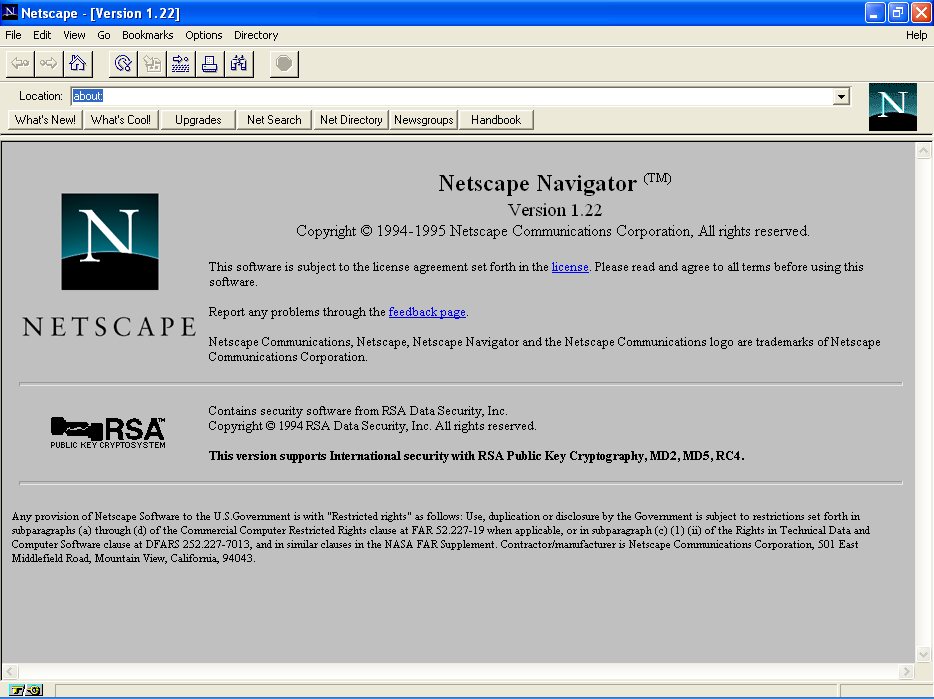
Here is the thing about 1993. There were maybe a few hundred commercial websites in existence. Most of the web was university and government. The total population of people using web browsers regularly was estimated in the low millions globally, with most of them in academia. Mosaic 1.0 had launched in March 1993. Netscape Navigator, the browser that would actually carry HotWired into the mainstream, would not launch its first commercial version until December 1994. The reader base HotWired was targeting was, when the planning began, theoretical.
The Decision to Sell Display Ads
The case against advertising on the web in 1994 was widely held. Howard Rheingold, who joined HotWired as one of its first executive editors and later left in part over editorial conflicts, was on record as skeptical of ad-supported content. The early online activist community was, as a whole, allergic to commercial advertising. The Cluetrain Manifesto, the famous tech-utopian document arguing that markets are conversations, was still five years in the future, but its mood was already strong in the air. Rossetto himself, recalling the moment in later interviews, said that critics had told him advertisements would make the internet "throw up." He thought the opposition was ridiculous.
The case for advertising was simpler. The magazine cost money. Selling subscriptions in 1994 to a website would mean asking users to either send a check or, somehow, transmit a credit card number over a network with no widely adopted encryption layer. Secure Sockets Layer, SSL, would not arrive in Netscape Navigator until February 1995. There was no PayPal. There was no Stripe. There was barely a browser cookie. The only known business model that worked at scale, on any media, was advertising.

So Andrew Anker and his commercial team made the call. HotWired would sell sponsorships. They would invent a unit. They would charge for it. They had a few months to figure out what the unit was.
Inventing the Banner
The dimensions of the original banner, 468 by 60 pixels, were chosen mostly to fit at the top of a page rendered in Netscape on a 13-inch monitor, the dominant display of the era. Larger and it would push content too far down on the screen. Smaller and there would not be enough room for legible copy. The aspect ratio was an arithmetic compromise. By happy accident, it would become the standard banner size on the web for almost a decade. The Internet Advertising Bureau, when it was founded in 1996, codified the 468-by-60 banner as the industry's primary unit. Designers who had never heard of HotWired would design ads to that size into the early 2000s.
The creative work for the first sponsor wave came from various agencies. The AT&T "You Will" campaign was already running on television and in print. AT&T's television ads, narrated by Tom Selleck, asked questions like "Have you ever borrowed a book from thousands of miles away? You will" and "Have you ever sent someone a fax from the beach? You will." The campaign was directed by David Fincher of the famous "Madonna Express Yourself" video and later Fight Club. The television campaign had been running since 1993. Translating it to a banner ad was, on paper, the easy part. The agency credited with the banner work was Modem Media, a Westport, Connecticut firm. The creative director on the project, Joe McCambley, would later speak about the project in oral histories.
Here's the thing. McCambley has been clear in interviews that the team did not know what they were inventing. They thought they were buying space on a niche website. They expected almost nobody to click.
What they got was a 44 percent click-through rate over the campaign's run. To put that in context, modern banner ads on display networks routinely deliver click-through rates below 0.1 percent. The first banner outperformed the average modern banner by a factor of more than four hundred. The reason is not that the creative was magic. The reason is that almost nobody on the web in October 1994 had ever seen a banner ad before, almost everyone visiting HotWired in October 1994 was technically literate, and the surrounding content was scarce enough that the ad was actually one of the more interesting things on the page.
What Was on the Other Side of the Click
Here is where the story gets genuinely strange. The AT&T banner did not go to a sales page. It went to a static landing page that hosted a virtual tour of seven international art museums. The tour was a series of images, hosted by AT&T, of museum exhibits with brief text descriptions. There was no call to action. There was no phone number. There was no order form. The implicit pitch was that AT&T was the company that connected you to the world, and look at all this world you could see when you were connected.
It was, by modern standards, an absurd return on a click. By 1994 standards, it was actually a reasonable execution of a brand-awareness budget. AT&T's marketing organization at the time was operating from a print and television playbook. They believed in repeated brand impressions and prestige association. The art museum tour fit that playbook exactly. It was a beautiful, untracked, unmeasurable brand experience that could be summarized in one slide of a board presentation: AT&T sponsors culture on the new digital frontier.
The team that built it was not thinking about funnel optimization. They were thinking about whether the page would load in under thirty seconds on a 14.4 kilobit modem.
The Knock-On Effect: How One Format Built the Web's Economy
Within two years of HotWired's launch, banner ads had spread to almost every commercial website. Yahoo, which incorporated in March 1995, sold banner ads as its primary revenue source. Excite, Lycos, Infoseek, and every search portal of the era followed. In 1995, the total internet advertising market in the United States was estimated at $54.7 million by the IAB. By 1997, that number was $906.5 million. By 1999, it had passed $4.6 billion. The annualized growth rates were higher than almost any other category of advertising in the postwar era.
The economic logic that powered all of that growth came from the banner ad format. Pages had spaces for banners. Advertisers paid per impression, denominated in dollars per thousand views, the CPM, a measurement borrowed directly from print. The IAB standardized formats. Ad networks, companies like DoubleClick, founded in 1995, emerged to broker between publishers and advertisers. DoubleClick would, a little over a decade later in April 2007, be sold to Google for $3.1 billion in cash, becoming the foundation of Google's display advertising business and, by extension, the foundation of the modern web's economy.
This is essentially the trajectory of every consumer technology pattern. An expedient choice gets made under deadline pressure. A standard accretes around it. A market organizes itself around the standard. A few players consolidate the market. A trillion dollar industry emerges from a 468-by-60-pixel rectangle that originally existed to pay the rent on a small office on Third Street in San Francisco.
The Technical Setup: What HotWired Actually Looked Like
The HotWired homepage on launch day was hosted on a Sun SPARCstation running a custom CGI-based publishing system. The site loaded over HTTP 1.0. Pages were authored mostly by hand in HTML 2.0. There was no JavaScript on the launch site, because JavaScript would not exist as a language until December 1995, when Brendan Eich shipped it inside Netscape Navigator 2.0. There were no cookies on the launch site, because cookies as a concept would not appear in the browser until the Netscape implementation in October 1994, the same month HotWired went live. The site that invented the banner ad was, in technical terms, almost entirely static and almost entirely untrackable.
The banner unit itself was a GIF image, animated in some cases, served from a directory on the HotWired server. There was no ad server in the modern sense. Clicks were counted by configuring the server logs to record which referrers were arriving at the AT&T museum tour, and those numbers were reconciled monthly. The 44 percent click-through rate is an aggregate over the campaign window, not a real-time number anyone watched on a dashboard, because the concept of a real-time advertising dashboard would not exist for another five years.
The implication is small but important. The first banner ad was not optimized. It was not A-B tested. It was not targeted. It was a static piece of creative shown to every visitor, with success measured after the fact. Almost every layer of complexity that modern digital advertising adds to the basic act of placing an image on a page came after October 1994. The original banner is the bedrock, and almost nothing in the modern stack was present at the start.
What HotWired Got Wrong
HotWired itself never figured out how to make the math work. The site was sold to Lycos in 1998. The original Wired empire, including the magazine and the digital arm, was carved up across multiple owners through the late 1990s. The HotWired brand was retired in 1999. By 2000, the URL redirected to Wired Digital. The website that invented the banner ad survived less than five years as a meaningful media property.
The deeper reason HotWired died is the same reason a lot of first-mover web publishers died. They were selling a unit, the banner ad, that was easy to copy. By 1997, every magazine on the web had a banner inventory. The premium HotWired had charged on the basis of being first vanished as the supply of inventory caught up to and then dramatically exceeded demand. CPMs fell. The economics that had worked at twelve sponsors paying $10,000 a month did not work when there were ten thousand sites offering similar units.
This is essentially the same trajectory that newspapers would face online a decade later: a desirable, scarce inventory format becomes commoditized as the supply expands faster than the demand. The publishers who invented the unit captured almost none of the long-term value.
The Modern Echo
The 44 percent click-through rate on the first banner ad is the number that should anchor the modern story. Not because anyone could ever reproduce it. Because the reason it was that high in 1994 is the same reason banner ads are dying in 2026: the click was a measure of novelty. When the format was new and rare, attention was high. When the format became standard and saturated, attention collapsed. The format itself did not change. The environment around it changed.
Banner blindness, the phenomenon of users learning to ignore ad-sized boxes in fixed positions on a webpage, was documented by usability researcher Jakob Nielsen in 1997, only three years after the format was invented. By 1999, click-through rates on display ads had fallen below 1 percent on most websites. By 2010, they were under 0.1 percent. The format never recovered. The industry instead built around the format with retargeting, behavioral data, programmatic auctions, native ad units, and eventually the surveillance infrastructure that would define the 2010s tech debate.
The real question is what the first banner ad's path tells us about every new advertising format that has come since. TikTok's For You feed in 2020 delivered something like 80 percent of users actively engaging with sponsored content because the ads were novel and well-targeted. Within three years, advertiser saturation pulled those engagement numbers down. Instagram's branded content saw the same arc. Newsletter sponsorships, which experienced a renaissance in the early 2020s as desktop browser ads collapsed, are showing the same early signs of fatigue in 2026. The pattern repeats: novelty creates engagement, saturation kills it, the format becomes a commodity, the platforms move on.
What the People Who Built It Say Now
Joe McCambley, the Modem Media creative director, has spent the years since the AT&T campaign giving talks and writing essays about what the first banner ad did and did not invent. He has been critical of the way the industry treated the banner as a product to optimize rather than as a moment of attention to respect. In interviews he has said that the team's mistake was not making the format itself, but failing to anticipate that the format would be used at a volume that would destroy its effectiveness. He calls it the tragedy of the banner: too useful, too soon, used too much.
Andrew Anker has spoken less publicly about HotWired in recent years. He moved on to venture capital at August Capital, and then to Facebook as a head of media partnerships, where the digital advertising business that the banner ad started would reach its modern apex. Anker's career trajectory is, in its own way, an emblem of the industry: he was at the launch of the banner ad and at the launch of the largest social ad business in history.
Louis Rossetto returned to writing. He published a novel. He maintained a friendly distance from the company he had founded. Wired magazine continues to operate, owned by Condรฉ Nast since 1998. The print edition still exists. The digital edition still sells display ads.
FAQ: The First Banner Ad
When did the first banner ad appear?
The first banner ad appeared on October 27, 1994, the launch day of HotWired, the web extension of Wired magazine. Twelve brands ran ads on launch day, including AT&T, MCI, Volvo, Club Med, 1-800-Collect, Sprint, IBM, and Zima. The AT&T ad has historically received the most attention because of its association with the broader "You Will" campaign.
What did the AT&T banner ad say?
The text read, "Have you ever clicked your mouse right HERE?" with an arrow pointing to the words "YOU WILL." Clicking the banner led to a static landing page hosting a virtual tour of seven international art museums.
What was the click-through rate on the first banner ad?
The AT&T banner ad had a click-through rate of approximately 44 percent during its run on HotWired. By comparison, modern display banner ads typically deliver click-through rates well below 0.1 percent. The original rate is widely cited by people who worked on the campaign and has been published in oral histories and trade press.
Who created the first banner ad?
The AT&T banner was created by Modem Media, a Westport, Connecticut advertising agency. The creative director on the project was Joe McCambley. The banner ran on HotWired, which was led by Andrew Anker, with Louis Rossetto and Jane Metcalfe as the founders of the parent Wired brand.
Why was the first banner ad 468 by 60 pixels?
The 468-by-60-pixel dimensions were chosen to fit at the top of a page rendered in Netscape on a 13-inch monitor, the dominant display configuration in 1994. Larger sizes would push article content below the fold. The Internet Advertising Bureau later codified those dimensions as the industry standard, and the format remained the default banner size into the early 2000s.
How much did the first banner ads cost?
HotWired charged advertisers roughly $10,000 a month per section, a price modeled on the cost of a full-page color ad in the print Wired magazine. There was no per-click or per-impression pricing in 1994 because tracking infrastructure for those models did not yet exist.
Did HotWired survive its own invention?
No. HotWired was sold to Lycos in 1998 and retired as a brand in 1999. The format it invented, the banner ad, outlived the publication that introduced it by decades. The lesson, which would later be repeated by newspapers and other early web media, is that inventing a format is not the same as capturing the long-term value of that format.