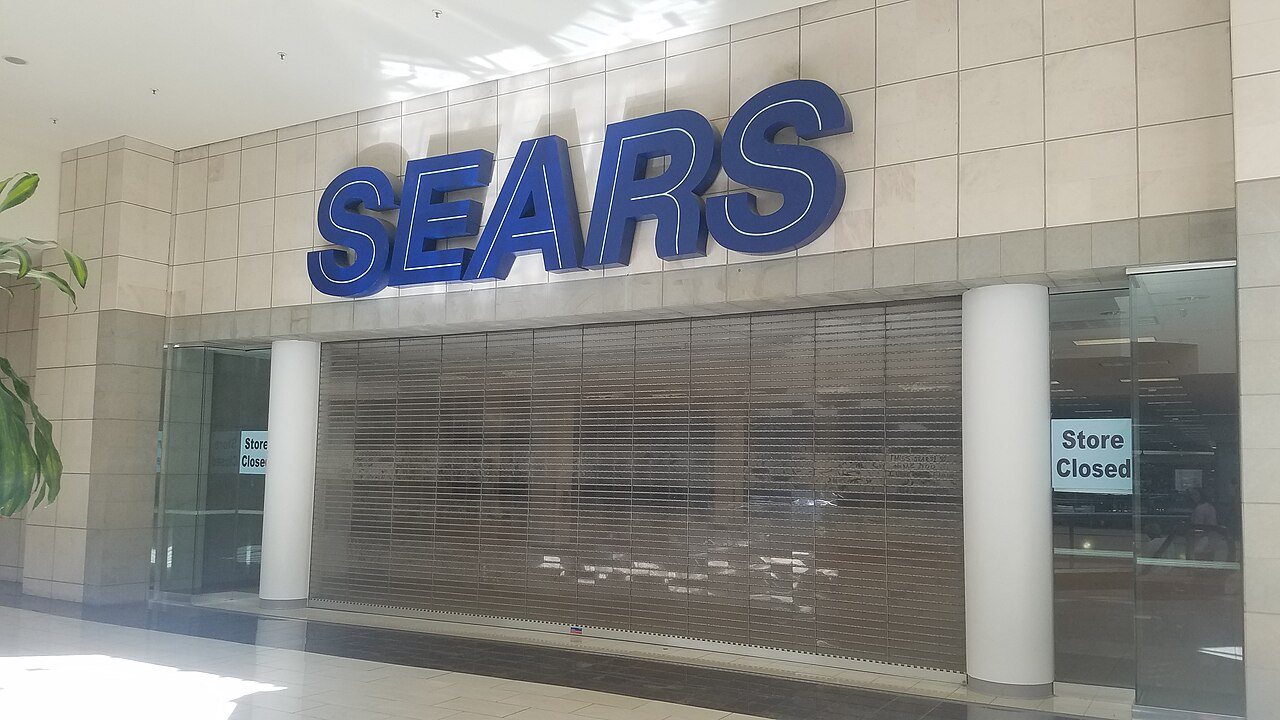
Who owns Sears now?
Sears is owned by Transform Holdco LLC, which does business as Transformco. It is a private company set up in 2019 by ESL Investments, the hedge fund run by Edward Lampert, who was chairman of Sears Holdings and, in its final years, its chief executive.
The handover happened in a courtroom. On February 7, 2019, Judge Robert Drain of the U.S. Bankruptcy Court in White Plains, New York, approved ESL's $5.2 billion bid for the salvageable parts of Sears Holdings. The sale closed on February 11, 2019.
Transformco took 223 Sears stores, 202 Kmart stores and roughly 45,000 jobs, plus the names that were worth more than the buildings: Kenmore, DieHard, Craftsman, Sears Home Services and Sears Auto Centers.
Because Transformco is private, it files no annual report and publishes no store count. Every number for how many Sears are left comes from reporters counting doors rather than from the company itself, which is why the figure below carries a date attached to it.
How many Sears stores are left in 2026?
Five, and that is a ceiling rather than a promise.
USA Today counted the survivors in December 2025 and found full-line Sears department stores still trading in Braintree, Massachusetts; Concord, California; El Paso, Texas; Orlando, Florida; and Coral Gables, Florida. Most of them sit inside malls owned by Simon Property Group, the largest mall operator in the country.
The collapse reads cleanly as a list. Sears Holdings ran 1,002 stores in the United States at February 3, 2018, made up of 547 Sears full-line stores, 23 Sears specialty stores and 432 Kmarts, according to its last annual report on Form 10-K. The 2019 bankruptcy sale carried 425 of those forward. By 2022 the Sears half was down to 22 locations. By December 2025 it was five.
Set that against roughly 3,500 stores at the time of the 2005 Kmart merger and the shape of the thing is obvious. The same stretch of years emptied out RadioShack and Circuit City, but neither of those had spent most of a century as the default American store.
Transformco does not announce closures in advance and does not confirm a count, so the honest answer for 2026 is five or fewer.
What happened in the 2018 Sears bankruptcy
Sears Holdings filed for Chapter 11 protection in October 2018. The scale of the retreat was already sitting in the filings: revenue of $16.7 billion for fiscal 2017 and a net loss of $383 million attributable to shareholders, on a store base that had been cut every year for a decade.
The auction that followed produced exactly one bid that would keep the chain running instead of liquidating it, and it came from the sitting chairman. Judge Drain approved that bid, having pressed Lampert in open court on whether his legacy would end up looking like Jay Gould's or Barney Fife's.
Worth saying plainly, because the search results rarely do: Sears did not go out of business in 2018. Chapter 11 is a reorganization, not a funeral. The company that walked out of it in February 2019 was smaller by design, at 425 stores against the 1,002 of a year earlier.
Everything since has been a slower version of the same process, run privately, with no filings and no warning to the towns losing an anchor tenant.
The catalog that was Amazon before Amazon
Richard Sears mailed his first catalog in 1888. It sold watches and jewelry and promised "THE LOWEST PRICES ON EARTH." The book kept growing until it ran well over 1,000 pages and carried more than 100,000 items: tools, hardware, apparel, appliances, furniture, sporting goods.
Between 1908 and 1940 it sold houses. More than 100,000 mail-order homes went out as numbered kits of lumber, priced from $107 at the bottom of the range to $3,506 at the top, which Smithsonian magazine puts at roughly $3,500 and $113,000 in current money. People ordered a house out of a book and it arrived on a railcar.
Sears opened its first physical store in 1925, and over the following decades the stores quietly became the whole company. The Big Book was retired on January 25, 1993, after a 105-year run, right as the web was arriving.
So the line about Sears being Amazon before Amazon is not a blogger's flourish. Sears had the catalog, the distribution, the credit operation and the national reach, and it traded them for anchor space in malls. The company that later rebuilt that model online only had to survive the dot-com crash to inherit it.
The $175 million settlement that closed the case
The Chapter 11 case outlived the 2019 sale by three years. Unsecured creditors, mostly former suppliers left holding unpaid invoices, sued Lampert along with other former executives and investors, alleging they had stripped Sears Holdings of billions of dollars in value to enrich themselves in the years before the filing.
It settled for $175 million, announced on September 1, 2022 and approved by a federal bankruptcy judge in New York. Insurers paid the bulk of it. Lampert and the other defendants admitted no liability, and the plaintiffs acknowledged that the defendants had acted in good faith. Transform Holdco, the company that owns Sears today, was one of the named defendants.
What survives now is mostly a brand and a service business. Sears.com still takes orders, Sears Home Services still books appliance repairs, and Kenmore, DieHard and Craftsman are still sold, though not always through Sears.
On the stores, Dan Hamilton Rice, a marketing professor at Louisiana State University, told USA Today what most of the retail industry assumes: "With so few stores, there's serious doubt from industry experts and former insiders that they could be profitable."
Frequently Asked Questions
Is Sears still in business in 2026?
Yes. Sears still operates as a retail brand under Transformco, with a small number of department stores, an online store and a home services arm. It is not currently in bankruptcy: the October 2018 Chapter 11 case was a reorganization, and the surviving business was sold in February 2019.
Where are the last Sears stores?
The last published count, from USA Today in December 2025, listed five full-line stores: Braintree, Massachusetts; Concord, California; El Paso, Texas; Orlando, Florida; and Coral Gables, Florida. Transformco publishes no store directory and gives no notice before a closing, so call ahead before driving to one.
Is Kmart owned by the same company as Sears?
Yes. Kmart bought Sears in 2005 and the two have shared an owner ever since, first as Sears Holdings and now as Transformco. Kmart shrank on the same curve, going from 432 stores in early 2018 to the 202 that were carried into the 2019 bankruptcy sale.