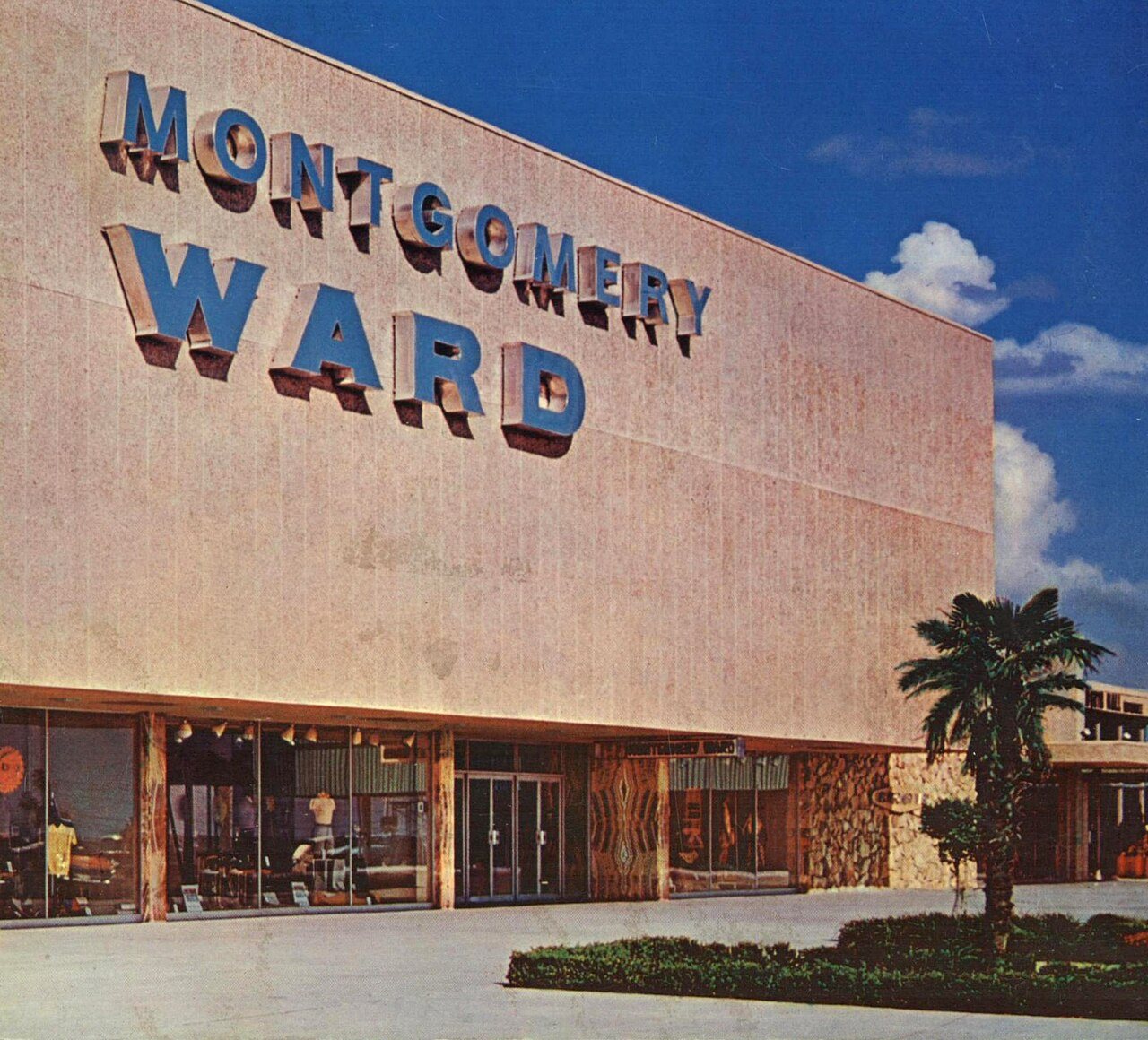
How one sheet of paper in 1872 became American shopping
Montgomery Ward opened in Chicago in August 1872. Britannica records that Aaron Montgomery Ward started with capital of $1,600 and issued his first catalog as a single sheet listing about 150 items.
The company's own history puts the count at 163 items, and adds the detail that makes the business make sense: from the start, Montgomery Ward sold on credit, buy now and pay later.
The sheet turned into a book, and the book turned into a habit. By 1904 Montgomery Ward was mailing catalogs to three million customers, according to that company history. Farm families ordered stoves, sewing machines, coats and wedding rings from a merchant none of them had ever seen.
That is the scale worth holding on to before the rest of the story. For most of the 19th century a rural American shopped at whatever general store was within a wagon ride. Montgomery Ward replaced that store with the mail, decades before a telephone was common and more than a century before a shopping cart appeared on a screen.
The day two soldiers carried the chairman out of his office
By the Second World War the company was run by Sewell Avery, and Avery spent more energy fighting Washington than fighting his competitors.
In April 1944 Attorney General Francis Biddle traveled to Chicago to press Avery to extend a union contract, so that Montgomery Ward's warehouses would keep supplying the home front. Avery would not do it.
The University of Wyoming's American Heritage Center, in its account of the seizure, records what Avery said to the Attorney General: "To hell with the government!"
Biddle stopped arguing. Two soldiers picked Avery up by an arm each and carried him out of his office, still sitting upright, past the photographers waiting outside. The federal government took control of Montgomery Ward facilities, and the picture of a company chairman being removed from his own building ran on front pages nationwide.
It is a strange thing for a catalog company to be famous for. It also set the tone for the next sixty years: Montgomery Ward was rarely the retailer that moved first, and it was often the one arguing with whoever wanted it to.
Montgomery Ward shut down its own catalog in 1985
Ownership moved out of retail entirely in the 1970s. Britannica records that Mobil Oil Corporation bought 54 percent of the voting shares of Marcor, Ward's parent company, in 1974, and that Marcor merged into the new Mobil Corporation two years later. An oil major now owned the business that invented mail order.
The catalog did not survive the arrangement. In 1985, Britannica records, Montgomery Ward ended its 113-year-old mail-order operation to concentrate on its retail stores.
Read that twice. The company that taught the country to buy sight unseen from a printed list closed that business to bet everything on mall anchors, roughly a decade before anyone typed a credit card number into a browser.
The stores then walked into a fight they could not win. Britannica notes that in the 1990s Montgomery Ward faced stiff competition from discount retailers such as Target and Wal-Mart, and filed for bankruptcy in 1997.
Ward was not the only casualty of that decade. Sears and Kmart were losing the same customers to the same discounters. Both outlasted Montgomery Ward, and both ended up shrunken to a fraction of what they were.
What the July 1997 bankruptcy filing actually said
Montgomery Ward filed for Chapter 11 protection on Monday, July 7, 1997. The Spokesman-Review reported that day that Ward was the largest privately owned retailer in the country, 125 years old, operating 400 stores in 43 states.
The figure behind the filing was a loss of $237 million in 1996. A chain that size does not lose that much on merchandising alone; it loses it on stores in the wrong places selling the wrong things at prices a discounter could beat.
GE Capital Services, which held the majority stake, backed the filing and promised a $1 billion line of credit so that the shelves would stay stocked while Ward reorganized.
That money bought time, not a turnaround. Montgomery Ward spent the rest of the decade inside a restructuring, still owned by a finance company rather than a retailer, and came out of it with the same problem it went in with: hundreds of large stores that shoppers no longer had a reason to drive to.
December 28, 2000: the day 128 years ended
Three and a half years after the first filing, Montgomery Ward gave up. WWD reported that the company was shutting all 250 stores, cutting about 37,000 jobs, and ending a business that had traded for 128 years.
Chairman and chief executive Roger Goddu blamed the Christmas that had just finished. "Overall weak holiday sales and a very difficult retail environment simply did not permit us to complete the turnaround that might have been possible in an otherwise thriving economy," he said in the statement announcing the filing.
He was blunter in the next line: "Sadly, today's action is unavoidable."
The decision was not entirely his. GE Capital, the owner, was withdrawing its financial support after the weak holiday season, and without that backing there was no version of Montgomery Ward that opened in January.
Britannica ends the story in a sentence: the company announced in December 2000 that it was going out of business, and closed its remaining stores in 2001. The liquidation ran through the first half of that year, store by store, with the fixtures sold off after the merchandise.
Is Montgomery Ward still in business in 2026?
Yes, but only as a name on a website. There has been no Montgomery Ward department store anywhere in the United States since 2001, and the company that ran them no longer exists.
The trademark was bought and restarted as a catalog and internet business. Montgomery Ward's own site states that in 2008 the brand was acquired by Colony Brands Inc., a family-owned direct-mail business, which has run it ever since.
What that company sells at wards.com is furniture, appliances, electronics and home goods, on installment credit, under the phrase "Buy Now, Pay Later." The mechanism is the one Aaron Montgomery Ward used in 1872, pointed at a browser instead of a mailbox.
So the honest answer to who owns Montgomery Ward now is Colony Brands, a Wisconsin direct marketer, and the honest answer to whether the old company survived is no. A dead retail name outliving its stores is common enough: Woolworth did the same thing in a different way.
Where to find one today: the paper is the collectible. Christmas Wish Books, fall and winter catalogs, store signage, appliance manuals and Wards-branded tools turn up in the vintage listings on Etsy. Year, page count and condition drive the asking price far more than anything else, so check whether a catalog is complete before paying for it.
Frequently Asked Questions
Is Montgomery Ward still in business?
Montgomery Ward exists today only as an online and catalog retailer at wards.com, with no physical stores. The original Montgomery Ward chain announced in December 2000 that it was going out of business and closed its remaining stores in 2001. The brand was later acquired by Colony Brands Inc. in 2008 and has been run as a direct-marketing business since.
When did Montgomery Ward close its stores?
Montgomery Ward announced on December 28, 2000 that it was closing all 250 of its stores, and WWD reported the shutdown cost about 37,000 jobs after 128 years in business. The stores were liquidated during 2001. Montgomery Ward had already closed its mail-order catalog in 1985, after 113 years.
Who owns Montgomery Ward now?
Colony Brands Inc., a family-owned direct-mail company, has owned the Montgomery Ward brand since 2008, according to Montgomery Ward's own company history. Before that, the original retailer was majority-owned by GE Capital Services, which backed its 1997 Chapter 11 filing and withdrew support in December 2000. No department store company owns the name today.