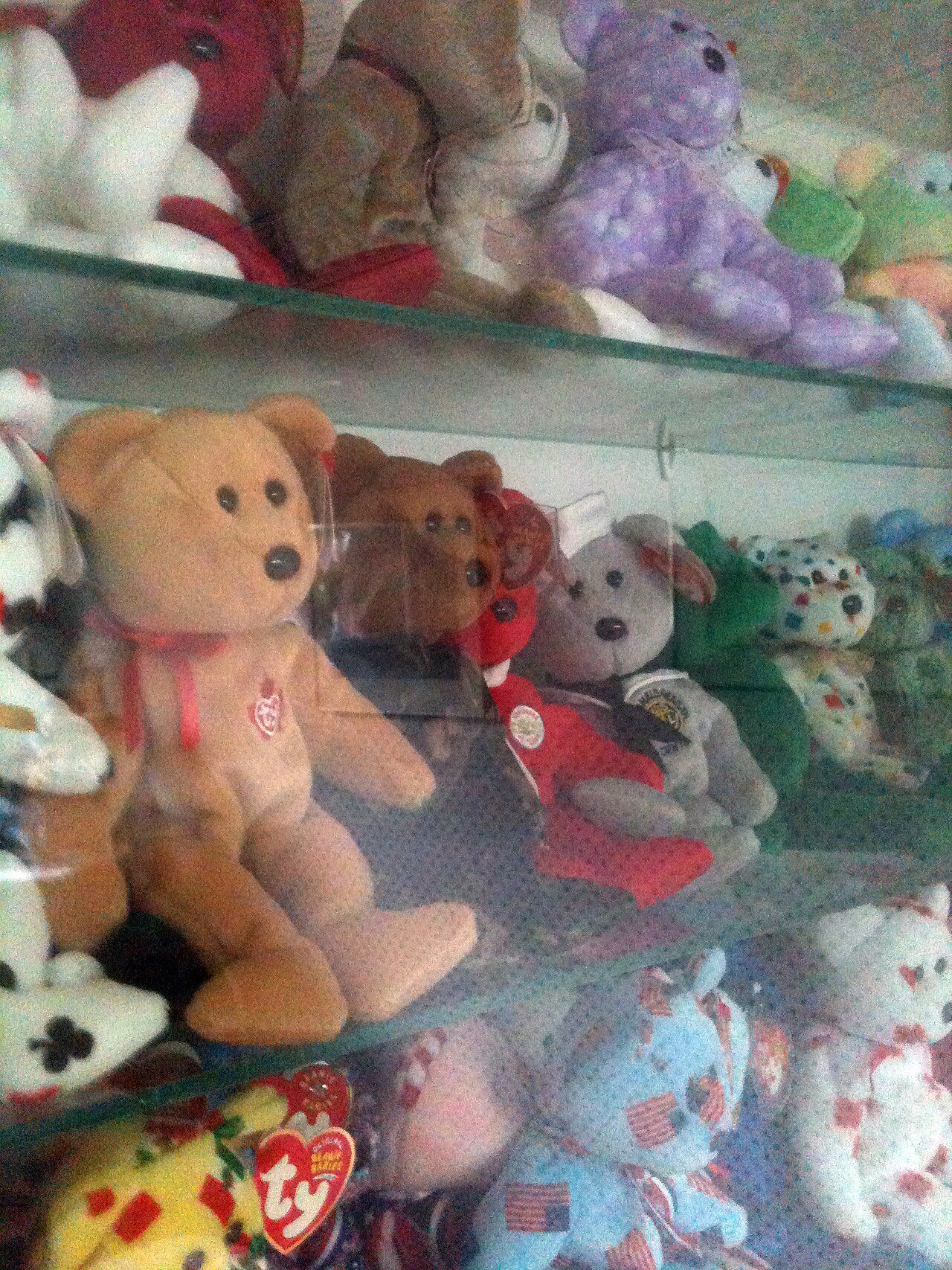
How did a $5 plush toy become an investment?
Ty Warner started Ty Inc. in 1986 selling stuffed cats, and in 1993 he introduced nine small, under-stuffed animals filled with plastic pellets so they could sit and slump like real pets. Each had a name, a birthday and a poem on a heart-shaped tag, and each cost about $5, which is roughly $10 in 2026 money.
Three decisions turned a toy into an asset. Warner refused to sell to big chains such as Toys "R" Us and Walmart, so Beanie Babies only appeared in small gift shops and Hallmark stores, in limited quantities per order. He "retired" designs without warning, which meant any bear could become unavailable overnight. And he kept changing tags and details between production runs, which gave collectors variants to hunt.
By 1996 the pattern was set: a retirement announcement, a sold-out shelf, and a price on the secondary market that had nothing to do with the cost of fabric and pellets.
What made 1997 and 1998 the peak?
Two things poured fuel on the fire. In April 1997 McDonald's put miniature Teenie Beanie Babies in Happy Meals and sold about 100 million of them in a matter of weeks, with restaurants running out and adults buying meals just for the toy. Later that year Ty released Princess, a purple bear honouring Diana, Princess of Wales, with proceeds going to her memorial fund. Princess was so scarce at first that it became the emblem of the whole craze.
The other accelerant was eBay, which had launched in 1995 and gave every collector in America a live price for every bear. Suddenly a retired Beanie Baby had a quote, like a stock, and magazines and price guides published "portfolios" of which animals to hold. Ty's revenue in 1998 was estimated at $1.4 billion, and Warner, who owned the company outright, became a billionaire on a product that retailed for the price of a sandwich.
The numbers behind the mania were never about the toy. A bear cost Ty a dollar or two to make and sold to shops for around $2.50, so the $5 shelf price was already a healthy margin. Everything above that, the $50 for a retired Garcia bear or the $300 for an early Peanut the elephant in royal blue, was money changing hands between collectors, and Ty saw none of it. What Ty did get was free demand: every resale price printed in a newspaper sent more people into gift shops asking for the next release.
Why did the Beanie Babies bubble burst?
Bubbles end when the supply of new buyers runs out, and by 1999 almost everyone who wanted Beanie Babies already had bins of them. Ty had also kept producing. Retiring a design creates scarcity only if the factory stops, and the factory did not stop; it moved on to new animals in growing quantities, so the total number of bears in circulation kept climbing while the number of people paying $50 for one shrank.
On 31 August 1999 Ty announced that every Beanie Baby would be retired on 31 December 1999. Collectors read it as a last chance and prices briefly spiked, then Ty ran an online vote on whether the line should continue, the public voted yes, and the company kept making them. The retirement that was supposed to lock in value turned out to be a marketing event, and the market lost faith. Through 2000 secondary prices fell to a fraction of their peak, and the bears that had been "worth" hundreds went back to being worth about what they cost new.
It was the same lesson the dot-com companies were about to learn a few months later: a price that depends on the next buyer paying more is not a value, it is a queue.
What happened to Ty Warner?
Ty Inc. survived the crash and still sells Beanie Babies, Beanie Boos and other plush lines today; Warner remained the sole owner and one of the richest people in the toy industry. His reputation took a different kind of hit in 2013, when he pleaded guilty to tax evasion for hiding income in a Swiss bank account. In January 2014 a federal judge in Chicago sentenced him to two years of probation and community service, and he paid a civil penalty of more than $53 million on top of back taxes.
The craze itself became a subject in its own right. Zac Bissonnette's 2015 book The Great Beanie Baby Bubble told the business story, the 2021 documentary Beanie Mania interviewed the collectors, and the 2023 film The Beanie Bubble dramatised Ty's rise with Zach Galifianakis as Warner.
What are Beanie Babies worth today?
For almost every bear from the 90s, the honest answer is $1 to $5, and often less if the tag is bent or missing. The listings that go viral, asking $10,000 for a Princess bear or a Valentino with a "rare" typo, are asking prices, not sales. Every Princess bear has the tag errors people describe as rare, because Ty made millions of them across several factories. Completed eBay sales for Princess typically land between $10 and $30.
A small number of genuine rarities do sell for real money: early bears with first-generation tags in mint condition, prototypes, and a few limited editions made for employees or events. Those are the exceptions that keep the myth alive. If a childhood collection is sitting in a closet, the most valuable thing about it is probably the memory.
Frequently Asked Questions
Are any Beanie Babies actually valuable?
A few are: first-generation bears with early tags in mint condition, prototypes, and limited editions made for employees or events can sell for hundreds or occasionally thousands. The Princess bear, despite what listings claim, usually sells for $10 to $30 because Ty made millions of them.
When did the Beanie Babies craze end?
The peak was 1998. Ty's announcement on 31 August 1999 that the whole line would retire, followed by a public vote to keep it going, broke collectors' confidence, and secondary prices collapsed through 2000.
Does Ty still make Beanie Babies?
Yes. Ty Inc. never stopped, and it still sells Beanie Babies alongside newer lines such as Beanie Boos. The company remains privately owned by Ty Warner.