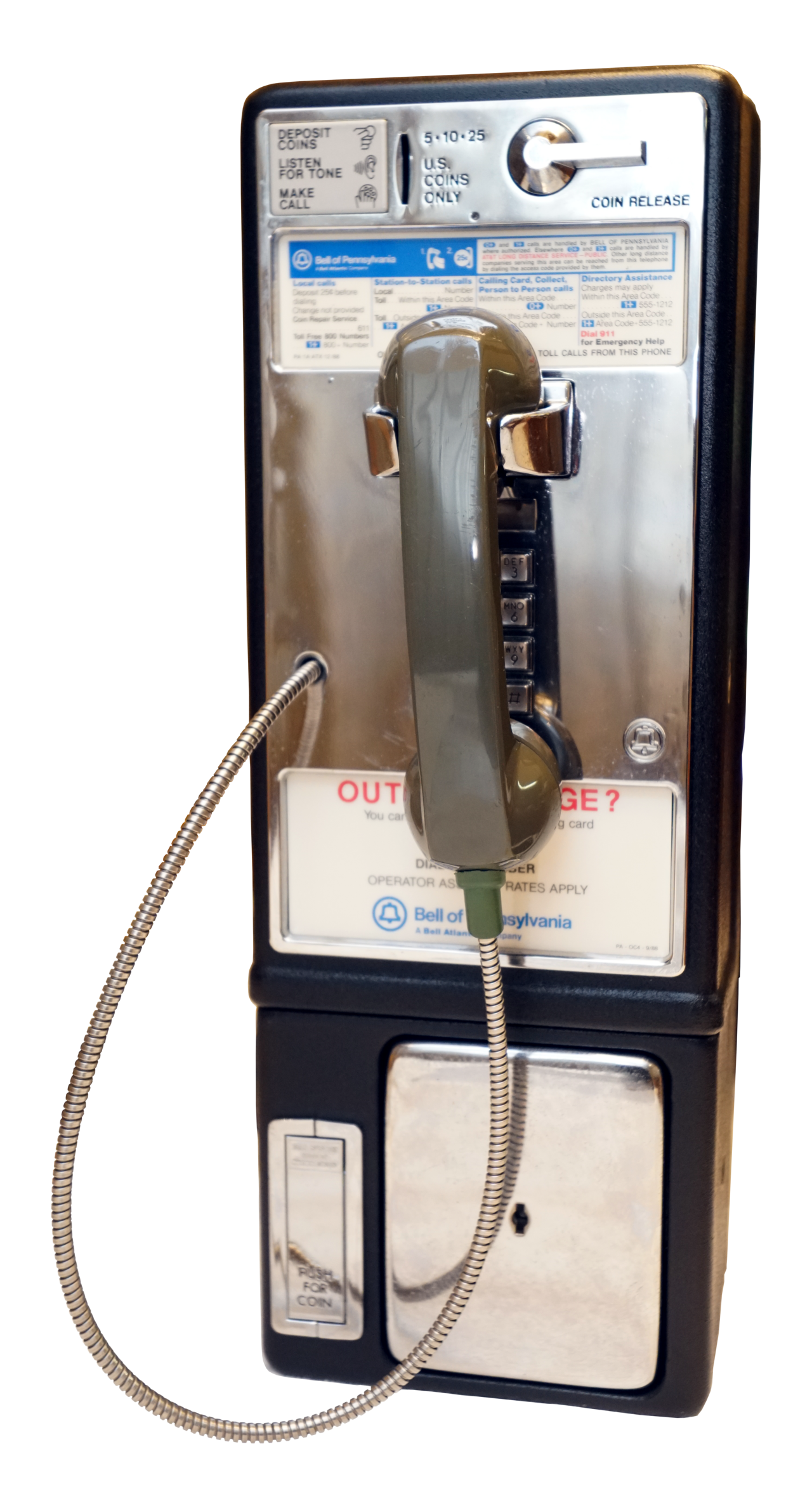
What the last official payphone count showed
The Federal Communications Commission counted payphones for years, and the numbers it published are still the only reliable trend line anyone has.
At the 1999 peak there were more than 2.1 million payphones in service in the United States. By the end of 2016 the count was under 100,000, a fall of about 95 percent from 2000.
The collapse was close to uniform. Most states lost more than 90 percent of their payphones between 2000 and 2016. Hawaii was the outlier, down only about 60 percent, because remote roads and visitors kept the phones earning.
New York was the other exception, in the opposite direction. In 2016 the state still held roughly one in five of every payphone left in the country, according to FCC figures reported by CNN in 2018.
Those two facts explain most of the map. Payphones survived where cell coverage was bad, where travelers arrived without a working plan, and where a sidewalk carried enough traffic to justify the maintenance visit.
Why nobody has an official number anymore
Congress opened the payphone business to competition in the Telecommunications Act of 1996. The law stopped the Bell companies from favoring their own phones and set up a system to pay independent operators for calls that never touched a coin slot, such as toll-free and calling-card calls.
That compensation system needed policing, so the FCC made carriers run annual audits of the call tracking systems that counted those calls.
By 2018 the audits cost more than the calls were worth. On March 15, 2018 the agency adopted an order scrapping them, writing that "Audit requirements are no longer needed as safeguards to ensure that [pay phone service providers] receive the compensation they are due." The rule changes took effect on April 16, 2018.
The side effect is that the federal government stopped generating payphone data. Anyone who states an exact number of payphones for 2026 is estimating from the 2016 baseline, from what operators disclose, or from walking around with a camera.
Are there still working payphones in 2026?
Yes. They are just no longer where most Americans walk.
The largest operator is Pacific Telemanagement Services of San Ramon, California, which absorbed AT&T's payphone estate in 2008 and most of Verizon's in 2011. Its president, Tom Keane, told CNN in 2018 that the company ran 20,000 phones and that payphones can still turn a profit where there is no cell or landline coverage.
Keane named the two conditions that keep a coin phone alive. The first is dead signal: "We have phones in Yosemite Valley that are extremely busy when there's not snow on the ground," he said. The second is everything else failing at once: "Every time there's a disaster our phone use goes through the roof."
That is where the survivors sit. Rural highways, national parks, jails and prisons where inmates cannot hold a handset of their own, hospitals, bus and rail stations, and university campuses. A payphone stopped being street furniture somewhere around 2010 and became emergency infrastructure instead.
How New York lost 6,000 street phones and kept four booths
New York City had more than 6,000 active public payphones on its sidewalks in 2014, when the franchise that became LinkNYC began. Removal started in 2015 and ran for seven years.
On May 23, 2022 a crane lifted the last free-standing public payphone off Seventh Avenue at West 50th Street, a block south of Times Square. It went to the Museum of the City of New York for an exhibit about the city before computers.
Matthew Fraser, then commissioner of the city's Office of Technology and Innovation, marked the moment: "As a native New Yorker, saying goodbye to the last street payphone is bittersweet because of the prominent place they've held in the city's physical landscape for decades."
The title was disputed the same week. Four full-length glass booths still stand on West End Avenue on the Upper West Side, kept there in large part by a neighborhood resident named Alan Flacks, who spent years lobbying to save them. Payphones inside private buildings were never part of the city count either.
What a payphone call cost before the coins stopped
Coin rates were deregulated in 1997, and the price climbed as the customer base shrank.
On September 8, 2001 CNN reported that Verizon, then the largest payphone operator in the country, would raise the price of a local call on its 430,000 payphones across 33 states from 35 cents to 50 cents. The company pointed at wireless competition: fewer calls meant each remaining call had to carry more of the cost.
What emptied the coin boxes is no mystery. Cheap handsets did it, first with phones like the Nokia 3310 from 2000 and then with the Motorola Razr V3 from 2004, which put a dial tone in the pocket of people who had never owned a landline. For what the rest of that decade's hardware cost in current money, see our table of 90s tech prices in 2026 dollars.
Where to find one today
Payphones have a second life as decor and as restoration projects. Single-slot Western Electric units, booth signs, coin doors, receivers and instruction cards all turn up in the vintage telephone listings on Etsy.
Condition drives the price, and the gap between a gutted shell and a unit with a working coin mechanism and its keys is wide. Read the listing carefully: reproductions built to look like 1950s phones sit in the same search results as genuine Bell System hardware, and a phone with no key is a phone you cannot open.
Frequently Asked Questions
How many payphones are left in the United States?
There is no current official count of payphones in the United States. The Federal Communications Commission's last full figure put the number under 100,000 at the end of 2016, down from more than 2.1 million at the 1999 peak, and the agency eliminated its payphone audit and reporting rules in March 2018, which ended the data series.
Are there still working payphones in 2026?
Yes, working payphones still exist in the United States in 2026, mostly on rural highways, in national parks, inside jails and prisons, and in hospitals and transit stations. Pacific Telemanagement Services, the largest operator, told CNN in 2018 that it ran 20,000 of them, and its president said payphones remain profitable where cell coverage is poor.
When did payphones start disappearing?
Payphones peaked in 1999 at more than 2.1 million and fell by about 95 percent between 2000 and 2016 as cell phones spread. New York City, which held roughly one in five of the country's remaining payphones in 2016, started pulling its street phones in 2015 and removed the last public one on May 23, 2022.