What Happened to SimCity and How EA Destroyed It

The Game That Taught a Generation to Think Like a Mayor

In 1985, a college dropout named Will Wright was building maps for a helicopter game called Raid on Bungeling Bay. He kept noticing something strange: he was having more fun placing buildings, roads, and power lines on his custom maps than he was actually playing the game. That observation, as mundane as it sounds, would eventually generate one of the most influential franchises in PC gaming history. It would also, decades later, produce one of the most spectacular launch disasters the industry has ever seen.

The story of SimCity is not just about a game. It is about how a single creative insight turned into a billion-dollar franchise, how corporate acquisition slowly eroded the thing that made it special, and how one catastrophic decision in 2013 killed a studio that had been making beloved games for nearly three decades.

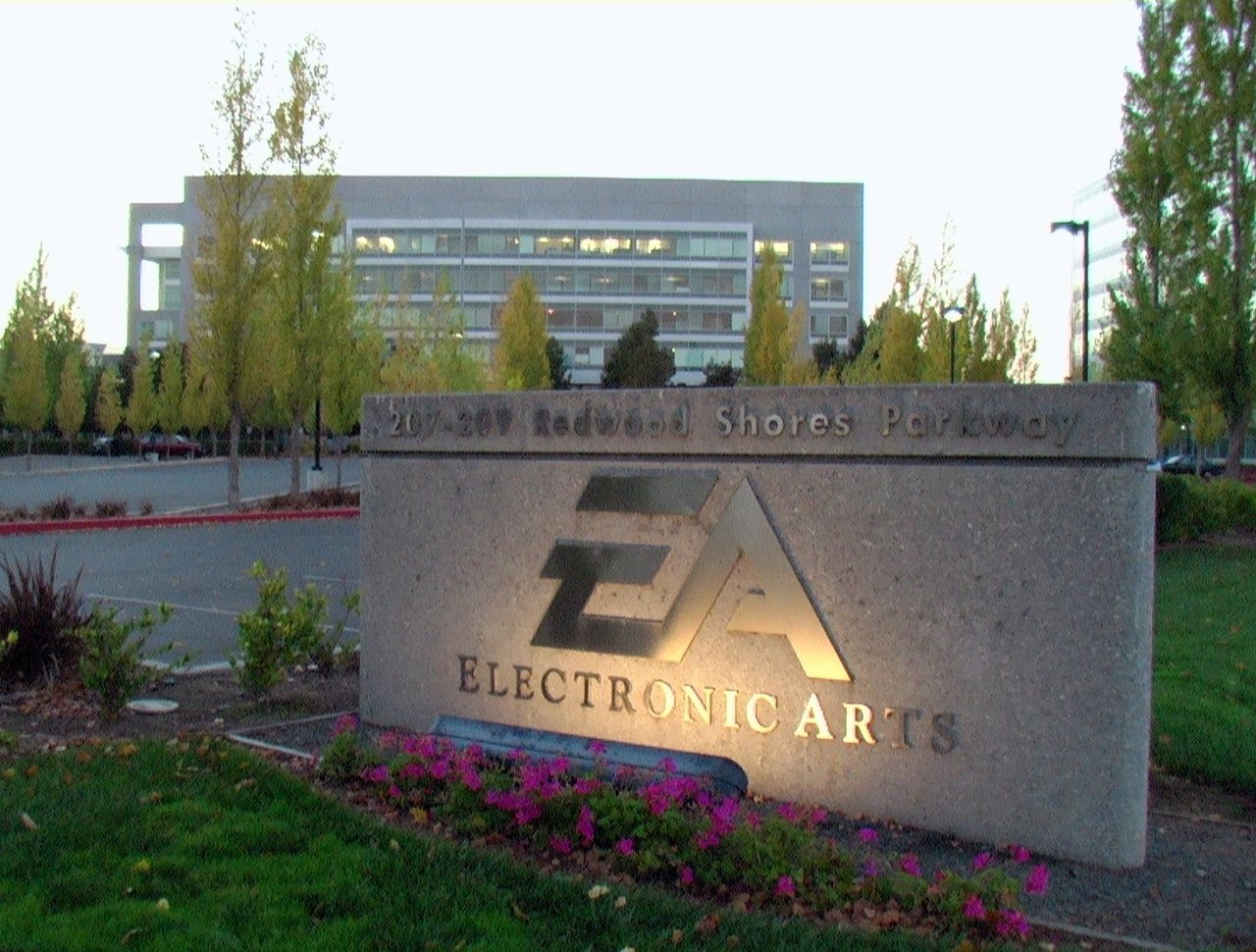
Electronic Arts headquarters building at Redwood Shores, California
EA’s Redwood Shores campus, where decisions about Maxis and SimCity’s future were ultimately made.

Will Wright, Jeff Braun, and the Pizza Party That Started Everything

Will Wright was not a typical game designer. He had dropped out of Louisiana State University, then the New School in Manhattan, and eventually landed in the Bay Area with an obsessive interest in systems, urban planning, and the writings of Jay Forrester, an MIT professor who pioneered the field of system dynamics. Forrester’s 1969 book Urban Dynamics modeled cities as interconnected feedback loops: population growth drives housing demand, which drives tax revenue, which funds infrastructure, which attracts more population. Wright wanted to turn that into something you could play.

The problem was that nobody wanted to publish it. Wright shopped his city simulator around to multiple publishers through the late 1980s. Every single one passed. The consensus was that a game without a win condition, without enemies, without a clear objective, was not a game at all. It was a toy. And toys, the thinking went, do not sell.

Then, in 1986, Wright attended what he later called \"the world’s most important pizza party.\" There he met Jeff Braun, an entrepreneur looking to break into the software business. Braun saw the potential immediately. Together, they founded Maxis in 1987 in Orinda, California. Their first release would be the game no one else wanted to publish.

SimCity Arrives and Breaks Every Rule

SimCity launched in February 1989, first on the Amiga and Macintosh, then on IBM PC and Commodore 64 later that year. The game dropped players into the role of mayor of a blank plot of land. You zoned residential, commercial, and industrial areas. You built roads and rails. You placed power plants and watched the electrical grid come alive. You raised and lowered taxes. And then you waited, watching your tiny simulated citizens, called \"Sims,\" respond to your decisions in real time.

There was no way to \"win\" SimCity. There was no final boss, no score threshold, no ending screen. You could build a thriving metropolis or a crime-ridden wasteland. You could unleash disasters for fun: earthquakes, tornadoes, Godzilla-like monsters stomping through your downtown. The game trusted you to set your own goals, which was practically unheard of in 1989.

It worked. SimCity sold one million copies by late 1992, split roughly evenly between home computers and the Super Nintendo port. Macworld named it the Best Simulation Game of 1989. It won the Origins Award for Best Military or Strategy Computer Game. Schools started using it in classrooms to teach urban planning concepts. The game that every publisher had rejected became a cultural phenomenon.

SimCity 2000: The Masterpiece

If the original SimCity proved the concept, SimCity 2000, released in 1993, perfected it. Wright co-designed the sequel with Fred Haslam, and the improvements were staggering. The flat, top-down grid gave way to an isometric perspective that made cities feel three-dimensional. Terrain had elevation. You could build underground water pipes. Highways and on-ramps appeared. Arcologies, those massive self-contained mega-structures from science fiction, became the ultimate late-game reward.

SimCity 2000 also introduced the newspaper feature, a small touch that had an outsized impact on immersion. After each year in the simulation, a procedurally generated newspaper would summarize events in your city: budget surpluses, crime waves, industrial growth. It made the simulation feel alive in a way the original never quite achieved.

The game was a commercial juggernaut. SimCity 2000 sold an estimated 4.23 million copies worldwide across all platforms. It won Best Simulation at the 1994 Codie Awards, marking the fifth consecutive year Maxis had taken that category. It also won the Origins Award for Best Strategy Game of 1994. For many players, especially those who grew up in the mid-1990s, SimCity 2000 remains the definitive version of the franchise. The one that got everything right.

Maxis Grows, Stumbles, and Gets Acquired

Success brought expansion, and expansion brought risk. Through the mid-1990s, Maxis launched an ambitious slate of \"Sim\" branded games: SimEarth, SimAnt, SimFarm, SimTower, SimCopter, Streets of SimCity. Some were creative experiments. Most were commercial disappointments. SimCopter, released in 1996, was particularly troubled, shipping with bugs and an infamous hidden Easter egg inserted by a disgruntled developer that made international news.

By 1997, Maxis was struggling financially. The company had overextended itself, releasing too many niche titles that diluted the SimCity brand without generating enough revenue to sustain the studio. That year, Electronic Arts acquired Maxis for approximately $125 million. Will Wright stayed on, and the deal initially seemed like a lifeline. EA had the resources and distribution network that Maxis needed. The trade-off, of course, was creative independence.

SimCity 3000 and SimCity 4: The Steady Middle Years

SimCity 3000 arrived in 1999, and while it was a solid game, it felt more like an incremental update than a revolution. The isometric perspective returned. Graphics improved. The simulation grew more complex. But the core loop was familiar: zone, build, manage, grow. It sold well enough, contributing to a franchise total of five million units by the end of the decade, but it did not redefine the genre the way its predecessors had.

SimCity 4, released in January 2003, was more ambitious. It introduced a regional system where multiple cities could exist on the same map, sharing resources and commuters. The simulation engine was significantly more detailed, modeling individual Sims traveling to work, shopping, and returning home. The game also introduced the \"My Sim\" mode, letting you import characters from The Sims to walk around your city.

SimCity 4 was critically acclaimed but commercially modest compared to The Sims, which had exploded into a global phenomenon after its 2000 launch. Within EA, the priorities were clear. The Sims was generating hundreds of millions in revenue through expansion packs. SimCity, by comparison, was a prestige title with a loyal but smaller audience.

CD-ROM drives from the 1990s era of PC gaming
CD-ROM drives like these were the delivery mechanism for SimCity 2000 and its era of PC gaming dominance.

The Ten-Year Gap and the Decision That Changed Everything

After SimCity 4, the franchise went quiet. Ten years passed without a new mainline entry. During that decade, the gaming landscape shifted dramatically. Always-online games became normalized through World of Warcraft and its imitators. Digital distribution through Steam began replacing physical retail. And within EA, a philosophy took hold that single-player, offline experiences were relics of an earlier era.

When EA and Maxis finally announced a new SimCity in 2012, the excitement was enormous. The franchise had been dormant for a decade. A new generation of players had grown up hearing about SimCity but never playing one at launch. Pre-orders surged. Preview coverage was overwhelmingly positive. The new \"GlassBox\" simulation engine promised to model every individual Sim, every car, every unit of electricity flowing through the grid.

There was one catch. The new SimCity would require a persistent internet connection to play. Even in single-player mode. EA and Maxis framed this as a feature, not a restriction. The game’s creative director Ocean Quigley and general manager Lucy Bradshaw explained that the simulation relied on server-side computing, that cities in the same region would interact and share resources, that the always-online requirement was fundamental to the game’s design.

March 5, 2013: The Launch That Broke Everything

SimCity launched at 12:01 AM Eastern on March 5, 2013. Within hours, the servers were overwhelmed. Players who had purchased the game, many of them digitally for $60, could not log in. Those who managed to connect faced rubberbanding, lost save files, and disconnections that erased hours of progress. The game was, in the words of multiple reviewers, \"unplayably broken.\"

The scale of the failure was remarkable. Amazon pulled the digital version from its store and posted a warning to customers. Review outlets, including Polygon and Kotaku, refused to publish final scores, instead posting ongoing \"review in progress\" updates as the situation deteriorated. Kotaku published a comprehensive guide titled \"Your Complete Guide to the SimCity Disaster\" that cataloged the cascading failures in real time.

On the evening of March 7, Lucy Bradshaw issued a public statement acknowledging the problems. She reported that more than 700,000 cities had been built in 24 hours, framing the crisis partly as a victim-of-success story. On March 8, she published a blog post announcing that server capacity had been increased by 120 percent and that error rates had dropped by 80 percent. She also announced that EA would offer every affected player a free game from the EA catalog as compensation.

The goodwill gesture came too late. The damage to SimCity’s reputation was already done. And then, things got worse.

The Offline Discovery and the Trust Collapse

Within days of launch, modders began poking at SimCity’s code. What they found was explosive. A modder discovered that by commenting out a single line of code, the game could run offline indefinitely. The simulation did not, in fact, require server-side computing. The cities functioned perfectly well on the player’s local machine. A source inside Maxis confirmed to the gaming site Rock Paper Shotgun that the always-online requirement was not a technical necessity. It was a DRM decision dressed up as a design philosophy.

This revelation demolished whatever remaining trust players had in EA and Maxis. The company had spent months insisting that the online requirement was integral to the game’s design, that the simulation literally could not function without server support. That turned out to be false. The backlash was swift and brutal. SimCity’s user reviews cratered. The game became a case study in how not to implement digital rights management.

In March 2014, a full year after launch, EA finally released an offline mode for SimCity. By then, the gesture felt more like an admission of defeat than a victory for players.

The Fall of Maxis Emeryville

On March 4, 2015, exactly two years after the SimCity launch disaster, EA announced the closure of Maxis Emeryville. The studio that Will Wright and Jeff Braun had founded in 1987, the studio that had created SimCity, SimCity 2000, The Sims, and Spore, was shutting its doors. Approximately 100 employees lost their jobs.

Guillaume Pierre, a Maxis designer, announced the closure on Twitter: \"A fun 12 years, but it’s time to turn off the lights and put the key under the door.\" EA stated that Maxis IP development would be consolidated to studios in Redwood Shores, Salt Lake City, Helsinki, and Melbourne. The Maxis name would survive, technically, but the original studio, the one with the history and the institutional memory, was gone.

The SimCity 2013 disaster was not the sole cause of the closure, but it was the most visible symptom of a deeper problem. EA had gradually transformed Maxis from an independent creative studio into a division that served corporate priorities. The always-online decision for SimCity was not a Maxis idea. It was an EA mandate, driven by concerns about piracy and a desire to push players toward microtransactions and online engagement metrics.

What SimCity’s Story Tells Us About the Industry

Look at the arc of SimCity and you see a pattern that has repeated across the gaming industry. A visionary creator builds something original. It succeeds because of its uniqueness. A larger corporation acquires the creator’s studio. The corporation gradually imposes its own priorities: recurring revenue, online engagement, DRM, franchise extension. The original vision gets diluted. The audience notices. And eventually, the thing that made the franchise special in the first place gets lost entirely.

Will Wright left EA in 2009, four years before the SimCity disaster. He had seen the trajectory. The Sims franchise had been carved into dozens of expansion packs and stuff packs, each one smaller and more cynical than the last. Spore, his most ambitious project, had shipped in 2008 with aggressive DRM that limited installations to three computers, sparking a consumer revolt that prefigured the SimCity backlash by five years.

The irony is that SimCity’s core design philosophy, the idea that complex systems can be made accessible and fun, has never been more relevant. Cities: Skylines, developed by Colossal Order and published by Paradox Interactive, launched in 2015, the same year Maxis Emeryville closed. It sold one million copies in its first month. It delivered exactly what SimCity fans had wanted: a deep, offline, moddable city builder. It succeeded precisely because it did not make the mistakes that killed SimCity.

The real question is not why SimCity failed in 2013. The mechanics of the failure are straightforward: bad DRM, insufficient servers, dishonest communication. The real question is why the people making the decisions did not see it coming. And the answer, most likely, is that they did see it coming. They just believed the business model was worth the risk. They were wrong.

Frequently Asked Questions

When was the original SimCity released?
\nThe original SimCity was released in February 1989 for the Amiga and Macintosh, with IBM PC and Commodore 64 versions following later that year. It was created by Will Wright and published by Maxis, the company he co-founded with Jeff Braun in 1987.

Why did SimCity 2013 require an always-online connection?
\nEA and Maxis initially claimed the always-online requirement was necessary because the simulation relied on server-side computing. This was later shown to be false when modders demonstrated the game could run offline by modifying a single line of code. The requirement was primarily a DRM (digital rights management) measure.

What happened to Maxis after SimCity 2013?
\nMaxis Emeryville, the original studio founded by Will Wright, was closed by EA on March 4, 2015. Approximately 100 employees were affected. EA consolidated Maxis development to other studios in Redwood Shores, Salt Lake City, Helsinki, and Melbourne.

How many copies did SimCity 2000 sell?
\nSimCity 2000 sold an estimated 4.23 million copies worldwide across all platforms. It remains one of the best-selling entries in the franchise and is widely considered the definitive SimCity experience.

What replaced SimCity after the franchise stalled?
\nCities: Skylines, developed by Colossal Order and published by Paradox Interactive, launched in March 2015 and quickly became the spiritual successor to SimCity. It sold one million copies in its first month and offered the deep, offline, moddable city-building experience that SimCity 2013 had failed to deliver.

Will there ever be a new SimCity game?
\nAs of early 2026, EA has not announced a new mainline SimCity title. The Maxis brand continues to be used primarily for The Sims franchise. Whether EA will revisit SimCity remains an open question, though the success of Cities: Skylines and its sequel suggests the audience for city builders remains strong.

\n
📖 What Happened to SimCity and How EA Destroyed It
_ ×
← Back

What Happened to SimCity and How EA Destroyed It

2026-04-08 by 404 Memory Found

The Game That Taught a Generation to Think Like a Mayor

In 1985, a college dropout named Will Wright was building maps for a helicopter game called Raid on Bungeling Bay. He kept noticing something strange: he was having more fun placing buildings, roads, and power lines on his custom maps than he was actually playing the game. That observation, as mundane as it sounds, would eventually generate one of the most influential franchises in PC gaming history. It would also, decades later, produce one of the most spectacular launch disasters the industry has ever seen.

The story of SimCity is not just about a game. It is about how a single creative insight turned into a billion-dollar franchise, how corporate acquisition slowly eroded the thing that made it special, and how one catastrophic decision in 2013 killed a studio that had been making beloved games for nearly three decades.

Electronic Arts headquarters building at Redwood Shores, California
EA’s Redwood Shores campus, where decisions about Maxis and SimCity’s future were ultimately made.

Will Wright, Jeff Braun, and the Pizza Party That Started Everything

Will Wright was not a typical game designer. He had dropped out of Louisiana State University, then the New School in Manhattan, and eventually landed in the Bay Area with an obsessive interest in systems, urban planning, and the writings of Jay Forrester, an MIT professor who pioneered the field of system dynamics. Forrester’s 1969 book Urban Dynamics modeled cities as interconnected feedback loops: population growth drives housing demand, which drives tax revenue, which funds infrastructure, which attracts more population. Wright wanted to turn that into something you could play.

The problem was that nobody wanted to publish it. Wright shopped his city simulator around to multiple publishers through the late 1980s. Every single one passed. The consensus was that a game without a win condition, without enemies, without a clear objective, was not a game at all. It was a toy. And toys, the thinking went, do not sell.

Then, in 1986, Wright attended what he later called \"the world’s most important pizza party.\" There he met Jeff Braun, an entrepreneur looking to break into the software business. Braun saw the potential immediately. Together, they founded Maxis in 1987 in Orinda, California. Their first release would be the game no one else wanted to publish.

SimCity Arrives and Breaks Every Rule

SimCity launched in February 1989, first on the Amiga and Macintosh, then on IBM PC and Commodore 64 later that year. The game dropped players into the role of mayor of a blank plot of land. You zoned residential, commercial, and industrial areas. You built roads and rails. You placed power plants and watched the electrical grid come alive. You raised and lowered taxes. And then you waited, watching your tiny simulated citizens, called \"Sims,\" respond to your decisions in real time.

There was no way to \"win\" SimCity. There was no final boss, no score threshold, no ending screen. You could build a thriving metropolis or a crime-ridden wasteland. You could unleash disasters for fun: earthquakes, tornadoes, Godzilla-like monsters stomping through your downtown. The game trusted you to set your own goals, which was practically unheard of in 1989.

It worked. SimCity sold one million copies by late 1992, split roughly evenly between home computers and the Super Nintendo port. Macworld named it the Best Simulation Game of 1989. It won the Origins Award for Best Military or Strategy Computer Game. Schools started using it in classrooms to teach urban planning concepts. The game that every publisher had rejected became a cultural phenomenon.

SimCity 2000: The Masterpiece

If the original SimCity proved the concept, SimCity 2000, released in 1993, perfected it. Wright co-designed the sequel with Fred Haslam, and the improvements were staggering. The flat, top-down grid gave way to an isometric perspective that made cities feel three-dimensional. Terrain had elevation. You could build underground water pipes. Highways and on-ramps appeared. Arcologies, those massive self-contained mega-structures from science fiction, became the ultimate late-game reward.

SimCity 2000 also introduced the newspaper feature, a small touch that had an outsized impact on immersion. After each year in the simulation, a procedurally generated newspaper would summarize events in your city: budget surpluses, crime waves, industrial growth. It made the simulation feel alive in a way the original never quite achieved.

The game was a commercial juggernaut. SimCity 2000 sold an estimated 4.23 million copies worldwide across all platforms. It won Best Simulation at the 1994 Codie Awards, marking the fifth consecutive year Maxis had taken that category. It also won the Origins Award for Best Strategy Game of 1994. For many players, especially those who grew up in the mid-1990s, SimCity 2000 remains the definitive version of the franchise. The one that got everything right.

Maxis Grows, Stumbles, and Gets Acquired

Success brought expansion, and expansion brought risk. Through the mid-1990s, Maxis launched an ambitious slate of \"Sim\" branded games: SimEarth, SimAnt, SimFarm, SimTower, SimCopter, Streets of SimCity. Some were creative experiments. Most were commercial disappointments. SimCopter, released in 1996, was particularly troubled, shipping with bugs and an infamous hidden Easter egg inserted by a disgruntled developer that made international news.

By 1997, Maxis was struggling financially. The company had overextended itself, releasing too many niche titles that diluted the SimCity brand without generating enough revenue to sustain the studio. That year, Electronic Arts acquired Maxis for approximately $125 million. Will Wright stayed on, and the deal initially seemed like a lifeline. EA had the resources and distribution network that Maxis needed. The trade-off, of course, was creative independence.

SimCity 3000 and SimCity 4: The Steady Middle Years

SimCity 3000 arrived in 1999, and while it was a solid game, it felt more like an incremental update than a revolution. The isometric perspective returned. Graphics improved. The simulation grew more complex. But the core loop was familiar: zone, build, manage, grow. It sold well enough, contributing to a franchise total of five million units by the end of the decade, but it did not redefine the genre the way its predecessors had.

SimCity 4, released in January 2003, was more ambitious. It introduced a regional system where multiple cities could exist on the same map, sharing resources and commuters. The simulation engine was significantly more detailed, modeling individual Sims traveling to work, shopping, and returning home. The game also introduced the \"My Sim\" mode, letting you import characters from The Sims to walk around your city.

SimCity 4 was critically acclaimed but commercially modest compared to The Sims, which had exploded into a global phenomenon after its 2000 launch. Within EA, the priorities were clear. The Sims was generating hundreds of millions in revenue through expansion packs. SimCity, by comparison, was a prestige title with a loyal but smaller audience.

CD-ROM drives from the 1990s era of PC gaming
CD-ROM drives like these were the delivery mechanism for SimCity 2000 and its era of PC gaming dominance.

The Ten-Year Gap and the Decision That Changed Everything

After SimCity 4, the franchise went quiet. Ten years passed without a new mainline entry. During that decade, the gaming landscape shifted dramatically. Always-online games became normalized through World of Warcraft and its imitators. Digital distribution through Steam began replacing physical retail. And within EA, a philosophy took hold that single-player, offline experiences were relics of an earlier era.

When EA and Maxis finally announced a new SimCity in 2012, the excitement was enormous. The franchise had been dormant for a decade. A new generation of players had grown up hearing about SimCity but never playing one at launch. Pre-orders surged. Preview coverage was overwhelmingly positive. The new \"GlassBox\" simulation engine promised to model every individual Sim, every car, every unit of electricity flowing through the grid.

There was one catch. The new SimCity would require a persistent internet connection to play. Even in single-player mode. EA and Maxis framed this as a feature, not a restriction. The game’s creative director Ocean Quigley and general manager Lucy Bradshaw explained that the simulation relied on server-side computing, that cities in the same region would interact and share resources, that the always-online requirement was fundamental to the game’s design.

March 5, 2013: The Launch That Broke Everything

SimCity launched at 12:01 AM Eastern on March 5, 2013. Within hours, the servers were overwhelmed. Players who had purchased the game, many of them digitally for $60, could not log in. Those who managed to connect faced rubberbanding, lost save files, and disconnections that erased hours of progress. The game was, in the words of multiple reviewers, \"unplayably broken.\"

The scale of the failure was remarkable. Amazon pulled the digital version from its store and posted a warning to customers. Review outlets, including Polygon and Kotaku, refused to publish final scores, instead posting ongoing \"review in progress\" updates as the situation deteriorated. Kotaku published a comprehensive guide titled \"Your Complete Guide to the SimCity Disaster\" that cataloged the cascading failures in real time.

On the evening of March 7, Lucy Bradshaw issued a public statement acknowledging the problems. She reported that more than 700,000 cities had been built in 24 hours, framing the crisis partly as a victim-of-success story. On March 8, she published a blog post announcing that server capacity had been increased by 120 percent and that error rates had dropped by 80 percent. She also announced that EA would offer every affected player a free game from the EA catalog as compensation.

The goodwill gesture came too late. The damage to SimCity’s reputation was already done. And then, things got worse.

The Offline Discovery and the Trust Collapse

Within days of launch, modders began poking at SimCity’s code. What they found was explosive. A modder discovered that by commenting out a single line of code, the game could run offline indefinitely. The simulation did not, in fact, require server-side computing. The cities functioned perfectly well on the player’s local machine. A source inside Maxis confirmed to the gaming site Rock Paper Shotgun that the always-online requirement was not a technical necessity. It was a DRM decision dressed up as a design philosophy.

This revelation demolished whatever remaining trust players had in EA and Maxis. The company had spent months insisting that the online requirement was integral to the game’s design, that the simulation literally could not function without server support. That turned out to be false. The backlash was swift and brutal. SimCity’s user reviews cratered. The game became a case study in how not to implement digital rights management.

In March 2014, a full year after launch, EA finally released an offline mode for SimCity. By then, the gesture felt more like an admission of defeat than a victory for players.

The Fall of Maxis Emeryville

On March 4, 2015, exactly two years after the SimCity launch disaster, EA announced the closure of Maxis Emeryville. The studio that Will Wright and Jeff Braun had founded in 1987, the studio that had created SimCity, SimCity 2000, The Sims, and Spore, was shutting its doors. Approximately 100 employees lost their jobs.

Guillaume Pierre, a Maxis designer, announced the closure on Twitter: \"A fun 12 years, but it’s time to turn off the lights and put the key under the door.\" EA stated that Maxis IP development would be consolidated to studios in Redwood Shores, Salt Lake City, Helsinki, and Melbourne. The Maxis name would survive, technically, but the original studio, the one with the history and the institutional memory, was gone.

The SimCity 2013 disaster was not the sole cause of the closure, but it was the most visible symptom of a deeper problem. EA had gradually transformed Maxis from an independent creative studio into a division that served corporate priorities. The always-online decision for SimCity was not a Maxis idea. It was an EA mandate, driven by concerns about piracy and a desire to push players toward microtransactions and online engagement metrics.

What SimCity’s Story Tells Us About the Industry

Look at the arc of SimCity and you see a pattern that has repeated across the gaming industry. A visionary creator builds something original. It succeeds because of its uniqueness. A larger corporation acquires the creator’s studio. The corporation gradually imposes its own priorities: recurring revenue, online engagement, DRM, franchise extension. The original vision gets diluted. The audience notices. And eventually, the thing that made the franchise special in the first place gets lost entirely.

Will Wright left EA in 2009, four years before the SimCity disaster. He had seen the trajectory. The Sims franchise had been carved into dozens of expansion packs and stuff packs, each one smaller and more cynical than the last. Spore, his most ambitious project, had shipped in 2008 with aggressive DRM that limited installations to three computers, sparking a consumer revolt that prefigured the SimCity backlash by five years.

The irony is that SimCity’s core design philosophy, the idea that complex systems can be made accessible and fun, has never been more relevant. Cities: Skylines, developed by Colossal Order and published by Paradox Interactive, launched in 2015, the same year Maxis Emeryville closed. It sold one million copies in its first month. It delivered exactly what SimCity fans had wanted: a deep, offline, moddable city builder. It succeeded precisely because it did not make the mistakes that killed SimCity.

The real question is not why SimCity failed in 2013. The mechanics of the failure are straightforward: bad DRM, insufficient servers, dishonest communication. The real question is why the people making the decisions did not see it coming. And the answer, most likely, is that they did see it coming. They just believed the business model was worth the risk. They were wrong.

Frequently Asked Questions

When was the original SimCity released?
\nThe original SimCity was released in February 1989 for the Amiga and Macintosh, with IBM PC and Commodore 64 versions following later that year. It was created by Will Wright and published by Maxis, the company he co-founded with Jeff Braun in 1987.

Why did SimCity 2013 require an always-online connection?
\nEA and Maxis initially claimed the always-online requirement was necessary because the simulation relied on server-side computing. This was later shown to be false when modders demonstrated the game could run offline by modifying a single line of code. The requirement was primarily a DRM (digital rights management) measure.

What happened to Maxis after SimCity 2013?
\nMaxis Emeryville, the original studio founded by Will Wright, was closed by EA on March 4, 2015. Approximately 100 employees were affected. EA consolidated Maxis development to other studios in Redwood Shores, Salt Lake City, Helsinki, and Melbourne.

How many copies did SimCity 2000 sell?
\nSimCity 2000 sold an estimated 4.23 million copies worldwide across all platforms. It remains one of the best-selling entries in the franchise and is widely considered the definitive SimCity experience.

What replaced SimCity after the franchise stalled?
\nCities: Skylines, developed by Colossal Order and published by Paradox Interactive, launched in March 2015 and quickly became the spiritual successor to SimCity. It sold one million copies in its first month and offered the deep, offline, moddable city-building experience that SimCity 2013 had failed to deliver.

Will there ever be a new SimCity game?
\nAs of early 2026, EA has not announced a new mainline SimCity title. The Maxis brand continues to be used primarily for The Sims franchise. Whether EA will revisit SimCity remains an open question, though the success of Cities: Skylines and its sequel suggests the audience for city builders remains strong.

\n
📖 What Happened to SimCity and How EA Destroyed It

The Game That Taught a Generation to Think Like a Mayor

In 1985, a college dropout named Will Wright was building maps for a helicopter game called Raid on Bungeling Bay. He kept noticing something strange: he was having more fun placing buildings, roads, and power lines on his custom maps than he was actually playing the game. That observation, as mundane as it sounds, would eventually generate one of the most influential franchises in PC gaming history. It would also, decades later, produce one of the most spectacular launch disasters the industry has ever seen.

The story of SimCity is not just about a game. It is about how a single creative insight turned into a billion-dollar franchise, how corporate acquisition slowly eroded the thing that made it special, and how one catastrophic decision in 2013 killed a studio that had been making beloved games for nearly three decades.

Electronic Arts headquarters building at Redwood Shores, California
EA’s Redwood Shores campus, where decisions about Maxis and SimCity’s future were ultimately made.

Will Wright, Jeff Braun, and the Pizza Party That Started Everything

Will Wright was not a typical game designer. He had dropped out of Louisiana State University, then the New School in Manhattan, and eventually landed in the Bay Area with an obsessive interest in systems, urban planning, and the writings of Jay Forrester, an MIT professor who pioneered the field of system dynamics. Forrester’s 1969 book Urban Dynamics modeled cities as interconnected feedback loops: population growth drives housing demand, which drives tax revenue, which funds infrastructure, which attracts more population. Wright wanted to turn that into something you could play.

The problem was that nobody wanted to publish it. Wright shopped his city simulator around to multiple publishers through the late 1980s. Every single one passed. The consensus was that a game without a win condition, without enemies, without a clear objective, was not a game at all. It was a toy. And toys, the thinking went, do not sell.

Then, in 1986, Wright attended what he later called \"the world’s most important pizza party.\" There he met Jeff Braun, an entrepreneur looking to break into the software business. Braun saw the potential immediately. Together, they founded Maxis in 1987 in Orinda, California. Their first release would be the game no one else wanted to publish.

SimCity Arrives and Breaks Every Rule

SimCity launched in February 1989, first on the Amiga and Macintosh, then on IBM PC and Commodore 64 later that year. The game dropped players into the role of mayor of a blank plot of land. You zoned residential, commercial, and industrial areas. You built roads and rails. You placed power plants and watched the electrical grid come alive. You raised and lowered taxes. And then you waited, watching your tiny simulated citizens, called \"Sims,\" respond to your decisions in real time.

There was no way to \"win\" SimCity. There was no final boss, no score threshold, no ending screen. You could build a thriving metropolis or a crime-ridden wasteland. You could unleash disasters for fun: earthquakes, tornadoes, Godzilla-like monsters stomping through your downtown. The game trusted you to set your own goals, which was practically unheard of in 1989.

It worked. SimCity sold one million copies by late 1992, split roughly evenly between home computers and the Super Nintendo port. Macworld named it the Best Simulation Game of 1989. It won the Origins Award for Best Military or Strategy Computer Game. Schools started using it in classrooms to teach urban planning concepts. The game that every publisher had rejected became a cultural phenomenon.

SimCity 2000: The Masterpiece

If the original SimCity proved the concept, SimCity 2000, released in 1993, perfected it. Wright co-designed the sequel with Fred Haslam, and the improvements were staggering. The flat, top-down grid gave way to an isometric perspective that made cities feel three-dimensional. Terrain had elevation. You could build underground water pipes. Highways and on-ramps appeared. Arcologies, those massive self-contained mega-structures from science fiction, became the ultimate late-game reward.

SimCity 2000 also introduced the newspaper feature, a small touch that had an outsized impact on immersion. After each year in the simulation, a procedurally generated newspaper would summarize events in your city: budget surpluses, crime waves, industrial growth. It made the simulation feel alive in a way the original never quite achieved.

The game was a commercial juggernaut. SimCity 2000 sold an estimated 4.23 million copies worldwide across all platforms. It won Best Simulation at the 1994 Codie Awards, marking the fifth consecutive year Maxis had taken that category. It also won the Origins Award for Best Strategy Game of 1994. For many players, especially those who grew up in the mid-1990s, SimCity 2000 remains the definitive version of the franchise. The one that got everything right.

Maxis Grows, Stumbles, and Gets Acquired

Success brought expansion, and expansion brought risk. Through the mid-1990s, Maxis launched an ambitious slate of \"Sim\" branded games: SimEarth, SimAnt, SimFarm, SimTower, SimCopter, Streets of SimCity. Some were creative experiments. Most were commercial disappointments. SimCopter, released in 1996, was particularly troubled, shipping with bugs and an infamous hidden Easter egg inserted by a disgruntled developer that made international news.

By 1997, Maxis was struggling financially. The company had overextended itself, releasing too many niche titles that diluted the SimCity brand without generating enough revenue to sustain the studio. That year, Electronic Arts acquired Maxis for approximately $125 million. Will Wright stayed on, and the deal initially seemed like a lifeline. EA had the resources and distribution network that Maxis needed. The trade-off, of course, was creative independence.

SimCity 3000 and SimCity 4: The Steady Middle Years

SimCity 3000 arrived in 1999, and while it was a solid game, it felt more like an incremental update than a revolution. The isometric perspective returned. Graphics improved. The simulation grew more complex. But the core loop was familiar: zone, build, manage, grow. It sold well enough, contributing to a franchise total of five million units by the end of the decade, but it did not redefine the genre the way its predecessors had.

SimCity 4, released in January 2003, was more ambitious. It introduced a regional system where multiple cities could exist on the same map, sharing resources and commuters. The simulation engine was significantly more detailed, modeling individual Sims traveling to work, shopping, and returning home. The game also introduced the \"My Sim\" mode, letting you import characters from The Sims to walk around your city.

SimCity 4 was critically acclaimed but commercially modest compared to The Sims, which had exploded into a global phenomenon after its 2000 launch. Within EA, the priorities were clear. The Sims was generating hundreds of millions in revenue through expansion packs. SimCity, by comparison, was a prestige title with a loyal but smaller audience.

CD-ROM drives from the 1990s era of PC gaming
CD-ROM drives like these were the delivery mechanism for SimCity 2000 and its era of PC gaming dominance.

The Ten-Year Gap and the Decision That Changed Everything

After SimCity 4, the franchise went quiet. Ten years passed without a new mainline entry. During that decade, the gaming landscape shifted dramatically. Always-online games became normalized through World of Warcraft and its imitators. Digital distribution through Steam began replacing physical retail. And within EA, a philosophy took hold that single-player, offline experiences were relics of an earlier era.

When EA and Maxis finally announced a new SimCity in 2012, the excitement was enormous. The franchise had been dormant for a decade. A new generation of players had grown up hearing about SimCity but never playing one at launch. Pre-orders surged. Preview coverage was overwhelmingly positive. The new \"GlassBox\" simulation engine promised to model every individual Sim, every car, every unit of electricity flowing through the grid.

There was one catch. The new SimCity would require a persistent internet connection to play. Even in single-player mode. EA and Maxis framed this as a feature, not a restriction. The game’s creative director Ocean Quigley and general manager Lucy Bradshaw explained that the simulation relied on server-side computing, that cities in the same region would interact and share resources, that the always-online requirement was fundamental to the game’s design.

March 5, 2013: The Launch That Broke Everything

SimCity launched at 12:01 AM Eastern on March 5, 2013. Within hours, the servers were overwhelmed. Players who had purchased the game, many of them digitally for $60, could not log in. Those who managed to connect faced rubberbanding, lost save files, and disconnections that erased hours of progress. The game was, in the words of multiple reviewers, \"unplayably broken.\"

The scale of the failure was remarkable. Amazon pulled the digital version from its store and posted a warning to customers. Review outlets, including Polygon and Kotaku, refused to publish final scores, instead posting ongoing \"review in progress\" updates as the situation deteriorated. Kotaku published a comprehensive guide titled \"Your Complete Guide to the SimCity Disaster\" that cataloged the cascading failures in real time.

On the evening of March 7, Lucy Bradshaw issued a public statement acknowledging the problems. She reported that more than 700,000 cities had been built in 24 hours, framing the crisis partly as a victim-of-success story. On March 8, she published a blog post announcing that server capacity had been increased by 120 percent and that error rates had dropped by 80 percent. She also announced that EA would offer every affected player a free game from the EA catalog as compensation.

The goodwill gesture came too late. The damage to SimCity’s reputation was already done. And then, things got worse.

The Offline Discovery and the Trust Collapse

Within days of launch, modders began poking at SimCity’s code. What they found was explosive. A modder discovered that by commenting out a single line of code, the game could run offline indefinitely. The simulation did not, in fact, require server-side computing. The cities functioned perfectly well on the player’s local machine. A source inside Maxis confirmed to the gaming site Rock Paper Shotgun that the always-online requirement was not a technical necessity. It was a DRM decision dressed up as a design philosophy.

This revelation demolished whatever remaining trust players had in EA and Maxis. The company had spent months insisting that the online requirement was integral to the game’s design, that the simulation literally could not function without server support. That turned out to be false. The backlash was swift and brutal. SimCity’s user reviews cratered. The game became a case study in how not to implement digital rights management.

In March 2014, a full year after launch, EA finally released an offline mode for SimCity. By then, the gesture felt more like an admission of defeat than a victory for players.

The Fall of Maxis Emeryville

On March 4, 2015, exactly two years after the SimCity launch disaster, EA announced the closure of Maxis Emeryville. The studio that Will Wright and Jeff Braun had founded in 1987, the studio that had created SimCity, SimCity 2000, The Sims, and Spore, was shutting its doors. Approximately 100 employees lost their jobs.

Guillaume Pierre, a Maxis designer, announced the closure on Twitter: \"A fun 12 years, but it’s time to turn off the lights and put the key under the door.\" EA stated that Maxis IP development would be consolidated to studios in Redwood Shores, Salt Lake City, Helsinki, and Melbourne. The Maxis name would survive, technically, but the original studio, the one with the history and the institutional memory, was gone.

The SimCity 2013 disaster was not the sole cause of the closure, but it was the most visible symptom of a deeper problem. EA had gradually transformed Maxis from an independent creative studio into a division that served corporate priorities. The always-online decision for SimCity was not a Maxis idea. It was an EA mandate, driven by concerns about piracy and a desire to push players toward microtransactions and online engagement metrics.

What SimCity’s Story Tells Us About the Industry

Look at the arc of SimCity and you see a pattern that has repeated across the gaming industry. A visionary creator builds something original. It succeeds because of its uniqueness. A larger corporation acquires the creator’s studio. The corporation gradually imposes its own priorities: recurring revenue, online engagement, DRM, franchise extension. The original vision gets diluted. The audience notices. And eventually, the thing that made the franchise special in the first place gets lost entirely.

Will Wright left EA in 2009, four years before the SimCity disaster. He had seen the trajectory. The Sims franchise had been carved into dozens of expansion packs and stuff packs, each one smaller and more cynical than the last. Spore, his most ambitious project, had shipped in 2008 with aggressive DRM that limited installations to three computers, sparking a consumer revolt that prefigured the SimCity backlash by five years.

The irony is that SimCity’s core design philosophy, the idea that complex systems can be made accessible and fun, has never been more relevant. Cities: Skylines, developed by Colossal Order and published by Paradox Interactive, launched in 2015, the same year Maxis Emeryville closed. It sold one million copies in its first month. It delivered exactly what SimCity fans had wanted: a deep, offline, moddable city builder. It succeeded precisely because it did not make the mistakes that killed SimCity.

The real question is not why SimCity failed in 2013. The mechanics of the failure are straightforward: bad DRM, insufficient servers, dishonest communication. The real question is why the people making the decisions did not see it coming. And the answer, most likely, is that they did see it coming. They just believed the business model was worth the risk. They were wrong.

Frequently Asked Questions

When was the original SimCity released?
\nThe original SimCity was released in February 1989 for the Amiga and Macintosh, with IBM PC and Commodore 64 versions following later that year. It was created by Will Wright and published by Maxis, the company he co-founded with Jeff Braun in 1987.

Why did SimCity 2013 require an always-online connection?
\nEA and Maxis initially claimed the always-online requirement was necessary because the simulation relied on server-side computing. This was later shown to be false when modders demonstrated the game could run offline by modifying a single line of code. The requirement was primarily a DRM (digital rights management) measure.

What happened to Maxis after SimCity 2013?
\nMaxis Emeryville, the original studio founded by Will Wright, was closed by EA on March 4, 2015. Approximately 100 employees were affected. EA consolidated Maxis development to other studios in Redwood Shores, Salt Lake City, Helsinki, and Melbourne.

How many copies did SimCity 2000 sell?
\nSimCity 2000 sold an estimated 4.23 million copies worldwide across all platforms. It remains one of the best-selling entries in the franchise and is widely considered the definitive SimCity experience.

What replaced SimCity after the franchise stalled?
\nCities: Skylines, developed by Colossal Order and published by Paradox Interactive, launched in March 2015 and quickly became the spiritual successor to SimCity. It sold one million copies in its first month and offered the deep, offline, moddable city-building experience that SimCity 2013 had failed to deliver.

Will there ever be a new SimCity game?
\nAs of early 2026, EA has not announced a new mainline SimCity title. The Maxis brand continues to be used primarily for The Sims franchise. Whether EA will revisit SimCity remains an open question, though the success of Cities: Skylines and its sequel suggests the audience for city builders remains strong.

\n
00:00