What Happened to PointCast and the 1990s Push Technology Boom

In March 1997, Wired magazine put a full image of a tombstone on its cover. The tombstone read "The Web." The cover story argued that the web was already obsolete, that browsing pages on demand was a clumsy way to consume information, and that the future of the internet was a technology called push. The headline product driving that argument was a Cupertino-based company called PointCast.

Two years later, in May 1999, PointCast sold for about $7 million. It had turned down a reported $450 million acquisition offer from News Corporation in January 1997.

That delta, from a billion-dollar covers-of-Wired moment to a $7 million fire sale, in roughly 28 months, is one of the cleanest case studies in tech history of how a real insight, wrapped in the wrong product at the wrong moment, can disintegrate.

The interesting part is not that PointCast failed. The interesting part is what it got right. PointCast understood, before nearly anyone else, that pull-based browsing was an inefficient way for humans to keep up with information. They built the first mainstream attempt at solving that problem. They lost. And then, fifteen years later, everyone who lost to them found different ways to win on the same insight.

What PointCast Actually Was

PointCast Network was free software for Windows and Mac that ran in the background on your office or home PC. When your machine sat idle, the software activated as a screensaver. Instead of flying toasters or starfields, you got a customizable scroll of news headlines, stock quotes, weather, and sports scores, pulled from sources like CNN, Reuters, the Boston Globe, the New York Times, and the Los Angeles Times.

The official launch was February 13, 1996. The company was based in Sunnyvale, California, and had been founded in 1992 by Christopher R. Hassett, originally under the name PED Software. By 1996 they had renamed the product PointCast Network and pivoted from CD-ROM-based publishing into internet-based delivery. The shift was the whole bet.

Here is the technical idea. The web in 1996 worked one way: a user opened a browser, typed a URL, and the browser pulled the page from a server. Every visit required intent. If you wanted to know the closing price of Microsoft stock, you had to open Netscape, type in a URL, and wait for the page to load over a 28.8 kbps modem.

PointCast inverted this. Instead of the user pulling content, the PointCast server pushed updates to the client software at scheduled intervals. The software stored those updates locally. When the user walked away from their desk, the screensaver kicked in and displayed the most recent content. The user did nothing. The content just arrived.

This sounds boring today. In 1996 it felt like science fiction.

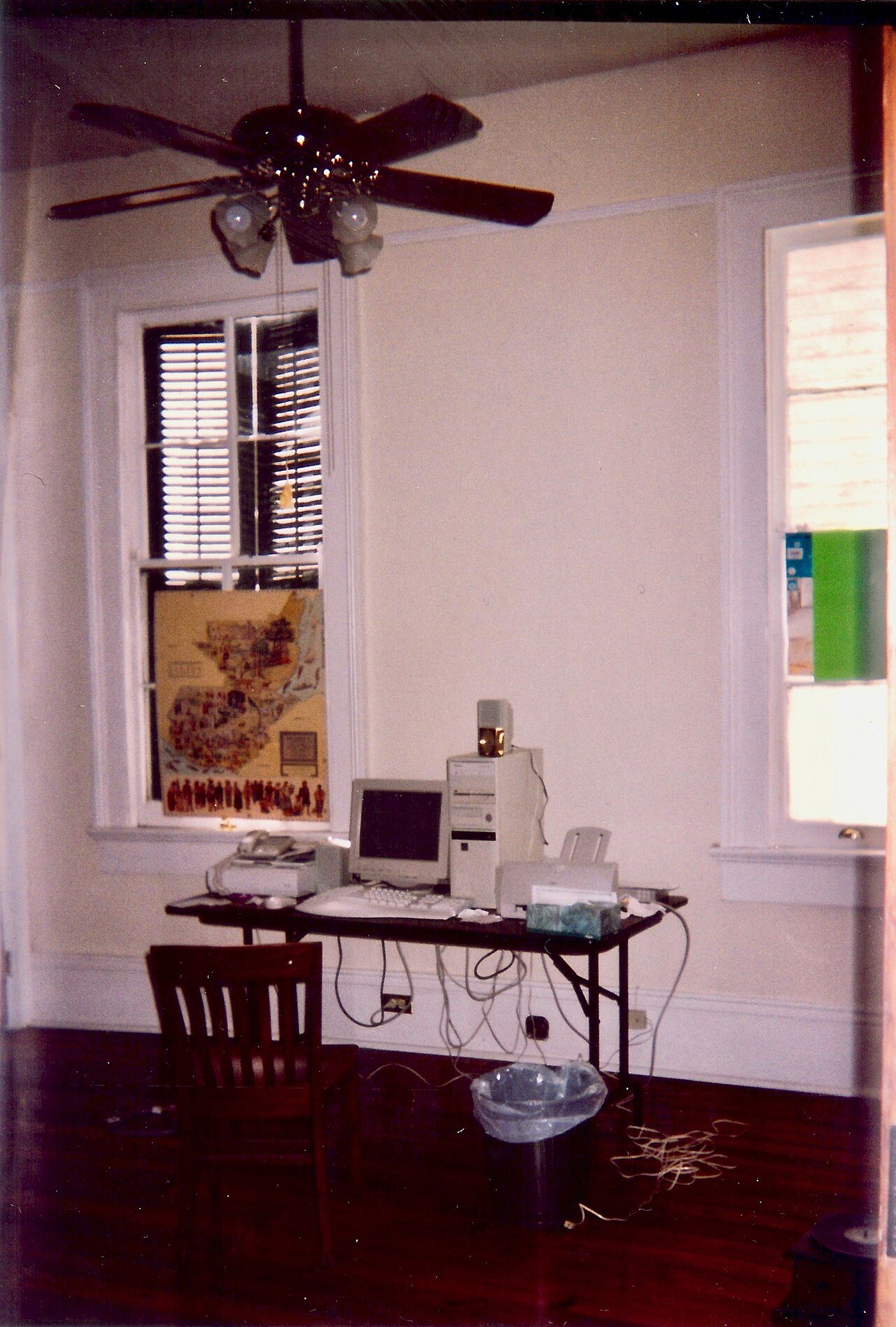
A 1990s home office computer setup, the natural habitat of PointCast and the push technology era
The natural habitat of PointCast. A 1990s desktop machine with a screensaver pulling headlines down over a dial-up modem.

The Cultural Moment

To understand why PointCast briefly captured the imagination of the entire tech press, you have to remember what 1996 actually felt like.

The web was four years old as a public phenomenon. Most people had encountered it for the first time within the previous 18 months. Yahoo had IPO'd in April 1996 and was the dominant directory of the internet, a hand-curated tree of links. Google did not exist yet. Search was bad. RSS would not be invented until 1999. The notion of an algorithmic feed of personalized content was not yet a notion.

What PointCast offered, in this context, was the first product that let you specify what you cared about and then receive a stream of it without further effort. You picked which news categories you wanted. You picked which stocks to follow. The software went out, fetched updates from PointCast's servers, and put the result on your screen.

For knowledge workers in 1996, this was meaningful. The alternative was opening five different websites every hour to check what had moved. PointCast collapsed that entire workflow into a passive ambient display.

Adoption was rapid. By late 1996, PointCast claimed somewhere between 1 and 1.7 million active users depending on the source and the measurement method. For free software in 1996, with a 28.8 modem as the average connection speed, those numbers are genuinely impressive. The product was being used in newsrooms, trading floors, marketing departments, and law firms, places where staying current mattered and where IT had budget to install niche software.

Wired magazine, in March 1997, ran the now-famous "Push!" cover. The thesis was that the pull-based browsing model was obsolete and that push would become the dominant paradigm of internet content delivery. PointCast was the lead example. The cover did not say it explicitly, but the message between the lines was that companies like Netscape and Yahoo, built on pull-based models, were sitting on a foundation that was about to crumble.

In 1997, the consensus position among tech journalists was that the browser was a transitional technology and push would replace it. That consensus did not survive the next 18 months.

The $450 Million Offer

The Wired moment was preceded by a more concrete signal of mainstream interest. In December 1996, Microsoft announced a partnership with PointCast that would integrate push technology into Internet Explorer 4. The partnership was widely covered as validation. Microsoft, the dominant force in consumer software, was effectively saying that push was the future of the desktop internet experience.

Around the same window, News Corporation, the global media conglomerate led by Rupert Murdoch, approached PointCast with an acquisition offer. The reported number was $450 million.

PointCast turned it down.

The exact reasoning depends on whose account you trust. Some accounts say Hassett and the board believed the company would be worth significantly more. Other accounts, including comments from News Corporation's James Murdoch in later interviews, point to internal hesitation at PointCast around revenue projections and execution. By March 1997, the offer was off the table. PointCast announced plans to go public instead.

In hindsight, the timing of that decision is extraordinary. The Wired cover hit newsstands roughly the same month that News Corp walked away. PointCast was, by external measures, at peak cultural relevance. The IPO was filed in 1997. It would never close.

The Bandwidth Problem

Here is where the logic starts to break down.

PointCast worked by having the client software check in with PointCast's servers at regular intervals, typically every few hours, to download fresh content. The downloaded content included not just text headlines but graphics, advertisements, and small animations. Each update was a few hundred kilobytes. Multiply that by tens or hundreds of users in a single company office, all pulling updates simultaneously over a shared T1 line, and the math gets ugly.

By mid-1997, corporate IT departments started noticing that PointCast was consuming a disproportionate share of their internet bandwidth. The complaints were not theoretical. A 1.5 Mbps T1 line shared by 50 employees, half of whom had PointCast running, could see meaningful chunks of its capacity tied up by background pushes during the workday. Pages loaded slower. Email moved slower. Video, which was barely a thing in 1997, became almost impossible.

The response from corporate IT was straightforward. PointCast was banned. By the end of 1997, many large companies had explicit policies prohibiting installation. The product's primary user base, knowledge workers in office environments, was systematically locked out.

Imagine pouring a swimming pool through a garden hose. That was the corporate internet of 1997, and PointCast had decided to fill the entire pool ten times a day on top of whatever else was already running.

The bandwidth problem was solvable. Send less data. Compress better. Update less frequently. But PointCast's business model required active, engaged users seeing fresh content and advertisements. Reducing the frequency of pushes meant reducing ad impressions, which meant reducing revenue. They were stuck between a technical problem and a revenue problem, and they could not optimize for one without breaking the other.

The Ad Revenue Question

PointCast was free to users. The revenue model was advertising. Brands could pay to have their ads appear in the screensaver rotation alongside the news headlines. Wells Fargo, GM, Visa, and other Fortune 500 advertisers signed on early.

The pitch to advertisers was elegant on paper. You could not skip a PointCast ad the way you skipped a television ad. The ad was on screen while the user was away from their desk and again when they returned. The audience was educated, employed, and the kind of person who paid attention to news. CPMs in the early days were reportedly high.

Two things went wrong with this revenue model in practice. First, the same bandwidth issues that made corporate IT depart-ments hostile also meant that ad rotations were not actually being seen as often as the pitch deck suggested. Second, advertisers in 1996 and 1997 were still figuring out how to measure online ad effectiveness at all. The metrics that would later make digital advertising a $500 billion industry, click-through rates tied to conversion data tied to attribution models, did not exist in mature form yet.

By the time PointCast's advertisers started asking harder questions about return on investment, the user base was already eroding from the corporate bans.

The IPO That Never Happened

Internal turmoil compounded the external pressure that followed the News Corp collapse. Christopher Hassett, the founder and CEO, was replaced in October 1997 by David W. Dorman, a former executive at Sprint and Pacific Bell. Dorman was brought in to bring adult supervision and to navigate either an IPO or a sale.

The IPO came first. PointCast filed in May 1998 with a reported valuation in the $250 million range, well below the $450 million News Corp offer it had refused 16 months earlier. The filing was withdrawn within two months. The public market was not buying.

A failed IPO in 1998 was not, by itself, fatal. The dot-com bubble was still inflating. Capital was available. But the withdrawal was widely covered as a confidence event. The narrative shifted, fast. PointCast went from being the future of the internet to being a cautionary example almost overnight.

By late 1998, PointCast was visibly in decline. Internet Explorer 4 had shipped with its push technology features. They went unused by most consumers. The Microsoft partnership, which was supposed to validate the model, had instead helped commodify it without driving meaningful PointCast adoption. A consortium-led acquisition deal valued around $100 million was discussed in late 1998 and ultimately did not close.

Meanwhile, a completely different idea was taking shape in Mountain View. Sergey Brin and Larry Page had incorporated Google in September 1998. The product was a search engine. Pull, not push. Better than the alternatives by an embarrassing margin. The bet that won the internet was the exact opposite of the bet PointCast had made.

The $7 Million Exit

In May 1999, PointCast was sold to Launchpad Technologies, a San Diego company backed by Idealab. The reported price was approximately $7 million. Dorman had resigned as CEO in March 1999, and Phil Koen, the former COO, had stepped in to manage what was effectively a wind-down.

$7 million versus $450 million is the number people remember. The decline is roughly 98 percent in a little over two years. It is one of the cleanest documented examples of how fast a tech valuation can collapse when the underlying thesis breaks.

Launchpad rebranded the service and continued operating it for less than a year. The PointCast network was shut down in 2000. The technology was effectively dead by the time of the dot-com crash in March 2000, though most of the press coverage of the crash never bothered to mention it. PointCast had already been written off.

What PointCast Got Right

It is tempting to read the PointCast story as a simple failure narrative. Bad bet, bad management, bad ending. The more interesting reading is that PointCast was wrong about everything except the central insight, and the central insight turned out to be enormous.

The insight: most information consumption should not require active retrieval. Users should be able to specify what they care about once, and then have a continuous stream of relevant content delivered to them. This is, almost word for word, the founding thesis of every algorithmic feed product that came after.

Look at what replaced PointCast and you see the insight everywhere. Google News, launched in 2002, was a personalized news aggregator. RSS readers in the mid-2000s. Twitter, founded 2006, was a manually curated push feed. Facebook News Feed, introduced in 2006, became the dominant news distribution channel of the 2010s. Apple News, Flipboard, Pocket, Feedly, Substack, TikTok's For You feed. All of them are versions of the same idea PointCast tried to sell in 1996.

What changed was the delivery mechanism. PointCast's failure was insisting on a heavy desktop client that fought corporate IT and burned through scarce bandwidth. The products that won used the browser or the phone, asked for less per session, and arrived after broadband and mobile networks had absorbed the bandwidth costs that killed PointCast.

PointCast was right that pull was inefficient. They were just early by about a decade.

The Screensaver Problem

One smaller observation that gets lost in the larger narrative is that PointCast bet on the screensaver as the primary surface. This was a clever and self-defeating choice.

Clever, because the screensaver was the one piece of screen real estate that nobody else was using. While the user was at their desk, that screen belonged to whatever app they were working in. The moment they walked away, the screen was idle. PointCast claimed that real estate and turned it into a content channel.

Self-defeating, because the screensaver is exactly the part of the desktop that the user is, by definition, not looking at. If the user was looking at the screen, the screensaver would not be running. PointCast solved this partially by also offering a foreground app, but the foreground app was less compelling than the screensaver, and it competed for attention with everything else on the user's desktop.

The successors to PointCast almost universally rejected this surface choice. The browser tab became the news delivery surface. Then the mobile home screen. Then the lock screen notification. Each successive generation of news delivery moved closer to where the user was actually looking, not further away.

An early-1990s office scene with monitors that would have been typical PointCast hosts a few years later
The office setup PointCast was trying to colonize. Banks of monitors that mostly displayed nothing during coffee breaks.

The Push Technology Hangover

The collapse of PointCast was not just a single-company event. It was the failure of an entire category narrative, and for the rest of the 1990s, the term "push" became almost unmentionable in technology marketing.

BackWeb, Marimba, Castanet, NewsEdge, BellCharles, and a dozen other companies had launched products under the push technology banner in 1996 and 1997. Most of them pivoted, downsized, or shut down by 1999. Marimba, founded in 1996 by Kim Polese and three colleagues from Sun Microsystems with a heavyweight Java pedigree, survived by repositioning entirely as an enterprise software distribution company, eventually being acquired by BMC Software in 2004 for around $239 million. The others quietly disappeared.

Internet Explorer 4's push features, the result of the much-hyped Microsoft partnership, shipped to consumers, were ignored, and were quietly removed in later versions of the browser. The technology was called Active Channels. Most users never knew the feature existed.

The push hangover was so severe that when notifications became a core part of smartphone operating systems in the early 2010s, almost nobody called them push technology even though that was exactly what they were. The category had a reputational scar that took a full product generation to fade.

Why PointCast Matters Now

Three things make the PointCast story worth revisiting today, even if you have never heard of the company before now.

The first is that PointCast is the cleanest example in tech of a company that was right about the future and wrong about the present. Their thesis about the inefficiency of pull-based information retrieval was correct. Their product was a dead end. The lesson is that being directionally right does not protect you from being executionally wrong, and the distance between those two things can be measured in $443 million of evaporated valuation.

The second is that the bandwidth story has a precise modern parallel. Every few years, a new category of internet product emerges that consumes more bandwidth than the existing infrastructure was sized for. Streaming video did this in the late 2000s. Cloud gaming attempted it in the early 2020s. Generative AI is doing it now in 2026, with model inference and data transfer chewing through enterprise networks in ways that IT departments are still figuring out how to manage. The PointCast pattern, of a useful product becoming a network parasite and being administratively blocked, recurs every cycle.

The third is that the screensaver bet illustrates how easy it is to confuse available surface area with attention. PointCast assumed that because the screensaver was unused, it was therefore available for content delivery. The unused screensaver was not unused because nobody had thought of it. It was unused because the user was not looking. A lot of modern product strategy still confuses these two things. Empty real estate is not the same thing as attention.

This is essentially what every notification overload critique twenty years later was about. You can fill an unused channel with content. That does not mean anyone is going to see it.

What Happened to the People

Christopher Hassett, the founder, went on to start several other companies, including a digital media company called Activate.net in the late 1990s. The post-PointCast trajectory was quieter, and he largely receded from the consumer tech press.

David Dorman, the CEO brought in to navigate the exit, moved on to become the CEO of Concert, the BT and AT&T global venture, and later the CEO of AT&T itself from 2002 to 2005. The PointCast period is a small footnote in his executive resume.

The PointCast brand, after Launchpad rebranded the service, became Infogate. Infogate operated for a couple more years before shutting down entirely. The domain pointcast.com floated through several owners and currently resolves to unrelated content.

The pattern is familiar. The technology lost. The people moved on. The lessons quietly entered the bloodstream of the next generation of product builders, most of whom were too young at the time to remember why nobody talked about push technology in 2001.

Frequently Asked Questions

What was PointCast? PointCast Network was free desktop software that used push technology to deliver personalized news, stock quotes, weather, and advertisements to users' computers, typically appearing as a screensaver when the machine was idle. It launched on February 13, 1996 from Sunnyvale, California, and was the most famous example of the 1990s push technology category.

Who founded PointCast? PointCast was founded by Christopher R. Hassett in 1992, originally as PED Software. The company pivoted from CD-ROM-based publishing into internet-based push delivery and rebranded as PointCast Network in the lead-up to the 1996 launch.

Did PointCast really turn down $450 million? Yes. In January 1997, News Corporation reportedly offered approximately $450 million to acquire PointCast. The offer was either rejected or withdrawn after a few months of negotiation, depending on which account you trust, and was definitively off the table by March 1997.

How much did PointCast eventually sell for? Approximately $7 million in May 1999. The buyer was Launchpad Technologies, a San Diego company backed by Idealab. The service was rebranded and shut down by 2000.

Why did PointCast fail? Several reasons compounded. The product consumed disproportionate amounts of corporate internet bandwidth and was banned by IT departments at many large companies by 1997. The push technology category lost narrative momentum after the Wired "Push!" cover became seen as overhyped. A failed IPO in 1997 eroded confidence. Internal leadership transitions slowed product decisions. And the rise of search-based pull models like Google starting in 1998 reframed the entire question of how users should find information.

Was PointCast really on the cover of Wired? The March 1997 issue of Wired magazine ran a cover story titled "Push! Kiss your browser goodbye," featuring an image of a tombstone for the web. PointCast was the most prominent product cited in the cover story, although the article covered the broader push technology category.

What was Microsoft's relationship with PointCast? Microsoft announced a partnership with PointCast in December 1996 to integrate push technology features into Internet Explorer 4. The resulting feature in IE4 was called Active Channels. The integration shipped, was largely ignored by users, and was quietly removed in later versions of the browser. The partnership did not result in an acquisition.

How is PointCast different from modern news apps? Conceptually, very similar. Practically, very different. PointCast required a heavyweight Windows or Mac client, ran as a screensaver, and pushed content over scheduled intervals using the corporate or home internet bandwidth of 1996. Modern news apps run on phones, occupy small surfaces in the foreground, and rely on broadband and mobile networks that did not exist at consumer scale during the PointCast era. The push concept survived. The PointCast delivery model did not.

Did anyone else try push technology and succeed? Indirectly, yes. Smartphone notifications, RSS readers, algorithmic feeds on Twitter, Facebook, TikTok, and others all implement variants of the push idea. The category never recovered the "push" name itself, but the underlying logic of automatically delivering personalized content to a user without active retrieval is now the dominant pattern of consumer internet consumption.

Is there anything left of PointCast today? No active operations. The pointcast.com domain has changed hands multiple times. The original software does not run on modern operating systems. Some historical screenshots and a few archived press releases from the 1996 to 1999 window survive on the Wayback Machine, which is the only place most of the original product still exists.

If you ever wonder why your phone buzzes 150 times a day with notifications you never explicitly asked for, the historical answer goes back to a Sunnyvale company in 1996 that bet the entire future of the internet on a screensaver. They got the future right and the screensaver wrong, and the rest of the industry spent the next 25 years quietly proving both halves of that statement.

๐Ÿ“– What Happened to PointCast and the 1990s Push Technology Boom
_ โ–ก ร—
← Back

What Happened to PointCast and the 1990s Push Technology Boom

2026-05-11 by 404 Memory Found

In March 1997, Wired magazine put a full image of a tombstone on its cover. The tombstone read "The Web." The cover story argued that the web was already obsolete, that browsing pages on demand was a clumsy way to consume information, and that the future of the internet was a technology called push. The headline product driving that argument was a Cupertino-based company called PointCast.

Two years later, in May 1999, PointCast sold for about $7 million. It had turned down a reported $450 million acquisition offer from News Corporation in January 1997.

That delta, from a billion-dollar covers-of-Wired moment to a $7 million fire sale, in roughly 28 months, is one of the cleanest case studies in tech history of how a real insight, wrapped in the wrong product at the wrong moment, can disintegrate.

The interesting part is not that PointCast failed. The interesting part is what it got right. PointCast understood, before nearly anyone else, that pull-based browsing was an inefficient way for humans to keep up with information. They built the first mainstream attempt at solving that problem. They lost. And then, fifteen years later, everyone who lost to them found different ways to win on the same insight.

What PointCast Actually Was

PointCast Network was free software for Windows and Mac that ran in the background on your office or home PC. When your machine sat idle, the software activated as a screensaver. Instead of flying toasters or starfields, you got a customizable scroll of news headlines, stock quotes, weather, and sports scores, pulled from sources like CNN, Reuters, the Boston Globe, the New York Times, and the Los Angeles Times.

The official launch was February 13, 1996. The company was based in Sunnyvale, California, and had been founded in 1992 by Christopher R. Hassett, originally under the name PED Software. By 1996 they had renamed the product PointCast Network and pivoted from CD-ROM-based publishing into internet-based delivery. The shift was the whole bet.

Here is the technical idea. The web in 1996 worked one way: a user opened a browser, typed a URL, and the browser pulled the page from a server. Every visit required intent. If you wanted to know the closing price of Microsoft stock, you had to open Netscape, type in a URL, and wait for the page to load over a 28.8 kbps modem.

PointCast inverted this. Instead of the user pulling content, the PointCast server pushed updates to the client software at scheduled intervals. The software stored those updates locally. When the user walked away from their desk, the screensaver kicked in and displayed the most recent content. The user did nothing. The content just arrived.

This sounds boring today. In 1996 it felt like science fiction.

A 1990s home office computer setup, the natural habitat of PointCast and the push technology era
The natural habitat of PointCast. A 1990s desktop machine with a screensaver pulling headlines down over a dial-up modem.

The Cultural Moment

To understand why PointCast briefly captured the imagination of the entire tech press, you have to remember what 1996 actually felt like.

The web was four years old as a public phenomenon. Most people had encountered it for the first time within the previous 18 months. Yahoo had IPO'd in April 1996 and was the dominant directory of the internet, a hand-curated tree of links. Google did not exist yet. Search was bad. RSS would not be invented until 1999. The notion of an algorithmic feed of personalized content was not yet a notion.

What PointCast offered, in this context, was the first product that let you specify what you cared about and then receive a stream of it without further effort. You picked which news categories you wanted. You picked which stocks to follow. The software went out, fetched updates from PointCast's servers, and put the result on your screen.

For knowledge workers in 1996, this was meaningful. The alternative was opening five different websites every hour to check what had moved. PointCast collapsed that entire workflow into a passive ambient display.

Adoption was rapid. By late 1996, PointCast claimed somewhere between 1 and 1.7 million active users depending on the source and the measurement method. For free software in 1996, with a 28.8 modem as the average connection speed, those numbers are genuinely impressive. The product was being used in newsrooms, trading floors, marketing departments, and law firms, places where staying current mattered and where IT had budget to install niche software.

Wired magazine, in March 1997, ran the now-famous "Push!" cover. The thesis was that the pull-based browsing model was obsolete and that push would become the dominant paradigm of internet content delivery. PointCast was the lead example. The cover did not say it explicitly, but the message between the lines was that companies like Netscape and Yahoo, built on pull-based models, were sitting on a foundation that was about to crumble.

In 1997, the consensus position among tech journalists was that the browser was a transitional technology and push would replace it. That consensus did not survive the next 18 months.

The $450 Million Offer

The Wired moment was preceded by a more concrete signal of mainstream interest. In December 1996, Microsoft announced a partnership with PointCast that would integrate push technology into Internet Explorer 4. The partnership was widely covered as validation. Microsoft, the dominant force in consumer software, was effectively saying that push was the future of the desktop internet experience.

Around the same window, News Corporation, the global media conglomerate led by Rupert Murdoch, approached PointCast with an acquisition offer. The reported number was $450 million.

PointCast turned it down.

The exact reasoning depends on whose account you trust. Some accounts say Hassett and the board believed the company would be worth significantly more. Other accounts, including comments from News Corporation's James Murdoch in later interviews, point to internal hesitation at PointCast around revenue projections and execution. By March 1997, the offer was off the table. PointCast announced plans to go public instead.

In hindsight, the timing of that decision is extraordinary. The Wired cover hit newsstands roughly the same month that News Corp walked away. PointCast was, by external measures, at peak cultural relevance. The IPO was filed in 1997. It would never close.

The Bandwidth Problem

Here is where the logic starts to break down.

PointCast worked by having the client software check in with PointCast's servers at regular intervals, typically every few hours, to download fresh content. The downloaded content included not just text headlines but graphics, advertisements, and small animations. Each update was a few hundred kilobytes. Multiply that by tens or hundreds of users in a single company office, all pulling updates simultaneously over a shared T1 line, and the math gets ugly.

By mid-1997, corporate IT departments started noticing that PointCast was consuming a disproportionate share of their internet bandwidth. The complaints were not theoretical. A 1.5 Mbps T1 line shared by 50 employees, half of whom had PointCast running, could see meaningful chunks of its capacity tied up by background pushes during the workday. Pages loaded slower. Email moved slower. Video, which was barely a thing in 1997, became almost impossible.

The response from corporate IT was straightforward. PointCast was banned. By the end of 1997, many large companies had explicit policies prohibiting installation. The product's primary user base, knowledge workers in office environments, was systematically locked out.

Imagine pouring a swimming pool through a garden hose. That was the corporate internet of 1997, and PointCast had decided to fill the entire pool ten times a day on top of whatever else was already running.

The bandwidth problem was solvable. Send less data. Compress better. Update less frequently. But PointCast's business model required active, engaged users seeing fresh content and advertisements. Reducing the frequency of pushes meant reducing ad impressions, which meant reducing revenue. They were stuck between a technical problem and a revenue problem, and they could not optimize for one without breaking the other.

The Ad Revenue Question

PointCast was free to users. The revenue model was advertising. Brands could pay to have their ads appear in the screensaver rotation alongside the news headlines. Wells Fargo, GM, Visa, and other Fortune 500 advertisers signed on early.

The pitch to advertisers was elegant on paper. You could not skip a PointCast ad the way you skipped a television ad. The ad was on screen while the user was away from their desk and again when they returned. The audience was educated, employed, and the kind of person who paid attention to news. CPMs in the early days were reportedly high.

Two things went wrong with this revenue model in practice. First, the same bandwidth issues that made corporate IT depart-ments hostile also meant that ad rotations were not actually being seen as often as the pitch deck suggested. Second, advertisers in 1996 and 1997 were still figuring out how to measure online ad effectiveness at all. The metrics that would later make digital advertising a $500 billion industry, click-through rates tied to conversion data tied to attribution models, did not exist in mature form yet.

By the time PointCast's advertisers started asking harder questions about return on investment, the user base was already eroding from the corporate bans.

The IPO That Never Happened

Internal turmoil compounded the external pressure that followed the News Corp collapse. Christopher Hassett, the founder and CEO, was replaced in October 1997 by David W. Dorman, a former executive at Sprint and Pacific Bell. Dorman was brought in to bring adult supervision and to navigate either an IPO or a sale.

The IPO came first. PointCast filed in May 1998 with a reported valuation in the $250 million range, well below the $450 million News Corp offer it had refused 16 months earlier. The filing was withdrawn within two months. The public market was not buying.

A failed IPO in 1998 was not, by itself, fatal. The dot-com bubble was still inflating. Capital was available. But the withdrawal was widely covered as a confidence event. The narrative shifted, fast. PointCast went from being the future of the internet to being a cautionary example almost overnight.

By late 1998, PointCast was visibly in decline. Internet Explorer 4 had shipped with its push technology features. They went unused by most consumers. The Microsoft partnership, which was supposed to validate the model, had instead helped commodify it without driving meaningful PointCast adoption. A consortium-led acquisition deal valued around $100 million was discussed in late 1998 and ultimately did not close.

Meanwhile, a completely different idea was taking shape in Mountain View. Sergey Brin and Larry Page had incorporated Google in September 1998. The product was a search engine. Pull, not push. Better than the alternatives by an embarrassing margin. The bet that won the internet was the exact opposite of the bet PointCast had made.

The $7 Million Exit

In May 1999, PointCast was sold to Launchpad Technologies, a San Diego company backed by Idealab. The reported price was approximately $7 million. Dorman had resigned as CEO in March 1999, and Phil Koen, the former COO, had stepped in to manage what was effectively a wind-down.

$7 million versus $450 million is the number people remember. The decline is roughly 98 percent in a little over two years. It is one of the cleanest documented examples of how fast a tech valuation can collapse when the underlying thesis breaks.

Launchpad rebranded the service and continued operating it for less than a year. The PointCast network was shut down in 2000. The technology was effectively dead by the time of the dot-com crash in March 2000, though most of the press coverage of the crash never bothered to mention it. PointCast had already been written off.

What PointCast Got Right

It is tempting to read the PointCast story as a simple failure narrative. Bad bet, bad management, bad ending. The more interesting reading is that PointCast was wrong about everything except the central insight, and the central insight turned out to be enormous.

The insight: most information consumption should not require active retrieval. Users should be able to specify what they care about once, and then have a continuous stream of relevant content delivered to them. This is, almost word for word, the founding thesis of every algorithmic feed product that came after.

Look at what replaced PointCast and you see the insight everywhere. Google News, launched in 2002, was a personalized news aggregator. RSS readers in the mid-2000s. Twitter, founded 2006, was a manually curated push feed. Facebook News Feed, introduced in 2006, became the dominant news distribution channel of the 2010s. Apple News, Flipboard, Pocket, Feedly, Substack, TikTok's For You feed. All of them are versions of the same idea PointCast tried to sell in 1996.

What changed was the delivery mechanism. PointCast's failure was insisting on a heavy desktop client that fought corporate IT and burned through scarce bandwidth. The products that won used the browser or the phone, asked for less per session, and arrived after broadband and mobile networks had absorbed the bandwidth costs that killed PointCast.

PointCast was right that pull was inefficient. They were just early by about a decade.

The Screensaver Problem

One smaller observation that gets lost in the larger narrative is that PointCast bet on the screensaver as the primary surface. This was a clever and self-defeating choice.

Clever, because the screensaver was the one piece of screen real estate that nobody else was using. While the user was at their desk, that screen belonged to whatever app they were working in. The moment they walked away, the screen was idle. PointCast claimed that real estate and turned it into a content channel.

Self-defeating, because the screensaver is exactly the part of the desktop that the user is, by definition, not looking at. If the user was looking at the screen, the screensaver would not be running. PointCast solved this partially by also offering a foreground app, but the foreground app was less compelling than the screensaver, and it competed for attention with everything else on the user's desktop.

The successors to PointCast almost universally rejected this surface choice. The browser tab became the news delivery surface. Then the mobile home screen. Then the lock screen notification. Each successive generation of news delivery moved closer to where the user was actually looking, not further away.

An early-1990s office scene with monitors that would have been typical PointCast hosts a few years later
The office setup PointCast was trying to colonize. Banks of monitors that mostly displayed nothing during coffee breaks.

The Push Technology Hangover

The collapse of PointCast was not just a single-company event. It was the failure of an entire category narrative, and for the rest of the 1990s, the term "push" became almost unmentionable in technology marketing.

BackWeb, Marimba, Castanet, NewsEdge, BellCharles, and a dozen other companies had launched products under the push technology banner in 1996 and 1997. Most of them pivoted, downsized, or shut down by 1999. Marimba, founded in 1996 by Kim Polese and three colleagues from Sun Microsystems with a heavyweight Java pedigree, survived by repositioning entirely as an enterprise software distribution company, eventually being acquired by BMC Software in 2004 for around $239 million. The others quietly disappeared.

Internet Explorer 4's push features, the result of the much-hyped Microsoft partnership, shipped to consumers, were ignored, and were quietly removed in later versions of the browser. The technology was called Active Channels. Most users never knew the feature existed.

The push hangover was so severe that when notifications became a core part of smartphone operating systems in the early 2010s, almost nobody called them push technology even though that was exactly what they were. The category had a reputational scar that took a full product generation to fade.

Why PointCast Matters Now

Three things make the PointCast story worth revisiting today, even if you have never heard of the company before now.

The first is that PointCast is the cleanest example in tech of a company that was right about the future and wrong about the present. Their thesis about the inefficiency of pull-based information retrieval was correct. Their product was a dead end. The lesson is that being directionally right does not protect you from being executionally wrong, and the distance between those two things can be measured in $443 million of evaporated valuation.

The second is that the bandwidth story has a precise modern parallel. Every few years, a new category of internet product emerges that consumes more bandwidth than the existing infrastructure was sized for. Streaming video did this in the late 2000s. Cloud gaming attempted it in the early 2020s. Generative AI is doing it now in 2026, with model inference and data transfer chewing through enterprise networks in ways that IT departments are still figuring out how to manage. The PointCast pattern, of a useful product becoming a network parasite and being administratively blocked, recurs every cycle.

The third is that the screensaver bet illustrates how easy it is to confuse available surface area with attention. PointCast assumed that because the screensaver was unused, it was therefore available for content delivery. The unused screensaver was not unused because nobody had thought of it. It was unused because the user was not looking. A lot of modern product strategy still confuses these two things. Empty real estate is not the same thing as attention.

This is essentially what every notification overload critique twenty years later was about. You can fill an unused channel with content. That does not mean anyone is going to see it.

What Happened to the People

Christopher Hassett, the founder, went on to start several other companies, including a digital media company called Activate.net in the late 1990s. The post-PointCast trajectory was quieter, and he largely receded from the consumer tech press.

David Dorman, the CEO brought in to navigate the exit, moved on to become the CEO of Concert, the BT and AT&T global venture, and later the CEO of AT&T itself from 2002 to 2005. The PointCast period is a small footnote in his executive resume.

The PointCast brand, after Launchpad rebranded the service, became Infogate. Infogate operated for a couple more years before shutting down entirely. The domain pointcast.com floated through several owners and currently resolves to unrelated content.

The pattern is familiar. The technology lost. The people moved on. The lessons quietly entered the bloodstream of the next generation of product builders, most of whom were too young at the time to remember why nobody talked about push technology in 2001.

Frequently Asked Questions

What was PointCast? PointCast Network was free desktop software that used push technology to deliver personalized news, stock quotes, weather, and advertisements to users' computers, typically appearing as a screensaver when the machine was idle. It launched on February 13, 1996 from Sunnyvale, California, and was the most famous example of the 1990s push technology category.

Who founded PointCast? PointCast was founded by Christopher R. Hassett in 1992, originally as PED Software. The company pivoted from CD-ROM-based publishing into internet-based push delivery and rebranded as PointCast Network in the lead-up to the 1996 launch.

Did PointCast really turn down $450 million? Yes. In January 1997, News Corporation reportedly offered approximately $450 million to acquire PointCast. The offer was either rejected or withdrawn after a few months of negotiation, depending on which account you trust, and was definitively off the table by March 1997.

How much did PointCast eventually sell for? Approximately $7 million in May 1999. The buyer was Launchpad Technologies, a San Diego company backed by Idealab. The service was rebranded and shut down by 2000.

Why did PointCast fail? Several reasons compounded. The product consumed disproportionate amounts of corporate internet bandwidth and was banned by IT departments at many large companies by 1997. The push technology category lost narrative momentum after the Wired "Push!" cover became seen as overhyped. A failed IPO in 1997 eroded confidence. Internal leadership transitions slowed product decisions. And the rise of search-based pull models like Google starting in 1998 reframed the entire question of how users should find information.

Was PointCast really on the cover of Wired? The March 1997 issue of Wired magazine ran a cover story titled "Push! Kiss your browser goodbye," featuring an image of a tombstone for the web. PointCast was the most prominent product cited in the cover story, although the article covered the broader push technology category.

What was Microsoft's relationship with PointCast? Microsoft announced a partnership with PointCast in December 1996 to integrate push technology features into Internet Explorer 4. The resulting feature in IE4 was called Active Channels. The integration shipped, was largely ignored by users, and was quietly removed in later versions of the browser. The partnership did not result in an acquisition.

How is PointCast different from modern news apps? Conceptually, very similar. Practically, very different. PointCast required a heavyweight Windows or Mac client, ran as a screensaver, and pushed content over scheduled intervals using the corporate or home internet bandwidth of 1996. Modern news apps run on phones, occupy small surfaces in the foreground, and rely on broadband and mobile networks that did not exist at consumer scale during the PointCast era. The push concept survived. The PointCast delivery model did not.

Did anyone else try push technology and succeed? Indirectly, yes. Smartphone notifications, RSS readers, algorithmic feeds on Twitter, Facebook, TikTok, and others all implement variants of the push idea. The category never recovered the "push" name itself, but the underlying logic of automatically delivering personalized content to a user without active retrieval is now the dominant pattern of consumer internet consumption.

Is there anything left of PointCast today? No active operations. The pointcast.com domain has changed hands multiple times. The original software does not run on modern operating systems. Some historical screenshots and a few archived press releases from the 1996 to 1999 window survive on the Wayback Machine, which is the only place most of the original product still exists.

If you ever wonder why your phone buzzes 150 times a day with notifications you never explicitly asked for, the historical answer goes back to a Sunnyvale company in 1996 that bet the entire future of the internet on a screensaver. They got the future right and the screensaver wrong, and the rest of the industry spent the next 25 years quietly proving both halves of that statement.

๐Ÿ“– What Happened to PointCast and the 1990s Push Technology Boom

In March 1997, Wired magazine put a full image of a tombstone on its cover. The tombstone read "The Web." The cover story argued that the web was already obsolete, that browsing pages on demand was a clumsy way to consume information, and that the future of the internet was a technology called push. The headline product driving that argument was a Cupertino-based company called PointCast.

Two years later, in May 1999, PointCast sold for about $7 million. It had turned down a reported $450 million acquisition offer from News Corporation in January 1997.

That delta, from a billion-dollar covers-of-Wired moment to a $7 million fire sale, in roughly 28 months, is one of the cleanest case studies in tech history of how a real insight, wrapped in the wrong product at the wrong moment, can disintegrate.

The interesting part is not that PointCast failed. The interesting part is what it got right. PointCast understood, before nearly anyone else, that pull-based browsing was an inefficient way for humans to keep up with information. They built the first mainstream attempt at solving that problem. They lost. And then, fifteen years later, everyone who lost to them found different ways to win on the same insight.

What PointCast Actually Was

PointCast Network was free software for Windows and Mac that ran in the background on your office or home PC. When your machine sat idle, the software activated as a screensaver. Instead of flying toasters or starfields, you got a customizable scroll of news headlines, stock quotes, weather, and sports scores, pulled from sources like CNN, Reuters, the Boston Globe, the New York Times, and the Los Angeles Times.

The official launch was February 13, 1996. The company was based in Sunnyvale, California, and had been founded in 1992 by Christopher R. Hassett, originally under the name PED Software. By 1996 they had renamed the product PointCast Network and pivoted from CD-ROM-based publishing into internet-based delivery. The shift was the whole bet.

Here is the technical idea. The web in 1996 worked one way: a user opened a browser, typed a URL, and the browser pulled the page from a server. Every visit required intent. If you wanted to know the closing price of Microsoft stock, you had to open Netscape, type in a URL, and wait for the page to load over a 28.8 kbps modem.

PointCast inverted this. Instead of the user pulling content, the PointCast server pushed updates to the client software at scheduled intervals. The software stored those updates locally. When the user walked away from their desk, the screensaver kicked in and displayed the most recent content. The user did nothing. The content just arrived.

This sounds boring today. In 1996 it felt like science fiction.

A 1990s home office computer setup, the natural habitat of PointCast and the push technology era
The natural habitat of PointCast. A 1990s desktop machine with a screensaver pulling headlines down over a dial-up modem.

The Cultural Moment

To understand why PointCast briefly captured the imagination of the entire tech press, you have to remember what 1996 actually felt like.

The web was four years old as a public phenomenon. Most people had encountered it for the first time within the previous 18 months. Yahoo had IPO'd in April 1996 and was the dominant directory of the internet, a hand-curated tree of links. Google did not exist yet. Search was bad. RSS would not be invented until 1999. The notion of an algorithmic feed of personalized content was not yet a notion.

What PointCast offered, in this context, was the first product that let you specify what you cared about and then receive a stream of it without further effort. You picked which news categories you wanted. You picked which stocks to follow. The software went out, fetched updates from PointCast's servers, and put the result on your screen.

For knowledge workers in 1996, this was meaningful. The alternative was opening five different websites every hour to check what had moved. PointCast collapsed that entire workflow into a passive ambient display.

Adoption was rapid. By late 1996, PointCast claimed somewhere between 1 and 1.7 million active users depending on the source and the measurement method. For free software in 1996, with a 28.8 modem as the average connection speed, those numbers are genuinely impressive. The product was being used in newsrooms, trading floors, marketing departments, and law firms, places where staying current mattered and where IT had budget to install niche software.

Wired magazine, in March 1997, ran the now-famous "Push!" cover. The thesis was that the pull-based browsing model was obsolete and that push would become the dominant paradigm of internet content delivery. PointCast was the lead example. The cover did not say it explicitly, but the message between the lines was that companies like Netscape and Yahoo, built on pull-based models, were sitting on a foundation that was about to crumble.

In 1997, the consensus position among tech journalists was that the browser was a transitional technology and push would replace it. That consensus did not survive the next 18 months.

The $450 Million Offer

The Wired moment was preceded by a more concrete signal of mainstream interest. In December 1996, Microsoft announced a partnership with PointCast that would integrate push technology into Internet Explorer 4. The partnership was widely covered as validation. Microsoft, the dominant force in consumer software, was effectively saying that push was the future of the desktop internet experience.

Around the same window, News Corporation, the global media conglomerate led by Rupert Murdoch, approached PointCast with an acquisition offer. The reported number was $450 million.

PointCast turned it down.

The exact reasoning depends on whose account you trust. Some accounts say Hassett and the board believed the company would be worth significantly more. Other accounts, including comments from News Corporation's James Murdoch in later interviews, point to internal hesitation at PointCast around revenue projections and execution. By March 1997, the offer was off the table. PointCast announced plans to go public instead.

In hindsight, the timing of that decision is extraordinary. The Wired cover hit newsstands roughly the same month that News Corp walked away. PointCast was, by external measures, at peak cultural relevance. The IPO was filed in 1997. It would never close.

The Bandwidth Problem

Here is where the logic starts to break down.

PointCast worked by having the client software check in with PointCast's servers at regular intervals, typically every few hours, to download fresh content. The downloaded content included not just text headlines but graphics, advertisements, and small animations. Each update was a few hundred kilobytes. Multiply that by tens or hundreds of users in a single company office, all pulling updates simultaneously over a shared T1 line, and the math gets ugly.

By mid-1997, corporate IT departments started noticing that PointCast was consuming a disproportionate share of their internet bandwidth. The complaints were not theoretical. A 1.5 Mbps T1 line shared by 50 employees, half of whom had PointCast running, could see meaningful chunks of its capacity tied up by background pushes during the workday. Pages loaded slower. Email moved slower. Video, which was barely a thing in 1997, became almost impossible.

The response from corporate IT was straightforward. PointCast was banned. By the end of 1997, many large companies had explicit policies prohibiting installation. The product's primary user base, knowledge workers in office environments, was systematically locked out.

Imagine pouring a swimming pool through a garden hose. That was the corporate internet of 1997, and PointCast had decided to fill the entire pool ten times a day on top of whatever else was already running.

The bandwidth problem was solvable. Send less data. Compress better. Update less frequently. But PointCast's business model required active, engaged users seeing fresh content and advertisements. Reducing the frequency of pushes meant reducing ad impressions, which meant reducing revenue. They were stuck between a technical problem and a revenue problem, and they could not optimize for one without breaking the other.

The Ad Revenue Question

PointCast was free to users. The revenue model was advertising. Brands could pay to have their ads appear in the screensaver rotation alongside the news headlines. Wells Fargo, GM, Visa, and other Fortune 500 advertisers signed on early.

The pitch to advertisers was elegant on paper. You could not skip a PointCast ad the way you skipped a television ad. The ad was on screen while the user was away from their desk and again when they returned. The audience was educated, employed, and the kind of person who paid attention to news. CPMs in the early days were reportedly high.

Two things went wrong with this revenue model in practice. First, the same bandwidth issues that made corporate IT depart-ments hostile also meant that ad rotations were not actually being seen as often as the pitch deck suggested. Second, advertisers in 1996 and 1997 were still figuring out how to measure online ad effectiveness at all. The metrics that would later make digital advertising a $500 billion industry, click-through rates tied to conversion data tied to attribution models, did not exist in mature form yet.

By the time PointCast's advertisers started asking harder questions about return on investment, the user base was already eroding from the corporate bans.

The IPO That Never Happened

Internal turmoil compounded the external pressure that followed the News Corp collapse. Christopher Hassett, the founder and CEO, was replaced in October 1997 by David W. Dorman, a former executive at Sprint and Pacific Bell. Dorman was brought in to bring adult supervision and to navigate either an IPO or a sale.

The IPO came first. PointCast filed in May 1998 with a reported valuation in the $250 million range, well below the $450 million News Corp offer it had refused 16 months earlier. The filing was withdrawn within two months. The public market was not buying.

A failed IPO in 1998 was not, by itself, fatal. The dot-com bubble was still inflating. Capital was available. But the withdrawal was widely covered as a confidence event. The narrative shifted, fast. PointCast went from being the future of the internet to being a cautionary example almost overnight.

By late 1998, PointCast was visibly in decline. Internet Explorer 4 had shipped with its push technology features. They went unused by most consumers. The Microsoft partnership, which was supposed to validate the model, had instead helped commodify it without driving meaningful PointCast adoption. A consortium-led acquisition deal valued around $100 million was discussed in late 1998 and ultimately did not close.

Meanwhile, a completely different idea was taking shape in Mountain View. Sergey Brin and Larry Page had incorporated Google in September 1998. The product was a search engine. Pull, not push. Better than the alternatives by an embarrassing margin. The bet that won the internet was the exact opposite of the bet PointCast had made.

The $7 Million Exit

In May 1999, PointCast was sold to Launchpad Technologies, a San Diego company backed by Idealab. The reported price was approximately $7 million. Dorman had resigned as CEO in March 1999, and Phil Koen, the former COO, had stepped in to manage what was effectively a wind-down.

$7 million versus $450 million is the number people remember. The decline is roughly 98 percent in a little over two years. It is one of the cleanest documented examples of how fast a tech valuation can collapse when the underlying thesis breaks.

Launchpad rebranded the service and continued operating it for less than a year. The PointCast network was shut down in 2000. The technology was effectively dead by the time of the dot-com crash in March 2000, though most of the press coverage of the crash never bothered to mention it. PointCast had already been written off.

What PointCast Got Right

It is tempting to read the PointCast story as a simple failure narrative. Bad bet, bad management, bad ending. The more interesting reading is that PointCast was wrong about everything except the central insight, and the central insight turned out to be enormous.

The insight: most information consumption should not require active retrieval. Users should be able to specify what they care about once, and then have a continuous stream of relevant content delivered to them. This is, almost word for word, the founding thesis of every algorithmic feed product that came after.

Look at what replaced PointCast and you see the insight everywhere. Google News, launched in 2002, was a personalized news aggregator. RSS readers in the mid-2000s. Twitter, founded 2006, was a manually curated push feed. Facebook News Feed, introduced in 2006, became the dominant news distribution channel of the 2010s. Apple News, Flipboard, Pocket, Feedly, Substack, TikTok's For You feed. All of them are versions of the same idea PointCast tried to sell in 1996.

What changed was the delivery mechanism. PointCast's failure was insisting on a heavy desktop client that fought corporate IT and burned through scarce bandwidth. The products that won used the browser or the phone, asked for less per session, and arrived after broadband and mobile networks had absorbed the bandwidth costs that killed PointCast.

PointCast was right that pull was inefficient. They were just early by about a decade.

The Screensaver Problem

One smaller observation that gets lost in the larger narrative is that PointCast bet on the screensaver as the primary surface. This was a clever and self-defeating choice.

Clever, because the screensaver was the one piece of screen real estate that nobody else was using. While the user was at their desk, that screen belonged to whatever app they were working in. The moment they walked away, the screen was idle. PointCast claimed that real estate and turned it into a content channel.

Self-defeating, because the screensaver is exactly the part of the desktop that the user is, by definition, not looking at. If the user was looking at the screen, the screensaver would not be running. PointCast solved this partially by also offering a foreground app, but the foreground app was less compelling than the screensaver, and it competed for attention with everything else on the user's desktop.

The successors to PointCast almost universally rejected this surface choice. The browser tab became the news delivery surface. Then the mobile home screen. Then the lock screen notification. Each successive generation of news delivery moved closer to where the user was actually looking, not further away.

An early-1990s office scene with monitors that would have been typical PointCast hosts a few years later
The office setup PointCast was trying to colonize. Banks of monitors that mostly displayed nothing during coffee breaks.

The Push Technology Hangover

The collapse of PointCast was not just a single-company event. It was the failure of an entire category narrative, and for the rest of the 1990s, the term "push" became almost unmentionable in technology marketing.

BackWeb, Marimba, Castanet, NewsEdge, BellCharles, and a dozen other companies had launched products under the push technology banner in 1996 and 1997. Most of them pivoted, downsized, or shut down by 1999. Marimba, founded in 1996 by Kim Polese and three colleagues from Sun Microsystems with a heavyweight Java pedigree, survived by repositioning entirely as an enterprise software distribution company, eventually being acquired by BMC Software in 2004 for around $239 million. The others quietly disappeared.

Internet Explorer 4's push features, the result of the much-hyped Microsoft partnership, shipped to consumers, were ignored, and were quietly removed in later versions of the browser. The technology was called Active Channels. Most users never knew the feature existed.

The push hangover was so severe that when notifications became a core part of smartphone operating systems in the early 2010s, almost nobody called them push technology even though that was exactly what they were. The category had a reputational scar that took a full product generation to fade.

Why PointCast Matters Now

Three things make the PointCast story worth revisiting today, even if you have never heard of the company before now.

The first is that PointCast is the cleanest example in tech of a company that was right about the future and wrong about the present. Their thesis about the inefficiency of pull-based information retrieval was correct. Their product was a dead end. The lesson is that being directionally right does not protect you from being executionally wrong, and the distance between those two things can be measured in $443 million of evaporated valuation.

The second is that the bandwidth story has a precise modern parallel. Every few years, a new category of internet product emerges that consumes more bandwidth than the existing infrastructure was sized for. Streaming video did this in the late 2000s. Cloud gaming attempted it in the early 2020s. Generative AI is doing it now in 2026, with model inference and data transfer chewing through enterprise networks in ways that IT departments are still figuring out how to manage. The PointCast pattern, of a useful product becoming a network parasite and being administratively blocked, recurs every cycle.

The third is that the screensaver bet illustrates how easy it is to confuse available surface area with attention. PointCast assumed that because the screensaver was unused, it was therefore available for content delivery. The unused screensaver was not unused because nobody had thought of it. It was unused because the user was not looking. A lot of modern product strategy still confuses these two things. Empty real estate is not the same thing as attention.

This is essentially what every notification overload critique twenty years later was about. You can fill an unused channel with content. That does not mean anyone is going to see it.

What Happened to the People

Christopher Hassett, the founder, went on to start several other companies, including a digital media company called Activate.net in the late 1990s. The post-PointCast trajectory was quieter, and he largely receded from the consumer tech press.

David Dorman, the CEO brought in to navigate the exit, moved on to become the CEO of Concert, the BT and AT&T global venture, and later the CEO of AT&T itself from 2002 to 2005. The PointCast period is a small footnote in his executive resume.

The PointCast brand, after Launchpad rebranded the service, became Infogate. Infogate operated for a couple more years before shutting down entirely. The domain pointcast.com floated through several owners and currently resolves to unrelated content.

The pattern is familiar. The technology lost. The people moved on. The lessons quietly entered the bloodstream of the next generation of product builders, most of whom were too young at the time to remember why nobody talked about push technology in 2001.

Frequently Asked Questions

What was PointCast? PointCast Network was free desktop software that used push technology to deliver personalized news, stock quotes, weather, and advertisements to users' computers, typically appearing as a screensaver when the machine was idle. It launched on February 13, 1996 from Sunnyvale, California, and was the most famous example of the 1990s push technology category.

Who founded PointCast? PointCast was founded by Christopher R. Hassett in 1992, originally as PED Software. The company pivoted from CD-ROM-based publishing into internet-based push delivery and rebranded as PointCast Network in the lead-up to the 1996 launch.

Did PointCast really turn down $450 million? Yes. In January 1997, News Corporation reportedly offered approximately $450 million to acquire PointCast. The offer was either rejected or withdrawn after a few months of negotiation, depending on which account you trust, and was definitively off the table by March 1997.

How much did PointCast eventually sell for? Approximately $7 million in May 1999. The buyer was Launchpad Technologies, a San Diego company backed by Idealab. The service was rebranded and shut down by 2000.

Why did PointCast fail? Several reasons compounded. The product consumed disproportionate amounts of corporate internet bandwidth and was banned by IT departments at many large companies by 1997. The push technology category lost narrative momentum after the Wired "Push!" cover became seen as overhyped. A failed IPO in 1997 eroded confidence. Internal leadership transitions slowed product decisions. And the rise of search-based pull models like Google starting in 1998 reframed the entire question of how users should find information.

Was PointCast really on the cover of Wired? The March 1997 issue of Wired magazine ran a cover story titled "Push! Kiss your browser goodbye," featuring an image of a tombstone for the web. PointCast was the most prominent product cited in the cover story, although the article covered the broader push technology category.

What was Microsoft's relationship with PointCast? Microsoft announced a partnership with PointCast in December 1996 to integrate push technology features into Internet Explorer 4. The resulting feature in IE4 was called Active Channels. The integration shipped, was largely ignored by users, and was quietly removed in later versions of the browser. The partnership did not result in an acquisition.

How is PointCast different from modern news apps? Conceptually, very similar. Practically, very different. PointCast required a heavyweight Windows or Mac client, ran as a screensaver, and pushed content over scheduled intervals using the corporate or home internet bandwidth of 1996. Modern news apps run on phones, occupy small surfaces in the foreground, and rely on broadband and mobile networks that did not exist at consumer scale during the PointCast era. The push concept survived. The PointCast delivery model did not.

Did anyone else try push technology and succeed? Indirectly, yes. Smartphone notifications, RSS readers, algorithmic feeds on Twitter, Facebook, TikTok, and others all implement variants of the push idea. The category never recovered the "push" name itself, but the underlying logic of automatically delivering personalized content to a user without active retrieval is now the dominant pattern of consumer internet consumption.

Is there anything left of PointCast today? No active operations. The pointcast.com domain has changed hands multiple times. The original software does not run on modern operating systems. Some historical screenshots and a few archived press releases from the 1996 to 1999 window survive on the Wayback Machine, which is the only place most of the original product still exists.

If you ever wonder why your phone buzzes 150 times a day with notifications you never explicitly asked for, the historical answer goes back to a Sunnyvale company in 1996 that bet the entire future of the internet on a screensaver. They got the future right and the screensaver wrong, and the rest of the industry spent the next 25 years quietly proving both halves of that statement.

00:00