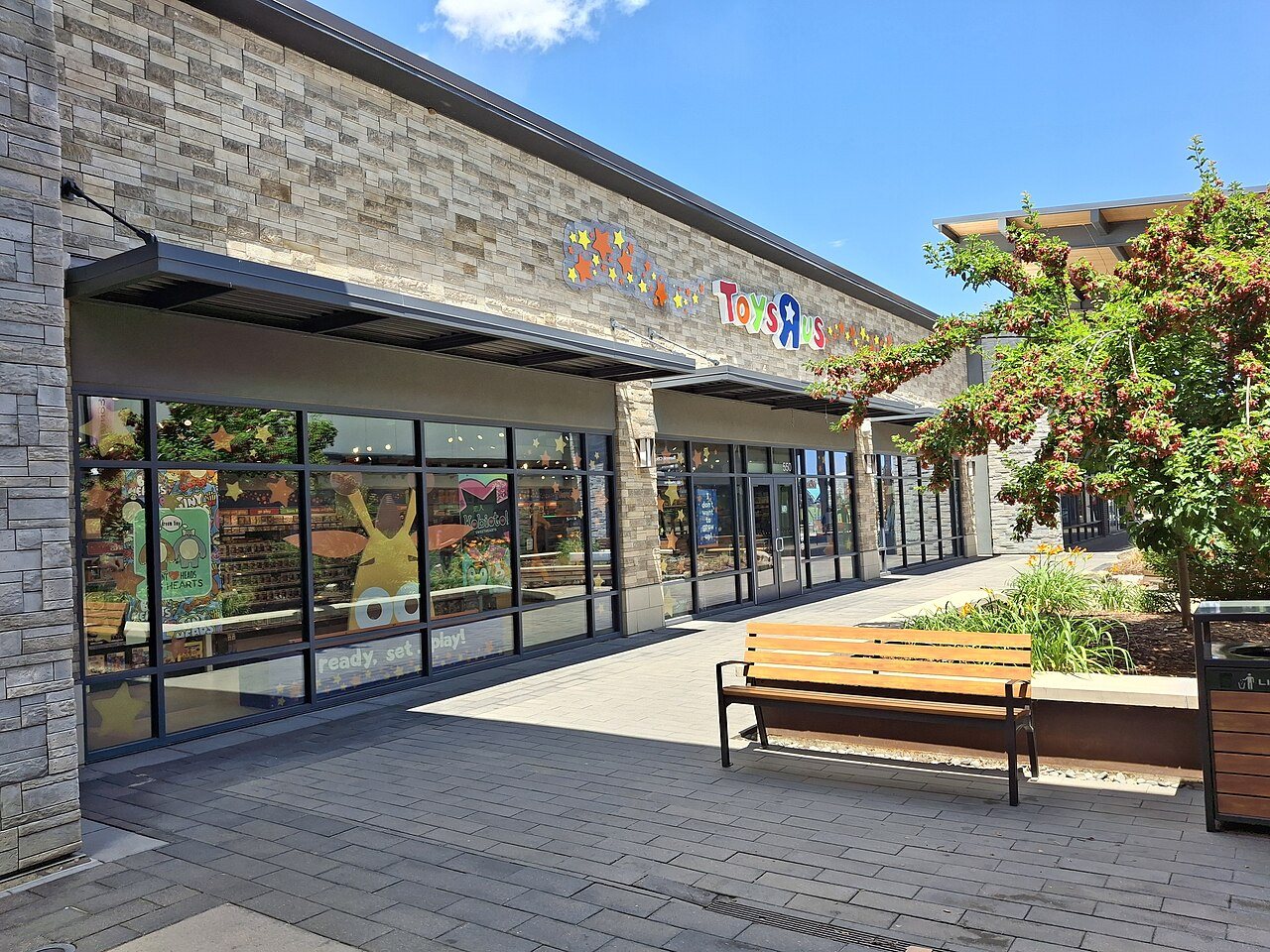
Why is Toys R Us opening 120 stores in 2026?
On September 17, 2026 the brand announced the largest US store expansion since the superstores closed: 120 new standalone Toys R Us stores for the holiday season, opened with the retail operator Go! Retail Group. That takes the standalone count from 40 to 160.
"This is a major moment for Toys R Us as we significantly expand our presence across the United States," said Jamie Uitdenhowen, executive vice president of Toys R Us at WHP Global, in the September 2026 announcement.
The stores are stocked around LEGO, Barbie, Hot Wheels and Pokemon, and selected locations carry a Creator Studio, a space set aside for toy brands and online creators to film product reveals and launches. Adult collectors, not only parents, are part of the pitch this time.
The company expects many of the 120 to trade past January rather than shut with the decorations, on the strength of how earlier holiday openings performed. None of that rebuilds the chain that existed in 1998. These are small shops run by a partner, in malls and strip centers, under a name a licensing company owns.
Who owns Toys R Us now?
WHP Global, a New York brand management company, announced on March 15, 2021 that it had acquired a controlling stake in Tru Kids Inc., the entity that held Toys R Us, Babies R Us and Geoffrey the Giraffe after the bankruptcy. That ownership has not changed since.
WHP Global is not a retailer. It owns the trademarks and licenses them out. The stores are run by partners: Macy's, Go! Retail Group, the Navy Exchange Service Command and overseas licensees, which is why the leases and the inventory risk sit with somebody else.
Yehuda Shmidman, chairman and chief executive of WHP Global, told CNBC in March 2021 that "for Toys R Us, the U.S. is really a blank canvas." He was being literal. On the day he said it there was not a single Toys R Us store open anywhere in the country.
Buying a dead toy name out of a collapse is a move Toys R Us itself once made, when it picked up the eToys.com name after the dot-com bust. Anyone searching for who owns Toys R Us today is looking for WHP Global, not for a company that stocks shelves.
How a $6.6 billion buyout set up the 2017 bankruptcy
In March 2005 an investment group of Bain Capital, Kohlberg Kravis Roberts and Vornado Realty Trust agreed to buy Toys R Us for $26.75 a share, a transaction valued at $6.6 billion. The deal closed on July 21, 2005, and the debt raised to pay for it landed on the company's own balance sheet.
The three buyers financed roughly 80 percent of the purchase, putting in about $1.3 billion of their own money against some $5 billion of borrowing.
By the time Toys R Us filed for Chapter 11 protection on September 18, 2017, it was spending around $400 million a year just to service that debt. The filing covered about $5 billion in debt obligations and a company with nearly 65,000 employees worldwide.
That $400 million a year was money not going into stores, wages or a working website, across the exact decade when Amazon, Walmart and Target were fighting over the same toy shoppers on price. The stated plan in September 2017 was to restructure and keep trading. It lasted about six months.
What happened on June 29, 2018
The 2017 holiday season went badly enough that a reorganization stopped looking credible to lenders. In March 2018 the company asked the bankruptcy court to approve closing its 735 US stores and liquidating their inventory.
"This is a profoundly sad day for us as well as the millions of kids and families who we have served for the past 70 years," chief executive Dave Brandon said in the statement the company filed with the Securities and Exchange Commission in March 2018.
The last American stores closed on June 29, 2018, and around 31,000 people lost their jobs, in most cases with no severance at all.
After months of pressure from worker groups and members of Congress, Bain Capital and Kohlberg Kravis Roberts each contributed $10 million to a $20 million assistance fund for former employees, announced on November 20, 2018. Vornado, the third buyout partner, did not contribute. Payouts ran from $200 to more than $12,000, scaled to salary, position and years served. The workers had asked for $75 million.
American toy retail had already lost KB Toys in 2009. Losing the superstores nine years later left the category to Walmart, Target and a website.
How many Toys R Us stores are left worldwide?
More than there were on the day the American superstores closed. In 2026 the brand counted 1,664 stores across 35 countries, according to Jamie Uitdenhowen of WHP Global, and 2025 was the largest year of international expansion in its history, with openings in six new countries and more than 100 new locations. Outside the United States the name never stopped trading at all.
The US number depends on what you count. There are the standalone stores, 40 before this holiday season and 160 after it. There are 451 Toys R Us shops inside Macy's, installed in a rollout that finished on October 15, 2022 and put the name back in front of American shoppers without signing a single big-box lease. Then there are the outliers: stores on Navy bases, airport locations and seasonal holiday shops.
The showpiece is at American Dream in East Rutherford, New Jersey, a two-story, 20,000 square foot flagship that opened in December 2021. It is a fraction of the floor space of the superstores it replaced, and it is the closest thing left to the original.
Was there an earlier comeback that failed?
Yes, and it is worth knowing about, because it explains why the 2026 expansion is being run by a partner instead of by the brand owner.
What survived the liquidation emerged on January 20, 2019 as Tru Kids Inc., holding the trademarks and looking for someone to license them. Tru Kids opened two small US stores in late 2019, at Westfield Garden State Plaza in Paramus, New Jersey and The Galleria in Houston. Both were built around demonstrations and play space rather than aisles of boxed stock.
The pandemic emptied American malls before either store found its footing. The Houston store closed on January 15, 2021 and the Paramus store on January 26, 2021. For most of that winter the number of Toys R Us stores in the United States was zero, which is the state of things Shmidman was describing when WHP Global took control seven weeks later.
Everything since has been built on other people's real estate: a department store chain, a specialty operator, a military exchange, overseas licensees. That is the lesson the second attempt took from the first.
Where to find Toys R Us pieces from the old stores
The superstores left behind a great deal of small, cheap, well-made stuff. Geoffrey the Giraffe plush, store shopping bags, Geoffrey's Birthday Club cards, shelf signage, employee shirts and name badges all circulate among collectors. What a piece asks depends on condition and on whether it actually carries the store logo, far more than on its age, so compare several listings before buying. Etsy's vintage Toys R Us listings are the practical place to browse them.
It is an unusual second life, closer to what happened at Polaroid than to a normal retail turnaround. The name outlived the retailer that made it famous, the stores got smaller, and the leases and the risk now belong to somebody else. Whether that counts as Toys R Us being back depends on what you wanted back.
Frequently Asked Questions
Is Toys R Us still open in the United States?
Yes, in smaller formats. Toys R Us runs 40 standalone US stores as of September 2026, with 120 more opening for the holiday season to reach 160, plus 451 shops inside Macy's stores and locations on Navy bases and in airports. The 735 superstores that closed on June 29, 2018 are not coming back.
Did Toys R Us go bankrupt or go out of business?
Both, in stages. Toys R Us filed for Chapter 11 bankruptcy protection on September 18, 2017 intending to reorganize, then wound down its US operations and closed all 735 remaining stores on June 29, 2018. The brands were later sold, and WHP Global has run them since March 2021.
Is Babies R Us still around?
Yes. Babies R Us was part of the same brand portfolio WHP Global took control of on March 15, 2021, and the two names are marketed together. It exists as shops and licensed retail rather than as the standalone US superstore chain it was before 2018.