What did a Tiger handheld cost when it was new?
Tiger Electronics built a decade of business on one price point. Through the 1990s the company's licensed LCD handhelds sold for roughly $20 each, and that line was Tiger Electronics' main earner for most of the decade.
The economics were simple. One game burned into one chip, one monochrome LCD, one molded plastic shell, and a license printed on the front.
Tiger Electronics never tried to beat Nintendo's Game Boy on screen quality or software depth. It competed on shelf price and on the sheer breadth of its licenses, and it licensed almost everything a kid in 1994 recognized, from cartoons to sports leagues to summer movies.
That strategy explains why so many of these units survive. Tiger Electronics sold them by the aisle at toy stores, drug stores and supermarkets as impulse buys rather than considered purchases. Thirty years later the supply of loose, working units is still large, and that supply is the single biggest reason most of them are not worth much in 2026.
Why did Hasbro pay $335 million for Tiger in 1998?
On February 9, 1998, Hasbro announced a definitive agreement to acquire the operating assets of Tiger Electronics for approximately $335 million, subject to closing adjustments plus the value of inventory, tooling and equipment.
Tiger Electronics was no startup by then. The press release filed with the Securities and Exchange Commission describes a company founded in 1979 by Randy Rissman, then its president and chief executive, and Roger Shiffman, its senior executive vice president.
Hasbro wanted the electronics expertise more than any single toy. "Tiger brings Hasbro a rich portfolio of brands and expertise in an area that has great growth potential for us, particularly as electronic entertainment technologies converge," said Alan Hassenfeld, Hasbro's chairman and chief executive, in the February 1998 announcement.
Rissman framed the sale as a distribution upgrade, saying it "allows us to accelerate the growth of our products on a global basis" while expanding opportunities for Tiger Electronics employees.
The deal closed on April 1, 1998. Later that year Tiger Electronics shipped Furby, and for one holiday season Hasbro's bet on a handheld games shop looked like the smartest money in the toy industry.
Did Tiger ever build a real game console?
Twice, and both attempts lost money. The R-Zone came first and failed quickly.
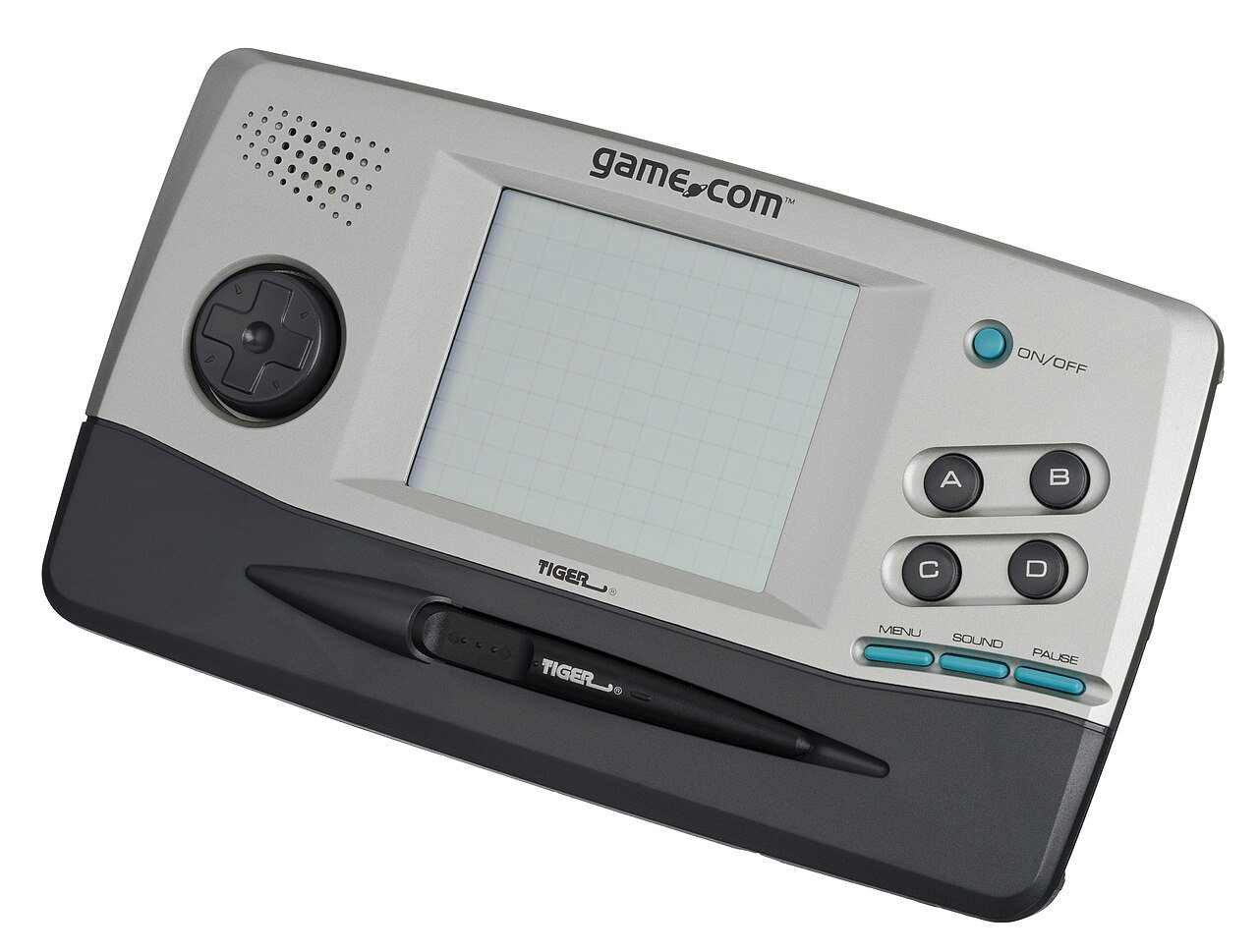
Then came game.com. Tiger Electronics released it in 1997 at a US price of $69.95, and on paper it was ahead of everything else on the shelf: a resistive touchscreen with a stylus, two cartridge slots, and a port for a 14.4 kbit/s modem that made it the first handheld game console with internet connectivity. The name was a reference to the .com domain.
The screen ruined it. The monochrome LCD refreshed slowly enough to smear anything that moved, which is a serious problem for ports of fast arcade and console games.
Tiger Electronics cut the price with the game.com Pocket Pro in 1999 at $29.99, then discontinued the line in 2000 having sold fewer than 300,000 units.
Nintendo's Virtual Boy is the usual shorthand for a failed 1990s handheld, and game.com belongs in the same conversation. The difference is that Tiger Electronics could absorb it, because the $20 LCD games kept paying the bills while the hardware experiments died.
Which Tiger handhelds actually sell for real money?
Condition decides almost everything. A loose, working Tiger Electronics handheld of a common title is a cheap object in 2026. A sealed one carrying a wanted license is a different market entirely.
The 1998 Pokemon Pokedex is the clearest case. SlashGear's 2026 guide puts open, working units at asking prices of $50 to $80, and sealed copies at roughly $350 to $600 depending on condition.
Paperboy shows the same split from the other end. Working copies change hands at about $20 to $30, while sealed, graded examples in excellent condition can reach upwards of $600.
The Terminator sits in between, with loose units in the $20 to $50 range and new-in-box copies far higher.
The pattern holds across the catalog. The license drives demand, the unopened blister card drives the price, and a cut or opened card knocks a unit back down into the low tens of dollars. Tiger Electronics sold these as disposable toys, so sealed survivors are genuinely scarce, and that scarcity is the entire premium.
Where to find one today
Loose, tested units of common titles are the cheap way in, and they turn up constantly on Etsy's Tiger Electronics handheld listings, where asking prices for working common games sit well below the sealed figures above. Buy from a seller who says the unit has been tested, because the battery contacts corrode and the LCD segments fade.
Is the Tiger Electronics brand still in use in 2026?
Yes, but as a label rather than a working company. Tiger Electronics has been part of Hasbro since April 1, 1998, and Hasbro still owns the name in 2026.
The clearest sign of life came in February 2020, when Hasbro revived the format with four new single-game LCD handhelds at $14.99 each: Sonic the Hedgehog 3, The Little Mermaid, X-Men Project X and Transformers Generation 2. They run on two AA batteries, which are not included, and preorders ran through GameStop ahead of a fall 2020 release.
Hasbro was explicit about the intent. "The design and technology were created with the original handheld game unit in mind," the company told The Verge in 2020.
So the status answer has two halves. The firm that made the originals stopped operating on its own in 1998, and the 1990s catalog has been out of production for decades. The brand, though, is a Hasbro asset that comes off the shelf whenever a retro line makes commercial sense, which is why a reissued Tiger Electronics unit can sit in a store while a thirty-year-old one sits on a collector table across town.
Frequently Asked Questions
Are Tiger Electronics handheld games worth anything?
Most Tiger Electronics LCD handhelds from the 1990s are worth little loose, with working common titles such as Paperboy trading at about $20 to $30 in 2026. Sealed units of wanted licenses are the exception: a sealed 1998 Pokemon Pokedex runs roughly $350 to $600, and sealed, graded Paperboy copies can reach upwards of $600.
Who owns Tiger Electronics now?
Hasbro owns Tiger Electronics. Hasbro announced on February 9, 1998 that it would buy Tiger Electronics' operating assets for approximately $335 million, and the deal closed on April 1, 1998. Tiger Electronics has been a Hasbro brand ever since, and Hasbro used the name again in 2020 for four reissued LCD handhelds at $14.99 each.
How much did Tiger Electronics handheld games cost in the 1990s?
Tiger Electronics' licensed LCD handheld games sold for roughly $20 each through the 1990s, and that line was the company's main earner for most of the decade. Tiger Electronics' own hardware cost much more: game.com launched in 1997 at $69.95 in the United States, and the cheaper game.com Pocket Pro followed in 1999 at $29.99.