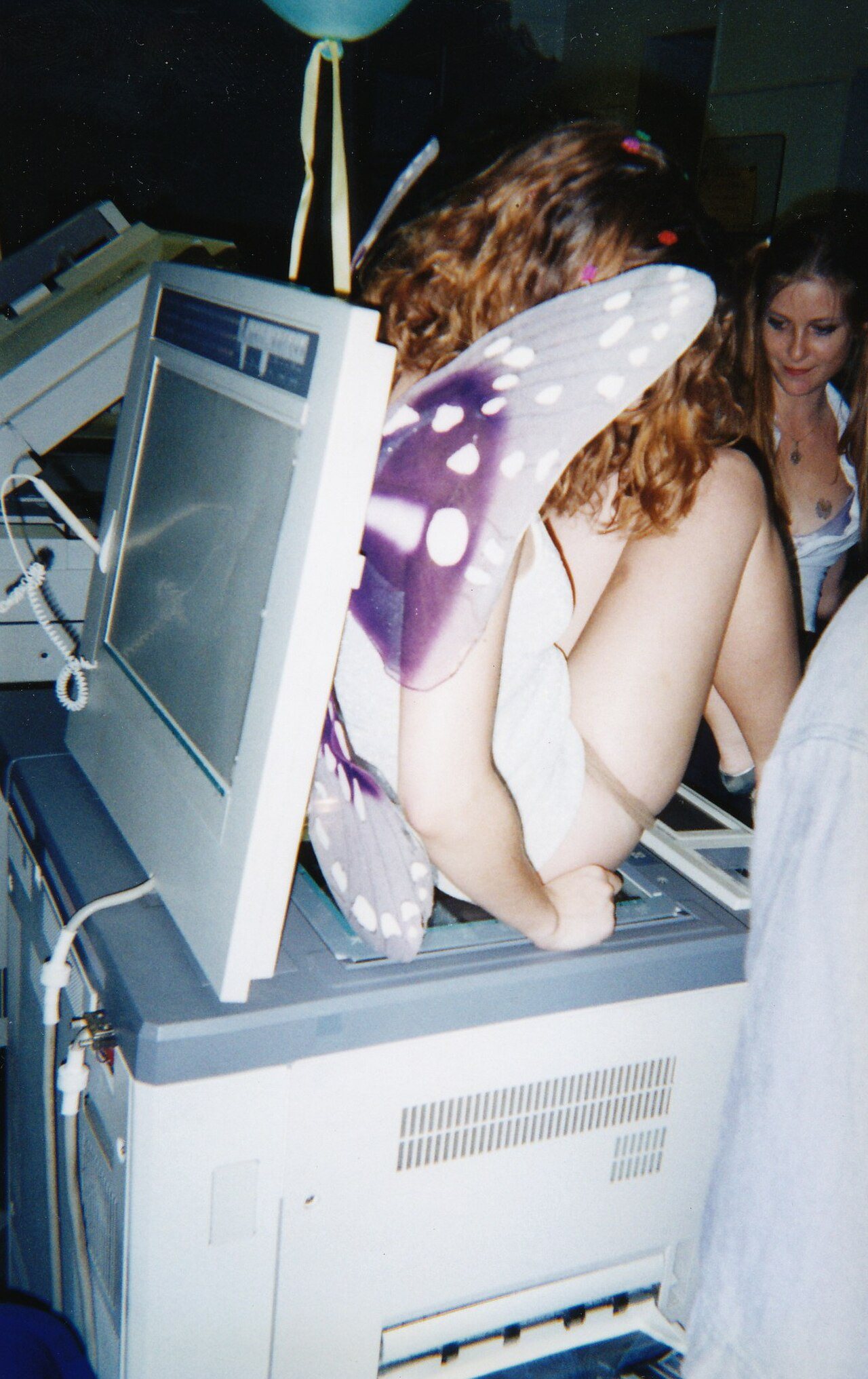
What was Kinko's before FedEx bought it?
Paul Orfalea opened the first Kinko's in 1970 in Isla Vista, California, a few steps from the University of California, Santa Barbara. He had a $5,000 Bank of America loan cosigned by his father, a rented Xerox copier, and a former hamburger stand to put them in.
Copies cost four cents a page. When the room filled up, he wheeled the copier out onto the sidewalk. Accounts of the space disagree: the FundingUniverse company history calls it 80 square feet, while other retellings of the story say 100.
The name came from his hair. Friends called Orfalea "Kinko" because of his red curls, and that is what went on the sign.
What grew out of that shop was strange for a national chain. Into the 1990s Kinko's was not one company but a federation of more than 120 separate partnerships, each with its own owners and its own way of doing things. The New York private equity firm Clayton, Dubilier & Rice bought into the business in 1996, and the partnerships were rolled up into a single corporation with centralized management.
That tidying up is what made Kinko's sellable. By the time FedEx came calling, Clayton, Dubilier & Rice controlled the chain and the head office had moved from the California coast to Dallas.
Why did FedEx pay $2.4 billion for a copy chain?
FedEx announced the purchase on December 30, 2003: $2.4 billion in cash for roughly 1,200 Kinko's locations worldwide and estimated annual revenue of about $2 billion for the year ending December 31, 2003.
The number that mattered was smaller. More than 400 of those 1,200 stores were open 24 hours a day, seven days a week. FedEx had drop boxes and a fleet. It did not have 400 staffed rooms with the lights on at 2 a.m., and it could not build them quickly.
Retail shelf space was also the thing FedEx's rival already had. United Parcel Service had converted a franchise chain into The UPS Store, which put a manned counter in strip malls across the country. Kinko's was the equivalent answer sitting on the market.
"The FedEx and Kinko's combination will substantially increase our retail presence worldwide and will enable both companies to take advantage of growth opportunities in the fast-moving digital economy," Frederick W. Smith, then chairman, president and chief executive officer of FedEx, said in the December 30, 2003 announcement.
The deal closed in the first quarter of 2004, and the chain went in as an operating company of its own inside FedEx rather than as a bolt-on to the delivery business.
When did the Kinko's name come off the stores?
In stages, and then all at once. For the first four years FedEx put its own name first and kept the old one in second place, so the stores traded as FedEx Kinko's.
On June 2, 2008, FedEx announced that FedEx Kinko's would become FedEx Office and that retail locations would be rebranded over the following several years. The same announcement carried the bill: a charge of approximately $891 million, or $696 million net of tax and $2.22 per diluted share, in the fiscal fourth quarter that ended May 31, 2008. Most of it was a one-time, non-cash impairment tied to the decision about using the Kinko's trade name and to the goodwill from the acquisition.
Brian D. Philips, who had been named president and chief executive officer of FedEx Office the month before, gave the reasoning in the release: "Kinko's was primarily a copy and print-service provider when it was acquired in 2004." The new name, he said, "more accurately represents our broader role of providing superior information and services through our company-owned, digitally connected locations around the world."
Put the two announcements side by side and the arithmetic is blunt. FedEx paid $2.4 billion in 2004 for a business whose best-known asset was a word, and in 2008 it wrote down close to a billion dollars for the right to stop saying it.
Can you still walk into a store called Kinko's?
Not in the United States. The rebranding that began in 2008 took the name off American storefronts, and FedEx Office is what stands there now: roughly 2,000 stores in the United States, run as an operating company of FedEx Corporation from a headquarters in Plano, Texas.
The name survived somewhere else. Kinko's had a Japanese arm, and in May 2012 Konica Minolta agreed to buy FedEx Kinko's Japan and its 61 locations from FedEx. Konica Minolta renamed the business Kinko's Japan, and the Kinko's name stayed on the doors there.
So the answer to who owns Kinko's now comes in two parts. The company that was Kinko's is FedEx Office, owned by FedEx and no longer using the word. The only business still trading as Kinko's is Kinko's Japan, owned by Konica Minolta.
That is an unusual exit for a retail name. When Woolworth disappeared from American main streets, the company survived by leaning on a different brand it already owned. Kinko's went the other way: the buyer kept every store and threw away the word on the sign.
What replaced the all-night copy shop?
Kinko's did not lose to a competitor. It lost to the job going away.
In 1995, a 40-page proposal that had to be in a client's hands in another city on Tuesday meant a physical original, a copier and a counter. Three things removed all of that. Email attachments and the PDF made duplication unnecessary. Cheap home laser and inkjet printers put a machine on every desk. And when a file was too fat to email, people carried it, which is how the era's other dead technologies got involved: Zip disks and blank CD-Rs did the courier work for a few years before broadband made even that pointless.
What is left at the counter is the errand FedEx wanted in the first place. FedEx Office still prints signs, banners and business documents, but the queue is mostly people handing over boxes and printing shipping labels.
It is the same slow squeeze that emptied out RadioShack: a store built around a task that the internet quietly took over, still standing after the reason for the visit was gone.
Frequently Asked Questions
Is Kinko's still around in 2026?
Not in the United States. Kinko's, founded in 1970 in Isla Vista, California, was bought by FedEx in a $2.4 billion deal announced on December 30, 2003, and FedEx announced on June 2, 2008 that the stores would be renamed FedEx Office. The only business still trading under the Kinko's name in 2026 is Kinko's Japan, which Konica Minolta agreed to buy from FedEx in May 2012.
Did Kinko's become FedEx Office?
Yes. The Kinko's chain FedEx acquired in 2004 traded as FedEx Kinko's until June 2, 2008, when FedEx announced it was renaming the business FedEx Office and taking a charge of approximately $891 million, most of it a non-cash write-down of the Kinko's trade name and the goodwill from the purchase. FedEx Office operates roughly 2,000 stores in the United States today.
Are FedEx Office stores open 24 hours the way Kinko's was?
Mostly not. When FedEx announced the Kinko's purchase in December 2003, more than 400 of the chain's roughly 1,200 locations worldwide were open 24 hours a day, seven days a week. FedEx Office does not run its network that way in 2026: most stores keep daytime and evening hours, and only a small number list round-the-clock service on FedEx's own store locator.