Picture this: 2002. You're 14, it's a Tuesday night, and you've staked out the basement TV. Your dad is watching the news upstairs, your mom is on the phone with your aunt, and you've got the cable box dialed to channel 174 or 211 or whatever obscure number TechTV happened to live on in your zip code. The intro hits: bouncy synth, neon graphics, and a guy in a bowling shirt named Patrick Norton walking around an industrial-looking studio in San Francisco. Leo Laporte is at his desk holding a hard drive like it's a small animal.
This is The Screen Savers. And for about six years, this was the closest thing American cable had to a clubhouse for the kind of kid who knew what an IRQ was.
If you're old enough to remember TechTV, you remember it the way you remember discovering a really good pizza place that closed before anybody else found out about it. You remember the regret. You also remember, vaguely, that some company you'd never heard of bought the channel, turned it into something else, and then a few years later that something else was also gone.
This is the story of a 24-hour cable channel that should have become CNN for nerds and instead became a cautionary tale about what happens when the people running a network do not actually like the people watching it.

From ZDTV to TechTV: How Ziff-Davis Started a Cable Channel
By the late '90s, Ziff-Davis was the most powerful tech magazine company in the United States. PC Magazine. PC/Computing. MacUser. Computer Shopper, the legendary doorstop of a monthly that you could fracture a toe on if it slid off a desk. The kind of titles you'd see stacked at a Borders newsstand thicker than a phonebook.
So when Ziff-Davis decided to launch a 24-hour cable channel called ZDTV in 1998, they had a built-in audience of subscribers who already trusted the brand. The channel went live on May 11, 1998, on a tiny handful of cable systems: Las Vegas, parts of Detroit, sections of Georgia near Atlanta, parts of Maine. It was a soft launch in the most literal sense. Most of the country could not actually find it on their cable lineup.
But the people who could find it were already addicted by week three.
ZDTV's pitch was simple. Imagine if all those tech magazines were a TV channel. Reviews of new gear. News about Microsoft and Apple. Programming help. Internet culture coverage. And, critically, a live nightly call-in show where two guys would walk a confused viewer through reformatting their Windows 98 machine over the phone, on the air, for two hours.
That was the bet. And in November 1998, Paul Allen's investment company Vulcan Ventures bet $54 million on it, taking a 33 percent stake in the network. Allen was not a casual tech investor. He had co-founded Microsoft. He understood the audience. The press release did not bother dressing it up: this was a long play, and Allen wanted in.
A year later, Vulcan came back for the rest. In November 1999, Allen's people moved to acquire the remaining two-thirds. The deal closed January 21, 2000, for $204.8 million. Ziff was out. Vulcan owned the channel outright.
On August 21, 2000, ZDTV got the rebrand it probably should have launched with. The name became TechTV. New logo, new sets, new ad campaign. Same shows, same hosts, same vibe. Just a cleaner package.
For about three years after that, TechTV ran the best lineup of programming about technology that any television network has ever attempted.
The Screen Savers Was the Show
You can argue about which show was the channel's flagship. Tech Live had the news. Call for Help had the largest reach. Extended Play, later renamed X-Play, owned video games. But for most viewers who actually remember TechTV, The Screen Savers was the show.
It premiered the same day the channel launched, May 11, 1998. The original hosts were Leo Laporte and Kate Botello. Leo had spent the early '90s as a tech radio host in San Francisco. Kate was a former PR person and stage actor who could be funny on demand. They had the right chemistry: he was the patient explainer, she was the smart skeptic asking the questions that the at-home audience was actually thinking.
The show was live. That part is important. In an era when basic cable had moved almost entirely to taped programming, The Screen Savers was running in real time, two hours a night, taking phone calls from viewers and answering them with whatever was on hand. Want to hear how to install RAM in your Compaq Presario? Call now. Your Outlook Express is throwing an unrecoverable error and your inbox is gone? Hold for Leo.
That structure made the show feel different from anything else on cable. It was technical, but it was warm. It moved fast, but it was patient with people who didn't know what they were doing. If your grandmother was crying because she'd installed BonziBuddy and now her browser opened to a different homepage every time, The Screen Savers would walk her through removing it. They cared.
In April 2000, Botello left to co-host GameSpot TV, and Patrick Norton joined Leo as co-host. Norton came over from PC Magazine, where he'd been a writer and reviews editor. The Leo and Patrick era is the version of the show most people remember. Norton was loose and funny and willing to break things on camera. The two of them together could carry an entire 7 PM hour with nothing more than a new sound card and a screwdriver.
Behind them rotated a whole bench of recurring contributors. Yoshi DeHerrera was the no-nonsense overclocking guy. Kevin Rose was the segment producer who became an on-air host and would later launch Digg. Sumi Das did the news. Megan Morrone covered games. Cat Schwartz, who had been on ZDTV's original Internet Tonight show, was a regular face. Together they made the network feel like a real workplace where smart people were having fun and you got to listen in.
Call for Help, X-Play, and the Rest of the Lineup
The Screen Savers was the cool show. Call for Help was the necessary one. Hosted by Leo Laporte solo for most of its run, Call for Help was an hour of pure tech support television. Viewers called in with broken PCs, and Leo would talk them down off the ledge.
It was so practical that some people watched it the way other people watched the morning news. You'd come home, eat dinner, turn on TechTV, and watch Leo solve other people's problems while taking notes for whatever was going wrong with your own machine. It was the original IT helpdesk YouTube channel, except you had to watch it when it aired or you missed it.
Then there was Extended Play, which premiered July 4, 1998 on the original ZDTV programming block. Adam Sessler hosted from the start. Extended Play was a weekly half-hour video game review show, and for years it was the most reliable place on television to actually find out whether a game was good or bad. Sessler was sharp, opinionated, and would spike scores he didn't believe in. On April 28, 2003, the show was rebranded as X-Play, and Morgan Webb joined Sessler as co-host. The Sessler and Webb era of X-Play is the one most gamers remember, and it is also the version that managed to survive the G4 transition the longest.
Other shows had their fans. Tech Live was the daily news block, the channel's CNN equivalent. Internet Tonight covered web culture before web culture was a beat. Fresh Gear reviewed gadgets the way Top Gear reviewed cars. The Lab With Leo ran briefly. There was even an interview format called Big Thinkers that hosted people like Steve Wozniak.
The thing that made all of this work was that everybody on the channel cared about the subject. They were not actors hired to read tech news. They were tech people who had stumbled into television. You could feel the difference.
The Vulcan Years and What Made Them Special
Under Paul Allen's Vulcan Inc., TechTV had real money behind it. The studio sat at 650 Townsend Street in San Francisco, a renovated industrial space that you can still see in old episodes if you look closely. Big windows, exposed brick, way too many monitors. The kind of place where Linux geeks could believably hang out.
The channel was not always profitable, and it never had enormous reach. By 2003, TechTV was carried in roughly 43 million American homes. That sounds like a lot, but for context, ESPN was in around 88 million. CNN was in about 88 million. TechTV was niche. It was always going to be niche.
That was actually fine. The viewership was small but rabid. Forums sprang up around every show. Leo Laporte had email lists with tens of thousands of subscribers. Kevin Rose was building the audience that would eventually become Digg. The audience was the kind of audience that bought magazines, built PCs, and convinced their families to upgrade to broadband. Advertisers like Intel, AMD, NVIDIA, and Logitech understood exactly who was watching.
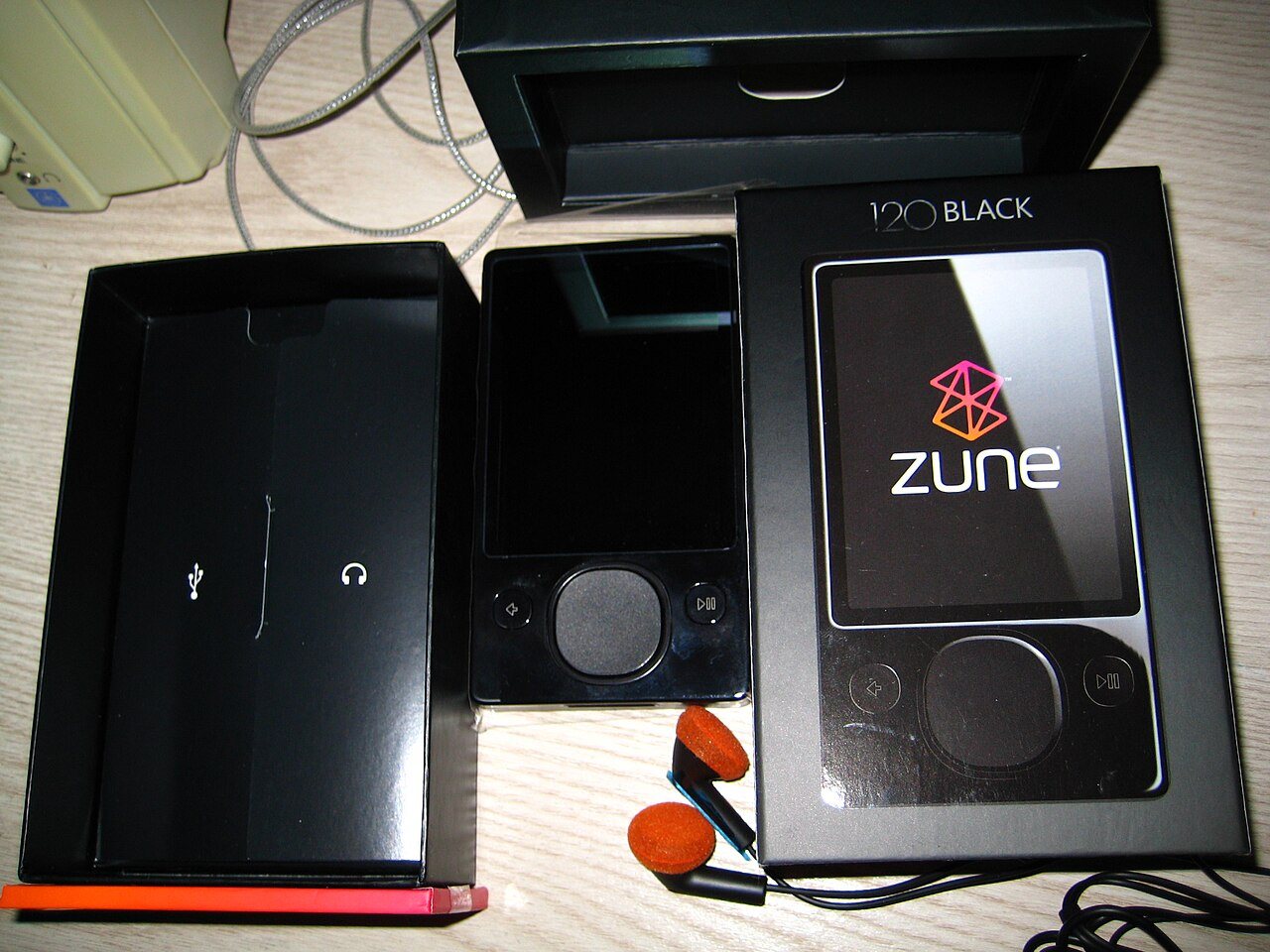
You could even see the lifestyle creep into the gear getting reviewed on screen. Patrick Norton would unbox a new Garmin eTrex GPS unit on Fresh Gear and walk you through using it. The Screen Savers would do segments comparing the original iPod against the Creative Nomad Jukebox. Years later, when the Microsoft Zune launched in late 2006, the channel that had been TechTV was already gone, but the heirs to that audience, on G4 and the early podcast networks, gave the Zune the only fair coverage it ever got.
This was the audience corporate America did not understand. And in early 2004, corporate America came for it.
The G4 Merger and the Long Slow Death
On March 25, 2004, Vulcan announced that it was selling TechTV to Comcast. Specifically, to Comcast's gaming-focused cable channel G4. The acquisition closed on May 10, 2004. The combined network launched on May 28, 2004, under the name G4techTV.
This is where it all falls apart.
G4 had launched in April 2002 as a 24-hour video game channel. Same general demographic as TechTV but a totally different vibe. G4 was younger, louder, more focused on consoles and pop culture. TechTV was older, more technical, more about computers and the internet. Cramming them together was a marketing decision that ignored basically everything that made either channel work.
The original plan was that G4techTV would keep both audiences. In practice, the new owners wanted G4's audience and treated the TechTV side like an annoying inheritance. The studio was shut down. Production moved from San Francisco to Los Angeles, into G4's existing facility. Most of the TechTV staff were not invited to come along. The ones who were got told their shows would be reformatted for the new audience.
"They wanted what we built but not the people who built it." That was the sentiment circulating among San Francisco staffers who watched their colleagues get cut in the spring and summer of 2004.
The Screen Savers got moved to LA in late 2004. Leo Laporte, after months of trying to make the new arrangement work, was let go in 2004 once the merger was finalized. Patrick Norton left around the same time. Kevin Rose became one of the new hosts of the show, alongside Alex Albrecht. The first LA based episode aired September 7, 2004.
The new Screen Savers was unrecognizable. Less tech, more pop culture, more skits, more young men yelling at each other. The legacy audience hated it. The new audience never showed up in the numbers the network needed. On March 18, 2005, The Screen Savers ended for good and was replaced by Attack of the Show, a magazine-format pop culture program with new hosts and a new tone.
X-Play survived because video games were always going to live on a gaming channel. Sessler and Webb actually got more polished air time. But everything else from the TechTV era was gone within 12 months.
On February 15, 2005, the network dropped the TechTV part of the name entirely. It was just G4 from then on. The brand TechTV, which had been built across two ownership changes and seven years of programming, was deleted from the channel logo and never came back.
Less than a year. That's all it took.
After TechTV: Leo, Kevin, Patrick, and the Podcast Generation
Here's the part that almost no other cable channel obituary can claim. Almost everybody who got fired or pushed out in 2004 went on to do something more interesting than what they had been doing on TV.
Leo Laporte launched the TWiT podcast network, originally short for This Week in Tech, in April 2005. It became one of the longest running podcast networks in the world. He recorded the first episodes essentially out of his cottage. By the late 2010s, TWiT was producing dozens of weekly shows out of a custom studio in Petaluma, California. Leo had basically rebuilt TechTV, except he owned it, and the audience came with him.
Patrick Norton co-hosted DL.TV with Robert Heron, then Tekzilla on Revision3, then later collaborated with Leo on TWiT shows. He has been on YouTube, podcasts, and live streams ever since.
Kevin Rose was a co-founder of Digg, which launched publicly on December 5, 2004, while still ostensibly hosting on G4. By 2008 Digg was being valued at well over $100 million and was widely seen as the front page of the internet, until Reddit ate its lunch a couple of years later. He also launched Pownce, Revision3, and a string of other ventures, eventually becoming a partner at Google Ventures. Not bad for the guy who used to demonstrate hard drives on a basement TV channel.
Adam Sessler stayed at G4 for years before leaving in 2012. He has run gaming review channels and worked in the games industry ever since.
Morgan Webb went on to host games coverage for various outlets and is now mostly active in voiceover and gaming streams.
Cat Schwartz, Sumi Das, Yoshi DeHerrera, Megan Morrone, and most of the rest of the bench scattered across the early 2000s tech media world. Several of them landed at the same podcast networks the others built.
The pattern is hard to miss. The audience was real. The talent was real. The only thing that did not survive the merger was the network itself.
Why TechTV Still Matters
Think about what this channel did, day after day, for six years. It taught a generation of people how to install RAM. It explained broadband. It walked viewers through their first home network. It demystified how computers actually worked at a moment when computers were going from being a tool a few people used at the office to being a thing that lived in everybody's house.
There has not been anything like it since. Not on television. Not really online either.
YouTube has thousands of tech channels, and a handful are excellent. But TechTV had something that YouTube does not. It was a place. A schedule. A nightly habit. You knew that at 7 PM Pacific, Leo and Patrick were going to be on, live, and they were going to take calls. You knew that on Friday night X-Play was going to review whatever just came out. You knew where to find the news at 5. The shape of a TV schedule made the channel feel inhabited in a way an algorithmic feed cannot.
This is the part that hits when you watch old episodes today on the Internet Archive. Not the content. The pacing. The fact that this was real time television about technology, made by people who liked you and assumed you were smart, broadcast every night for six years until somebody decided that pop culture skits would draw a younger demographic.
The Dreamcast deserved better. The Nokia 3310 deserved better. TechTV belongs on that same list. The channel was built for an audience that turned out to be much bigger than anyone running it could see, and by the time anyone realized it, the audience had taken its talent and gone to make podcasts.
If you ever called in to The Screen Savers, you remember it. If you watched X-Play religiously every Friday, you remember the music sting and the way Sessler delivered a 1 out of 5 like a personal insult. If you had Call for Help on while you ate dinner, you remember the relief of hearing somebody on cable television tell you that, no, your hard drive crashing was not your fault.
That's the thing about a great cable channel. You don't realize it was a city until they tear it down.
Frequently Asked Questions
When did TechTV launch and when did it shut down?
ZDTV launched May 11, 1998, was rebranded TechTV on August 21, 2000, and was acquired by Comcast's G4 on May 10, 2004. The combined channel was called G4techTV until February 15, 2005, when the TechTV name was dropped entirely from the channel's branding.
Who owned TechTV?
ZDTV started under Ziff-Davis. Vulcan Ventures, Paul Allen's holding company, took a 33 percent stake in November 1998 and bought the rest on January 21, 2000, for $204.8 million. Vulcan sold the channel to Comcast's G4 in 2004.
When did The Screen Savers end?
The original San Francisco run of The Screen Savers ended in 2004 after the move to Los Angeles. The Los Angeles version, hosted by Kevin Rose and Alex Albrecht, ran from September 7, 2004 to March 18, 2005, when it was replaced by Attack of the Show. Leo Laporte revived the format as The New Screen Savers on TWiT from 2015 to 2018.
Who were the hosts of The Screen Savers?
The original hosts were Leo Laporte and Kate Botello, from May 1998 to April 2000. Patrick Norton replaced Botello in April 2000 and stayed through the network's closure. Kevin Rose and Alex Albrecht hosted the LA version from 2004 to 2005. Many other on-air contributors rotated through the show, including Yoshi DeHerrera, Sumi Das, Megan Morrone, and Cat Schwartz.
What happened to Leo Laporte?
Leo was let go in 2004 after the G4 merger. He launched the TWiT podcast network in April 2005, and it grew into one of the largest independent podcast networks in the world. He revived the Screen Savers format on TWiT from 2015 to 2018.
Did G4 ever come back?
G4 was effectively wound down for new programming by 2014, and Comcast removed the channel from its Xfinity systems on January 6, 2014. A revived G4 launched in 2021 as a streaming and limited cable channel, but it shut down again in 2022.
Where can I watch old TechTV episodes today?
The Internet Archive has saved many episodes of The Screen Savers, Call for Help, and X-Play. Fan uploads on YouTube cover most of what is left. There is no official streaming archive of the TechTV catalog.