What Happened to Prodigy, the Online Service That Beat AOL to America

By the end of 1990, Prodigy had 465,000 paying subscribers, the second-largest commercial online service in the United States. AOL, then transitioning out of its Quantum Computer Services days, was still much smaller, with subscriber numbers well under six figures. CompuServe, the elder statesman of the field, was sitting on about 600,000 and watching nervously. By 1993, Prodigy had passed CompuServe and was the largest online service in the country.

By 1996, IBM and Sears, the two corporate parents who had spent more than a billion dollars building it, sold the entire operation for $200 million. Carlos Slim, the Mexican telecom billionaire, came in as a minority investor on the buyer's side. By 2001, the Prodigy brand had effectively been folded into SBC Communications and quietly retired. Today most people under 40 have never heard the name.

The story of how that happened is more interesting than "AOL won." It is a story about what happens when two of the most powerful corporations in America build a product around what they think users should want, then refuse to listen when users tell them something different.

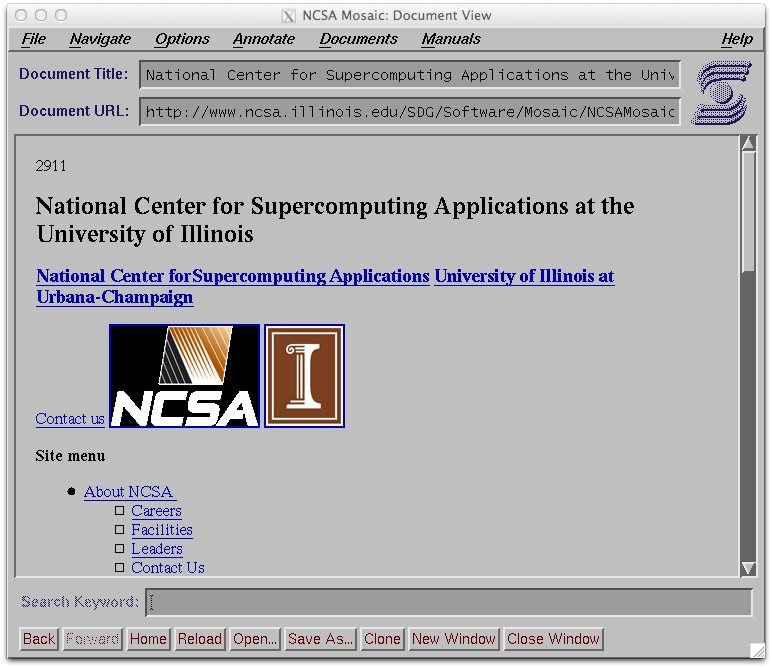
A screenshot of NCSA Mosaic, the browser that helped popularize the World Wide Web in 1993
NCSA Mosaic, released in 1993, helped trigger the shift away from walled-garden online services like Prodigy. By the time Prodigy launched a real web browser, that war was already over.

Trintex: A Joint Venture That Should Not Have Existed

Prodigy was incorporated on February 13, 1984 under the name Trintex. The three founding partners were CBS, IBM, and Sears, Roebuck and Company. Each contributed something the other two did not have. CBS brought media and content expertise. IBM brought hardware, networking, and engineering. Sears brought distribution, retail, and a 100-year-old relationship with American households.

On paper this was a dream team. In practice it was a corporate Frankenstein. Three CEOs from three different industries trying to agree on what an online service for ordinary Americans should look like in a world where most ordinary Americans had never used a modem.

CBS lost interest first. In 1986, CBS CEO Tom Wyman was selling off non-core assets, and an experimental data network for home computers fit cleanly into that bucket. CBS exited, and the venture continued with IBM and Sears as co-owners.

The remaining two partners had a clear shared vision, even if it took them another four years to figure out how to ship it. The pitch internally was simple. Online services like CompuServe were aimed at engineers, hobbyists, and corporate users. They were expensive, charged by the hour, and required you to read a manual. Prodigy would be different. It would be aimed at ordinary households. Flat monthly fee. Polished graphical interface. Pre-packaged content from real publishers. And, critically, advertising. The Sears half of the partnership saw an obvious opportunity: an entire shopping channel, but built into a computer.

The 1988 Soft Launch and the 1990 National Push

Prodigy went live regionally in 1988 in three test markets: Atlanta, Hartford, and San Francisco. The pricing was $9.95 per month, flat rate. For families used to CompuServe's per-minute charges, the difference was almost difficult to comprehend. You could log on, browse for an hour, and not have to mentally calculate how much you were spending.

The national launch came on September 6, 1990, supported by a marketing campaign developed by the ad agency J. Walter Thompson and its direct response sister company JWT Direct. IBM and Sears bundled Prodigy with new IBM PS/1 and PS/2 home computers, with Hayes modems, and with a long list of clones. If you bought a computer in a Sears in 1990, there was a meaningful chance Prodigy was already in the box.

Within months, Prodigy had crossed half a million subscribers. By 1993, it was the largest online service in the United States. It was, by every measure of mainstream consumer reach, winning.

The Interface That Made Sense to Sears Executives

The Prodigy interface is one of the most fascinating UX artifacts of the early online era. It was built around a custom graphical client, written by IBM engineers, that ran on top of a proprietary protocol. The screen was divided into a content frame on top and an advertising banner along the bottom. The whole experience felt less like browsing and more like flipping through a digital magazine.

Look at it now and the design choices read like a corporate strategy document made visible. The content frame was where Prodigy editors curated stock quotes, news headlines, sports scores, weather, encyclopedia entries, kids' content from Sesame Street, and shopping links. The bottom banner was where Sears, Coldwell Banker, JCPenney, and other partners sold things to you. The interface looked like television because the people who designed it thought of the online world as television with shopping attached.

This is essentially what Pinterest's home feed and Amazon's product recommendations would do twenty years later, just with worse graphics and a $9.95 monthly subscription. Prodigy was, in a real sense, the first major attempt to build the thing that mainstream consumer internet would eventually become.

The problem was that Prodigy thought users wanted to consume what Prodigy curated. The users wanted something else. They wanted to talk to each other.

The Bulletin Board Surprise

This is the part of the Prodigy story that the founders never planned for. The service had bulletin boards, message areas where users could post and reply to each other. They were buried in the interface, treated as a small feature among many. The Sears and IBM executives saw the boards as a sideline, not a destination.

The users had other ideas. By 1991, Prodigy's bulletin boards were generating volumes of messages and engagement that the company had never modeled for. People were not logging on to read curated stock quotes. They were logging on to argue about politics, to discuss parenting, to swap recipes, to flirt, to vent. The boards were where the actual product lived. The shopping mall the founders had built was almost empty. The town square next door was packed.

This created a problem the company did not know how to solve. Their per-user economics had been built around a flat fee plus advertising revenue. They had assumed the average user would log on, click through some content, look at some ads, and leave. Bulletin board addicts did not behave that way. They stayed for hours. They posted hundreds of messages. They cost Prodigy real money in network usage and storage.

And here the logic of the business starts to break down.

The 1991 Email Charge Disaster

In January 1991, Prodigy modified its pricing. Subscribers would still pay $9.95 a month, but they would now be limited to 30 free email messages per month. Each additional email would cost 25 cents.

The reasoning, from the company's perspective, was straightforward. Email was being used at volumes nobody had projected. The infrastructure was straining. The shopping advertising model was not throwing off enough revenue to subsidize unlimited communication. Charge for email past 30 messages, recover some of the costs, and steer users toward the parts of the service that actually paid the bills.

From the user's perspective this looked, accurately, like a betrayal. People had subscribed to Prodigy under the belief that the flat $9.95 fee covered email. Suddenly it did not. Some subscribers organized in protest, formed user groups, posted angry messages on the bulletin boards, and began contacting Prodigy advertisers directly to complain. Prodigy's response was to suspend the accounts of users coordinating the protest, which made the original story much worse.

The company eventually backed down on the per-email fee, but the damage was real. The narrative stuck. Prodigy was the online service that charged you to read your own mail.

The Censorship Problem

The other long-running issue, which started early and never fully resolved, was content moderation. Prodigy moderated user-generated content with a heavy hand. The company employed editors who could pull posts they considered obscene, libelous, or commercially harmful. Bulletin board posts about competitors of Sears, for example, sometimes vanished. Posts critical of Prodigy itself sometimes vanished too.

Prodigy framed this as family-friendly stewardship. Users framed it differently. The phrase that circulated on the bulletin boards in the early 90s was that Prodigy was a "censored service for the censored mind." The company had a mailing address that protesters could send physical mail to. Some did, in volume.

The censorship policy also created an unexpected legal precedent. In a 1995 New York case, Stratton Oakmont v. Prodigy Services, a court ruled that because Prodigy actively moderated content, it could be held legally liable as a publisher for user-posted defamatory statements, much like a newspaper. The ruling was eventually superseded by Section 230 of the Communications Decency Act in 1996, which essentially flipped the logic. But for a brief window, Prodigy's editorial choices had made it the test case for how online services would be regulated for decades. That is a remarkable amount of internet legal history for a service most people now barely remember.

Netscape Navigator 2 browser screenshot from the mid 1990s, showing an early World Wide Web page
Netscape Navigator, released in late 1994, made the open web feel like the obvious place to be online. Walled-garden services like Prodigy spent the next several years trying to catch up.

Banner Ads Before the Web Had Banner Ads

Here is something that does not get said often enough. Prodigy ran banner ads on its home interface in 1990. Four years before the web's first famous banner ad, the AT&T ad on HotWired in October 1994, Prodigy was already showing on-screen promotional graphics at the bottom of every user's screen, integrated into the platform interface.

By any reasonable definition, Prodigy invented the format that would later become the dominant economic engine of the entire commercial internet. The catch was that Prodigy's banner ads were not particularly effective, partly because click-through was not really a concept yet, partly because the ads were mostly for Sears products, and partly because users were already irritated by Prodigy and disinclined to engage with anything the platform promoted.

The lesson here is one that internet history has a hard time articulating. Being first is not the same as being right. Prodigy got the format. AOL and the open web got the model.

The Internet Arrives

The thing that ultimately killed Prodigy was not AOL. It was the open internet, and Prodigy's inability to figure out how to compete with something it did not control.

Through 1993 and 1994, the World Wide Web went from an experimental academic protocol to a consumer phenomenon. NCSA Mosaic, released in 1993, made the web visual. Netscape Navigator, released in late 1994, made it usable for people who had never touched a command line. Internet service providers like NetCom, Pipeline, and a wave of regional dial-up companies started selling raw internet access for $19.95 a month, often with no minutes cap, no advertising, and no censorship.

Prodigy's business model was not built for this. The whole point of Prodigy was the curated experience, the controlled interface, the ad-supported wall around the content. Once consumers could just dial into the open internet and go anywhere, the walled garden looked like a smaller, less interesting version of the thing right next door.

Prodigy launched a web browser feature in early 1995, but it was bolted onto the existing client and felt like exactly that. AOL did not have a much better product, but AOL had marketing, distribution, and a willingness to flood every magazine and mailbox in America with free trial CDs. Between 1994 and 1996, AOL went from a competitor Prodigy did not fully take seriously to the company that owned the consumer online category.

The 1996 Sale

By 1996, Prodigy's subscriber growth had stalled around 2 million. The numbers do not look terrible at first glance, but they were the wrong numbers. AOL had passed Prodigy in subscribers in 1994 and was growing at a pace Prodigy could not match. IBM and Sears had now spent more than a billion dollars combined on the venture and were not seeing a credible path to profitability.

In 1996, IBM and Sears sold their stakes for $200 million to a buyer group led by the former founders of Boston Technology, operating as International Wireless. Carlos Slim, then the principal owner of the Mexican telecom giant Telmex, came in as a minority investor. The new ownership group renamed the company Prodigy Communications Corporation, restructured it around traditional internet service provision, and tried to position it as a premium ISP rather than a walled-garden online service.

The strategy had some merit. Prodigy's brand recognition with US consumers was still high, and the new ownership team genuinely understood telecom. The company went public on the NASDAQ in 1999 at the height of dot-com enthusiasm, and at one point had a market capitalization in the billions. None of the traditional online service features survived the transition. The famous Prodigy interface, the banner ads, the curated content, the bulletin boards, all of it was effectively gone.

The SBC Acquisition and the Quiet Ending

In 2001, the regional Bell company SBC Communications, which would later become AT&T, acquired Prodigy. By then Prodigy was a mid-tier ISP with around 3 million subscribers, competing in a market full of mid-tier ISPs. SBC paid in stock and rolled the operations into its broader internet services division.

The Prodigy brand limped along inside SBC for a few years. The Prodigy.net domain stayed live. Some long-time subscribers continued to receive email at prodigy.net addresses well into the late 2000s. There was no formal funeral. The brand simply faded. The story of Prodigy ends not with a collapse but with a slow administrative absorption, the way most failed corporate experiments end in America.

What Prodigy Got Right

Look at what Prodigy was actually trying to build, and the modern internet looks suspiciously similar to the version Prodigy sketched out in 1990.

Curated content delivered to a consumer through a graphical interface, supported by advertising and integrated shopping, with social features layered on top. That is essentially Facebook. It is also Amazon. It is also the homepage of every major news site. The walled garden Prodigy built has become the dominant architecture of the consumer web, just under different ownership and with much better front-end design.

Prodigy got the on-screen advertising format right. It got the flat-fee subscription model right. It got the idea that ordinary households would pay every month for a polished consumer service right. It got the importance of bulletin boards, eventually, even if the company never fully embraced them.

What it missed was openness. Users wanted to talk to each other, and Prodigy treated that as a cost center rather than a product. Users wanted to publish their own content, and Prodigy treated that as a moderation problem. Users wanted to roam beyond the walls, and Prodigy could not bring itself to let them.

What Prodigy Got Wrong

The clearest lesson from the Prodigy story is that Sears and IBM were not stupid. They were just looking at the wrong question. They were trying to figure out how to extend the existing world (catalog shopping, broadcast advertising, branded content) into the online era. They were not trying to figure out what the online era would actually be.

The companies that won the next decade, AOL, Yahoo, then Google, then Facebook, were not better engineers than IBM. They were not better marketers than Sears. What they had was a willingness to follow user behavior wherever it led, even when that meant abandoning the original product plan. Prodigy could not do that. Its founders had spent too much money on a vision that was already calcifying by the time the service launched.

The other lesson is about ownership structure. Prodigy was always slow because it had two parents with different priorities, and later three layers of corporate oversight. Decisions that AOL could make in a week took Prodigy three months. By the time Prodigy responded to a competitor's move, the competitor had already moved twice more. That is what corporate joint ventures look like when the underlying market is moving faster than the partners can agree on a meeting time.

The Cultural Memory

Prodigy lives on in the memories of people who logged in for the first time as teenagers in the early 1990s and remember the strange textured beige of the welcome screen, the loading sound of the IBM client, the chunky pixelated graphics of the bulletin board interface, the distinctive feel of using something that was clearly trying very hard to be a magazine.

It also lives on in retrocomputing communities, in archived screenshots, in academic papers about the prehistory of the consumer internet. The original client software has been preserved by hobbyists, and you can run a working Prodigy emulator on a modern Windows machine if you know where to look. The bulletin board content, mostly, is gone. Most of the content was hosted on IBM mainframes that were decommissioned years ago.

The clearest place to find Prodigy's fingerprint, though, is on the modern internet itself. Every time a website serves you curated content alongside a banner ad and a recommendation widget, every time a social network moderates user content according to its own policies, every time a flat-fee subscription service tries to figure out how to handle power users who use the product more than the average customer, the ghost of Prodigy is somewhere in the room.

FAQ

When did Prodigy launch?

Prodigy was incorporated as Trintex on February 13, 1984. The service launched regionally in 1988 in Atlanta, Hartford, and San Francisco, then nationally on September 6, 1990.

Who owned Prodigy?

Prodigy was originally a joint venture of CBS, IBM, and Sears, Roebuck and Company. CBS exited in 1986. IBM and Sears jointly owned the service through 1996, when they sold their stakes to a buyer group led by International Wireless and including Carlos Slim as a minority investor. SBC Communications acquired Prodigy in 2001.

How many subscribers did Prodigy have?

Prodigy crossed 465,000 subscribers by 1990 and reached approximately 2 million subscribers at its peak in the mid-1990s. After its 1996 transition to a traditional ISP, it grew further to around 3 million subscribers by the time of the SBC acquisition.

What was the controversy with Prodigy email?

In January 1991, Prodigy capped free email at 30 messages per month and charged 25 cents for each additional message. Subscribers organized in protest, and the company eventually rescinded the policy. The episode permanently damaged the company's reputation with its most engaged users.

Did Prodigy invent banner ads?

Prodigy ran banner-style on-screen advertising at the bottom of its interface from its national launch in 1990, four years before the famous AT&T web banner ad on HotWired in October 1994. By any reasonable definition of the format, Prodigy was the first major commercial online service to integrate persistent on-screen banner advertising into the user experience.

Why did Prodigy fail?

Prodigy failed because its walled-garden model could not adapt to the open internet. The service was built around curated content, controlled interface, and integrated shopping. When the web arrived in 1993 and 1994, users gained the ability to access unlimited content without curation, advertising, or content restrictions. AOL adapted faster, marketed more aggressively, and absorbed many of Prodigy's would-be subscribers. Internal corporate politics between IBM and Sears slowed Prodigy's response further.

Is Prodigy still around?

The Prodigy brand was effectively retired after SBC Communications absorbed it in the early 2000s. Some long-time users continued to receive email at prodigy.net addresses for several years afterward, but the service no longer exists as a meaningful product. SBC later became part of AT&T.

๐Ÿ“– What Happened to Prodigy, the Online Service That Beat AOL to America
_ โ–ก ร—
← Back

What Happened to Prodigy, the Online Service That Beat AOL to America

2026-05-07 by 404 Memory Found

By the end of 1990, Prodigy had 465,000 paying subscribers, the second-largest commercial online service in the United States. AOL, then transitioning out of its Quantum Computer Services days, was still much smaller, with subscriber numbers well under six figures. CompuServe, the elder statesman of the field, was sitting on about 600,000 and watching nervously. By 1993, Prodigy had passed CompuServe and was the largest online service in the country.

By 1996, IBM and Sears, the two corporate parents who had spent more than a billion dollars building it, sold the entire operation for $200 million. Carlos Slim, the Mexican telecom billionaire, came in as a minority investor on the buyer's side. By 2001, the Prodigy brand had effectively been folded into SBC Communications and quietly retired. Today most people under 40 have never heard the name.

The story of how that happened is more interesting than "AOL won." It is a story about what happens when two of the most powerful corporations in America build a product around what they think users should want, then refuse to listen when users tell them something different.

A screenshot of NCSA Mosaic, the browser that helped popularize the World Wide Web in 1993
NCSA Mosaic, released in 1993, helped trigger the shift away from walled-garden online services like Prodigy. By the time Prodigy launched a real web browser, that war was already over.

Trintex: A Joint Venture That Should Not Have Existed

Prodigy was incorporated on February 13, 1984 under the name Trintex. The three founding partners were CBS, IBM, and Sears, Roebuck and Company. Each contributed something the other two did not have. CBS brought media and content expertise. IBM brought hardware, networking, and engineering. Sears brought distribution, retail, and a 100-year-old relationship with American households.

On paper this was a dream team. In practice it was a corporate Frankenstein. Three CEOs from three different industries trying to agree on what an online service for ordinary Americans should look like in a world where most ordinary Americans had never used a modem.

CBS lost interest first. In 1986, CBS CEO Tom Wyman was selling off non-core assets, and an experimental data network for home computers fit cleanly into that bucket. CBS exited, and the venture continued with IBM and Sears as co-owners.

The remaining two partners had a clear shared vision, even if it took them another four years to figure out how to ship it. The pitch internally was simple. Online services like CompuServe were aimed at engineers, hobbyists, and corporate users. They were expensive, charged by the hour, and required you to read a manual. Prodigy would be different. It would be aimed at ordinary households. Flat monthly fee. Polished graphical interface. Pre-packaged content from real publishers. And, critically, advertising. The Sears half of the partnership saw an obvious opportunity: an entire shopping channel, but built into a computer.

The 1988 Soft Launch and the 1990 National Push

Prodigy went live regionally in 1988 in three test markets: Atlanta, Hartford, and San Francisco. The pricing was $9.95 per month, flat rate. For families used to CompuServe's per-minute charges, the difference was almost difficult to comprehend. You could log on, browse for an hour, and not have to mentally calculate how much you were spending.

The national launch came on September 6, 1990, supported by a marketing campaign developed by the ad agency J. Walter Thompson and its direct response sister company JWT Direct. IBM and Sears bundled Prodigy with new IBM PS/1 and PS/2 home computers, with Hayes modems, and with a long list of clones. If you bought a computer in a Sears in 1990, there was a meaningful chance Prodigy was already in the box.

Within months, Prodigy had crossed half a million subscribers. By 1993, it was the largest online service in the United States. It was, by every measure of mainstream consumer reach, winning.

The Interface That Made Sense to Sears Executives

The Prodigy interface is one of the most fascinating UX artifacts of the early online era. It was built around a custom graphical client, written by IBM engineers, that ran on top of a proprietary protocol. The screen was divided into a content frame on top and an advertising banner along the bottom. The whole experience felt less like browsing and more like flipping through a digital magazine.

Look at it now and the design choices read like a corporate strategy document made visible. The content frame was where Prodigy editors curated stock quotes, news headlines, sports scores, weather, encyclopedia entries, kids' content from Sesame Street, and shopping links. The bottom banner was where Sears, Coldwell Banker, JCPenney, and other partners sold things to you. The interface looked like television because the people who designed it thought of the online world as television with shopping attached.

This is essentially what Pinterest's home feed and Amazon's product recommendations would do twenty years later, just with worse graphics and a $9.95 monthly subscription. Prodigy was, in a real sense, the first major attempt to build the thing that mainstream consumer internet would eventually become.

The problem was that Prodigy thought users wanted to consume what Prodigy curated. The users wanted something else. They wanted to talk to each other.

The Bulletin Board Surprise

This is the part of the Prodigy story that the founders never planned for. The service had bulletin boards, message areas where users could post and reply to each other. They were buried in the interface, treated as a small feature among many. The Sears and IBM executives saw the boards as a sideline, not a destination.

The users had other ideas. By 1991, Prodigy's bulletin boards were generating volumes of messages and engagement that the company had never modeled for. People were not logging on to read curated stock quotes. They were logging on to argue about politics, to discuss parenting, to swap recipes, to flirt, to vent. The boards were where the actual product lived. The shopping mall the founders had built was almost empty. The town square next door was packed.

This created a problem the company did not know how to solve. Their per-user economics had been built around a flat fee plus advertising revenue. They had assumed the average user would log on, click through some content, look at some ads, and leave. Bulletin board addicts did not behave that way. They stayed for hours. They posted hundreds of messages. They cost Prodigy real money in network usage and storage.

And here the logic of the business starts to break down.

The 1991 Email Charge Disaster

In January 1991, Prodigy modified its pricing. Subscribers would still pay $9.95 a month, but they would now be limited to 30 free email messages per month. Each additional email would cost 25 cents.

The reasoning, from the company's perspective, was straightforward. Email was being used at volumes nobody had projected. The infrastructure was straining. The shopping advertising model was not throwing off enough revenue to subsidize unlimited communication. Charge for email past 30 messages, recover some of the costs, and steer users toward the parts of the service that actually paid the bills.

From the user's perspective this looked, accurately, like a betrayal. People had subscribed to Prodigy under the belief that the flat $9.95 fee covered email. Suddenly it did not. Some subscribers organized in protest, formed user groups, posted angry messages on the bulletin boards, and began contacting Prodigy advertisers directly to complain. Prodigy's response was to suspend the accounts of users coordinating the protest, which made the original story much worse.

The company eventually backed down on the per-email fee, but the damage was real. The narrative stuck. Prodigy was the online service that charged you to read your own mail.

The Censorship Problem

The other long-running issue, which started early and never fully resolved, was content moderation. Prodigy moderated user-generated content with a heavy hand. The company employed editors who could pull posts they considered obscene, libelous, or commercially harmful. Bulletin board posts about competitors of Sears, for example, sometimes vanished. Posts critical of Prodigy itself sometimes vanished too.

Prodigy framed this as family-friendly stewardship. Users framed it differently. The phrase that circulated on the bulletin boards in the early 90s was that Prodigy was a "censored service for the censored mind." The company had a mailing address that protesters could send physical mail to. Some did, in volume.

The censorship policy also created an unexpected legal precedent. In a 1995 New York case, Stratton Oakmont v. Prodigy Services, a court ruled that because Prodigy actively moderated content, it could be held legally liable as a publisher for user-posted defamatory statements, much like a newspaper. The ruling was eventually superseded by Section 230 of the Communications Decency Act in 1996, which essentially flipped the logic. But for a brief window, Prodigy's editorial choices had made it the test case for how online services would be regulated for decades. That is a remarkable amount of internet legal history for a service most people now barely remember.

Netscape Navigator 2 browser screenshot from the mid 1990s, showing an early World Wide Web page
Netscape Navigator, released in late 1994, made the open web feel like the obvious place to be online. Walled-garden services like Prodigy spent the next several years trying to catch up.

Banner Ads Before the Web Had Banner Ads

Here is something that does not get said often enough. Prodigy ran banner ads on its home interface in 1990. Four years before the web's first famous banner ad, the AT&T ad on HotWired in October 1994, Prodigy was already showing on-screen promotional graphics at the bottom of every user's screen, integrated into the platform interface.

By any reasonable definition, Prodigy invented the format that would later become the dominant economic engine of the entire commercial internet. The catch was that Prodigy's banner ads were not particularly effective, partly because click-through was not really a concept yet, partly because the ads were mostly for Sears products, and partly because users were already irritated by Prodigy and disinclined to engage with anything the platform promoted.

The lesson here is one that internet history has a hard time articulating. Being first is not the same as being right. Prodigy got the format. AOL and the open web got the model.

The Internet Arrives

The thing that ultimately killed Prodigy was not AOL. It was the open internet, and Prodigy's inability to figure out how to compete with something it did not control.

Through 1993 and 1994, the World Wide Web went from an experimental academic protocol to a consumer phenomenon. NCSA Mosaic, released in 1993, made the web visual. Netscape Navigator, released in late 1994, made it usable for people who had never touched a command line. Internet service providers like NetCom, Pipeline, and a wave of regional dial-up companies started selling raw internet access for $19.95 a month, often with no minutes cap, no advertising, and no censorship.

Prodigy's business model was not built for this. The whole point of Prodigy was the curated experience, the controlled interface, the ad-supported wall around the content. Once consumers could just dial into the open internet and go anywhere, the walled garden looked like a smaller, less interesting version of the thing right next door.

Prodigy launched a web browser feature in early 1995, but it was bolted onto the existing client and felt like exactly that. AOL did not have a much better product, but AOL had marketing, distribution, and a willingness to flood every magazine and mailbox in America with free trial CDs. Between 1994 and 1996, AOL went from a competitor Prodigy did not fully take seriously to the company that owned the consumer online category.

The 1996 Sale

By 1996, Prodigy's subscriber growth had stalled around 2 million. The numbers do not look terrible at first glance, but they were the wrong numbers. AOL had passed Prodigy in subscribers in 1994 and was growing at a pace Prodigy could not match. IBM and Sears had now spent more than a billion dollars combined on the venture and were not seeing a credible path to profitability.

In 1996, IBM and Sears sold their stakes for $200 million to a buyer group led by the former founders of Boston Technology, operating as International Wireless. Carlos Slim, then the principal owner of the Mexican telecom giant Telmex, came in as a minority investor. The new ownership group renamed the company Prodigy Communications Corporation, restructured it around traditional internet service provision, and tried to position it as a premium ISP rather than a walled-garden online service.

The strategy had some merit. Prodigy's brand recognition with US consumers was still high, and the new ownership team genuinely understood telecom. The company went public on the NASDAQ in 1999 at the height of dot-com enthusiasm, and at one point had a market capitalization in the billions. None of the traditional online service features survived the transition. The famous Prodigy interface, the banner ads, the curated content, the bulletin boards, all of it was effectively gone.

The SBC Acquisition and the Quiet Ending

In 2001, the regional Bell company SBC Communications, which would later become AT&T, acquired Prodigy. By then Prodigy was a mid-tier ISP with around 3 million subscribers, competing in a market full of mid-tier ISPs. SBC paid in stock and rolled the operations into its broader internet services division.

The Prodigy brand limped along inside SBC for a few years. The Prodigy.net domain stayed live. Some long-time subscribers continued to receive email at prodigy.net addresses well into the late 2000s. There was no formal funeral. The brand simply faded. The story of Prodigy ends not with a collapse but with a slow administrative absorption, the way most failed corporate experiments end in America.

What Prodigy Got Right

Look at what Prodigy was actually trying to build, and the modern internet looks suspiciously similar to the version Prodigy sketched out in 1990.

Curated content delivered to a consumer through a graphical interface, supported by advertising and integrated shopping, with social features layered on top. That is essentially Facebook. It is also Amazon. It is also the homepage of every major news site. The walled garden Prodigy built has become the dominant architecture of the consumer web, just under different ownership and with much better front-end design.

Prodigy got the on-screen advertising format right. It got the flat-fee subscription model right. It got the idea that ordinary households would pay every month for a polished consumer service right. It got the importance of bulletin boards, eventually, even if the company never fully embraced them.

What it missed was openness. Users wanted to talk to each other, and Prodigy treated that as a cost center rather than a product. Users wanted to publish their own content, and Prodigy treated that as a moderation problem. Users wanted to roam beyond the walls, and Prodigy could not bring itself to let them.

What Prodigy Got Wrong

The clearest lesson from the Prodigy story is that Sears and IBM were not stupid. They were just looking at the wrong question. They were trying to figure out how to extend the existing world (catalog shopping, broadcast advertising, branded content) into the online era. They were not trying to figure out what the online era would actually be.

The companies that won the next decade, AOL, Yahoo, then Google, then Facebook, were not better engineers than IBM. They were not better marketers than Sears. What they had was a willingness to follow user behavior wherever it led, even when that meant abandoning the original product plan. Prodigy could not do that. Its founders had spent too much money on a vision that was already calcifying by the time the service launched.

The other lesson is about ownership structure. Prodigy was always slow because it had two parents with different priorities, and later three layers of corporate oversight. Decisions that AOL could make in a week took Prodigy three months. By the time Prodigy responded to a competitor's move, the competitor had already moved twice more. That is what corporate joint ventures look like when the underlying market is moving faster than the partners can agree on a meeting time.

The Cultural Memory

Prodigy lives on in the memories of people who logged in for the first time as teenagers in the early 1990s and remember the strange textured beige of the welcome screen, the loading sound of the IBM client, the chunky pixelated graphics of the bulletin board interface, the distinctive feel of using something that was clearly trying very hard to be a magazine.

It also lives on in retrocomputing communities, in archived screenshots, in academic papers about the prehistory of the consumer internet. The original client software has been preserved by hobbyists, and you can run a working Prodigy emulator on a modern Windows machine if you know where to look. The bulletin board content, mostly, is gone. Most of the content was hosted on IBM mainframes that were decommissioned years ago.

The clearest place to find Prodigy's fingerprint, though, is on the modern internet itself. Every time a website serves you curated content alongside a banner ad and a recommendation widget, every time a social network moderates user content according to its own policies, every time a flat-fee subscription service tries to figure out how to handle power users who use the product more than the average customer, the ghost of Prodigy is somewhere in the room.

FAQ

When did Prodigy launch?

Prodigy was incorporated as Trintex on February 13, 1984. The service launched regionally in 1988 in Atlanta, Hartford, and San Francisco, then nationally on September 6, 1990.

Who owned Prodigy?

Prodigy was originally a joint venture of CBS, IBM, and Sears, Roebuck and Company. CBS exited in 1986. IBM and Sears jointly owned the service through 1996, when they sold their stakes to a buyer group led by International Wireless and including Carlos Slim as a minority investor. SBC Communications acquired Prodigy in 2001.

How many subscribers did Prodigy have?

Prodigy crossed 465,000 subscribers by 1990 and reached approximately 2 million subscribers at its peak in the mid-1990s. After its 1996 transition to a traditional ISP, it grew further to around 3 million subscribers by the time of the SBC acquisition.

What was the controversy with Prodigy email?

In January 1991, Prodigy capped free email at 30 messages per month and charged 25 cents for each additional message. Subscribers organized in protest, and the company eventually rescinded the policy. The episode permanently damaged the company's reputation with its most engaged users.

Did Prodigy invent banner ads?

Prodigy ran banner-style on-screen advertising at the bottom of its interface from its national launch in 1990, four years before the famous AT&T web banner ad on HotWired in October 1994. By any reasonable definition of the format, Prodigy was the first major commercial online service to integrate persistent on-screen banner advertising into the user experience.

Why did Prodigy fail?

Prodigy failed because its walled-garden model could not adapt to the open internet. The service was built around curated content, controlled interface, and integrated shopping. When the web arrived in 1993 and 1994, users gained the ability to access unlimited content without curation, advertising, or content restrictions. AOL adapted faster, marketed more aggressively, and absorbed many of Prodigy's would-be subscribers. Internal corporate politics between IBM and Sears slowed Prodigy's response further.

Is Prodigy still around?

The Prodigy brand was effectively retired after SBC Communications absorbed it in the early 2000s. Some long-time users continued to receive email at prodigy.net addresses for several years afterward, but the service no longer exists as a meaningful product. SBC later became part of AT&T.

๐Ÿ“– What Happened to Prodigy, the Online Service That Beat AOL to America

By the end of 1990, Prodigy had 465,000 paying subscribers, the second-largest commercial online service in the United States. AOL, then transitioning out of its Quantum Computer Services days, was still much smaller, with subscriber numbers well under six figures. CompuServe, the elder statesman of the field, was sitting on about 600,000 and watching nervously. By 1993, Prodigy had passed CompuServe and was the largest online service in the country.

By 1996, IBM and Sears, the two corporate parents who had spent more than a billion dollars building it, sold the entire operation for $200 million. Carlos Slim, the Mexican telecom billionaire, came in as a minority investor on the buyer's side. By 2001, the Prodigy brand had effectively been folded into SBC Communications and quietly retired. Today most people under 40 have never heard the name.

The story of how that happened is more interesting than "AOL won." It is a story about what happens when two of the most powerful corporations in America build a product around what they think users should want, then refuse to listen when users tell them something different.

A screenshot of NCSA Mosaic, the browser that helped popularize the World Wide Web in 1993
NCSA Mosaic, released in 1993, helped trigger the shift away from walled-garden online services like Prodigy. By the time Prodigy launched a real web browser, that war was already over.

Trintex: A Joint Venture That Should Not Have Existed

Prodigy was incorporated on February 13, 1984 under the name Trintex. The three founding partners were CBS, IBM, and Sears, Roebuck and Company. Each contributed something the other two did not have. CBS brought media and content expertise. IBM brought hardware, networking, and engineering. Sears brought distribution, retail, and a 100-year-old relationship with American households.

On paper this was a dream team. In practice it was a corporate Frankenstein. Three CEOs from three different industries trying to agree on what an online service for ordinary Americans should look like in a world where most ordinary Americans had never used a modem.

CBS lost interest first. In 1986, CBS CEO Tom Wyman was selling off non-core assets, and an experimental data network for home computers fit cleanly into that bucket. CBS exited, and the venture continued with IBM and Sears as co-owners.

The remaining two partners had a clear shared vision, even if it took them another four years to figure out how to ship it. The pitch internally was simple. Online services like CompuServe were aimed at engineers, hobbyists, and corporate users. They were expensive, charged by the hour, and required you to read a manual. Prodigy would be different. It would be aimed at ordinary households. Flat monthly fee. Polished graphical interface. Pre-packaged content from real publishers. And, critically, advertising. The Sears half of the partnership saw an obvious opportunity: an entire shopping channel, but built into a computer.

The 1988 Soft Launch and the 1990 National Push

Prodigy went live regionally in 1988 in three test markets: Atlanta, Hartford, and San Francisco. The pricing was $9.95 per month, flat rate. For families used to CompuServe's per-minute charges, the difference was almost difficult to comprehend. You could log on, browse for an hour, and not have to mentally calculate how much you were spending.

The national launch came on September 6, 1990, supported by a marketing campaign developed by the ad agency J. Walter Thompson and its direct response sister company JWT Direct. IBM and Sears bundled Prodigy with new IBM PS/1 and PS/2 home computers, with Hayes modems, and with a long list of clones. If you bought a computer in a Sears in 1990, there was a meaningful chance Prodigy was already in the box.

Within months, Prodigy had crossed half a million subscribers. By 1993, it was the largest online service in the United States. It was, by every measure of mainstream consumer reach, winning.

The Interface That Made Sense to Sears Executives

The Prodigy interface is one of the most fascinating UX artifacts of the early online era. It was built around a custom graphical client, written by IBM engineers, that ran on top of a proprietary protocol. The screen was divided into a content frame on top and an advertising banner along the bottom. The whole experience felt less like browsing and more like flipping through a digital magazine.

Look at it now and the design choices read like a corporate strategy document made visible. The content frame was where Prodigy editors curated stock quotes, news headlines, sports scores, weather, encyclopedia entries, kids' content from Sesame Street, and shopping links. The bottom banner was where Sears, Coldwell Banker, JCPenney, and other partners sold things to you. The interface looked like television because the people who designed it thought of the online world as television with shopping attached.

This is essentially what Pinterest's home feed and Amazon's product recommendations would do twenty years later, just with worse graphics and a $9.95 monthly subscription. Prodigy was, in a real sense, the first major attempt to build the thing that mainstream consumer internet would eventually become.

The problem was that Prodigy thought users wanted to consume what Prodigy curated. The users wanted something else. They wanted to talk to each other.

The Bulletin Board Surprise

This is the part of the Prodigy story that the founders never planned for. The service had bulletin boards, message areas where users could post and reply to each other. They were buried in the interface, treated as a small feature among many. The Sears and IBM executives saw the boards as a sideline, not a destination.

The users had other ideas. By 1991, Prodigy's bulletin boards were generating volumes of messages and engagement that the company had never modeled for. People were not logging on to read curated stock quotes. They were logging on to argue about politics, to discuss parenting, to swap recipes, to flirt, to vent. The boards were where the actual product lived. The shopping mall the founders had built was almost empty. The town square next door was packed.

This created a problem the company did not know how to solve. Their per-user economics had been built around a flat fee plus advertising revenue. They had assumed the average user would log on, click through some content, look at some ads, and leave. Bulletin board addicts did not behave that way. They stayed for hours. They posted hundreds of messages. They cost Prodigy real money in network usage and storage.

And here the logic of the business starts to break down.

The 1991 Email Charge Disaster

In January 1991, Prodigy modified its pricing. Subscribers would still pay $9.95 a month, but they would now be limited to 30 free email messages per month. Each additional email would cost 25 cents.

The reasoning, from the company's perspective, was straightforward. Email was being used at volumes nobody had projected. The infrastructure was straining. The shopping advertising model was not throwing off enough revenue to subsidize unlimited communication. Charge for email past 30 messages, recover some of the costs, and steer users toward the parts of the service that actually paid the bills.

From the user's perspective this looked, accurately, like a betrayal. People had subscribed to Prodigy under the belief that the flat $9.95 fee covered email. Suddenly it did not. Some subscribers organized in protest, formed user groups, posted angry messages on the bulletin boards, and began contacting Prodigy advertisers directly to complain. Prodigy's response was to suspend the accounts of users coordinating the protest, which made the original story much worse.

The company eventually backed down on the per-email fee, but the damage was real. The narrative stuck. Prodigy was the online service that charged you to read your own mail.

The Censorship Problem

The other long-running issue, which started early and never fully resolved, was content moderation. Prodigy moderated user-generated content with a heavy hand. The company employed editors who could pull posts they considered obscene, libelous, or commercially harmful. Bulletin board posts about competitors of Sears, for example, sometimes vanished. Posts critical of Prodigy itself sometimes vanished too.

Prodigy framed this as family-friendly stewardship. Users framed it differently. The phrase that circulated on the bulletin boards in the early 90s was that Prodigy was a "censored service for the censored mind." The company had a mailing address that protesters could send physical mail to. Some did, in volume.

The censorship policy also created an unexpected legal precedent. In a 1995 New York case, Stratton Oakmont v. Prodigy Services, a court ruled that because Prodigy actively moderated content, it could be held legally liable as a publisher for user-posted defamatory statements, much like a newspaper. The ruling was eventually superseded by Section 230 of the Communications Decency Act in 1996, which essentially flipped the logic. But for a brief window, Prodigy's editorial choices had made it the test case for how online services would be regulated for decades. That is a remarkable amount of internet legal history for a service most people now barely remember.

Netscape Navigator 2 browser screenshot from the mid 1990s, showing an early World Wide Web page
Netscape Navigator, released in late 1994, made the open web feel like the obvious place to be online. Walled-garden services like Prodigy spent the next several years trying to catch up.

Banner Ads Before the Web Had Banner Ads

Here is something that does not get said often enough. Prodigy ran banner ads on its home interface in 1990. Four years before the web's first famous banner ad, the AT&T ad on HotWired in October 1994, Prodigy was already showing on-screen promotional graphics at the bottom of every user's screen, integrated into the platform interface.

By any reasonable definition, Prodigy invented the format that would later become the dominant economic engine of the entire commercial internet. The catch was that Prodigy's banner ads were not particularly effective, partly because click-through was not really a concept yet, partly because the ads were mostly for Sears products, and partly because users were already irritated by Prodigy and disinclined to engage with anything the platform promoted.

The lesson here is one that internet history has a hard time articulating. Being first is not the same as being right. Prodigy got the format. AOL and the open web got the model.

The Internet Arrives

The thing that ultimately killed Prodigy was not AOL. It was the open internet, and Prodigy's inability to figure out how to compete with something it did not control.

Through 1993 and 1994, the World Wide Web went from an experimental academic protocol to a consumer phenomenon. NCSA Mosaic, released in 1993, made the web visual. Netscape Navigator, released in late 1994, made it usable for people who had never touched a command line. Internet service providers like NetCom, Pipeline, and a wave of regional dial-up companies started selling raw internet access for $19.95 a month, often with no minutes cap, no advertising, and no censorship.

Prodigy's business model was not built for this. The whole point of Prodigy was the curated experience, the controlled interface, the ad-supported wall around the content. Once consumers could just dial into the open internet and go anywhere, the walled garden looked like a smaller, less interesting version of the thing right next door.

Prodigy launched a web browser feature in early 1995, but it was bolted onto the existing client and felt like exactly that. AOL did not have a much better product, but AOL had marketing, distribution, and a willingness to flood every magazine and mailbox in America with free trial CDs. Between 1994 and 1996, AOL went from a competitor Prodigy did not fully take seriously to the company that owned the consumer online category.

The 1996 Sale

By 1996, Prodigy's subscriber growth had stalled around 2 million. The numbers do not look terrible at first glance, but they were the wrong numbers. AOL had passed Prodigy in subscribers in 1994 and was growing at a pace Prodigy could not match. IBM and Sears had now spent more than a billion dollars combined on the venture and were not seeing a credible path to profitability.

In 1996, IBM and Sears sold their stakes for $200 million to a buyer group led by the former founders of Boston Technology, operating as International Wireless. Carlos Slim, then the principal owner of the Mexican telecom giant Telmex, came in as a minority investor. The new ownership group renamed the company Prodigy Communications Corporation, restructured it around traditional internet service provision, and tried to position it as a premium ISP rather than a walled-garden online service.

The strategy had some merit. Prodigy's brand recognition with US consumers was still high, and the new ownership team genuinely understood telecom. The company went public on the NASDAQ in 1999 at the height of dot-com enthusiasm, and at one point had a market capitalization in the billions. None of the traditional online service features survived the transition. The famous Prodigy interface, the banner ads, the curated content, the bulletin boards, all of it was effectively gone.

The SBC Acquisition and the Quiet Ending

In 2001, the regional Bell company SBC Communications, which would later become AT&T, acquired Prodigy. By then Prodigy was a mid-tier ISP with around 3 million subscribers, competing in a market full of mid-tier ISPs. SBC paid in stock and rolled the operations into its broader internet services division.

The Prodigy brand limped along inside SBC for a few years. The Prodigy.net domain stayed live. Some long-time subscribers continued to receive email at prodigy.net addresses well into the late 2000s. There was no formal funeral. The brand simply faded. The story of Prodigy ends not with a collapse but with a slow administrative absorption, the way most failed corporate experiments end in America.

What Prodigy Got Right

Look at what Prodigy was actually trying to build, and the modern internet looks suspiciously similar to the version Prodigy sketched out in 1990.

Curated content delivered to a consumer through a graphical interface, supported by advertising and integrated shopping, with social features layered on top. That is essentially Facebook. It is also Amazon. It is also the homepage of every major news site. The walled garden Prodigy built has become the dominant architecture of the consumer web, just under different ownership and with much better front-end design.

Prodigy got the on-screen advertising format right. It got the flat-fee subscription model right. It got the idea that ordinary households would pay every month for a polished consumer service right. It got the importance of bulletin boards, eventually, even if the company never fully embraced them.

What it missed was openness. Users wanted to talk to each other, and Prodigy treated that as a cost center rather than a product. Users wanted to publish their own content, and Prodigy treated that as a moderation problem. Users wanted to roam beyond the walls, and Prodigy could not bring itself to let them.

What Prodigy Got Wrong

The clearest lesson from the Prodigy story is that Sears and IBM were not stupid. They were just looking at the wrong question. They were trying to figure out how to extend the existing world (catalog shopping, broadcast advertising, branded content) into the online era. They were not trying to figure out what the online era would actually be.

The companies that won the next decade, AOL, Yahoo, then Google, then Facebook, were not better engineers than IBM. They were not better marketers than Sears. What they had was a willingness to follow user behavior wherever it led, even when that meant abandoning the original product plan. Prodigy could not do that. Its founders had spent too much money on a vision that was already calcifying by the time the service launched.

The other lesson is about ownership structure. Prodigy was always slow because it had two parents with different priorities, and later three layers of corporate oversight. Decisions that AOL could make in a week took Prodigy three months. By the time Prodigy responded to a competitor's move, the competitor had already moved twice more. That is what corporate joint ventures look like when the underlying market is moving faster than the partners can agree on a meeting time.

The Cultural Memory

Prodigy lives on in the memories of people who logged in for the first time as teenagers in the early 1990s and remember the strange textured beige of the welcome screen, the loading sound of the IBM client, the chunky pixelated graphics of the bulletin board interface, the distinctive feel of using something that was clearly trying very hard to be a magazine.

It also lives on in retrocomputing communities, in archived screenshots, in academic papers about the prehistory of the consumer internet. The original client software has been preserved by hobbyists, and you can run a working Prodigy emulator on a modern Windows machine if you know where to look. The bulletin board content, mostly, is gone. Most of the content was hosted on IBM mainframes that were decommissioned years ago.

The clearest place to find Prodigy's fingerprint, though, is on the modern internet itself. Every time a website serves you curated content alongside a banner ad and a recommendation widget, every time a social network moderates user content according to its own policies, every time a flat-fee subscription service tries to figure out how to handle power users who use the product more than the average customer, the ghost of Prodigy is somewhere in the room.

FAQ

When did Prodigy launch?

Prodigy was incorporated as Trintex on February 13, 1984. The service launched regionally in 1988 in Atlanta, Hartford, and San Francisco, then nationally on September 6, 1990.

Who owned Prodigy?

Prodigy was originally a joint venture of CBS, IBM, and Sears, Roebuck and Company. CBS exited in 1986. IBM and Sears jointly owned the service through 1996, when they sold their stakes to a buyer group led by International Wireless and including Carlos Slim as a minority investor. SBC Communications acquired Prodigy in 2001.

How many subscribers did Prodigy have?

Prodigy crossed 465,000 subscribers by 1990 and reached approximately 2 million subscribers at its peak in the mid-1990s. After its 1996 transition to a traditional ISP, it grew further to around 3 million subscribers by the time of the SBC acquisition.

What was the controversy with Prodigy email?

In January 1991, Prodigy capped free email at 30 messages per month and charged 25 cents for each additional message. Subscribers organized in protest, and the company eventually rescinded the policy. The episode permanently damaged the company's reputation with its most engaged users.

Did Prodigy invent banner ads?

Prodigy ran banner-style on-screen advertising at the bottom of its interface from its national launch in 1990, four years before the famous AT&T web banner ad on HotWired in October 1994. By any reasonable definition of the format, Prodigy was the first major commercial online service to integrate persistent on-screen banner advertising into the user experience.

Why did Prodigy fail?

Prodigy failed because its walled-garden model could not adapt to the open internet. The service was built around curated content, controlled interface, and integrated shopping. When the web arrived in 1993 and 1994, users gained the ability to access unlimited content without curation, advertising, or content restrictions. AOL adapted faster, marketed more aggressively, and absorbed many of Prodigy's would-be subscribers. Internal corporate politics between IBM and Sears slowed Prodigy's response further.

Is Prodigy still around?

The Prodigy brand was effectively retired after SBC Communications absorbed it in the early 2000s. Some long-time users continued to receive email at prodigy.net addresses for several years afterward, but the service no longer exists as a meaningful product. SBC later became part of AT&T.

00:00