What Happened to Kazaa and the P2P Wars After Napster

The Most Downloaded Software You Probably Broke the Law With

In May 2003, Kazaa Media Desktop broke a record. It became the single most downloaded piece of software in the world, as tracked by CNET's Download.com, surpassing the previous record holder, ICQ, with 229,513,316 cumulative downloads. At its peak, the network had roughly four million simultaneous users sharing files at any given moment. To put that in perspective, Netflix wouldn't reach four million subscribers until 2005. Kazaa wasn't a niche tool for power users. It was mainstream, global, and running on millions of desktops in dorm rooms, bedrooms, and home offices across the world.

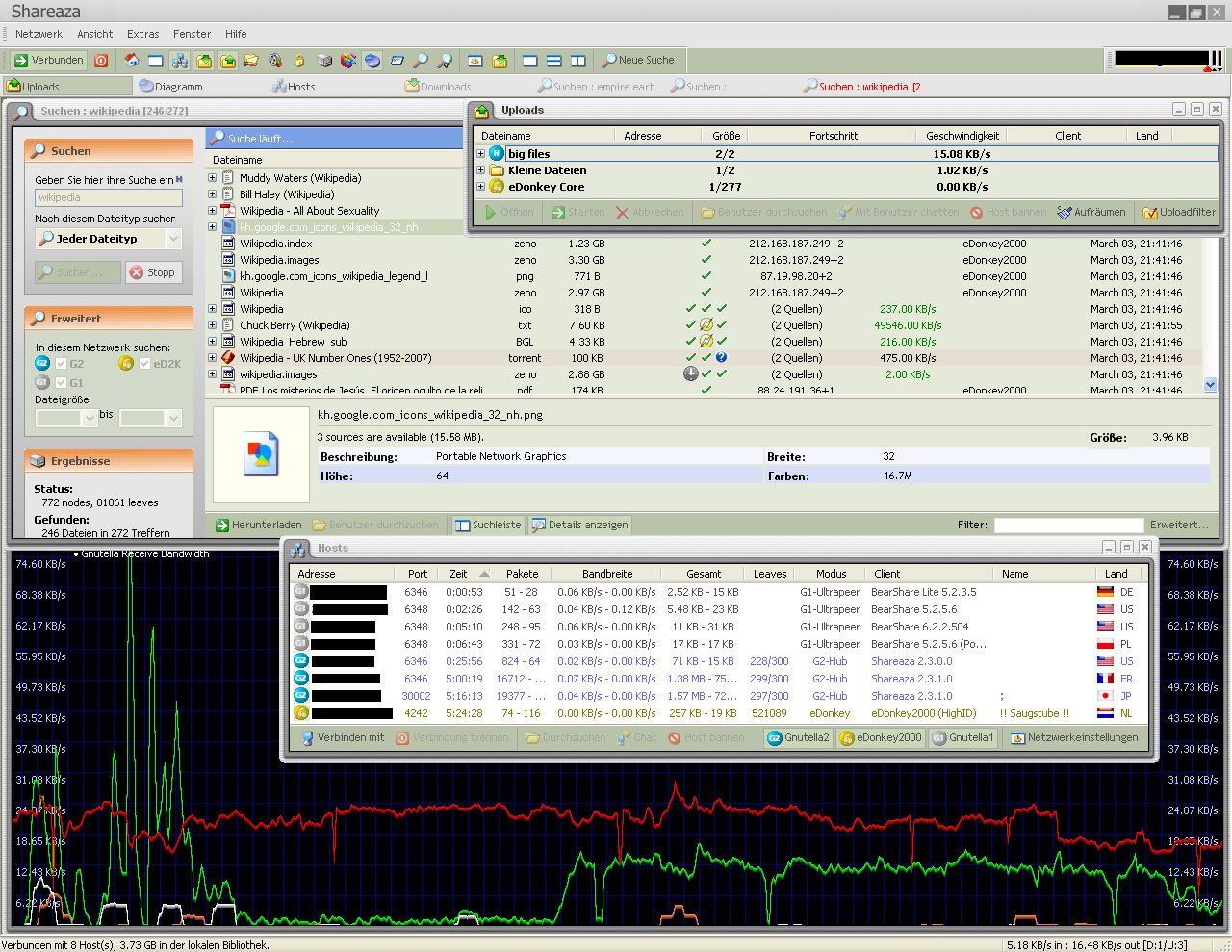
Screenshot of a peer-to-peer file sharing client from the early 2000s
A P2P file sharing client interface from the era. Applications like Kazaa, Shareaza, and Morpheus all competed for users on the same networks.

And yet, almost nobody talks about Kazaa anymore. It exists in a strange historical blind spot, overshadowed by Napster's dramatic origin story on one side and BitTorrent's technical elegance on the other. Kazaa was the bridge between those two eras, the application that proved peer-to-peer file sharing could survive a legal shutdown and come back stronger. It was also the application that proved the music industry would spend any amount of money to make sure that didn't happen again.

The story of Kazaa is really the story of the P2P wars: a five-year stretch from roughly 2001 to 2006 when the recording industry, the courts, and millions of ordinary internet users fought over who owned digital music. The outcome shaped everything that came after, from iTunes to Spotify to the way copyright law works online today.

Built in Estonia, Launched in the Netherlands, Sued in Australia

Kazaa's origin story reads like the setup for a techno-thriller that nobody would believe. The core technology, the FastTrack peer-to-peer protocol, was built by three Estonian programmers: Jaan Tallinn, Ahti Heinla, and Priit Kasesalu, working at a company called BlueMoon Interactive that they had co-founded in 1993. These were serious engineers. Tallinn, in particular, would go on to become one of the founding engineers of Skype and later a prominent figure in artificial intelligence safety research. But in 2000, their immediate project was building a file-sharing protocol that could do what Napster did without Napster's fatal weakness.

Napster's problem was architectural. Every search query went through Napster's central servers. When a court ordered those servers shut down in July 2001, the whole network went dark. FastTrack solved this with a concept called "supernodes." Instead of routing all traffic through a central server, the protocol designated certain high-bandwidth computers on the network as indexing points. These supernodes maintained searchable databases of nearby files, and queries were distributed across them. There was no single point of failure. You couldn't kill the network by pulling one plug.

The Estonian programmers sold the technology to Niklas Zennstrom, a Swedish entrepreneur, and Janus Friis, a Danish programmer. These two would become recurring characters in early 2000s tech history. After Kazaa, they went on to create Skype in 2003, which used a similar P2P architecture for voice calls, and which Microsoft would eventually acquire for $8.5 billion in 2011.

Zennstrom and Friis launched Kazaa through a Dutch company called Consumer Empowerment in March 2001. The timing was almost comically perfect. Napster was in the process of being shut down by court order. Millions of users who had gotten used to free music were suddenly looking for somewhere else to go. Kazaa was right there, ready, and technically superior.

How Kazaa Actually Worked

For anyone who never used it, here's what the experience was like. You downloaded Kazaa Media Desktop from the website. The installer was bundled with a significant amount of adware and, depending on the version, varying degrees of spyware. This wasn't a secret. It was the business model. Kazaa was free to use because it made money by installing advertising software on your computer. For most users in 2002, this seemed like a reasonable trade. Free music in exchange for some pop-up ads. The calculus would shift later.

Once installed, you typed what you wanted into a search bar, and results appeared from across the FastTrack network: MP3s, movie files, software, documents, whatever other users were sharing from their hard drives. You clicked download, and the file transferred directly from their computer to yours, often from multiple sources simultaneously to speed up the process. Download speeds varied wildly depending on the era. In 2001, most people were still on dial-up, so a single MP3 might take twenty minutes. By 2003, broadband adoption was accelerating, and you could grab an album in under an hour.

Diagram of a peer-to-peer network architecture
The peer-to-peer network model: every connected computer acts as both client and server, with no central authority controlling the flow of data.

The quality of what you downloaded was unpredictable. A file labeled "Eminem - Lose Yourself.mp3" might actually be that song, or it might be a low-bitrate recording, or it might be a completely different track, or it might be a virus. The Recording Industry Association of America, the RIAA, eventually exploited this by flooding the network with corrupted or fake files as a disruption tactic. Searching for popular songs would return dozens of results, and sorting the real from the fake became its own skill.

Sharman Networks and the Corporate Shell Game

One of the most fascinating aspects of Kazaa's story is the corporate structure behind it. After the Dutch company Consumer Empowerment ran into legal trouble, the rights to Kazaa were transferred to Sharman Networks, a company incorporated in Vanuatu, the Pacific island nation. Sharman was run by Nikki Hemming, an Australian businesswoman, and its day-to-day operations were based in Sydney. The FastTrack protocol itself was licensed through Joltid Ltd., a company registered in the British Virgin Islands.

This wasn't accidental. The entire structure was designed to make it as difficult as possible for any single country's legal system to shut down the operation. If you sued Sharman in Australia, they could argue the technology was licensed from a company in the British Virgin Islands. If you went after the protocol itself, the people who built it were in Estonia. The corporate entity was in Vanuatu. It was jurisdiction arbitrage, and for a while, it worked.

Look, they weren't stupid. They watched what happened to Napster, a company that was based in San Mateo, California, with a clear corporate address and a founder who showed up to court. Napster made it easy. Kazaa's operators made it as hard as possible.

The RIAA Goes to War

The recording industry tried everything. In 2003, the RIAA began filing lawsuits against individual Kazaa users, not just the company but the people downloading music. They sued a twelve-year-old girl named Brianna LaHara, who lived in a New York City housing project. They sued a seventy-one-year-old grandfather in Texas. They sued college students, single mothers, and people who didn't own computers but whose names were on internet service accounts. Between 2003 and 2008, the RIAA filed lawsuits against approximately 35,000 individuals.

The strategy was deliberate. The RIAA knew it couldn't sue everyone who used Kazaa. But it could create enough fear to change behavior. Settlement demands typically ranged from $3,000 to $11,000, and most people paid rather than fight. For the recording industry, the math worked: even if each lawsuit cost more to file than it recovered, the chilling effect on the broader public was the real goal.

Simultaneously, the industry went after Sharman Networks directly. In 2004, Australian record labels, led by Universal Music Australia, filed suit against Sharman in the Federal Court of Australia. The case, Universal Music Australia Pty Ltd v Sharman License Holdings Ltd, was heard by Justice Murray Wilcox, and the 2005 ruling was a landmark in copyright law.

Justice Wilcox found that Sharman had "authorized" its users to infringe copyrights. The key finding was that Sharman knew the predominant use of Kazaa was for sharing copyrighted material and had taken no meaningful steps to prevent it. The court noted that technical measures existed that could have curtailed the sharing of copyrighted files, but Sharman chose not to implement them because doing so would have been against its financial interests. The ruling ordered Kazaa to modify its software so that searches would filter out files matching a list of copyrighted works supplied by the industry.

The $115 Million Surrender

On July 27, 2006, Sharman Networks settled with the global recording industry. The settlement required Sharman to pay $115 million in damages to the four major music companies: Universal Music, Sony BMG, EMI, and Warner Music. Sharman also agreed to convert Kazaa into a legal, licensed music service and to use "all reasonable means" to discourage piracy through its software.

The conversion never really worked. By the time Kazaa relaunched as a legal download service, the market had moved on. Apple's iTunes Store had launched in 2003 and was already the dominant legal music download platform. Users who wanted free music had migrated to BitTorrent, which was even more decentralized than FastTrack and didn't require a specific application. Kazaa's brand was permanently associated with viruses, spyware, and RIAA lawsuits. Nobody was coming back.

The website lingered for years, technically operational but functionally dead, before finally going offline. The domain changed hands. The software stopped being updated. By 2012, it was over in every meaningful sense.

What Kazaa Actually Changed

Here's the thing about the P2P wars: the recording industry won every legal battle and lost the actual war. Kazaa was shut down, Grokster was shut down, LimeWire was shut down, and file sharing kept growing. The RIAA's lawsuit campaign against individuals was widely seen as a public relations disaster, generating more sympathy for downloaders than for record labels. And the fundamental insight that Kazaa proved, that people would choose digital convenience over physical media if given the option, turned out to be correct. The industry just needed a legal way to deliver it.

That's where the story connects to what came next. Steve Jobs launched the iTunes Store on April 28, 2003, positioning it as "music downloads done right." He cited Kazaa by name during the announcement, contrasting its unreliable, virus-laden experience with iTunes: individual songs for 99 cents, perfectly encoded, instant download. Within its first week, iTunes sold one million songs. The model worked because Jobs understood something the record labels had been fighting for years: the demand was real. People didn't want to steal music. They wanted to access it easily, and they were willing to pay a reasonable price for the convenience.

Spotify took this further in 2008, eliminating the purchase entirely and replacing it with a subscription model. The P2P era had demonstrated that people wanted instant access to everything, and streaming delivered that legally. This is essentially what Kazaa's users were doing, just without the licensing agreements.

The Skype Connection

Perhaps the most remarkable legacy of Kazaa is what its creators built next. Niklas Zennstrom, Janus Friis, and the Estonian engineering team, the same people who built the FastTrack protocol, used the same underlying peer-to-peer architecture to create Skype in 2003. The technology that had been used to share pirated MP3s was repurposed to route voice calls over the internet, bypassing traditional telephone networks.

Skype's P2P architecture used supernodes in exactly the same way FastTrack did, distributing the load across the network instead of routing everything through central servers. eBay acquired Skype in 2005 for $2.6 billion, and Microsoft acquired it in 2011 for $8.5 billion. Jaan Tallinn, the Estonian programmer who had helped build FastTrack in the late 1990s, became wealthy enough to devote his career to funding research into existential risks from artificial intelligence.

Which brings us to an interesting question about how we assign value to technology. The same protocol that was treated as a criminal instrument when it moved music files was celebrated as a breakthrough when it moved voice data. The architecture didn't change. The application did.

Frequently Asked Questions

When was Kazaa released?

Kazaa Media Desktop was publicly released on March 1, 2001, by the Dutch company Consumer Empowerment. It was created using the FastTrack peer-to-peer protocol developed by Estonian programmers at BlueMoon Interactive.

How many people used Kazaa?

At its peak, Kazaa had approximately four million simultaneous users online at any given time. The software was downloaded over 239 million times, and in May 2003 it became the most downloaded application tracked by CNET's Download.com.

Why was Kazaa sued?

Kazaa faced lawsuits from the recording industry because its network was predominantly used to share copyrighted music and movies without authorization. The most significant case, heard in Australia in 2005, found that Sharman Networks had "authorized" copyright infringement by knowingly facilitating it.

How much did Kazaa pay in the settlement?

In July 2006, Sharman Networks agreed to pay $115 million in damages to Universal Music, Sony BMG, EMI, and Warner Music. The company also agreed to convert Kazaa into a legal music service.

What is the connection between Kazaa and Skype?

Kazaa and Skype were created by the same team. Niklas Zennstrom, Janus Friis, and the Estonian programmers who built the FastTrack protocol used similar P2P technology to create Skype in 2003. Microsoft acquired Skype in 2011 for $8.5 billion.

What replaced Kazaa?

Users migrated to other P2P applications like LimeWire and BitTorrent clients, while legal alternatives like the iTunes Store (launched 2003) and later Spotify (launched 2008) eventually captured most of the demand for digital music.

๐Ÿ“– What Happened to Kazaa and the P2P Wars After Napster
_ โ–ก ร—
← Back

What Happened to Kazaa and the P2P Wars After Napster

2026-04-07 by 404 Memory Found

The Most Downloaded Software You Probably Broke the Law With

In May 2003, Kazaa Media Desktop broke a record. It became the single most downloaded piece of software in the world, as tracked by CNET's Download.com, surpassing the previous record holder, ICQ, with 229,513,316 cumulative downloads. At its peak, the network had roughly four million simultaneous users sharing files at any given moment. To put that in perspective, Netflix wouldn't reach four million subscribers until 2005. Kazaa wasn't a niche tool for power users. It was mainstream, global, and running on millions of desktops in dorm rooms, bedrooms, and home offices across the world.

Screenshot of a peer-to-peer file sharing client from the early 2000s
A P2P file sharing client interface from the era. Applications like Kazaa, Shareaza, and Morpheus all competed for users on the same networks.

And yet, almost nobody talks about Kazaa anymore. It exists in a strange historical blind spot, overshadowed by Napster's dramatic origin story on one side and BitTorrent's technical elegance on the other. Kazaa was the bridge between those two eras, the application that proved peer-to-peer file sharing could survive a legal shutdown and come back stronger. It was also the application that proved the music industry would spend any amount of money to make sure that didn't happen again.

The story of Kazaa is really the story of the P2P wars: a five-year stretch from roughly 2001 to 2006 when the recording industry, the courts, and millions of ordinary internet users fought over who owned digital music. The outcome shaped everything that came after, from iTunes to Spotify to the way copyright law works online today.

Built in Estonia, Launched in the Netherlands, Sued in Australia

Kazaa's origin story reads like the setup for a techno-thriller that nobody would believe. The core technology, the FastTrack peer-to-peer protocol, was built by three Estonian programmers: Jaan Tallinn, Ahti Heinla, and Priit Kasesalu, working at a company called BlueMoon Interactive that they had co-founded in 1993. These were serious engineers. Tallinn, in particular, would go on to become one of the founding engineers of Skype and later a prominent figure in artificial intelligence safety research. But in 2000, their immediate project was building a file-sharing protocol that could do what Napster did without Napster's fatal weakness.

Napster's problem was architectural. Every search query went through Napster's central servers. When a court ordered those servers shut down in July 2001, the whole network went dark. FastTrack solved this with a concept called "supernodes." Instead of routing all traffic through a central server, the protocol designated certain high-bandwidth computers on the network as indexing points. These supernodes maintained searchable databases of nearby files, and queries were distributed across them. There was no single point of failure. You couldn't kill the network by pulling one plug.

The Estonian programmers sold the technology to Niklas Zennstrom, a Swedish entrepreneur, and Janus Friis, a Danish programmer. These two would become recurring characters in early 2000s tech history. After Kazaa, they went on to create Skype in 2003, which used a similar P2P architecture for voice calls, and which Microsoft would eventually acquire for $8.5 billion in 2011.

Zennstrom and Friis launched Kazaa through a Dutch company called Consumer Empowerment in March 2001. The timing was almost comically perfect. Napster was in the process of being shut down by court order. Millions of users who had gotten used to free music were suddenly looking for somewhere else to go. Kazaa was right there, ready, and technically superior.

How Kazaa Actually Worked

For anyone who never used it, here's what the experience was like. You downloaded Kazaa Media Desktop from the website. The installer was bundled with a significant amount of adware and, depending on the version, varying degrees of spyware. This wasn't a secret. It was the business model. Kazaa was free to use because it made money by installing advertising software on your computer. For most users in 2002, this seemed like a reasonable trade. Free music in exchange for some pop-up ads. The calculus would shift later.

Once installed, you typed what you wanted into a search bar, and results appeared from across the FastTrack network: MP3s, movie files, software, documents, whatever other users were sharing from their hard drives. You clicked download, and the file transferred directly from their computer to yours, often from multiple sources simultaneously to speed up the process. Download speeds varied wildly depending on the era. In 2001, most people were still on dial-up, so a single MP3 might take twenty minutes. By 2003, broadband adoption was accelerating, and you could grab an album in under an hour.

Diagram of a peer-to-peer network architecture
The peer-to-peer network model: every connected computer acts as both client and server, with no central authority controlling the flow of data.

The quality of what you downloaded was unpredictable. A file labeled "Eminem - Lose Yourself.mp3" might actually be that song, or it might be a low-bitrate recording, or it might be a completely different track, or it might be a virus. The Recording Industry Association of America, the RIAA, eventually exploited this by flooding the network with corrupted or fake files as a disruption tactic. Searching for popular songs would return dozens of results, and sorting the real from the fake became its own skill.

Sharman Networks and the Corporate Shell Game

One of the most fascinating aspects of Kazaa's story is the corporate structure behind it. After the Dutch company Consumer Empowerment ran into legal trouble, the rights to Kazaa were transferred to Sharman Networks, a company incorporated in Vanuatu, the Pacific island nation. Sharman was run by Nikki Hemming, an Australian businesswoman, and its day-to-day operations were based in Sydney. The FastTrack protocol itself was licensed through Joltid Ltd., a company registered in the British Virgin Islands.

This wasn't accidental. The entire structure was designed to make it as difficult as possible for any single country's legal system to shut down the operation. If you sued Sharman in Australia, they could argue the technology was licensed from a company in the British Virgin Islands. If you went after the protocol itself, the people who built it were in Estonia. The corporate entity was in Vanuatu. It was jurisdiction arbitrage, and for a while, it worked.

Look, they weren't stupid. They watched what happened to Napster, a company that was based in San Mateo, California, with a clear corporate address and a founder who showed up to court. Napster made it easy. Kazaa's operators made it as hard as possible.

The RIAA Goes to War

The recording industry tried everything. In 2003, the RIAA began filing lawsuits against individual Kazaa users, not just the company but the people downloading music. They sued a twelve-year-old girl named Brianna LaHara, who lived in a New York City housing project. They sued a seventy-one-year-old grandfather in Texas. They sued college students, single mothers, and people who didn't own computers but whose names were on internet service accounts. Between 2003 and 2008, the RIAA filed lawsuits against approximately 35,000 individuals.

The strategy was deliberate. The RIAA knew it couldn't sue everyone who used Kazaa. But it could create enough fear to change behavior. Settlement demands typically ranged from $3,000 to $11,000, and most people paid rather than fight. For the recording industry, the math worked: even if each lawsuit cost more to file than it recovered, the chilling effect on the broader public was the real goal.

Simultaneously, the industry went after Sharman Networks directly. In 2004, Australian record labels, led by Universal Music Australia, filed suit against Sharman in the Federal Court of Australia. The case, Universal Music Australia Pty Ltd v Sharman License Holdings Ltd, was heard by Justice Murray Wilcox, and the 2005 ruling was a landmark in copyright law.

Justice Wilcox found that Sharman had "authorized" its users to infringe copyrights. The key finding was that Sharman knew the predominant use of Kazaa was for sharing copyrighted material and had taken no meaningful steps to prevent it. The court noted that technical measures existed that could have curtailed the sharing of copyrighted files, but Sharman chose not to implement them because doing so would have been against its financial interests. The ruling ordered Kazaa to modify its software so that searches would filter out files matching a list of copyrighted works supplied by the industry.

The $115 Million Surrender

On July 27, 2006, Sharman Networks settled with the global recording industry. The settlement required Sharman to pay $115 million in damages to the four major music companies: Universal Music, Sony BMG, EMI, and Warner Music. Sharman also agreed to convert Kazaa into a legal, licensed music service and to use "all reasonable means" to discourage piracy through its software.

The conversion never really worked. By the time Kazaa relaunched as a legal download service, the market had moved on. Apple's iTunes Store had launched in 2003 and was already the dominant legal music download platform. Users who wanted free music had migrated to BitTorrent, which was even more decentralized than FastTrack and didn't require a specific application. Kazaa's brand was permanently associated with viruses, spyware, and RIAA lawsuits. Nobody was coming back.

The website lingered for years, technically operational but functionally dead, before finally going offline. The domain changed hands. The software stopped being updated. By 2012, it was over in every meaningful sense.

What Kazaa Actually Changed

Here's the thing about the P2P wars: the recording industry won every legal battle and lost the actual war. Kazaa was shut down, Grokster was shut down, LimeWire was shut down, and file sharing kept growing. The RIAA's lawsuit campaign against individuals was widely seen as a public relations disaster, generating more sympathy for downloaders than for record labels. And the fundamental insight that Kazaa proved, that people would choose digital convenience over physical media if given the option, turned out to be correct. The industry just needed a legal way to deliver it.

That's where the story connects to what came next. Steve Jobs launched the iTunes Store on April 28, 2003, positioning it as "music downloads done right." He cited Kazaa by name during the announcement, contrasting its unreliable, virus-laden experience with iTunes: individual songs for 99 cents, perfectly encoded, instant download. Within its first week, iTunes sold one million songs. The model worked because Jobs understood something the record labels had been fighting for years: the demand was real. People didn't want to steal music. They wanted to access it easily, and they were willing to pay a reasonable price for the convenience.

Spotify took this further in 2008, eliminating the purchase entirely and replacing it with a subscription model. The P2P era had demonstrated that people wanted instant access to everything, and streaming delivered that legally. This is essentially what Kazaa's users were doing, just without the licensing agreements.

The Skype Connection

Perhaps the most remarkable legacy of Kazaa is what its creators built next. Niklas Zennstrom, Janus Friis, and the Estonian engineering team, the same people who built the FastTrack protocol, used the same underlying peer-to-peer architecture to create Skype in 2003. The technology that had been used to share pirated MP3s was repurposed to route voice calls over the internet, bypassing traditional telephone networks.

Skype's P2P architecture used supernodes in exactly the same way FastTrack did, distributing the load across the network instead of routing everything through central servers. eBay acquired Skype in 2005 for $2.6 billion, and Microsoft acquired it in 2011 for $8.5 billion. Jaan Tallinn, the Estonian programmer who had helped build FastTrack in the late 1990s, became wealthy enough to devote his career to funding research into existential risks from artificial intelligence.

Which brings us to an interesting question about how we assign value to technology. The same protocol that was treated as a criminal instrument when it moved music files was celebrated as a breakthrough when it moved voice data. The architecture didn't change. The application did.

Frequently Asked Questions

When was Kazaa released?

Kazaa Media Desktop was publicly released on March 1, 2001, by the Dutch company Consumer Empowerment. It was created using the FastTrack peer-to-peer protocol developed by Estonian programmers at BlueMoon Interactive.

How many people used Kazaa?

At its peak, Kazaa had approximately four million simultaneous users online at any given time. The software was downloaded over 239 million times, and in May 2003 it became the most downloaded application tracked by CNET's Download.com.

Why was Kazaa sued?

Kazaa faced lawsuits from the recording industry because its network was predominantly used to share copyrighted music and movies without authorization. The most significant case, heard in Australia in 2005, found that Sharman Networks had "authorized" copyright infringement by knowingly facilitating it.

How much did Kazaa pay in the settlement?

In July 2006, Sharman Networks agreed to pay $115 million in damages to Universal Music, Sony BMG, EMI, and Warner Music. The company also agreed to convert Kazaa into a legal music service.

What is the connection between Kazaa and Skype?

Kazaa and Skype were created by the same team. Niklas Zennstrom, Janus Friis, and the Estonian programmers who built the FastTrack protocol used similar P2P technology to create Skype in 2003. Microsoft acquired Skype in 2011 for $8.5 billion.

What replaced Kazaa?

Users migrated to other P2P applications like LimeWire and BitTorrent clients, while legal alternatives like the iTunes Store (launched 2003) and later Spotify (launched 2008) eventually captured most of the demand for digital music.

๐Ÿ“– What Happened to Kazaa and the P2P Wars After Napster

The Most Downloaded Software You Probably Broke the Law With

In May 2003, Kazaa Media Desktop broke a record. It became the single most downloaded piece of software in the world, as tracked by CNET's Download.com, surpassing the previous record holder, ICQ, with 229,513,316 cumulative downloads. At its peak, the network had roughly four million simultaneous users sharing files at any given moment. To put that in perspective, Netflix wouldn't reach four million subscribers until 2005. Kazaa wasn't a niche tool for power users. It was mainstream, global, and running on millions of desktops in dorm rooms, bedrooms, and home offices across the world.

Screenshot of a peer-to-peer file sharing client from the early 2000s
A P2P file sharing client interface from the era. Applications like Kazaa, Shareaza, and Morpheus all competed for users on the same networks.

And yet, almost nobody talks about Kazaa anymore. It exists in a strange historical blind spot, overshadowed by Napster's dramatic origin story on one side and BitTorrent's technical elegance on the other. Kazaa was the bridge between those two eras, the application that proved peer-to-peer file sharing could survive a legal shutdown and come back stronger. It was also the application that proved the music industry would spend any amount of money to make sure that didn't happen again.

The story of Kazaa is really the story of the P2P wars: a five-year stretch from roughly 2001 to 2006 when the recording industry, the courts, and millions of ordinary internet users fought over who owned digital music. The outcome shaped everything that came after, from iTunes to Spotify to the way copyright law works online today.

Built in Estonia, Launched in the Netherlands, Sued in Australia

Kazaa's origin story reads like the setup for a techno-thriller that nobody would believe. The core technology, the FastTrack peer-to-peer protocol, was built by three Estonian programmers: Jaan Tallinn, Ahti Heinla, and Priit Kasesalu, working at a company called BlueMoon Interactive that they had co-founded in 1993. These were serious engineers. Tallinn, in particular, would go on to become one of the founding engineers of Skype and later a prominent figure in artificial intelligence safety research. But in 2000, their immediate project was building a file-sharing protocol that could do what Napster did without Napster's fatal weakness.

Napster's problem was architectural. Every search query went through Napster's central servers. When a court ordered those servers shut down in July 2001, the whole network went dark. FastTrack solved this with a concept called "supernodes." Instead of routing all traffic through a central server, the protocol designated certain high-bandwidth computers on the network as indexing points. These supernodes maintained searchable databases of nearby files, and queries were distributed across them. There was no single point of failure. You couldn't kill the network by pulling one plug.

The Estonian programmers sold the technology to Niklas Zennstrom, a Swedish entrepreneur, and Janus Friis, a Danish programmer. These two would become recurring characters in early 2000s tech history. After Kazaa, they went on to create Skype in 2003, which used a similar P2P architecture for voice calls, and which Microsoft would eventually acquire for $8.5 billion in 2011.

Zennstrom and Friis launched Kazaa through a Dutch company called Consumer Empowerment in March 2001. The timing was almost comically perfect. Napster was in the process of being shut down by court order. Millions of users who had gotten used to free music were suddenly looking for somewhere else to go. Kazaa was right there, ready, and technically superior.

How Kazaa Actually Worked

For anyone who never used it, here's what the experience was like. You downloaded Kazaa Media Desktop from the website. The installer was bundled with a significant amount of adware and, depending on the version, varying degrees of spyware. This wasn't a secret. It was the business model. Kazaa was free to use because it made money by installing advertising software on your computer. For most users in 2002, this seemed like a reasonable trade. Free music in exchange for some pop-up ads. The calculus would shift later.

Once installed, you typed what you wanted into a search bar, and results appeared from across the FastTrack network: MP3s, movie files, software, documents, whatever other users were sharing from their hard drives. You clicked download, and the file transferred directly from their computer to yours, often from multiple sources simultaneously to speed up the process. Download speeds varied wildly depending on the era. In 2001, most people were still on dial-up, so a single MP3 might take twenty minutes. By 2003, broadband adoption was accelerating, and you could grab an album in under an hour.

Diagram of a peer-to-peer network architecture
The peer-to-peer network model: every connected computer acts as both client and server, with no central authority controlling the flow of data.

The quality of what you downloaded was unpredictable. A file labeled "Eminem - Lose Yourself.mp3" might actually be that song, or it might be a low-bitrate recording, or it might be a completely different track, or it might be a virus. The Recording Industry Association of America, the RIAA, eventually exploited this by flooding the network with corrupted or fake files as a disruption tactic. Searching for popular songs would return dozens of results, and sorting the real from the fake became its own skill.

Sharman Networks and the Corporate Shell Game

One of the most fascinating aspects of Kazaa's story is the corporate structure behind it. After the Dutch company Consumer Empowerment ran into legal trouble, the rights to Kazaa were transferred to Sharman Networks, a company incorporated in Vanuatu, the Pacific island nation. Sharman was run by Nikki Hemming, an Australian businesswoman, and its day-to-day operations were based in Sydney. The FastTrack protocol itself was licensed through Joltid Ltd., a company registered in the British Virgin Islands.

This wasn't accidental. The entire structure was designed to make it as difficult as possible for any single country's legal system to shut down the operation. If you sued Sharman in Australia, they could argue the technology was licensed from a company in the British Virgin Islands. If you went after the protocol itself, the people who built it were in Estonia. The corporate entity was in Vanuatu. It was jurisdiction arbitrage, and for a while, it worked.

Look, they weren't stupid. They watched what happened to Napster, a company that was based in San Mateo, California, with a clear corporate address and a founder who showed up to court. Napster made it easy. Kazaa's operators made it as hard as possible.

The RIAA Goes to War

The recording industry tried everything. In 2003, the RIAA began filing lawsuits against individual Kazaa users, not just the company but the people downloading music. They sued a twelve-year-old girl named Brianna LaHara, who lived in a New York City housing project. They sued a seventy-one-year-old grandfather in Texas. They sued college students, single mothers, and people who didn't own computers but whose names were on internet service accounts. Between 2003 and 2008, the RIAA filed lawsuits against approximately 35,000 individuals.

The strategy was deliberate. The RIAA knew it couldn't sue everyone who used Kazaa. But it could create enough fear to change behavior. Settlement demands typically ranged from $3,000 to $11,000, and most people paid rather than fight. For the recording industry, the math worked: even if each lawsuit cost more to file than it recovered, the chilling effect on the broader public was the real goal.

Simultaneously, the industry went after Sharman Networks directly. In 2004, Australian record labels, led by Universal Music Australia, filed suit against Sharman in the Federal Court of Australia. The case, Universal Music Australia Pty Ltd v Sharman License Holdings Ltd, was heard by Justice Murray Wilcox, and the 2005 ruling was a landmark in copyright law.

Justice Wilcox found that Sharman had "authorized" its users to infringe copyrights. The key finding was that Sharman knew the predominant use of Kazaa was for sharing copyrighted material and had taken no meaningful steps to prevent it. The court noted that technical measures existed that could have curtailed the sharing of copyrighted files, but Sharman chose not to implement them because doing so would have been against its financial interests. The ruling ordered Kazaa to modify its software so that searches would filter out files matching a list of copyrighted works supplied by the industry.

The $115 Million Surrender

On July 27, 2006, Sharman Networks settled with the global recording industry. The settlement required Sharman to pay $115 million in damages to the four major music companies: Universal Music, Sony BMG, EMI, and Warner Music. Sharman also agreed to convert Kazaa into a legal, licensed music service and to use "all reasonable means" to discourage piracy through its software.

The conversion never really worked. By the time Kazaa relaunched as a legal download service, the market had moved on. Apple's iTunes Store had launched in 2003 and was already the dominant legal music download platform. Users who wanted free music had migrated to BitTorrent, which was even more decentralized than FastTrack and didn't require a specific application. Kazaa's brand was permanently associated with viruses, spyware, and RIAA lawsuits. Nobody was coming back.

The website lingered for years, technically operational but functionally dead, before finally going offline. The domain changed hands. The software stopped being updated. By 2012, it was over in every meaningful sense.

What Kazaa Actually Changed

Here's the thing about the P2P wars: the recording industry won every legal battle and lost the actual war. Kazaa was shut down, Grokster was shut down, LimeWire was shut down, and file sharing kept growing. The RIAA's lawsuit campaign against individuals was widely seen as a public relations disaster, generating more sympathy for downloaders than for record labels. And the fundamental insight that Kazaa proved, that people would choose digital convenience over physical media if given the option, turned out to be correct. The industry just needed a legal way to deliver it.

That's where the story connects to what came next. Steve Jobs launched the iTunes Store on April 28, 2003, positioning it as "music downloads done right." He cited Kazaa by name during the announcement, contrasting its unreliable, virus-laden experience with iTunes: individual songs for 99 cents, perfectly encoded, instant download. Within its first week, iTunes sold one million songs. The model worked because Jobs understood something the record labels had been fighting for years: the demand was real. People didn't want to steal music. They wanted to access it easily, and they were willing to pay a reasonable price for the convenience.

Spotify took this further in 2008, eliminating the purchase entirely and replacing it with a subscription model. The P2P era had demonstrated that people wanted instant access to everything, and streaming delivered that legally. This is essentially what Kazaa's users were doing, just without the licensing agreements.

The Skype Connection

Perhaps the most remarkable legacy of Kazaa is what its creators built next. Niklas Zennstrom, Janus Friis, and the Estonian engineering team, the same people who built the FastTrack protocol, used the same underlying peer-to-peer architecture to create Skype in 2003. The technology that had been used to share pirated MP3s was repurposed to route voice calls over the internet, bypassing traditional telephone networks.

Skype's P2P architecture used supernodes in exactly the same way FastTrack did, distributing the load across the network instead of routing everything through central servers. eBay acquired Skype in 2005 for $2.6 billion, and Microsoft acquired it in 2011 for $8.5 billion. Jaan Tallinn, the Estonian programmer who had helped build FastTrack in the late 1990s, became wealthy enough to devote his career to funding research into existential risks from artificial intelligence.

Which brings us to an interesting question about how we assign value to technology. The same protocol that was treated as a criminal instrument when it moved music files was celebrated as a breakthrough when it moved voice data. The architecture didn't change. The application did.

Frequently Asked Questions

When was Kazaa released?

Kazaa Media Desktop was publicly released on March 1, 2001, by the Dutch company Consumer Empowerment. It was created using the FastTrack peer-to-peer protocol developed by Estonian programmers at BlueMoon Interactive.

How many people used Kazaa?

At its peak, Kazaa had approximately four million simultaneous users online at any given time. The software was downloaded over 239 million times, and in May 2003 it became the most downloaded application tracked by CNET's Download.com.

Why was Kazaa sued?

Kazaa faced lawsuits from the recording industry because its network was predominantly used to share copyrighted music and movies without authorization. The most significant case, heard in Australia in 2005, found that Sharman Networks had "authorized" copyright infringement by knowingly facilitating it.

How much did Kazaa pay in the settlement?

In July 2006, Sharman Networks agreed to pay $115 million in damages to Universal Music, Sony BMG, EMI, and Warner Music. The company also agreed to convert Kazaa into a legal music service.

What is the connection between Kazaa and Skype?

Kazaa and Skype were created by the same team. Niklas Zennstrom, Janus Friis, and the Estonian programmers who built the FastTrack protocol used similar P2P technology to create Skype in 2003. Microsoft acquired Skype in 2011 for $8.5 billion.

What replaced Kazaa?

Users migrated to other P2P applications like LimeWire and BitTorrent clients, while legal alternatives like the iTunes Store (launched 2003) and later Spotify (launched 2008) eventually captured most of the demand for digital music.

00:00